Best Portable Water Filters Australia 2026: Bottles, Jugs, and Travel Filters Compared
The best portable water filter for Australia in 2026 depends on one thing most articles ignore: whether your city uses chloramine or free chlorine — because standard carbon bottles that work fine in Melbourne fail to meaningfully reduce disinfectants in Brisbane, Sydney, Adelaide, and Gold Coast.
Quick Verdict — Best Portable Water Filters Australia 2026
If you live in Brisbane, Sydney, Adelaide, Gold Coast, or Darwin, your tap water is disinfected with chloramine — not free chlorine. Standard carbon filter bottles (including most budget Amazon picks) remove chloramine at roughly 1/40th the rate they remove free chlorine. For daily carry in chloramine cities, you need a filter specifically designed for it.
| Use Case | Best Filter | Price (AUD) | Key Benefit |
|---|---|---|---|
| Kitchen bench / alkaline water | Waterman Black | $49.95 | Remineralises + ionises in a compact bottle |
| Hiking / bushwalking / camping | LifeStraw Go | ~$49–$79 | 0.2 micron hollow fibre — removes bacteria + protozoa |
| Budget / free chlorine cities (Melbourne, Hobart) | Brita Fill & Go Vital | ~$20–$35 | Lowest cost entry — works for taste improvement in free-chlorine cities |
Why Australian Tap Water Chemistry Changes Everything for Portable Filters
Most portable water filter reviews you will find online are written for the US or European market. They assume your tap water is disinfected with free chlorine — a simple molecule that standard activated carbon (GAC) neutralises effectively. In Australia, that assumption is wrong for the five largest cities.
Brisbane and South-East Queensland, Sydney, Adelaide, Gold Coast, and Darwin all use chloramine as the primary disinfectant. Chloramine is a compound of chlorine and ammonia. It is more stable than free chlorine, which is why utilities switched to it — it persists further into the distribution network without degrading. The problem is that standard granular activated carbon (GAC) removes chloramine at approximately 1/40th the rate it removes free chlorine. That means your average $20 carbon filter bottle is doing almost nothing for the water coming out of a Brisbane, Sydney, or Perth tap.
Melbourne, Hobart, and Canberra still use free chlorine. If you are filling up at a Melbourne tap, a standard carbon filter bottle works fine for taste. If you are in Sydney or Brisbane, you need either catalytic carbon or a compressed carbon block — or you need to accept that the bottle is not doing much beyond placebo.
This is the single most important fact for portable filter selection in Australia, and almost no competitor article mentions it. I am Jayce Love, former Royal Australian Navy Clearance Diver, and this distinction is what separates useful product advice from generic product listings. Let us go through each option in detail.
The 5 Best Portable Water Filters for Australia in 2026
2. Waterman Black 600ml Portable Filter — Best Compact Alkaline Filter
✓ Pros
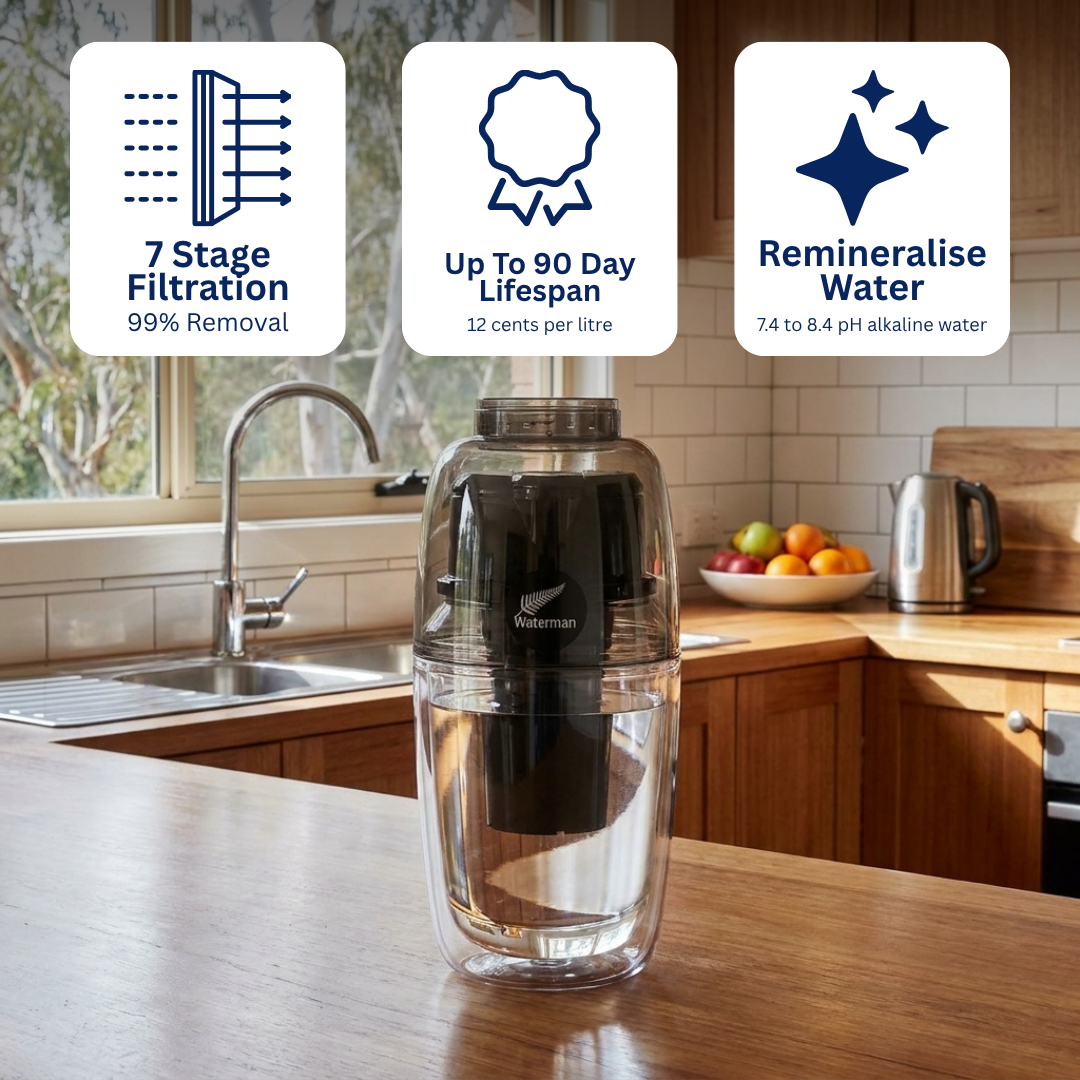
- Alkaline mineral + magnetic ionisation in a compact 600ml form factor
- $49.95 price point — lowest cost alkaline filter bottle in this roundup
- Dual-chamber design separates pre-filtering and mineralisation stages
- Good for office desk, travel, and hotel use where you want remineralised water
✗ Cons
- Standard activated carbon — NOT effective against chloramine (avoid as primary filter in Brisbane, Sydney, Gold Coast, Adelaide, Darwin)
- Does not remove bacteria or protozoa — not suitable for untreated water sources
- No independent NSF or TGA certification published for filtration claims
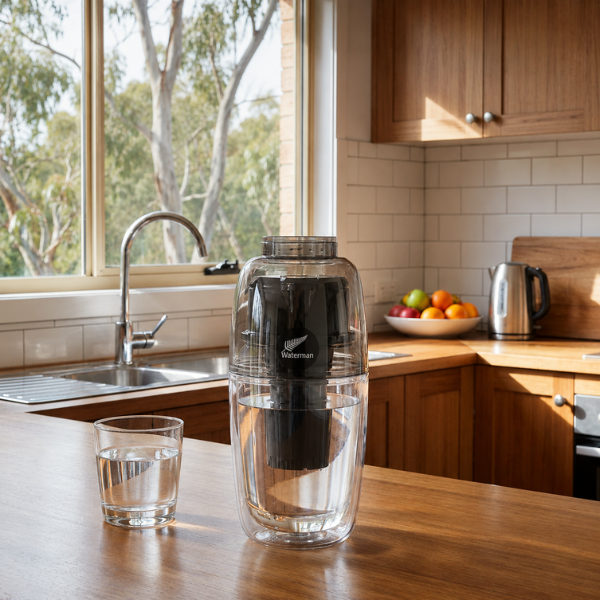
The Waterman Black sits in a specific niche: alkaline remineralisation at an accessible price. Its dual-chamber design runs water through activated carbon first, then through a cartridge loaded with alkaline minerals and magnetic media. The output is water with a slightly elevated pH and added minerals — a profile some people prefer over flat filtered water.
Where it excels is on a desk at an office or during travel, where you are filling from a treated mains source and the primary goal is taste improvement and mineralisation rather than pathogen removal. For Melbourne or Hobart tap water — free chlorine cities — the activated carbon does its job on taste and odour. At $49.95 it is actually affordable.
The constraint is clear: the activated carbon in the Waterman Black is not a chloramine-focused formulation. In Brisbane, Sydney, Adelaide, or Gold Coast, this bottle will improve taste somewhat but will not meaningfully reduce chloramine. If alkaline mineralisation is what you are after and you are on Melbourne or Hobart mains, the Waterman Black does that job well at the lowest price in this category.
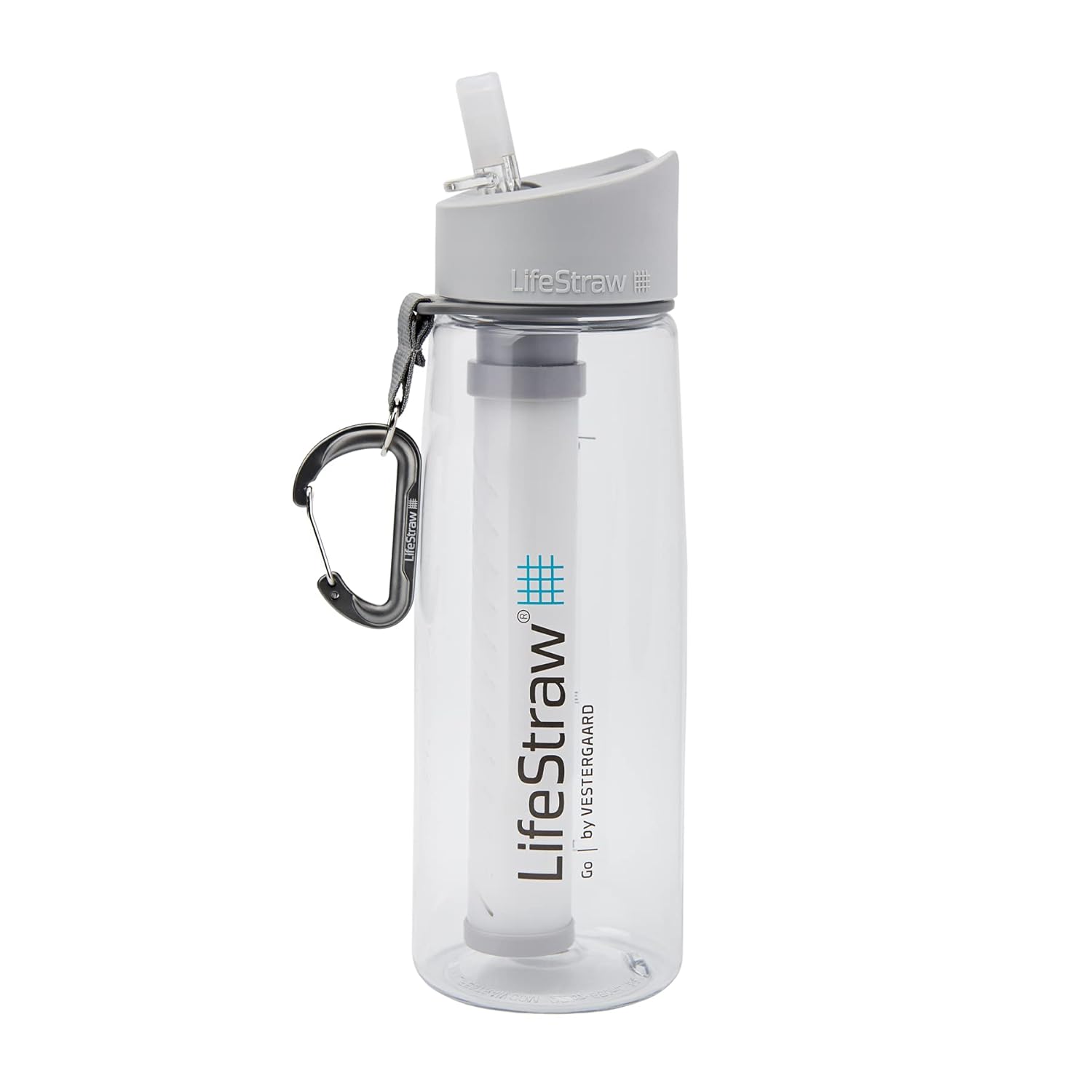
4. LifeStraw Go Water Filter Bottle — Best for Hiking and Camping
✓ Pros
- 0.2-micron hollow fibre removes bacteria and protozoa — essential for untreated water
- US EPA-standard microbiological filtration — independently verified performance claim
- Lightweight for bushwalking — no pump required, drink directly through the straw
- Widely available on Amazon AU with fast shipping
✗ Cons
- Does not remove viruses — relevant for international travel or contaminated urban sources
- Does not remove heavy metals, PFAS, fluoride, or nitrates
- Standard carbon stage does not address chloramine in treated mains water
The LifeStraw Go is purpose-built for outdoor water sources — not mains tap water. This distinction matters. Its hollow fibre membrane at 0.2 microns physically blocks bacteria and protozoa. Giardia, Cryptosporidium, E. coli — all stopped. This is the filter you want when you are filling from a creek in the Blue Mountains, a rainwater tank at a campsite in the Kimberley, or a remote bore in the Flinders Ranges.
For treated Australian tap water — whether in a hotel, Airbnb, or caravan park — the LifeStraw Go’s membrane does not add much, because the water is already treated for pathogens. The carbon stage handles chlorine taste, but as noted above, it is not a chloramine-focused formulation.
One note on viruses: the hollow fibre membrane does not remove viruses. For international travel to regions with poor sanitation — Southeast Asia, South Asia, parts of Africa — you need a filter that adds UV or iodine treatment for viral disinfection. For Australian bushwalking, viral contamination of backcountry water is low risk, and the LifeStraw’s bacterial and protozoan protection is the right tool for the job.
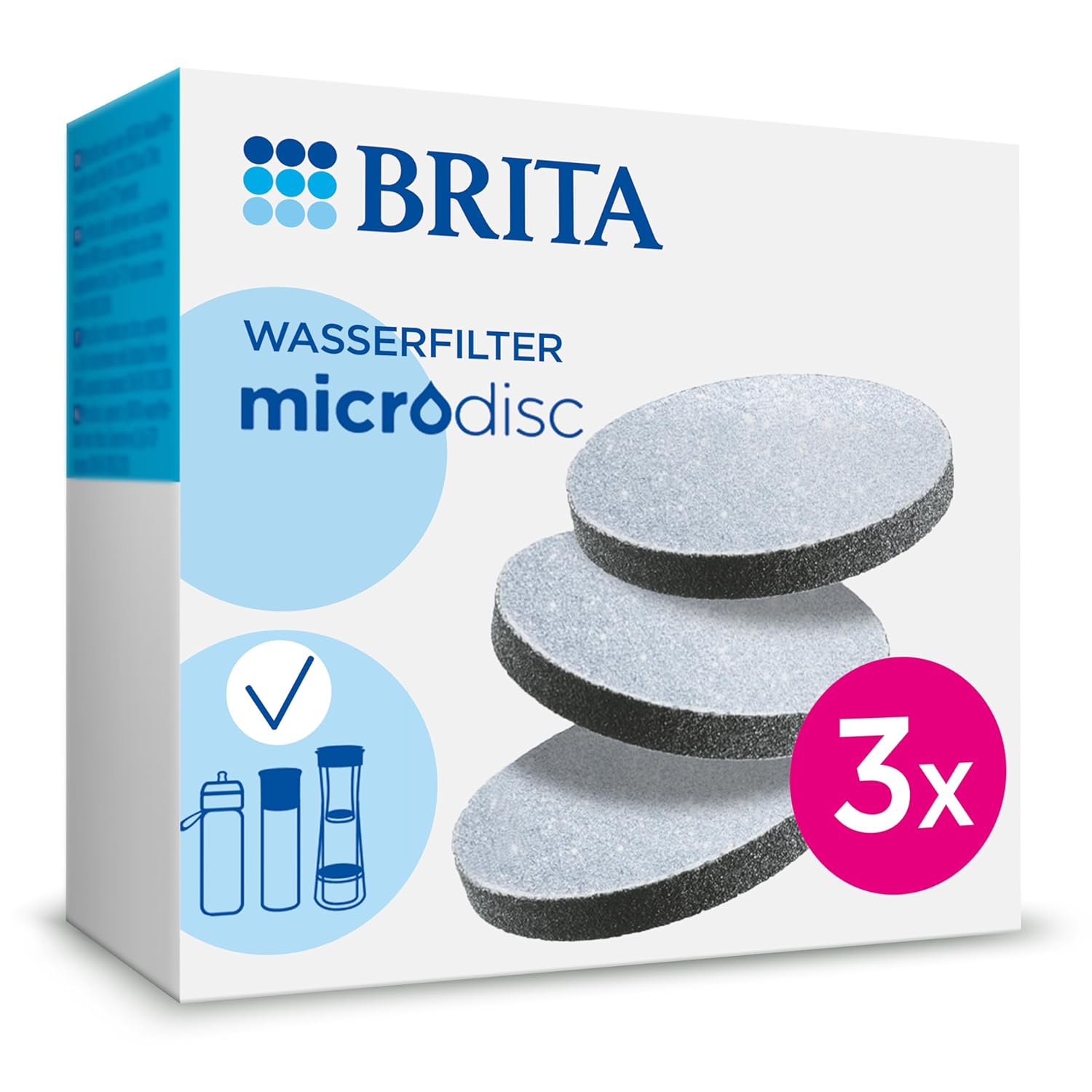
5. Brita Fill & Go Vital Filter Bottle — Best Budget Pick
✓ Pros
- $20-$35 upfront — lowest cost entry in this roundup
- Brita is a well-established brand with replacement microdisc filters widely available in Australian supermarkets
- Lightweight and compact for gym or office use
- Effective for free chlorine taste reduction in Melbourne, Hobart, Canberra
✗ Cons
- Standard GAC — does NOT remove chloramine (largely ineffective in Brisbane, Sydney, Adelaide, Gold Coast, Darwin)
- Does not remove bacteria, protozoa, fluoride, or PFAS
- Plastic body — no insulation, less durable than stainless options
The Brita Fill & Go earns its place in this roundup as the budget option, but it earns it with a clear geographic asterisk. In Melbourne, where Melbourne Water still uses free chlorine at low concentrations and the TDS is a very soft ~60 mg/L, this bottle does exactly what it says: it noticeably improves the taste of the water. The microdisc filter handles free chlorine and some limescale. Melbourne water is already among the cleanest in Australia. The Brita is a fine daily carry there.
Put it in a Brisbane kitchen and the story changes. Brisbane’s tap water is disinfected with chloramine. The Brita’s GAC microdisc will remove roughly 1/40th as much chloramine as it would free chlorine. You will get some taste improvement, but you are not meaningfully reducing the disinfection compound.
How to Choose: Matching the Filter to Your Actual Use Case
The most common mistake in portable filter buying is selecting a product for the wrong scenario. A backcountry camping filter is not the right office companion. A daily carry bottle is not ideal for a rental property needing a full household supply. Here is the decision framework I use.
Daily Carry — Work, Gym, Commute
You fill this bottle from a tap at work, at the gym, or at home before you leave. You drink from it throughout the day. The water source is treated municipal mains water. The question is which city you are in.
Melbourne, Hobart, Canberra — free chlorine cities: the Brita Fill & Go handles taste adequately at the lowest price. If you want alkaline remineralisation as well, the Waterman Black adds that benefit.
Travel — Hotels, Airbnbs, Business Trips
You are in a hotel room in Sydney or a serviced apartment in Singapore. You have no access to a fixed filter. You need filtered water for drinking and making coffee. You cannot modify anything.
For international travel where viral contamination is a real risk (much of Southeast Asia, South Asia), you need a UV pen (SteriPen) in addition to — or instead of — a mechanical filter bottle. The LifeStraw Go does not cover viruses.
Rental Properties
You cannot install an under-sink filter. You cannot attach anything to the plumbing. You are in Brisbane paying rent and drinking chloraminated tap water daily.
Caravanning and Camping
Two distinct scenarios live here. If you are on a caravan park with connected mains water, your water is treated tap water — same rules apply as rental properties. If you are free camping and drawing from tanks, bores, or natural water sources, the LifeStraw Go’s 0.2-micron membrane is essential for bacterial and protozoan protection.
Office Use
Office water in Australian capital cities is mains water. The daily carry rules apply.
Decision Guide — Which Filter Do You Need?
| Your Situation | City Type | Recommended Pick |
|---|---|---|
| Daily carry, work/gym | Free chlorine (Melbourne, Hobart, Canberra) | Brita Fill & Go |
| Bushwalking / free camping / untreated water | N/A — natural water sources | LifeStraw Go |
| Alkaline water on a tight budget | Melbourne / Hobart / Canberra | Waterman Black |
What Portable Filters Cannot Remove — Be Honest With Yourself
This section exists because most filter articles skip it. Knowing what a filter does not do is as important as knowing what it does — and the gaps are significant for some Australian households.
Fluoride
Every portable filter in this roundup — including the Waterman Black, the LifeStraw, and the Brita — cannot remove fluoride. Full stop. Carbon filtration, regardless of type, does not reduce fluoride. Catalytic carbon, compressed carbon block, GAC — none of them. Fluoride removal requires reverse osmosis (90-97% rejection) or activated alumina (80-95%). Both require fixed installation. If fluoride removal is your goal, a portable filter will not achieve it. You need an under-sink reverse osmosis system.
PFAS (Per- and Polyfluoroalkyl Substances)
PFAS contamination has been confirmed at over 700 sites across Australia according to the DCCEEW national register. Most confirmed sites are near airports, defence facilities, and industrial zones — Williamtown (NSW), Oakey (QLD), Edinburgh (SA), Kwinana (WA), and dozens more. Portable carbon filters do not reliably remove PFAS. Some granular activated carbon has modest PFAS adsorption, but performance varies by compound and contact time. Consistent, verified PFAS removal requires reverse osmosis or high-quality NSF 58-certified RO membranes. If you live near a confirmed PFAS site, a filter bottle is not your solution.
Nitrates
Nitrate contamination is a concern for rural Australian households on bore water or in agricultural areas. Carbon filtration does not remove nitrates. Only reverse osmosis or ion exchange systems reduce nitrate levels. If you are on rural bore water with elevated nitrates, a portable filter bottle is not an adequate treatment device.
Bacteria and Viruses
The Waterman Black and Brita are not designed for microbiologically contaminated water. They assume treated mains water as the input. The LifeStraw Go removes bacteria and protozoa but not viruses. For water from rivers, dams, or bore holes, a 0.2-micron filter like the LifeStraw handles most Australian backcountry risk. For international travel or seriously contaminated sources, add UV treatment.
Heavy Metals — Partial Reduction Only
All five filters claim some reduction of heavy metals such as lead and mercury. These claims are based on standard NSF testing protocols under controlled conditions. Real-world performance depends on contact time, flow rate, and initial concentration. A filter bottle passed quickly through under high flow rate may have significantly lower actual reduction than laboratory rates suggest. If you have a confirmed lead problem — older home with lead pipes in Melbourne’s inner suburbs or in aging Hobart infrastructure — a portable bottle filter is not a substitute for a certified under-sink filter with lead reduction.
Cost Per Litre: Portable Filters vs Bottled Water
Buying bottled water in Australia costs between $1.50 and $4.00 per 600ml bottle at retail — $2.50 to $6.67 per litre. Over a year of drinking 2 litres per day, that is $1,825 to $4,867 annually. Portable filter running costs look very different.
Annual Cost Per Litre — Portable Water Options (2L/day, AU Retail)
Against servo-bought water at $4.17 per litre, the savings over a year are over $2,900. The filter pays for itself inside the first week of use.
That is not a marketing claim — it is the arithmetic. The real cost of drinking bottled water in Australia is not the per-bottle price, it is the compounding daily habit multiplied by 365 days. A $109 filter bottle with a $199 annual filter bundle is $308 per year total. The equivalent bottled water habit at $1.50 per 600ml twice a day costs $1,095. The difference is $787 annually, purely on a lifestyle convenience decision.
Final Verdict
Most people reading this article live in a chloramine city and carry a reusable water bottle already. The gap between what they are doing and what they should be doing is one filter cartridge upgrade.
The Waterman Black earns its spot for buyers who specifically want alkaline remineralisation at the lowest price and are in a free-chlorine city. The LifeStraw Go is the only pick for backcountry water sources. The Brita Fill & Go is a legitimate budget option for Melbourne, Hobart, and Canberra — and the wrong option for the five chloramine cities.
Last reviewed: June 2026 — Clean and Native
Frequently Asked Questions
No. No portable filter bottle removes fluoride. Carbon filtration — regardless of type, including catalytic carbon and compressed carbon block — cannot remove fluoride. Fluoride removal requires reverse osmosis (90-97% rejection rate) or activated alumina (80-95%). Both require fixed installation. If fluoride removal is your priority, you need an under-sink RO system, not a portable filter bottle.
Brisbane and South-East Queensland, Sydney, Adelaide, Gold Coast, and Darwin use chloramine as the primary water disinfectant. Melbourne, Hobart, Canberra, Townsville, Cairns, and Toowoomba use free chlorine. This distinction is critical for portable filter selection — standard carbon filters work for free chlorine cities but are largely ineffective against chloramine.
For Australian backcountry use, yes. The LifeStraw Go’s 0.2-micron hollow fibre membrane removes 99.9999% of bacteria (E. coli, Campylobacter) and 99.9% of protozoa (Giardia, Cryptosporidium) — the primary biological risks in Australian natural water sources. It does not remove viruses, but viral contamination of Australian backcountry water is low risk. It does not remove heavy metals, nitrates, or fluoride. Do not use it as your only treatment on seriously contaminated or industrial water sources.
Not effectively for chloramine removal. Sydney’s tap water is disinfected with chloramine, and the Brita Fill & Go uses standard activated carbon (GAC) which removes chloramine at roughly 1/40th the rate it removes free chlorine. It will produce some taste improvement, but it is not meaningfully reducing chloramine. Sydney residents wanting actual chloramine reduction should use a filter formulated specifically for chloramine, such as a confirmed catalytic-carbon product.
Yes, with the right filter for the source. If you are free camping using a caravan water tank fed from natural sources or bore water, the LifeStraw Go provides bacterial and protozoan protection. For tank water with unknown chemistry, a combination approach (LifeStraw for biological, RO for chemical contaminants) is more thorough than any portable filter bottle alone.
Melbourne uses free chlorine and has very soft, low-TDS water (~60 mg/L TDS, ~25 mg/L CaCO3 hardness) — already among the best tap water quality in Australia. A Brita Fill & Go at $20-$35 handles free chlorine taste adequately. If you want alkaline remineralisation added, the Waterman Black at $49.95 steps up the output quality. There is no need for a chloramine-specific filter in Melbourne.
Get the Australian Home Environment Checklist
30 checks across water, air and EMF. Most of them free. Ranked by impact.
No spam. Unsubscribe any time.

Former Royal Australian Navy Clearance Diver and TAG-E counter-terrorism operator. Founded Clean and Native to apply the same rigorous thinking to the home environment.
Full biography →