Grounding for Anxiety: Does Earthing Actually Help? Australian Evidence Review (2026)
Electrical earthing — direct skin contact with a conductive surface connected to the earth’s electron field — has measurable effects on cortisol rhythm and inflammatory markers in peer-reviewed trials. This is not the same thing as the CBT “5-4-3-2-1” sensory grounding technique your therapist may have taught you. Both are called “grounding,” both may reduce anxiety symptoms, and conflating them leads to confusion about what mechanism is actually doing the work.
Quick Verdict — Grounding for Anxiety Australia 2026
Electrical earthing (skin contact with a grounded mat or sheet connected to the earth terminal of a standard power outlet) has produced statistically significant reductions in overnight cortisol and self-reported stress in small trials; the evidence is promising but not definitive, and earthing should be treated as a complementary practice alongside professional mental health support — not as a standalone anxiety treatment.
| Approach | Mechanism | Verdict |
|---|---|---|
| CBT Sensory Grounding (5-4-3-2-1) | Attentional redirection, vagal activation | Strong clinical evidence — use for acute anxiety |
| Electrical Earthing (barefoot/mat/sheet) | Free electron transfer, cortisol normalisation | Promising, small studies — worthwhile adjunct |
| EMF Reduction + Earthing Combined | Removes nervous system stressor + adds electron replenishment | Best approach for chronic stress and poor sleep |
CBT Grounding vs Electrical Earthing — What Is the Difference?
Here is the problem with the word “grounding”: it means two completely different things depending on who is using it. Your psychologist uses it to mean a mindfulness technique that anchors you to present-moment sensory experience. An electrician uses it to mean the earth wire that prevents electrocution. In the anxiety space, both definitions have merged into a single confusing term — and most online content treats them as interchangeable. They are not.
The CBT grounding technique — typically the 5-4-3-2-1 method — asks you to consciously name five things you can see, four you can touch, three you can hear, two you can smell, and one you can taste. The mechanism is attentional: you interrupt a threat-appraisal loop by deliberately redirecting neural resources toward sensory input. It activates the parasympathetic nervous system through controlled attention, not through any physical contact with the ground. This is a well-validated tool for acute anxiety and panic, supported by decades of clinical research.

Electrical earthing — also called earthing — is something different. It involves direct conductive contact between skin and either bare earth (soil, grass, sand) or an indoor grounding product (mat, sheet, patch) that is connected via a cord to the earth terminal of a standard Australian power outlet. The proposed mechanism is electron transfer: the earth carries a mild negative charge from atmospheric lightning activity, and direct contact allows free electrons to move into the body, where they may neutralise reactive oxygen species and modulate inflammatory and autonomic pathways.
Both may reduce anxiety. The mechanisms are unrelated. This article covers both — but spends most of its time on electrical earthing because it is the less-understood of the two, and because the evidence for it is more contested and therefore more worth examining carefully.
In Australia, anxiety disorders are the most common mental health condition. According to the Australian Institute of Health and Welfare (AIHW), approximately 17% of Australians meet criteria for an anxiety disorder in any given year. The mental health burden is substantial among young people — federal health data from 2026 specifically identifies major depression and anxiety as significant concerns among Australians aged 12-17, with unmet need for psychosocial supports remaining high outside the NDIS framework. That context matters here: anything being positioned as support for anxiety in Australia needs to be honest about what it can and cannot do.
How Earthing May Affect Anxiety — The Cortisol Mechanism
The central proposed mechanism for earthing’s anxiety-relevant effects is cortisol normalisation. Cortisol is your primary stress hormone, secreted by the adrenal glands in a rhythm tied to the 24-hour light-dark cycle. In healthy adults, cortisol peaks shortly after waking and declines through the day to a low around midnight. Chronic stress, poor sleep, and sustained low-grade inflammation disrupt this rhythm — flattening the morning peak and elevating night-time levels. Elevated night-time cortisol is directly associated with poor sleep, increased anxiety sensitivity, and impaired emotional regulation.

Chevalier et al (2011), published in the Journal of Alternative and Complementary Medicine, measured salivary cortisol levels in 12 participants over a two-month grounded sleep period compared to a control (ungrounded) period. The grounded participants showed normalisation of the diurnal cortisol profile — specifically, the morning peak became more defined and night-time levels decreased. All twelve participants also reported subjective improvements in sleep quality and reduced symptoms of stress and anxiety. The sample size is small enough that these results need replication in larger trials before any clinical claims can be made. They are nonetheless internally consistent and mechanistically plausible.
A 2019 review in Integrative Environmental Medicine (Sinatra et al) examined the broader literature and identified several convergent lines of evidence: earthing reduces markers of systemic inflammation (specifically CRP, fibrinogen, and white cell count in some trials), improves heart rate variability (HRV — a direct measure of autonomic nervous system balance and resilience), and reduces blood viscosity. Each of these has documented associations with anxiety disorders. Higher HRV is associated with better emotional regulation. Lower systemic inflammation is associated with reduced depressive and anxious symptomatology. The plausibility of the mechanism is established. What is not yet established is the size of the effect and whether it is clinically meaningful at the level of a diagnosed anxiety disorder.
The EMF Connection
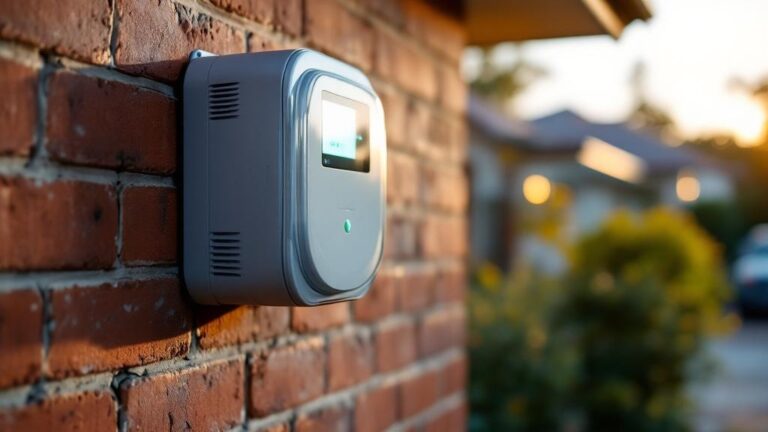
One angle that most grounding content ignores entirely: electromagnetic field (EMF) exposure as an independent anxiety-relevant stressor. ARPANSA sets the Australian radiofrequency (RF) public exposure limit at 1,000 microwatts per square centimetre at 2.4 GHz — a thermal safety limit that says nothing about chronic low-level biological effects. Building biology guidelines (SBM-2015) recommend sleeping area RF below 0.1 mW/m2 and AC electric fields below 5 V/m. Most Australian bedrooms with WiFi routers, smart meters, and multiple devices active at night exceed these precautionary thresholds substantially.
There is a documented mechanism here worth understanding. The human body acts as an antenna for ambient AC electric fields when ungrounded. When you make conductive contact with a grounded surface, induced AC body voltage — measurable with a multimeter — drops from tens of millivolts to near zero. Some researchers (Sokal et al, 2011) propose that this reduction in induced electrical noise on the body contributes directly to autonomic nervous system calming effects. Whether that is the whole mechanism or part of it remains open. What is not open is the physics: grounding does reduce body voltage, and this is reproducible with basic measurement equipment.
What the Research Actually Shows — And Where It Falls Short
Let’s be precise about what the earthing literature is and is not. The honest summary: there are roughly 20-30 peer-reviewed studies on earthing, most with sample sizes under 40, many with methodological limitations including lack of true blinding (participants can tell whether they are grounded), industry funding from earthing product companies, and short intervention periods. This is not a body of evidence that supports clinical recommendations. It is a body of evidence that justifies further research and makes earthing a reasonable complementary practice for people who are already engaging with professional mental health support.
Studies Worth Knowing
Chevalier et al (2011), n=12, found cortisol normalisation and self-reported stress reduction after grounded sleep. Chevalier et al (2019), n=27, found reduced CRP (C-reactive protein, a key inflammatory marker) after earthing. Gaétan Chevalier’s research group has produced the most systematic earthing literature, though his institutional affiliations with earthing product companies create conflicts of interest that need to be disclosed.
Sokal and Sokal (2011) published physiological and electrical measurement data showing reproducible reductions in body voltage and changes in blood parameters during earthing. Notably this study used continuous monitoring and actual electrical measurement rather than self-report alone — which makes it methodologically stronger than most in the field.
A 2015 pilot study by Ghaly and Teplitz monitored sleep, pain, and stress in 60 subjects using grounded sleeping systems versus sham-grounded controls. The grounded group reported statistically significant improvements in sleep quality. Importantly this study attempted blinding — participants did not know whether their mat was actually grounded or sham-grounded — which addresses the placebo confound partially.
What the Research Does Not Show
No trial has demonstrated that earthing treats an anxiety disorder as defined by DSM-5 or ICD-11 criteria. No trial has compared earthing to cognitive behavioural therapy, medication, or exercise — all of which have substantially stronger evidence bases for anxiety management. Most studies measure proxy outcomes (cortisol, HRV, self-reported stress) rather than validated anxiety scales. The effect sizes reported are real but their clinical significance — whether they translate to meaningful day-to-day improvements for someone living with anxiety — is not yet established.
This is not a dismissal. Plenty of beneficial health practices have weak formal evidence because they are not patentable and therefore do not attract pharmaceutical-scale research funding. Earthing probably has real physiological effects. What you should not do is replace evidence-based mental health treatment with it, and any product or content that implies otherwise is being dishonest with you.
EMF Meters & Protection
See full EMF guide →How to Try Earthing for Anxiety — A Practical Protocol
If you want to try electrical earthing, the barrier is low. You already have access to the most effective form of it: bare feet on soil, grass, or sand. For Australians living in Queensland, New South Wales, or Western Australia where the climate allows outdoor barefoot time year-round, daily earthing costs nothing. Thirty minutes barefoot on grass or sand — genuine skin contact with moist, conductive soil — delivers the same electron transfer mechanism as an indoor grounding mat. This is worth stating because many people reach for a product before trying the free version.
Outdoor Earthing — The Baseline
Aim for 30 minutes per day of direct skin-to-earth contact. Wet or damp ground is significantly more conductive than dry sand or rock. Morning earthing on dewy grass has the added benefit of aligning with the natural cortisol morning peak — which the Chevalier 2011 data suggests earthing may help normalise. Concrete is conductive only if it is unsealed and damp. Asphalt is not conductive. Synthetic turf is not conductive. Timber decking is not conductive.
Indoor Earthing — When Outdoor Access Is Limited
For people in apartments, high-rise buildings, cold climates, or offices — which covers a significant portion of the Australian population — indoor grounding products allow earthing during sleep or desk work. These connect via a cord to the earth (ground) terminal of a standard Australian 3-pin power outlet. The active and neutral pins carry no current through the grounding cord — only the earth terminal is used, and this terminal is passively bonded to ground potential at your switchboard. There is no electrical shock risk from a correctly manufactured and certified product used as directed.
The Correct Grounding Protocol for Anxiety
Start with a minimum four-week trial. Effects on cortisol rhythm take time — you are not going to feel a difference in 20 minutes. Use a grounding mat during your desk work or evening wind-down period. Use a grounding sheet for overnight contact. Track your subjective sleep quality and morning mood using a simple 1-10 scale daily. This is not a clinical trial, but it gives you your own n=1 data rather than relying entirely on other people’s results.
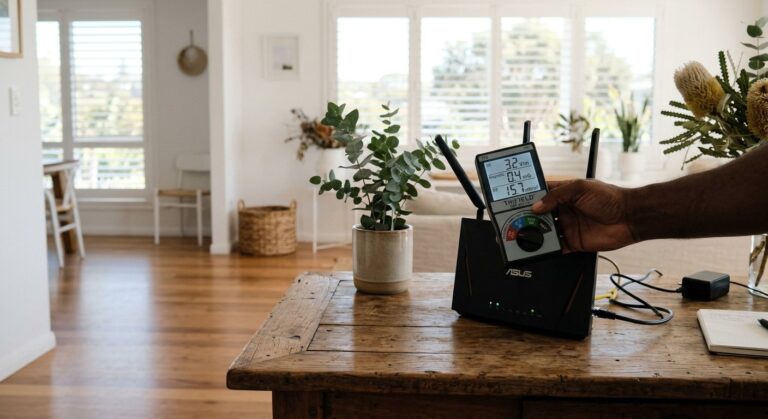
Combine earthing with basic EMF reduction in the bedroom: turn off WiFi at the router overnight (or use a Jackson 24hr Mechanical Timer on a ~$20 set-and-forget schedule), keep your phone on airplane mode or in another room, and remove smart devices from within two metres of your bed. This addresses the AC body voltage mechanism that earthing partly acts through — reducing the source makes the grounding more effective. Think of it as removing the stressor while simultaneously supporting your body’s recovery from it.
The 5-4-3-2-1 Technique — Use This Too
The CBT sensory grounding technique remains the most evidence-backed immediate anxiety intervention available without a prescription. It works during a panic attack, during anxious rumination before sleep, and during stressful workplace situations. It requires nothing except your attention. Use it alongside electrical earthing rather than instead of it. Five things you can see. Four you can touch (including the grounding mat under your feet). Three you can hear. Two you can smell. One you can taste. The tactile step integrates naturally with earthing — the sensation of the mat or sheet is a legitimate grounding anchor for the attentional technique.
Grounding Products for Anxiety — What to Buy in Australia
If you have already committed to trying electrical earthing indoors, these are the two products I use and recommend. Both are from Premium Grounding, a dedicated earthing specialist with Australian distribution. Both use conductive silver-thread or stainless-steel weave construction. Both connect via a standard cord to the earth terminal of an Australian 3-pin outlet.
Premium Grounding Mat

✓ Pros
- Stainless steel weave — washable and durable
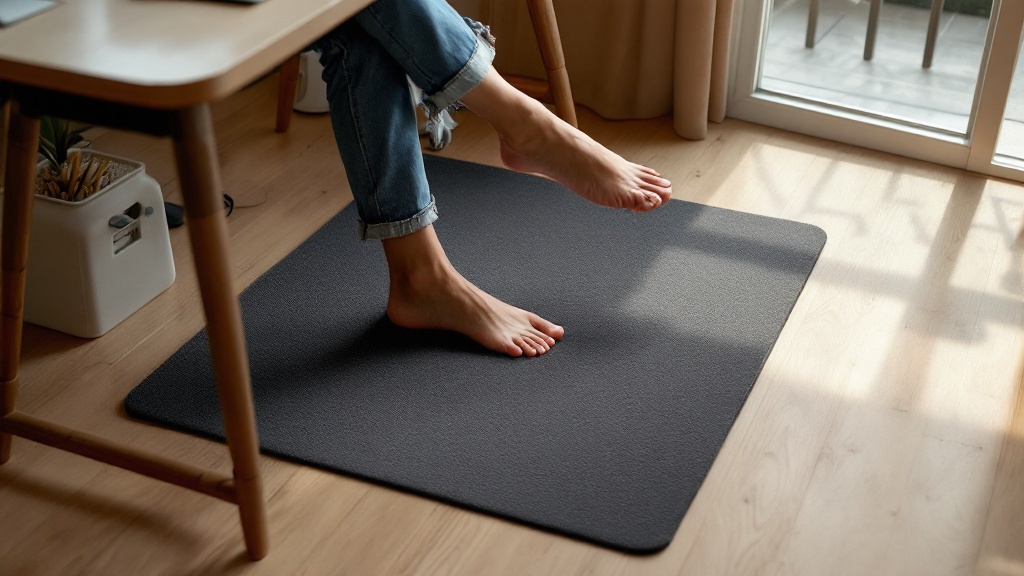
- Works on desk surface or floor under bare feet
- Compatible with standard Australian 3-pin outlet (earth terminal only — no shock risk)
- Immediate body voltage reduction verifiable with a multimeter
✗ Cons
- Requires barefoot or bare-skin contact — socks break the circuit
- Cord creates a trip hazard if run across floor carelessly
- No WaterMark or Australian certification — verify outlet earth connection with an outlet tester first
The mat is the right choice if you spend significant time at a desk and want earthing contact during your working day without any sleep routine changes. Place it under your desk, bare feet on the mat surface, cord running to the nearest outlet. You can pair this with a full grounding mats guide for a deeper comparison against other options available in Australia.
Premium Grounding Sheet

✓ Pros
- Up to 8 hours overnight contact — longest daily earthing window possible
- Closest format to the cortisol-normalisation trials in published literature
- Silver thread construction is antimicrobial and machine washable
- Full-body contact area — leg, torso, or arm contact maintained through natural sleep movement
✗ Cons
- Requires outlet near the bed and careful cord management
- Silver thread degrades faster with bleach or high-heat washing — follow care instructions precisely
- Does not replace need to reduce in-bedroom EMF sources before grounding
The sheet delivers the longest continuous earthing contact of any indoor format — and sustained overnight contact is what the published cortisol studies actually used. If your primary concern is sleep-disrupting anxiety and poor sleep quality, this is the format most directly supported by the research. See the complete grounding sheets guide for Australia for side-by-side comparisons and care instructions.
Final Verdict
Electrical earthing is not an anxiety treatment. State that clearly. If you have an anxiety disorder, CBT, ACT, medication (where appropriate), exercise, and sleep hygiene have substantially stronger evidence bases and should form the core of your management plan. What earthing may offer is a measurable physiological adjunct — specifically, cortisol rhythm normalisation and autonomic balance improvements — that can support the effectiveness of those primary approaches when used consistently over weeks.
For desk-based anxiety and daytime stress, the Premium Grounding Mat is the right purchase: it integrates into a work routine without changing anything about your sleep setup, delivers verifiable body voltage reduction, and costs less than one session with a private psychologist. For sleep-onset anxiety and night-time cortisol disruption — the kind that leaves you lying awake replaying the day — the Premium Grounding Sheet is the better choice. It provides the sustained overnight contact that the cortisol research actually measured, and eight hours of continuous earthing is categorically more exposure than 30 minutes on a mat.
If you are going to try one, try the sheet. Pair it with EMF reduction in the bedroom (router off at night, phone on airplane mode or out of the room), run a four-week self-experiment tracking sleep quality and morning mood, and then decide based on your own data. That is the honest recommendation from someone who has done exactly that at the Palm Beach house — as a former Royal Australian Navy Clearance Diver, I have a low tolerance for placebo effects and a high tolerance for discomfort, and I kept the sheet on the bed.
Last reviewed: June 2026 — Clean and Native
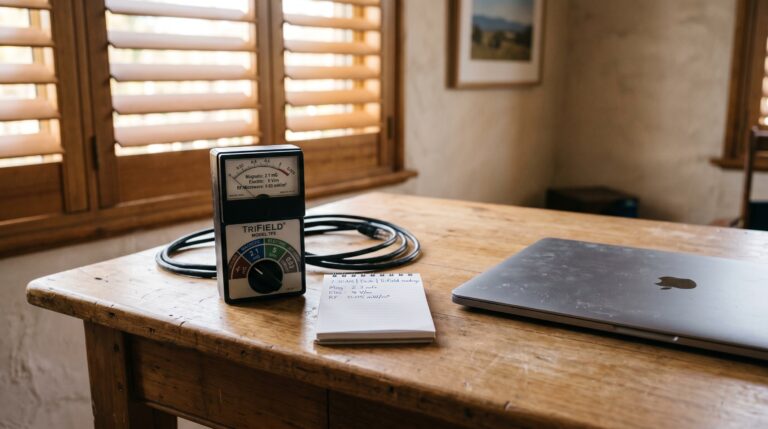
Start with measurement. The TriField TF2 is the only meter you need.
Measures AC magnetic, AC electric, and RF in one device. I use it for every room audit at the Palm Beach house. Without real readings, every EMF decision is a guess.
Frequently Asked Questions
Yes, when used correctly. Grounding mats and sheets connect only to the earth (ground) terminal of a standard Australian 3-pin outlet — the same terminal that bonds your appliances to earth potential. No current flows through the cord during normal use. The earth terminal carries no voltage under normal conditions. Test your outlet with an inexpensive outlet tester (available at Bunnings) before first use to confirm it is correctly wired, including the earth connection. Do not use grounding products if your home has ungrounded outlets, which are common in pre-1970s Australian homes.
The Chevalier 2011 cortisol study ran for eight weeks. Most participants in earthing trials report subjective sleep improvements within two to four weeks. Do not expect to feel a difference after one session — cortisol rhythm normalisation is a slow process. Run a minimum four-week trial with daily use before deciding whether it is working for you. Track morning mood and sleep quality on a simple 1-10 daily scale so you have real data rather than impressions.
Yes. There is no known interaction between electrical earthing and any class of psychiatric medication including SSRIs, SNRIs, benzodiazepines, or beta-blockers. Earthing is a passive physical intervention with no pharmacological mechanism. Inform your prescribing doctor you are using it, but there is no clinical basis for concern about combination use. Earthing does not substitute for medication where medication is clinically indicated.
No. The 5-4-3-2-1 technique is a CBT-based attentional exercise that redirects your focus to present-moment sensory experience during anxiety or panic. It operates through a neurological mechanism (parasympathetic activation via controlled attention). Electrical earthing operates through an electrochemical mechanism (free electron transfer between the earth and your body via conductive contact). Both are called “grounding.” The mechanisms are unrelated. Both may be useful. Use both.
Yes — and it may do more. Outdoor earthing on moist conductive surfaces (grass, soil, sand, unsealed concrete) delivers the same electron transfer mechanism as an indoor grounding product and adds the additional benefits of natural light exposure, movement, and sensory input. The advantage of indoor grounding products is availability regardless of weather, season, or housing type. If you have reliable access to outdoor earthing time, use it. If you live in an apartment or your climate restricts outdoor barefoot time, an indoor mat or sheet fills the gap.
The published evidence measures proxy outcomes — cortisol levels, heart rate variability, self-reported sleep quality, and inflammatory markers — rather than validated anxiety disorder scales. There are no randomised controlled trials showing that earthing meets clinical diagnostic criteria for treating an anxiety disorder. The physiological changes measured are associated with reduced anxiety sensitivity in broader literature, but the direct link has not been established in controlled trials. Treat it as a physiological support tool, not a treatment.
Two windows are most useful: morning (30-60 minutes during the natural cortisol peak, sitting or working with bare feet on the mat) and evening (60-90 minutes before bed to support the cortisol decline and parasympathetic transition into sleep). Overnight with a grounding sheet covers both the late evening and early morning windows automatically. If you can only do one, evening or overnight is more valuable for anxiety management because this is when cortisol dysregulation is most disruptive.
Grounding reduces induced AC body voltage — measurable with a multimeter — which some researchers link to nervous system dysregulation in EMF-sensitive individuals. Whether clinical electromagnetic hypersensitivity (EHS) is a recognised diagnosis remains contested; ARPANSA’s position is that the evidence does not currently support EHS as a distinct condition. What is reproducible is the physics: grounding demonstrably reduces body voltage from ambient AC fields. For anyone who notices sleep or mood worsening near high-EMF environments, the combination of source reduction (devices out of bedroom, WiFi timer, phone on airplane mode) and earthing during sleep addresses both the stressor and the body’s electrical state simultaneously.
Best Earthing Products Australia 2026: Mats, Sheets, Pillowcases & Bands
Compare every earthing product category tested in Australia →Get the Australian Home Environment Checklist
30 checks across water, air and EMF. Most of them free. Ranked by impact.
No spam. Unsubscribe any time.

Former Royal Australian Navy Clearance Diver and TAG-E counter-terrorism operator. Founded Clean and Native to apply the same rigorous thinking to the home environment.
Full biography →