PFAS in Wagga Water: How to Filter It at Home
Wagga Wagga’s tap water supply has been officially declared safe, but groundwater bores near RAAF Base Wagga recorded PFOS and PFHxS concentrations of 300 ng/L in 2018 — well above the ADWG health guideline of 70 ng/L for combined PFAS. The only residential technologies proven to remove PFAS from drinking water are reverse osmosis (90–97% removal) and granular activated carbon at high contact time — standard carbon jugs and basic bench filters do not work.
What the PFAS Contamination Record Actually Shows for Wagga Wagga
The contamination story around Wagga Wagga is not a rumour or precautionary fiction. It is documented in NSW government data. In 2018, environmental monitoring of groundwater bores near RAAF Base Wagga Wagga detected combined PFOS and PFHxS concentrations at 300 ng/L — more than four times the ADWG 2016 health guidance value of 70 ng/L for those compounds combined. PFAS compounds were used in aqueous film-forming foam (AFFF) at defence and aviation sites across Australia from the 1970s through to 2004, when the most toxic variants were phased out.
Wagga Wagga is one of at least 315 confirmed PFAS-affected locations across Australia, according to the Australian PFAS Map maintained by researchers tracking contamination sites nationally. That number has grown substantially — the last comprehensive national drinking water study was published in April 2011, meaning there is a 13-year monitoring gap in the national data set. No coordinated national PFAS monitoring programme exists as of 2026. The NSW Select Committee on PFAS, which published its final report in September 2025, found that Australia’s regulatory framework remains fragmented and that the ADWG limits have not kept pace with international evidence on health risks.
The International Agency for Research on Cancer classified PFOA as a Group 1 carcinogen in 2025 — the same category as tobacco smoke and asbestos. Australia’s ADWG still permits PFOA in tap water at levels it considers safe, though those guidelines are under review. That regulatory lag matters for Wagga Wagga residents deciding whether to wait for updated government action or act now at the household level.
Town Water vs. Bore Water: Understanding Your Actual Risk
Your risk profile in Wagga Wagga depends entirely on your water source. This distinction is almost never explained clearly in media coverage, which conflates groundwater contamination with tap water safety as if they are the same question. They are not.
Wagga Wagga’s reticulated town water supply is drawn from the Murrumbidgee River via the Wagga Wagga Water Treatment Plant, operated by Riverina Water County Council. This surface water source has not returned PFAS detections at concentrations above ADWG limits in publicly reported testing. Riverina Water publishes an annual drinking water quality report; if you are on town water, that is your baseline. The official position — “your drinking water is safe” — applies specifically to this supply.
The situation is different if you draw water from a private bore, particularly any bore within a few kilometres of RAAF Base Wagga Wagga or the Wagga Wagga Airport. PFAS compounds bind to soil particles and migrate through groundwater plumes over years and decades. The 300 ng/L detection in 2018 was from monitoring bores in the contamination investigation zone — but PFAS plumes do not respect property boundaries. If your property sits within or adjacent to the investigation area and you use groundwater, you have a confirmed contamination risk, not a hypothetical one.
Rainwater tank users face a third scenario. PFAS can be deposited on roofs via atmospheric transport and washed into tanks during rain events. Research published in Environmental Science and Technology found PFAS detections in rainwater tank samples across Australian cities, including inland regional sites. Tank users near industrial or aviation sites should treat this as an additional exposure pathway.
Which Filters Actually Remove PFAS — and Which Are a Waste of Money
This is where the majority of consumer confusion sits, and it is where competitors in this space consistently fail their readers. They present general information about PFAS without ever telling you which specific filter technologies, certified to which specific standards, will actually address it. Let me be direct.
Reverse Osmosis: The Only Certified Option
NSF/ANSI P473 is the standard that certifies filter products for PFOA and PFOS removal. It requires demonstrated removal of at least 80% under worst-case test conditions; high-quality RO systems achieve 90–97% in real-world use. The 0.0001 micron RO membrane physically excludes PFAS molecules based on size and charge — it is not an adsorption process that can saturate and fail silently.
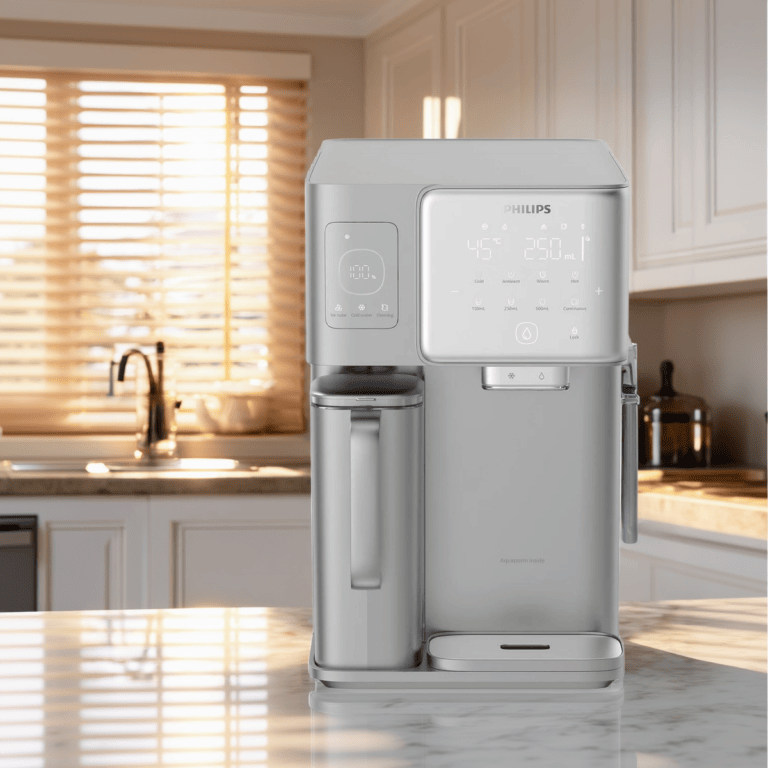
For Wagga Wagga households on town water wanting precautionary protection, a countertop RO unit like the AquaTru Classic is the lowest-friction option. No plumber required. It connects to your bench, fills a tank, and you draw from a tap on the unit. The AquaTru has NSF P473 certification for PFOA and PFOS. At a flow rate of roughly 4 litres per hour, it handles typical drinking and cooking needs without running dry. The waste-water ratio is approximately 3:1 — for every litre of filtered water, about three litres go to drain. That is the real tradeoff with countertop RO and worth knowing before you buy.
For bore-water users or households wanting filtered water at the kitchen tap without bench space, an under-sink RO system is a more appropriate choice. The PWS EcoHero 5-Stage carries WaterMark certification to AS3497 — the Australian standard for plumbing products — and NSF 58 certification for membrane performance. It installs under the sink with a dedicated filtered-water tap and runs at higher pressure than countertop units, which typically means better membrane performance and lower waste ratios (around 1:1 with a permeate pump).
Activated Carbon Block: Partial, Not Certified
Some compressed carbon block filters — particularly those using powdered activated carbon at high contact time — do show PFAS adsorption in independent testing. But “shows some removal in lab conditions” and “NSF P473 certified” are different things. No standard carbon block filter currently holds NSF P473 certification as a standalone PFAS treatment. Carbon has a finite adsorption capacity that depletes over time, and there is no reliable consumer-level way to know when that capacity is exhausted for PFAS specifically. As a secondary stage behind RO, carbon is useful for taste and chloramine. As a standalone PFAS treatment, it is insufficient.
Wagga Wagga’s town water uses chloramine disinfection — the same as the broader South-East Queensland and Sydney networks. Standard granular activated carbon (GAC) removes chloramine at roughly 1/40th the rate it removes free chlorine, meaning a standard Brita or similar jug is not even effective for taste improvement in Wagga Wagga water, let alone PFAS. If you are using a carbon jug in Wagga Wagga and assuming it is protecting you from anything, you are spending money on false reassurance.
What Absolutely Does Not Work
Boiling does not remove PFAS. It concentrates it. UV sterilisation does not remove PFAS — UV targets biological contaminants, not chemical ones. Softeners and descalers have no effect on PFAS. Ion exchange resins can remove some PFAS compounds but the technology is not standardised for residential use and requires frequent regeneration. Standard KDF-55 media, which is sometimes marketed for heavy metals and chlorine, has no published efficacy against PFAS.
NSF P473-Certified PFAS Filtration — Wagga Wagga
Cost Analysis: Filtration vs. Bottled Water vs. Doing Nothing
Most people in Wagga Wagga who are concerned about PFAS are currently doing one of three things: drinking tap water unfiltered, buying bottled water, or running a basic carbon filter jug. The cost and protection trade-off of each option deserves a direct comparison.
A four-person Wagga Wagga household consuming 4 litres of drinking water per day — roughly 1,460 litres per year — pays around $730 to $2,190 per year on bottled water at $0.50 to $1.50 per litre (budget 10L packs to single-serve). That money buys uncertain protection: Australian bottled water is not required to be tested for PFAS, and several brands source from municipal supplies that have not been independently verified PFAS-free under any published testing regime.
5-Year Cost of Drinking Water — 4-Person Household, Wagga Wagga
Assumes 4L/day drinking water, 1,460L/year. RO filter costs include upfront hardware + annual filter replacement. Bottled water at $1.00/L average (mid-tier 10L packs).
The maths are simple. A countertop RO unit costs roughly $1,179 over five years — around $0.16 per litre — compared to $7,300 on bottled water with unverified PFAS content. The under-sink EcoHero comes in at $1,609 over five years but delivers filtered water at every kitchen tap draw, not just from a bench-top unit. The carbon jug costs the least but removes nothing it claims to remove in a chloramine supply, and removes no PFAS at all.
There is another cost the chart above does not capture: the cost of not acting. PFOA is now classified as a Group 1 carcinogen. PFOS has been linked to thyroid disruption, immune suppression, and developmental effects in children in studies cited by the NHMRC. There is no economic figure to put on that, but there is a clear decision for households with young children or pregnant women. For a bore-water user in the Wagga Wagga contamination investigation zone, this is not a precautionary calculation — it is a response to confirmed contamination.
Choosing the Right System for Your Situation
Not every Wagga Wagga household has the same needs or living situation. Here is a decision-based breakdown rather than a generic product list.
If You Rent or Cannot Modify Plumbing
The AquaTru Classic countertop RO sits on your bench, connects via a standard adapter to your existing tap, and goes with you when you move. No licensed plumber required. NSF P473 certified for PFOA and PFOS. This is the right answer for renters, people in temporary accommodation, or anyone who wants immediate protection without a tradesperson and a lease conversation.

✓ Pros
- NSF/ANSI P473 certified — PFOA and PFOS removal independently verified
- No plumbing — renter-friendly, portable between properties
- Also removes fluoride (90–95%), lead, nitrates, and chloramine
- Alkaline remineralisation stage included in this model
✗ Cons
- 3:1 waste-to-product water ratio — uses ~3L of water to produce 1L filtered
- Tank capacity of ~1.9L means refilling for larger households
- Bench space required — not suitable for very small kitchens
If You Own Your Home and Want Whole-Kitchen Coverage
The PWS EcoHero 5-Stage under-sink RO installs under your kitchen sink with a dedicated filtered-water tap. WaterMark certified to AS3497, NSF 58 membrane certification. A licensed plumber installs it in roughly one hour. From that point, every glass you fill from the filtered tap is RO-treated. For a family with young children, this is a more convenient daily-use configuration than a countertop tank.

✓ Pros
- WaterMark AS3497 — meets Australian plumbing product standard
- NSF 58 certified membrane — independent performance verification
- Under-sink installation means no bench clutter
- Australian support — not a grey-market import
✗ Cons
- Requires licensed plumber installation (~$150–$250 in regional NSW)
- Not portable — stays with the property
- Higher upfront cost than countertop units
If You Are on a Bore or Rainwater Tank
For contaminated bore-water users or tank-water households near RAAF Base Wagga, a countertop or under-sink RO unit addresses drinking and cooking water. But it does not address the full contact exposure from showering, bathing, or garden irrigation from a contaminated supply. In these situations, a whole-house treatment approach is warranted — starting with a PFAS-rated granular activated carbon system at the point of entry, followed by an RO unit at the drinking tap. This is a multi-stage response that requires an assessment from a water treatment specialist, not a single product recommendation. Contact Riverina Water County Council or a WaterMark-licensed water treatment installer in Wagga Wagga for a site-specific assessment.
The Regulatory Gap and What It Means for You
The NSW Select Committee on PFAS published its final report in September 2025 and found that Australia’s approach to PFAS regulation is fragmented, outdated, and not fit for purpose. The ADWG’s current PFAS guideline values were set under the 2016 review and have not been updated to reflect the IARC’s 2025 carcinogenicity classification of PFOA. There is no nationally coordinated monitoring programme. The most recent comprehensive national drinking water survey that included PFAS was published in April 2011 — meaning the data gap is now 15 years wide.
What this means practically: even if your water utility reports no PFAS exceedance at the treatment plant outlet, that does not mean PFAS has been tested for in your specific area or at the tap in your home. It may mean it has not been tested at all. Wagga Wagga’s town water has not, to the best of public knowledge, returned PFAS detections above ADWG limits. But the 2018 bore contamination data suggests PFAS is present in the local groundwater environment. In the absence of comprehensive residential monitoring, the precautionary logic is simple: a certified RO filter costs less per litre than bottled water and removes PFAS when the tap water supply does not.
Australia is one of the only developed nations without a statutory maximum contaminant level (MCL) for PFAS in drinking water. The United States EPA set enforceable MCLs for PFOA and PFOS at 4 ng/L in April 2024. Australia’s ADWG guidance value for the same compounds is 70 ng/L — more than seventeen times higher. This is not a minor policy difference. It reflects a fundamentally different risk tolerance, and Wagga Wagga residents living near a confirmed contamination site are bearing the practical consequences of it.
How to Test Your Own Water Before Buying a Filter
If you want data before spending money on a filter, you can test. For PFAS specifically, a DIY test kit is not sufficient — PFAS requires laboratory analysis using EPA Method 533 or 537.1, which detects compounds at parts-per-trillion concentrations. You cannot test for PFAS with a home strip kit.
Several NATA-accredited laboratories in NSW accept residential water samples by mail and return PFAS panel results within 10–15 business days. Costs typically range from $150 to $350 for a 40-compound PFAS panel. If you are on bore water within the Wagga Wagga investigation zone, NSW Health and the Department of Climate Change, Energy, the Environment and Water (DCCEEW) have conducted sampling programmes in affected areas — contact them to confirm whether your bore has been sampled and request the results.
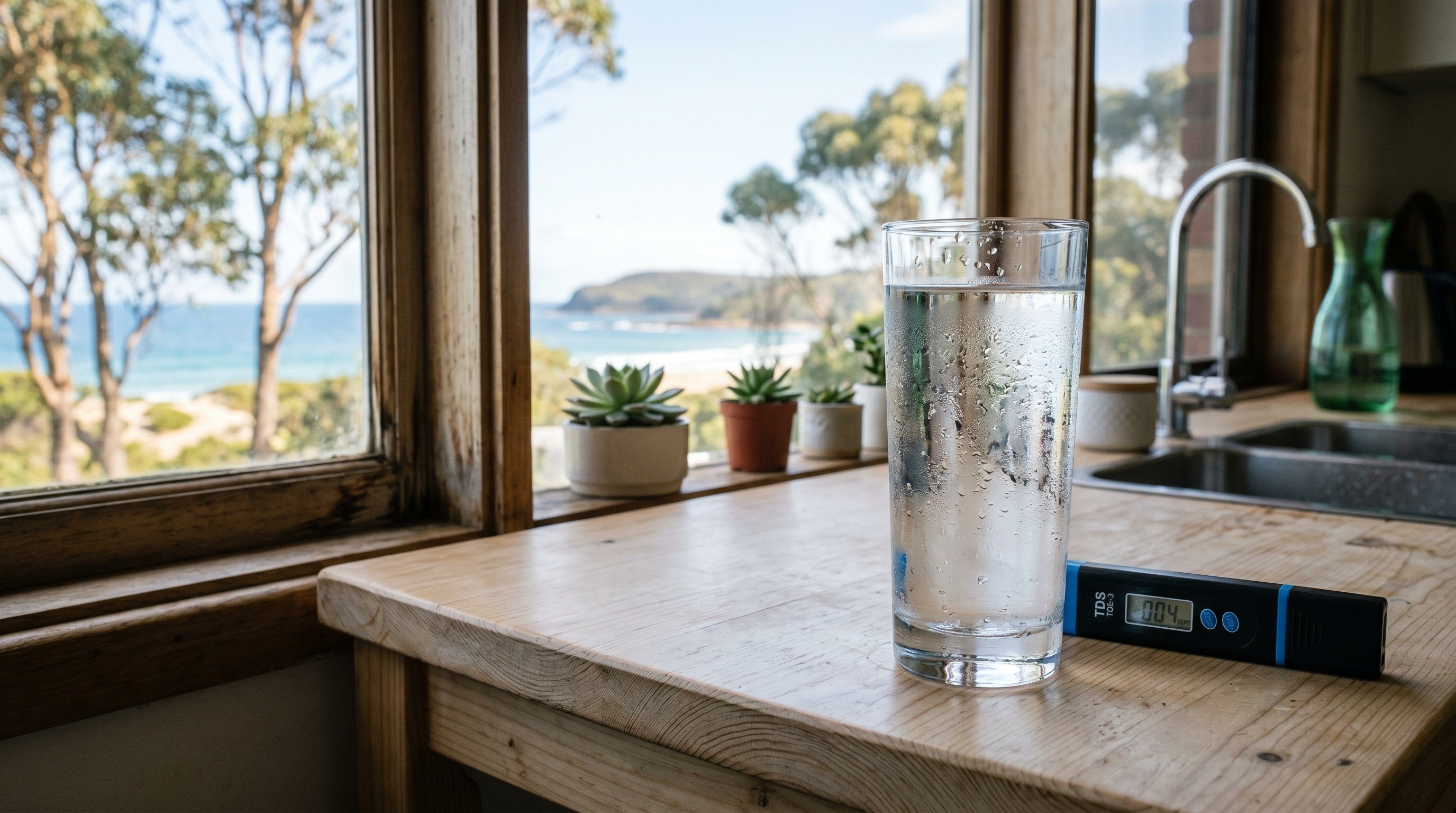
For general water quality — TDS, pH, hardness — a basic TDS meter gives you a useful data point in about ten seconds. Wagga Wagga town water typically runs at a TDS of 100–180 mg/L, which is moderate by Australian standards and well within the ADWG aesthetic guideline of 500 mg/L. That reading will not tell you anything about PFAS, but it confirms whether an RO system is reducing dissolved solids as expected after installation. I use a TDS-3 meter for post-filter verification on every system I assess.
Last reviewed: June 2026 — Clean and Native
Our Verdict
Wagga Wagga town water has not recorded PFAS at levels above ADWG limits in publicly reported testing. But the 2018 bore contamination data, the 15-year gap in national monitoring, IARC’s 2025 carcinogenicity classification of PFOA, and Australia’s ADWG limits sitting 17x higher than the US EPA’s enforceable standard all point in the same direction: waiting for regulatory reassurance is a reasonable position only if you are comfortable with the level of uncertainty that comes with it.
For bore-water or tank-water users near RAAF Base Wagga, the risk is not precautionary — it is confirmed. Act now. For town-water users, the precautionary argument for an RO filter is strong and the cost-per-litre case is clear. The AquaTru Classic is the right answer for renters and anyone who wants immediate, certified protection without plumbing. The PWS EcoHero 5-Stage is the right answer for homeowners who want permanent, whole-kitchen coverage.
Frequently Asked Questions
Wagga Wagga’s reticulated town water from the Riverina Water County Council has not recorded PFAS concentrations above ADWG guideline values in publicly reported testing. However, the national PFAS monitoring programme has a 15-year data gap and Australia’s guideline limits are 17 times higher than the US EPA’s enforceable standard. The official position is “safe” — but that assessment uses an outdated risk threshold and incomplete monitoring data.
Environmental monitoring of groundwater bores near RAAF Base Wagga Wagga in 2018 detected combined PFOS and PFHxS at 300 ng/L. The ADWG health guidance value for those compounds combined is 70 ng/L. The contamination is attributed to aqueous film-forming foam (AFFF) used at the base for firefighting training from the 1970s through to 2004.
No. Boiling concentrates PFAS — it does not destroy or remove them. The water volume reduces through evaporation while the PFAS compounds remain. Do not use boiling as a PFAS treatment method.
No. Standard granular activated carbon (GAC) jugs including Brita do not hold NSF/ANSI P473 certification and do not remove PFAS reliably. In Wagga Wagga, which uses chloramine disinfection, a standard carbon jug is also ineffective at improving taste — chloramine requires catalytic carbon or RO for removal, not standard GAC.
Reverse osmosis systems certified to NSF/ANSI P473 are the only residential technology with independently verified PFAS removal. Look for that specific certification on the product. The AquaTru Classic (countertop, no plumbing) and the PWS EcoHero 5-Stage (under-sink, WaterMark AS3497) are both verified options available in Australia.
Not reliably. PFAS detection requires laboratory analysis at parts-per-trillion concentrations using EPA Method 533 or 537.1 — home test strips cannot measure this. Use a NATA-accredited laboratory in NSW that accepts mailed water samples. A 40-compound PFAS panel typically costs $150–$350. If your property is in the RAAF Base investigation zone, contact NSW DCCEEW to request your bore’s sampling history.
Yes. NSW fluoridates its water supplies, and Wagga Wagga town water is fluoridated at approximately 0.6–1.0 mg/L, within the ADWG target range of 0.6–1.1 mg/L. Fluoride is not removed by carbon filters, boiling, or standard softeners. Only reverse osmosis (90–97% removal) or activated alumina (80–95%) removes fluoride from drinking water.
Wagga Wagga’s town water supply uses chloramine disinfection. This means standard GAC filters and basic carbon jugs are largely ineffective at removing the disinfectant for taste or odour improvement. Chloramine removal requires catalytic carbon, a compressed carbon block, or reverse osmosis.
The confirmed contamination in the Wagga Wagga area is in groundwater bores near RAAF Base Wagga. Town water from the Murrumbidgee is a separate supply with separate treatment. However, bore-water users, rainwater tank users, and anyone in the groundwater investigation zone face a directly confirmed risk. Town-water users face an unquantified risk given the gaps in national monitoring and outdated ADWG limits.
Get the Australian Home Environment Checklist
30 checks across water, air and EMF. Most of them free. Ranked by impact.
No spam. Unsubscribe any time.

Former Royal Australian Navy Clearance Diver and TAG-E counter-terrorism operator. Founded Clean and Native to apply the same rigorous thinking to the home environment.
Full biography →