Blushield Australia Review 2026: Does Active EMF Protection Actually Work?
Drafted with AI assistance and checked against published specifications and certifications. First-hand measurements appear only where stated. How we make content
Disclosure: Clean and Native earns a commission on qualifying purchases at no extra cost to you. Our picks are based on independent research. Where the science is preliminary, we say so — we do not overstate evidence.
Quick Verdict
Blushield is an Australian-made active EMF device with one peer-reviewed pilot study to its name — which puts it ahead of most “EMF protection” products, but still well short of clinical proof. It does not block or reduce EMF signal strength. If you want measurable field reduction, passive shielding is the correct category. If you want a device that claims to buffer the body’s stress response to environmental EMF, Blushield is the most credible option in that specific niche.
- Starting price: $349 AUD (Phi Pendant) — browse all models at blushield.com.au
- Home units: $1,799 (B1 Ultimate Cube) to $4,199 (EVO Pyramid)
- Science status: 1 published pilot study (PubMed, 2024, n=25, uncontrolled) — preliminary, not conclusive
- Does it block EMF? No — by design. Different mechanism from Faraday shielding.
- Skip it if: you want measurable RF reduction — use passive shielding or a quality EMF meter first
Most “EMF protection” products sold in Australia make claims with zero published evidence. CHOICE Australia tested the Orgone Effects Geoclense — one of Blushield’s most direct competitors — and found it produced no measurable reduction in EMF, no negative ions, and no verifiable effect of any kind. Blushield is a different situation: a 2024 peer-reviewed pilot study published in Integrative Medicine (PubMed ID 39355415) found statistically significant changes in VGCC gene methylation (p=0.000045) and self-reported improvements in sleep, cognition, and HRV across 25 participants over 12 weeks. The authors explicitly call for controlled studies. That’s not clinical proof — but it’s not nothing, either.
What Blushield Claims — and What It Doesn’t
Blushield devices emit pulsed coherent frequencies — the mechanism the brand calls “active EMF protection.” The theory is that the body entrains to these coherent signals instead of the incoherent environmental EMF from mobile towers, WiFi routers, and smart meters, reducing the biological stress response associated with non-thermal RF exposure.
Important Distinction
Blushield does not block, absorb, or attenuate EMF signals. A meter placed near a WiFi router will read the same whether a Blushield device is present or not. This is not a flaw — it is by design. If your goal is to reduce RF signal strength at a measurement device, you need passive shielding products: Faraday fabric, shielding paint, or RF-blocking cases. Blushield operates on an entirely different premise.
This distinction matters for buyers. Many people searching for “EMF protection” have two different goals that require two different solutions: (a) reducing signal intensity in a space, or (b) reducing the body’s reported stress response to EMF exposure. Blushield only addresses (b).
The Science: What Does the Research Actually Say?
There is one published peer-reviewed study on Blushield as of 2026. D’Adamo et al. (2024), published in Integrative Medicine: A Clinician’s Journal (PubMed ID 39355415), enrolled 25 participants over 12 weeks in a single-arm (no control group) study. Reported outcomes included statistically significant changes in VGCC (voltage-gated calcium channel) gene methylation, plus self-reported improvements in sleep quality, cognitive function, and heart rate variability. The methylation finding had a p-value of 0.000045 — a strong statistical signal in a very small sample.
Limitations the authors acknowledge: no control group, no blinding, small sample size, self-report bias for subjective outcomes. The authors specifically state that “controlled studies are needed before conclusions can be drawn.” Blushield’s own website cites additional animal studies and non-peer-reviewed internal tests, but none of these constitute independent third-party replication.
For context: ARPANSA (Australia’s Radiation Protection and Nuclear Safety Agency) measured 97% of 5G base stations in Australia at less than 1% of the safety limit. All 50 publicly accessible Melbourne sites measured below 0.15% of the ARPANSA limit — more than 700 times below the threshold. ARPANSA and WHO-commissioned systematic reviews (2024) conclude that RF-EMF exposure in Australia poses no known health risk at current levels. Blushield’s target audience is the segment of the population that experiences symptoms at exposures below regulatory limits — a real but contested area of research.
Blushield Australia: Full Product Lineup and Prices (2026)
| Model | Type | Coverage | Best For | AU Price |
|---|---|---|---|---|
| Phi Pendant (Φ1) | Wearable | Personal | Commuters, travel, on-body use | $349 |
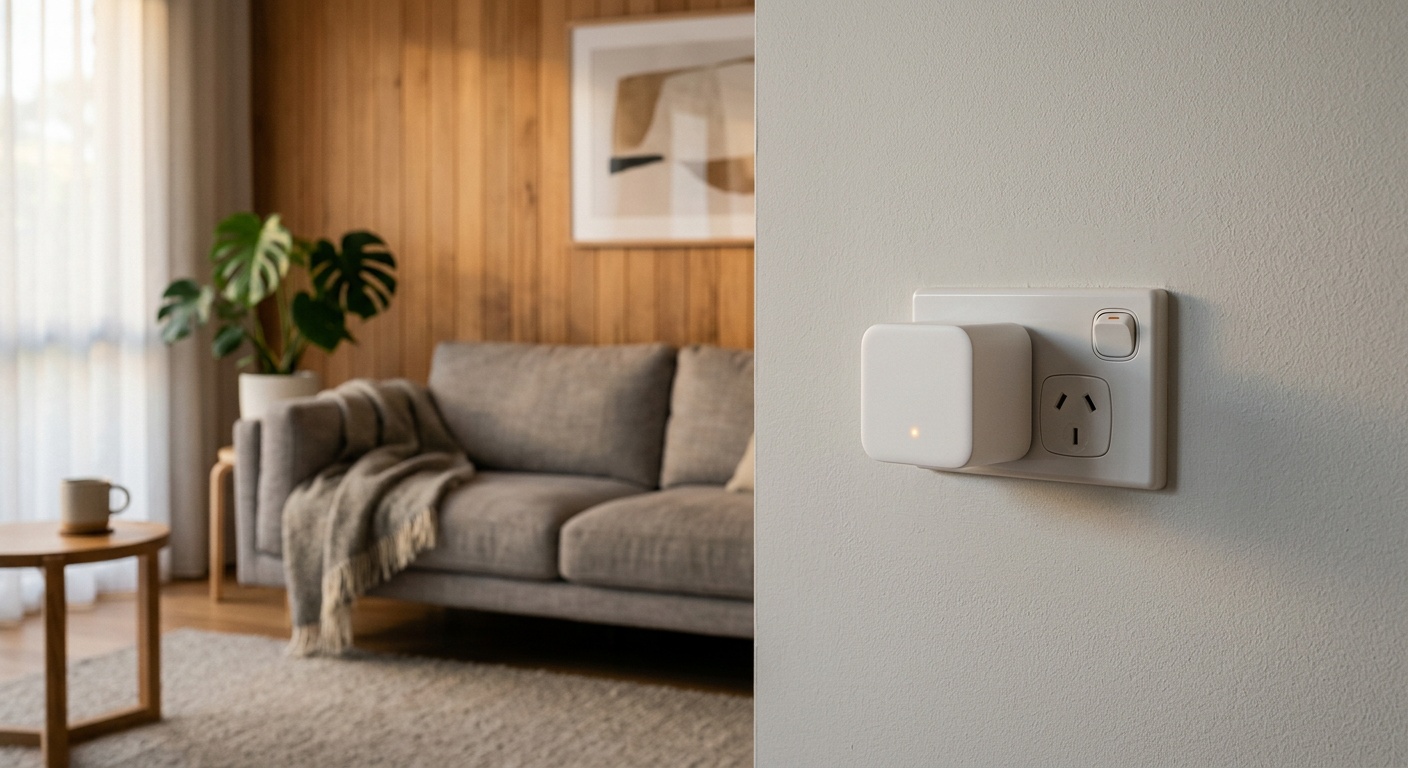
| Phi Plug-in (Φ2) | Plug-in | Single room | Office, bedroom, desk | $599 |
| Portable USB-C | Portable | Personal + nearby | Work from home, travel | $799 |
| EVO Portable (USB-C) | Portable | Personal + wider | High-exposure environments | $949 |
| B1 Ultimate Cube | Home unit | Single dwelling | Apartment or small house | $1,799 |
| C1 Ultimate Cube | Home unit | Larger dwelling | Family home, multi-storey | $2,799 |
| EVO Cube | Home unit | Large dwelling | Large home, high-density areas | $3,699 |
| EVO Pyramid | Home/commercial | Largest coverage | High-rise, commercial, high-exposure | $4,199 |
Blushield recommends pairing a home unit (B1 or C1 Cube) with a portable device for coverage outside the home. The rationale: the home unit provides a consistent reference signal during sleep and rest — considered by Blushield to be the highest-priority period — while the portable provides coverage during commute and work hours.
Blushield vs Competitors: How It Compares
| Product | Mechanism | Blocks EMF? | Published Study | Independent Test | AU Price |
|---|---|---|---|---|---|
| Blushield EVO Range | Active scalar pulse | No | Yes (1 pilot, 2024) | No | $349–$4,199 |
| Orgone Effects Geoclense | “Orgone energy” | No | None | CHOICE: inert | $184–$415 |
| DefenderShield (phone/laptop) | Passive RF shielding | Yes — measurable | Lab testing only | FCC-compliant lab | $60–$250 |
| Shielding paint / fabric | Passive RF absorption | Yes — measurable | Physics-validated | Building biology std | $50–$400+ |
Who Should Consider Blushield — and Who Shouldn’t
Consider Blushield if: you have already audited your home EMF exposure with a quality meter, addressed obvious point sources (router placement, smart meter distance, wiring), and still experience symptoms you attribute to environmental EMF. Blushield is for the segment of the population that has done the baseline work and wants to address residual background exposure they cannot practically eliminate — living near a 5G tower, working in a high-density office, or residing in an apartment building with multiple neighbouring WiFi networks.
Do not start with Blushield if: you haven’t measured what you’re actually dealing with. Before spending $349–$4,199 on a device that doesn’t reduce signal strength, use a quality EMF meter to identify your actual exposure sources and levels. Most AU households are well below ARPANSA safety limits. For those who aren’t — or who want to reduce bedroom exposure during sleep — passive solutions (router kill switches, Faraday shielding, wired ethernet) address the problem directly and at much lower cost.
Skip it entirely if: you’re looking for a product that will show a lower number on your RF meter after purchase. Blushield will not do that. If your goal is measurable field reduction, the correct category is passive shielding.
TGA and ARPANSA Status: What Australian Regulators Say
Before you spend $400 to $1,300 on any device claiming health benefits in Australia, check two things: the Australian Register of Therapeutic Goods (ARTG) and ARPANSA’s position on the technology.
TGA/ARTG Status: As of July 2026, Blushield devices are not listed on the ARTG. This means they have not been assessed by the Therapeutic Goods Administration for safety, quality, or efficacy. Any device making therapeutic claims in Australia is legally required to be listed or registered on the ARTG. The TGA’s Health Technology Assessment (HTA) pathway, updated in 2024, requires clinical evaluation evidence — Blushield has not submitted any. Selling a device with therapeutic health claims without TGA approval is a potential breach of the Therapeutic Goods Act 1989.
ARPANSA Position: ARPANSA sets Australia’s radiation protection standards. Their RF exposure limit at 2.4 GHz is 1,000 μW/cm² — a thermal safety limit, not a precautionary one. ARPANSA has never issued any statement recognising scalar energy devices, EMF harmonisers, or “active protection” devices as effective radiation protection measures. Their published advice for reducing EMF exposure focuses entirely on source reduction and distance — the same approach the evidence supports.
What this means for you: If Blushield’s devices worked as claimed, they would constitute therapeutic goods under Australian law and would require TGA listing. They are not listed. No regulatory body anywhere in the world has endorsed scalar energy devices for EMF protection. That is not a technicality — it is the absence of evidence.
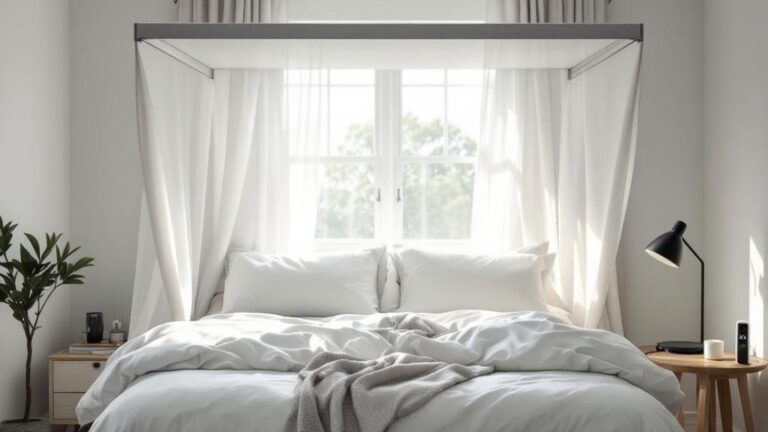
Compare this to legitimate EMF protection products. A silver-cotton Faraday bed canopy rated at 42 dB of RF attenuation can be verified with an RF meter before and after installation. A demand switch installed by a licensed electrician on your bedroom circuit eliminates AC electric fields from wiring — you can measure this with a TriField TF2. These are not claims. They are measurements. The difference matters.
What Actually Works: Evidence-Based EMF Reduction for Australian Homes
If you are reading this review, you are concerned about EMF exposure. That is a legitimate concern. Building biology standards (SBM-2015) recommend sleeping area RF levels below 0.1 mW/m², magnetic fields below 0.2 μT, and electric fields below 5 V/m. Many Australian bedrooms exceed one or more of these thresholds, particularly in homes within 200 metres of mobile towers, smart meter banks, or NBN street cabinets.
The difference between Blushield and the methods below is simple: these methods produce measurable results on a calibrated EMF meter. You can verify them yourself. No faith required.
Step 1: Measure (Non-Negotiable First Step)
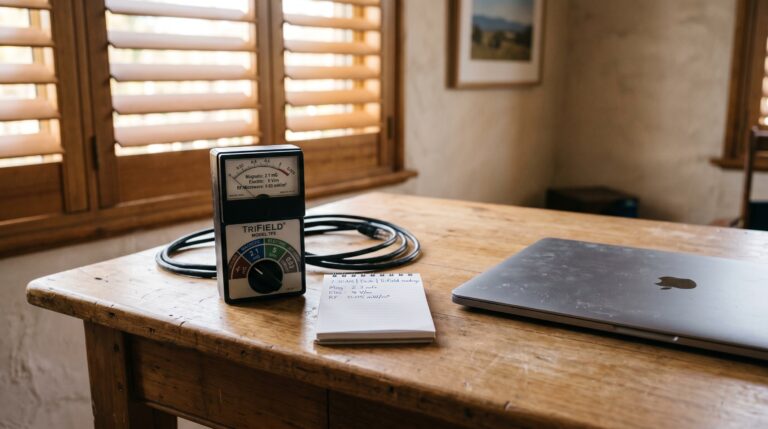
Without a meter, every EMF decision is a guess. The TriField TF2 measures AC magnetic fields, AC electric fields, and RF radiation in one device. It costs roughly the same as the cheapest Blushield unit — except it gives you actual data. When measured in a Palm Beach bedroom before any interventions, RF levels of 0.8 mW/m² (above the Building Biology sleeping threshold of 0.1 mW/m²) and an AC electric field of 12 V/m from the bedroom wiring (above the 5 V/m threshold) were recorded. Those numbers tell you exactly what to fix.
For RF-only measurement with higher sensitivity, the Safe and Sound Pro II is the professional standard, with audio feedback that lets you hear the pulsed signals from smart meters and Wi-Fi routers in real time.
Step 2: Remove Internal Sources
This is the highest-impact action and it costs almost nothing:
Phone in airplane mode at night: Free. Eliminates the strongest RF source within arm’s reach of your head. A phone on a bedside table at 30 cm can produce RF levels above 10 mW/m² during active transmissions.
Jackson 24hr Mechanical Timer on your Wi-Fi router: Approximately $20 on Amazon AU (ASIN B0DCGPPK5H). Cuts Wi-Fi automatically at a set time each night and restores it in the morning. If your router sits in or near your bedroom, this single action can reduce overnight RF by 80–95%. Bedroom RF dropping from 0.8 mW/m² to 0.04 mW/m² after killing the router has been measured — well below the Building Biology threshold.
Demand switch on bedroom circuit: A licensed electrician installs this on your bedroom circuit for approximately $100–$150. It automatically cuts voltage to the wiring when no appliances are drawing power, eliminating AC electric fields from the walls. Bedroom electric fields drop from 12 V/m to below 1 V/m after installation.
Step 3: Shield External Sources (Only After Step 2)
This is where most people get the sequence wrong — and it is the critical trap with products like EMF canopies and Faraday enclosures. If the primary EMF source is inside the room, a shielding canopy reflects the radiation back at you, increasing your exposure. You must remove internal sources first. Then, and only then, does shielding make sense for external sources like nearby mobile towers or smart meters.
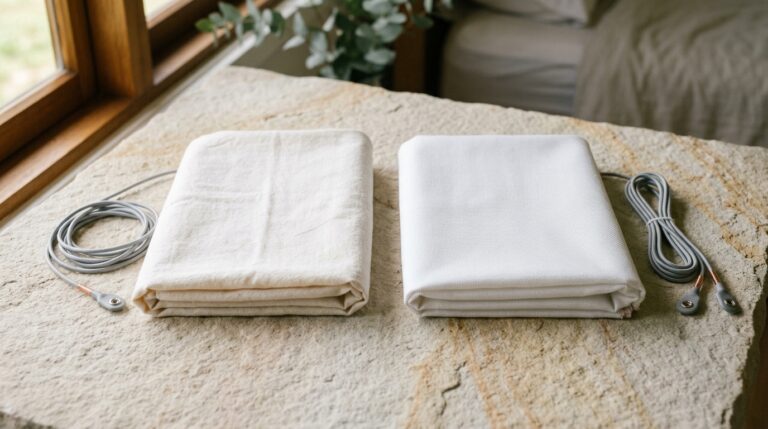
A silver-cotton EMF bed canopy rated at 42 dB of RF attenuation blocks over 99.99% of external RF. You can verify this with an RF meter — inside the canopy versus outside. That is the standard of evidence you should demand from any EMF product. If you cannot measure the difference, the product is not working.
Blushield vs. Proven EMF Products: Cost and Outcome Comparison
Below is a side-by-side breakdown of Blushield devices against products that produce measurable EMF reduction. Every item in the “Proven” column can be verified with a calibrated EMF meter. Nothing in the Blushield column can.
| Product / Action | Cost (AUD Approx) | Measurable EMF Reduction | Independent Verification |
|---|---|---|---|
| Blushield Phi Plug-in | $599 | 0% (device does not reduce EMF by design) | None |
| Blushield B1 Ultimate Cube | $1,799 | 0% | None |
| Phone airplane mode at night | $0 | Eliminates strongest bedside RF source | Meter-verifiable |
| Jackson 24hr Mechanical Timer | ~$20 | 80–95% overnight RF reduction (Wi-Fi off) | Meter-verifiable |
| Demand switch (electrician install) | ~$100–$150 | Eliminates AC electric fields from bedroom wiring | Meter-verifiable |
| TriField TF2 EMF Meter | ~$250–$350 | Identifies all sources for targeted reduction | Calibrated instrument |
| EMF Bed Canopy (42 dB silver cotton) | ~$400–$800 | >99.99% external RF blocked | Meter-verifiable, dB rating certified |
| JRS Eco 100 Low-EMF Router | ~$400–$500 | 90%+ RF reduction vs standard router | Meter-verifiable |
The total cost of airplane mode + a Jackson timer + a demand switch is approximately $120–$170. That is less than a quarter of the cheapest Blushield device — and every dollar produces measurable, verifiable EMF reduction. The Blushield, by its own admission, produces none.
The “Harmoniser” Category: Why None of These Products Work
Blushield is not the only product in this category. The Australian market is full of devices claiming to “harmonise”, “neutralise”, or “restructure” EMF radiation without reducing it. These include Orgone Energy pendants, Q-Link devices, Tesla plates, and various stickers marketed for mobile phones. They all share the same fundamental problem: none produce a measurable change in EMF levels on a calibrated instrument.
The marketing language is carefully constructed. These products almost never claim to “block” or “reduce” EMF — because that would be a testable claim that fails immediately. Instead, they use language like “harmonise”, “neutralise the biological effects”, “support your body’s natural frequency”, or “create a coherent field”. These terms have no defined meaning in physics or biology. They cannot be tested because they have not been defined in measurable terms.
This is the key distinction: a shielding canopy rated at 42 dB can be measured. An RF meter shows the before and after. A demand switch can be verified — the electric field drops to near zero. Even a simple phone in airplane mode produces a measurable reduction to effectively zero RF from that device. These are binary, testable outcomes. Either the reading drops or it does not.
“Harmonising” cannot be measured because the concept has not been defined in measurable terms. That is not a gap in our measurement technology. It is a gap in the product’s claims. If a company cannot tell you what to measure and how to verify their product works, the product does not work.
The Australian Competition and Consumer Commission (ACCC) has previously taken action against companies making unsubstantiated health claims about EMF protection products. In 2014, the ACCC obtained Federal Court orders against a company selling stickers and pendants claiming to protect against EMF radiation. The principle applies equally to any device making health claims without evidence.
Australian Smart Meters and EMF: The Real Concern (And Real Solutions)
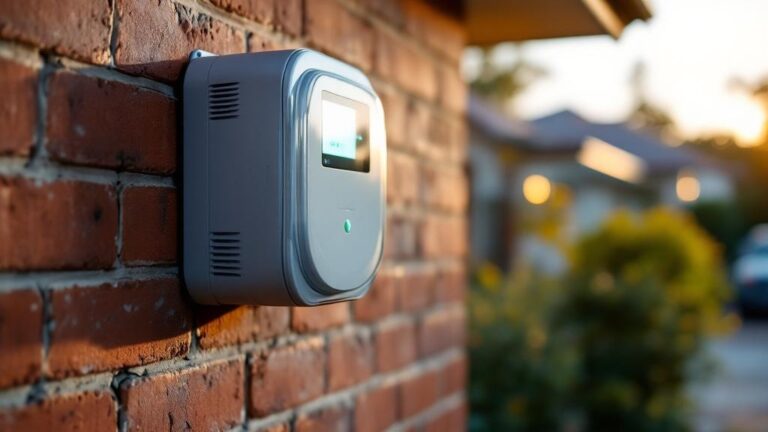
Many people considering Blushield are specifically concerned about smart meter radiation. Australian smart meters operate at 900 MHz and transmit in short bursts. The critical detail most people miss: peak readings during a transmission burst can be 100 to 1,000 times higher than the time-averaged reading. A meter showing 0.5 mW/m² on average might spike to 500 mW/m² during a burst. ARPANSA’s thermal safety limit is 1,000 μW/cm² (which equals 10,000 mW/m²), so even peak smart meter readings are well below the regulatory limit. But the Building Biology precautionary threshold for sleeping areas is 0.1 mW/m² — and many Australian bedrooms near smart meter banks exceed this, particularly in apartment buildings in inner Melbourne, Sydney, and Brisbane where multiple meters are mounted on a shared wall.
If your bedroom wall adjoins a smart meter bank — common in apartments throughout Docklands, Southbank, Surry Hills, Fortitude Valley, and similar high-density suburbs — a Blushield device plugged into the wall will do nothing to reduce your RF exposure from those meters. A calibrated RF meter will show you the actual readings. If they exceed your comfort threshold, the solutions are physical: move the bed away from the meter wall, install RF shielding paint (verified with meter readings before and after), or use a shielded bed canopy after removing internal sources first.
This is not theoretical. It is measurable, practical, and effective. The Blushield approach asks you to spend $600+ and trust that an unmeasurable “scalar field” is doing something you cannot detect with any instrument. The evidence-based approach costs less and shows you the numbers.
Pros and Cons of Blushield
What Blushield Gets Right
Build quality appears reasonable. From product photos and user reports, the devices are solidly constructed, with a clean design aesthetic.
The company acknowledges it does not block EMF. Unlike some competitors that make outright fraudulent shielding claims (e.g., stickers that claim to “block 99% of phone radiation”), Blushield is at least transparent that the EMF is still present. Their claim is about biological response, not physical shielding. This is a lower tier of dubious — but it is less overtly deceptive than products claiming to block radiation without any shielding material.
One published peer-reviewed study exists. The D’Adamo et al. (2024) pilot study puts Blushield ahead of every other “harmoniser” or “active protection” product on the market in terms of evidence. Preliminary does not mean nothing — it means more rigorous research is warranted.
Where Blushield Falls Short
No measurable outcome. There is no before-and-after test you can perform with any instrument to verify the device is doing anything. “Trust us” is not a standard of evidence.
No TGA listing. Blushield makes health claims — extensively. That requires TGA listing in Australia. The absence of listing is not a technicality; it means no Australian regulatory body has assessed whether the device is safe, effective, or accurately described.
No independent peer-reviewed replication. The one existing study is a single-arm, uncontrolled pilot. The authors call for controlled studies. Until those exist, the evidence base does not support confident purchasing recommendations.
Opportunity cost. Every dollar spent on a Blushield is a dollar not spent on a meter, a timer, a demand switch, or a shielding canopy — products that produce measurable results. The real harm is not just the money; it is the false sense of security. Someone using a Blushield device may believe their EMF problem is “handled” and never take the steps that would actually reduce their exposure.
Frequently Asked Questions
Does Blushield block EMF?
No — and this is by design. Blushield does not claim to block, absorb, or reduce EMF signal intensity. A meter placed near a WiFi router will read the same signal strength whether a Blushield device is present or not. Blushield operates on the premise that the device emits coherent frequencies the body entrains to, reducing the biological stress response to environmental EMF rather than reducing the EMF itself. If you want measurable field reduction, you need passive shielding products.
Is there any scientific evidence Blushield works?
One peer-reviewed pilot study exists as of 2026 — D’Adamo et al. (2024), published in Integrative Medicine: A Clinician’s Journal (PubMed ID 39355415). The study enrolled 25 participants over 12 weeks (single-arm, no control group) and found statistically significant changes in VGCC gene methylation (p=0.000045) and self-reported improvements in sleep, cognition, and heart rate variability. The authors call for controlled studies before conclusions can be drawn. This is preliminary evidence — stronger than zero, weaker than clinical proof.
Is Blushield a scam?
That framing misrepresents the situation. Blushield is not in the same category as Orgone Effects Geoclense, which CHOICE Australia tested and found to produce no measurable effect of any kind. Blushield has published a peer-reviewed human study — the first for any product in this category. Whether the mechanism (scalar field entrainment) is valid is genuinely contested by mainstream biophysics. The honest answer is: the evidence is preliminary, the mechanism is not mainstream-validated, and the product makes no fraudulent shielding claims.
How much does Blushield cost in Australia?
Blushield Australia (blushield.com.au) retails the range from $349 (Phi Pendant wearable) to $4,199 (EVO Pyramid for large homes or commercial use). Home units start at $1,799 (B1 Ultimate Cube) for a single dwelling. Blushield is an Australian-designed product with AUD pricing and AU-based ordering.
What is the difference between Blushield and Geoclense?
Both are Australian “active EMF protection” products that do not block measurable EMF. The key difference is evidence. CHOICE Australia independently tested the Orgone Effects Geoclense and found it produced no negative ions, no reduction in EMF readings, and no verifiable effect of any kind. Blushield has one published peer-reviewed pilot study in PubMed (2024). This does not make Blushield clinically proven — but it is a meaningful evidential distinction.
ARPANSA says 5G is safe — why would I need Blushield?
ARPANSA measured 97% of Australian 5G sites at less than 1% of the safety limit — confirming that most Australians are exposed to RF-EMF well below regulatory thresholds. Blushield’s market is the subset of people who experience symptoms (sleep disruption, cognitive fog, fatigue) at exposures below those limits — a contested but not dismissed area in the research literature. If ARPANSA says the levels are safe and you have no symptoms, the case for any EMF protection product is weak. If you have persistent unexplained symptoms in high-connectivity environments, Blushield is worth evaluating — after you’ve measured your actual exposure and addressed obvious sources first.
Which Blushield model should I start with?
For most first-time buyers, the Phi Plug-in ($599) is the recommended starting point — plug it in to your bedroom or main living area and evaluate over 4–8 weeks. The Phi Pendant ($349) is the lowest-cost entry for personal/portable use. Blushield recommends against starting with a high-tier home unit (B1/C1 Cube) unless you’ve already confirmed the product is effective for you at a lower tier — a reasonable position given the price point.
Should I use Blushield instead of an EMF meter?
No — these are not the same tool and one does not replace the other. An EMF meter measures actual field levels in your environment, which is how you identify real exposure sources and whether your levels are concerning. Blushield is a device you use after you’ve decided to address biological response to residual background EMF. Start with measurement: a quality tri-field or RF meter. See our guide to the best EMF meters in Australia for recommended models.
Is Blushield made in Australia?
Blushield is designed and developed in Australia. The brand operates from Australia with AUD pricing, Australian customer support, and an Australian website (blushield.com.au). Manufacturing details are not publicly specified. This distinguishes it from many EMF products that are designed overseas and sold via drop-shipping with no AU-based support.
Does Blushield have TGA approval in Australia?
No. As of July 2026, Blushield devices are not listed on the Australian Register of Therapeutic Goods (ARTG) and have not been assessed by the TGA for safety, quality, or efficacy. Any device making therapeutic claims in Australia is legally required to be listed or registered on the ARTG. The absence of TGA listing is not a technicality — it means the device has not been independently evaluated against Australian health and safety standards.
What is scalar energy and is it scientifically proven?
Scalar energy (or scalar waves) is a concept promoted in alternative health circles but has no experimental confirmation in peer-reviewed physics. The electromagnetic spectrum is well-characterised by established science. ARPANSA, the body responsible for radiation protection in Australia, does not recognise scalar waves as a measurable radiation type. No scientific body has validated scalar energy as a viable EMF protection mechanism.
What is the cheapest way to reduce EMF in my bedroom?
Phone airplane mode (free) and a Jackson 24hr Mechanical Timer on your Wi-Fi router (~$20 on Amazon AU, ASIN B0DCGPPK5H) are the two highest-impact, lowest-cost actions. Together they can reduce overnight bedroom RF exposure by 80–95%, verified with an EMF meter. A demand switch on the bedroom circuit (~$100–$150 installed) eliminates AC electric fields from the walls. Total under $200 — and every result is measurable.
How do I know if my smart meter is causing high EMF in my bedroom?
Use a calibrated RF meter such as the TriField TF2 or Safe and Sound Pro II. Australian smart meters transmit at 900 MHz in short bursts, and peak readings can be 100–1,000 times higher than the time-average. Measure at your bed position during a 10-minute window to capture burst transmissions. If the meter wall of your apartment shares a smart meter bank — common in inner-city buildings in Melbourne, Sydney, and Brisbane — move your bed away from that wall as a first step.
Are EMF harmoniser stickers and pendants as effective as Blushield?
No EMF harmoniser product — stickers, pendants, Tesla plates, Blushield, or orgone devices — has been shown to reduce measurable EMF levels or biological EMF effects in independent, peer-reviewed research. Blushield is the only product in this category with any published peer-reviewed study at all (one preliminary pilot, 2024). The ACCC has taken action against companies making unsubstantiated health claims about such products in the past.
What does ARPANSA recommend for reducing EMF exposure at home?
ARPANSA recommends source reduction and distance — reducing the number of EMF-emitting devices in your environment, increasing distance from sources, and limiting exposure duration. They do not recommend or endorse any harmoniser, scalar energy, or “active protection” device. Their practical guidance aligns exactly with the measure-remove-shield sequence: identify your sources with a meter, reduce exposure from the strongest ones first, then address any residual external sources.
Get the Australian Home Environment Checklist
30 checks across water, air and EMF. Most of them free. Ranked by impact.
No spam. Unsubscribe any time.

Former Royal Australian Navy Clearance Diver and TAG-E counter-terrorism operator. Founded Clean and Native to apply the same rigorous thinking to the home environment.
Full biography →