Perth Tap Water Australia 2026: Is It Safe? TDS, Hardness, PFAS & Best Filters
Drafted with AI assistance and checked against published specifications and certifications. First-hand measurements appear only where stated. How we make content
Disclosure: Clean and Native earns a commission on qualifying purchases at no extra cost to you. Our picks are based on independent research — we never recommend products we wouldn’t use ourselves.
Related: Best reverse osmosis systems Australia 2026 · Best PFAS water filters Australia
Quick Verdict — Is Perth Tap Water Safe to Drink?
Perth tap water is safe to drink under Australian Drinking Water Guidelines (ADWG) — Water Corporation and the Department of Health confirm it meets all microbiological and chemical standards. But “safe” under ADWG and “ideal drinking water” are different measures. Perth’s water is notably high in TDS (576 mg/L, near the 600 mg/L guideline limit), very hard (204 mg/L vs Sydney’s ~50 mg/L), and has confirmed PFAS detections in both surface and groundwater sources. PFAS are not yet regulated under ADWG — detection does not equal a guideline breach. If you want to reduce TDS, hardness, and PFAS as a precaution, a reverse osmosis system is the only residential technology that meaningfully addresses all three.
- Safe by regulation: Yes — meets all ADWG microbiological and chemical standards
- Ideal taste: No — 576 mg/L TDS and high chlorine produce noticeable taste
- PFAS status: Detected in some source water — not regulated under ADWG, precautionary reduction reasonable
- Best filter type: Reverse osmosis (RO) — the only technology that reduces TDS, hardness, and PFAS simultaneously
- Chlorine type: Free chlorine (NOT chloramine) — simpler to remove with carbon + RO
Perth sits on one of the driest inhabited regions in the developed world. Unlike the east coast capitals that draw primarily from mountain catchments with naturally soft, low-TDS water, Perth’s Water Corporation sources from a mix of groundwater aquifers, surface reservoirs, and desalination — each contributing to a final tap water profile that is substantially harder and higher in dissolved minerals than any other major Australian capital. This guide covers what’s actually in Perth’s water, how it compares to ADWG limits, and which filter approach works for Perth’s specific profile.
Perth Tap Water — Key Quality Parameters
TDS (Total Dissolved Solids) — 576 mg/L: The ADWG aesthetic guideline is 600 mg/L — Perth sits within 4% of that threshold. TDS at this level is not a health concern under current guidelines, but noticeably affects taste. Most Australians prefer drinking water below 300 mg/L. Perth’s high TDS comes from its groundwater sources, which pick up minerals from the Gnangara and Jandakot mounds — particularly calcium, magnesium, sodium, and chloride.
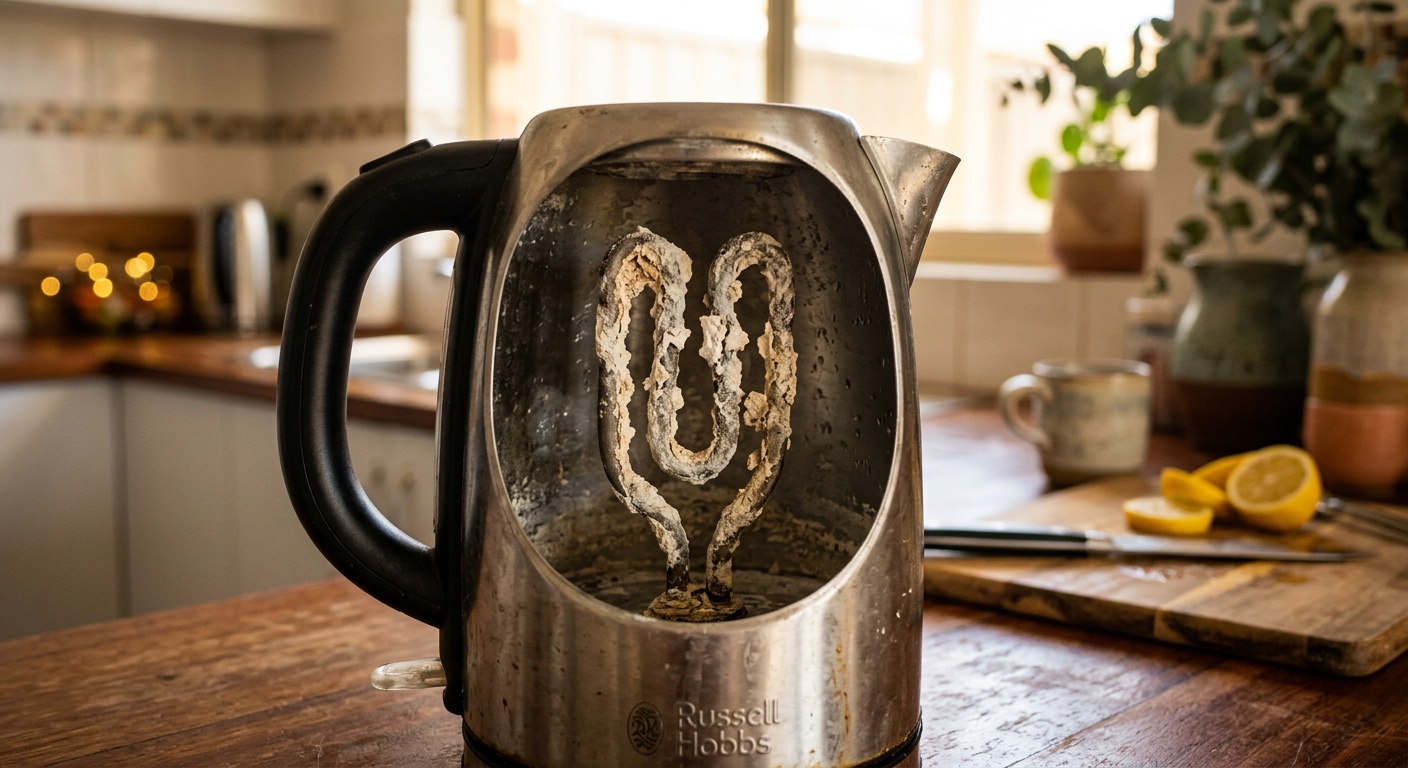
Water Hardness — 204 mg/L as CaCO₃: Perth water is classified as “very hard” (>180 mg/L). Sydney’s water is ~50 mg/L and Melbourne’s is ~10 mg/L — Perth is 4–20× harder than the east coast capitals. High hardness causes limescale buildup in appliances (kettles, coffee machines, dishwashers), affects soap lathering, and can influence taste. It is not a health concern for most people, and may provide some cardiovascular benefit via calcium and magnesium intake. RO is the most effective residential treatment for hardness.
Chlorination — Free Chlorine (not chloramine): This is an important distinction for filter selection. Perth uses free chlorine disinfection, unlike Sydney, Melbourne, and Brisbane which use chloramine (a more stable but harder-to-remove compound). Free chlorine is easier to remove — a quality activated carbon block filter eliminates it effectively. This means a basic carbon pitcher filter handles chlorine taste in Perth, even if it won’t address TDS or hardness.
PFAS in Perth Water — What We Know
The WA Department of Health and Water Corporation have confirmed PFAS detections in some Perth-area water sources — 9 compounds detected in surface water and 13 in groundwater at various monitoring sites. PFAS are not currently regulated under Australian Drinking Water Guidelines (ADWG). Safe Drinking Water AU and the National Health and Medical Research Council (NHMRC) are reviewing guidance. Reverse osmosis (RO) systems remove PFAS compounds by approximately 90–99% depending on membrane quality — the only residential treatment with a reliable PFAS reduction claim.
How Perth Water Compares to Other AU Capitals
| City | TDS (mg/L) | Hardness (mg/L) | Chlorination | PFAS Detected |
|---|---|---|---|---|
| Perth | 576 | 204 | Free chlorine | Yes (surface + GW) |
| Sydney | ~80 | ~50 | Chloramine | Yes (PFAS detected) |
| Melbourne | ~30 | ~10 | Chloramine | Yes (some zones) |
| Brisbane | ~120 | ~65 | Chloramine | Yes |
| Adelaide | ~320 | ~120 | Chloramine | Yes |
| Hobart | ~40 | ~15 | Chlorine | Minimal |
Perth’s water profile is in a category of its own among Australian capital cities. The next closest is Adelaide at ~320 mg/L TDS — still significantly below Perth. East coast capitals like Melbourne (~30 mg/L TDS) and Sydney (~80 mg/L) draw from high-altitude catchments with naturally soft water. Perth’s geography provides no equivalent catchment and relies increasingly on groundwater and the Kwinana and Southern Seawater desalination plants — the latter produces very low-TDS water, but once blended into the distribution system with groundwater sources, the final TDS rises substantially.
Which Water Filter Works for Perth?
Filter selection for Perth is different from every other Australian capital because of the TDS. Most filter types address specific contaminants but not TDS:
| Filter Type | Removes Chlorine? | Reduces TDS? | Removes Hardness? | Removes PFAS? |
|---|---|---|---|---|
| Carbon block pitcher | ✓ Yes | ✗ No | ✗ No | ✗ No |
| Benchtop carbon filter | ✓ Yes | ✗ No | ✗ No | Partial |
| Whole-house sediment | ✗ No | ✗ No | ✗ No | ✗ No |
| Reverse Osmosis (RO) | ✓ Yes | ✓ Yes (~90%) | ✓ Yes (~95%) | ✓ Yes (90–99%) |
For Perth’s water profile, RO is the only technology that simultaneously addresses TDS, hardness, and PFAS. If you only want to remove chlorine taste (not TDS or PFAS), a quality carbon pitcher like Brita or Aquasana is sufficient and substantially cheaper. If full-profile improvement is the goal — particularly given Perth’s near-guideline-limit TDS and confirmed PFAS detections — RO is the recommended approach.
Best Water Filter for Perth — Waterdrop X8
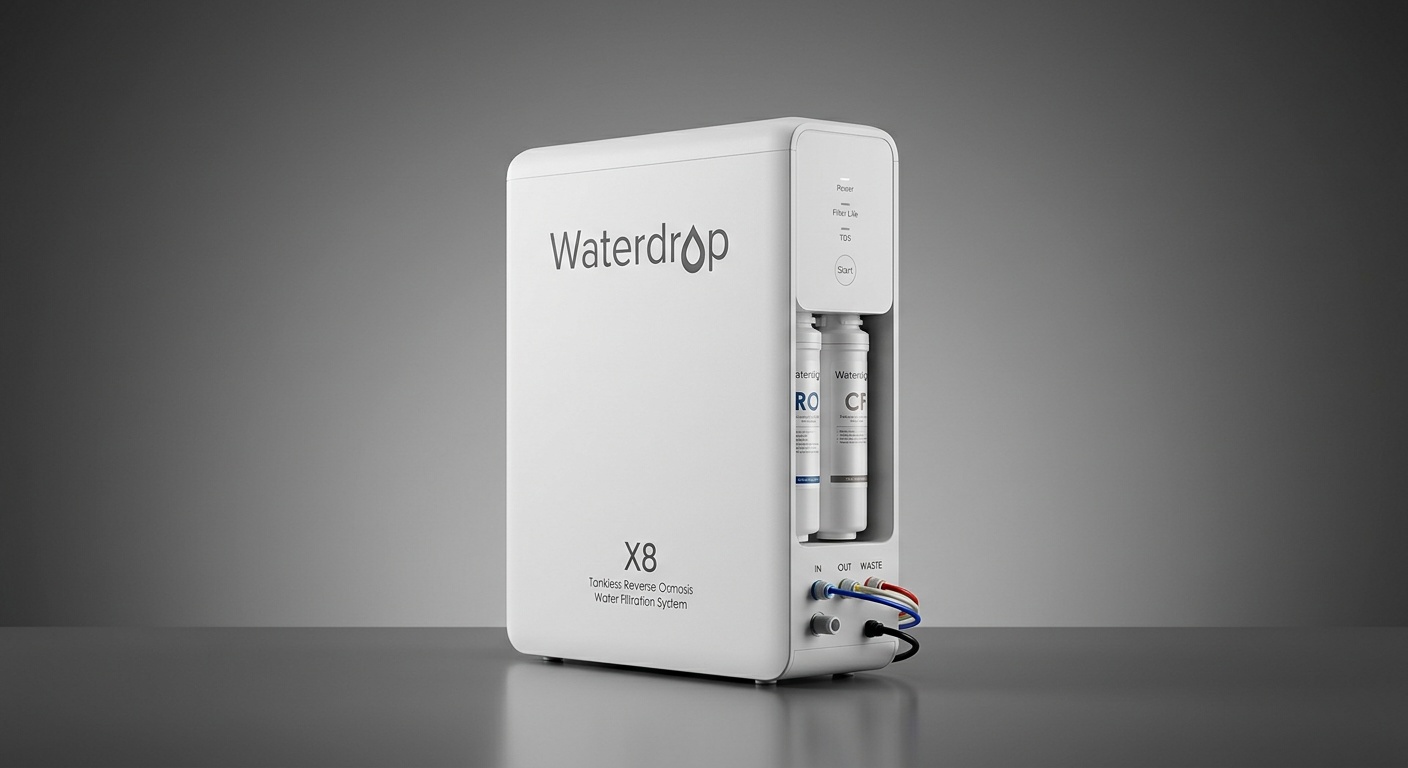
Waterdrop X8 Under-Sink RO Filter
Perth’s 576 mg/L TDS and 204 mg/L hardness demand an RO system — carbon filters alone won’t meaningfully reduce either. The Waterdrop X8 uses 8-stage filtration including a remineralisation stage that adds beneficial minerals back after RO, targeting a final output TDS of approximately 50–80 mg/L. The 3:1 pure-to-drain ratio is among the most efficient available. NSF 58 certified for TDS reduction. Tankless design fits under standard kitchen cabinetry with no bulky storage tank.
Pros
- 8-stage RO with remineralisation — addresses Perth’s full water quality profile
- 3:1 pure-to-drain ratio — efficient on Perth’s mains pressure (500–650 kPa)
- NSF 58 certified — verified TDS and contaminant reduction claims
- Reduces TDS from ~576 to ~50–80 mg/L
- Tankless design — no bulky tank, compact undersink footprint
- Smart filter life indicator — no guessing replacement schedule
Cons
- $719 upfront — higher entry cost than countertop alternatives
- Requires installation — undersink plumbing connection
- High TDS water (576 mg/L) shortens RO membrane life vs lower-TDS cities
- Produces some wastewater — unavoidable with RO technology
The Waterdrop X8 was chosen for Perth’s specific conditions because of its 3:1 pure-to-drain ratio — critical in a high-TDS, high-hardness supply where a less efficient RO system (the older 1:1 ratio systems) would waste significant mains water. Perth’s mains pressure runs at 500–650 kPa, which is within the Waterdrop X8’s optimal operating range (40–125 PSI / 280–860 kPa). The 8-stage process includes a remineralisation stage using alkaline mineral balls — this restores calcium, magnesium, and potassium to the output water, addressing the flatness that pure RO (output TDS near zero) can produce in taste.
Budget Option — Waterdrop C1S Countertop Filter ($399)
If undersink installation isn’t possible — renting, a shared kitchen, or no accessible plumbing connection under the bench — the Waterdrop C1S Countertop RO system at $399 is the best no-installation alternative. It sits on the bench, connects to the tap via a diverter valve, and produces filtered water into a pitcher. It doesn’t reduce TDS to the same extent as the X8 (typically 70–75% reduction vs 90%), but for Perth water at 576 mg/L TDS, a 75% reduction still brings output to ~140 mg/L — well within the preferred taste range. Available from waterdropfilter.com.au.
Does Perth Tap Water Taste Bad?
Yes — by most subjective assessments, Perth tap water tastes notably different from east coast tap water. The primary taste factors are: high chlorine dosing (free chlorine is added at the treatment plant and detectable at the tap in much of Perth), high TDS producing a mineralised/salty aftertaste, and high hardness. These are taste factors, not safety factors — but they’re real and widely reported by Perth residents and visitors. A quality RO system reduces free chlorine to undetectable levels, TDS to ~50–80 mg/L, and hardness by ~95%, producing water that tastes substantially different from the raw supply.
Perth Water and Appliances — Limescale Impact
At 204 mg/L hardness, Perth water deposits limescale in appliances significantly faster than soft-water cities. A kettle used daily in Perth may show visible scaling within 2–4 weeks. Coffee machines require monthly descaling vs quarterly for Melbourne users. Dishwashers require salt dispensers (water softener function) to perform effectively. From an appliance longevity perspective, filtering at the kitchen tap via RO extends the life of downstream appliances by eliminating mineral deposits — a secondary benefit beyond taste and health.
Frequently Asked Questions
Is Perth tap water safe to drink in 2026?
Yes — Perth’s tap water is tested and treated by Water Corporation and meets Australian Drinking Water Guidelines (ADWG) for all regulated parameters. High TDS (576 mg/L) and hardness (204 mg/L) are within aesthetic guidelines, not health limits. PFAS detections are real but PFAS are not currently regulated under ADWG. For sensitive populations (pregnant women, infants, immunocompromised individuals), precautionary RO filtration is a reasonable approach.
What is the TDS of Perth tap water?
Perth’s average TDS is approximately 576 mg/L — the highest of any major Australian capital city. The ADWG aesthetic guideline (not a health limit) for TDS is 600 mg/L. Perth’s TDS comes from groundwater sources high in calcium, magnesium, sodium, and chloride minerals. Reverse osmosis reduces Perth’s TDS by approximately 90%, to around 50–80 mg/L in the output water.
Does Perth use chloramine or chlorine?
Perth uses free chlorine (not chloramine). This is different from Sydney, Melbourne, and Brisbane, which use chloramine for disinfection. Free chlorine is easier to remove via activated carbon filtration — a standard carbon pitcher filter or benchtop carbon system eliminates chlorine taste. Chloramine requires specialised catalytic carbon or RO for effective removal. For Perth residents, chlorine taste removal is achievable with simpler and cheaper filter technology than in eastern capitals.
Is there PFAS in Perth tap water?
PFAS have been detected in some Perth-area water sources — both surface water and groundwater. The WA Department of Health confirms detections at various monitoring sites. PFAS are not currently regulated under Australian Drinking Water Guidelines (ADWG), so detection does not mean a regulatory breach. Reverse osmosis (RO) removes PFAS compounds by 90–99% and is the recommended residential treatment for PFAS reduction. Carbon block filters provide only partial PFAS removal.
Why is Perth water so hard?
Perth’s hardness (204 mg/L as CaCO₃) comes from its groundwater sources — particularly the Gnangara and Jandakot limestone aquifer mounds, where water naturally picks up calcium and magnesium carbonate as it passes through rock. East coast capitals draw from granite mountain catchments that produce naturally soft water. Perth’s geology produces hard water regardless of treatment — it’s a source characteristic, not a treatment failure.
What is the best water filter for Perth?
A reverse osmosis (RO) system is the most effective filter type for Perth’s water profile. RO simultaneously reduces TDS (by ~90%), hardness (~95%), free chlorine (100%), and PFAS (90–99%). For under-sink installation, the Waterdrop X8 ($719) is the recommended option — its 3:1 pure-to-drain ratio and 8-stage remineralisation address Perth’s specific high-TDS profile. For renters or those without installation access, the Waterdrop C1S Countertop ($399) is the best no-installation alternative.
Will a Brita filter improve Perth water?
A Brita pitcher will remove chlorine taste from Perth water — it won’t meaningfully reduce TDS or hardness. The Brita carbon filter addresses the chlorine component of Perth’s taste profile effectively. If your primary concern is chlorine taste (and TDS, hardness, and PFAS are lower priorities), a Brita or equivalent carbon pitcher is a cost-effective solution. If you want comprehensive improvement in Perth’s full water quality profile, a Brita is insufficient and RO is required.
Can you drink tap water straight from the tap in Perth?
Yes — Perth tap water is microbiologically safe and meets all regulated Australian drinking water standards. The taste is subjectively worse than bottled water or filtered water due to high TDS and chlorine, but it is not unsafe to drink straight. Whether to filter comes down to personal taste preferences, PFAS precaution considerations, and appliance longevity concerns with the high-hardness supply.
Where does Perth’s drinking water come from?
Perth’s water supply comes from three sources managed by Water Corporation: surface water catchments (including Mundaring, Canning, and other reservoirs), groundwater from the Gnangara and Jandakot mounds, and desalinated water from the Kwinana and Southern Seawater Desalination Plants. As WA has experienced declining rainfall, reliance on groundwater and desalination has increased — with the desalination plants now providing approximately 50–60% of Perth’s supply in drier years.
Get the Australian Home Environment Checklist
30 checks across water, air and EMF. Most of them free. Ranked by impact.
No spam. Unsubscribe any time.

Former Royal Australian Navy Clearance Diver and TAG-E counter-terrorism operator. Founded Clean and Native to apply the same rigorous thinking to the home environment.
Full biography →