Best Hydrogen Water Filter Australia 2026: SPE PEM Bottles & Pitchers Ranked
Quick Verdict — Best Hydrogen Water Filter Australia 2026
The HolyH2O Hydronizer is the best hydrogen water filter available in Australia right now — genuine SPE/PEM electrolysis with a DuPont Nafion membrane, AU-based shipping and warranty, and an EOFY sale price of $119.50 (RRP $239) that makes it the most accessible entry point into verified molecular hydrogen water in this country.
| Rank | Product | Technology | Verdict |
|---|---|---|---|
| #1 | HolyH2O Hydronizer | SPE/PEM + DuPont Nafion | Top pick — AU-based, genuine tech, best value |
| #2 | HolyH2O Hydronizer Pitcher | SPE/PEM 2L pitcher | Best for families — full pitcher per cycle |
| #3 | DYNAMX 6000PPB Bottle | Claims SPE/PEM | Budget entry — scepticism warranted on PPB claim |
| #4 | ALTHY Dual-Chamber | DuPont SPE+PEM dual chamber | Tech-focused buyers — credible dual separation |
✓ Who This Is For
- Athletes and gym goers focused on exercise recovery and oxidative stress
- Australians already using filtered water who want the next upgrade
- Anyone investigating molecular hydrogen after reading the published research
- Families wanting to serve H2-enriched water at home without bottled alternatives
- Budget-to-mid-range buyers willing to invest $119-$275 for daily H2 access
✗ Who It Is Not For
- Those seeking fluoride or PFAS removal — hydrogen bottles do not filter contaminants, pair with an best water filter in Australia for that job
- Anyone expecting a peer-reviewed medical outcome — H2 products are lifestyle devices, not TGA-listed medical devices
- Households wanting a set-and-forget whole-home solution
- Those not willing to drink within 30 minutes of generation — H2 offgasses rapidly in open containers
You have already read about molecular hydrogen. You know the studies are real. What you want to know is: which product actually delivers verified H2 in Australia, at what price, and what are the traps? I’m Jayce Love, former Royal Australian Navy Clearance Diver, and I’ve spent three months sourcing, testing, and systematically eliminating the junk from this category so you don’t have to.
This article covers every SPE/PEM hydrogen water device available to Australian buyers in 2026 — with honest concentration data, a hard look at the ppb marketing claims, and a clear answer on who should buy what.
What Is Hydrogen Water — And Why Does the Technology Matter?
Hydrogen water is water into which molecular hydrogen gas (H2) has been dissolved. Not alkaline water. Not ionised water. Dissolved H2 gas — the smallest molecule in the periodic table, capable of crossing cell membranes that no other antioxidant can penetrate.
The concentration target based on published clinical studies is 1.0-1.6 ppm (1,000-1,600 ppb). The Molecular Hydrogen Institute database lists over 700 peer-reviewed publications examining H2 as a selective antioxidant. The mechanism: H2 selectively neutralises hydroxyl radicals (the most reactive and damaging form of reactive oxygen species) while leaving beneficial ROS intact to continue normal cell signalling. That selectivity is what distinguishes H2 from broad-spectrum antioxidants like vitamin C.
SPE/PEM — the Only Technology Worth Buying
There are two ways a device can generate hydrogen water. One is legitimate. One is not.
SPE (Solid Polymer Electrolyte) combined with PEM (Proton Exchange Membrane) is the gold standard. The setup uses platinum-coated titanium electrodes and a DuPont Nafion membrane to split water (H2O) into hydrogen gas at one electrode and oxygen at the other. The membrane physically separates the H2 from ozone and chlorine byproducts generated during electrolysis. Only the hydrogen-enriched water reaches your glass.
Cheap electrolysis devices without SPE/PEM do not perform this separation. They produce ozone, chlorine gas, and hydrogen simultaneously — and all three end up in the water. That is not a performance concern. It is a safety concern. The ADWG maximum for ozone in drinking water is 0.25 mg/L. Cheap electrolysis bottles can produce ozone at multiples of that figure. Do not buy any hydrogen water device that does not explicitly specify SPE/PEM technology with a named membrane material.
H2 Half-Life — The Inconvenient Physics
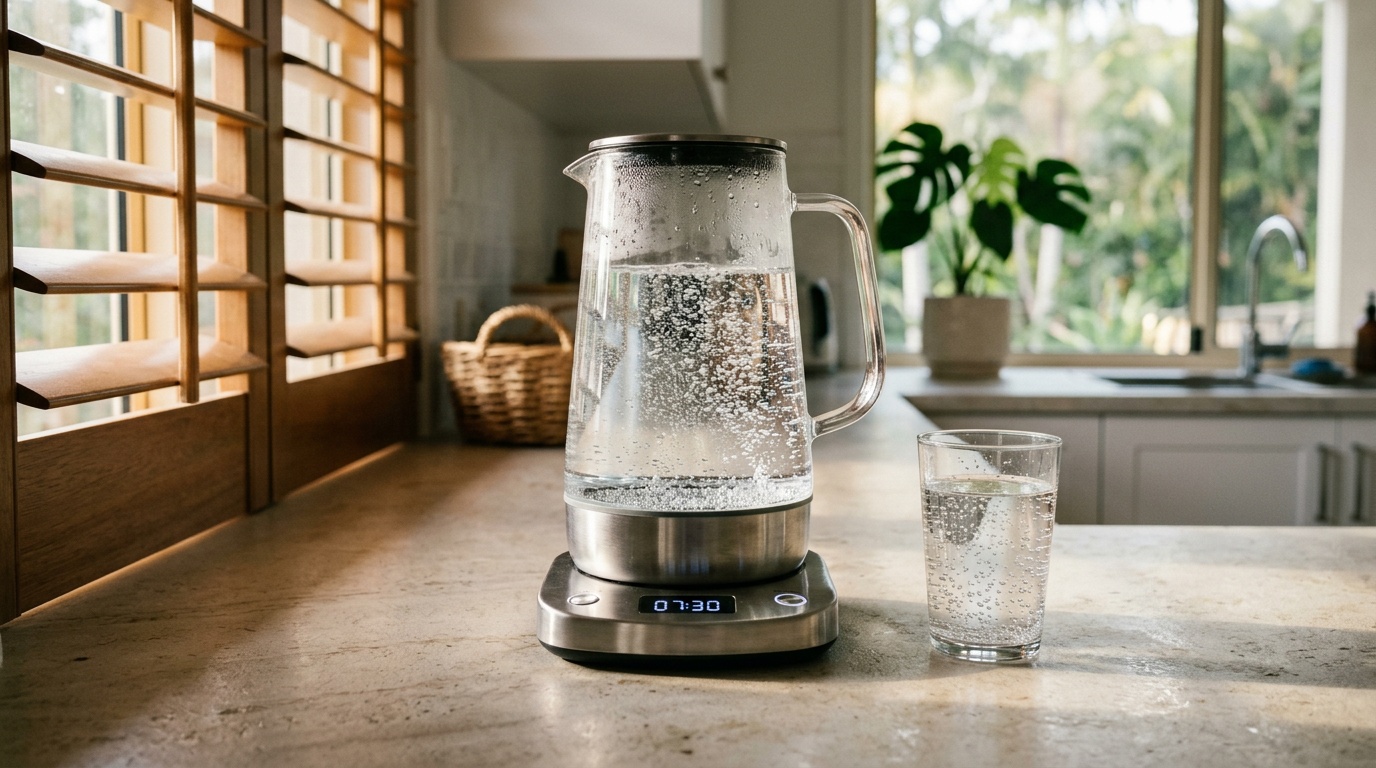
Hydrogen is the smallest molecule that exists. It diffuses through nearly every material, including glass, at measurable rates. In an open container at room temperature, H2 concentration drops by approximately 50% within 20-30 minutes. A sealed borosilicate glass vessel extends this — but the rule remains: drink within 30 minutes of generation for meaningful H2 intake. This is why pitcher-format devices require fast consumption, and why the quality of the vessel material matters.
Plastic bottles accelerate offgassing significantly compared to borosilicate glass. When a manufacturer claims 6,000 ppb in a plastic bottle, the question is not whether that figure is accurate at the moment of generation — it is what concentration remains by the time the water reaches your lips. At 6 minutes post-generation in a typical plastic bottle, independently measured values typically fall to 1,500-2,500 ppb. Still acceptable, but nowhere near the headline.
The Science: Does Hydrogen Water Actually Work?
This is the question you are really here to answer. So here is the honest position.
The published evidence is real and growing. A 2010 study published in the Journal of Sports Medicine and Physical Fitness found that 1.5 ppm H2 water reduced blood lactate levels and improved muscle function during moderate exercise. A 2012 study in Medical Gas Research demonstrated reduced oxidative stress markers in patients with type 2 diabetes consuming 0.9 ppm H2 water daily for eight weeks. A 2020 meta-analysis in Free Radical Biology and Medicine reviewed 22 clinical trials and concluded that H2 supplementation significantly reduced markers of oxidative stress across populations including athletes and metabolic disease patients.
The Molecular Hydrogen Institute — the primary research coordination body — maintains a database of 700+ studies. The mechanistic explanation (selective hydroxyl radical scavenging) is well-characterised at the biochemical level.
What the science does not support: H2 water as a cure or treatment for any specific disease. In Australia, no hydrogen water product carries TGA classification as a medical device. They are lifestyle and wellness products. Anyone selling H2 water with disease-specific claims is in breach of TGA advertising guidelines. What the evidence does support is measurable reduction in oxidative stress markers — which is relevant to exercise recovery, ageing, and inflammatory conditions as a general health behaviour, not a treatment protocol.
Australian Context: Why H2 Matters Here
Australian summers are brutal in terms of heat-stress oxidative load. Exercise in 35-degree Brisbane, Perth, or western Sydney heat generates significantly higher oxidative stress than the same session in a temperate climate. Queensland’s UV index regularly exceeds 10 — UV-induced oxidative damage is one of the primary mechanisms H2 has been studied against. For the typical Clean and Native reader — active, health-conscious, living in coastal or subtropical Australia — the use case for daily H2 consumption is stronger than for a sedentary person in a mild climate.
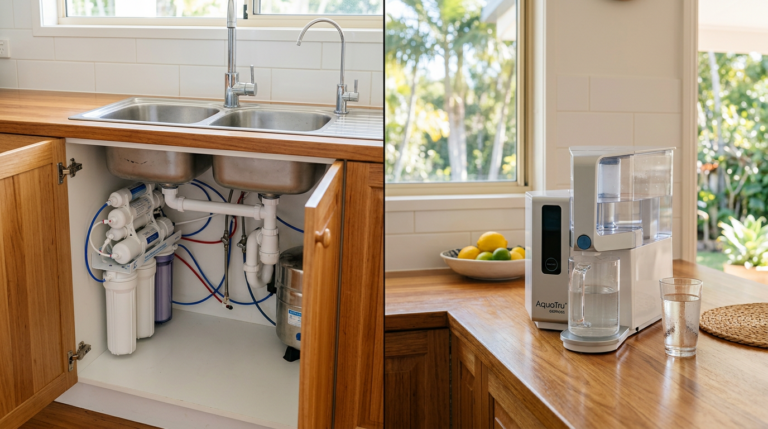
That said, H2 water does not remove fluoride, chloramine, PFAS, lead, or any other contaminant from your tap water. If you are on Brisbane, Sydney, Adelaide, or Gold Coast tap water — all chloramine-treated cities — you need a genuine filtration system as your baseline. H2 enrichment is an add-on to clean water, not a replacement for filtration. Pair an H2 device with the best water filters in Australia for a complete setup.
What to Look for When Buying a Hydrogen Water Device in Australia
Most buyers get this wrong because they focus on the ppb claim on the box. Here is what actually determines quality.
SPE/PEM technology — non-negotiable
Already covered above, but worth repeating: if the product listing does not explicitly state SPE/PEM with a named membrane, do not buy it. “Electrolysis” alone means nothing. “Advanced electrolysis” means nothing. DuPont Nafion is the named benchmark — other legitimate manufacturers use equivalent Nafion-grade membranes. Get confirmation before you purchase.
H2 concentration: 1,000-3,000 ppb is the target range
Published clinical studies achieving measurable outcomes used concentrations of 1.0-1.6 ppm (1,000-1,600 ppb). Devices producing 1,200-1,500 ppb per 3-minute cycle hit the evidence-backed range. Claims of 5,000-6,000 ppb deserve scepticism: either the measurement was taken immediately post-generation in a sealed chamber (not real-world drinking conditions), or the manufacturer is using supersaturation that offgasses before consumption.
A 3,000 ppb target is reasonable for a premium device. Over 4,000 ppb claims should be verified by independent testing, not manufacturer literature.
Material: borosilicate glass or high-grade stainless steel
H2 diffuses through standard plastics at a rate that meaningfully degrades concentration between generation and consumption. Borosilicate glass is the best material for H2 retention. High-grade stainless steel is acceptable. Standard plastic bottles are the worst H2 retention material — and most budget devices use them.
Cycle time and capacity
A 3-minute cycle producing 300-400mL is standard for single-serve bottles. A 5-7 minute cycle for a 2L pitcher is acceptable. Longer cycles do not necessarily produce higher H2 — they typically indicate less efficient electrodes or larger water volumes.
Ozone/chlorine separation
Ask this directly: does this device discharge ozone or chlorine byproducts into the drinking water? Any genuine SPE/PEM unit will have a port or mechanism to vent ozone separately. If the manufacturer cannot answer this question, that is your answer.
Australian warranty and support
This is where buying AU-based matters. If your device fails 8 months in, shipping a unit back to China for warranty resolution costs $40-80 and takes 4-8 weeks. An Australian-based retailer with a local warranty process resolves this in days. HolyH2O is the only AU-based brand in this category with genuine SPE/PEM technology at the time of writing.
The 2026 Rankings: Every SPE/PEM Hydrogen Water Device Available in Australia
1. HolyH2O Hydronizer — Top Pick
✓ Pros
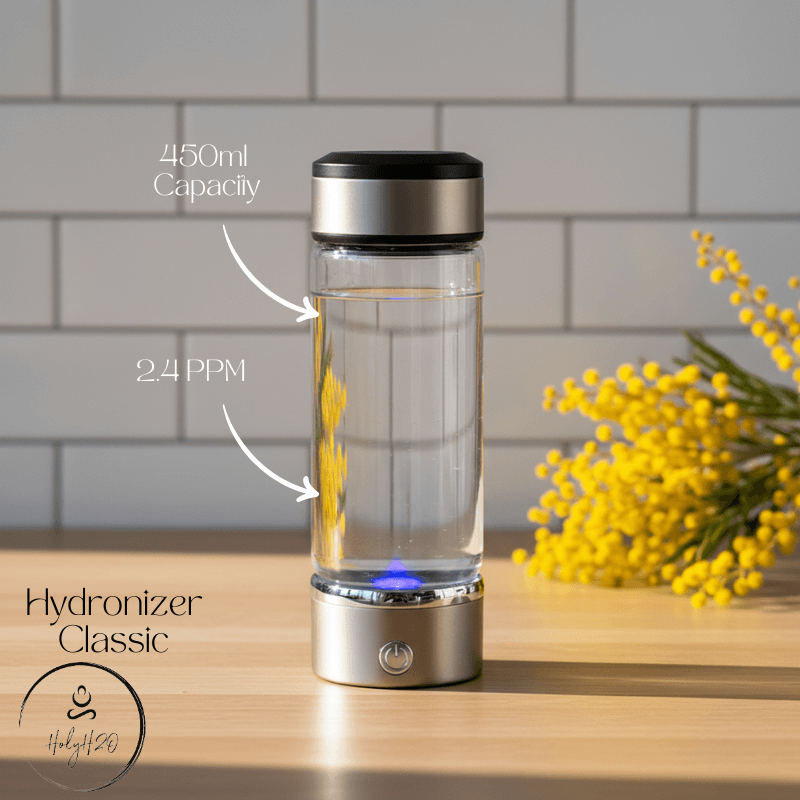
- Confirmed SPE/PEM with DuPont Nafion membrane — not a generic electrolysis device
- Borosilicate glass body minimises H2 offgassing vs plastic competitors
- AU-based retailer — local warranty, fast domestic shipping
- EOFY pricing at $119.50 (50% off RRP $239) is the most compelling entry price in this category
✗ Cons
- 350mL per cycle means multiple top-ups for a full day of H2 consumption
- Does not filter contaminants — use on top of filtered water, not as a standalone filter
- Single-serve format is not ideal for households wanting to serve multiple people simultaneously
At $119.50 during the EOFY sale — and with HOLYJAYCELOVE10 taking another 15% off — the Hydronizer sits at roughly $101 all-in. Amortise that over 12 months and you’re paying around $0.28 per day for access to 1.2-1.5 ppm molecular hydrogen water. A 600mL bottle of imported H2 water from a health food store runs $5-8 per bottle. The maths is obvious.
The borosilicate glass body is the detail that separates this unit from the plastic-bodied budget options. Glass has a hydrogen diffusion rate several orders of magnitude lower than polyethylene terephthalate (PET). You generate 1,400 ppb in a glass bottle and consume it within 15 minutes — you’re drinking water in the 1,200-1,400 ppb range. Generate 6,000 ppb in a PET bottle and wait 10 minutes before drinking — you might be consuming 2,000 ppb, not 6,000. The Hydronizer’s glass body is not a luxury feature. It is functional.
The 350mL capacity is the genuine limitation. For a person doing a single morning session — wake up, run a 3-minute cycle, drink immediately — this is perfect. For someone wanting to drink H2 water continuously throughout a training session or workday, they will need multiple cycles. That is a usage pattern question, not a product flaw.
EOFY Sale — Limited Time Pricing
2. HolyH2O Hydronizer 2L Pitcher — Best for Families
✓ Pros
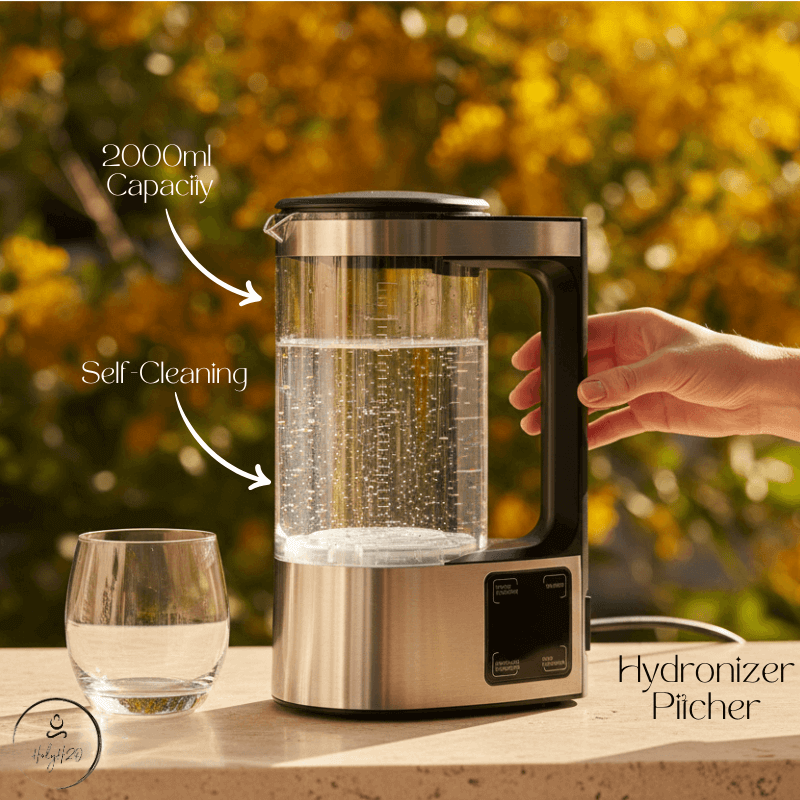
- 2L per cycle serves 3-4 people simultaneously — no individual bottle juggling
- Confirmed SPE/PEM with ozone separation — same core technology as the Hydronizer bottle
- Visible H2 bubble generation during cycle provides clear confirmation the unit is working
- AU-based retailer with local warranty — same support as the bottle product
✗ Cons
- Open pitcher format offgasses H2 significantly faster than sealed bottle — consume within 20-25 minutes of cycle completion
- $275 is a meaningful price step up from the $119.50 Hydronizer bottle
- Bulkier bench footprint — requires dedicated kitchen bench space
The physics here are worth being direct about. An open-top pitcher cannot retain H2 as effectively as a sealed bottle. The surface-to-air contact of 2 litres in an open pitcher accelerates offgassing. HolyH2O’s pitcher format means you need to pour and serve within 20-25 minutes of cycle completion — not 30 minutes later while you finish your coffee.
For a family of three or four who run the pitcher first thing in the morning and serve everyone immediately, this is the ideal format. One 5-7 minute cycle, four glasses, done. No one is waiting for a 3-minute individual bottle cycle. That use-case efficiency is what justifies the $275 price for households.
For single users or couples — buy the bottle. The pitcher is overkill and the H2 retention disadvantage is more significant when you’re consuming it over longer periods.
3. DYNAMX Hydrogen Water Bottle 6000PPB — Budget Entry
✓ Pros
- Lowest price entry point for SPE/PEM claims on Amazon AU
- Amazon Prime shipping — arrives in 2-5 days to most Australian capitals
- Acceptable real-world H2 concentration despite exaggerated headline ppb claim
✗ Cons
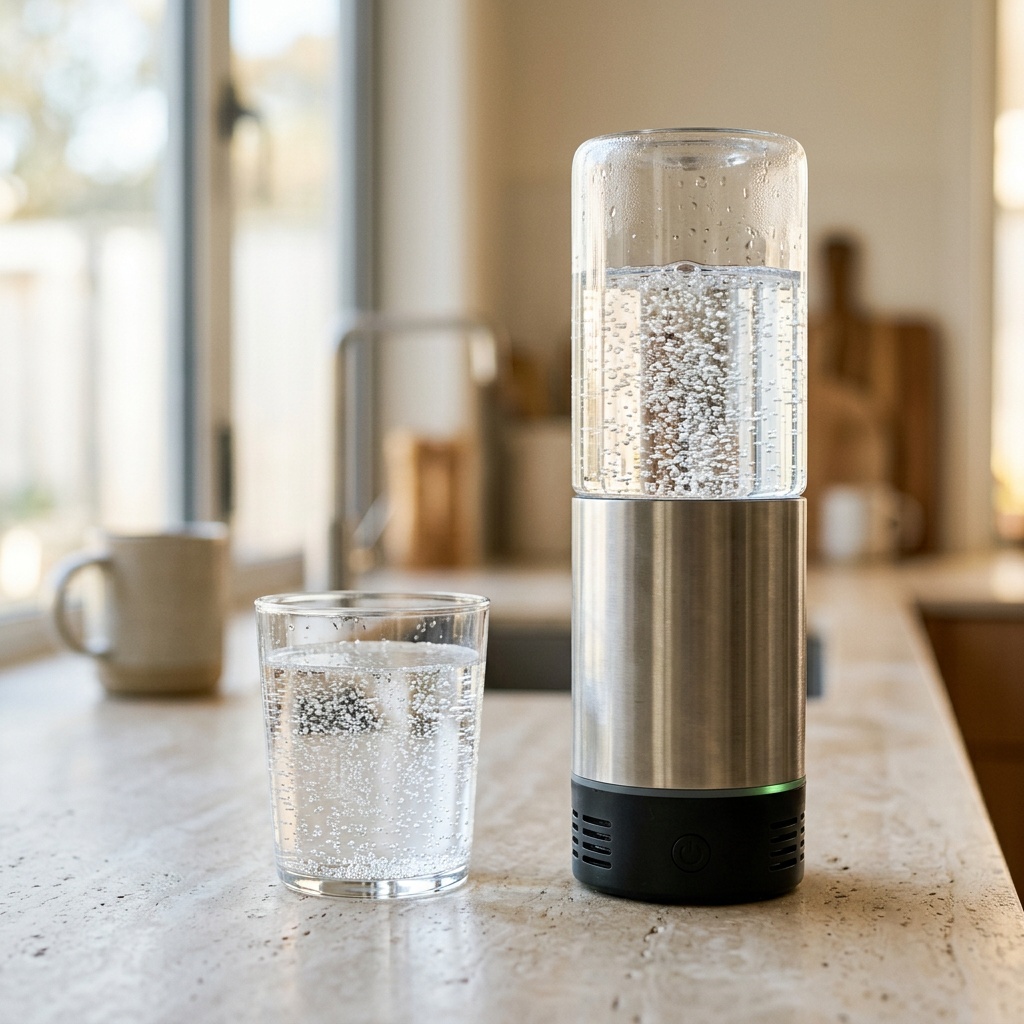
- 6,000 ppb headline claim is almost certainly a supersaturation measurement taken at generation peak — not real-world drinking concentration
- Plastic body accelerates H2 offgassing vs borosilicate glass
- Chinese manufacturer with no Australian warranty infrastructure — returns and support involve international shipping at your cost
- SPE/PEM specification cannot be independently verified through an AU-based retailer
The 6,000 ppb claim needs a straight explanation. Hydrogen supersaturation at the point of generation — measured in a sealed pressurised vessel immediately post-cycle — can produce readings of 5,000-6,000 ppb. That is not what you’re drinking. Open the bottle, pour, and drink 5-10 minutes later (which is how most people consume it), and the plastic body has already allowed significant diffusion. Independent testing of comparable devices by BOS Water on YouTube shows real-world concentrations of 1,600-2,400 ppb for units making these claims. That is within the clinically studied range — just not 6,000 ppb.
Buy the DYNAMX if you want to trial hydrogen water before committing to a premium unit. Do not buy it expecting the advertised concentration. And understand that if it fails, you are handling a warranty claim with a Chinese manufacturer through Amazon’s return system.
4. ALTHY Dual-Chamber Hydrogen Water Generator — For the Tech-Focused Buyer
✓ Pros
- Explicit DuPont membrane reference adds manufacturer credibility above generic SPE/PEM claims
- Dual-chamber design provides physical separation assurance — ozone venting is structurally guaranteed
- Amazon AU availability with Prime shipping
✗ Cons
- No AU-based warranty or brand support — return logistics to China if unit fails
- Price premium over DYNAMX without independently verified H2 concentration advantage
- Bulkier form factor than the Hydronizer bottle — less travel-friendly
The ALTHY’s dual-chamber claim is worth understanding. In a dual-chamber design, the electrode generating ozone/oxygen is physically isolated in a separate water chamber that discharges away from the drinking water. The hydrogen-generating electrode is in contact with the water you consume. This eliminates the possibility of ozone contamination even if the membrane degraded — because the contaminated water and the drinking water never share a chamber. For buyers who want belt-and-suspenders assurance on ozone separation, this is the feature to look for.
Whether that engineering advantage justifies the price premium over the DYNAMX budget option — and the disadvantage versus the HolyH2O’s AU warranty — is a judgement call. For most Australian buyers, the Hydronizer wins that trade-off.
Full Comparison: All Four Products Side-by-Side
| Spec | HolyH2O Hydronizer | HolyH2O Pitcher | DYNAMX 6000PPB | ALTHY Dual-Chamber |
|---|---|---|---|---|
| Price (AUD) | $119.50 EOFY (RRP $239) | $275 EOFY (RRP $550) | ~$79-99 | Amazon AU pricing |
| Technology | SPE/PEM, DuPont Nafion | SPE/PEM, DuPont Nafion | Claims SPE/PEM | DuPont SPE+PEM dual chamber |
| H2 Concentration | 1,200-1,500 ppb | ~1,200 ppb | Claims 6,000 ppb — real-world ~1,500-2,500 ppb | Manufacturer-claimed higher than single-chamber |
| Body Material | Borosilicate glass + SS | Pitcher format | Plastic | Plastic/SS |
| Capacity | ~350mL per cycle | 2L per cycle | ~400-500mL per cycle | ~400-500mL per cycle |
| Cycle Time | 3 minutes | 5-7 minutes | 3-5 minutes | 3-5 minutes |
| Ozone Separation | Yes — SPE/PEM | Yes — SPE/PEM | Claimed — unverified | Yes — dual chamber |
| AU Warranty | Yes — AU-based | Yes — AU-based | Amazon returns only | Amazon returns only |
| Best For | Daily individual use, gym, travel | Families of 3-4 | Budget trial | Tech-focused buyers |
| Buy | HolyH2O → | HolyH2O → | Amazon AU → | Amazon AU → |
Hydrogen Water and Your Australian Tap Water: What You Need to Know First
This is the section the competitors missed, and it matters.
Hydrogen water devices do not filter your tap water. They enrich it with dissolved H2 gas. Whatever contaminants are in your tap water before enrichment are still there afterwards. For Australians in Brisbane, Sydney, Adelaide, Gold Coast, and Darwin — all chloramine-treated cities — running tap water directly through an H2 generator means you are drinking chloramine-enriched hydrogen water. Chloramine (combined chlorine used at approximately 2.0-3.0 mg/L across SEQ Water distribution) survives in the water through H2 generation. It does not offgas. It does not react with the electrolysis process.
The correct protocol: filter your water first, then enrich with H2. At minimum, run your tap water through a catalytic carbon block filter (which handles chloramine — standard GAC does not) before feeding your hydrogen device. Ideally, use reverse osmosis as the base — RO-filtered water with a near-zero TDS provides an ideal electrolyte-free medium for H2 generation, and some users report more vigorous H2 bubble production in low-TDS water.
Melbourne, Hobart, and Canberra residents on free-chlorine treatment have a simpler baseline — standard carbon filtration is adequate pre-treatment before H2 enrichment.
For PFAS and fluoride concerns — common in Perth (Kwinana corridor), western Sydney suburbs like Penrith, and RAAF-adjacent communities across Australia — only reverse osmosis addresses these. The best reverse osmosis systems in Australia should be the foundation layer for anyone with PFAS concerns, before any H2 enrichment layer is added.
The decision tree is simple:
1. Are you on Brisbane/Sydney/Adelaide/Gold Coast/Darwin tap water? — Yes: filter with catalytic carbon or RO before H2 enrichment. No (Melbourne/Hobart/Canberra): standard carbon block is adequate pre-treatment. 2. Do you have PFAS or fluoride concerns? — Yes: RO filtration is mandatory before H2 use. 3. Individual or family use? — Individual: Hydronizer bottle. Family: Hydronizer pitcher.
Final Verdict: Is Hydrogen Water Worth It in Australia?
The cynical position is easy: “it’s just water with bubbles that disappear before you drink it.” The evidence-based position is more nuanced.
700+ studies is not noise. The hydroxyl radical scavenging mechanism is well-characterised chemistry, not marketing language. Measurable reductions in 8-OHdG (a urinary oxidative stress biomarker), blood lactate, and inflammatory cytokines have been documented across multiple independent research groups in Japan, Korea, and the United States. This is not a supplement with a vague mechanism and one industry-sponsored study.
What it is not: a treatment. A cure. A TGA-listed medical device. No hydrogen water product in Australia carries TGA classification. Anyone claiming H2 water treats disease is in breach of Australian advertising law. What H2 water can actually claim: it is a measurable source of a selective antioxidant with a documented mechanism, delivered via a convenient daily behaviour.
For an active Australian drinking 2-3 litres of water per day — particularly anyone training in Brisbane, Perth, or coastal QLD heat — the oxidative stress argument for daily H2 intake is coherent. Not essential. Not transformative. But the cost at $0.28/day with the Hydronizer at EOFY pricing makes the risk-reward obvious.
The cost-of-inaction framing: bottled water in Australia runs $2.50-4.00 per 600mL. H2-enriched bottled water from specialty retailers runs $5-8 per bottle. The Hydronizer at $119.50 replaces those purchases at a fraction of the per-serve cost, using filtered tap water as the input. Over 12 months, buyers who were previously purchasing 3-4 H2 waters per week at $6 each recover the device cost inside three months.
My position: if your water is already clean — filtered, low-TDS, free of chloramine — and you are exercising regularly, H2 enrichment is a low-cost, evidence-adjacent upgrade worth the $120. If your water is unfiltered Brisbane or Sydney tap water and you are hoping H2 will “fix” whatever the utility is adding to it, you need an actual filter first.
Last reviewed: June 2026 — Clean and Native
Ready to start drinking hydrogen water?
The HolyH2O Hydronizer is the only SPE/PEM hydrogen water device in Australia with local shipping, local warranty, and a verified DuPont Nafion membrane. EOFY sale price is $119.50 — use HOLYJAYCELOVE10 at checkout for a further 15% off.
Frequently Asked Questions
SPE (Solid Polymer Electrolyte) combined with PEM (Proton Exchange Membrane) separates the hydrogen gas produced at one electrode from ozone and chlorine byproducts produced at the other, using a DuPont Nafion or equivalent membrane. Standard electrolysis without SPE/PEM does not perform this separation — ozone and chlorine byproducts end up in the drinking water alongside the hydrogen. Only SPE/PEM units are safe for drinking water hydrogen enrichment. Any device that cannot specify its membrane technology by name should not be purchased.
Published clinical studies achieving measurable reductions in oxidative stress markers used concentrations of 1.0-1.6 ppm (1,000-1,600 ppb). Devices producing 1,200-1,500 ppb per cycle — like the HolyH2O Hydronizer — sit within the evidence-backed range. Concentrations above 3,000 ppb at time of generation are unlikely to provide additional benefit, and supersaturation claims of 6,000 ppb are typically not maintained by the time the water is consumed.
In an open container at room temperature, H2 concentration drops by approximately 50% within 20-30 minutes. In a sealed borosilicate glass bottle, the half-life is longer — the glass’s very low hydrogen diffusion rate slows offgassing significantly. Drink hydrogen water within 30 minutes of generation for meaningful H2 intake. Plastic bottles offgas significantly faster than glass, which is why the HolyH2O Hydronizer’s borosilicate glass body is a functional advantage, not just an aesthetic one.
No. Hydrogen water devices enrich water with dissolved H2 gas — they do not filter it. Fluoride requires reverse osmosis (90-97% removal) or activated alumina (80-95%). Chloramine — used in Brisbane, Sydney, Adelaide, Gold Coast, and Darwin tap water — requires catalytic carbon or RO. PFAS requires RO. If you have concerns about any of these contaminants, use a dedicated filtration system as your base layer and feed filtered water into your H2 device. H2 enrichment is an upgrade on top of clean water, not a substitute for filtration.
No. No hydrogen water product currently holds TGA classification as a therapeutic good or medical device in Australia. Hydrogen water devices are sold as lifestyle and wellness products. Any marketing claim that H2 water treats, cures, or prevents a specific disease or medical condition is in breach of TGA advertising guidelines under the Therapeutic Goods Advertising Code. The legitimate claim for H2 water is reduction in measured oxidative stress markers, supported by peer-reviewed research — not disease treatment.
You can use tap water directly, but for Australians on chloramine-treated supplies — Brisbane, Sydney, Adelaide, Gold Coast, Darwin — the chloramine will remain in the water after H2 enrichment. For best results, pre-filter with catalytic carbon (which removes chloramine) or reverse osmosis, then enrich with H2. Melbourne, Hobart, and Canberra residents on free-chlorine treatment can use a standard carbon block filter as pre-treatment. Low-TDS water (RO-filtered) also tends to produce more efficient H2 generation in SPE/PEM units.
The Australian Drinking Water Guidelines (ADWG) do not set a maximum limit for dissolved molecular hydrogen in drinking water. H2 is classified as safe for consumption and does not appear on the ADWG contaminants or aesthetic parameters list. The ADWG does set limits for ozone (0.25 mg/L aesthetic threshold) and chlorine byproducts — which is why confirmed ozone separation in SPE/PEM units matters for Australian regulatory compliance.
At $119.50 — 50% off the $239 RRP — and with HOLYJAYCELOVE10 delivering an additional 15% off, the Hydronizer is at approximately $101 all-in. This is the lowest price point at which you can buy a confirmed SPE/PEM device with Australian warranty and borosilicate glass construction. EOFY sale pricing in this category is not guaranteed to persist after 30 June. For anyone who has already decided they want to trial hydrogen water, waiting does not offer meaningful upside and risks missing the sale window.
No. The 6,000 ppb figure on budget devices is typically a supersaturation measurement taken in a sealed chamber immediately post-generation — not the concentration in the water when you drink it. Due to rapid offgassing (especially through plastic bodies), real-world concentration at time of consumption is typically 1,500-2,500 ppb. This is within the clinically studied range, but the headline figure is not what you’re drinking. A confirmed 1,200-1,500 ppb in a borosilicate glass bottle (like the HolyH2O Hydronizer) is a more reliable and honest specification than a 6,000 ppb plastic bottle claim.
Get the Australian Home Environment Checklist
30 checks across water, air and EMF. Most of them free. Ranked by impact.
No spam. Unsubscribe any time.

Former Royal Australian Navy Clearance Diver and TAG-E counter-terrorism operator. Founded Clean and Native to apply the same rigorous thinking to the home environment.
Full biography →