Grounding for Pain and Inflammation Australia: The Electron Transfer Theory and Real Evidence
Drafted with AI assistance and checked against published specifications and certifications. First-hand measurements appear only where stated. How we make content
Early research proposes that physical contact with the earth’s surface may reduce systemic inflammation markers by enabling free electron transfer from the ground — and if that mechanism holds, reduced pain may follow as a downstream effect. The evidence is preliminary, drawn from small studies rather than large randomised controlled trials, and no researcher in this field claims earthing is a treatment for chronic pain. What the existing science does suggest is a plausible mechanism worth understanding, particularly for the 7.5 million Australians living with musculoskeletal conditions (Australian Institute of Health and Welfare, 2022). As someone who has spent years in high-physical-demand environments as a Navy Clearance Diver, I have a personal interest in practical, low-cost recovery tools — and earthing fits that description if applied with clear expectations.
Quick Verdict
Grounding for Pain and Inflammation — What the Evidence Actually Shows
- Free electron transfer from the earth’s surface is the proposed anti-inflammatory mechanism (Oschman et al., 2015).
- Small studies show measurable reductions in pain scores and delayed-onset muscle soreness, not anecdotal reports (Brown et al., 2010; Chevalier et al., 2006).
- No large RCT has confirmed these effects — early-stage science only.
- Earthing cannot replace physiotherapy, anti-inflammatory medication, or professional pain management.
- Practical entry point: a grounding mat at your desk or a conductive sheet during sleep, used alongside existing treatment.
Best for: Adults with chronic low-grade inflammation, post-exercise soreness, or joint discomfort who want a low-cost adjunct to existing care.
Who this article is for
Chronic Pain Patients
Managing long-term musculoskeletal, joint, or neuropathic pain in Australia and looking for low-risk adjunct options.
Active Individuals
Athletes, gym-goers, or tradies in Queensland, New South Wales, or Victoria dealing with recurring DOMS or joint soreness.
Inflammation-Aware Readers
People who have already addressed diet, sleep, and movement and are exploring whether grounding offers any additional anti-inflammatory benefit.
Sceptical Researchers
Readers who want to assess the actual published studies rather than take marketing claims at face value.
The Electron Transfer Theory — How Earthing May Reduce Inflammation
The theoretical framework for earthing as an anti-inflammatory intervention was formalised in a 2015 review by James Oschman and colleagues published in the Journal of Inflammation Research. The core proposition is straightforward: the earth’s surface carries a mild negative electrical charge, continuously replenished by lightning strikes and ionospheric activity. When bare skin contacts the ground — or a conductive earthing product connected to the earth terminal of a grounded outlet — free electrons can transfer from the earth into the body’s tissues (Oschman JL et al., 2015, “The effects of grounding (earthing) on inflammation, the immune response, wound healing, and prevention and treatment of chronic inflammatory and autoimmune diseases”).
The relevance to inflammation lies in the behaviour of reactive oxygen species (ROS). During the normal immune response, white blood cells release ROS as part of the oxidative burst that destroys pathogens and damaged cells. This process is essential and tightly regulated in healthy tissue. The problem arises when the inflammatory response becomes chronic or dysregulated — excess ROS accumulate, attacking healthy cell membranes, mitochondria, and connective tissue in a process called oxidative stress. Antioxidants neutralise ROS by donating electrons. Oschman’s hypothesis is that free electrons from the earth’s surface can act as exogenous antioxidants in exactly this way — quenching excess ROS and thereby dampening the perpetuating cycle of chronic inflammation. The proposal is mechanistically plausible because electrons are electrons regardless of source, but the critical question is whether sufficient electron transfer actually occurs through skin contact in realistic use conditions. That question has not yet been definitively answered by large-scale human trials.
Supporting evidence for the electron transfer mechanism includes early studies showing measurable changes in biomarkers associated with the inflammatory cascade. Chevalier and Oschman (2012) reported that grounding affected the zeta potential of red blood cells — a measure of the surface charge that governs how cells cluster and flow — suggesting that earthing does produce detectable electrical changes within living tissue. Additionally, a pilot study published in the Journal of Alternative and Complementary Medicine (Chevalier G et al., 2012) found changes in markers of immune response and pain following earthing during sleep. These are not definitive findings, but they do indicate that something measurable is occurring, rather than the effects being purely placebo.
What the Research Shows on Pain Specifically
Two studies are most directly relevant to pain outcomes. The first, by Brown R, Chevalier G, and Hill M, published in the Journal of Alternative and Complementary Medicine in 2010, involved 60 participants who were assigned to sleep on either conductive carbon fibre mattress pads connected to earth ground, or identical-looking sham pads that were not grounded. Participants completed standard pain questionnaires at baseline and after four weeks of nightly earthing. The grounded group reported statistically significant improvements in pain scores, sleep quality, and stress compared with the control group. This is a controlled study with a reasonable sample size for preliminary research, though 60 subjects is a small base from which to generalise, and blinding in earthing research is inherently imperfect — participants may become aware of which condition they are in.
The second study most relevant to pain is Chevalier G, Mori K, and Oschman JL (2006), which examined earthing’s effect on delayed-onset muscle soreness (DOMS) in 8 subjects following exercise-induced muscle damage. DOMS is a model of acute localised inflammation that typically peaks 24–48 hours after unfamiliar eccentric exercise. The small group that received earthing treatment showed reduced pain scores and more favourable changes in white blood cell counts and various immune markers compared with controls. Eight subjects is an extremely small sample, and this study should be understood as a proof-of-concept rather than clinical evidence. However, it is notable that changes were observed in objective immune markers, not only self-reported pain — which partially addresses the placebo concern, though it does not eliminate it.
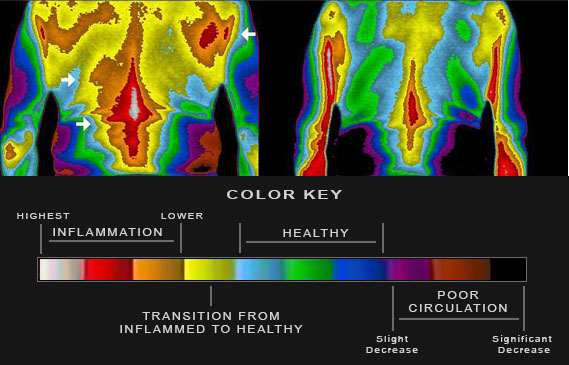
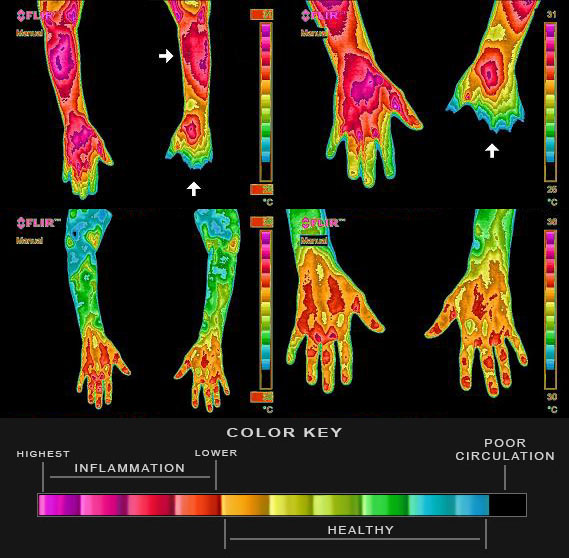
To understand why inflammation reduction would logically lead to pain reduction, it helps to briefly trace the pain pathway. Inflammation causes the release of prostaglandins, bradykinin, and other chemical mediators at the site of tissue damage or immune activation. These mediators sensitise nociceptors — the specialised pain receptors in peripheral tissues. Once sensitised, nociceptors fire at lower thresholds and with greater frequency, a process called peripheral sensitisation. In chronic pain conditions, central sensitisation can also develop, where the central nervous system itself becomes hyperresponsive to pain signals. If earthing does reduce systemic inflammation markers as preliminary data suggests, peripheral sensitisation may lessen, and pain amplification may reduce as a downstream effect. This logical chain is coherent, but each step requires independent validation. Earthing has not been tested in clinical pain populations with the rigour required to make direct treatment recommendations.
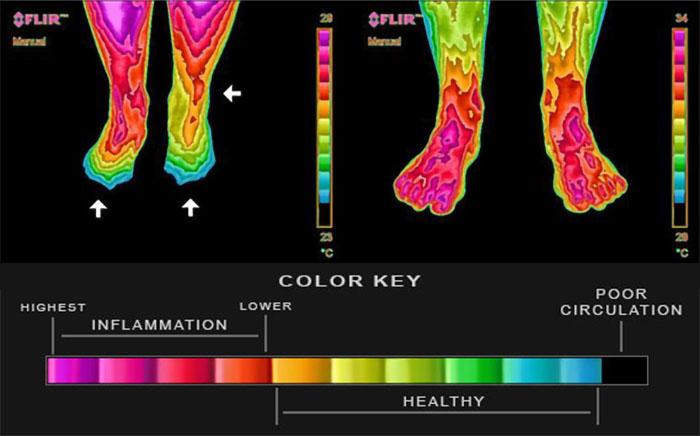
Chronic Pain in Australia — Who This May Benefit
Chronic pain is one of the most burdensome health conditions in Australia. Musculoskeletal conditions — including arthritis, back pain, and other chronic pain disorders — affected approximately 7.5 million Australians in 2022, according to the Australian Institute of Health and Welfare. The economic cost is substantial: Painaustralia estimated in 2019 that chronic pain costs the Australian economy $73.2 billion annually when accounting for healthcare costs, lost productivity, and reduced quality of life. Standard management typically involves a combination of pharmacological treatment (NSAIDs, opioids, anticonvulsants, antidepressants), physiotherapy, psychological support, and lifestyle modification. Adjunct approaches that carry minimal risk and low cost are of genuine practical interest to both clinicians and patients in this context, even when the evidence base is preliminary.
Within Australia, several population groups may have particular reason to explore grounding as an adjunct. People in urban environments in Sydney, Melbourne, and Brisbane — where barefoot outdoor time on natural ground surfaces is limited by concrete, footwear norms, and lifestyle — have relatively low baseline contact with the earth’s surface compared with rural Australians or those in coastal areas of Queensland and northern New South Wales where barefoot beach walking is habitual. This matters because if electron transfer is the active mechanism, indoor grounding products (mats and sheets) may partially substitute for direct outdoor earth contact during the winter months or in urban contexts where barefoot grass walking is not practical daily. For people in regional Western Australia or the Northern Territory where outdoor access is plentiful, simply spending 30 minutes barefoot on damp grass or soil each day costs nothing and aligns with the proposed mechanism.
Populations with inflammatory conditions including osteoarthritis (which affects roughly 2.1 million Australians according to AIHW 2022 data), rheumatoid arthritis, fibromyalgia, and chronic lower back pain are the most plausible candidates for exploring earthing as an adjunct — not as a replacement for established treatment, but as a low-risk addition. People recovering from sports injuries in competitive sporting environments across Victoria and New South Wales may also find the DOMS data from Chevalier et al. (2006) relevant, recognising the limitations of that eight-subject pilot. Anyone with implanted electrical devices, or those on anticoagulant medication (given early data suggesting earthing may affect blood viscosity), should consult their treating physician before using indoor earthing products.
Practical Setup for Pain and Inflammation Support
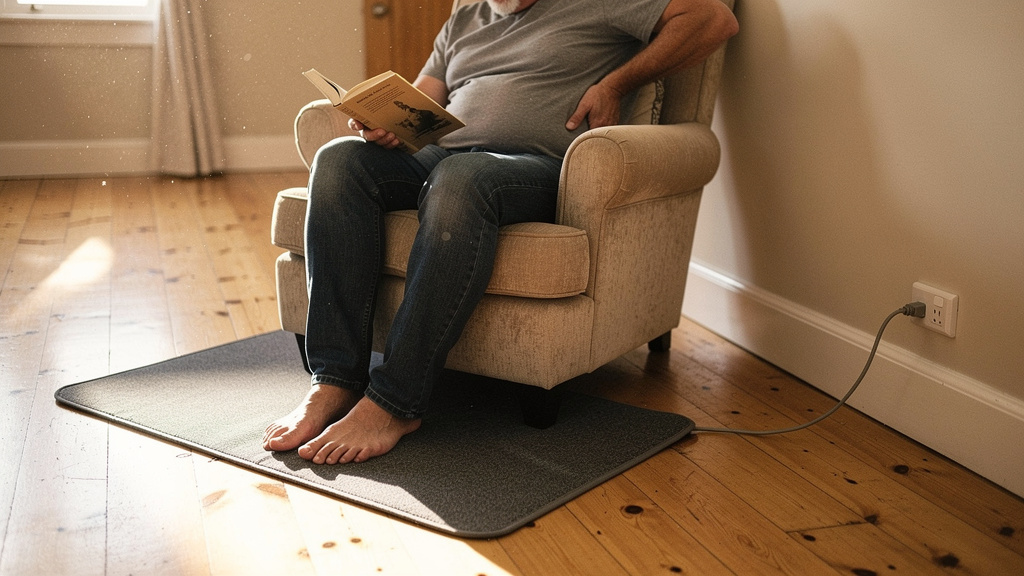
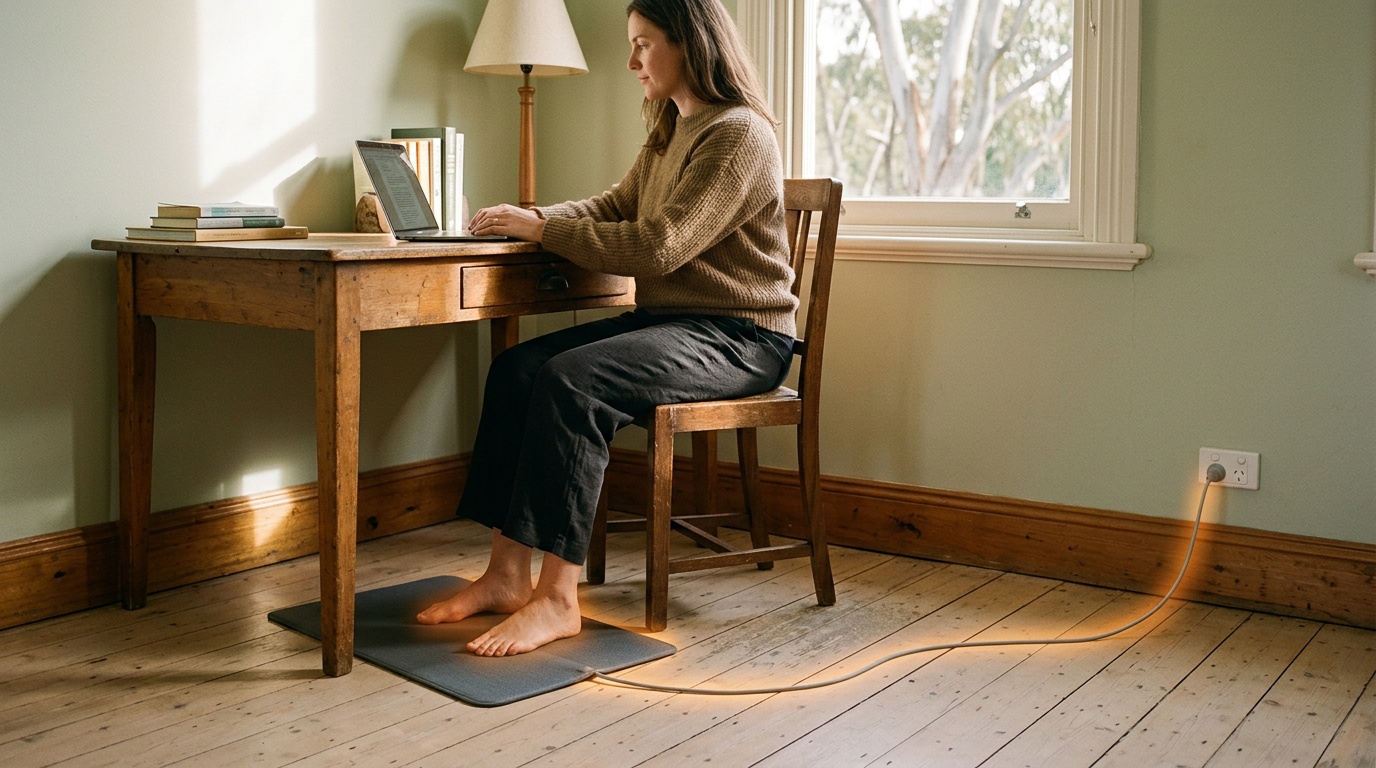
For Australians who want to explore earthing as an adjunct to their existing pain management, the two most practical indoor methods are a conductive mat at a desk or workstation, and a conductive sheet during sleep. Both connect via a cord to the earth terminal (the round hole at the bottom) of a standard Australian three-pin power outlet — no electrical current flows through the product, only the earth connection is used. Australian homes built after 1966 are required by standards to have earthed outlets, though older properties in inner-city Sydney or Melbourne may have ungrounded wiring; use a simple outlet tester (available at Bunnings for under $15) to confirm grounding before use.
For joint pain users specifically, placement matters. A desk mat allows continuous contact through bare forearms and wrists during seated work — a practical passive approach that requires no additional time commitment. People with lower limb joint pain (knee osteoarthritis, plantar fasciitis, ankle injuries) may prefer a floor mat under the desk for foot contact. Grounding sheets are particularly relevant for those whose pain disrupts sleep, given that the Brown et al. (2010) study specifically used overnight earthing and found improvements in both pain and sleep quality. Cotton-based grounding sheets with woven conductive silver threads are generally more comfortable for long-duration use than carbon or stainless steel mat surfaces, and they can be washed at standard temperatures without losing conductivity if care instructions are followed. For people with sensitive or inflamed joints who use heat packs or ice, earthing can be used concurrently — there is no contraindication to combining these approaches.
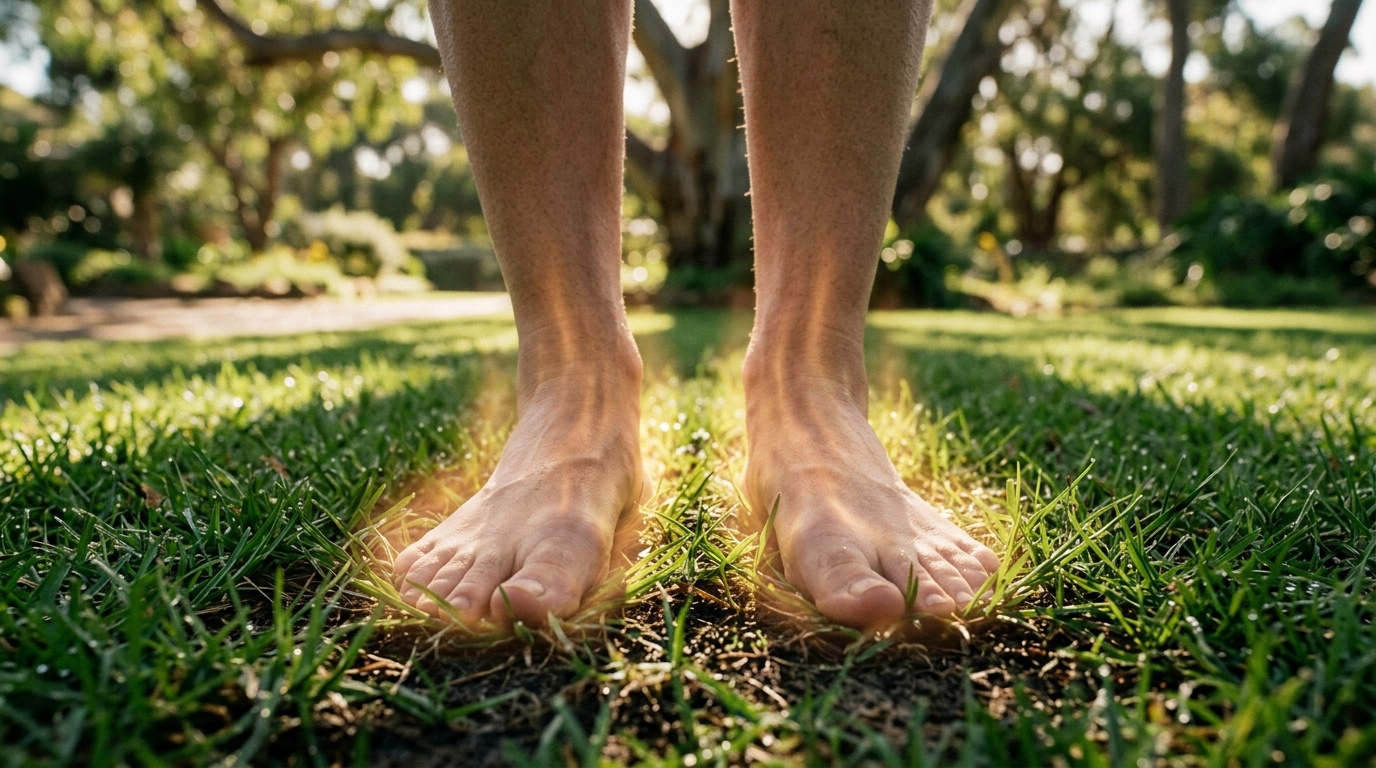
Barefoot outdoor earthing remains the most direct and cost-free application of the mechanism. Damp grass in a garden in Brisbane or Perth, wet sand on a beach in Noosa or the Gold Coast, or concrete pathways that are connected to the ground all provide conductive contact. Dry sand, dry wood, and rubber-soled footwear do not conduct electrons effectively. For Australians who live near the coast — particularly in coastal Queensland, New South Wales, and Western Australia — regular barefoot beach walking provides earthing as a natural byproduct of normal activity. This is worth noting because the mechanism does not require purchasing any product. Indoor products are useful for people who want continuous earthing during sleep or desk work, where going outside is not practical.
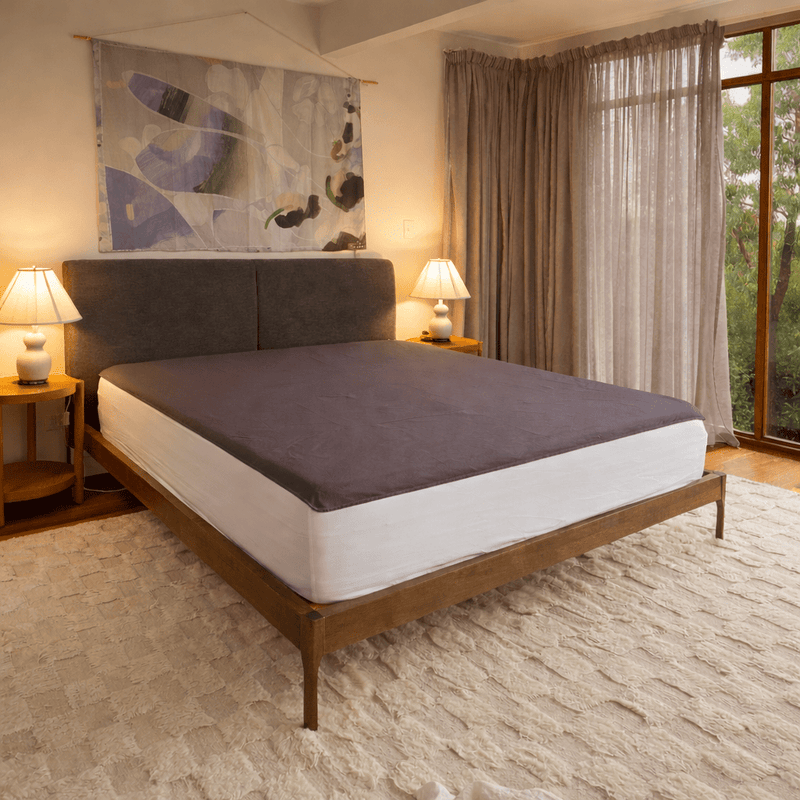 Premium Grounding Earthing Mat — Stainless Steel” width=”160″ />
Premium Grounding Earthing Mat — Stainless Steel
Conductive stainless steel surface, ships to Australia, includes earth connection cord for standard three-pin AU outlets. Suitable for desk use (forearm or wrist contact) or floor placement for foot contact. Tested for conductivity out of the box.
View on Premium GroundingPros
- Stainless steel surface is durable and easily wiped clean
- Compatible with standard Australian three-pin earthed outlets
- Flexible placement — desk mat or floor mat use
- No ongoing cost after purchase
- Ships directly to Australian addresses
Cons
- Hard surface less comfortable for extended sleep use (sheet better for overnight)
- Benefits are not clinically proven at scale
- Requires a properly earthed outlet (verify with outlet tester)
Premium Grounding Earthing Sheet
Cotton-based sheet with woven conductive threads, designed for use during sleep. Connects to earth terminal of AU three-pin outlet. The Brown et al. (2010) study used a sleep-based earthing protocol — this product format aligns with that methodology.
View on Premium GroundingPros
- Most closely mirrors the protocol used in the Brown et al. (2010) pain and sleep study
- 8 hours of passive earthing contact each night requires no routine change
- Comfortable for skin-sensitive users with inflammatory conditions
- Washable at standard temperatures
Cons
- Conductivity degrades over time with repeated washing if care instructions are not followed
- Requires skin contact — pyjamas reduce effectiveness
- Higher upfront cost than basic mat
What to Expect and What Earthing Cannot Replace
Setting realistic expectations is essential. The existing studies on earthing and pain used outcomes measured over weeks, not days. Brown et al. (2010) ran their intervention for four weeks before measuring pain outcomes. Anyone expecting immediate relief after one night of earthing is applying a standard borrowed from pharmaceuticals with fast onset times. If the electron transfer mechanism is real and the anti-inflammatory effect builds through consistent contact over time, the appropriate expectation is gradual and modest improvement as an adjunct — not a rapid and dramatic shift. Some participants in the Brown et al. study did report early improvements in sleep before pain scores changed, which may reflect the known relationship between sleep quality and pain perception rather than a direct anti-inflammatory effect.
There are conditions and situations where earthing is clearly insufficient as a sole or primary strategy. Acute inflammatory episodes — a gout flare in the knee, an acute rheumatoid arthritis flare, post-surgical inflammation — require medical management. Chronic pain conditions involving central sensitisation, neuropathic pain, or significant psychological components (which are common and well-documented in fibromyalgia, chronic lower back pain, and complex regional pain syndrome) require multidisciplinary care that earthing is not equipped to provide. The pain and disability burden experienced by many Australians with these conditions reflects pathology at multiple levels of the nervous system and immune cascade, and no single adjunct intervention addresses all of them. Earthing, if it works as proposed, addresses one upstream input (electron availability for ROS quenching) — which may be relevant but is unlikely to be sufficient alone.
What earthing can reasonably offer, based on current evidence, is: a low-cost, low-risk daily practice that may contribute to reduced systemic oxidative stress and inflammation over time; a potential improvement in sleep quality as a secondary benefit (sleep quality data from Brown et al. 2010 was notable); and a method that is compatible with all standard pain management approaches including physiotherapy, medication, exercise, and dietary interventions. For Australians interested in a fuller picture of grounding products and their evidence base, the Premium Grounding Australia review covers specific product testing, and the best grounding mats Australia 2026 guide compares options across price points. For those considering a sheet for overnight use, best grounding sheets Australia 2026 provides a detailed comparison.
Ready to Try Grounding
Start with a Premium Grounding Mat or Sheet
Ships to Australia. No ongoing cost. Connects to any standard earthed three-pin outlet.
Frequently Asked Questions
Does grounding actually reduce inflammation, or is it just placebo?
The honest answer is that we do not yet know definitively. Oschman et al. (2015) proposed a plausible mechanism — free electron transfer from the earth’s surface neutralising excess reactive oxygen species that drive chronic inflammation. Small studies have found measurable changes in immune markers (not only self-reported outcomes), which partially addresses the placebo argument. However, no large randomised controlled trial has confirmed these effects. The current scientific position is: the mechanism is plausible, early data is supportive but limited, and more rigorous research is needed before definitive conclusions can be drawn.
How long does it take for grounding to affect pain levels?
Based on the Brown et al. (2010) study — the most directly relevant human trial on grounding and pain — the intervention ran for four weeks before pain outcomes were measured. Participants slept on conductive mats connected to earth ground for this period. Some reported earlier improvements in sleep quality. There is no reliable data suggesting significant pain changes in under a week of earthing. Setting an expectation of four to eight weeks of consistent daily earthing before assessing any change in chronic pain is reasonable based on available evidence.
Can I use a grounding mat if I have arthritis?
There is no published evidence of harm from earthing in people with arthritis, and the proposed mechanism — reducing systemic oxidative stress and inflammation — is theoretically relevant to both osteoarthritis and rheumatoid arthritis. However, earthing has not been specifically tested in arthritis clinical populations. If you are on anticoagulant medication (which some RA patients take), early data suggests earthing may affect blood viscosity — speak with your rheumatologist before starting. Earthing should not replace your prescribed arthritis treatment plan.
Is barefoot walking on grass the same as using an earthing mat?
In terms of the proposed mechanism, yes — direct skin contact with damp natural ground surfaces (grass, soil, wet sand) provides the same electron transfer pathway as a conductive mat connected to an earth outlet. The practical advantage of indoor earthing products is duration and consistency: a grounding sheet provides eight hours of contact during sleep, which is difficult to replicate with outdoor barefoot walking. For Australians with easy access to natural ground (coastal Queensland, rural areas, suburban gardens), regular barefoot time outdoors is a free and effective alternative to purchasing products.
Can grounding help with delayed-onset muscle soreness (DOMS)?
The Chevalier, Mori, and Oschman (2006) study tested this specifically using an eight-subject design. The grounded group showed reduced pain scores and more favourable changes in immune markers following exercise-induced muscle damage compared with controls. This is a very small study and cannot be considered clinical evidence, but it does suggest that earthing may have some application in post-exercise recovery. Athletes or active Australians who already use other recovery tools (cold water immersion, compression, adequate sleep) could reasonably add earthing as a low-cost, low-effort adjunct without expecting it to replace those established methods.
Are Australian power outlets suitable for earthing products?
Standard Australian three-pin power outlets (AS/NZS 3112) include an earth terminal, and homes built after 1966 are generally required to have earthed wiring under Australian standards. Most earthing products sold by reputable suppliers include an Australian-compatible connection cord. Before use, verify that your outlet is properly earthed using an inexpensive outlet tester (available at hardware stores across Australia for under $15). Older homes in inner Sydney, Melbourne, or Adelaide may have ungrounded two-pin or two-pin-with-earth legacy wiring — testing first is important.
What does the research say about grounding and chronic lower back pain specifically?
No study has been specifically conducted on grounding and chronic lower back pain as a defined condition. The Brown et al. (2010) study included general pain scores that would encompass back pain in a mixed participant group, and improvements were observed in the grounded group. Chronic lower back pain is a complex condition that frequently involves both peripheral and central sensitisation components, as well as psychological factors, muscle deconditioning, and structural contributors. Even if earthing contributes to reduced peripheral inflammation — which is plausible but unproven — it would address only one element of a multifactorial condition. Physiotherapy and supervised exercise remain the most evidence-backed first-line approaches for chronic lower back pain in Australia.
How many Australians have chronic pain, and what does it cost?
Musculoskeletal conditions affecting pain and movement affected approximately 7.5 million Australians in 2022, according to the Australian Institute of Health and Welfare. Painaustralia’s 2019 national pain strategy report estimated that chronic pain costs the Australian economy $73.2 billion annually — accounting for direct healthcare expenditure, lost productivity, reduced workforce participation, and quality of life impacts. These figures underscore why cost-effective adjunct strategies are of genuine interest to clinicians, health economists, and people living with pain — even where the evidence base is still developing.
Is there a risk of electric shock from an earthing mat?
No. Earthing products connect only to the earth (ground) terminal of an outlet — the same terminal that all metal appliance casings connect to for safety purposes. No electrical current flows through a properly designed earthing product; the connection merely equalises the body’s electrical potential with the earth. Reputable earthing products include a resistor in the connection cord that limits current to levels that cannot cause any sensation even in the event of a fault. The earth terminal of a power outlet carries no mains voltage under any normal wiring configuration. However, always purchase from reputable suppliers and verify your outlet is properly earthed before use.
Last reviewed: June 2026 — Clean and Native
Get the Australian Home Environment Checklist
30 checks across water, air and EMF. Most of them free. Ranked by impact.
No spam. Unsubscribe any time.

Former Royal Australian Navy Clearance Diver and TAG-E counter-terrorism operator. Founded Clean and Native to apply the same rigorous thinking to the home environment.
Full biography →