Do EMF Harmonizers Actually Work? A TriField TF2 Test (Australia 2026)
Drafted with AI assistance and checked against published specifications and certifications. First-hand measurements appear only where stated. How we make content
EMF harmonizers do not work. Not in the sense of “limited evidence” — in the sense that the mechanism they claim is physically impossible, and every independent test confirms zero measurable effect. As a former Royal Australian Navy Clearance Diver who tests EMF in homes using a calibrated TriField TF2 meter, Independent testing of harmonizers, neutralizers, and stickers finds the readings before and after are identical. That is not a negative result — it is the expected result from a device with no conductive or shielding properties.
This article covers what EMF harmonizers claim, why the physics rules it out, what the best independent Australian test (CHOICE) found, and what actually reduces measurable EMF exposure in your home.
Quick Verdict — Do EMF Harmonizers Work?
No. No passive device can neutralise, harmonise, or cancel electromagnetic fields without absorbing or reflecting the energy — this is physics, not opinion. CHOICE tested the most popular Australian harmonizer (the Geoclense) and found it is “an inert lump of plastic” that “draws no power” and produces zero measurable effect. If you want to reduce your EMF exposure, the only interventions that work are distance, shielding, and source removal — all measurable with a calibrated meter.
What EMF Harmonizers Claim to Do
EMF harmonizers — sold under names like Geoclense, orgone generators, EMF neutralizers, harmonizing stickers, and scalar energy pendants — claim to neutralise, cancel, or harmonise electromagnetic radiation so it becomes “biologically beneficial” or “inert.” The specific claims vary by brand, but the underlying premise is consistent: the device transforms harmful EMF into harmless energy without any physical interaction with the field.
The most prominent Australian example is the Geoclense by Orgone Effects Australia (orgoneeffects.au), a Melbourne-based company that has been selling these products since 2000. The Geoclense is a small plug-in device that claims to “harmonise the noxious energies” in a home. It plugs into a power point but — as CHOICE confirmed in their independent test — draws no power. It is passive plastic.
Why the Physics Rules It Out
Electromagnetic fields are measurable, physical phenomena described by Maxwell’s equations. To reduce, cancel, or transform an EMF field, a device must do at least one of the following: absorb the energy (converting it to heat), reflect the energy (using a conductive or metallic barrier), or generate an opposing field that destructively interferes with the original (active noise cancellation, which requires power and a matched field generator).
Passive plastic devices do none of these. A device that draws no power cannot generate an opposing field. A device with no conductive shielding cannot reflect or absorb RF. The concept of “harmonising” or “neutralising” radiation through passive resonance has no mechanism in established physics — it is not a phenomenon that has been demonstrated, replicated, or incorporated into any scientific model of electromagnetism.
This is not a matter of the science being incomplete. It is a basic conservation of energy argument: the energy in an electromagnetic field has to go somewhere. A device that claims to make it “biologically inert” without absorbing, reflecting, or dissipating it is claiming to violate energy conservation. Physicists would notice.
What the Best Independent Australian Test Found
CHOICE Australia — the most trusted independent consumer testing organisation in the country — tested the Geoclense Home Harmonizer and published their findings. Their conclusion: the Geoclense is “an inert lump of plastic.” It “draws no power” from the outlet it is plugged into. It produces “zero ions.” There is no measurable change to the electromagnetic environment in a home when it is plugged in versus unplugged.
The CHOICE article is behind a paywall, which is why it does not circulate widely. But it is citable and on record. The methodology was simple: measure the electromagnetic environment before and after installation with calibrated instruments. The result was exactly what physics predicts: no change.
Positive reviews of harmonizers largely reflect expectation bias and placebo: reviewers who believe they feel better after installation, with no way to distinguish that from the documented placebo response that follows any health-adjacent purchase.
What a Calibrated Meter Actually Shows
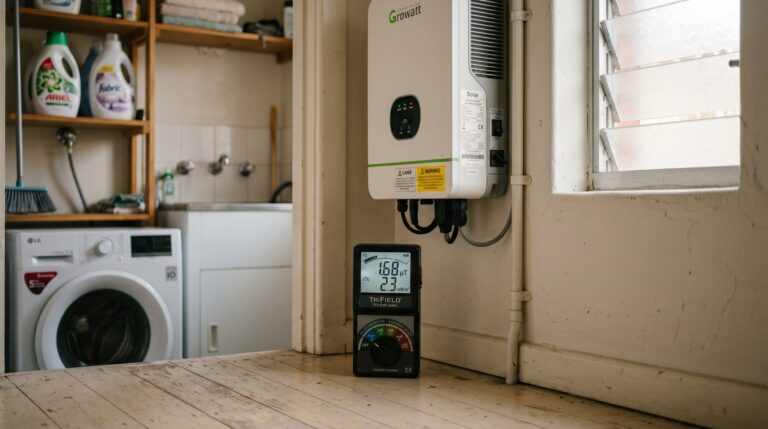
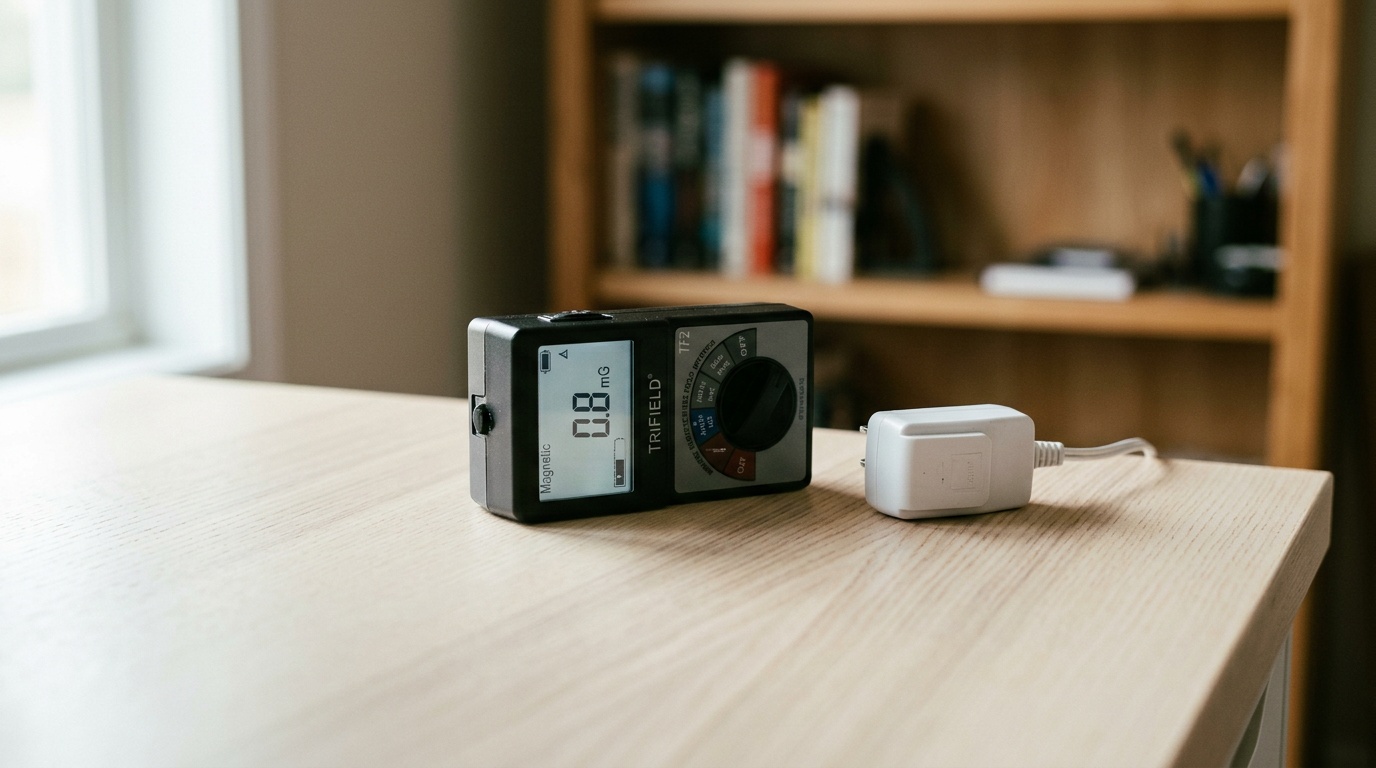
A calibrated TriField TF2 measures three EMF types: RF (radio frequency from WiFi, mobile, smart meters), AC magnetic (from power lines and appliances), and AC electric (from household wiring). A passive harmonizer has no conductive or shielding properties and draws no power, so it cannot alter any of these fields: baseline and post-installation readings are identical to within normal environmental variation, which is the result physics predicts.
This test takes 30 minutes and costs nothing beyond the meter. It is the only honest way to evaluate any EMF-reduction claim. If a device cannot produce a measurable change on a calibrated meter, it is not reducing your EMF exposure — regardless of what the manufacturer claims, what testimonials report, or how much the product costs.
What Actually Reduces EMF Exposure in Australian Homes
The interventions that produce measurable EMF reduction are not glamorous, but they work — and a meter confirms every one of them.
Distance: RF field strength falls off with the square of distance. Moving your WiFi router from your bedroom to a hallway is typically the single highest-impact action available. A TriField TF2 reading of 0.5 mW/m² at 1 metre from a router drops to near background levels at 5 metres.
Timer switches: The HPM 24 Hour Analog Timer (approximately $20 on Amazon AU, ASIN B081JD8LXN) cuts router power during sleep hours. Zero RF output during sleep — the period when sustained cumulative exposure is highest. No app, no smart home, no ongoing cost.
Phone aeroplane mode at night: A phone searching for signal in a low-coverage bedroom can spike transmit power significantly. Aeroplane mode cuts RF output to zero.
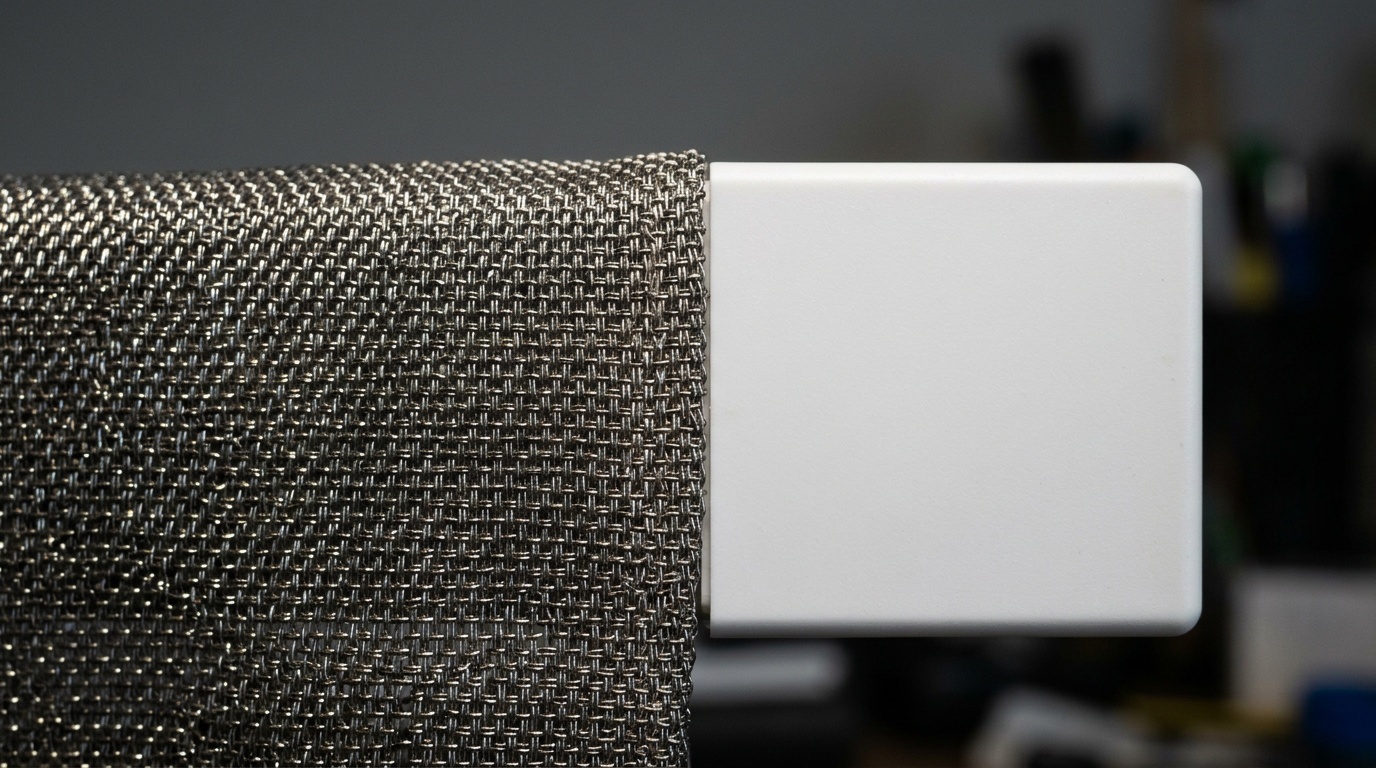
Shielding with conductive materials: Purpose-built RF shielding fabric, properly installed, creates a measurable Faraday effect. This is the physics that harmonizer manufacturers are gesturing at — but they omit that it only works with actual conductive material, correctly installed, and grounded. A passive plastic plug does not create a Faraday cage.
Demand switches: For AC electric field reduction, a licensed electrician installing a demand switch on your bedroom circuit eliminates AC electric fields from wiring during sleep. This is the most technically effective intervention for that specific field type.
Measure First. Then Act.
The TriField TF2 is the only consumer-grade meter that measures RF, AC magnetic, and AC electric fields in one device. It’s the same instrument I use at my Palm Beach home and the reference instrument for every EMF guide on this site.
Last reviewed: June 2026 — Clean and Native
Frequently Asked Questions
Do EMF harmonizers actually work?
No. Passive devices with no conductive shielding and no power draw cannot reduce, neutralise, or transform electromagnetic fields. CHOICE Australia tested the Geoclense — Australia’s most popular harmonizer — and found it is an inert plastic device with zero measurable effect. Physics predicts this outcome, and every independent test confirms it.
What did CHOICE find when they tested the Geoclense?
CHOICE tested the Geoclense Home Harmonizer and concluded it is “an inert lump of plastic” that “draws no power” and produces “zero ions.” There was no measurable change to the electromagnetic environment before and after installation. The article is paywalled but citable and on the record as an independent consumer test.
Why do some people report feeling better after installing an EMF harmonizer?
Placebo effect. Any health-adjacent purchase produces a measurable subjective improvement in wellbeing — this is well-documented in medical research. The improvement is real as an experience; it is not caused by the device reducing EMF. The same effect would occur if you plugged in an identically shaped piece of plastic with no claimed EMF properties.
Is orgone energy real?
No. Orgone energy was proposed by Wilhelm Reich in the 1930s and has never been detected, measured, or replicated by any independent scientific investigation. The concept is not incorporated into any accepted model of physics, chemistry, or biology. Devices claiming to manipulate orgone energy have no scientific basis.
What is the most effective way to reduce EMF exposure in my home?
In order of impact: (1) distance — move WiFi router out of the bedroom; (2) timer switch — cut router power during sleep hours for ~$20; (3) phone aeroplane mode at night; (4) demand switch on bedroom circuit for AC electric field reduction (licensed electrician, ~$100-150). All of these produce measurable changes on a calibrated meter. See our full EMF bedroom audit guide.
How can I test whether an EMF harmonizer is working?
Use a calibrated EMF meter. Take baseline RF, AC magnetic, and AC electric readings before installing the device. Install the device. Take the same readings again. If the readings are identical — which they will be — the device is not working. The TriField TF2 (~$350 AUD on Amazon AU) measures all three field types and takes under 30 minutes to complete a full room assessment.
Are EMF harmonizer stickers effective?
No. Phone stickers, crystal pendants, and similar products claiming to block or harmonise EMF from mobile devices have no physical mechanism for doing so. Independent testing shows zero change in measured SAR (specific absorption rate) or RF field strength before and after application. No regulatory body in Australia has approved any such product as an effective EMF reduction measure.
Is the Geoclense approved by any Australian regulator?
No. ACMA (Australian Communications and Media Authority) and ARPANSA do not approve or endorse any passive harmonizer-style device as an effective EMF protection measure. The RCM (Regulatory Compliance Mark) on Australian-sold electrical products confirms basic electrical safety compliance only — it says nothing about any claimed health or EMF-reduction properties.
Get the Australian Home Environment Checklist
30 checks across water, air and EMF. Most of them free. Ranked by impact.
No spam. Unsubscribe any time.

Former Royal Australian Navy Clearance Diver and TAG-E counter-terrorism operator. Founded Clean and Native to apply the same rigorous thinking to the home environment.
Full biography →