Reverse Osmosis Systems vs Gravity Filters Australia 2026: Which Is Worth Your Money?
9 min read
This article contains affiliate links. We may earn a commission at no extra cost to you. Full disclosure.
You’ve narrowed it down to two fundamentally different approaches: the precision engineering of reverse osmosis versus the elegant simplicity of gravity filtration. Both remove contaminants from Australian tap water, but they do it through completely different mechanisms. One strips out virtually everything using membrane technology, while the other relies on activated carbon and ceramic filters working with gravity alone. The choice isn’t about which is “better” — it’s about which fits your specific Australian home situation. This reverse osmosis vs gravity filter Australia comparison will tell you exactly which system belongs in your kitchen.
The Short Answer
Reverse osmosis systems suit homes with plumbing access needing maximum contaminant removal including fluoride and heavy metals. Gravity filters work best for renters, off-grid situations, or those wanting simple maintenance with decent filtration. Your water source and installation flexibility determine the winner.
| Specification | Reverse Osmosis | Gravity Filters |
|---|---|---|
| Initial Cost (AUD) | $350-$1,200 | $150-$450 |
| Installation Requirements | Under-sink plumbing modification | Countertop placement only |
| Fluoride Removal | 95-99% (NSF/ANSI 58) | 0-50% (depends on filter type) |
| Chlorine Removal | 99%+ (pre-carbon stage) | 99%+ (activated carbon) |
| Heavy Metal Reduction | 95-99% lead, mercury, arsenic | 85-95% (quality carbon filters) |
| Bacteria/Cyst Removal | 99.99% (0.0001 micron membrane) | 99.9% (ceramic pre-filters) |
| Daily Capacity | 150-300 litres | 8-20 litres (storage dependent) |
| Water Waste Ratio | 3-4 litres waste per 1 litre filtered | Zero waste |
| Filter Replacement Cost/Year (AUD) | $180-$320 | $120-$200 |
| Power Requirements | Mains pressure (15-80 PSI) | Gravity only |
| Mineral Retention | Removes all minerals | Retains beneficial minerals |
| Emergency/Off-Grid Use | Requires pressurised water supply | Works with any water source |
## Reverse Osmosis Systems: Maximum Filtration for Australian Conditions
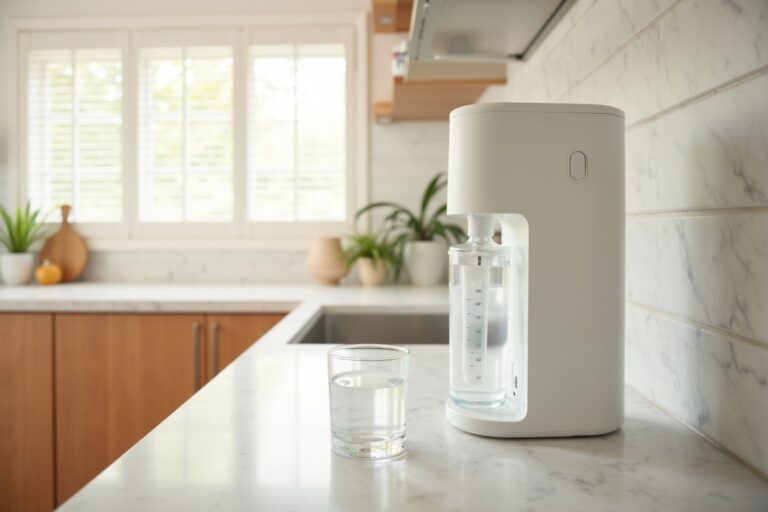
Reverse osmosis represents the most comprehensive water treatment available for residential use. The technology forces water through a semipermeable membrane with pores approximately 0.0001 microns — small enough to block virtually every contaminant except pure H2O molecules.
In Australian homes, RO systems excel where municipal water carries specific concerns. Queensland’s fluoridated water supplies see fluoride levels around 0.6-1.0 mg/L according to the Queensland Health Department. A quality RO system certified to NSF/ANSI Standard 58 will reduce this to under 0.05 mg/L — a 95%+ reduction rate that gravity filters simply cannot match.
The multi-stage process typically includes sediment pre-filtration, activated carbon for chlorine removal, the RO membrane itself, and post-carbon polishing. This combination addresses the full spectrum of Australian water concerns: the chlorine and chloramines used for disinfection across all capital cities, the agricultural runoff affecting regional supplies, and the naturally occurring minerals that can reach problematic levels in bore water.
Installation requires under-sink space and basic plumbing modifications — usually a dedicated faucet and connection to your cold water line. Most quality systems include a storage tank (typically 7-12 litres) because the filtration process is slower than your kitchen tap flow rate. This storage capacity suits Australian family usage patterns, with the tank refilling automatically as water is used.
The mineral removal aspect deserves specific attention in the Australian context. While some sources suggest RO water is “too pure,” the Australian Drinking Water Guidelines don’t specify minimum mineral levels — only maximum safe levels for contaminants. The World Health Organisation notes that healthy individuals obtain minerals primarily from food, not water.
Affiliate link — we may earn a commission at no extra cost to you.
## Gravity Filters: Simplicity and Reliability for Australian Homes
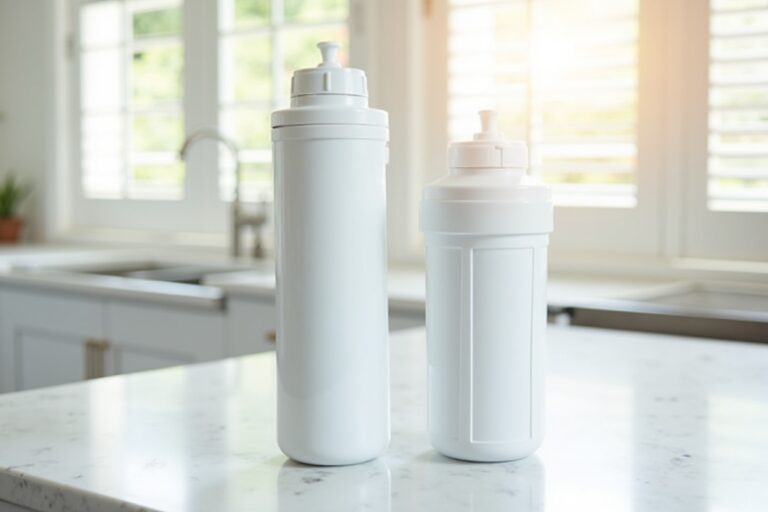
Gravity filtration operates on a principle older than modern plumbing: water flows downward through filter media, emerging cleaner at the bottom. Contemporary gravity systems typically combine ceramic pre-filters with activated carbon elements, creating surprisingly effective treatment without electricity or water pressure requirements.
The standout advantage for Australian conditions is operational flexibility. Whether you’re dealing with Brisbane’s variable water pressure, camping in the Outback, or facing one of the periodic boil-water notices that affect regional towns, gravity filters continue working. They process rainwater, bore water, or municipal supplies with equal effectiveness.
Quality gravity systems like those using Black Berkey elements achieve impressive contaminant reduction: 99.9% of pathogenic bacteria and cysts, over 99% chlorine removal, and significant heavy metal reduction. The ceramic outer shell provides physical filtration down to 0.9 microns, while the internal carbon matrix handles chemical contaminants through adsorption.
The Australian climate presents specific advantages for gravity filtration. Unlike reverse osmosis membranes that can degrade in extreme heat, gravity filter elements remain stable across temperature ranges typical in Australian homes. The lack of moving parts or pressure requirements means reliability in remote locations where RO systems would fail.
Storage capacity varies dramatically with system size. Compact countertop models hold 2-4 litres, suitable for single users or couples. Larger systems accommodate 8-23 litres, serving families or small offices. The stainless steel construction common in quality units suits Australian conditions better than plastic alternatives that may degrade under UV exposure.
Maintenance involves periodic cleaning of ceramic elements and annual replacement of carbon filters. The ceramic components can be scrubbed clean when flow rates decrease, extending their operational life significantly compared to disposable cartridge filters.
Affiliate link — we may earn a commission at no extra cost to you.
## Where Each Falls Short
Reverse osmosis systems generate substantial wastewater — typically 3-4 litres discarded for every litre of filtered water produced. In drought-prone Australia, this represents both environmental and cost concerns. Sydney households might see an additional $200-300 annually on water bills purely from RO waste. The mineral removal, while not harmful, does create water that some find flat-tasting compared to the mineral content Australians expect from quality spring water.
Installation complexity poses the biggest practical limitation. Rental properties often prohibit plumbing modifications, and the under-sink space requirements don’t suit all kitchen configurations. The storage tank needs replacement every 2-3 years, and membrane replacement requires technical knowledge or professional service calls.
Gravity filters suffer from limited capacity and slow flow rates. A typical family using 8-12 litres of drinking water daily will find smaller gravity systems inadequate, requiring constant refilling. The 2-5 litres per hour flow rate means you cannot fill large containers quickly — problematic when cooking or preparing drinks for groups.
Fluoride removal remains inconsistent across gravity filter brands. While some specialty filters claim fluoride reduction, most standard activated carbon elements provide minimal fluoride removal. Families specifically seeking fluoride reduction for young children will find gravity systems inadequate compared to RO performance.
The physical footprint can be problematic in Australian kitchens. Counter space is premium in many homes, and gravity systems require permanent placement with sufficient clearance for top loading. Unlike RO systems hidden under sinks, gravity filters become a permanent kitchen fixture.
## Which Should You Buy?
If you rent your home or cannot modify plumbing, gravity filtration is your only viable option. The best systems provide excellent chlorine and sediment removal without installation complexity. Choose larger capacity units (15+ litres) for families.
If fluoride removal is your primary concern, reverse osmosis delivers unmatched performance. Families with young children in fluoridated areas like Melbourne or Perth will find RO systems provide the 95%+ fluoride reduction that gravity filters cannot match.
If you live off-grid or have unreliable water pressure, gravity systems work regardless of infrastructure. Remote Queensland properties, rural NSW homesteads, or anywhere with tank water supplies benefit from gravity filtration’s independence from mains pressure.
If water waste concerns you environmentally or financially, gravity filtration produces zero waste water. RO systems waste 75% of input water — significant in drought-prone regions or where water costs are high.
If you want maximum contaminant removal including pharmaceuticals and industrial chemicals, reverse osmosis provides the most comprehensive treatment. The 0.0001 micron membrane blocks contaminants that activated carbon cannot adsorb.
## Frequently Asked Questions
### Can I use a gravity filter in a rental property in Australia?
Yes, gravity filters require no plumbing modifications or permanent installation. They sit on countertops and connect to no fixed infrastructure, making them ideal for rental properties across Australia. Most lease agreements permit countertop appliances without landlord approval.
### Does reverse osmosis remove fluoride from Queensland tap water completely?
Reverse osmosis systems certified to NSF/ANSI Standard 58 remove 95-99% of fluoride from Queensland’s fluoridated water supplies. Starting from Queensland’s typical 0.6-1.0 mg/L fluoride levels, quality RO systems reduce this to under 0.05 mg/L — effectively complete removal for practical purposes.
### Which is cheaper to run per year in Australia?
Gravity filters typically cost $120-200 annually for filter replacements, while RO systems cost $180-320 for all filter stages plus membrane replacement. However, RO systems add $200-300 to water bills through waste water generation, making gravity filtration significantly cheaper overall.
### Will a gravity water filter work during power outages?
Yes, gravity filters operate without electricity or water pressure. During the power outages common in rural Australia or extreme weather events, gravity systems continue filtering water while RO systems requiring mains pressure cannot function.
### Can I take a gravity filter camping or to remote areas?
Gravity filters excel for camping and remote use across Australia. They filter water from any source — creeks, rainwater, bore water — without requiring pressurised supply or electricity. Many camping and 4WD enthusiasts use portable gravity systems for reliable water treatment in the Outback.
For comprehensive water treatment guidance, see our detailed analysis of the [best water filter systems for Australian homes](/water-filters/best-water-filter-australia-2026/). Understanding your [local water quality by Australian state](/water/whats-in-australian-tap-water-by-state-2026/) helps determine which filtration approach suits your specific situation. Consider our complete guide to [household water treatment options](/water-filters/complete-guide-water-filters-australia-2026/) for additional filtration methods and technologies.
Written by Jayce Love — Former Royal Australian Navy Clearance Diver & Founder, Clean and Native
Get the Australian Home Environment Checklist
30 checks across water, air and EMF. Most of them free. Ranked by impact.
No spam. Unsubscribe any time.

Former Royal Australian Navy Clearance Diver and TAG-E counter-terrorism operator. Founded Clean and Native to apply the same rigorous thinking to the home environment.
Full biography →