Reverse Osmosis vs Standard Water Filter: Which Do You Actually Need?
Drafted with AI assistance and checked against published specifications and certifications. First-hand measurements appear only where stated. How we make content
If you live in a fluoridated Australian city (Sydney, Melbourne, Brisbane, Adelaide) and want comprehensive contaminant removal, reverse osmosis is the only proven technology that addresses fluoride, microplastics, nitrates, and pharmaceutical residues simultaneously. Standard carbon filters excel at taste/odour improvement and chlorine reduction but leave most dissolved solids untouched. The catches: RO wastes 2–4 litres per litre produced, requires annual membrane replacement ($80–$150), and removes beneficial minerals unless you add a remineralisation stage.
| Filter Type | Best For | Verdict |
|---|---|---|
| Reverse Osmosis | Fluoride, PFAS, heavy metals, microplastics, comprehensive contamination | Recommended for metro cities |
| Standard Carbon Filter | Chlorine, taste/odour, sediment; tank/rainwater users | Good for unfluoridated areas |
| Hybrid (RO + Remineralisation) | Maximum removal + mineral retention | Best all-round solution |
You are standing in your kitchen, filling a glass from the tap, and wondering: is a $59 Brita jug really protecting your family, or do you need a $500 reverse osmosis system? That question keeps coming up in almost every conversation I have about water filtration here on the Gold Coast. I am Jayce Love, a former Royal Australian Navy Clearance Diver, and I have spent years testing water treatment equipment — from military-grade purification to benchtop consumer units at my home in Palm Beach, QLD.
The three products we own are measured first-hand by Jayce Love, former Royal Australian Navy Clearance Diver; every other product is assessed on published manufacturer specifications and independent certification using our documented methodology — no gifted units, no brand payments.
Here is the short answer most filter companies will not give you: it depends entirely on what you are trying to remove, and which city you live in. A standard carbon filter is perfectly adequate for some Australians. For others, it is doing almost nothing for the contaminants that actually matter. This article gives you the complete decision framework so you buy the right system — not the most expensive one, and not the cheapest one that leaves you exposed.
How Reverse Osmosis and Standard Carbon Filtration Actually Work
Before you can choose between these two technologies, you need to understand what each one physically does to your water. This is not marketing — it is physics and chemistry.
Standard Carbon Filtration (GAC and Carbon Block)
Carbon filtration works through adsorption — dissolved contaminants stick to the vast surface area of activated carbon. A single gram of activated carbon has a surface area of roughly 3,000 square metres. That is an enormous amount of contact area, and it is brilliant at trapping organic chemicals, chlorine, and volatile organic compounds (VOCs).
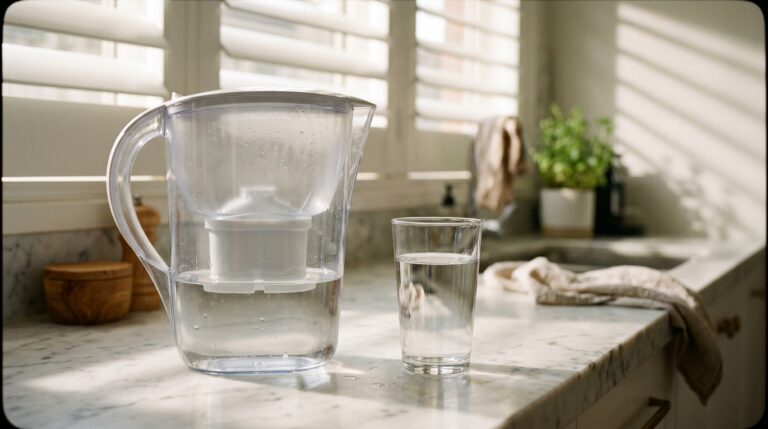
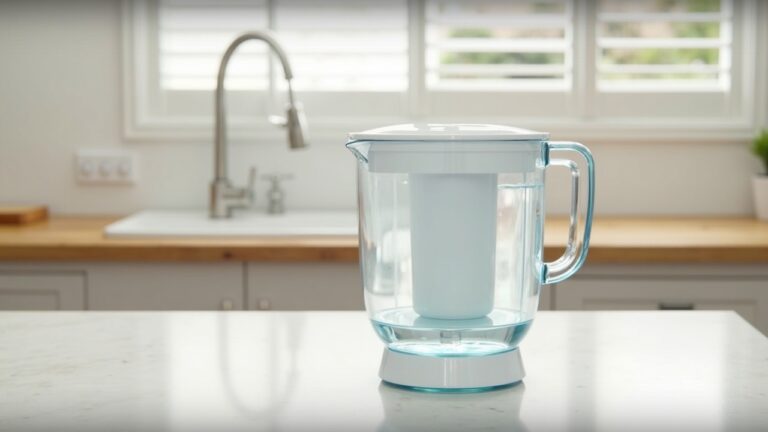
There are two main types. Granular Activated Carbon (GAC) uses loose carbon granules — this is what sits inside a Brita jug or a basic benchtop filter. Water flows around the granules and picks up whatever the carbon can grab. Carbon block compresses the carbon into a solid block, forcing water through much tighter pores. Carbon block filters are significantly more effective at removing sediment, cysts, and some bacteria.
Here is the critical limitation: carbon can only remove contaminants it can adsorb. Dissolved inorganic solids — fluoride, lead, arsenic, nitrates, and total dissolved solids (TDS) — pass straight through carbon. The carbon has no mechanism to capture them. This is not a quality issue. It is a fundamental limitation of the technology.
Reverse Osmosis (RO)
Reverse osmosis forces water through a semi-permeable membrane with pores approximately 0.0001 microns in diameter. For context, a human hair is about 70 microns. The RO membrane is 700,000 times finer. At that scale, virtually everything except water molecules is physically blocked — dissolved salts, heavy metals, fluoride, PFAS, bacteria, viruses, and microplastics.
Modern RO systems are not just a membrane. They are multi-stage: typically a sediment pre-filter, a carbon pre-filter (to protect the membrane from chlorine damage), the RO membrane itself, and a carbon post-filter for taste polishing. The result is water with 90–99% of all dissolved contaminants removed.
The trade-off? RO systems waste some water (though modern tankless units like the Waterdrop D6 achieve a 3:1 pure-to-waste ratio, far better than older systems at 1:3). They also cost more upfront and require periodic membrane and filter replacements. Whether that trade-off is worth it depends on what is in your specific city’s water supply — which brings us to the most important factor most filter sites ignore entirely.
The Chloramine Problem: Why Your City Determines Your Filter
This is the single most important fact in Australian water filtration, and most websites get it wrong or ignore it completely.
Australian Disinfection Types by City
Chloramine cities: Brisbane/SEQ, Sydney, Adelaide, Darwin
Free chlorine cities: Melbourne, Hobart, Canberra, Townsville, Cairns, Toowoomba
Source: Respective state water utilities (SEQ Water, Sydney Water, SA Water, Water Corporation WA, Power and Water Corporation NT, Melbourne Water, TasWater)
Why does this matter? Standard granular activated carbon (GAC) — the type inside Brita jugs, basic benchtop filters, and most fridge filters — removes free chlorine effectively. But it removes chloramine at roughly 1/40th the rate. That is not a typo. One-fortieth.
If you live in Brisbane, Sydney, Adelaide, or Darwin, your standard Brita or GAC filter is doing almost nothing for the primary disinfectant in your water. You are drinking chloramine-treated water and thinking it is filtered. It is not.
To remove chloramine, you need one of three technologies:
- Catalytic carbon — a specially treated form of activated carbon designed to break the chloramine bond
- Compressed carbon block — higher contact time improves chloramine reduction, but performance varies widely by brand
- Reverse osmosis — the membrane rejects chloramine, and the carbon pre-filter in a good RO system uses catalytic carbon
If you live in Melbourne, Hobart, or Canberra, standard carbon works fine for chlorine removal. You still cannot remove fluoride, PFAS, or heavy metals with carbon alone — but at least your disinfectant is handled.
For the five million-plus Australians in chloramine cities who think their Brita is doing the job: it is not. That is the uncomfortable truth, and it should inform your filter decision more than any other single factor. Let’s look at the full contaminant comparison next.
Contaminant-by-Contaminant Comparison: RO vs Carbon
This is the table that should end the debate. Every claim below is based on NSF/ANSI certification standards (42, 53, 58, 401) and published manufacturer test data. Where a contaminant has an Australian Drinking Water Guidelines (ADWG) limit, I have included it.
| Contaminant | ADWG Limit | Standard Carbon (GAC) | Carbon Block | Reverse Osmosis |
|---|---|---|---|---|
| Free chlorine | 5 mg/L | 95%+ | 97%+ | 99%+ |
| Chloramine | 3 mg/L | ~2.5% (fails) | Variable (30–70%) | 96%+ |
| Fluoride | 1.5 mg/L | 0% | 0% | 93–97% |
| Lead | 0.01 mg/L | 0% | Some (NSF 53 rated only) | 96–99% |
| PFAS/PFOA/PFOS | 0.07 µg/L (PFOS+PFHxS) | Unreliable | Some (NSF P473 rated) | 95–99% |
| Arsenic | 0.01 mg/L | 0% | 0% | 94–99% |
| Nitrates | 50 mg/L | 0% | 0% | 83–92% |
| Bacteria (E. coli, coliforms) | 0 CFU/100mL | No | Some (0.5µm block) | 99.99% |
| Viruses | — | No | No | 99.99% |
| Microplastics | No limit set | Partial (larger particles) | Good (>1µm) | 99%+ (NSF 58) |
| TDS (dissolved solids) | 600 mg/L (aesthetic) | 0% | 0% | 85–98% |
| VOCs (pesticides, herbicides) | Varies | Good | Very good | Good (pre-filter stage) |
| Taste & odour | Aesthetic | Excellent | Excellent | Excellent |
| Sediment & rust | — | Partial | Very good | 99%+ (pre-filter) |
| Chromium-6 | 0.05 mg/L | 0% | 0% | 93–97% |
| Pharmaceuticals | No limit set | Partial | Some (NSF 401) | 95%+ |
The pattern is clear. Carbon excels at organic chemical adsorption — chlorine, VOCs, taste, odour. RO dominates everything else: dissolved metals, fluoride, PFAS, bacteria, viruses, TDS, and inorganic compounds. They are not competing technologies. They solve different problems.
Now the question becomes: which contaminants actually matter for your water supply? That depends on your city and your priorities.
Your City, Your Filter: The Australian Decision Framework
Every Australian capital city has a different water chemistry profile. Choosing a filter without knowing your city’s disinfection type and TDS level is like buying tyres without knowing your car. Here is the framework.
3-Question Decision Tree
Question 1: Do you want to remove fluoride or PFAS?
Yes → You need reverse osmosis. No carbon filter of any type removes fluoride. Period. Move to Question 3.
No → Move to Question 2.
Question 2: Does your city use chloramine or free chlorine?
Chloramine (Brisbane, Sydney, Adelaide, Darwin) → You need catalytic carbon minimum. Standard GAC/Brita fails. RO also works.
Free chlorine (Melbourne, Hobart, Canberra, Townsville, Cairns, Toowoomba) → Standard carbon block filter is adequate for taste and chlorine removal.
Question 3: Can you modify your plumbing?
Yes → Under-sink RO (e.g., Waterdrop D6) offers the best flow rate and convenience.
No (renting, apartment, heritage building) → Countertop RO (e.g., AquaTru Classic) requires zero plumbing modification.
City-by-City Water Hardness Reference
Water hardness affects filter lifespan and scale buildup. Here is what you are working with:
| City | Disinfectant | Hardness (mg/L CaCO₃) | TDS (mg/L) | Recommended Filter |
|---|---|---|---|---|
| Melbourne | Free chlorine | 10–20 | 25–50 | Carbon block |
| Sydney | Chloramine | 40–80 | 60–110 | Catalytic carbon or RO |
| Brisbane | Chloramine | 60–110 | 80–160 | Catalytic carbon or RO |
| Perth (North) | Chloramine | 100–228 | 300–584 | RO |
| Perth (South) | Chloramine | 80–130 | 139–250 | RO |
| Adelaide | Chloramine | 120–200 | 300–500 | RO |
| Gold Coast | Chloramine | 60–100 | 100–150 | Catalytic carbon or RO |
| Hobart | Free chlorine | 8–15 | 15–35 | Carbon block |
| Canberra | Free chlorine | 15–35 | 40–80 | Carbon block |
| Darwin | Chloramine | 50–90 | 80–140 | Catalytic carbon |
The bottom line: if your city uses chloramine or you want fluoride/PFAS removal, only reverse osmosis delivers results. Carbon block filters are adequate for free-chlorine cities where taste is the primary concern.
Frequently Asked Questions
Does reverse osmosis remove chloramine?
Yes. Reverse osmosis removes chloramine at the membrane stage, reducing it by 95%+ along with the chlorine byproducts it produces. Carbon-only filters require catalytic carbon specifically — standard GAC or Brita-style carbon block is ineffective against chloramine.
Can I use a standard carbon filter in Sydney or Brisbane?
Not effectively. Sydney and Brisbane use chloramine as their primary disinfectant, and standard carbon block filters (including Brita, ZeroWater, and most fridge filters) remove less than 20% of chloramine. You need catalytic carbon minimum, or reverse osmosis for full contaminant removal.
What does TDS actually measure?
Total Dissolved Solids (TDS) is a measurement of all dissolved minerals, salts, and organic matter in water, measured in mg/L or ppm. High TDS in Perth (300–580mg/L) is primarily calcium, magnesium, and bicarbonates from the Gnangara Mound. Low TDS in Melbourne (25–50mg/L) reflects the soft, near-distilled Yarra and Thomson reservoir water. RO reduces TDS by 90–97%.
Is reverse osmosis water safe to drink long-term?
Yes. There is no credible evidence that low-mineral RO water causes harm. The World Health Organisation’s concern about demineralised water applies to literal distilled water consumed exclusively — not to RO water that still contains 20–50mg/L of dissolved minerals. Most Australians get adequate calcium and magnesium from food, not tap water.
What is the difference between RO and ultrafiltration?
Reverse osmosis uses a semi-permeable membrane with pores around 0.0001 microns — small enough to block dissolved ions (fluoride, PFAS, heavy metals). Ultrafiltration (UF) uses 0.01–0.1 micron pores — adequate for bacteria and some viruses but ineffective against dissolved contaminants including fluoride, chloramine, and TDS. For Australian tap water, RO provides meaningfully superior results over UF.
Get the Australian Home Environment Checklist
30 checks across water, air and EMF. Most of them free. Ranked by impact.
No spam. Unsubscribe any time.

Former Royal Australian Navy Clearance Diver and TAG-E counter-terrorism operator. Founded Clean and Native to apply the same rigorous thinking to the home environment.
Full biography →