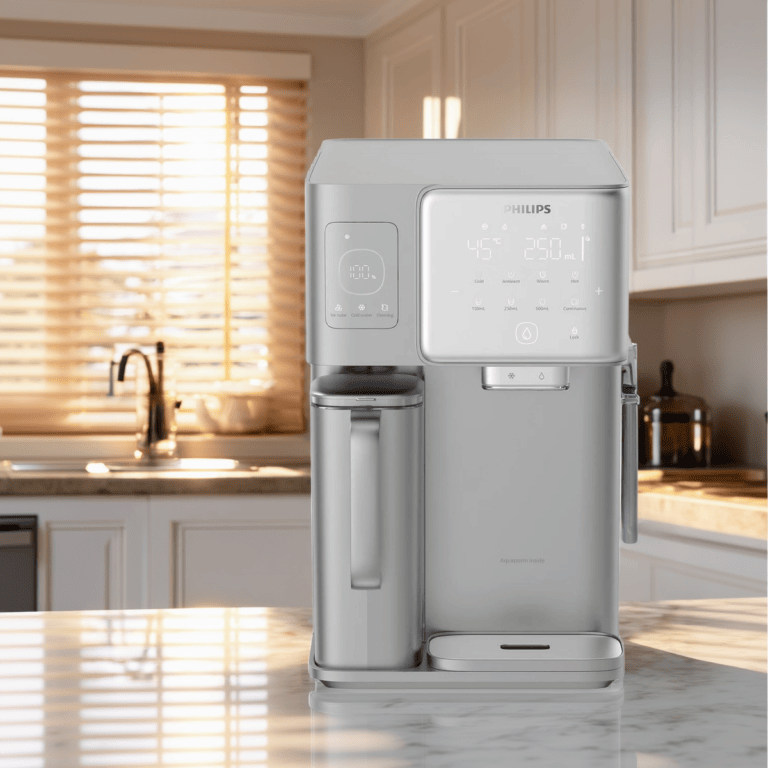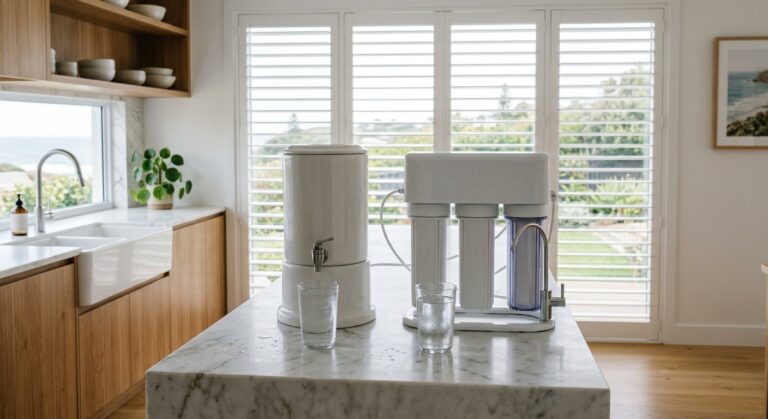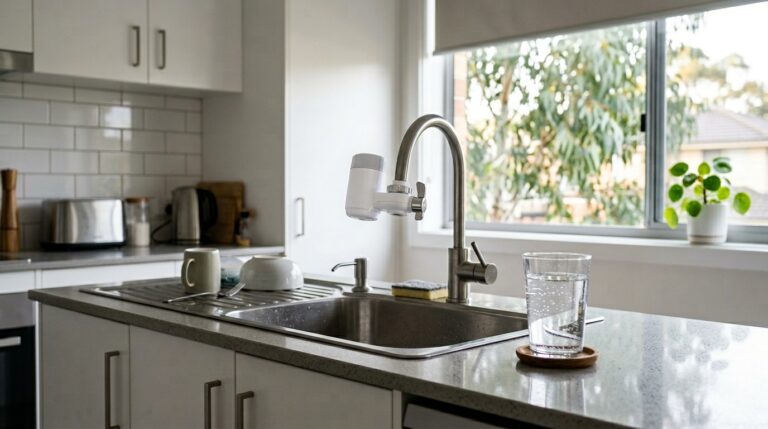
Best Benchtop Water Filters Australia 2026: No Plumbing Required
For fluoride and PFAS removal the AquaTru Classic is the only benchtop option that delivers verified NSF/ANSI 58 results. For off-grid or rental properties where even a tap diverter is not possible, the Berkey Royal runs on any water source.
The three products we own are measured first-hand by Jayce Love, former Royal Australian Navy Clearance Diver; every other product is assessed on published manufacturer specifications and independent certification using our documented methodology — no gifted units, no brand payments.
| Filter | Best for | Verdict |
|---|---|---|
| AquaTru Classic | Fluoride, PFAS, heavy metal removal | Best for RO |
| Berkey Royal | Off-grid, rental (no tap connection ever) | Best Gravity |
Benchtop water filters are the single most practical filtration option for Australian renters, unit dwellers, and anyone unwilling to pay a plumber. No under-sink penetrations, no cabinetry modifications, no WaterMark compliance paperwork for installation — you connect a diverter valve to the existing tap, or you pour water into a gravity unit and let physics do the work.
The problem is that most Australians buy the wrong one. The country’s most populated cities — Brisbane, Sydney, and Adelaide — all use chloramine as the primary disinfectant. Standard activated carbon filters, including the Brita, remove chloramine at roughly 1/40th the rate they remove free chlorine. If you are in Brisbane and running a standard jug filter, you are getting minimal disinfectant reduction. This guide fixes that.
Before buying any benchtop filter, identify what your city adds to water. Chloramine cities (Brisbane, Sydney, Adelaide, Darwin): require catalytic carbon, compressed carbon block, or reverse osmosis. Standard GAC and standard carbon jugs will not adequately remove chloramine. Free chlorine cities (Melbourne, Hobart, Canberra, Townsville, Cairns, Toowoomba): standard carbon filters work fine for disinfectant removal.
Why Benchtop Filters Are the Right Move for Most Australian Renters
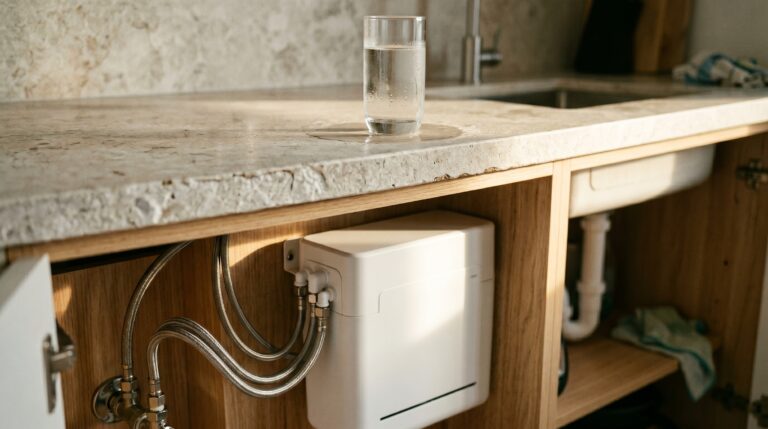
Under-sink filtration is technically superior in most cases. The filter is hidden, flow rates are higher, and there is no counter obstruction. But in Australia, under-sink systems require a penetration through the benchtop for a dedicated tap — and most residential leases prohibit structural modifications without written landlord consent. That is before you factor in the WaterMark certification requirements under AS/NZS 3500 for plumbing products connected to the potable water supply.
Benchtop units sidestep this entirely. A tap diverter valve (which itself must carry WaterMark certification under AS/NZS 4020 for products in contact with drinking water) connects to the existing aerator fitting. No drilling. No plumber. No lease conflict. The filter sits on the bench, processes water on demand, and moves with you when the lease ends.
Gravity filters go one step further — no tap connection at all. You fill the upper chamber manually. This makes them viable for off-grid use, caravans, and situations where the tap fitting is incompatible with standard diverter valves.
For a full comparison of benchtop versus under-sink filtration, including flow rate data and lifetime cost analysis, see water filtration guide.
Australian Water Chemistry: What You Are Actually Filtering
The Australian Drinking Water Guidelines (ADWG 2022) set maximum contaminant levels for over 250 parameters. What matters most for filter selection at the household level:
| City | Disinfectant | Typical TDS (mg/L) | Hardness (mg/L CaCO3) | Fluoride Added? | Carbon Filter Works? |
|---|---|---|---|---|---|
| Brisbane / SEQ | Chloramine | 80-115 | 80-120 | Yes (~0.6 mg/L) | No — needs catalytic carbon or RO |
| Sydney | Chloramine | 80-120 | 50-80 | Yes (~0.6 mg/L) | No — needs catalytic carbon or RO |
| Melbourne | Free chlorine | ~60 | ~25 | Yes (~0.7 mg/L) | Yes for chlorine; not fluoride |
| Adelaide | Chloramine | ~400 | ~140 | Yes (~0.6 mg/L) | No — RO recommended for TDS also |
| Perth | Chloramine | ~170 | ~180 | Yes (~0.6 mg/L) | No — needs catalytic carbon or RO |
| Hobart | Free chlorine | ~40 | ~20 | No | Yes — standard carbon fine |
| Canberra | Free chlorine | ~80 | ~40 | Yes (~0.6 mg/L) | Yes for chlorine; not fluoride |
Source: State utility annual water quality reports, ADWG 2022. TDS and hardness are typical midrange values — check your specific supplier’s annual report for exact figures.
Not sure which filter suits your city’s water?
Use our free Australian city-by-city filter selector to match the right technology to your tap water chemistry — chloramine, fluoride, hardness and all.
Find the Right Filter for Your City →The 6 Best Benchtop Water Filters for Australia in 2026
2. Tappwater EcoPro — Best for Chloramine Cities
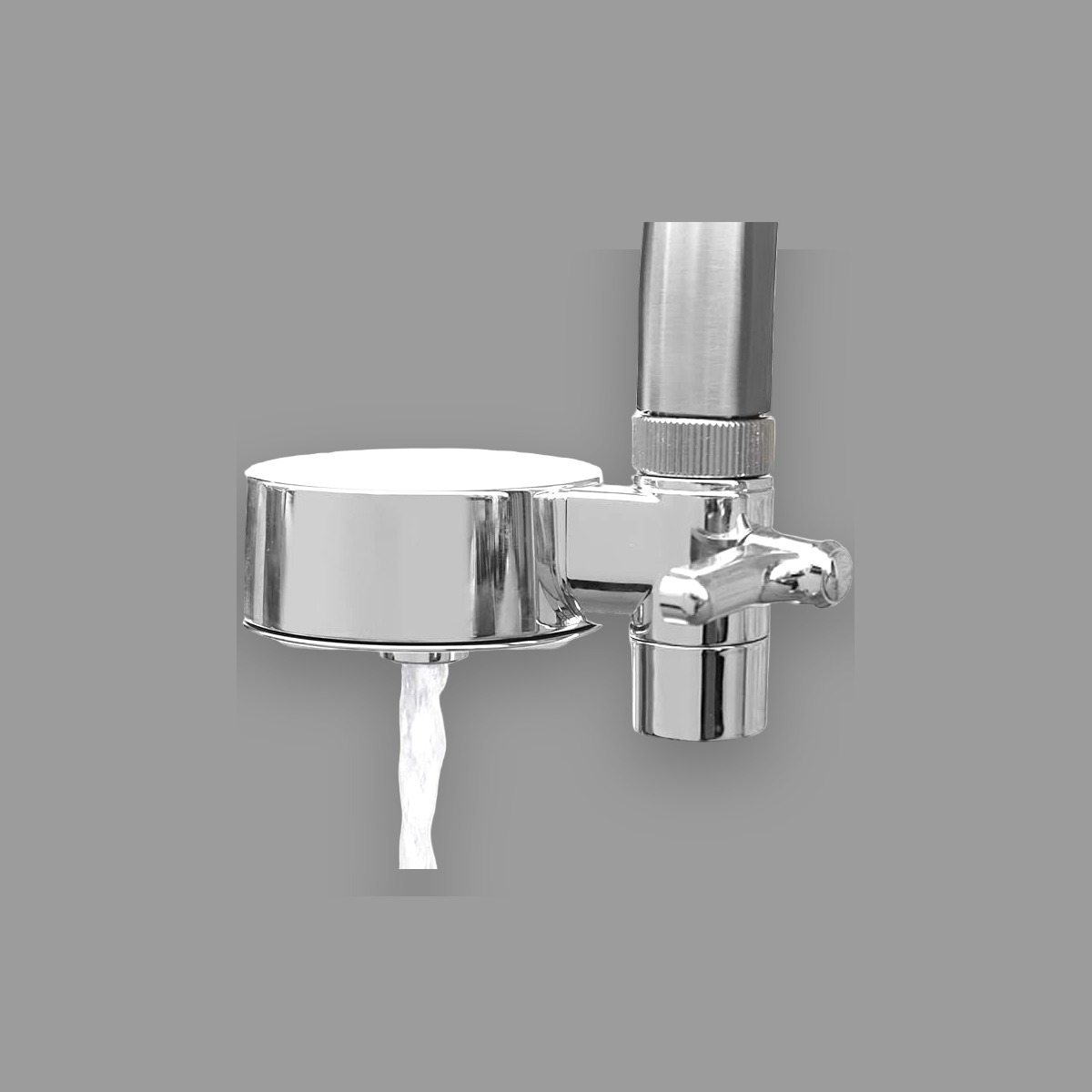
The Tappwater EcoPro uses catalytic carbon, which is the correct media for chloramine reduction. Standard activated carbon granules (as used in jug filters and cheaper benchtop units) adsorb chloramine at approximately 1/40th the rate of free chlorine — effectively useless in Brisbane, Sydney, or Adelaide. The EcoPro’s catalytic carbon handles the full chloramine molecule efficiently at gravity flow rates.
NSF/ANSI 42 and 53 testing confirms reduction of 200+ contaminants including lead, VOCs, chloramine, and turbidity. The 5,000L filter life means a typical family of four will replace the element once every 12–18 months. An optional activated alumina fluoride module reduces fluoride by up to 95% (tested to NSF/ANSI 58) for households that need it.
3. Doulton Ultracarb Benchtop — Best Ceramic for Biological Protection
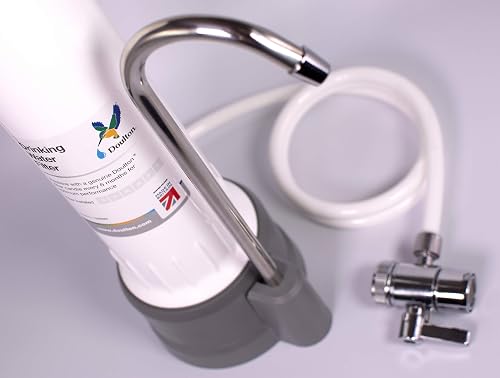
Doulton has manufactured ceramic filter elements since 1827. The Ultracarb element combines a 0.9 micron absolute ceramic outer shell with an inner catalytic carbon block and a silver-impregnated bacteriostatic layer. This three-stage approach handles the complete chloramine removal requirement for Australian chloramine cities and adds genuine biological protection — the ceramic stage removes Cryptosporidium and Giardia, both regulated under the ADWG at zero tolerable risk.
Flow rate at mains pressure is 1.5–2L/min, which is practical for normal household use and significantly faster than any gravity-fed unit. Filter life is rated to 2,500L or 12 months. It does not reduce fluoride — households requiring fluoride removal should consider the AquaTru Classic.
4. AquaTru Classic Benchtop Reverse Osmosis — Best for Fluoride and PFAS Removal
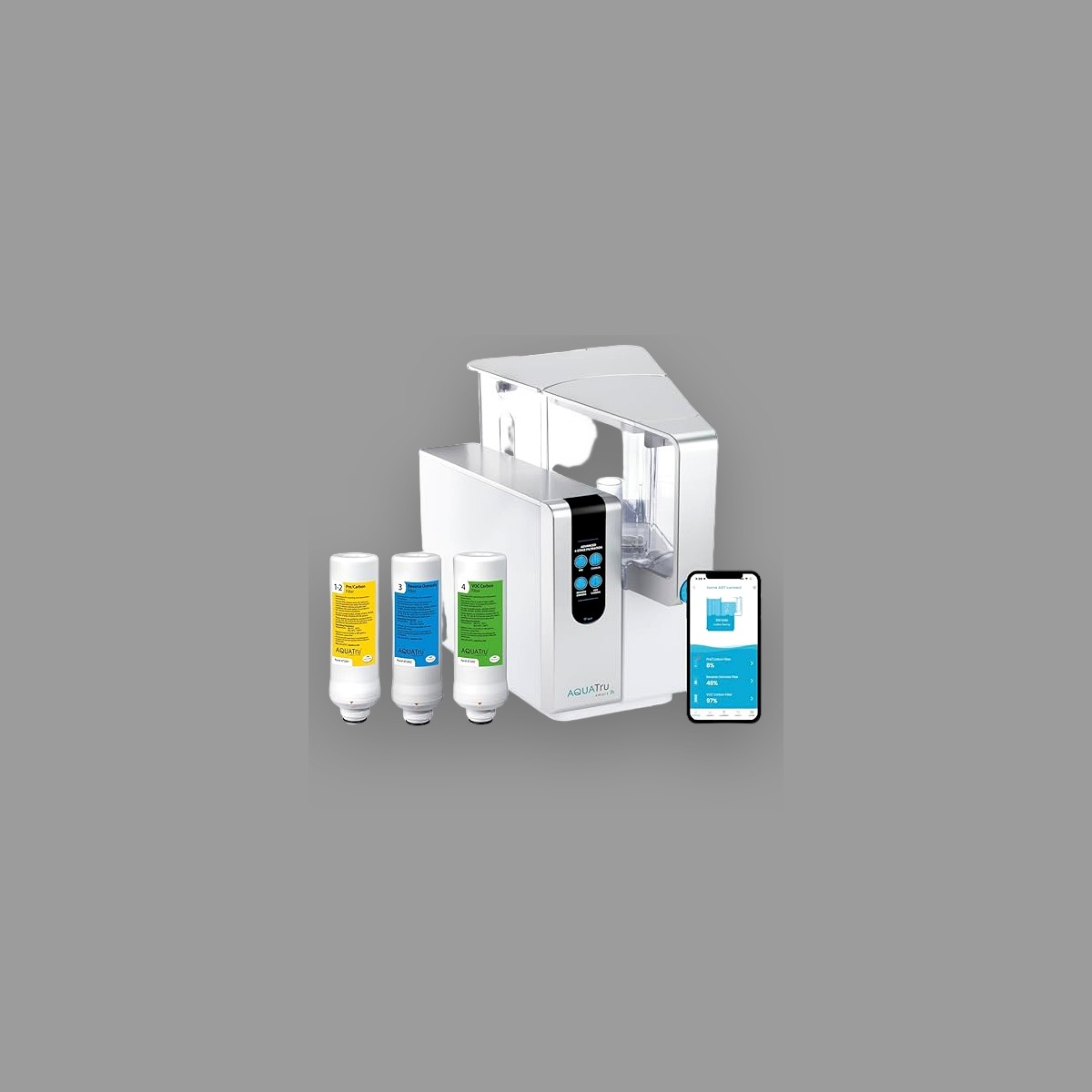
Reverse osmosis is the only reliably effective benchtop technology for simultaneous removal of fluoride, PFAS, chloramine, heavy metals, and dissolved solids. The AquaTru Classic uses five stages: two prefilters (sediment and carbon), a 50 GPD RO membrane rated at 90–97% TDS rejection, and a post-carbon polishing stage — all certified to NSF/ANSI 58 and 42.
For Adelaide households (TDS ~400mg/L), output TDS drops to approximately 20–40mg/L. Fluoride at 0.6mg/L in Australian supplies is reduced below 0.03mg/L — a greater than 95% reduction. The waste ratio is approximately 3:1, which is a genuine consideration for water-restricted Perth. Beneficial minerals are stripped with the contaminants — a remineralisation cartridge is recommended for households using this as their primary drinking water source.
5. Berkey Royal — Best Off-Grid and No-Tap Gravity Option
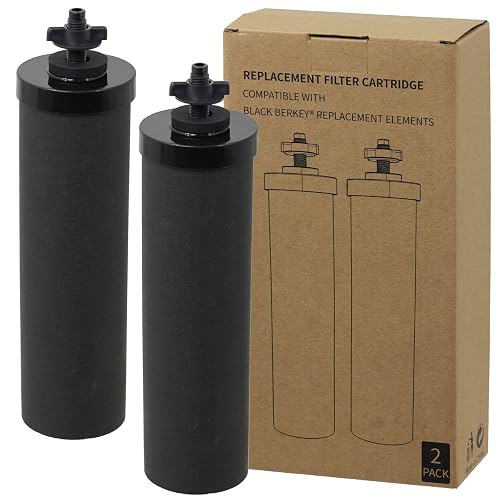
The Berkey Royal has been the reference gravity filter in Australian preparedness and off-grid communities for over a decade. Two Black Berkey elements running in parallel produce approximately 3.8L/hr — significantly faster than single-element gravity units. No tap connection is ever required: fill the upper chamber from any source, including tank water, rainwater, or river water during emergencies.
The Black Berkey element matrix (carbon + ion exchange resin) has been independently tested to show greater than 99.9% chloramine reduction at rated throughput — unusual for a gravity-only product. The optional PF-2 add-on elements (activated alumina) reduce fluoride by up to 95% and arsenic when fitted below the main elements.
6. Brita Style XL with Maxtra+ — Budget Option (Melbourne, Hobart, Canberra Only)
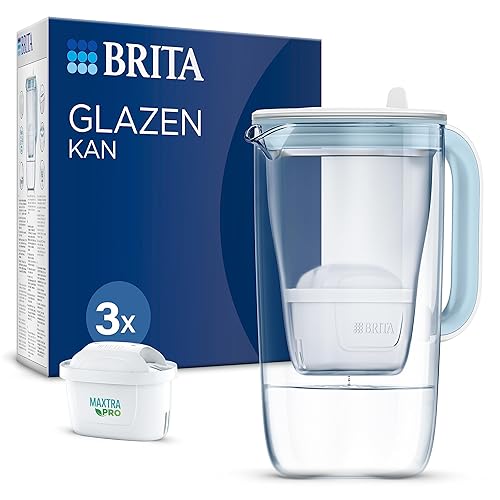
The Brita Maxtra+ cartridge uses standard activated carbon granules (GAC). State this clearly: GAC does not remove chloramine. Chloramine adsorbs onto standard GAC at approximately 1/40th the rate of free chlorine. In Brisbane, Sydney, or Adelaide this filter provides essentially no disinfectant reduction. In Melbourne, Hobart, and Canberra — where the supply uses free chlorine — it performs exactly as marketed and at roughly $8–10/month in running costs it is the cheapest effective option for those cities.
NSF/ANSI 42 certification covers taste and odour claims only. There is no fluoride, PFAS, or heavy metal removal. It earns its place on this list only for free-chlorine cities where basic taste improvement is the only goal.
What to Look for When Buying a Benchtop Water Filter in Australia
Filter Media Type — The Decision That Matters Most
Carbon filter technology divides into three practical categories for Australian consumers:
- Standard Granular Activated Carbon (GAC): Removes free chlorine, some VOCs, taste and odour compounds. Does not remove chloramine at any meaningful rate. Found in most jug filters and low-cost benchtop units. Suitable only for Melbourne, Hobart, Canberra, Townsville, Cairns, Toowoomba.
- Catalytic Carbon (also called CCAC — Catalytically Converted Activated Carbon): Modified high-activity carbon that breaks chloramine through catalytic reaction rather than just adsorption. Effective for chloramine cities. Required in Brisbane, Sydney, Adelaide, Darwin. Often found in Doulton, Everpure, and premium Pentek cartridges.
- Compressed Carbon Block: Dense, high-contact-time carbon pressed into a solid block. Effective for chloramine due to extended residence time. Also filters to sub-micron level mechanically. Used in Doulton Ultracarb and many
Our Top Picks
For fluoride and PFAS removal, the AquaTru Classic is the only NSF-certified benchtop option. For renters or off-grid use with no tap connection, the Berkey Royal runs on any water source.
Frequently asked questions
What is the best benchtop water filter in Australia?
The best benchtop water filter depends on your water supply and what you want to remove. For chloramine (Brisbane, Adelaide, Gold Coast, Sydney, Darwin), you need catalytic carbon — not standard GAC. For fluoride removal, only reverse osmosis achieves meaningful reduction. The AquaTru countertop RO is the most effective all-in-one benchtop option for fluoride plus chloramine removal.
Do benchtop water filters remove chloramine?
Standard activated carbon (GAC) filters like Brita do not remove chloramine effectively. You need catalytic carbon block or compressed carbon block. Brisbane, Adelaide, Gold Coast, Sydney, and Darwin all use chloramine — check which technology is in your filter before buying.
Can a benchtop filter remove fluoride?
Only reverse osmosis removes fluoride at meaningful rates (90–97%). Standard carbon block or ceramic benchtop filters do not remove fluoride. Countertop RO units like the AquaTru are the exception — they are true RO systems in a benchtop form factor.
Are benchtop water filters better than jug filters?
Benchtop filters generally use higher-quality filter media with greater contact time and capacity than jug filters. The main advantage of jugs is portability and lower upfront cost, but filter replacement costs and performance are typically inferior to a good benchtop system.
How often do I need to replace benchtop water filter cartridges in Australia?
Most benchtop carbon block cartridges need replacement every 3–6 months depending on usage and your local water quality. In areas with high turbidity or heavy chlorination (Darwin wet season, for example), expect shorter cartridge life. Always follow manufacturer replacement intervals — do not extend them.
What is the difference between benchtop and under-sink water filters?
Benchtop filters sit on your countertop and connect to your existing tap via a diverter valve — no plumbing required. Under-sink filters are installed under the bench with a dedicated filtered water tap. Under-sink systems typically use larger cartridges with longer service intervals and higher flow rates, but require a plumber or DIY installation.
Do benchtop water filters work in rental properties in Australia?
Yes. Most benchtop water filters use a diverter valve that attaches to a standard tap aerator — no permanent modifications required, making them ideal for rentals. Check your tap thread before purchasing (M22 and M24 are most common in Australia). Some brands include multiple adaptors.
What should I look for when buying a benchtop water filter in Australia?
Key factors: filter technology (catalytic carbon for chloramine cities, RO for fluoride), NSF/ANSI certification (NSF 42 for taste/chlorine, NSF 53 for heavy metals, NSF 58 for RO/fluoride), flow rate, cartridge replacement cost, and compatibility with your tap thread. Avoid units without third-party test data published on the manufacturer’s website.
Get the Australian Home Environment Checklist
30 checks across water, air and EMF. Most of them free. Ranked by impact.
No spam. Unsubscribe any time.
 Written by Jayce Love
Former Royal Australian Navy Clearance Diver and TAG-E counter-terrorism operator. Founded Clean and Native to apply the same rigorous thinking to the home environment.
Full biography →