VOCs in Australian Homes: What They Are, Where They Come From, How to Remove Them
Drafted with AI assistance and checked against published specifications and certifications. First-hand measurements appear only where stated. How we make content
Australian indoor VOC concentrations of 1,000+ µg/m³ in new or renovated homes are cut most effectively by removing emission sources and ventilating strategically before adding air purification. Activated carbon air purifiers work only for residual gas-phase pollutants after source reduction — they cannot offset continuous off-gassing from engineered timber, vinyl flooring, or solvent-based products. The catches: VOC meters like the Air Quality Egg measure TVOC in broad strokes and miss individual hazardous compounds like formaldehyde; no consumer air purifier certified to Australian standards can handle unchecked source emissions indefinitely.
| Strategy | Impact on TVOC | Verdict |
|---|---|---|
| Source elimination + ventilation | 60–90% reduction in 7–14 days | Primary defence |
| Activated carbon purifier (residual) | 20–40% reduction if sources controlled | Supporting layer |
| Air purifier alone (no source control) | Ineffective; carbon saturates in weeks | False security |
Volatile organic compounds (VOCs) are carbon-based chemicals that off-gas from building materials, furniture, cleaning products, and dozens of other household sources. Australian indoor air typically contains VOC concentrations 2 to 5 times higher than outdoor air — and in newly built or renovated homes, readings above 1,000 µg/m³ total VOCs (TVOC) are common. At those levels, you are breathing a chemical load that exceeds both the German Federal Environment Agency’s recommended indoor limit of 300 µg/m³ and the thresholds linked to headaches, respiratory irritation, and impaired cognitive function in peer-reviewed research.
The three products we own are measured first-hand by Jayce Love, former Royal Australian Navy Clearance Diver; every other product is assessed on published manufacturer specifications and independent certification using our documented methodology — no gifted units, no brand payments.
The fix is systematic: identify sources, reduce or eliminate them, ventilate strategically, and — where residual levels remain — deploy activated carbon air purification rated for gas-phase removal. This article covers the full process with Australian-specific data, standards, and product certifications so you can measure and manage VOCs in your home with precision.
What Exactly Are VOCs? Chemistry in Plain Language
VOCs are organic chemicals with a boiling point roughly between 50°C and 260°C. At room temperature, they evaporate from liquids and solids into your indoor air. The World Health Organization classifies them under ISO 16000-6 as compounds eluting between n-hexane and n-hexadecane on a gas chromatograph — which is the technical definition labs use when they measure your air.
There are hundreds of individual VOC species. Some are relatively benign at low concentrations. Others — formaldehyde, benzene, toluene, xylene, styrene, perchloroethylene — are classified carcinogens (IARC Group 1 or 2A) or carry specific organ toxicity ratings. The key point: “VOC” is a category, not a single substance. Measuring total VOC (TVOC) gives you a screening number. Identifying individual compounds requires laboratory analysis.
Clean Water
The right filter removes what this article describes.
Reverse osmosis is the only residential technology that reliably removes PFAS, fluoride, chloramine, and heavy metals. Our guide covers the top-rated options for Australian homes — tested, certified, and ranked.
See the Top-Rated Water Filters →Common VOC species in Australian homes
| Compound | Primary Indoor Sources | IARC Classification | Australian Indoor Guideline |
|---|---|---|---|
| Formaldehyde | Plywood, MDF, particle board, some fabrics | Group 1 (carcinogenic) | ≤0.1 mg/m³ (WHO guideline adopted by NHMRC) |
| Benzene | Attached garages, tobacco smoke, some adhesives | Group 1 (carcinogenic) | No safe threshold (NHMRC); WHO chronic ≤0.0017 mg/m³ |
| Toluene | Paints, lacquers, adhesives, nail polish | Group 3 | ≤0.26 mg/m³ (WHO chronic) |
| Xylenes | Paints, varnishes, pesticides | Group 3 | ≤0.2 mg/m³ (WHO) |
| Styrene | Polystyrene insulation, rubber-backed carpet | Group 2A (probable carcinogenic) | ≤0.26 mg/m³ (WHO) |
| Limonene / Pinene | Cleaning products, air fresheners, essential oils | Not classified | No specific guideline; oxidation products (formaldehyde, ultrafine PM) are the concern |
| Perchloroethylene (PCE) | Dry-cleaned clothing | Group 2A | ≤0.25 mg/m³ (WHO) |
| Naphthalene | Mothballs, combustion, tobacco smoke | Group 2B | ≤0.01 mg/m³ (WHO) |
Why VOCs Are Worse Indoors — The Australian Data
CSIRO’s baseline air toxics project and multiple state health authority surveys have consistently found that indoor VOC concentrations in Australian homes exceed outdoor levels by a factor of 2 to 10. The reasons are simple:
- Australian homes are increasingly airtight. The National Construction Code (NCC) 2022 updates pushed for better thermal performance (condensation management provisions in Volume 2). This is good for energy. It is bad for VOC dilution unless mechanical ventilation is designed in — which it rarely is in residential builds.
- High renovation rates. ABS data shows Australians spent over $12 billion on home renovations in 2023. Fresh paint, new cabinetry, engineered flooring, and adhesives produce peak VOC emissions in the first 2-4 weeks — exactly the period when occupants move back in.
- Climate factors. In Brisbane, Perth, Darwin, and northern NSW, sustained high temperatures accelerate off-gassing. Formaldehyde emission rates from composite wood roughly double with every 7°C temperature increase (US EPA technical bulletin on formaldehyde). A Queensland home hitting 35°C internally before the air conditioning kicks in is functionally a bake-out chamber.
- Cleaning product culture. A 2019 University of Melbourne study published in Environmental Science & Technology found that scented cleaning products and air fresheners were the dominant source of terpene VOCs (limonene, pinene) in 90% of sampled Australian homes. These terpenes react with ozone to produce formaldehyde and ultrafine particles as secondary pollutants.
The Biggest VOC Sources in an Australian Home — Ranked by Emission Rate
Not all sources are equal. Targeting the highest-emission sources first delivers the most reduction per dollar and per hour of effort. Here is the hierarchy based on emission rate data from published Australian and international studies:
1. Composite wood products (formaldehyde: 50-500 µg/m³ contribution)
Particle board, MDF, plywood, and laminated products bonded with urea-formaldehyde resin are the single largest chronic formaldehyde source in most homes. In Australia, composite wood products are supposed to comply with AS/NZS 4266.16 for formaldehyde emissions, which references the E1 classification (≤8 mg/100g using the perforator method, or ≤0.1 ppm in a 1m³ chamber test). However, enforcement is patchy. Imported flat-pack furniture — especially from unverified supply chains — frequently exceeds E1 limits.
Action: Look for products certified to E0 (≤0.5 mg/L) or Super E0 / CARB Phase 2 standards. Laminam, Polytec, and Laminex all offer E0 products in the Australian market. If you have existing high-emission furniture, seal exposed edges and drill holes with a water-based polyurethane sealant — this reduces formaldehyde emission by 70-90% within the first coat.
2. Fresh paint (TVOC: 2,000-25,000 µg/m³ in first 24 hours)
Conventional solvent-based paints emit massive VOC loads. Even “low VOC” water-based paints in Australia — defined under the Australian Paint Manufacturers’ Federation (APMF) voluntary scheme — can contain up to 5 g/L for flat wall paints. True ultra-low VOC products like Dulux Professional EnvirO2 (≤1 g/L) or Haymes Ultra Premium (certified under Good Environmental Choice Australia — GECA) emit 90%+ less than conventional options.
Action: Specify paints meeting GECA certification or ISO 16000-9/10 chamber-tested VOC emission limits. After painting, ventilate aggressively for a minimum of 72 hours — windows open, fans running. Off-gassing drops by approximately 90% in the first week for quality low-VOC products, but can persist for 3-6 months for standard paints.
3. Cleaning products and air fresheners (terpenes: 50-300 µg/m³)
This is the source most people underestimate. Plug-in air fresheners, scented candles, reed diffusers, and “essential oil” diffusers pump terpenes (limonene, pinene, linalool) into your air continuously. The terpenes themselves are moderate irritants, but they react with ambient ozone (even the low levels that infiltrate from outdoors) to produce formaldehyde, acetaldehyde, and ultrafine particles in the sub-100nm range.
Action: Remove plug-in air fresheners entirely. Switch to fragrance-free cleaning products — in Australia, the Sensitive Choice program (Asthma Australia) certifies products with reduced irritant and VOC profiles. If you want your home to smell pleasant, open a window. natural indoor air quality tips
4. New carpet and underlay (TVOC: 200-2,000 µg/m³)
Synthetic carpets (nylon, polyester) emit 4-phenylcyclohexene (4-PCH), styrene, and formaldehyde. Rubber-backed carpet is typically worse than separate underlay systems. In Australia, look for carpet certified under the Carpet Institute of Australia’s Environmental Certification Scheme (ECS), which requires chamber-tested TVOC emissions below defined thresholds at 72 hours post-manufacture.
Action: Unroll new carpet in a ventilated garage or covered outdoor area for 72 hours before installation. Run the air conditioning or fans on high for the first two weeks post-install. Better still, choose hard flooring (timber, tile, polished concrete) and washable rugs.
5. Furniture and mattresses (variable: 100-1,000 µg/m³)
Polyurethane foam in mattresses, couches, and cushions emits toluene diisocyanate (TDI) residuals, flame retardant by-products, and various solvents. New memory foam mattresses are particularly high emitters in the first 1-4 weeks. In Australia, the ACCC has recalled products for exceeding safe emission limits, but no mandatory standard exists specifically for mattress VOC emissions.
Action: Unwrap new mattresses and let them off-gas in a well-ventilated room for 3-7 days before sleeping on them. Choose CertiPUR-US or OEKO-TEX Standard 100 certified foam products, which have tested VOC emission limits.
6. Attached garages (benzene, toluene, xylene: 10-100 µg/m³ leakage)
An internal-access garage containing a car, lawnmower fuel, paint tins, and solvent-based products is a concentrated VOC reservoir. CSIRO research found that homes with attached garages had benzene levels 2-3 times higher than homes without. The door seal between garage and living space is the critical control point, and in most Australian homes, it is inadequate.
Action: Weatherstrip the garage-to-house door with compression seals. Store fuels and solvents in sealed containers in a detached shed if possible. Never run engines in an attached garage with the roller door partially closed.
Our Top Air Purifier Picks
True H13 HEPA with activated carbon is the only technology that removes particles AND gases from your indoor air. For bushfire smoke, pollen, and VOCs — HEPA is non-negotiable.
How to Measure VOCs in Your Home
You cannot manage what you do not measure. There are three tiers of VOC measurement available to Australian homeowners:
Tier 1: Consumer TVOC monitors ($100-$300)
Devices like the Temtop M10 or IKEA VINDSTYRKA use metal-oxide semiconductor (MOS) sensors that respond to a broad range of VOCs and give a TVOC reading in µg/m³ or mg/m³. These are screening tools. They tell you whether your indoor air is getting better or worse, and they will flag obvious high-emission events (painting, cleaning, cooking). They cannot identify individual compounds, and their absolute accuracy is ±30-50% at best.
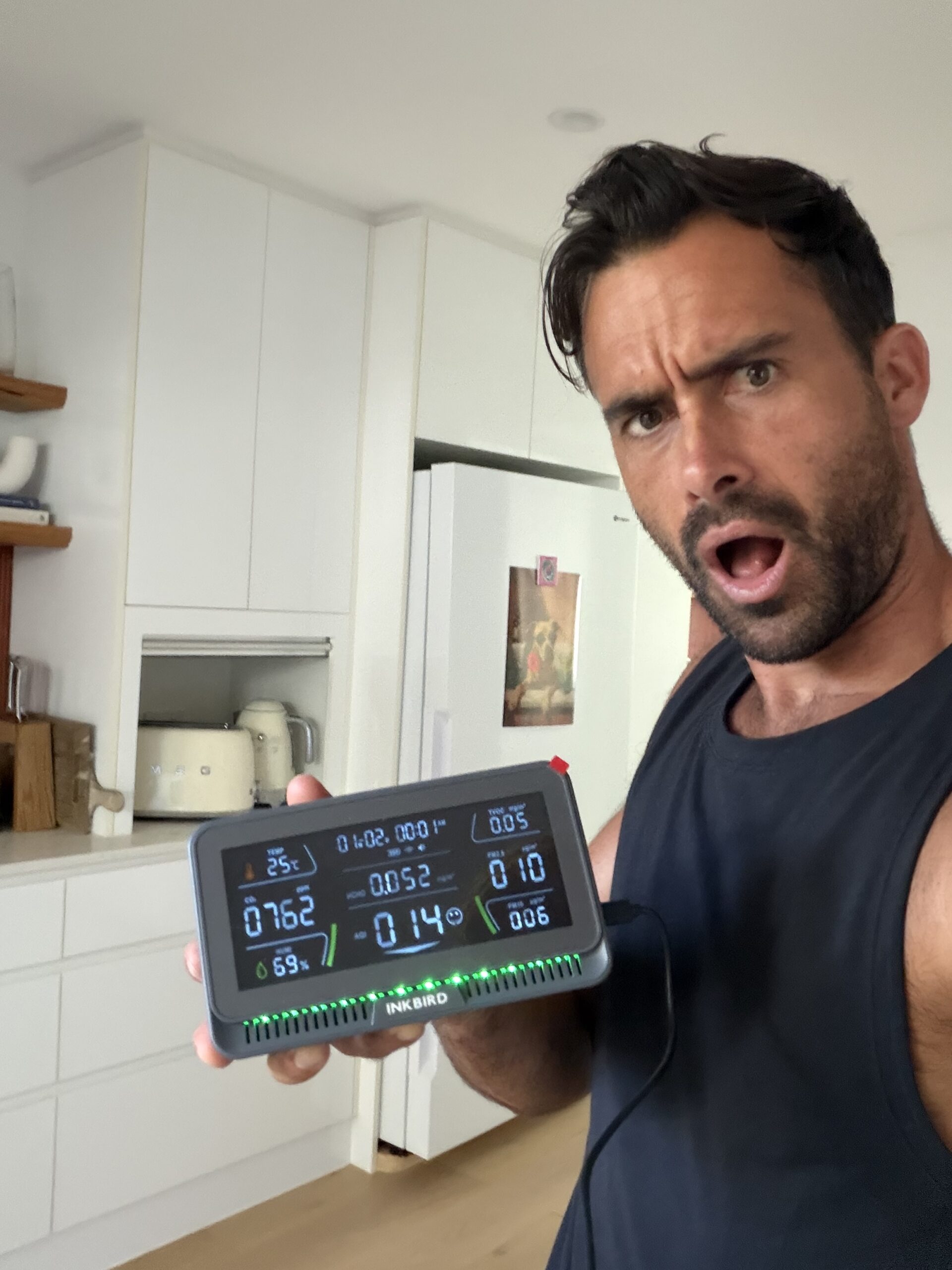
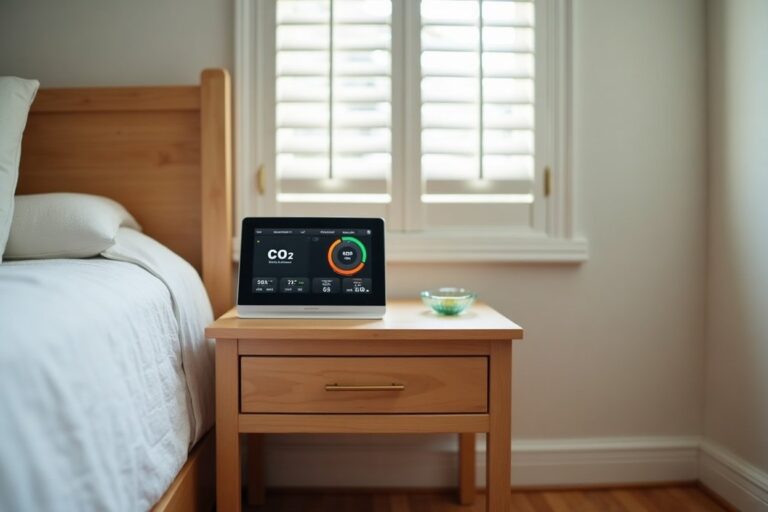
The is the unit I use for testing in this article. It reads TVOC, PM2.5, PM10, CO2, HCHO (formaldehyde), temperature, and humidity on a single colour display — at around $90 on Amazon AU, it covers more parameters than most monitors at twice the price. The electrochemical formaldehyde sensor gives it an edge over pure MOS-only devices when you want to confirm whether a new piece of furniture or flooring is outgassing HCHO specifically. For a screening tool in an Australian home, it hits the right balance of capability and cost.
What to look for: TVOC below 300 µg/m³ is the German Federal Environment Agency (UBA) target for “hygienic” indoor air. Below 100 µg/m³ is excellent. Above 1,000 µg/m³ warrants investigation and action.
Tier 2: Formaldehyde-specific monitors ($150-$400)
Because formaldehyde is the highest-risk individual VOC in most homes, a dedicated electrochemical formaldehyde sensor (like the Temtop M2000 or Extech FM200) provides more actionable data than a generic TVOC sensor. Target: below 0.1 mg/m³ (100 µg/m³) per WHO/NHMRC guidelines. If your reading is consistently above 0.08 mg/m³, you have a source that needs addressing.
Tier 3: NATA-accredited laboratory analysis ($250-$500 per sample)
For definitive results — especially before renovations, in dispute situations, or if occupants are experiencing health symptoms — commission a NATA-accredited lab to sample your indoor air. The standard method is passive sampling using Tenax TA sorbent tubes exposed for 24-72 hours, followed by thermal desorption and GC-MS analysis (per ISO 16000-6). This gives you concentrations for 30-60+ individual VOC species. Australian providers include Eurofins, ALS Environmental, and EnviroLab.
The Four-Step VOC Reduction Protocol
This is the same approach I use when helping people sort out their indoor air. It follows a logical hierarchy: remove, ventilate, seal, purify. Skipping straight to step four (buying an air purifier) without addressing the first three is like bailing water without plugging the hole.
Step 1: Source removal and substitution
Identify your top 2-3 VOC sources using the ranking a bove and a TVOC monitor. Remove what you can — air fresheners, scented products, excess stored chemicals. Substitute what you cannot remove — low-VOC paint, E0 composite wood, fragrance-free cleaners. This single step typically reduces TVOC by 30-60%.
Step 2: Ventilation
Australian homes, particularly modern builds complying with NCC 2022, are designed to minimise air leakage for thermal efficiency. This means you need to intentionally introduce fresh air. The mechanical ventilation standard AS 1668.2 recommends a minimum of 10 L/s per person for residential living areas, but most homes rely entirely on window opening.
Practical approach: Open windows on opposite sides of the house for 15-20 minutes twice daily (cross-ventilation). This achieves approximately 3-5 air changes in that period, diluting accumulated VOCs by 80-95%. In summer in Brisbane or Perth, do this early morning or late evening when outdoor temperatures and ozone levels are lower. In bushfire season or on high pollution days, keep windows closed and rely on mechanical filtration.
For a more controlled approach, a heat recovery ventilator (HRV) or energy recovery ventilator (ERV) provides continuous fresh air exchange while retaining 70-90% of heating/cooling energy. Systems like the Lossnay by Mitsubishi Electric or Zehnder units are available in the Australian market. Installed cost is typically $3,000-$6,000 for a ducted whole-home system.
Step 3: Source sealing
Where you cannot remove a high-emission source — say, particle board kitchen cabinetry — you can seal it. A water-based polyurethane sealant applied to exposed surfaces (including the interior of cabinets) reduces formaldehyde emission by 70-90% per the US EPA’s guidance on formaldehyde control. Two coats with 24-hour cure time between coats. Ensure the sealant itself is low-VOC (look for ≤50 g/L VOC content on the TDS).
Step 4: Air purification with activated carbon
After steps 1-3, residual VOCs can be addressed with air purification. This is where filter selection matters enormously. HEPA filters — even medical-grade H13 HEPA — capture particles only. They do zero for gas-phase VOCs. You need activated carbon, and you need enough of it.
The carbon weight problem: Most consumer air purifiers marketed as “HEPA + carbon” contain a thin carbon pre-filter weighing 100-200 grams. This is decorative at best. It will adsorb some VOCs for a few days before saturating — and once saturated, it can re-release adsorbed compounds back into your air (off-gassing from the spent filter).
For meaningful VOC reduction, you need a minimum of 2-3 kg of granular or pelletised activated carbon in the filter housing. Units like the IQAir HealthPro 250 (with the optional V5-Cell gas-phase cartridge containing 2.5 kg of activated carbon and alumina) or the Austin Air HealthMate (with 6.8 kg of activated carbon and zeolite blend) are purpose-built for gas-phase removal.
| Air Purifier | Carbon Weight | HEPA Class | CADR (m³/h) | Suited Room Size | Price (AUD) |
|---|---|---|---|---|---|
| Austin Air HealthMate | 6.8 kg carbon + zeolite | HEPA (medical grade) | ~250 | Up to 65 m² | ~$1,100 |
| IQAir HealthPro 250 (V5-Cell) | 2.5 kg carbon + alumina | H12/13 (HyperHEPA) | ~470 | Up to 85 m² | ~$2,500 |
| Blueair HealthProtect 7470i | ~500 g (carbon impregnated) | H13 HEPA equivalent | ~540 | Up to 62 m² | ~$1,300 |
| Dyson Purifier Big Quiet+ | ~300 g (carbon coated) | H13 HEPA | ~470 | Up to 100 m² | ~$1,400 |
| Samsung Bespoke Cube Air | ~200 g (carbon deodoriser) | H13 HEPA | ~330 | Up to 50 m² | ~$900 |
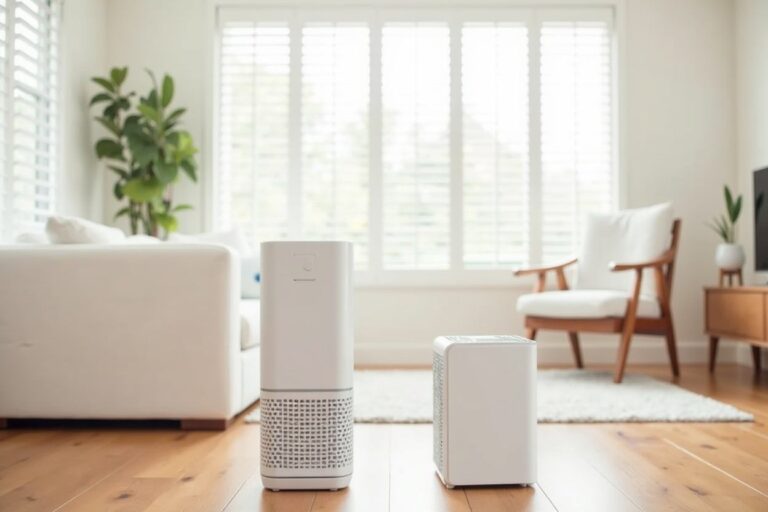
The table makes the distinction clear. If your primary concern is VOCs (not just dust and pollen), the Austin Air HealthMate carries more than 10 times the carbon of a typical consumer unit. The IQAir V5-Cell option offers high airflow combined with meaningful carbon mass. Units with 200-500g of carbon are fine for light odour control but will not deliver sustained VOC reduction in a high-emission environment.
For a full comparison of options, see our guide to the best air purifiers in Australia.
VOCs and Water: The Shower and Tap Connection
VOCs are not limited to air sources. Chloroform and other trihalomethanes (THMs) — VOCs formed when chlorine reacts with organic matter during water treatment — are present in Australian tap water. When you run a hot shower, THMs volatilise into the steam you inhale. ADWG guideline values for total THMs are 250 µg/L, which is substantially higher than the US EPA limit of 80 µg/L.
This matters most in chloramine-treated cities (Brisbane/SEQ, Sydney, Adelaide, Gold Coast, Darwin) where the disinfection by-product profile includes N-nitrosodimethylamine (NDMA), a probable carcinogen. In free chlorine cities (Melbourne, Hobart, Canberra), the THM profile is more conventional but still present.
Practical action: A quality shower filter using catalytic carbon (not standard KDF-55) reduces THMs and chloramine-related by-products during showering. For drinking water, a reverse osmosis system removes THMs, NDMA, and other volatile organic compounds at 95%+ rejection rates. Standard carbon block filters are effective for THM removal in free chlorine cities but require catalytic carbon or RO in chloramine cities.
If shower exposure concerns you, see our guide to the best shower filters for Australian water.
Australian Standards and Regulations Relevant to Indoor VOCs
Australia does not have a single, enforceable indoor air quality standard for residential buildings. What exists is a patchwork of guidelines, voluntary standards, and building code requirements:
| Standard / Guideline | What It Covers | Status |
|---|---|---|
| NHMRC Indoor Air Quality Guidelines | Formaldehyde (≤0.1 mg/m³), NO₂, CO, various pollutants | Advisory only — not enforceable |
| NCC 2022 (Volume 2) | Ventilation requirements for residential buildings; condensation management | Mandatory for new builds |
| AS/NZS 4266.16 | Formaldehyde emission from reconstituted wood products | Voluntary (not called up by NCC) |
| GECA (Good Environmental Choice Australia) | Eco-label for paints, coatings, adhesives, flooring with VOC limits | Voluntary certification |
| Green Star (GBCA) | Indoor environment quality credits including TVOC limits for commercial/multi-res | Voluntary certification for buildings |
| Safe Work Australia WES | Workplace exposure standards for individual VOCs (8-hour TWA) | Mandatory for workplaces; not applicable to homes but useful as reference |
The gap is clear: no Australian body sets enforceable TVOC limits for the air inside your home. The German UBA TVOC categories (below 200 µg/m³ = acceptable; 200-300 = still acceptable; 300-1,000 = action needed; above 1,000 = unacceptable) are the most widely used benchmarks in the absence of Australian-specific limits. Green Star buildings target TVOC below 500 µg/m³ at four weeks post-completion — a standard your home should meet or exceed.
Special Considerations for New Builds and Renovations
If you are building or substantially renovating, you have a once-off opportunity to specify low-emission materials and design ventilation into the build. Here is the spec list I recommend:
- Composite wood: E0 or better for all cabinetry, structural plywood, and shelving. Australian suppliers: Polytec (E0 range), Laminex (E0 range), or FSC-certified solid timber.
- Paint: GECA-certified or independently verified ≤5 g/L VOC for interior walls. ≤1 g/L is achievable with Dulux EnvirO2 or similar.
- Adhesives and sealants: Green Star compliant (TVOC ≤50 g/L for adhesives, ≤250 g/L for sealants per SCAQMD Rule 1168).
- Flooring: GreenTag or GECA-certified. Alternatively, solid timber, tile, or polished concrete with low-VOC finish.
- Ventilation: Specify at minimum a bathroom exhaust fan with timer run-on (15 minutes post-use) and a kitchen rangehood ducted to outside (recirculating rangehoods do not remove VOCs). Ideally, include an ERV/HRV for continuous fresh air supply.
- Pre-occupancy bake-out: After construction and before moving in, heat the interior to 30-35°C for 72 hours with windows closed, then ventilate aggressively for 24 hours. Repeat twice. This accelerates off-gassing by 3-6 months’ worth of room-temperature emission into a controlled period. Commission a TVOC measurement before and after to confirm effectiveness.
VOCs and Health: What the Evidence Actually Shows
I am not going to make vague claims about VOCs and health. Here is what the epidemiological and toxicological evidence supports:
Formaldehyde: IARC Group 1 carcinogen. Causes nasopharyngeal cancer at occupational exposure levels. At residential levels (0.05-0.2 mg/m³), associated with increased asthma diagnosis in children (meta-analysis: McGwin et al., 2010, Environmental Health Perspectives) and sensory irritation (eye and throat) in sensitive individuals. The threshold for sensory irritation is approximately 0.1 mg/m³ — which is also the WHO guideline.
Benzene: IARC Group 1 carcinogen. No safe exposure threshold for leukaemia risk. WHO recommends lifetime cancer risk-based guideline of 0.0017 mg/m³ for a 1 in 100,000 excess risk. If you have an attached garage with a car, you likely exceed this in your living areas.
TVOC mixtures: The Molhave scale (1991) identifies symptom thresholds: comfort range below 200 µg/m³, multifactorial exposure effects 200-3,000 µg/m³, discomfort range 3,000-25,000 µg/m³. A 2021 Harvard COGFX study found that cognitive function scores (decision-making, strategy, crisis response) declined significantly when TVOC exceeded 500 µg/m³ — scores were 61% lower compared to conditions below 50 µg/m³.
Children and vulnerable populations: Australian children spend an estimated 90% of their time indoors. CSIRO and the Cooperative Research Centre for Asthma and Airways identified indoor VOCs (particularly formaldehyde and toluene) as significant risk factors for childhood asthma exacerbation in Australian homes. Infants have higher relative ventilation rates (more air per kg body weight), so the dose-per-kilogram is 2-3 times higher than for adults at the same ambient concentration.
Clean Air
An air purifier with enough carbon makes a measurable difference.
After removing sources and improving ventilation, an air purifier with 2+ kg of activated carbon addresses residual VOCs. Our guide covers the units with the carbon capacity to actually do the job — not just the ones with “carbon filter” on the box.
See the Top-Rated Air Purifiers →VOC Reduction Decision Tree
Three questions to determine your priority action:
1. Have you measured your TVOC levels?
No → Buy a consumer TVOC monitor ($100-$200) and establish a baseline. If readings are consistently below 300 µg/m³, your air is likely acceptable.
Yes, readings above 300 µg/m³ → Proceed to question 2.
2. Can you identify the primary source?
New furniture/cabinetry/renovation = formaldehyde-dominant. Action: ventilate aggressively, seal composite wood, specify E0 replacements.
Cleaning products/air fresheners = terpene-dominant. Action: remove scented products immediately.
Attached garage = benzene-dominant. Action: seal the garage-house junction, remove stored chemicals.
Unknown = commission a NATA-accredited air test ($250-$500).
3. After source reduction, do residual levels remain above 200 µg/m³?
Yes → Deploy an air purifier with ≥2 kg activated carbon (Austin Air HealthMate, IQAir V5-Cell, or equivalent). Run it on medium 24/7 in the highest-occupancy room.
No → Maintain ventilation routine and re-measure quarterly.
Common Myths About VOCs in Australia
Myth: “Plants remove VOCs”
The famous 1989 NASA study tested plants in sealed chambers — conditions nothing like a real home. A 2019 Drexel University meta-analysis published in Journal of Exposure Science & Environmental Epidemiology calculated that you would need 10-1,000 plants per square metre of floor space to match the VOC removal rate of simply opening a window. Plants are great for aesthetics. They are not air purifiers.
Myth: “My home is well-ventilated so VOCs aren’t a problem”
Ventilation dilutes VOCs — it does not eliminate sources. A strong formaldehyde-emitting piece of furniture will continuously replenish the chemical load. If you close the windows (overnight, during rain, during bushfire smoke events), levels rebound within 2-4 hours. Ventilation and source control work together; neither alone is sufficient.
Myth: “Low-VOC paint means no VOCs”
“Low VOC” in Australia (APMF scheme) means ≤5 g/L for flat finishes. That is low relative to solvent-based paints (300-500 g/L), but it is not zero. There are also coalescent solvents and preservatives in the wet paint that are not captured in the VOC-at-can measurement but off-gas for weeks after application. Always ventilate after painting, even with low-VOC products.
Myth: “Essential oil diffusers improve air quality”
Essential oils are concentrated terpene VOCs. Running a diffuser adds 100-500 µg/m³ of limonene and pinene to your air. In the presence of even small amounts of ozone (from outdoor infiltration or nearby electronics), these terpenes undergo ozonolysis to produce formaldehyde and PM2.5. You are adding to your VOC load, not reducing it.
Myth: “If I can’t smell anything, the VOC level is safe”
Human odour threshold for formaldehyde is approximately 0.05-0.5 mg/m³ — meaning you may or may not smell it at concentrations already exceeding the WHO guideline. Benzene’s odour threshold is approximately 1.5 mg/m³, which is nearly 1,000 times higher than the WHO chronic guideline. By the time you smell most VOCs, you have been exposed to health-relevant concentrations for some time.
Ready to filter your water?
We have ranked the best countertop and under-sink RO systems available in Australia — including options for renters who cannot modify their plumbing.
Countertop Filter Guide → Under-Sink Options →Frequently Asked Questions
What are safe VOC levels in an Australian home?
Australia does not have enforceable residential TVOC limits. The widely referenced German Federal Environment Agency (UBA) benchmarks classify below 200 µg/m³ as acceptable, 200-300 µg/m³ as still acceptable, 300-1,000 µg/m³ as requiring action, and above 1,000 µg/m³ as unacceptable. For individual compounds, the NHMRC recommends formaldehyde below 0.1 mg/m³ (aligned with WHO guidelines). Aim for total VOC below 300 µg/m³ in living areas and below 100 µg/m³ in bedrooms.
How long do VOCs off-gas from new furniture and building materials?
Most VOC emissions from paints and adhesives drop by 80-90% within the first 2-4 weeks. However, formaldehyde from composite wood products (particle board, MDF with urea-formaldehyde binder) can continue off-gassing for 3-5 years at declining rates. Temperature and humidity accelerate emissions — a hot, humid Queensland home will off-gas faster than a cool Tasmanian home. Sealing exposed surfaces with water-based polyurethane can reduce ongoing formaldehyde emission by 70-90%.
Do HEPA air purifiers remove VOCs?
No. HEPA filters capture airborne particles (dust, pollen, smoke, mould spores) down to 0.3 microns but have no mechanism for gas-phase VOC removal. VOCs are individual molecules far smaller than any particle filter can capture. You need activated carbon adsorption for VOC removal — and a meaningful quantity of it. Air purifiers with less than 500 grams of carbon provide minimal, short-lived VOC reduction. Look for units with 2 kg or more of granular activated carbon for sustained gas-phase removal.
Are VOC levels worse in newly built Australian homes?
Yes. New homes combine fresh paint, new cabinetry, flooring adhesives, sealants, and carpet — all at peak emission simultaneously. TVOC levels in new Australian homes commonly exceed 1,000 µg/m³ for the first 4-8 weeks. The NCC 2022 improved thermal sealing requirements, which further reduces natural dilution. A pre-occupancy bake-out (heating interior to 30-35°C for 72 hours, then ventilating) followed by TVOC measurement is the most effective strategy for new builds.
Can you test VOC levels in your home without a professional?
Consumer TVOC monitors costing $100-$300 (such as the Temtop M10 or IKEA VINDSTYRKA) provide useful screening data. They measure total VOC concentration using metal-oxide sensors with approximately ±30-50% accuracy. They cannot identify individual compounds. For definitive results or specific compound identification, you need a NATA-accredited laboratory analysis using passive sampling tubes and GC-MS analysis, typically costing $250-$500 per sample from providers like Eurofins or ALS Environmental.
Do essential oil diffusers reduce indoor VOCs?
No — they increase indoor VOCs. Essential oils are concentrated terpene VOCs (limonene, pinene, linalool). A diffuser running for one hour can add 100-500 µg/m³ of terpenes to your indoor air. These terpenes react with ambient ozone to produce secondary pollutants including formaldehyde and ultrafine particles. A 2019 University of Melbourne study identified scented products and essential oils as the dominant source of terpene VOCs in 90% of Australian homes sampled.
Are VOCs in Australian tap water a health concern?
Trihalomethanes (THMs) — VOCs formed as chlorine disinfection by-products — are present in all chlorinated Australian tap water. The ADWG guideline for total THMs is 250 µg/L, which is three times higher than the US EPA limit of 80 µg/L. THMs volatilise during hot showers, contributing to indoor air VOC load. In chloramine-treated cities (Brisbane, Sydney, Adelaide, Gold Coast, Darwin), additional disinfection by-products including NDMA are a concern. Reverse osmosis removes THMs at 95%+ rejection rates.
What is the most effective single action to reduce VOCs in an existing home?
Remove scented products — plug-in air fresheners, scented candles, reed diffusers, and fragrance-heavy cleaning products. This eliminates the dominant terpene VOC source in most Australian homes and can reduce TVOC by 30-50% within 24 hours. It costs nothing and has immediate effect. After that, a twice-daily cross-ventilation routine (15-20 minutes with windows open on opposite sides) is the next highest-impact action.
Get the Australian Home Environment Checklist
30 checks across water, air and EMF. Most of them free. Ranked by impact.
No spam. Unsubscribe any time.

Former Royal Australian Navy Clearance Diver and TAG-E counter-terrorism operator. Founded Clean and Native to apply the same rigorous thinking to the home environment.
Full biography →