5G and EMF: What Does the Science Actually Say? (Australia 2026)

39 min read
Disclosure: Clean and Native earns a commission if you purchase through links on this page, at no extra cost to you. We only recommend products we have researched and believe meet the standards described here.

Australian 5G networks operate within strict exposure limits set by ARPANSA under RPS S1:2021, which adopts the international ICNIRP 2020 guidelines. The primary frequencies used are sub-6GHz bands — specifically 3.5GHz (n78) and 700MHz (n28) — with limited millimetre wave deployment at 26GHz in select CBD areas. ARPANSA field measurements consistently show public exposure levels at 0.001% to 1% of the reference levels designed to prevent established thermal effects. The IARC classifies radiofrequency EMF as Group 2B (“possibly carcinogenic”), the same category as coffee and pickled vegetables, based on limited evidence. No Australian or international regulatory body has found evidence of health effects at exposure levels below ARPANSA reference levels. The scientific consensus, including positions from ARPANSA, WHO, and ICNIRP, is that 5G technology operating within guidelines does not pose a known health risk, though research continues into long-term and non-thermal effects. For those who prefer precautionary measures, reducing bedroom RF exposure and measuring actual levels with a calibrated meter represents a practical, evidence-based approach.

What Australian 5G Networks Actually Emit

Sub-6GHz Bands: The Workhorse Frequencies

Australian 5G networks primarily operate on sub-6GHz frequencies, which behave similarly to existing 4G signals in terms of propagation and tissue interaction. The main band is n78, centred around 3.5GHz, which provides the balance of speed and coverage that carriers need for urban and suburban deployment. Telstra, Optus, and TPG all hold substantial spectrum allocations in this band following ACMA’s 2018 and 2021 auctions.

The 700MHz band (n28) serves as the coverage layer, penetrating buildings and travelling further than higher frequencies. This band was previously used for digital television and was reallocated for mobile broadband through the digital dividend process. Its characteristics are essentially identical to existing 4G 700MHz deployments.

At 3.5GHz, the ARPANSA reference level for general public exposure is 10 W/m² under RPS S1:2021. Measured levels in Australian urban environments typically range from 0.0001 to 0.1 W/m², representing a substantial margin below the reference level. The reference levels themselves incorporate a safety factor of 50 below the threshold for established thermal effects.

Millimetre Wave: Limited Australian Deployment

Millimetre wave (mmWave) frequencies — specifically 26GHz and 28GHz bands — receive significant attention in public discussion despite limited Australian deployment. ACMA allocated 26GHz spectrum in 2021, but carriers have deployed it only in high-traffic CBD locations where the additional capacity is commercially justified. As of early 2025, mmWave coverage represents less than 0.5% of Australia’s 5G footprint.

These higher frequencies have different propagation characteristics: they don’t penetrate buildings well and are absorbed by foliage, rain, and even humidity. The practical result is that mmWave cells require direct line-of-sight and close proximity to function. Indoor exposure from outdoor mmWave installations is minimal due to these absorption characteristics.

At 26GHz, the ARPANSA reference level is 10 W/m² for the general public, the same as lower frequencies. The reference level applies to localised exposure over any 4 cm² of tissue surface. Measured levels from mmWave small cells in Australian CBDs range from 0.001 to 0.05 W/m² at typical pedestrian distances.

ACMA Spectrum Allocation and Compliance

ACMA maintains the Australian Radiofrequency Spectrum Plan and enforces compliance with ARPANSA exposure standards as a licence condition. All 5G base stations require apparatus licences, and carriers must submit EME (electromagnetic energy) reports demonstrating compliance before activation. ACMA conducts compliance audits and investigates complaints about specific installations.

The ACMA register shows over 180,000 licensed transmitter sites across Australia, including 5G installations on existing tower infrastructure and new small cell locations. Each site undergoes EME assessment using ARPANSA-approved methodology. Non-compliant installations face licence suspension, though compliance rates remain extremely high due to the substantial engineering margins built into system design.

Carriers typically design installations to operate at 10-20% of ARPANSA reference levels under maximum theoretical load conditions. Actual operating levels during typical usage are lower still, as adaptive power control reduces transmit power when traffic is light. This engineering approach provides substantial margins below regulatory limits.

Frequency Band Australian 5G Use ARPANSA Reference Level (W/m²) Typical Measured Urban Level (W/m²) Distance for Typical Level
700MHz (n28) Coverage layer 3.6 0.0001 – 0.01 50-200m from macro tower
850MHz (n5) Coverage/capacity 4.3 0.0001 – 0.01 50-200m from macro tower
2100MHz (n1) Capacity layer 10 0.0001 – 0.05 30-150m from macro tower
3500MHz (n78) Primary 5G band 10 0.0001 – 0.1 20-100m from macro/small cell
26GHz (n258) mmWave (CBD only) 10 0.001 – 0.05 10-50m from small cell
28GHz (n257) mmWave (limited trial) 10 0.001 – 0.05 10-50m from small cell

Note: ARPANSA reference levels are from RPS S1:2021, which adopts ICNIRP 2020 guidelines. Measured levels represent typical ranges from ARPANSA and carrier EME reports; actual levels vary by location, traffic load, and measurement distance. Reference levels at frequencies above 2GHz are capped at 10 W/m² for general public exposure.

How 5G Differs From Previous Generations

Beamforming: Directed Energy Instead of Broadcast

Unlike 4G towers that broadcast signals in all directions simultaneously, 5G base stations use beamforming to direct energy toward active devices. This technology uses phased array antennas with multiple elements that can steer signal beams electronically. The practical result is that RF energy is concentrated where it’s needed rather than dispersed broadly across the coverage area.

Beamforming changes the exposure pattern from constant ambient RF to dynamic, device-following beams. If you’re not actively using a 5G-connected device, the beam isn’t pointed at you. This represents a fundamental shift from the always-on broadcast model of previous generations.

ARPANSA’s exposure assessment methodology accounts for beamforming by considering the maximum possible exposure from a fully-loaded base station with beams in worst-case orientations. Real-world average exposures are typically lower because beams are distributed across multiple users and directions throughout the day. The peak-to-average ratio for beamformed signals is higher than for broadcast signals, which is why ARPANSA reference levels include provisions for time-averaged exposure.

Small Cells: Lower Power, Closer Proximity

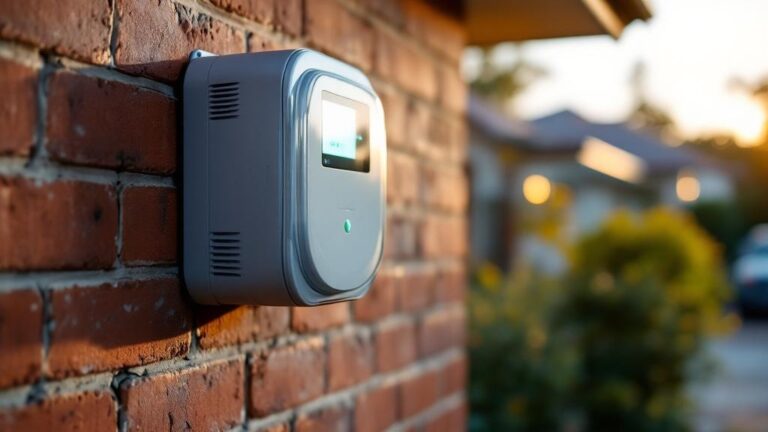
5G deployment increasingly relies on small cells — low-power base stations mounted on street furniture, building walls, and utility poles. These units typically operate at 1-10 watts, compared to 40-100 watts for traditional macro towers. The lower power means shorter range, requiring more installations to cover the same area.

The proximity of small cells to pedestrians and building occupants raises questions about exposure. However, the inverse square law means that the lower transmit power partially offsets the closer distance. A 5-watt small cell at 10 metres produces similar power density to a 50-watt macro tower at 32 metres, all else being equal.

ARPANSA EME assessments for small cells show that exclusion zones — areas where exposure might exceed reference levels — are typically less than 2 metres from the antenna face. At normal pedestrian distances of 5-10 metres or more, measured levels remain well below reference limits. Building occupants behind walls experience additional attenuation, further reducing exposure from external small cells.

Massive MIMO: More Antennas, Not More Power

5G base stations use Massive MIMO (Multiple Input, Multiple Output) technology with 64 or more antenna elements compared to 4-8 elements in typical 4G installations. More antennas enable better signal quality and higher data rates without increasing total radiated power. The additional elements are used for beamforming precision and spatial multiplexing, not power amplification.

A Massive MIMO antenna array may look more substantial than a 4G panel antenna, leading to assumptions about higher power output. In reality, the total radiated power is often similar or lower, distributed across more antenna elements operating at lower individual power levels. The engineering goal is spectral efficiency — getting more data through the same spectrum — not raw power output.

Carrier EME reports filed with ACMA show that 5G Massive MIMO installations on existing tower sites typically produce similar aggregate EME levels to the 4G equipment they supplement or replace. The shift to 5G doesn’t automatically mean higher exposure levels at any given location. Where exposure increases occur, they’re generally due to increased usage and traffic rather than technology changes.

Actual Power Comparison: 5G vs 4G

Direct power comparisons between 5G and 4G require careful specification of what’s being compared. A 5G small cell at 5 watts cannot be meaningfully compared to a 4G macro tower at 80 watts without considering coverage area and user capacity. Per-user power allocation in 5G is often lower due to improved efficiency.

Carrier data from Australian deployments shows that total site power consumption — which correlates loosely with RF output — has increased modestly with 5G additions, primarily due to additional processing equipment rather than RF transmission. The RF power increase is typically 10-30% when 5G is added to an existing 4G site, not the order-of-magnitude increases sometimes claimed.

Your personal RF exposure is dominated by your own device, not base stations. The phone in your pocket or hand operates at up to 0.2 watts and is millimetres from your body, while base stations operate at 5-100 watts but are tens or hundreds of metres away. Distance matters enormously: doubling distance quarters power density.

What the Research Actually Shows

The NTP Study: Context and Limitations

The US National Toxicology Program (NTP) study, completed in 2018 at a cost of $30 million, exposed rats and mice to 2G and 3G radiofrequency radiation for their entire lives. The study found “clear evidence” of heart tumours (schwannomas) in male rats exposed at the highest levels. This finding received significant attention and continues to be cited in discussions about RF safety.

The exposure levels used in the NTP study were 1.5 to 6 W/kg whole-body SAR — substantially higher than any real-world human exposure scenario and above Australian limits. The exposures were also continuous for 9 hours daily, every day, for two years. Applying these results to typical human exposure requires significant extrapolation across species, exposure duration, and intensity.

The NTP study did not test 5G frequencies or modulation schemes, which didn’t exist in the study design phase. Some scientists argue the biological mechanisms identified could apply to all RF frequencies, while others note that the specific absorption patterns differ between frequencies. ARPANSA’s position is that the NTP findings don’t change the assessment that exposures within reference levels are safe, while acknowledging the study contributes to ongoing research.

IARC Group 2B: What It Actually Means

The International Agency for Research on Cancer (IARC), part of the WHO, classified radiofrequency electromagnetic fields as Group 2B in 2011. This classification means “possibly carcinogenic to humans” based on limited evidence from human studies and limited evidence from animal studies. The classification applies to RF fields generally, not specifically to 5G.

Group 2B is IARC’s third-highest category out of five, and includes over 300 agents. Other Group 2B substances include coffee (until reclassified in 2016), pickled vegetables, aloe vera extract, and the antimicrobial triclocarban. The classification indicates a possible hazard exists but does not quantify risk or establish that harm occurs at any particular exposure level.

IARC classification evaluates hazard — whether something can cause cancer under any conditions — not risk, which considers actual exposure levels. The Group 2B classification for RF was based largely on studies of heavy mobile phone use and brain tumours, particularly the Interphone study. Subsequent large-scale studies, including the Danish cohort study and Australian cancer registry analyses, have not found increased brain tumour rates corresponding to mobile phone adoption.

Millimetre Wave Research: Current Evidence

Research on millimetre wave frequencies (above 20GHz) is less extensive than research on lower frequencies, simply because widespread deployment began more recently. The physics of mmWave interaction with tissue is better understood than lower frequencies: penetration depth is less than 1mm, meaning energy is absorbed in the skin’s outer layers rather than deeper tissues.

Studies on mmWave exposure show thermal effects at high intensities — heating of skin tissue — consistent with established physics. The ICNIRP 2020 guidelines revised reference levels for frequencies above 6GHz based on updated dosimetry, setting limits to prevent excessive localised heating. ARPANSA adopted these revised levels in RPS S1:2021.

Non-thermal effects of mmWave exposure remain an active research area with mixed and inconclusive results. Some in-vitro studies report effects on cell membranes or gene expression at non-thermal levels, while others find no effects. The WHO’s systematic review of 5G health evidence, ongoing since 2020, aims to assess this body of research. No regulatory body has concluded that non-thermal mmWave effects present a health risk at exposure levels below current limits.

WHO and ARPANSA Positions

The WHO’s 2024 systematic review on radiofrequency EMF and health outcomes found no consistent evidence of health effects at exposure levels below international guidelines. The review examined studies on cancer, neurological effects, reproductive health, and cardiovascular outcomes. It acknowledged limitations in the evidence base, particularly for 5G-specific frequencies and long-term exposure.

ARPANSA maintains that “there is no established scientific evidence that low-level RF EMF exposure from 5G and other wireless telecommunications can affect human health.” This position statement, updated in 2023, reflects the consensus of Australian radiation protection experts and aligns with international bodies including ICNIRP and the WHO. ARPANSA also acknowledges that “the current research does not rule out the possibility of effects” and supports continued research.

The Australian position represents honest uncertainty communication: no established evidence of harm, but not absolute proof of safety. This nuanced stance frustrates both those who want definitive safety assurances and those who want validation of harm claims. It reflects the actual state of scientific knowledge — confident about absence of established effects, uncertain about theoretical possibilities.

What Honest Risk Communication Looks Like

EMF health discussion often falls into two camps: dismissive (“completely safe, nothing to worry about”) or alarmist (“proven dangerous, being covered up”). Neither position reflects the actual evidence. The honest position acknowledges genuine scientific uncertainty while contextualising what we do and don’t know.

What we know with confidence: RF exposure at levels above current limits causes tissue heating, which can be harmful. Current limits are set well below thermal effect thresholds with substantial safety margins. Measured exposure levels in Australian environments are typically 0.001% to 1% of these limits.

What remains uncertain: whether non-thermal effects exist and are harmful at real-world exposure levels, whether long-term cumulative exposure poses risks not detected in existing studies, and whether certain populations are more susceptible than others. These uncertainties exist for many environmental exposures and don’t automatically indicate hidden dangers.

Measure First. Act Second.

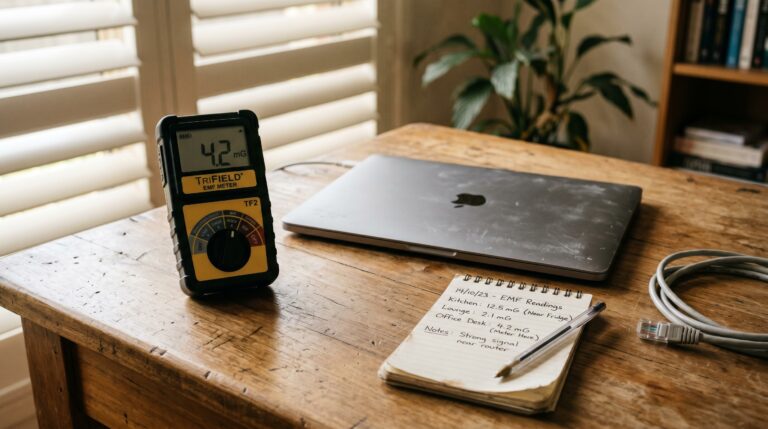
The TriField TF2 measures AC magnetic, AC electric, and RF fields in one meter. Without real readings, every EMF decision is a guess. Every room audit starts here.

Australian Exposure Measurements

ARPANSA Field Measurement Program

ARPANSA conducts regular field measurements of RF exposure levels across Australia, published in their annual radiation protection reports. The measurement program uses calibrated spectrum analysers and broadband probes at locations including residential areas, CBD centres, schools, and hospitals. Results consistently show exposure levels far below reference limits.

The 2022-23 ARPANSA survey measured RF levels at 50 sites across Sydney, Melbourne, Brisbane, and Perth, including locations near 5G base stations. Maximum measured levels were 1.2% of the ARPANSA reference level at a CBD site with multiple base stations on nearby buildings. Median levels across all sites were 0.02% of reference levels.

These measurements represent snapshot assessments at specific times and locations. Continuous monitoring at fixed locations shows variation throughout the day corresponding to network traffic patterns. Peak levels occur during business hours in commercial areas, with lower levels at night and in residential areas.

CBD Environments

Central business districts have the highest RF exposure levels due to dense telecommunications infrastructure and high user density. Melbourne CBD measurements in 2023 ranged from 0.001 to 0.12 W/m² at street level, with higher levels near building-mounted antennas. These levels correspond to 0.01% to 1.2% of the 10 W/m² reference level.

Office buildings in CBDs may have internal small cells for in-building coverage, adding to ambient RF levels. Measurement surveys in Sydney commercial buildings found interior levels of 0.0001 to 0.01 W/m², lower than street level due to building attenuation. Workers in upper floors of buildings with rooftop base stations may have higher exposure, though typically still below 1% of reference levels.

CBD mmWave deployments at 26GHz produce higher localised levels within 20 metres of the small cell antenna. However, rapid signal attenuation and limited penetration through glass and building materials mean indoor exposure from outdoor mmWave sources is minimal. If you can see the small cell antenna directly, you’re receiving more signal than if glass or walls are between you.

Suburban Environments

Suburban areas have lower RF exposure levels than CBDs due to sparser infrastructure and lower user density. ARPANSA measurements in residential suburbs of Australian capital cities found levels of 0.0001 to 0.01 W/m², typically 0.001% to 0.1% of reference levels. The dominant sources are usually macro cell towers at distances of 200 metres or more.

Homes within 100 metres of a telecommunications tower have higher exposure than those further away, but still typically measure below 0.1% of reference levels outside the property boundary. ARPANSA guidance notes that exclusion zones around typical towers extend only 2-5 metres from the antenna, well within the tower compound.

Indoor levels in suburban homes are dominated by the home’s own devices — WiFi routers, cordless phones, smart home equipment — rather than external base stations. A WiFi router at 3 metres produces higher exposure than a cell tower at 200 metres. This has implications for exposure reduction strategies: addressing in-home sources often matters more than external infrastructure.

Rural and Regional Areas

Rural areas have the lowest ambient RF levels, often measuring at or near the background noise floor of measurement equipment. Base station coverage is sparse, with macro towers serving large areas at relatively low power. 5G deployment in regional Australia focuses on sub-1GHz bands for coverage rather than high-capacity urban bands.

Some regional areas have no measurable RF from telecommunications infrastructure at all. ARPANSA measurements at remote locations show levels below 0.00001 W/m², limited only by instrument sensitivity. For residents concerned about RF exposure, regional and rural locations offer substantially lower ambient levels than metropolitan areas.

The flip side is that mobile devices in low-coverage areas transmit at higher power to reach distant towers. A phone with one bar of signal may transmit at 0.2W, while a phone with full signal in an urban area might use 0.001W. Personal device exposure may actually be higher in low-coverage areas despite lower ambient levels.

Who Is Most Exposed and When

Proximity to Small Cell Infrastructure

The highest RF exposure from 5G infrastructure occurs within 5 metres of small cell antennas, particularly at similar elevation to the equipment. Street-level small cells mounted on poles or building facades may position antennas at head height for pedestrians or at window height for adjacent buildings. These scenarios represent the highest potential exposure from infrastructure.

Building occupants with small cells mounted directly outside their windows represent a specific concern. While building materials provide some attenuation, glass windows allow significant RF transmission. ARPANSA recommends setback distances be maintained, and carriers must demonstrate compliance at all accessible locations.

Specific exposure scenarios from small cell proximity:

  • Standing within 2 metres of a small cell antenna: 0.1 to 1 W/m² (1% to 10% of reference level)
  • Walking past a street-level small cell at 5 metres: 0.01 to 0.1 W/m² (0.1% to 1% of reference level)
  • Working in a building with rooftop small cell above: 0.001 to 0.01 W/m² typical (0.01% to 0.1% of reference level)
  • Living in apartment with small cell on adjacent building: varies widely, requires measurement

Heavy Smartphone and Device Users

Your personal devices represent a larger RF exposure source than telecommunications infrastructure for most people. A smartphone against your head operates at up to 0.2W and is separated from your tissue by millimetres. The resulting SAR (Specific Absorption Rate) can approach the regulatory limit of 2 W/kg averaged over 10g of tissue.

High-exposure device usage patterns include:

  • Extended voice calls with phone against head (not using speaker or headphones)
  • Carrying phone in pants pocket against thigh for hours daily
  • Sleeping with phone under pillow or beside head
  • Using laptop on lap while WiFi is active
  • Tablet use with device resting against body during video streaming

Reducing device-body exposure requires minimal lifestyle change: using speakerphone or wired headphones, keeping phone in a bag rather than pocket, and using devices on a table rather than against your body. These changes reduce the highest-intensity exposure most people experience.

Night-Time Bedroom Exposure

Sleep represents 7-9 hours of continuous exposure at whatever RF level exists in the bedroom. While absolute exposure levels may be lower than daytime activities (no active phone use), the duration is significant. Continuous exposure allows any biological effects to accumulate without the intermittent breaks that daytime activities provide.

Common bedroom RF sources include:

  • WiFi router (if located in or near bedroom): 0.001 to 0.1 W/m² at 2-3 metres
  • Smartphone on bedside table: 0.0001 to 0.01 W/m² (standby) to 0.1 W/m² (active call or data)
  • Smart home devices: 0.0001 to 0.01 W/m² each
  • External base stations: varies by location, typically 0.0001 to 0.01 W/m² in suburban areas
  • Neighbour’s WiFi: 0.00001 to 0.001 W/m² through walls

For those choosing precautionary RF reduction, the bedroom represents a high-value target due to exposure duration. Simple measures like router switch-off or device aeroplane mode can substantially reduce night-time exposure with minimal inconvenience.

Children and Vulnerable Populations

ARPANSA notes that children may absorb more RF energy than adults due to smaller body size, thinner skulls, and different tissue water content. The reference levels in RPS S1:2021 are designed to protect all age groups, but some researchers argue children warrant additional consideration. No specific Australian regulations differentiate limits for children versus adults.

Vulnerable populations potentially warranting precautionary consideration include:

  • Children and adolescents (developing nervous systems, longer lifetime exposure)
  • Pregnant women (potential fetal exposure)
  • People with medical implants (specific devices may have RF susceptibility)
  • Individuals reporting electromagnetic hypersensitivity (EHS) symptoms

The scientific evidence for specific vulnerability is mixed. The INTERPHONE study found some association between heavy mobile phone use and glioma risk, though not consistently replicated. EHS symptoms are real experiences for those reporting them, but blinded studies have not identified RF as a causative factor. Precautionary measures for these groups reflect uncertainty, not established risk.

What Practical Steps Are Warranted

Evidence-Based Action Hierarchy

Practical EMF reduction should prioritise actions based on evidence of actual exposure levels, not assumptions or fear. Measurement provides the foundation for targeted action. Without knowing your actual exposure, you cannot distinguish between high-value interventions and wasted effort.

The following hierarchy represents a proportionate approach, starting with assessment and moving to intervention only where measurement indicates elevated levels:

  1. Measure first: Use a calibrated RF meter like the TriField TF2 to determine actual exposure levels in your home, particularly in the bedroom. This single step eliminates guesswork and allows targeted action.
  2. Distance from small cells where practical: If you have line-of-sight to a small cell within 20 metres, and measurements confirm elevated RF levels, consider whether work or living arrangements can increase distance. This applies to a small minority of situations.
  3. Wired ethernet at home: Connect computers, smart TVs, and gaming consoles via ethernet cable and disable their WiFi radios. This reduces both your router’s activity and the device’s RF output. A straightforward change for fixed devices.
  4. Router switch at night: A simple timer switch or smart plug can disable your WiFi router during sleeping hours, eliminating the largest controllable RF source for 7-9 hours daily. No impact on wired devices.
  5. Bedroom RF audit: Move the router out of the bedroom if currently located there. Put phones in aeroplane mode or in another room overnight. Remove or disable unnecessary smart home devices from the bedroom.

What Doesn’t Warrant Action

Some promoted interventions lack evidence of benefit or address exposures that are already minimal:

  • EMF-blocking phone cases: reduce your signal strength, causing your phone to transmit at higher power, potentially increasing exposure
  • Whole-house shielding paint: expensive, requires professional application, can trap internal RF sources inside, unnecessary for most homes
  • Moving house to avoid cell towers: towers visible from your home contribute minimal exposure compared to your own devices
  • Anti-5G USB devices, stickers, or pendants: have no measurable effect on RF levels; pure placebo products

Proportionate responses match the actual exposure level. If measurement shows bedroom RF at 0.0001 W/m², you’re already at 0.001% of reference levels, and aggressive shielding provides minimal additional reduction. Reserve intensive interventions for situations where measurement confirms elevated exposure.

Router Options for RF Reduction

Standard home routers broadcast WiFi signals continuously, even when no devices are actively using data. “Eco” mode on some routers reduces transmit power, but most don’t offer meaningful control over RF output. The simplest approach is switching the router off when not needed, particularly overnight.

For those wanting WiFi convenience with reduced RF output, the JRS Eco 100 Era router offers a hardware solution. This device uses full-signal eco mode that reduces beacon frequency when no devices are actively transmitting, cutting RF output by up to 90% during idle periods. It maintains normal WiFi connectivity when devices are active.

Wired ethernet remains the lowest-RF option for fixed devices. Running ethernet cables may require some installation effort, but eliminates RF from device-router communication entirely for connected devices. Powerline adapters offer an alternative where new cable runs aren’t practical, though they introduce some ELF-EMF on household wiring.

EMF Meters

Measure your actual exposure before spending on shielding.

The TriField TF2 measures all three EMF types — RF, ELF electric, and ELF magnetic — in one device. It is the only meter I recommend to Australian homeowners for a first assessment.

Buy TriField TF2 (SaferEMF) →Check on Amazon AU →

The EMF Meter Case: Measuring Your Own Exposure

Why Measurement Beats Assumption

Assumptions about EMF exposure are frequently wrong in both directions. People living near visible cell towers often assume high exposure, when measurement shows their own WiFi router dominates. Others assume their suburban home is “safe” without recognising that a smart meter or neighbour’s WiFi contributes measurable RF. Measurement replaces guesswork with data.

A one-time measurement provides a baseline, but RF levels vary throughout the day. Network traffic peaks during business hours, while your own devices vary with usage patterns. Measuring at different times, particularly during sleep hours, gives a more complete picture.

Measurement also enables before-and-after comparison when implementing changes. You can verify that router switch-off actually achieves the expected reduction, or that a shielded canopy provides the attenuation claimed. Without measurement, you’re relying on faith that interventions work.

What the TriField TF2 Measures

The TriField TF2 measures three types of EMF fields with a single device, making it practical for home assessment. Its RF measurement range of 1MHz to 8GHz covers all Australian 5G frequencies except millimetre wave bands, plus WiFi, Bluetooth, cordless phones, and other common sources.

TF2 measurement capabilities:

  • RF/Microwave (1MHz – 8GHz): Covers sub-6GHz 5G, 4G, 3G, WiFi 2.4GHz and 5GHz, Bluetooth, cordless phones, smart meters, microwave ovens. Does not cover 26GHz mmWave.
  • Magnetic field (40Hz – 100kHz): Covers power-frequency magnetic fields from wiring, appliances, transformers. Includes higher harmonics and dirty electricity frequencies.
  • Electric field (40Hz – 100kHz): Measures electric field strength from wiring and appliances, useful for bedroom assessment.

The TF2 displays readings in mW/m², which can be converted to W/m² by dividing by 1000. A reading of 1 mW/m² equals 0.001 W/m², or 0.01% of the ARPANSA reference level of 10 W/m². Most bedroom readings fall in the 0.001 to 0.1 mW/m² range.

Interpreting Readings in Practice

TF2 readings should be compared against ARPANSA reference levels, but also against building biology guidelines used by some practitioners. These guideline sets have different philosophies: ARPANSA limits are designed to prevent established thermal effects with safety margins, while building biology guidelines aim for exposure levels typical of pre-wireless environments.

Reference comparison for TF2 RF readings:

  • Below 0.01 mW/m² (0.00001 W/m²): Very low, typical of rural areas with no nearby infrastructure
  • 0.01 – 0.1 mW/m²: Low, typical of suburban homes away from routers
  • 0.1 – 1 mW/m²: Moderate, typical near active WiFi router or in urban areas
  • 1 – 10 mW/m²: Elevated, within 2 metres of router or near small cell
  • Above 10 mW/m²: High, very close to active RF source
  • ARPANSA reference level (10 W/m² = 10,000 mW/m²): Maximum permitted for continuous public exposure

Most home readings fall between 0.01 and 1 mW/m², representing 0.0001% to 0.01% of ARPANSA limits. Whether these levels warrant action depends on your risk tolerance and the feasibility of reduction measures. Measurement provides the information; you decide the response.

When Higher-Frequency Coverage Matters

The TF2’s 8GHz upper limit means it doesn’t detect 26GHz millimetre wave 5G signals. For most Australians, this limitation is irrelevant — mmWave deployment is limited to specific CBD locations and doesn’t penetrate buildings effectively. If you’re not in a CBD with line-of-sight to mmWave small cells, the TF2 covers your exposure sources.

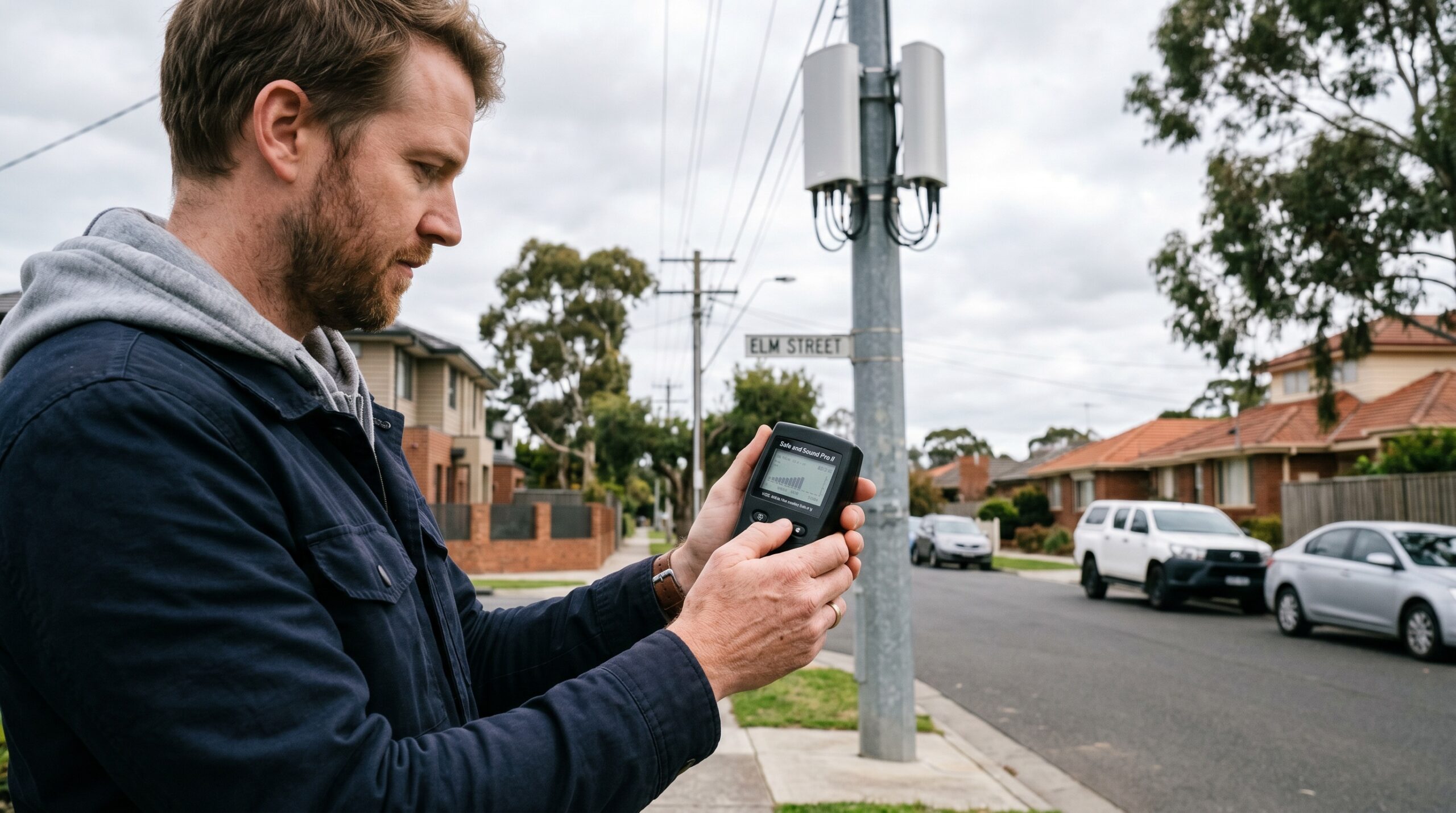
For those in CBD environments or wanting comprehensive RF measurement, the Safe and Sound Pro II offers extended frequency range up to 8GHz with better sensitivity and faster response time. It’s an RF-only meter without ELF measurement, so it complements rather than replaces the TF2’s multi-function capability.

Professional EMF assessments use spectrum analysers costing thousands of dollars, providing frequency-specific information that consumer meters cannot. For most home assessment purposes, the TF2 or Safe and Sound Pro II provides sufficient information to guide practical decisions. Professional assessment is warranted for complex situations or legal/compliance purposes.

Bedroom RF Reduction: The Highest-Priority Action

Why the Bedroom Matters Most

Sleep duration makes the bedroom your longest continuous exposure environment. Eight hours represents one-third of each day in a single location. While absolute exposure levels may be lower than daytime activities involving phones and computers, the cumulative dose from uninterrupted exposure is substantial.

Sleep also represents a time of physiological repair and restoration. Some researchers hypothesise that RF exposure during sleep may interfere with these processes, though evidence remains inconclusive. The precautionary principle suggests minimising exposure during sleep has a better benefit-to-disruption ratio than restrictions on daytime activities.

Bedroom interventions are also among the easiest to implement. You don’t need WiFi while asleep. Your phone can be in another room or in aeroplane mode. The router can be switched off without affecting anyone’s sleep. These changes have zero cost beyond a timer switch and zero lifestyle impact beyond mild inconvenience.

Router Management Strategies

The WiFi router is typically the largest controllable RF source in a home. A standard dual-band router produces 0.1 to 1 mW/m² at 3-5 metres distance, dropping with distance squared. If the router is in or near the bedroom, it dominates night-time RF exposure.

Router management options in order of effectiveness:

  • Relocate router: Move to a central location away from bedrooms. Living room or home office placement maintains coverage while creating distance from sleeping areas.
  • Timer switch: A mechanical or digital timer can power off the router from bedtime to morning. Cost: under $20. Reconnects automatically when power restored.
  • Manual switch-off: Simply unplugging the router before bed works, but requires daily action and may be forgotten.
  • Low-EMF router: The JRS Eco 100 Era reduces beacon transmissions during idle periods, maintaining connectivity with lower RF output.

Router switch-off affects all devices expecting WiFi access, including security cameras, smart home devices, and phones receiving calls/messages. For most households, this is acceptable overnight. Those requiring 24/7 connectivity can use wired ethernet for critical devices.

Device Management for Sleep

Smartphones in the bedroom contribute both RF exposure and sleep disruption from notifications. Aeroplane mode eliminates RF transmission while maintaining alarm clock functionality. Better still, charging the phone in another room removes both the RF source and the temptation to check it during the night.

Bedroom device management checklist:

  • Smartphones: Aeroplane mode or charge in another room. Use a battery-powered alarm clock instead of phone alarm if needed.
  • Tablets: Charge outside bedroom, or at minimum enable aeroplane mode.
  • Laptops: Remove from bedroom or disable WiFi. Wired ethernet if needed for work.
  • Smart speakers: Relocate to living areas. These listen continuously and transmit regularly.
  • Smart TVs: Disable WiFi and use wired ethernet if streaming. Most TVs maintain WiFi connection even when “off.”
  • Baby monitors: Position as far from crib as practical while maintaining function. Analogue monitors produce less RF than digital.

When Shielding Is Warranted

RF shielding products, including bed canopies and window films, provide physical attenuation of external RF sources. These products can reduce measured RF levels by 20-40dB (99% to 99.99% reduction) depending on material and installation quality. They represent a more intensive intervention than source control.

Shielding is warranted only when:

  • Measurement with a TriField TF2 confirms elevated RF levels in the bedroom
  • The RF source is external and cannot be controlled (cell tower, neighbour’s equipment)
  • Internal sources have already been addressed (router, devices)
  • Elevation justifies the cost and effort of shielding installation

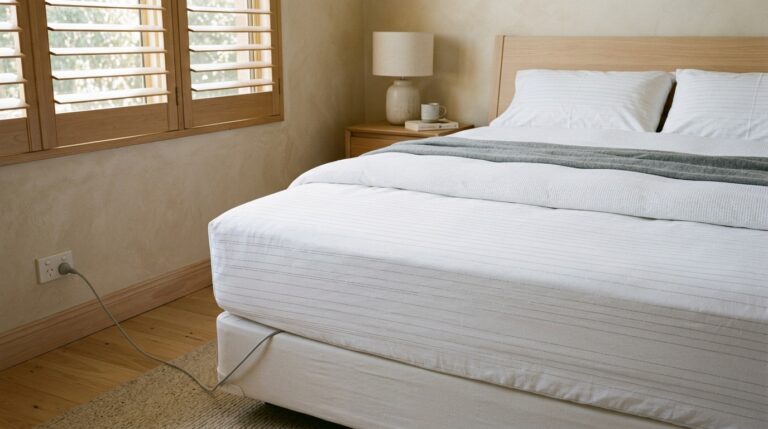
An EMF shielding bed canopy creates a Faraday cage environment around the bed, blocking RF from all directions including external sources. The 42dB attenuation specification means reduction by a factor of over 15,000. This level of shielding is unnecessary for most homes but provides meaningful protection in high-exposure environments.

Shielding without measurement is putting the cart before the horse. If your bedroom measures 0.01 mW/m² — already 0.0001% of ARPANSA limits — a canopy reducing this to 0.000001 mW/m² provides little practical benefit. Measure first, then decide whether shielding is proportionate to your actual exposure level.

Ready to measure your EMF exposure?

Our full EMF meter guide compares every device available in Australia — from entry-level to professional — with Australian pricing and where to buy.

EMF Meter Guide →

Frequently Asked Questions

Claim Evidence Quality Verdict
NTP study proves RF causes cancer Moderate (animal study, 2G/3G, very high exposure) Study showed tumours in rats at exposure levels far above human experience. Relevance to real-world human exposure limited. Contributes to ongoing research, doesn’t establish human risk at normal exposure.
IARC Group 2B means 5G is carcinogenic Misinterpretation Group 2B means “possibly carcinogenic” — a hazard classification, not a risk finding. Same category as coffee (until 2016), pickled vegetables. Indicates limited evidence of possible effect, not established causation.
Millimetre waves cause skin damage Low (thermal effects only at high intensity) mmWave at high intensity causes heating, like any absorbed energy. At real-world exposure levels well below ARPANSA limits, no thermal effects occur. Non-thermal effects at low levels not established.
Children are more susceptible to RF Uncertain (theoretical concern, limited data) ARPANSA notes children may absorb more RF energy per unit mass. Current limits designed to protect all ages. Whether this theoretical higher absorption translates to higher risk not established.
5G causes brain tumours Very low (no supporting evidence) Large epidemiological studies (Danish cohort, Australian registry data) show no increase in brain tumour rates corresponding to mobile phone adoption. 5G-specific brain tumour evidence doesn’t exist.
RF exposure affects male fertility Low to moderate (mixed results, methodology issues) Some studies show sperm parameter changes with phone-in-pocket exposure. Results inconsistent across studies. WHO review found insufficient evidence for causal link. Precautionary pocket avoidance is low-cost option.
EMF disrupts sleep quality Low to moderate (some studies, blinding challenges) Some studies report sleep quality changes with RF exposure. Blinded studies have mixed results. Device use before bed clearly affects sleep through blue light and cognitive activation. RF effect independent of device use unclear.
5G causes oxidative stress Low (in-vitro studies, relevance uncertain) Some cell studies show oxidative markers with RF exposure. Translation to whole-organism effects at real-world exposure levels not established. ARPANSA and ICNIRP don’t recognise this as established effect requiring limit revision.

Is 5G safe in Australia?

Australian 5G networks operate within exposure limits set by ARPANSA under RPS S1:2021, which adopts international ICNIRP 2020 guidelines. These limits include substantial safety margins below levels where thermal effects occur. ARPANSA field measurements consistently show public exposure at 0.001% to 1% of reference levels. No Australian or international regulatory body has found evidence of health effects at these exposure levels. The WHO and ARPANSA both state there is no established evidence that 5G at current exposure levels affects human health. Scientific uncertainty remains about potential long-term and non-thermal effects, which is why research continues. For those preferring precautionary measures, reducing bedroom RF exposure represents a practical approach.

What frequency does Australian 5G use?

Australian 5G networks primarily use sub-6GHz frequencies, specifically the n78 band at 3.5GHz (main capacity band) and n28 band at 700MHz (coverage layer). Some carriers also use n1 at 2100MHz and n5 at 850MHz for 5G. Millimetre wave frequencies at 26GHz (n258) are deployed only in select CBD locations in Sydney, Melbourne, and Brisbane, representing less than 0.5% of Australia’s 5G coverage. The 28GHz band is allocated but minimally deployed. Most Australians interact with 5G in the 700MHz to 3500MHz range, frequencies similar to existing 4G bands and with well-understood propagation characteristics.

Does ARPANSA say 5G is dangerous?

No. ARPANSA’s official position states: “There is no established scientific evidence that low-level RF EMF exposure from 5G and other wireless telecommunications can affect human health.” ARPANSA sets exposure limits through RPS S1:2021 that are designed to protect all members of the public, including children, pregnant women, and those with medical conditions. ARPANSA acknowledges that research is ongoing and that current evidence “does not rule out the possibility of effects,” which reflects appropriate scientific caution rather than evidence of danger. ARPANSA conducts regular field measurements confirming that Australian 5G installations operate well below reference levels.

How do I measure 5G radiation at home?

A calibrated RF meter provides home measurement capability. The TriField TF2 measures RF from 1MHz to 8GHz, covering all sub-6GHz 5G bands plus WiFi, Bluetooth, and other common sources. To measure, turn on the meter in RF mode and walk through your home, noting readings in different rooms and at different times of day. Pay particular attention to bedrooms and areas where you spend extended time. The TF2 doesn’t measure 26GHz millimetre wave, but this is only relevant in select CBD locations with line-of-sight to mmWave small cells. For most homes, the TF2 provides comprehensive RF assessment capability.

Are 5G small cells more dangerous than 4G towers?

No. 5G small cells operate at lower power than 4G macro towers — typically 1-10 watts compared to 40-100 watts for macro sites. While small cells are deployed closer to people, the lower power partially offsets the reduced distance. A 5-watt small cell at 10 metres produces similar power density to a 50-watt macro tower at 32 metres, following the inverse square law. ARPANSA EME assessments show that exclusion zones around small cells extend only 1-2 metres from the antenna face. At typical pedestrian distances of 5 metres or more, exposure levels remain well below reference limits. Building materials provide additional attenuation for indoor occupants.

What is the ARPANSA exposure limit for 5G?

ARPANSA’s reference level for general public exposure to RF at 5G frequencies is 10 W/m² (watts per square metre) for frequencies between 2GHz and 300GHz, as specified in RPS S1:2021. Below 2GHz, the reference level varies by frequency — for example, 3.6 W/m² at 700MHz. These limits are designed to prevent tissue heating effects with a safety factor of 50 below the threshold where effects begin. The limits apply to time-averaged exposure over any 30-minute period. Measured exposure levels in Australian environments are typically 0.001% to 1% of these reference levels, providing substantial margin below the limits.

Does 5G use millimetre waves in Australia?

Yes, but with very limited deployment. ACMA allocated 26GHz spectrum for 5G use in 2021, and carriers have deployed mmWave in high-traffic CBD locations including parts of Sydney, Melbourne, and Brisbane. The 28GHz band is also allocated but minimally used. Millimetre wave deployment represents less than 0.5% of Australia’s 5G coverage because mmWave signals don’t penetrate buildings well, are absorbed by foliage and rain, and require line-of-sight between tower and device. The vast majority of Australian 5G connections use sub-6GHz frequencies with characteristics similar to existing 4G. If you’re not in a CBD with direct line-of-sight to mmWave small cells, you’re not exposed to millimetre wave 5G.

Should I put my phone in aeroplane mode at night?

If reducing RF exposure during sleep is a priority for you, yes. Aeroplane mode disables all wireless transmitters (cellular, WiFi, Bluetooth) while maintaining alarm clock functionality. A smartphone in standby mode periodically checks for data and maintains cell tower connection, producing low-level RF emissions. These emissions are minimal compared to active use, but occur continuously through the night if the phone is beside your bed. Charging the phone in another room achieves the same result while also removing the sleep-disrupting temptation to check notifications. This is a low-cost precautionary measure with no downside other than missing calls and messages overnight.

Do EMF bed canopies actually work against 5G?

Yes, if properly designed and installed. A silver-thread fabric canopy creates a Faraday cage that attenuates RF signals from all directions. A quality EMF shielding bed canopy with 42dB attenuation reduces RF by a factor of over 15,000. However, canopies are warranted only when measurement confirms elevated bedroom RF levels from external sources you cannot control. If your bedroom already measures very low RF (as most suburban bedrooms do), a canopy provides minimal additional benefit. Measure first with a TF2 meter, address internal sources like routers and devices, then consider shielding only if external exposure remains elevated.

What does IARC Group 2B mean for 5G risk?

IARC Group 2B classification means “possibly carcinogenic to humans” based on limited evidence. This is a hazard classification, not a risk assessment — it indicates that a substance or exposure can possibly cause cancer under some conditions, without quantifying the probability at any particular exposure level. Over 300 agents are classified as Group 2B, including aloe vera extract, pickled vegetables, and the antimicrobial triclocarban. Coffee was in Group 2B until 2016. The RF classification was based primarily on studies of heavy mobile phone use and brain tumours. It applies to RF fields generally, not 5G specifically. Subsequent large-scale studies have not found brain tumour increases corresponding to mobile phone adoption. The classification reflects scientific caution about uncertainty, not evidence of established harm.

Get the Australian Home Environment Checklist

30 checks across water, air and EMF. Most of them free. Ranked by impact.

No spam. Unsubscribe any time.

Jayce Love — Clean and Native founder
Written by Jayce Love

Former Royal Australian Navy Clearance Diver and TAG-E counter-terrorism operator. Founded Clean and Native to apply the same rigorous thinking to the home environment.

Full biography →

Similar Posts