Chloramine and Your Skin: Why Australian Shower Filters Are Worth It
Chloramine and Your Skin: Why Australian Shower Filters Are Worth It in 2026
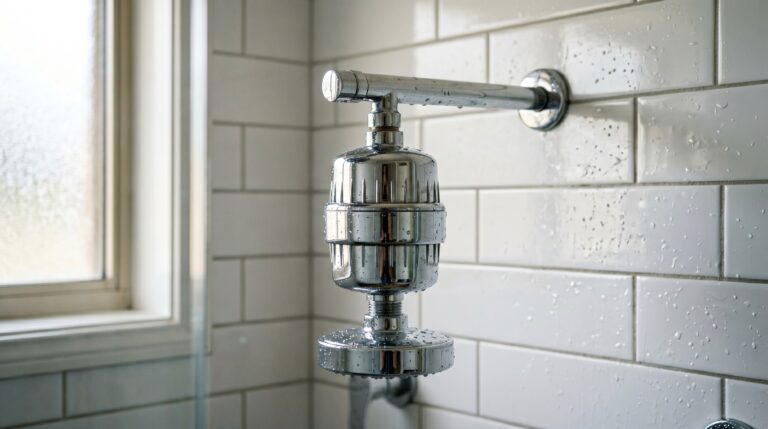
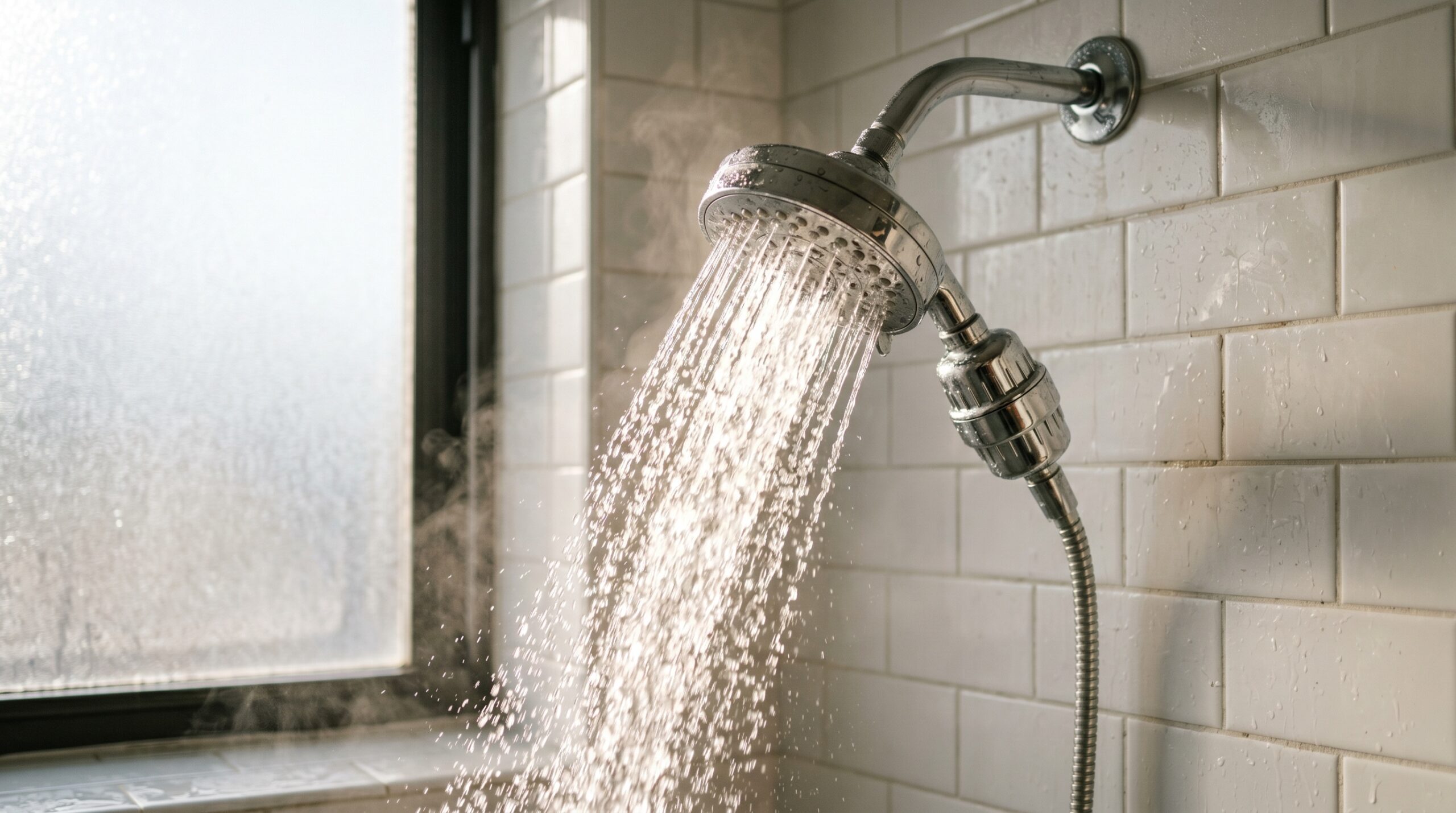
Chloramine is the disinfectant in Brisbane, Sydney, Adelaide, Perth, and Darwin tap water — and standard shower filters cannot remove it. If your skin is dry, your hair is brittle, or your scalp itches after showering, the water chemistry is the most likely culprit, and a filter rated for chloramine is the only fix that works.
Quick Verdict
The right shower filter for Australian cities depends entirely on which disinfectant your utility uses — chloramine cities need catalytic carbon or vitamin C; KDF-55 and standard GAC filters are ineffective against chloramine.
Brisbane, Sydney, Adelaide, Perth, and Darwin all use chloramine. Melbourne, Hobart, Canberra, Townsville, and Cairns use free chlorine. Buying the wrong filter type is the single most expensive mistake Australian shower filter shoppers make.
| Filter Technology | What It Does | Verdict |
|---|---|---|
| Catalytic Carbon | Breaks chloramine bond via catalytic reaction; also removes chlorine, VOCs | Recommended — chloramine cities |
| Vitamin C (Ascorbic Acid) | Chemically neutralises both chloramine and free chlorine on contact | Recommended — all cities |
| KDF-55 / Standard GAC | Removes free chlorine effectively; removes chloramine at ~1/40th the rate | Avoid as primary — chloramine cities |
The Chloramine Problem Most Shower Filters Ignore
Most shower filter marketing was written for the American market, where free chlorine is the dominant disinfectant. In Australia, the five largest cities have moved to chloramine — a compound formed by reacting chlorine with ammonia — because it is more stable over long distribution networks and produces fewer trihalomethane byproducts under the Australian Drinking Water Guidelines (ADWG 6.4). The NHMRC’s ADWG specifies chloramine as a compliant disinfection method for Australian supplies, and SEQ Water, Sydney Water, SA Water, Water Corporation WA, and Power and Water NT all use it.
The chemistry matters here. Chloramine is a much more stable molecule than free chlorine. Standard granular activated carbon (GAC) — the media in most shower filter cartridges sold at Bunnings, Chemist Warehouse, and Amazon AU — removes free chlorine through adsorption at a rate roughly 40 times faster than it removes chloramine. In practical terms: a GAC cartridge rated for 10,000 litres of free chlorine removal is effectively rated for around 250 litres of chloramine removal at the same contact time and flow rate. At typical Australian shower flow rates of 6-9 litres per minute, that cartridge is exhausted in under an hour of cumulative shower time. You are showering in unfiltered chloramine within a few weeks of installing it.
KDF-55 — the copper-zinc alloy media frequently combined with GAC in budget shower filters — works via an electrochemical redox reaction. It is highly effective against free chlorine. Against chloramine, the chemistry simply does not work at shower water temperatures. The nitrogen-chlorine bond in chloramine does not break under the same redox conditions. If the label on your shower filter lists KDF-55 as the primary active media and your city uses chloramine, that filter is not doing what you bought it to do.
What Chloramine Actually Does to Skin and Hair
Your skin barrier is a lipid matrix — ceramides, fatty acids, and cholesterol arranged in a lamellar structure that keeps moisture in and irritants out. Chloramine is an oxidising agent. Every shower exposes this barrier to a low-concentration oxidising wash. Over weeks and months, this degrades ceramide content, disrupts the acid mantle (the slightly acidic pH layer that keeps the microbiome stable), and increases transepidermal water loss (TEWL). The result is skin that feels tight after showering, patches of dryness that do not resolve with moisturiser alone, and a reactive scalp.
Hair protein — specifically the disulphide bonds in keratin — is also vulnerable to oxidative damage. Chloramine breaks these bonds at a slower rate than bleach, but cumulative daily exposure produces measurable effects: reduced tensile strength, increased porosity, colour fade in dyed hair, and that rough, straw-like texture that does not respond to conditioner. A 2014 study published in the International Journal of Trichology found that swimmers in chlorinated pools showed statistically significant reductions in hair tensile strength compared to non-swimmers — and pool chlorine concentrations are typically lower than the chloramine concentrations in some Australian tap water systems.
The hard water interaction compounds this. Brisbane tap water runs at 80-120 mg/L CaCO₃ and TDS of approximately 80-115 mg/L. Adelaide reaches 140 mg/L CaCO₃ (hard, TDS ~400 mg/L). Perth is harder still at approximately 180 mg/L CaCO₃. Calcium and magnesium ions in hard water bind to hair cuticles, creating a mineral deposit that reduces shine and increases friction. Combined with oxidative damage from chloramine, you get a compound effect: the barrier is compromised AND the surface is coated in minerals. Neither a conditioner nor a filter alone fully addresses both — but removing the chloramine load eliminates the ongoing oxidative damage, which is the more significant of the two factors.
Filter Technologies That Actually Work Against Chloramine
Two filter media are validated for chloramine removal in a shower filter context: catalytic carbon and vitamin C (ascorbic acid). They work through completely different mechanisms and suit different priorities.
Catalytic carbon is activated carbon that has been treated at high temperature to alter its surface chemistry. The catalytic surface facilitates the breakdown of chloramine through an oxidative-reductive catalytic reaction — the carbon acts as a catalyst that splits the nitrogen-chlorine bond, releasing nitrogen gas and converting the chlorine to a harmless compound. Catalytic carbon also removes free chlorine, VOCs, and some chlorination byproducts. It is a passive medium that does not require cartridge replacement as frequently as vitamin C, and it does not alter water pH. The Tappwater EcoPro benchtop filter uses catalytic carbon media and is one of the better-specified units available through Amazon AU for Australian chloramine conditions.
Vitamin C (ascorbic acid or sodium ascorbate) works by a direct chemical reduction reaction. Ascorbic acid reacts stoichiometrically with both chloramine and free chlorine: one molecule of ascorbic acid neutralises one molecule of chloramine on contact. The reaction is essentially instantaneous, which makes it highly effective at shower flow rates where contact time with carbon media can be insufficient. The limitation is that vitamin C cartridges have a finite capacity by mass — a standard 100g ascorbic acid cartridge typically provides around 1,500-3,000 litres of treatment depending on your incoming chloramine concentration, which at Brisbane or Sydney concentrations is roughly two to four months of daily showering. Cartridges need replacement more frequently than catalytic carbon, but the chemistry is unambiguous and the cost per litre is well understood.
Certifications and Australian standards: The relevant Australian certification for water treatment devices is WaterMark (AS/NZS 3718 for tap fittings, AS/NZS 4020 for products in contact with drinking water). WaterMark certification validates that the device is safe for contact with potable water — it does not independently validate chloramine removal efficiency. For performance claims, look for NSF/ANSI 177 (shower filtration systems — free chlorine reduction) as a minimum, but note that NSF 177 tests against free chlorine, not chloramine. There is currently no published NSF standard specifically for chloramine removal in shower filters, which means the onus is on the manufacturer to publish independent third-party test data using chloraminated feed water at realistic concentrations. If a manufacturer only cites NSF 177, their test data may not reflect chloramine removal performance.
Shower Filters Rated for Australian Chloramine Conditions
Cost, Lifespan, and ROI: What Australian Households Actually Spend
Shower filters range from under $40 to over $200 at retail in Australia. The upfront price is almost irrelevant — the ongoing cartridge replacement cost is the number that determines whether you are actually getting filtration value.
Here is what the real costs look like across the main filter types, based on manufacturer-published cartridge replacement intervals and current Australian retail pricing. Assumptions: one standard Australian household, two adults, averaging approximately 15 litres per shower per person per day (Water Efficiency Labelling and Standards [WELS] benchmark for 3-star showerheads), seven showers per day total, giving roughly 105 litres per day or approximately 38,000 litres per year.
Annual Shower Filter Cartridge Cost — Australian Households (2026 AUD)
The whole-house perspective deserves a separate note. A point-of-use shower filter addresses the shower only. If you are also concerned about chloramine when washing your face at the sink, filling a bath, or using the laundry, a whole-house catalytic carbon filtration system installed on the main water line covers every fixture. These systems cost $800-$3,500 installed (depending on tank size and media specification) and have annual running costs of $40-$80 for media maintenance. The payback calculation changes significantly depending on whether you have skin conditions affecting multiple family members or a single adult using one shower. For most renters and single-bathroom households, a point-of-use shower filter at $40-$200 is the practical starting point.
One overlooked ROI factor: dermatological product spending. Australian households with eczema, psoriasis, or seborrhoeic dermatitis spend on average hundreds of dollars annually on prescription and over-the-counter treatments. If the root-cause driver is daily chloramine exposure disrupting the skin barrier, removing that exposure has an asymmetric payoff. A $150 shower filter with $130/year cartridge costs is a $280 first-year investment against ongoing dermatological spending that often exceeds that in a single month of prescription topicals. I am a former Navy Clearance Diver, not a dermatologist — but I know how to read a cost-benefit structure.
City-by-City: Which Filter You Need Based on Your Water Supply
This is the section most Australian shower filter guides skip entirely. The answer changes based on your postcode — not just your preference.
| City / Region | Disinfectant | Hardness (CaCO₃) | Recommended Filter Media | Avoid |
|---|---|---|---|---|
| Brisbane / SEQ | Chloramine | 80-120 mg/L (moderate) | Catalytic carbon, Vitamin C | KDF-55, Standard GAC |
| Sydney / Greater NSW | Chloramine | ~60-80 mg/L (soft-moderate) | Catalytic carbon, Vitamin C | KDF-55, Standard GAC |
| Adelaide | Chloramine | ~140 mg/L (hard, TDS ~400) | Catalytic carbon + mineral filter | KDF-55, Standard GAC |
| Perth | Chloramine | ~180 mg/L (very hard) | Catalytic carbon + KDF-85 (iron) | KDF-55, Standard GAC |
| Darwin | Chloramine | Variable (wet/dry season) | Catalytic carbon, Vitamin C | KDF-55, Standard GAC |
| Melbourne | Free Chlorine | ~25 mg/L (very soft, TDS ~60) | KDF-55, Standard GAC, Catalytic carbon | None — all types work |
| Hobart / Canberra | Free Chlorine | Low-moderate | KDF-55, Standard GAC, Catalytic carbon | None — all types work |
| Townsville / Cairns | Free Chlorine | Moderate (tropical hardness) | KDF-55, Standard GAC, Catalytic carbon | None — all types work |
Perth households face a compounding problem: the hardest tap water in Australia at approximately 180 mg/L CaCO₃ combined with chloramine disinfection. Residents in Kwinana, Rockingham, and Mandurah on the southern distribution network often see the worst combination of these parameters. For Perth, a shower filter that combines catalytic carbon (for chloramine) with a polyphosphate or KDF-85 stage (for iron and hardness scale) delivers better outcomes than catalytic carbon alone. Standard KDF-55 still does not address chloramine, but KDF-85 performs differently and targets different contaminants — do not conflate the two.
Adelaide deserves special attention because its TDS of approximately 400 mg/L is the highest of any Australian capital. That TDS includes chloramine, hardness minerals, sulfates, and other dissolved solids. Residents in the northern suburbs of Salisbury and Elizabeth, which sit further along the distribution network from the Morgan-Whyalla supply, sometimes see chloramine concentrations at the higher end of SA Water’s reported range. A catalytic carbon shower filter here is the minimum — a whole-house system addresses all fixtures and is worth considering for households with multiple people reporting skin or hair issues.
What “Certified” Actually Means on Australian Shower Filter Packaging
The word “certified” on Australian shower filter packaging is doing a lot of work. Understanding what each certification actually validates — and what it does not — stops you from paying a premium for credentials that do not match your specific water chemistry problem.
WaterMark (SAI Global / JAS-ANZ): WaterMark certification under AS/NZS 3718 (water supply — tap fittings) or AS/NZS 4020 (testing of products for use in contact with drinking water) confirms that the physical device is safe for potable water contact and will not leach contaminants into the water. It does NOT validate filtration performance. A WaterMark-certified shower filter may have zero actual contaminant removal capability — it just will not poison you with plasticisers or heavy metals leaching from the filter housing. WaterMark is a safety baseline, not a performance endorsement.
NSF/ANSI 177 (Shower Filtration Systems — Aesthetic Effects): This is the main performance standard cited on shower filters. NSF 177 tests for free chlorine reduction of at least 50% at rated flow and rated capacity. The critical limitation for Australian buyers: NSF 177 tests against free chlorine, not chloramine. A filter that passes NSF 177 with flying colours may perform negligibly against chloramine because the test protocol does not include it. If the manufacturer claims “NSF 177 certified” and your city uses chloramine, ask specifically for their independent test data against chloraminated feed water. If they cannot provide it, treat the certification as irrelevant to your actual water chemistry.
NSF/ANSI 42 (Aesthetic Effects — Drinking Water): Some shower filter manufacturers reference NSF 42, which is designed for drinking water treatment systems. NSF 42 tests for chlorine taste and odour reduction using carbon-based media at 0.5 mg/L free chlorine in a controlled laboratory setup. Again — free chlorine, not chloramine. The standard is more rigorous than NSF 177 and the laboratory methodology is more reproducible, but the same fundamental gap applies for chloramine cities.
The honest answer is that there is currently no published NSF or AS/NZS standard that specifically validates shower filter performance against chloramine under real-world Australian conditions. This is a gap in the standards landscape, not a niche problem — given that five of Australia’s eight capital cities use chloramine, it represents the majority of Australian shower filter buyers. Until that standard exists, the most useful credential is independently commissioned third-party testing (not self-tested) using synthetic water dosed with chloramine at the concentration range specified in ADWG 6.4, at Australian shower flow rates of 6-9 L/min and water temperatures of 38-42°C.
The EMF and “Energised Water” Claims: What the Evidence Says
Some shower filters sold in Australia include claims about “energising” or “restructuring” water, far-infrared ceramic balls, tourmaline stones, or bioceramic media that allegedly alter the molecular structure of water to improve absorption and skin hydration. These claims do not have a plausible physical mechanism and are not supported by peer-reviewed evidence.
Water’s molecular structure at ambient temperature and pressure is not altered by passing over ceramic beads in the timeframe of a shower. The hydrogen bonding network in liquid water restructures itself on a femtosecond timescale — faster than any contact with a ceramic surface could maintain any alleged structural change. The bioceramic and tourmaline claims derive from a class of marketing that originated in Japanese cosmetic water devices in the 1990s and has never been validated under controlled experimental conditions that distinguish the effect of these media from a simple placebo.
Similarly, “negative ion generation” claims in shower filters warrant scepticism. While negative air ions do have some evidence base for mood effects in high-concentration ionised air environments (as per a 2013 meta-analysis in the Journal of Alternative and Complementary Medicine), the mechanism does not translate to ionisation effects from water contact in a shower context. ARPANSA does not recognise any health guidance threshold for “negative ions” in water because the mechanism is not established.
The reason this matters for purchasing decisions: shower filters that dedicate cartridge space to tourmaline, infrared ceramics, or “alkalising” media are typically providing less volume of the media that actually removes chloramine. You are paying for a layer that does nothing demonstrable while reducing the capacity of the layer that does. A filter that is 60% catalytic carbon and 40% bioceramic is performing worse at chloramine removal than an equivalent unit that is 100% catalytic carbon. Focus on the chemistry that has a validated mechanism: catalytic carbon and ascorbic acid.
Last reviewed: May 2026 — Clean and Native
Ready to match the right filter to your city’s water?
The Tappwater EcoPro uses catalytic carbon media — the correct technology for Brisbane, Sydney, Adelaide, Perth, and Darwin chloramine conditions. Available via Amazon AU with no plumbing required.
Frequently Asked Questions
Only if it contains catalytic carbon or vitamin C (ascorbic acid) as the active media. Standard GAC and KDF-55 filters remove chloramine at approximately 1/40th the rate they remove free chlorine, making them effectively useless in Brisbane, Sydney, Adelaide, Perth, and Darwin. Check your filter’s listed media before assuming it is working.
Brisbane/SEQ (SEQ Water), Sydney (Sydney Water), Adelaide (SA Water), Perth (Water Corporation WA), and Darwin (Power and Water) all use chloramine as the primary disinfectant. Melbourne (Melbourne Water), Hobart (TasWater), Canberra (Icon Water), Townsville, and Cairns use free chlorine. You can confirm by calling your utility or checking their published annual water quality report.
No. Fluoride removal requires reverse osmosis (90-97% removal) or activated alumina (80-95% removal). Carbon filters — including catalytic carbon — cannot remove fluoride. No shower filter currently available in Australia removes fluoride from shower water. If fluoride is your primary concern, the relevant filter is a drinking water RO unit, not a shower filter.
It depends on the media type and your household water usage. Vitamin C cartridges typically last 1,500-3,000 litres — roughly two to four months for a two-adult household at standard Australian shower usage. Catalytic carbon cartridges rated for 10,000-20,000 litres last approximately six to twelve months under the same conditions. Replace based on volume treated, not time elapsed — a higher-use household exhausts cartridges faster regardless of the rated “month” interval on the packaging.
Removing chloramine from shower water eliminates a daily source of oxidative stress on the skin barrier, which clinical dermatology identifies as a contributing factor in eczema and psoriasis flare cycles. A shower filter is not a treatment for these conditions — that requires a dermatologist. However, reducing barrier disruption from chloramine exposure can decrease flare frequency for people whose skin conditions are worsened by chemical irritants. This is a contributing factor, not a cure.
Yes, meaningfully. Chloramine is an oxidising agent that degrades the artificial pigment molecules in dyed hair. Removing chloramine from shower water slows colour fade. Vitamin C is particularly effective here because it also acts as a mild reducing agent that can partially counteract existing oxidative damage to the hair cuticle. Hairdressers in chloramine cities who recommend “colour protecting” shower filters are correct — the chemistry supports the recommendation.
No. WaterMark certifies that the filter device is safe for contact with potable water and will not leach contaminants into your water supply. It does not test or validate contaminant removal performance of any kind. A WaterMark-certified shower filter may have no chloramine removal capability whatsoever. Performance certification requires NSF/ANSI testing — and even NSF 177 tests against free chlorine, not chloramine. Demand independent third-party test data using chloraminated feed water specifically.
A point-of-use shower filter addresses the shower only. If your concern is limited to skin and hair effects from showering, a shower filter is sufficient. If you are also concerned about chloramine in bath water, at the kitchen sink, or in water used for filling a baby’s bath or washing sensitive skin, a whole-house catalytic carbon system on the main line covers every fixture. Whole-house systems cost $800-$3,500 installed in Australia; shower filters cost $40-$200. For renters or single-bathroom households, start with the shower filter.
No. “Energised water,” tourmaline, far-infrared ceramics, and negative ion claims in shower filters have no validated mechanism of action and no peer-reviewed evidence of skin or hair benefit. These media additions reduce the available volume of effective filtration media (catalytic carbon or vitamin C) in the cartridge without providing any measurable benefit. Choose filters based on their active chemical removal media only.
Get the Australian Home Environment Checklist
30 checks across water, air and EMF. Most of them free. Ranked by impact.
No spam. Unsubscribe any time.

Former Royal Australian Navy Clearance Diver and TAG-E counter-terrorism operator. Founded Clean and Native to apply the same rigorous thinking to the home environment.
Full biography →