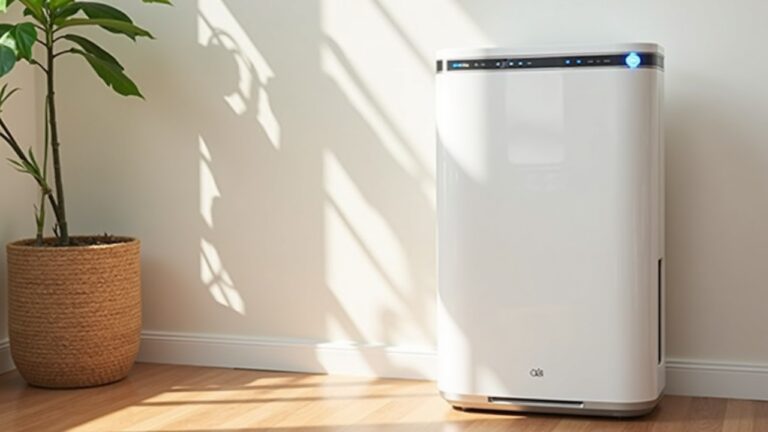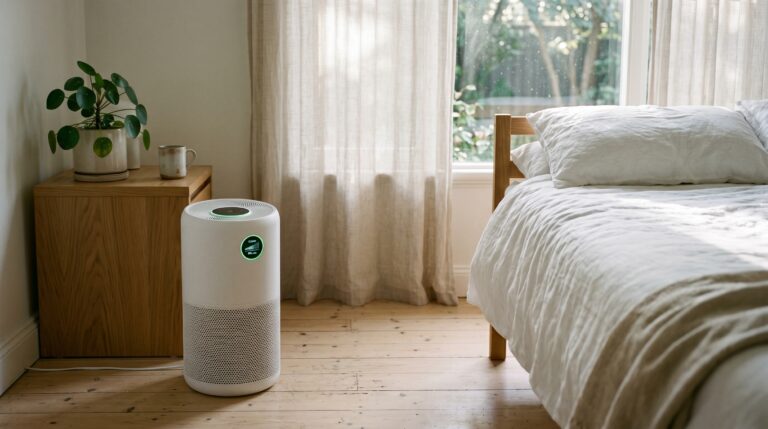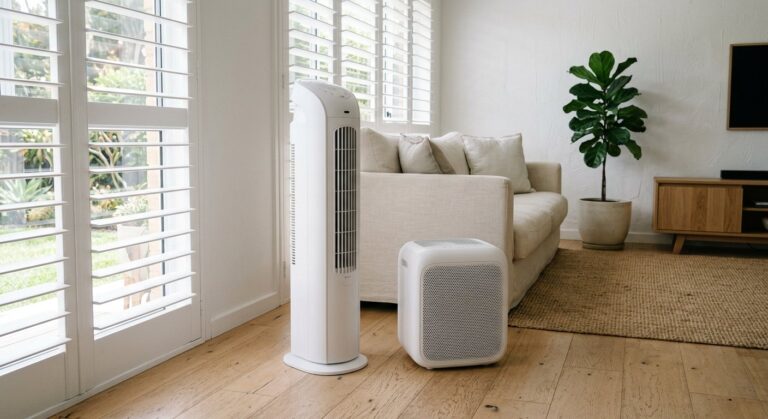
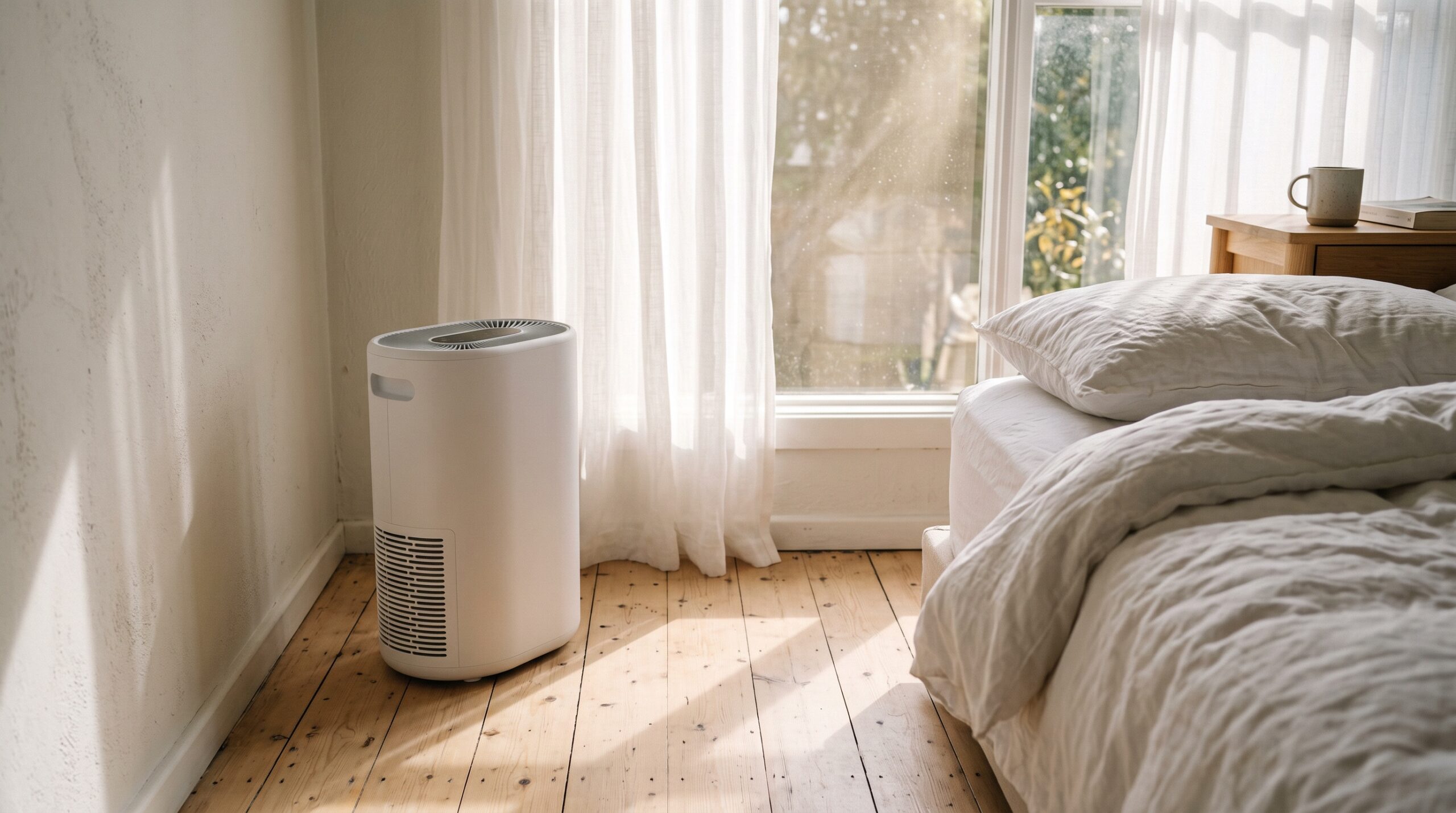
Philips Air Purifier Series 3000i Review Australia 2026: Good Mid-Range Option?
Drafted with AI assistance and checked against published specifications and certifications. First-hand measurements appear only where stated. How we make content
Solid mid-range performance. Certification claims need scrutiny.
The Philips Air Purifier Series 3000i (AC3033 / AC3059) delivers genuine HEPA filtration with responsive auto-sensing at a competitive price point for Australian rooms up to 79 m². It is a practical choice for Palm Beach or inner-city apartments in the $229–$399 range. The weakness is certification: NanoProtect is Philips’ in-house branding, not independent NSF/ANSI or EU EN1822 H13 certification. If you are buying based on health claims, that gap matters.
The catches:
- NanoProtect HEPA is Philips’ own marketing term — not independently certified to NSF/ANSI 58 or EU EN1822 H13
- Filter replacement costs ~$80–$110 per year for the combined HEPA + activated carbon set
- CADR of 300 m³/h is Philips-claimed — no independent AHAM verification on Australian-spec units
- At the $349 price point, the Breville Protect Max (~$468) delivers independently verified HEPA 13 performance for ~$120 more
The Philips Air Purifier Series 3000i is one of the most visible air purifiers on Australian shelves — stocked at Harvey Norman, JB Hi-Fi, and Amazon AU in two variants: the AC3033 (smaller, ~$229–$269) and the AC3059 (larger, ~$349–$399). At this price tier, it competes directly with the Breville Protect Max and the budget Coway AP-1512HH. This review cuts through the NanoProtect marketing language to examine what the filtration system actually delivers and where the Philips earns its price versus where it does not.
This is for you if
- You want WiFi-connected auto-sensing without paying Dyson prices
- Your room is 40–79 m² and you need genuine HEPA-grade particle filtration
- You are in Brisbane, Sydney, or coastal QLD and want allergy and humidity-triggered auto-mode
- The Breville Protect Max is out of budget and you still want a step above basic HEPA units
Look elsewhere if
- You need independently certified H13 HEPA for medical or respiratory health reasons
- Your room is under 30 m² — the Coway AP-1512HH covers that at half the price
- You prioritise filter longevity — the Breville Protect Max filter lasts up to 3 years versus 12 months for the Philips
- You want confirmed CADR data from an independent Australian laboratory
Philips 3000i Series: AC3033 vs AC3059 — What Are the Actual Differences?
The Series 3000i is sold in Australia under two model codes. The AC3033 is the entry point at approximately $229–$269. Philips rates it for rooms up to 63 m² with a claimed CADR of approximately 270 m³/h. The AC3059 — the more commonly reviewed unit — is rated for rooms up to 79 m² with a stated CADR of 300 m³/h, retailing at $349–$399.
Both units use the same NanoProtect HEPA filter (FY1410/30) and activated carbon filter (FY1413/30), the same sensor suite (PM2.5 particulate, TVOC, humidity, temperature), and the same Philips Clean Home+ app via WiFi. The physical difference is fan motor and housing size. If you are between the two models, the $100 premium for the AC3059 buys you approximately 25% more CADR for a room size increase of 16 m². For a standard Australian lounge room (approximately 30–45 m²), the AC3033 is sufficient. The AC3059 earns its place in open-plan living spaces or larger bedrooms above 50 m².
NanoProtect HEPA: What Philips Claims vs What the Certification Actually Covers
This is the most important section in this review. Philips markets the 3000i Series with “NanoProtect” technology — a name that suggests superior filtration performance. The reality is that NanoProtect is Philips’ own product designation for their HEPA filter. It is not a third-party certification standard.
True HEPA filtration is defined as removing 99.97% of particles at 0.3 microns (the “most penetrating particle size”) — the specification covered by European standard EN1822 at the H13 grade. Independent certification bodies including NSF International (USA) and the Association of Home Appliance Manufacturers (AHAM, USA) test and verify these claims externally. Philips does not publish independent NSF/ANSI or AHAM CADR certification for the 3000i Series on Australian-market units. Their CADR figures are Philips-generated, not third-party verified.
This does not mean the filter does not work. Genuine HEPA-grade media is a physical filtration standard — fibrous mat, electrostatic charge, specific face velocity — and if the media meets the specification, it captures particles effectively regardless of who named it “NanoProtect”. But it does mean you are relying on Philips’ own testing data rather than an independent laboratory. For most allergy, dust, and pollen control applications in an Australian home, this is an acceptable trade-off at the $229–$399 price point. For someone with asthma managing a medical-grade air quality requirement, or a buyer comparing against a unit with genuine independent H13 certification, the gap is meaningful.
The Breville Protect Max (B0CV5PKL3V), by contrast, states HEPA 13 specification on its Australian product page. At ~$468, you pay $100–$240 more depending on which Philips model you compare it to. Whether that premium is justified depends on how critically you need independent certification versus stated specification.
Air Cleaning Performance: CADR, Room Coverage, and the Bushfire Smoke Question
Philips rates the AC3059 at 300 m³/h CADR and a maximum room size of 79 m². The industry standard for sizing an air purifier is to achieve 4–5 air changes per hour (ACH) in the target room. At 4 ACH, 300 m³/h covers a room with a floor area of approximately 37–42 m² at standard Australian ceiling heights of 2.4–2.7 m. The 79 m² coverage claim assumes 2 ACH — a rate that maintains acceptable air quality in low-pollution conditions but is insufficient during high-pollution events such as bushfire smoke.
For NSW, Victorian, and Queensland homes during bushfire smoke season (October–March), target 4–5 ACH against the room you actually use — not the maximum rated room size. In practical terms, the AC3059 performs best in rooms of 35–50 m² during bushfire events, and can manage larger rooms adequately in the off-season when the primary concern is dust, pollen, and mould spores.
Brisbane and coastal Queensland homes face a specific combination: high ambient humidity, elevated PM2.5 during burn-off events and occasional bushfire smoke incursion, and year-round mould spore counts. The Philips 3000i’s humidity sensor triggers auto-mode fan speed adjustment when humidity rises — a genuinely useful feature in sub-tropical environments where the correlation between humidity spikes and mould spore counts is well-established. The TVOC sensor responds to cooking fumes, cleaning products, and off-gassing from furnishings — less critical for health than PM2.5 filtration, but a useful indicator of indoor air quality.
Auto Mode, Sensors, and the Philips Clean Home+ App
Auto mode is the standout convenience feature of the 3000i Series. The unit uses a real-time PM2.5 laser scattering sensor to detect airborne particle concentrations and adjusts fan speed from sleep mode (14 dB(A), 34 m³/h) to turbo (65 dB(A), 300 m³/h) without manual input.
The Philips Clean Home+ app (iOS and Android, WiFi 2.4 GHz) provides remote control, air quality history, and filter life tracking. The app is well-regarded by Australian reviewers for stability — a meaningful point given the poor reputation of several competing brands’ apps in 2024–2025. Scheduling, manual fan speed override, and real-time sensor data are all accessible. The unit does not require the app to function — all controls are available on the device itself.
One point worth noting: the TVOC sensor detects a broad range of volatile organic compounds, but is not calibrated to individual compounds. It will respond to cooking fumes, spray cleaners, and fresh paint — but it cannot distinguish between a harmless spike (toast burning) and a meaningful indoor air quality concern (off-gassing formaldehyde from new furniture). Use it as a directional indicator, not a diagnostic tool.
Noise Levels: Is the Philips 3000i Quiet Enough for a Bedroom?
Philips specifies a sleep mode noise level of 14 dB(A) for the AC3059. At that rating, the unit is functionally inaudible in a quiet bedroom — 14 dB(A) is below the level of normal breathing (approximately 20 dB(A)). On medium speed, the AC3059 runs at a level comparable to a quiet office background hum. Turbo mode at 65 dB(A) is clearly audible and not suitable for sleeping, but is intended for rapid air cleaning after a pollution event, not sustained operation.
For bedroom use in coastal Queensland, where windows-open sleeping is common in autumn and spring, the AC3059 on auto mode will spend most of its time at low-to-moderate fan speeds depending on outdoor air quality. During bushfire events, expect more turbo-mode cycling. For light sleepers, placing the unit at least 2 metres from the bed and using sleep mode scheduling in the app reduces noise exposure during core sleep hours.
Filter Costs and Running Costs Over 5 Years
The Philips AC3059 uses two consumable filters: the NanoProtect HEPA filter (FY1410/30, approximately $45–$55 on Amazon AU) and the activated carbon filter (FY1413/30, approximately $35–$45). Both have a rated life of 12 months at 16 hours per day operation. Running 24 hours per day in auto mode with frequent elevated-pollution events (typical for coastal QLD or Sydney during bushfire season) will shorten that to 8–10 months. Budget $80–$110 per year for filter replacement — the combination pack is available on Amazon AU and reduces per-unit cost.
5-Year Cost Comparison (AUD)
| Unit | Upfront | Filter/yr | 5-yr total | Certified |
|---|---|---|---|---|
| Philips AC3033 | ~$249 | ~$90 | ~$699 | Philips-rated |
| Philips AC3059 | ~$379 | ~$95 | ~$854 | Philips-rated |
| Breville Protect Max | ~$468 | ~$60 | ~$768 | HEPA 13 stated |
| Coway AP-1512HH | ~$169 | ~$75 | ~$544 | None (AU) |
The 5-year cost comparison reveals an important point: the Breville Protect Max, despite the higher upfront cost, actually comes in cheaper over 5 years than the AC3059 because its filter replacement cycle is significantly longer (up to 3 years per filter). If you are planning long-term use, the Breville pays back within 3–4 years of ownership. The Philips wins on upfront cost and connectivity; the Breville wins on total cost of ownership and certification clarity.
Philips 3000i vs Breville Protect Max vs Coway: Definitive Comparison
| Criteria | Philips AC3059 | Breville Protect Max | Coway AP-1512HH |
|---|---|---|---|
| Price (AU) | ~$349–399 | ~$468 | ~$169–199 |
| CADR (claimed) | 300 m³/h | 400 m³/h | 246 m³/h (US AHAM) |
| Max room (practical) | ~50 m² @ 4 ACH | ~60 m² @ 4 ACH | ~30 m² @ 4 ACH |
| HEPA certification | NanoProtect (Philips-rated) | HEPA 13 (stated) | None (AU-specific) |
| WiFi / App | Yes (Clean Home+) | No | No |
| Auto mode sensors | PM2.5 + TVOC + humidity | PM2.5 | PM2.5 |
| Ioniser | No | No | Yes (disable recommended) |
| Filter life | ~12 months | Up to 3 years | ~12 months |
| Annual filter cost | ~$90–110 | ~$50–70 | ~$65–80 |
The three units occupy clearly distinct positions. The Coway is the budget choice for rooms under 30 m² — effective filtration at the lowest entry cost, but sized for bedrooms and small studies only, and with an ioniser that should be disabled to avoid ozone production. The Philips 3000i is the connectivity play — if app control, humidity sensing, and TVOC monitoring matter to you in a mid-size room, it is the only option at this price tier. The Breville Protect Max is the performance choice for larger rooms where filtration efficacy is the priority and app control is not.
Best Mid-Range Air Purifier for Australian Homes
Philips Air Purifier 3000i (AC3059)
300 m³/h CADR, PM2.5 + TVOC auto-sensing, WiFi app control. Best-in-class connectivity at the mid-range price point for rooms up to 50 m².
See Current Price on Amazon AU →The right choice at $349 — if connectivity matters more than independent certification
The Philips Air Purifier Series 3000i delivers what the box promises: genuine HEPA-grade particulate filtration, responsive auto-sensing, and stable WiFi connectivity at a price point well below the Dyson and Samsung smart purifier tier. For a Brisbane apartment, a coastal Queensland home with high humidity, or a Sydney bedroom where app scheduling and auto-mode are day-to-day conveniences, the AC3059 earns its place on the bench.
The qualification that matters: NanoProtect is Philips’ own term, not an independent certification body’s verdict. If you are buying an air purifier specifically to address a documented respiratory health concern — asthma, chemotherapy, severe allergy — you should not rely solely on a manufacturer’s own certification claim. Spend the extra $100–$120 and get the Breville Protect Max, which carries stated HEPA 13 specification on an Australian-stocked unit.
Buy it if
- Your room is 30–50 m² and you want WiFi auto-sensing
- You are in Brisbane, coastal QLD, or high-humidity Sydney areas
- The Breville Protect Max is out of budget
- You want app scheduling and humidity-triggered response
Look elsewhere if
- You need independently certified H13 for medical or respiratory reasons
- Your room is under 30 m² — the Coway is half the price
- Long filter life matters — Breville filters last up to 3x longer
- You want independently verified CADR data
Frequently Asked Questions
Does the Philips Air Purifier 3000i remove bushfire smoke?
Yes. The NanoProtect HEPA filter captures PM2.5 particles — the primary health hazard in bushfire smoke — at a filtration efficiency consistent with HEPA-grade media. During high-AQI events (above 150), run the unit on turbo or high speed in the affected room with windows and doors closed. For rooms above 50 m², the AC3059 will cycle air 3–4 times per hour on high speed, which is the minimum effective rate for managing smoke infiltration.
Is the Philips 3000i good for Brisbane humidity and mould?
The humidity sensor in auto mode will increase fan speed when indoor humidity rises above threshold, which helps circulate and filter air when mould spore counts are elevated. However, the Philips 3000i does not dehumidify — it filters particles from the air including mould spores, but does not reduce absolute humidity. For mould prevention, you need both filtration and humidity control. The unit handles filtration well; add a dehumidifier for the humidity component in Brisbane and Cairns homes.
What does NanoProtect HEPA actually mean?
NanoProtect is Philips’ own product name for their HEPA filter range. It is not a certification standard issued by an independent body such as NSF International or AHAM. Philips rates their NanoProtect filters at HEPA-grade particle capture efficiency (99.97% at 0.3 microns), but this figure comes from Philips’ own testing rather than third-party laboratory verification. The filter media is genuine HEPA-grade by design; the marketing term adds no additional technical meaning.
How often do you need to replace the Philips 3000i filters in Australia?
Philips rates both the HEPA filter (FY1410/30) and the activated carbon filter (FY1413/30) at approximately 12 months of life at 16 hours per day use. Running the unit 24 hours in auto mode — typical for Brisbane and coastal QLD homes — shortens that to 8–10 months. Budget $80–$110 per year for both filters. The app tracks filter life and alerts when replacement is due. Filter replacement takes under 2 minutes.
What is the difference between the Philips AC3033 and AC3059?
The AC3033 is rated at approximately 270 m³/h CADR for rooms up to 63 m² and retails at approximately $229–$269. The AC3059 is rated at 300 m³/h for rooms up to 79 m² at approximately $349–$399. Both use the same filters, sensors, and app. The practical difference is fan motor size — the AC3059 moves more air volume per hour. For rooms under 45 m², the AC3033 is sufficient. Choose the AC3059 for larger living areas or open-plan spaces.
Does the Philips 3000i have an ioniser?
No. The Philips Air Purifier Series 3000i does not include an ioniser. This is a positive feature — ionisers produce trace amounts of ozone as a byproduct, which is a respiratory irritant. The 3000i uses mechanical HEPA filtration and activated carbon only, with no ozone-generating components. This makes it categorically safe to use in a bedroom overnight without concern about ozone accumulation.
How does the Philips 3000i compare to the Breville Protect Max?
The Breville Protect Max (~$468) delivers higher CADR (400 vs 300 m³/h), stated HEPA 13 specification, and longer filter life (up to 3 years vs 12 months), but has no WiFi connectivity or app. The Philips AC3059 (~$349–$399) offers humidity and TVOC sensing, app control, and scheduling at a lower entry price. Over 5 years, the Breville is often cheaper due to lower filter replacement costs. Choose Philips for connectivity; choose Breville for performance and long-term cost.
Is the Philips 3000i suitable for a small apartment in Sydney or Melbourne?
Yes. For apartments in the 35–65 m² range common in inner Sydney (Potts Point, Newtown, Surry Hills) and Melbourne (Fitzroy, Richmond, Southbank), the AC3059 covers the space at 4 ACH on medium-high speed. The TVOC sensor is useful in apartments where cooking fumes and cleaning product off-gassing are concerns in shared open-plan spaces. Sydney’s chloramine-treated mains water produces no air quality issues, but the general urban PM2.5 from traffic and nearby industrial activity is where the HEPA filter earns its place.
Last reviewed: July 2026 — Clean and Native
Get the Australian Home Environment Checklist
30 checks across water, air and EMF. Most of them free. Ranked by impact.
No spam. Unsubscribe any time.

Former Royal Australian Navy Clearance Diver and TAG-E counter-terrorism operator. Founded Clean and Native to apply the same rigorous thinking to the home environment.
Full biography →