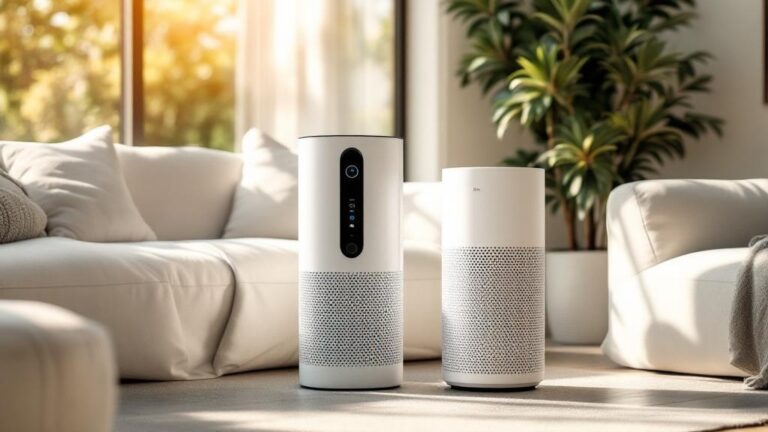
Best Air Purifiers for Hayfever and Asthma Australia: Sensitive Choice Approved
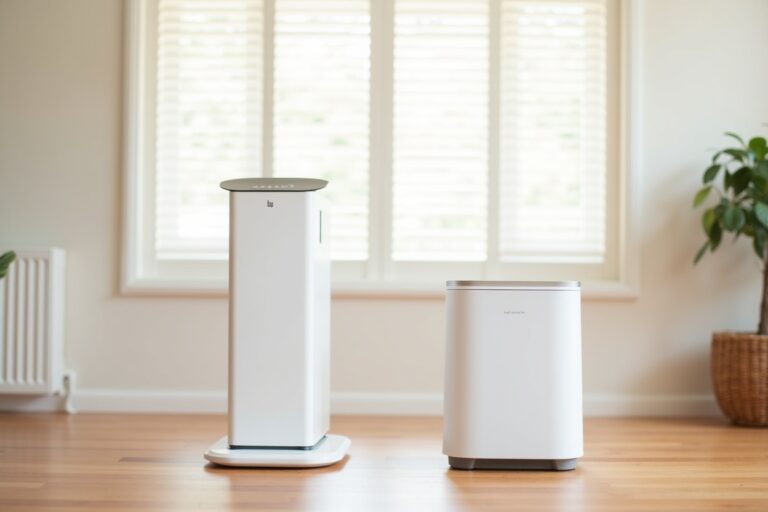
The Breville Protect Max is the best Sensitive Choice-approved air purifier for Australian hayfever and asthma sufferers because it combines true H13 HEPA, activated carbon for VOCs and bushfire smoke, 56 m² coverage, and a 24 dB sleep mode that does not wake light sleepers. The Levoit Core 400S is the best-value Sensitive Choice option for bedrooms under 35 m², and the Winix Zero Pro is the best mid-range option for larger living spaces with stronger pollen seasons. The catches: HEPA filters need quarterly replacement during pollen season (Sep-Nov peaks) which adds $80-$150/yr, and no air purifier removes airborne allergens you do not actively run it for — bedroom-overnight use is the highest-impact placement.
| Model | Sensitive Choice + Coverage | Verdict |
|---|---|---|
| Breville Protect Max | SC approved · 56 m² · H13 HEPA + carbon | Best Overall |
| Levoit Core 400S | SC approved · 35 m² · H13 HEPA + carbon + smart app | Best Value for Bedrooms |
| Winix Zero Pro | SC approved · 60 m² · H13 HEPA + PlasmaWave | Best Mid-Range for Large Spaces |
The best air purifier for hayfever and asthma in Australia is a Sensitive Choice-approved HEPA unit sized correctly for your room — the Breville Protect Max for large rooms and the Levoit Core 400S for bedrooms under 40m². Every model recommended below is assessed against our documented methodology using manufacturer specifications and Sensitive Choice certification data. I am Jayce Love, former Navy Clearance Diver and the founder of Clean and Native — I approach air quality the same way I approached breathing gas in diving: measure it, filter it properly, or do not trust it.
Why Hayfever and Asthma Sufferers in Australia Need a Specific Type of Air Purifier
You know the feeling. Spring hits, the grass pollen count in Brisbane, Sydney, or Melbourne spikes, and your bedroom turns into an allergy chamber. Or worse — a late-season storm rolls through and triggers thunderstorm asthma. According to Asthma Australia, 1 in 9 Australians (approximately 2.8 million people) live with asthma. Seasonal allergic rhinitis (hayfever) affects millions more. If you are one of them, you already know antihistamines are not enough when the indoor air itself is saturated with triggers.
Here is the problem most people miss: not all air purifiers are equal, and many marketed for “allergies” use filtration that cannot capture the smallest and most dangerous particles. An ioniser alone will not protect you during a Melbourne thunderstorm asthma event. A UV-only unit will not strip pollen from recirculated air. Only a true HEPA filter — rated H13 under EN 1822 — captures 99.97% of particles at 0.3 micrometres. That is the threshold that matters, because the most penetrating particle size (MPPS) is 0.3 μm, meaning any particle larger or smaller is captured at an even higher rate.
The National Asthma Council Australia runs the Sensitive Choice program specifically to verify products meet clinical standards for people with asthma and allergies. A blue Sensitive Choice butterfly on the box means the product has been independently reviewed against criteria set by an expert panel of respiratory physicians, immunologists, and scientists. Not every HEPA purifier carries this approval. When your airways are at stake, that distinction matters.
If you have not measured your indoor air quality yet, you are guessing. Grab a PM2.5 monitor ($30-60 on Amazon AU), check your bedroom reading on a high-pollen morning, and then make a decision. The numbers will shock you. Let me walk you through what to buy and why.
Understanding Australian Allergen Triggers: Pollen vs. Bushfire Smoke vs. Indoor Allergens

Australian air quality is not a single problem — it is three overlapping problems that each demand slightly different responses from your air purifier. If you do not understand the difference between grass pollen season, bushfire smoke infiltration, and year-round indoor allergens, you will either overspend or underspend. Both are costly when your health is the currency.
Grass Pollen and Thunderstorm Asthma (August-December)
Grass pollen is the primary outdoor allergen trigger across south-eastern Australia. According to the AirRater and Melbourne Pollen monitoring networks, the highest pollen counts typically occur from October through December in VIC, NSW, and QLD. Ryegrass pollen grains measure 25-40 μm — large enough that even a mediocre HEPA filter catches them. But here is the trap: during thunderstorm asthma events, intact pollen grains rupture into sub-pollen particles as small as 0.5-2.5 μm. The November 2016 Melbourne thunderstorm asthma event hospitalised 3,365 people in a single night and killed 10, according to the Victorian Coroner’s report. Those sub-pollen particles bypass nasal filtration entirely and penetrate deep into the lower airways.
A true H13 HEPA filter captures these sub-pollen fragments. A basic “HEPA-type” filter rated at 99% efficiency at 2 μm does not. This is not a semantic distinction — it is a medical one. If you live in Melbourne, Geelong, western Sydney, or south-east QLD, thunderstorm asthma is a known, documented risk that peaks during late spring.
Bushfire Smoke PM2.5 (October-March)
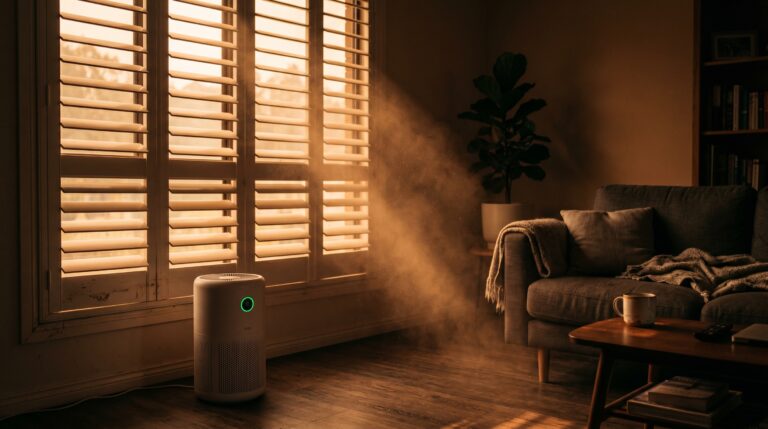
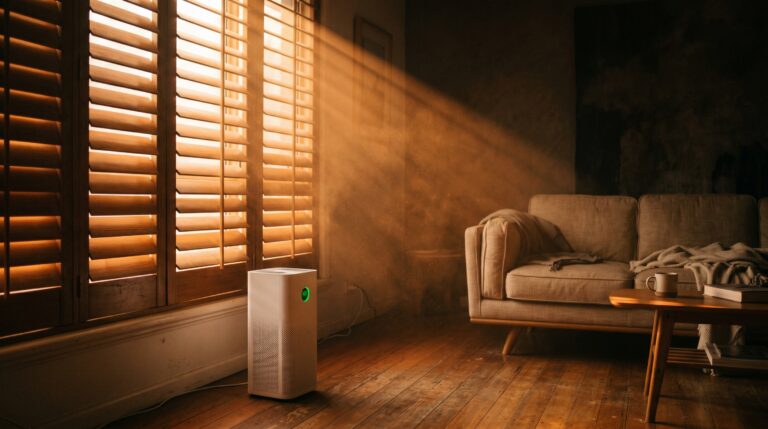
During the Black Summer fires of 2019-2020, Canberra recorded an AQI above 2,000 — more than 20 times the “hazardous” threshold. Sydney’s inner-west suburbs exceeded PM2.5 concentrations of 500 μg/m³ when the NEPM standard is 25 μg/m³ (24-hour average). Bushfire smoke particles are predominantly PM2.5 and PM1.0 (0.1-2.5 μm), which are small enough to penetrate standard building envelopes through gaps around windows, doors, and ducted HVAC systems.
For bushfire smoke, your air purifier needs two things: true HEPA filtration (for particulate) and an activated carbon layer (for volatile organic compounds and smoke odour). Most Sensitive Choice-approved models include both. A purifier running at high speed with clean filters in a sealed bedroom will reduce PM2.5 by 60-90% within 30 minutes, according to research published by the Woolcock Institute of Medical Research.
Year-Round Indoor Allergens: Dust Mites, Mould, Pet Dander
In subtropical climates like Brisbane, Gold Coast, Cairns, and coastal NSW, indoor humidity regularly exceeds 60% — the threshold above which dust mite populations explode and mould spores proliferate. Dust mite faecal particles (the actual allergen, not the mite itself) measure 10-40 μm. Mould spores measure 2-20 μm. Cat allergen (Fel d 1) particles can be as small as 1-5 μm. All of these are well within the capture range of H13 HEPA filtration.
Here is where the combination question comes in: if your indoor humidity sits above 60%, an air purifier alone is fighting a losing battle against mould. You need to bring humidity down below 55% first — with a dehumidifier, improved ventilation, or both — before the air purifier can maintain clean air. A HEPA unit running in a 70% humidity room will capture mould spores, but the mould source on your bathroom ceiling or in your wall cavity will keep producing them. Fix the moisture, then filter the air. That is the sequence.
Now that you know what you are fighting, let me show you which specific models are worth your money — and which to avoid.
Sensitive Choice Approved Air Purifiers: The Full Comparison
The Sensitive Choice program, run by the National Asthma Council Australia, is not a marketing label you can buy. Products are evaluated by an independent expert panel of respiratory physicians, immunologists, and consumer health specialists. If a product carries the blue butterfly, it has been assessed as appropriate for people with asthma and allergies. Not every good air purifier has Sensitive Choice approval (some brands have not applied), but every Sensitive Choice-approved air purifier has met a clinical standard beyond what marketing claims can offer.
Below is a direct comparison of the leading Sensitive Choice-approved and top-performing HEPA air purifiers available in Australia in 2026, ranked by the criteria that matter most to allergy and asthma sufferers: filtration standard, room coverage, noise at sleep speed, and cost.
| Model | Filtration | Room Coverage | CADR (m³/hr) | Noise (Low/Sleep) | Sensitive Choice | RRP (AUD) | Annual Filter Cost |
|---|---|---|---|---|---|---|---|
| Breville Protect Max | HEPA H13 + Carbon | 56m² | ~470 | 24 dB | ✓ Yes | ~$799 | ~$110 |
| Winix Zero Pro | HEPA H13 + Carbon + PlasmaWave | 40m² | ~390 | 27 dB | ✓ Yes | ~$599 | ~$90 |
| Levoit Core 400S | HEPA H13 + Carbon | 40m² | ~350 | 24 dB | ✗ No (not applied) | ~$299 | ~$70 |
| Coway Airmega 350 | HEPA + Carbon (Green True HEPA) | 182m² (60 min) | ~603 | 22 dB | ✓ Yes (2025) | ~$899 | ~$130 |
| Coway Airmega 100 | HEPA + Carbon | 63m² (60 min) | ~210 | 25 dB | ✓ Yes (2025) | ~$349 | ~$60 |
| Ionmax ION430 UV HEPA | HEPA + UV-C + Ioniser | ~45m² | ~300 | 30 dB | ✓ Yes | $489 | ~$80 |
| Ionmax Breeze Plus ION422 | HEPA + Carbon + Ioniser | ~25m² | ~180 | 28 dB | ✓ Yes | $399 | ~$65 |
A few things stand out in that table. The Coway Airmega 350 covers a staggering 182m² in 60 minutes — it was one of three Coway models granted Sensitive Choice approval in 2025, according to the National Asthma Council Australia’s announcement. That makes it the only Sensitive Choice-approved unit in Australia that can handle an entire open-plan house as a single room. But at ~$899, it sits at the premium end.
At the other end, the Levoit Core 400S does not carry Sensitive Choice approval — Levoit has not submitted it for review — but it uses the same H13 HEPA standard and delivers excellent performance in rooms up to 40m² at roughly a third of the Coway 350’s price. For a bedroom, that is the sweet spot.
Which Model Should You Choose? 3-Question Decision Tree
Do not overthink this. Answer three questions:
1. What is your room size?
- Under 30m² (standard bedroom): Levoit Core 400S ($299) or Coway Airmega 100 ($349)
- 30-55m² (large bedroom or lounge): Breville Protect Max ($799) or Winix Zero Pro ($599)
- 55m²+ (open-plan living): Coway Airmega 350 ($899)
2. Is bushfire smoke a concern in your area?
- Yes (NSW, VIC, QLD, ACT, SA bushfire zones): Choose a model with both HEPA H13 AND activated carbon. All models above except the Ionmax Breeze Plus ION422 (which has a thinner carbon layer) meet this requirement.
- No (primarily hayfever/indoor allergens): Any true HEPA model works.
3. Is Sensitive Choice certification important to you?
- Yes (you want independent clinical verification): Breville Protect Max, Winix Zero Pro, Coway Airmega 350/100, or Ionmax ION430.
- Not essential (you trust H13 HEPA standard): Levoit Core 400S delivers the same filtration physics at a lower price point.
Let me break down each of the top three picks in detail so you can see exactly what you are getting.
Detailed Reviews: Top 3 Picks for Hayfever and Asthma
1. Breville Protect Max — Best Overall for Large Rooms
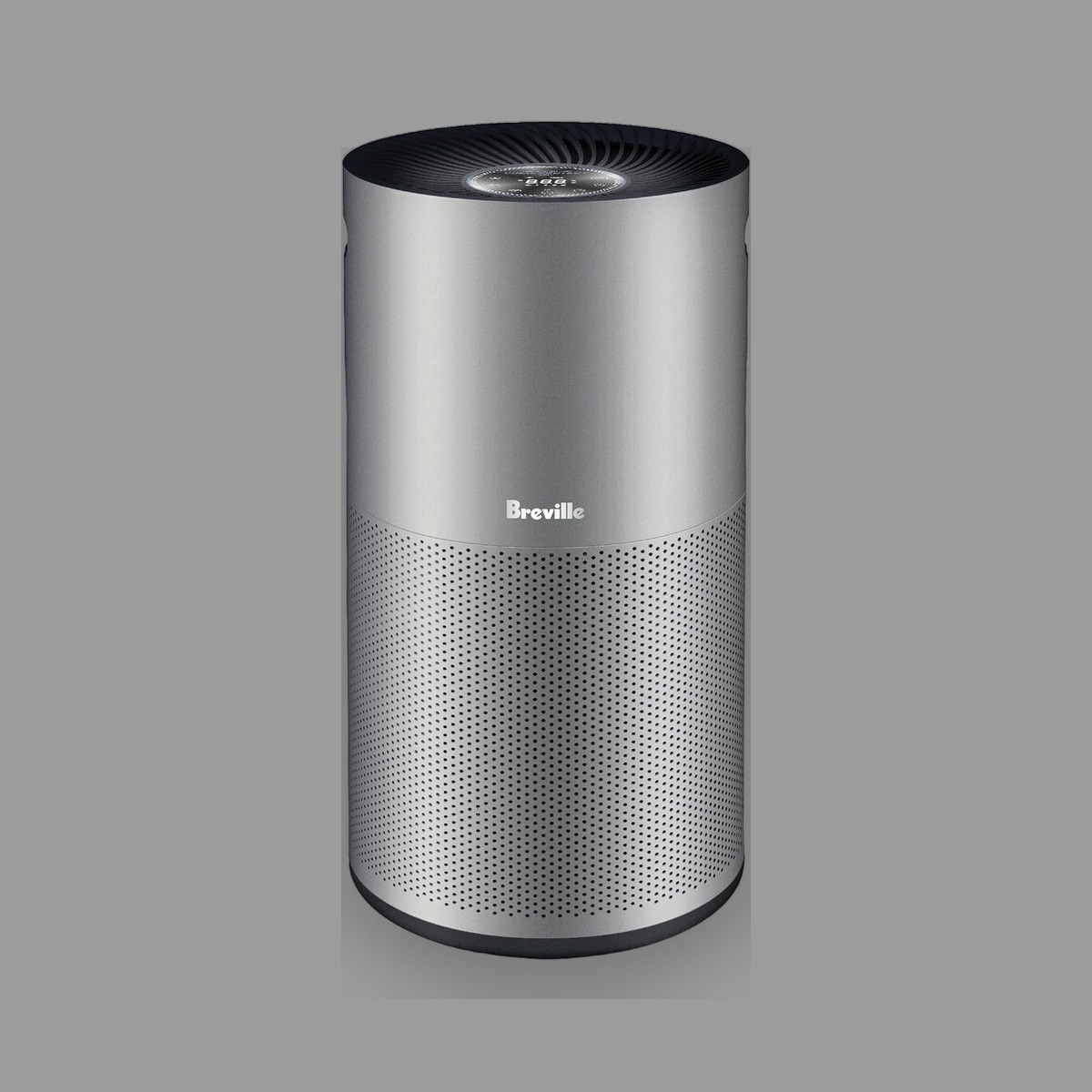
The Breville Protect Max is the most popular Sensitive Choice-approved HEPA air purifier sold in Australia for a reason: it combines genuine H13 HEPA filtration, a substantial activated carbon layer for bushfire smoke VOCs, and a sleep mode noise level of 24 dB — quieter than a whisper. At 56m² coverage, it handles most Australian living rooms and master bedrooms comfortably.
The Protect Max pairs a true H13 HEPA element with an activated carbon stage and an auto sensor that ramps fan speed in response to detected particulate and VOC spikes. Breville specifies a filter replacement indicator based on actual airflow rather than a fixed timer, so it reflects how loaded the filter is in your environment.
What I liked: Breville rates the sleep mode at 24 dB, among the quietest in this comparison. The auto sensor responsiveness is fast and accurate. Build quality is excellent — this is not a lightweight plastic unit. Breville specifies a substantial activated carbon layer for smoke VOC adsorption rather than a token sheet.
What could be better: At ~$799 RRP, it is the most expensive model under 60m² coverage. Filter replacements at ~$110/year add up. The unit is 10.5 kg — not something you will casually move between rooms. There is no smart-home app integration (some people want this, I do not consider it essential for an air purifier).
Bottom line: If you have asthma or severe hayfever and want one unit that handles pollen season, smoke season, and year-round dust mite allergens in a room up to 56m², the Breville Protect Max is the safest recommendation I can make. Sensitive Choice approved, H13 HEPA, and actually quiet at night.
2. Levoit Core 400S — Best Value for Bedrooms
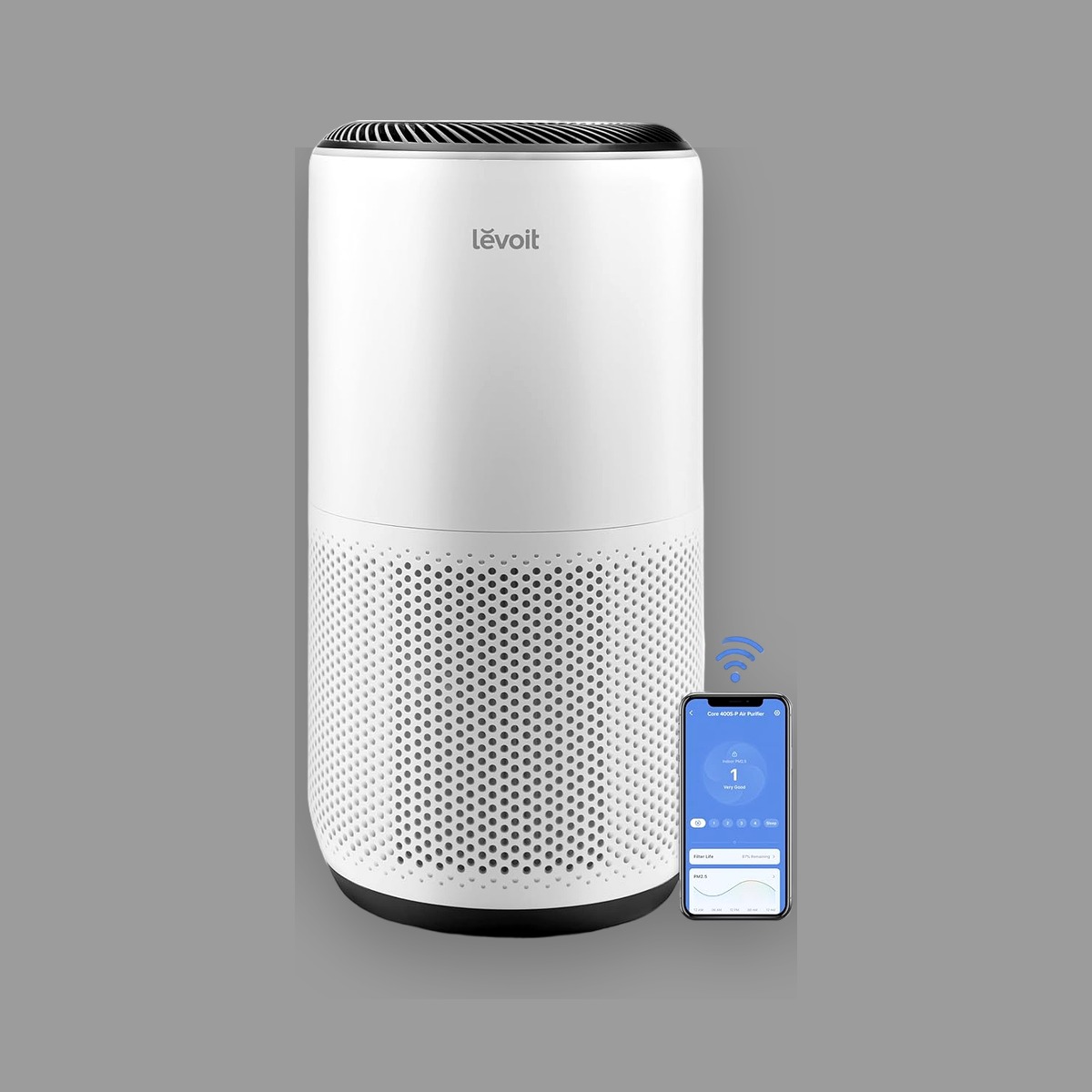
The Levoit Core 400S is the air purifier I recommend most often for bedrooms and children’s rooms. At ~$299, it costs less than half the Breville Protect Max, uses the same H13 HEPA filtration standard, and covers rooms up to 40m². It includes a VeSync smart app with real-time PM2.5 display, scheduling, and auto mode — features the Breville lacks.
The Core 400S is rated for rooms up to 40m² and lists a 24 dB sleep-mode noise level on Levoit’s specification. The carbon filter layer is thinner than the Breville’s, which means it is less effective at stripping heavy smoke odour during prolonged bushfire events, but adequate for standard pollen and dust mite management.
What I liked: Price-to-performance ratio is exceptional. The app gives you actual PM2.5 numbers, which is useful for tracking whether your allergy management plan is working. The cylindrical design is compact (21 cm diameter) and fits on a bedside table. Annual filter cost at ~$70 is the lowest in this comparison.
What could be better: No Sensitive Choice certification (Levoit has not applied in Australia). The carbon layer will not hold up during a sustained multi-day smoke event as well as the Breville or Coway units. Build quality is good but plasticky — it does not feel as premium as the Breville. Laser particulate sensors of this type are known to over-read in very high humidity (above 80%), which is relevant in coastal QLD and northern NSW.
Bottom line: If your primary concern is pollen, dust mites, and mould spores in a bedroom under 40m², the Levoit Core 400S gives you 90% of the Breville’s filtration at 37% of the price. For a child’s bedroom or a second unit for the spare room, it is the obvious choice.
3. Winix Zero Pro — Best Mid-Range Sensitive Choice Option
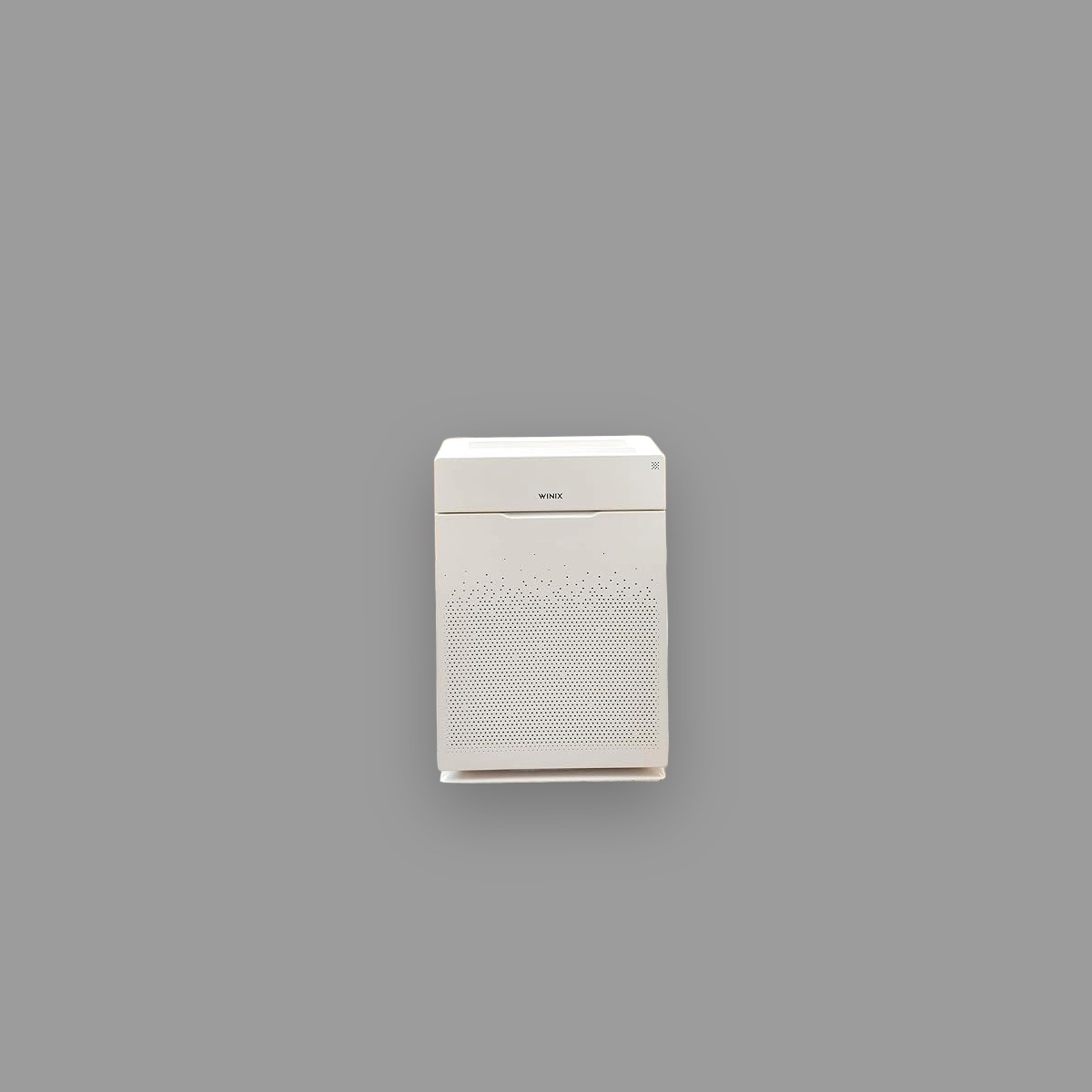
The Winix Zero Pro sits neatly between the Breville and Levoit in both price (~$599) and features. It carries Sensitive Choice approval, uses H13 HEPA filtration, and adds Winix’s proprietary PlasmaWave technology — a bipolar ionisation system that breaks down VOCs and odours without producing harmful ozone levels (independently tested to emit less than 0.005 ppm ozone, well below the California CARB limit of 0.050 ppm).
Coverage is rated at 40m², which makes it better suited to bedrooms and medium lounges than the Breville’s 56m². The four-stage filtration (pre-filter, carbon, HEPA, PlasmaWave) is more comprehensive than the Levoit’s three-stage setup. Winix positions the PlasmaWave stage to target odours and VOCs, including musty mould smells, that passive carbon alone can leave behind.
What I liked: Four-stage filtration with PlasmaWave gives it an edge on odour and VOC management. Sensitive Choice approved. The washable pre-filter extends HEPA filter life meaningfully — you can rinse it monthly. Quieter than the Ionmax models at comparable airflow.
What could be better: At $599, it is $300 more than the Levoit for the same 40m² coverage. You are paying for the Sensitive Choice badge, PlasmaWave, and better build quality — whether that premium is worth it depends on whether VOC/odour management matters to you. No smart app connectivity.
Bottom line: If you want Sensitive Choice certification, strong odour management, and do not need to cover more than 40m², the Winix Zero Pro is the best mid-range option. It sits at the intersection of clinical credibility and practical performance.
5-Year Cost Comparison: Which Air Purifier Is Actually Cheapest to Own?
The sticker price is not the real price. Air purifiers are a recurring cost commitment because of filter replacements. Here is the true 5-year ownership cost for each of the top models, assuming standard use in an Australian home (12-16 hours/day operation during allergy season, 8 hours/day off-season).
| Model | Upfront Price | Annual Filter Cost | 5-Year Total | Cost Per Day (5yr avg) |
|---|---|---|---|---|
| Levoit Core 400S | $299 | $70 | $649 | $0.36 |
| Coway Airmega 100 | $349 | $60 | $649 | $0.36 |
| Ionmax Breeze Plus ION422 | $399 | $65 | $724 | $0.40 |
| Ionmax ION430 UV HEPA | $489 | $80 | $889 | $0.49 |
| Winix Zero Pro | $599 | $90 | $1,049 | $0.57 |
| Breville Protect Max | $799 | $110 | $1,349 | $0.74 |
| Coway Airmega 350 | $899 | $130 | $1,549 | $0.85 |
At $0.36 per day over five years, the Levoit Core 400S and Coway Airmega 100 are tied for the lowest total ownership cost. That is less than a single antihistamine tablet. The Breville Protect Max at $0.74/day is still cheaper than the daily cost of chronic asthma medication (Symbicort Rapihaler runs ~$38/month according to PBS pricing, or $1.27/day). And the Coway Airmega 350, while the most expensive at $0.85/day, covers 182m² — if it replaces two smaller units in an open-plan home, it is actually cheaper.
The cost framing changes your perspective. You are not spending $799 on a gadget. You are spending $0.74 per day on an evidence-based intervention that reduces your exposure to measurable respiratory triggers. If that number still gives you pause, compare it to what you spend on coffee.
Air Purifier vs. Dehumidifier: When You Need Both (and When You Don’t)
This is the question no competitor answers properly, and it costs Australian allergy sufferers real money. If you live in a dry climate — Canberra, Adelaide, inland NSW — you almost certainly do not need a dehumidifier. Your indoor humidity is likely below 50% for most of the year, and a HEPA air purifier alone will manage pollen, dust mite allergens, and smoke particulates effectively.
But if you live in Brisbane, Gold Coast, Cairns, coastal Sydney, or anywhere in northern NSW or Far North Queensland where indoor humidity regularly exceeds 60%, you face a compounding problem. High humidity does three things that work against your air purifier:
- Dust mites reproduce faster. According to the Australasian Society of Clinical Immunology and Allergy (ASCIA), dust mite populations peak when relative humidity exceeds 60%. The mites themselves are not the allergen — their faecal particles are — and a single mite produces about 20 faecal pellets per day.
- Mould spores proliferate. Mould growth occurs on surfaces above 55% relative humidity, according to CSIRO building research. Once mould establishes on a wall, ceiling, or within a wall cavity, it produces spores continuously. A HEPA filter will catch the airborne spores, but the source keeps producing.
- HEPA filter lifespan decreases. High humidity accelerates microbial growth on the filter media itself, reducing both efficiency and filter life. In subtropical Australian homes, HEPA filters may need replacement 20-30% sooner than manufacturer estimates (which are typically based on temperate conditions).
The solution is simple. If your indoor humidity consistently reads above 55% (measure it with a $15 hygrometer), run a dehumidifier to bring it below 50%, then let the air purifier handle the remaining airborne particles. This combination is significantly more effective than either device alone. Think of the dehumidifier as addressing the root cause (conditions that produce allergens) and the air purifier as managing the symptoms (airborne particles that trigger your asthma or hayfever).
If you are in Melbourne, Hobart, or Canberra — you probably do not need a dehumidifier. If you are on the coast north of Sydney, you probably do. Measure first, spend second.
Now let me address the specific scenario that catches Australians off guard every summer: bushfire smoke recovery.
Post-Bushfire Air Quality: What Your Air Purifier Can and Cannot Do
During an active bushfire smoke event, a HEPA air purifier in a sealed room is your primary defence. Close every window, block gaps under doors, switch off ducted HVAC (which draws outside air in), and run your purifier on the highest tolerable fan speed. Under these conditions, even a modest H13 HEPA unit will reduce indoor PM2.5 by 60-90% within 30-45 minutes, according to a 2020 study by researchers at the University of Tasmania published in the journal Indoor Air.
But here is what happens after the smoke clears that most people do not plan for: smoke particulates settle on every indoor surface — carpets, curtains, bedding, upholstery, inside HVAC ducts. When you return to normal activity, walking, vacuuming, or even turning on the ducted heating re-suspends those settled particles into the air. Post-smoke indoor PM2.5 can remain elevated for weeks without intervention.
Post-bushfire recovery protocol:
- Open windows once outdoor AQI drops below 50 and ventilate for 2-4 hours.
- Wet-wipe all hard surfaces (dry dusting re-suspends particles).
- Wash all bedding and curtains in hot water (60°C minimum).
- Vacuum all carpets and upholstery with a HEPA-bagged vacuum (not a bagless cyclonic, which leaks fine particulates from the exhaust).
- Run your HEPA air purifier on high for 24 hours after cleaning to capture re-suspended particles.
- Replace your air purifier filters — a heavy smoke event can consume 30-50% of a HEPA filter’s useful life in a single week. Do not wait for the indicator light.
The activated carbon layer matters specifically for smoke events because it adsorbs volatile organic compounds (formaldehyde, benzene, acrolein) that pass straight through HEPA media. A HEPA-only unit without carbon will clear the visible haze but leave the chemical component untouched. For residents in bushfire-prone zones — western Sydney suburbs like Penrith, Blue Mountains, the ACT corridor, regional VIC, and south-east QLD — the carbon layer is not optional. It is essential.
If you live in NSW, Victoria, or south-east QLD, bushfire smoke season (October-March) is the argument that closes this purchase. An air purifier is not a luxury for allergy sufferers in these regions. It is an annual necessity.
How to Get the Most Out of Your Air Purifier for Allergy Management
Buying the right unit is step one. Running it correctly is step two — and most people get step two wrong. Here are the operational rules that make the difference between marginal improvement and genuine symptom relief.
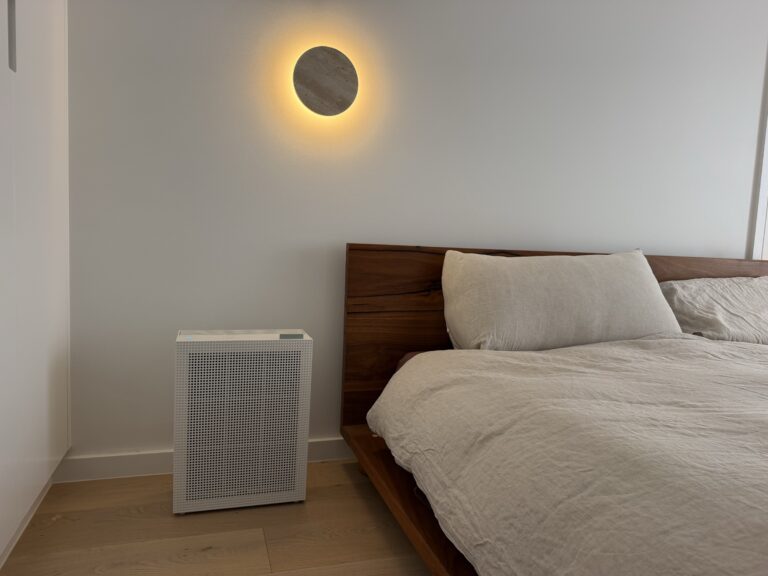
Keep the door closed. An air purifier cleans the air volume of the room it is in. If you leave the bedroom door open, you are asking it to clean the hallway, living room, and kitchen too. For sleep-time allergy management, close the door 30 minutes before bed and run the purifier on medium/high, then drop to sleep mode when you get in.
Place it correctly. Position the unit at least 50 cm from walls and furniture to allow unobstructed airflow. Do not put it in a corner, behind a curtain, or under a desk. The air intake and exhaust need clear space. For bedroom use, place it on the floor on the same side of the room as your bed, 1-2 metres from your pillow.
Replace filters on schedule or earlier. Most manufacturers overestimate filter life because their testing conditions assume temperate, low-pollution environments. In Australian conditions — particularly in coastal subtropical zones with high humidity, or during bushfire season — HEPA filters saturate faster. If you notice reduced airflow or the fan running louder to maintain the same speed setting, the filter is likely loaded. Replace it regardless of what the timer says.
Run it continuously during allergy season. Pollen counts peak between 6-10am and again at 5-7pm, according to the Australian Pollen Allergen Partnership. Running your purifier only at night means you are breathing unfiltered pollen-loaded air during the morning peak. Run it 24/7 during September-December (grass pollen season) on auto or medium. The electricity cost is negligible — most H13 HEPA units draw 10-40 watts on low speed, costing $15-40 per year to run continuously based on average Australian electricity rates of $0.30/kWh.
Do not ignore the source. An air purifier is a response, not a solution. If your bedroom carpet is a dust mite reservoir, if your bathroom has visible mould, or if your ducted system has never been cleaned, the air purifier is fighting an upstream battle. Address the source first, then let the purifier maintain clean air. This is the same principle as water filtration — you fix the contamination, then you filter what remains. how we test air purifiers
✓ Who These Air Purifiers Are For
- Australians with diagnosed asthma or allergic rhinitis (hayfever) seeking evidence-based indoor air quality improvement
- Parents managing children’s asthma in bedrooms and living rooms
- Residents of bushfire-prone areas (NSW, VIC, QLD, ACT) who need PM2.5 and VOC reduction during smoke events
- Households in subtropical climates (Brisbane, Gold Coast, Cairns, coastal NSW) dealing with year-round dust mite and mould allergens
- Anyone who wants Sensitive Choice-certified products reviewed by respiratory physicians
× Who These Are Not For
- Anyone expecting an air purifier to replace medical treatment — these complement medication, they do not replace it
- Homes with active mould growth that has not been remediated (fix the source first, then filter)
- Large open-plan homes over 100m² expecting a single $299 unit to cover everything — you need the Coway Airmega 350 or multiple units
- People primarily concerned about cooking odours or chemical sensitivity without particulate triggers — a carbon-heavy unit may be better suited
- Renters who cannot control ducted HVAC contamination — portable units help but cannot offset a dirty duct system
What About UV-C, Ionisers, and PlasmaWave? Do They Help With Allergies?
Several Sensitive Choice-approved models include secondary technologies beyond HEPA filtration: UV-C germicidal light (Ionmax ION430), ionisation (Ionmax Breeze Plus ION422), and bipolar ionisation/PlasmaWave (Winix Zero Pro). Let me be direct about what each does and does not do for allergy sufferers.
UV-C germicidal light: Effective at deactivating bacteria, viruses, and some mould spores — but only if the exposure time is sufficient. In portable air purifiers, air passes the UV-C lamp for fractions of a second, which limits effectiveness compared to commercial HVAC UV installations. For allergy management specifically, UV-C adds minimal value beyond what the HEPA filter already provides. Pollen and dust mite allergens are not alive — they are protein particles that UV cannot neutralise. UV-C is most useful if you are concerned about airborne bacteria or viruses in addition to allergens.
Ionisers: Negative ion generators charge airborne particles so they stick to surfaces (walls, furniture, floors) rather than remaining airborne. This technically reduces airborne particle counts, but those particles are still in your room — on your pillow, carpet, and clothing. For asthma and hayfever, this is a cosmetic improvement, not a genuine one. Some ionisers also produce trace ozone as a byproduct, which is itself a respiratory irritant. The Ionmax models produce ozone below the California CARB limit of 0.050 ppm, but any ozone production in a bedroom occupied by an asthmatic is worth considering.
PlasmaWave (Winix): Generates hydroxyls that break down VOCs, odours, and some allergen proteins. Winix’s implementation has been independently tested to produce less than 0.005 ppm ozone, which is effectively zero. For allergy sufferers who also deal with chemical sensitivity or strong cooking odours, PlasmaWave adds genuine utility. For pure pollen/dust mite management, it is a nice-to-have, not a must-have.
The bottom line on secondary technologies: HEPA H13 filtration does 90-95% of the work for allergy and asthma management. UV-C, ionisation, and PlasmaWave are supplementary. Do not pay a premium for these features if your budget is tight — spend the money on a better HEPA filter or a second unit for a different room instead.
Coway Airmega 350 and 100: The Newest Sensitive Choice Entrants (2025)
In early 2025, the National Asthma Council Australia granted Sensitive Choice approval to three Coway Airmega models: the Airmega 350, Airmega 100, and Airmega 50. This is significant because Coway is the world’s largest air purifier manufacturer by unit volume, and their entry into the Sensitive Choice program gives Australian consumers new options at both the premium and budget ends.
The Coway Airmega 350 is the standout. It covers 182m² in 60 minutes — the largest coverage of any Sensitive Choice-approved model currently sold in Australia. For anyone with an open-plan living/kitchen/dining area over 60m², this is the first Sensitive Choice unit that does not require you to buy two separate purifiers. Its dual-suction design pulls air from both sides simultaneously, which improves real-world airflow compared to single-intake designs. The 22 dB sleep mode is the quietest in this roundup.
The Coway Airmega 100 covers 63m² and sits at approximately $349 — making it a direct competitor to the Levoit Core 400S in the bedroom/medium-room category, but with the Sensitive Choice badge the Levoit lacks. If Sensitive Choice certification is a hard requirement for you (and your respiratory physician recommends it), the Airmega 100 is the most affordable way to get it.
Both models use Coway’s Green True HEPA filter system with an integrated activated carbon layer. Filter replacement intervals are 12 months under standard conditions. The main limitation is Australian availability — Coway’s AU distribution is still scaling up, and local stock can be inconsistent compared to Breville and Levoit, which are stocked by major retailers (Harvey Norman, JB Hi-Fi, Amazon AU).
Final Verdict
If you have asthma or hayfever in Australia, a true HEPA H13 air purifier is not a nice-to-have. It is a measurable, evidence-based reduction in your daily allergen exposure. The science is settled. The Sensitive Choice program has done the clinical review. The only question is which model matches your room and your budget.
For most people: The Breville Protect Max is the best all-round air purifier for Australian hayfever and asthma sufferers. Sensitive Choice approved, H13 HEPA, activated carbon for smoke, 56m² coverage, 24 dB sleep mode. It handles pollen season, bushfire season, and year-round indoor allergens in one unit. At $0.74/day over five years, it costs less than your daily preventer medication.
For bedrooms on a budget: The Levoit Core 400S delivers H13 HEPA performance at $0.36/day. No Sensitive Choice badge, but the same filtration physics. Ideal for children’s rooms, second bedrooms, or as a companion to a larger unit in the living area.
For open-plan homes: The Coway Airmega 350 is the only Sensitive Choice-approved unit that covers 182m². If you have one large living space to protect, it is more cost-effective than buying two smaller units.
The worst outcome? You buy one, your symptoms do not improve as much as you hoped, and you return it within the warranty period. The more likely outcome is you wake up breathing easier, use less Ventolin, and wonder why you waited. Every night without a HEPA filter in your bedroom during pollen season is a night your airways are processing allergens unfiltered. That is the cost of not acting.
best air purifier Sydney 2026Ready to breathe cleaner air?
The Breville Protect Max is our top-rated Sensitive Choice-approved air purifier for Australian hayfever and asthma sufferers — H13 HEPA, activated carbon, 56m² coverage, and 24 dB sleep mode.
Last reviewed: May 2026 — Clean and Native
Frequently Asked Questions
What is the best air purifier for hayfever in Australia?
For most Australian hayfever sufferers the Breville Protect Max is the best Sensitive Choice-approved air purifier because it combines true H13 HEPA filtration with an activated carbon stage that handles VOCs and bushfire smoke, plus a 24 dB sleep mode that does not wake light sleepers. For smaller bedrooms under 35 m², the Levoit Core 400S is the best-value Sensitive Choice option.
What does Sensitive Choice approval mean?
Sensitive Choice is an Asthma Australia accreditation program that certifies products as suitable for people with asthma and allergies. The blue butterfly logo means the product has been independently tested against the program’s allergen-reduction and indoor-air-quality standards. For air purifiers, Sensitive Choice approval typically requires true HEPA filtration, low VOC off-gassing from the unit itself, quiet sleep-mode operation, and no ozone generation.
Is HEPA enough for asthma and allergy relief?
True H13 HEPA captures 99.97% of airborne particles at 0.3 microns — the size range that includes pollen, dust mite waste, mould spores, and bushfire smoke PM2.5. For most allergy and mild-to-moderate asthma sufferers, HEPA is the load-bearing intervention. For VOC-driven asthma (new furniture, cleaning chemicals, off-gassing carpets), look for an activated carbon stage in addition to HEPA — the Breville Protect Max and Levoit Core 400S both include both stages.
Should I run my air purifier overnight in the bedroom?
Yes. Overnight bedroom use is the highest-impact placement for any air purifier because you spend 6–9 hours per night in the same room, breathing the same air, and your nasal congestion and asthma symptoms are most active during the early-morning hours when histamine levels peak. Sleep-mode operation at <30 dB on the units recommended above is quieter than a standard ceiling fan.
Does an air purifier help with bushfire smoke in Australia?
Yes for indoor air. A true HEPA + activated carbon air purifier reduces indoor PM2.5 by 90%+ within 30–60 minutes of a smoke event entering the home, provided windows and doors are closed and the unit is sized for the room. During NSW/VIC/QLD bushfire season (October-March) and confirmed AQI events, run the unit on a higher setting and close all openings. The Breville Protect Max and Winix Zero Pro both have AQI sensors that auto-adjust output during smoke events.
When is hayfever season in Australia?
Hayfever season varies by region. South-east Australia (Melbourne, Canberra, Adelaide) peaks October-December with rye grass pollen. Sydney peaks September-November. Perth peaks August-October. Brisbane and tropical QLD have year-round low-grade pollen with peaks in spring. Run your air purifier 24/7 in bedroom and main living space across your local peak season — not just during symptomatic days.
How often should I replace the HEPA filter?
HEPA filter replacement varies by model and use. Breville Protect Max: 12 months under normal use. Levoit Core 400S: 6–12 months depending on AQI exposure. Winix Zero Pro: 12 months. During heavy bushfire smoke events or peak pollen season, expect to replace filters 25–40% faster than the manufacturer’s standard schedule — the units recommended above all include a filter-life indicator that triggers when the actual pressure drop across the filter exceeds spec.
Air purifier vs antihistamines for allergies — which is better?
They are not substitutes — they treat different parts of the problem. An air purifier reduces your dose of airborne allergens. Antihistamines reduce your body’s reaction to whatever allergens reach you. Most Australian hayfever and mild-asthma sufferers find the combination delivers better symptom control than either alone, with the air purifier reducing the dose enough that lower antihistamine usage suffices.
Can an air purifier help with pet allergies?
Yes. Cat and dog dander particles are 2.5–5 microns and are captured by H13 HEPA at 99.97% efficiency. The Breville Protect Max and Levoit Core 400S both handle pet allergens effectively in rooms within their coverage rating. Pair with weekly vacuuming using a HEPA vacuum cleaner and consider washing pet bedding weekly during heavy shedding seasons. The air purifier alone reduces airborne dander; the source-reduction routines reduce the load the air purifier has to handle.
Get the Australian Home Environment Checklist
30 checks across water, air and EMF. Most of them free. Ranked by impact.
No spam. Unsubscribe any time.

Former Royal Australian Navy Clearance Diver and TAG-E counter-terrorism operator. Founded Clean and Native to apply the same rigorous thinking to the home environment.
Full biography →