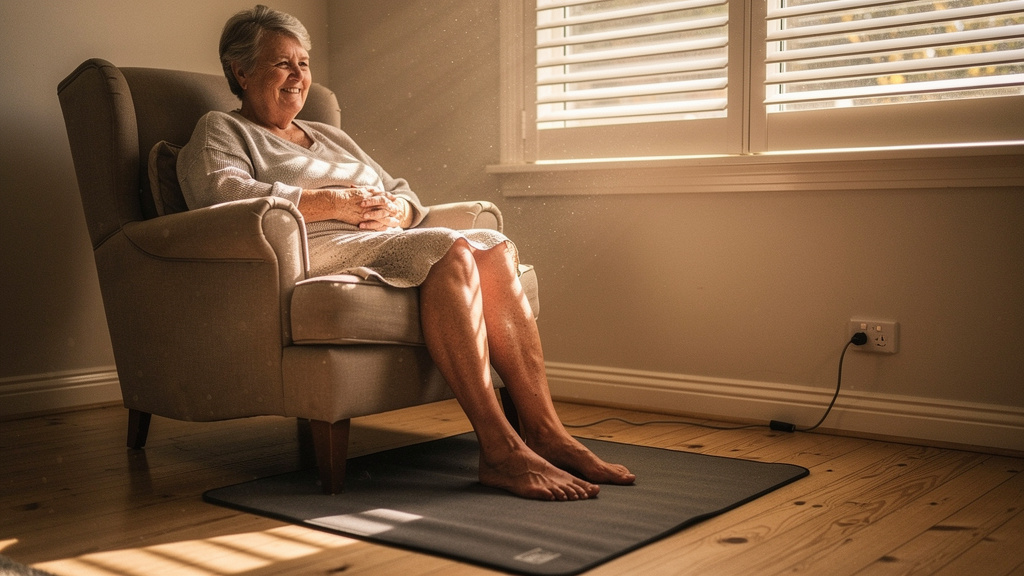
Grounding for Arthritis Australia: The Science, the Setup, and the Honest Evidence
Drafted with AI assistance and checked against published specifications and certifications. First-hand measurements appear only where stated. How we make content
Earthing — the practice of direct contact between the body and the Earth’s surface — has attracted interest as a complementary approach for people managing chronic inflammation, including arthritis. Early research suggests it may reduce certain inflammatory markers, though the evidence specific to arthritis remains limited and no large clinical trials have been completed.
Quick Verdict
Earthing is a low-risk, low-cost complementary practice with a biologically plausible anti-inflammatory mechanism. Small studies show reductions in blood markers associated with inflammation and improvements in sleep and cortisol — both relevant to arthritis management. It is not a treatment or cure, and it does not replace medication or physiotherapy. For Australians already following a medical plan, adding an earthing mat or grounding sheet costs little and the downside risk is minimal.
Verdict: Worth trying as a complement — not a replacement — to evidence-based arthritis care.
This may suit you if you are…
- Managing arthritis with medical supervision and looking for complementary support
- Experiencing disrupted sleep or elevated stress alongside joint pain
- Already using anti-inflammatory lifestyle strategies (diet, movement, cold therapy)
- Open to low-risk, evidence-informed practices while evidence matures
This is not suited for you if you are…
- Expecting earthing to cure or treat arthritis — it cannot
- Considering replacing prescribed medication or physiotherapy
- Implant-dependent (pacemakers, insulin pumps) — consult your doctor first
- Looking for a proven, large-scale RCT-backed intervention specifically for arthritis
What Is Earthing and How Might It Help Arthritis?
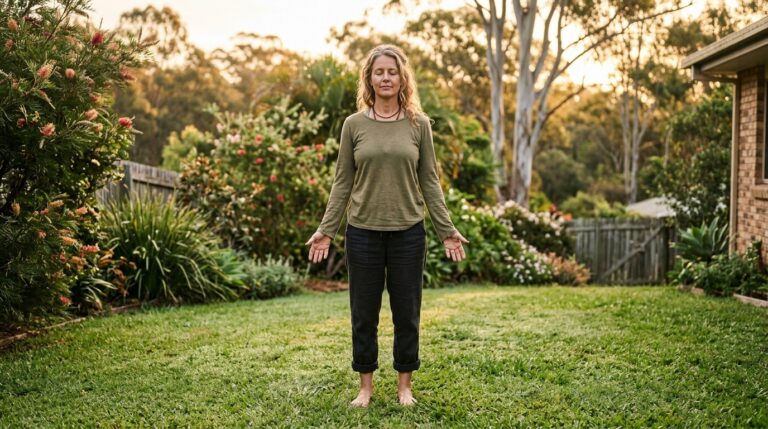
Earthing — also called grounding — refers to any form of direct electrical contact between the human body and the surface of the Earth. Outdoors, this means bare feet on grass, soil, sand, or rock. Indoors, purpose-built earthing mats and conductive sheets connect via a grounded power outlet, replicating the same electron-transfer pathway without requiring outdoor access.
The proposed mechanism relevant to arthritis sits at the intersection of free radical chemistry and inflammation biology. The Earth’s surface carries a mild negative electrical charge and is continuously replenished with free electrons generated by lightning strikes and solar radiation. When the body is isolated from ground — as it nearly always is with rubber-soled footwear and elevated sleeping — reactive oxygen species (free radicals) generated by normal metabolic processes and immune responses can accumulate. Oschman and colleagues, writing in the Journal of Inflammation Research (2015), proposed that free electrons donated from the Earth’s surface act as natural antioxidants, neutralising these reactive oxygen species before they can sustain the inflammatory cascade. Because chronic inflammation is the central driver of joint damage in both rheumatoid arthritis and osteoarthritis, this mechanism — if it operates as proposed — would be directly relevant to arthritis symptoms.
It is important to note this remains a proposed mechanism. The electron-transfer hypothesis is consistent with established electrochemistry but has not yet been confirmed as the definitive explanation for the physiological changes observed in earthing trials. What the research does show, in small samples, is that contact with ground appears to produce measurable changes in blood and cortisol profiles — changes in the direction you would expect if the inflammatory pathway were being moderated.
The Research — What Small Studies Show
The most directly relevant published work comes from Sokal and Sokal, whose 2011 study in the Journal of Alternative and Complementary Medicine examined 28 subjects who slept on grounded conductive mattress pads over several weeks. The study reported reductions in blood markers associated with inflammation and normalisation of cortisol diurnal rhythms. The authors concluded that earthing during sleep produced statistically significant physiological changes consistent with a reduction in chronic low-grade inflammation. The sample size was small and the study lacked a long-term follow-up, but the design was controlled and the biomarker changes were measurable, not self-reported only.
A 2010 study by Brown and colleagues (published in the Journal of Alternative and Complementary Medicine) assessed 60 participants experiencing sleep disturbances, pain, and stress. Those grounded during sleep showed reduced cortisol at night, improved sleep quality, and reported reductions in pain, including joint and muscle pain. Again, the sample was small and the study relied partly on self-report, but cortisol measurements provided an objective physiological correlate. A 2015 review by Oschman et al. in the Journal of Inflammation Research synthesised this growing body of work, describing earthing as a “global anti-inflammatory” and flagging the free-electron mechanism as the most plausible explanation, while explicitly calling for larger, double-blind trials to confirm findings.
The honest summary of the research landscape: there are no large randomised controlled trials specifically testing earthing in arthritis patients. The studies that exist are small, some are unblinded, and direct arthritis endpoints have not been the primary outcome in any completed trial. The anti-inflammatory mechanism is biologically plausible and consistent with adjacent research in oxidative stress biology, but “biologically plausible” is not the same as “clinically proven.” Australians with arthritis should read this evidence as encouraging early signals, not as a green light to deprescribe or delay medical care.
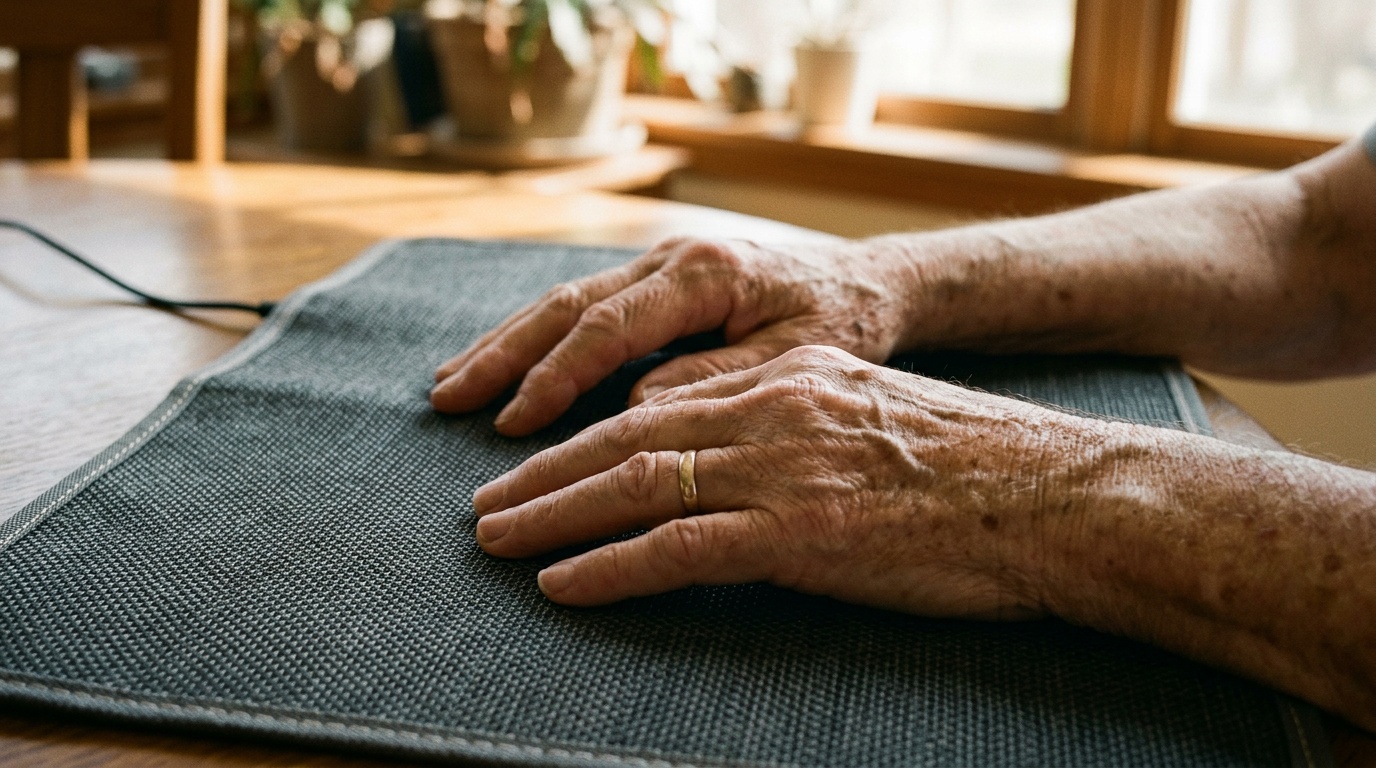
Practical Setup for Arthritis Relief in Australia
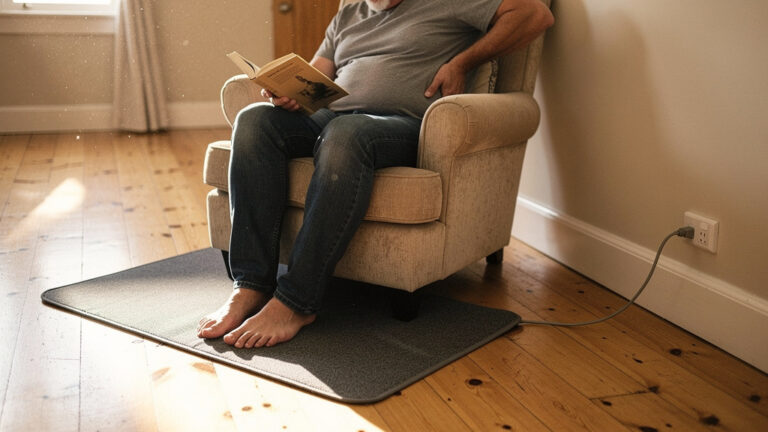
For Australians managing arthritis, the two most practical indoor earthing options are a grounding mat used at a desk or recliner, and a conductive grounding sheet used during sleep. Both connect to the earth pin of a standard Australian power outlet (AS/NZS 3112) via a cord fitted with a current-limiting resistor — this protects against any possibility of electrical current passing through the body, making the setup safe for daily use in homes across New South Wales, Victoria, Queensland, South Australia, Western Australia, and elsewhere. No rewiring or specialist installation is required.
For arthritis specifically, sleep-based grounding is likely the most effective entry point given that the Sokal and Sokal study used overnight grounding and sleep disruption is a near-universal complaint among people with both osteoarthritis and rheumatoid arthritis. A grounding sheet placed beneath the fitted sheet, or used as the fitted sheet itself, means you accumulate 6–8 hours of grounded contact each night without any change to routine. During waking hours, a desk mat under bare feet or forearms adds another 1–3 hours of contact for those working from home — increasingly common in cities such as Brisbane, Melbourne, and Sydney following the post-pandemic shift in working patterns.
Timeline expectations matter here. The Brown 2010 study observed cortisol normalisation within several weeks of nightly grounding. Anecdotal reports from users with joint pain suggest that subjective changes — particularly in sleep quality and morning stiffness — may be noticeable within two to four weeks, though individual response varies widely. Do not expect overnight pain elimination. Think of earthing as a slow, low-level background intervention that may reduce the inflammatory load on your joints over time, rather than a fast-acting analgesic. If you notice no change after eight weeks of consistent nightly use, earthing may not be producing a meaningful effect for you specifically.
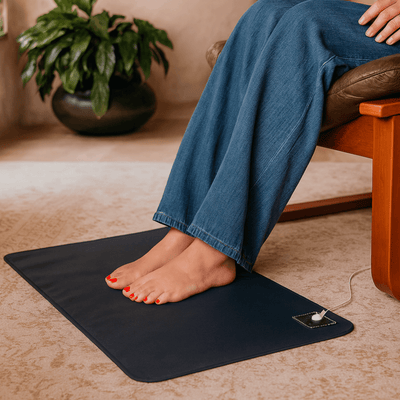 Premium Grounding Earthing Mat — Stainless Steel” style=”max-width:140px;max-height:160px;object-fit:contain;” />
Premium Grounding Earthing Mat — Stainless Steel
Stainless steel conductive surface, AU-compatible grounding cord with current-limiting resistor, desk or floor use. Ships to Australia. 15% commission supports this site at no extra cost to you.
View on Premium GroundingPros
- Stainless steel surface durable and easy to clean
- Compatible with standard Australian earthed outlets
- No subscription or ongoing cost
- Desk and floor configurations available
- 15% commission via Premium Grounding affiliate
Cons
- Requires a grounded (earthed) outlet — not all older homes have one at every point
- Evidence base for arthritis-specific outcomes is still preliminary
- Some users find the surface texture takes adjustment
For overnight grounding, see our roundup of the best grounding sheets available in Australia in 2026, which covers cotton-silver and stainless-steel weave options at multiple price points. If you want to understand the physics behind how these products work, our guide on how grounding sheets work in Australia covers the electron-transfer mechanism, outlet safety, and AU/NZ plug standards in detail.
Australian Context — 3.6 Million Australians Living With Arthritis
Arthritis Australia estimates that 3.6 million Australians are currently living with arthritis, making it the leading cause of chronic pain and disability in this country. Osteoarthritis is the most common form, affecting joints in the knees, hips, hands, and spine — areas that bear most load in daily movement. Rheumatoid arthritis, an autoimmune inflammatory condition, affects approximately 460,000 Australians. Together, these conditions account for billions of dollars in direct healthcare costs and represent one of the most significant sources of reduced quality of life for working-age and older Australians alike.
The Australian climate creates a particular opportunity for outdoor earthing that many northern hemisphere researchers do not account for. In Queensland, the Northern Territory, and northern Western Australia, bare-foot outdoor contact on soil, grass, or beach sand is practical for much of the year — early morning walks on a Gold Coast beach or a Darwin park lawn provide both movement (well-documented as beneficial for arthritis) and grounded contact simultaneously. In Victoria, Tasmania, and southern New South Wales, cooler winters make year-round outdoor earthing less practical, which is where indoor mats and sheets become more relevant. The earthing protocol does not change by climate — direct skin contact with a conductive surface connected to ground is the constant — but the delivery method may shift seasonally depending on where in Australia you live.
One practical note for Australians: the standard AS/NZS 3112 outlet used throughout Australia includes an earth (ground) pin as standard, which means virtually every modern home and apartment is already equipped for indoor earthing products without any modification. This is not the case in all countries — Australians have an infrastructure advantage that makes transitioning to indoor earthing straightforward.
Important Caveats — What Earthing Cannot Do
Earthing is not a medical treatment. It has not been approved by the Therapeutic Goods Administration (TGA) as a treatment for any condition, and no earthing product should be marketed or understood as treating, curing, or managing arthritis. If your rheumatologist or GP has prescribed disease-modifying anti-rheumatic drugs (DMARDs), biologics, or non-steroidal anti-inflammatory drugs (NSAIDs), those prescriptions exist because the evidence base for them is substantially stronger than the evidence base for earthing. Stopping or reducing prescribed medication without medical supervision is dangerous and could result in accelerated joint damage.
Physiotherapy and structured exercise programs are among the most evidence-backed interventions for both osteoarthritis and rheumatoid arthritis. A 2019 systematic review in the British Medical Journal confirmed that exercise — including hydrotherapy, resistance training, and tailored land-based programs — produces clinically meaningful improvements in pain and function for people with knee and hip osteoarthritis. These interventions have a far more robust evidence base than earthing currently does. The most defensible approach is to use earthing alongside, not instead of, physiotherapy, movement, and prescribed medication.
People with implanted electronic medical devices — including cardiac pacemakers, implantable cardioverter-defibrillators, and insulin pumps — should consult their treating specialist before using any grounding product. While the current-limiting resistor in commercial earthing cords is specifically designed to prevent electrical current from passing through the body, the interaction between Earth-contact electron flow and implanted devices has not been formally studied and cannot be assumed safe without clinical guidance. Similarly, anyone who is pregnant, has a history of seizures, or is taking blood-thinning medications should speak with their doctor before starting earthing, as there are theoretical interaction risks that have not been adequately studied.
Where to Start With Earthing for Arthritis in Australia
As someone who has spent time researching recovery-based interventions — including during a career as a Navy Clearance Diver where managing physical stress and inflammation was a practical daily concern — I have a reasonably high bar for what I recommend. Earthing clears that bar as a complementary practice specifically because the downside risk is low, the cost is modest, and the mechanism is at least biologically coherent even if the clinical evidence in arthritis specifically is still maturing.
The practical starting point for most Australians with arthritis is a grounding mat for use during a portion of the day when you are stationary — at a desk, watching television, or reading — combined with a grounding sheet for overnight use. This stacks grounded contact time without requiring any change to routine. The Premium Grounding stainless steel mat is a well-built, AU-compatible option that ships to Australia. For a broader comparison of mat options, see our guide to the best grounding mats in Australia for 2026.
Keep a simple log for the first eight weeks: rate morning stiffness on a 1–10 scale, note sleep quality, and record any changes in pain patterns. This gives you a personal data set to assess whether earthing is producing a meaningful effect for your specific case. If after eight weeks you see no change, the honest answer is that earthing may not be adding value for you — and that is a valid outcome. The goal is to add a low-cost, low-risk tool to your arthritis management stack, not to commit indefinitely to a practice that is not working.
Recommended Product
Premium Grounding Earthing Mat
Stainless steel mat, AU-compatible cord, ships to Australia. A straightforward way to add daily grounded contact to your arthritis management routine.
View on Premium Grounding Browse All Premium Grounding ProductsLast reviewed: June 2026 — Clean and Native
Frequently Asked Questions
Does earthing actually help with arthritis pain?
There is no large clinical trial that specifically tested earthing in arthritis patients, so we cannot say it is proven to reduce arthritis pain. What small controlled studies have shown — including Sokal and Sokal (2011) and Brown et al. (2010) — is that earthing during sleep reduces certain blood markers associated with inflammation and lowers cortisol levels. Because chronic inflammation is the central driver of arthritis joint damage, these findings are relevant, but the direct link to arthritis-specific pain relief has not been established in a large controlled trial. Consider it a plausible complementary support, not a proven treatment.
How long does it take to notice a difference from earthing if I have arthritis?
Based on the available studies and user reports, the most commonly reported timeline for any subjective change — particularly improved sleep and reduced morning stiffness — is two to four weeks of consistent nightly grounding. Cortisol normalisation in the Brown 2010 study was observed over several weeks of nightly use. There is significant individual variation, and some people report no noticeable change at all. A practical approach is to track morning stiffness and sleep quality for eight weeks and evaluate honestly from your own data.
Is it safe to use an earthing mat if I take arthritis medications?
For most people taking standard arthritis medications — including NSAIDs, DMARDs, or biologics — there is no known interaction with earthing mats or grounding sheets. The products use a current-limiting resistor that prevents electrical current from passing through the body. That said, always inform your rheumatologist or GP that you are using an earthing product, and do not adjust your prescribed medication without medical guidance. If you take blood thinners (anticoagulants), some researchers have raised a theoretical concern given that earthing may affect blood viscosity — speak with your doctor before starting.
Can I use a grounding mat if I have a pacemaker or other implanted device?
Consult your cardiologist or treating specialist before using any grounding product if you have a pacemaker, implantable cardioverter-defibrillator, insulin pump, or other implanted electronic device. While commercial earthing cords are designed with current-limiting resistors specifically to prevent electrical flow through the body, the interaction with implanted devices has not been formally studied. This is a genuine precaution, not a marketing disclaimer — get medical sign-off first.
Do I need to buy a product or can I just walk barefoot outside?
Outdoor barefoot contact on grass, soil, sand, or rock is effective earthing and costs nothing. For Australians in Queensland, the Northern Territory, or coastal New South Wales, outdoor barefoot earthing is practical for much of the year. Indoor products — mats and sheets — are most useful when outdoor access is inconvenient, during winter in southern states like Victoria and Tasmania, or when you want sustained overnight grounding during sleep. The mechanism is the same whether the electron source is soil under your feet or a conductive mat connected to a grounded outlet.
What is the difference between a grounding mat and a grounding sheet for arthritis?
A grounding mat is a rigid or semi-rigid conductive surface used during waking hours — typically under bare feet at a desk, under forearms, or on the floor near a chair. A grounding sheet is a conductive textile integrated into your bed setup, used during sleep to accumulate 6–8 hours of contact each night. For arthritis management, a grounding sheet is likely the more valuable starting point given that sleep disruption is near-universal in arthritis and the Sokal and Sokal (2011) study specifically used overnight grounding. The two products are complementary, not interchangeable. See our guide to the best grounding sheets in Australia for a full comparison.
Is earthing recognised by Arthritis Australia or mainstream medical bodies?
Arthritis Australia does not currently list earthing as a recommended complementary therapy on its website, and it is not endorsed by the Royal Australian College of General Practitioners (RACGP) or the Australian Rheumatology Association as a treatment for arthritis. This is consistent with the current evidence level — promising small studies but no large clinical trials. This does not mean earthing is harmful or without merit; it means the research has not yet met the threshold required for mainstream medical endorsement. The situation may change as more research is completed.
What type of arthritis might benefit most from earthing?
Based on the proposed anti-inflammatory mechanism, rheumatoid arthritis — which is driven primarily by systemic chronic inflammation — would theoretically have the most relevant biological pathway. Osteoarthritis also involves an inflammatory component, particularly in advanced stages, so the mechanism is not irrelevant. However, no study has directly compared earthing outcomes across arthritis subtypes, so this remains speculative. Regardless of arthritis type, the primary measurable outcomes in existing studies — improved sleep, lower cortisol, reduced inflammatory biomarkers — are relevant to quality of life for people with any form of chronic arthritis.
How does grounding at a desk differ from overnight grounding for arthritis?
Desk-based grounding typically involves a mat under bare feet or forearms, accumulating 1–3 hours of contact during work time. Overnight grounding via a conductive sheet accumulates 6–8 hours passively during sleep. The total daily grounded contact time matters — more contact hours means more potential electron transfer over a 24-hour period. For people with arthritis who want to maximise the potential benefit, combining both approaches to reach 8–10 hours of daily grounded contact represents the most consistent protocol in the available literature. For details on how indoor grounding products connect to Australian power outlets, see our explainer on how grounding sheets work in Australia.
Get the Australian Home Environment Checklist
30 checks across water, air and EMF. Most of them free. Ranked by impact.
No spam. Unsubscribe any time.

Former Royal Australian Navy Clearance Diver and TAG-E counter-terrorism operator. Founded Clean and Native to apply the same rigorous thinking to the home environment.
Full biography →