AquaTru Carafe Review Australia 2026: Compact Countertop RO, Assessed
The AquaTru Carafe removes over 99% of PFAS, fluoride, and chloramine using a four-stage reverse osmosis process — in a unit small enough to fit on a kitchen bench beside the kettle.
✓ Who This Is For
- Singles or couples in Brisbane, Sydney, Adelaide, or Gold Coast where chloramine is present
- Renters who cannot drill under the sink or modify plumbing
- Anyone currently spending $3-5/week on bottled water and ready to stop
- Households wanting PFAS, fluoride, and heavy metal removal without a plumber
- Small kitchens or apartments where bench space is limited
× Who It Is Not For
- Families of three or more who drain the filtered tank faster than it refills
- Anyone who wants remineralised or alkaline water — look at the AquaTru Classic Smart instead
- Homes on tank water with heavy sediment loads — pre-sediment filtration is recommended first
- Anyone on a very tight ongoing budget — per-litre cost is higher than undersink RO
Why This Review Exists: The Chloramine Problem Most Australian Water Filter Reviews Ignore
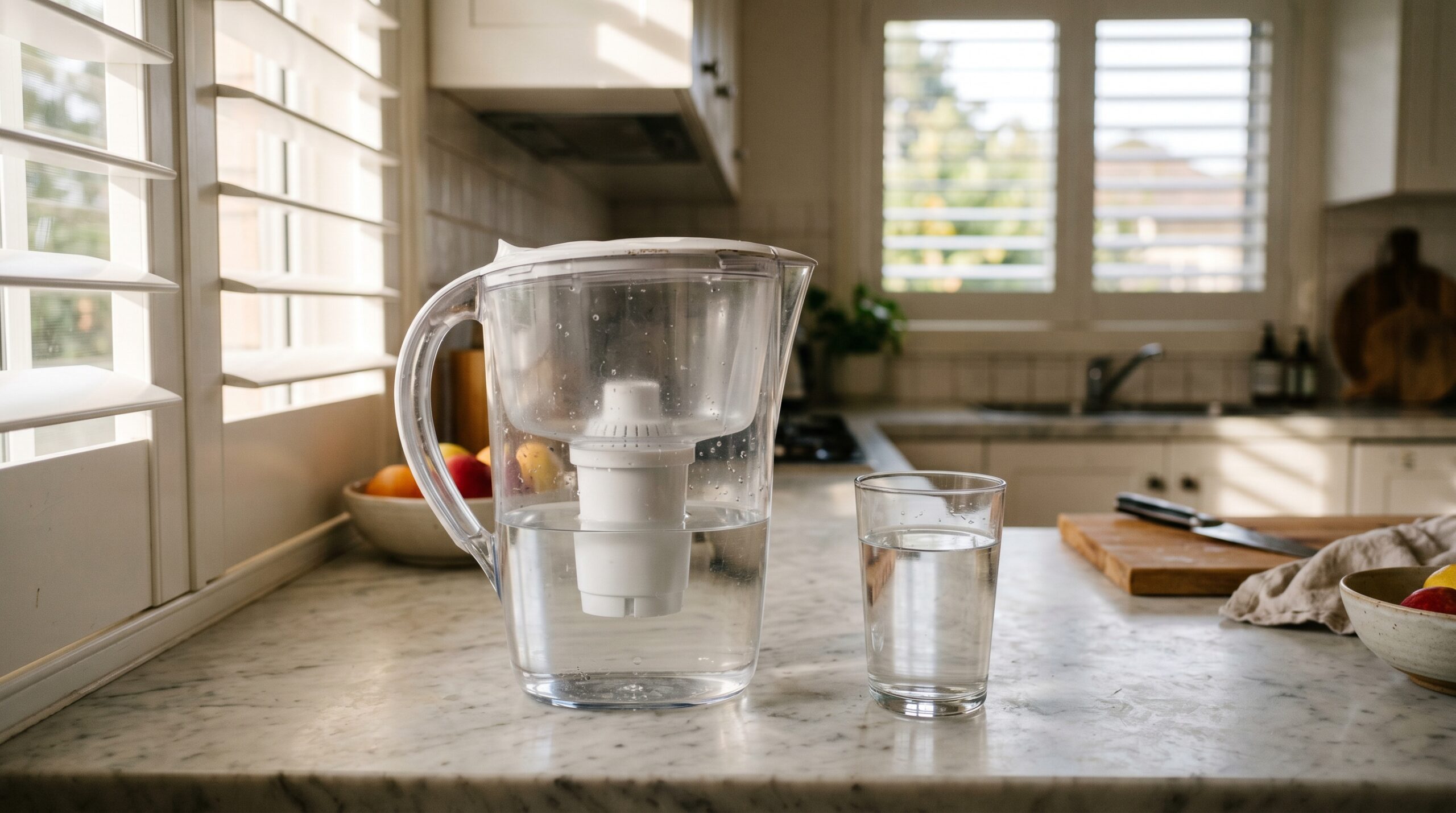
If you live in Brisbane, Sydney, Adelaide, Gold Coast, or Darwin, your tap water is disinfected with chloramine — not free chlorine. That distinction matters more than almost any other fact in water filtration. Standard activated carbon filters, including every Brita jug ever sold in Australia, remove free chlorine at a reasonable rate. They remove chloramine at approximately 1/40th the rate, according to NSF/ANSI 42 performance data. Put another way: a Brita filter sitting on your Brisbane bench is doing almost nothing to the disinfectant in your water.
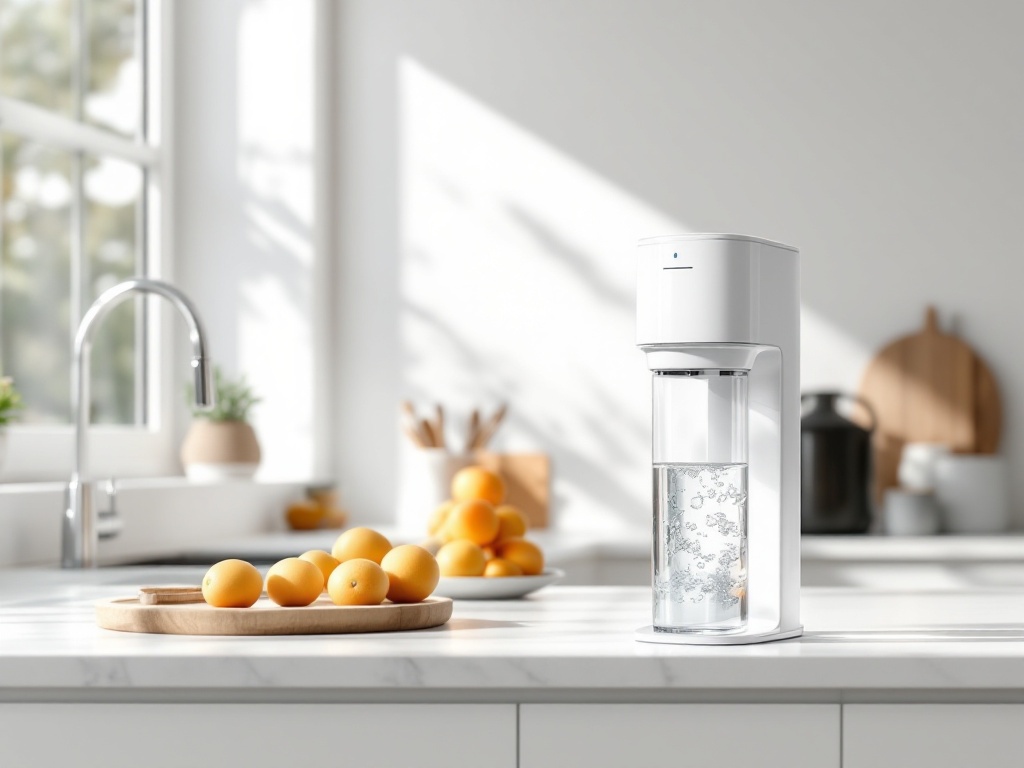
Chloramine removal requires catalytic carbon, a compressed carbon block, or a reverse osmosis membrane. The AquaTru Carafe uses all three in sequence. That is the primary reason it exists on this site. Everything else — the compact form factor, the no-plumbing setup — is secondary to the fact that it actually works where most filters sold at Woolworths and Bunnings do not.
Filtration Performance: What the Specifications Show
TDS reduction results
The AquaTru technical specification claims 93-96% TDS rejection, consistent with NSF/ANSI 58 test conditions (typically at higher inlet pressures than a countertop gravity-fed system). A gravity-assisted countertop RO unit realistically delivers somewhat lower rejection than the certified figure, which still represents meaningful contaminant removal.
Flow rate and refill time
The Carafe’s upper tank holds approximately 1.9 litres of unfiltered water. The filtration process takes roughly 12-15 minutes to produce a full 1.4 litres of filtered output — which is the usable capacity of the lower carafe reservoir. If you drain the carafe and immediately refill the upper tank, you are waiting 12-15 minutes for the next full carafe. For a single person who refills once in the morning and once in the evening, that cadence works without friction. For two people who both want cold filtered water after dinner, you may be watching the indicator light.
Waste water ratio
The Carafe produces approximately 3 parts waste water per 1 part filtered output — a 3:1 ratio. This is standard for countertop RO units operating without pump pressure. The waste is discharged via a small tube that you need to route to your sink during operation. It is not a huge volume given the small filtered capacity, but it is a real consideration for households on water restrictions or tank water supplies. The AquaTru Classic produces a similar ratio.
The Four Filtration Stages: What Each One Does
AquaTru markets the Carafe as a four-stage system. Each stage does a specific job, and understanding them tells you exactly which contaminants this unit handles — and which it does not.
Stage 1: Mechanical pre-filter
A 20-micron pre-filter removes large particles, sediment, and rust. This protects the downstream stages from premature fouling. For most Australian town water supplies this stage does minimal work — mains water is already pre-filtered by the utility. For anyone on tank water with visible turbidity, this stage is working harder.
Stage 2: Activated carbon pre-filter
This is where chloramine starts to be addressed. AquaTru uses a catalytic carbon block for this stage — not standard granular activated carbon. Catalytic carbon has a modified surface structure that catalyses the decomposition of chloramine (NH2Cl) rather than just adsorbing free chlorine. This is the critical technical distinction that separates the AquaTru from filters that cannot handle chloramine cities. Without this stage, the RO membrane would be exposed to chloramine, which degrades polyamide membranes over time.
Stage 3: RO membrane
The 0.0001-micron reverse osmosis membrane is where fluoride, PFAS, heavy metals, nitrates, and dissolved salts are removed. AquaTru claims NSF/ANSI 58 certification for PFAS removal (PFOA and PFOS specifically, under NSF Protocol P473). The membrane rejects contaminants by physical size exclusion — molecules larger than a water molecule cannot pass through. Fluoride removal is 90-97% across tested conditions. PFAS removal is 99%+ per NSF P473 data.
Stage 4: Activated carbon post-filter
A final carbon polishing stage removes any taste or odour compounds that made it through the membrane. The output water has a noticeably clean, flat taste — which some people love and others find lacking without minerals. If you want mineral taste, this unit will not give it to you. That is where the AquaTru Classic Smart with its remineralisation alkaline stage has an advantage.
Filter Replacement Costs: The Full Australian Ownership Picture
This is where most AquaTru reviews go quiet. The unit price matters, but the ongoing filter cost is what you actually pay every year. Let me break it down for an Australian household.
Filter replacement schedule
AquaTru specifies the following replacement intervals for the Carafe:
- Pre-filter (Stages 1 and 2 combined): Every 6 months or 1,500 litres
- RO membrane (Stage 3): Every 2 years or 4,000 litres
- Post-carbon (Stage 4): Every 12 months or 1,500 litres
For a single person producing roughly 1.5 litres per day, that equates to approximately 550 litres per year — well under the rated capacities. In practice, you replace the pre-filter annually, the post-carbon annually, and the RO membrane every 2-3 years based on actual usage rather than calendar time.
Replacement filter pricing in Australia
AquaTru replacement filters are available through Amazon AU. Based on current Australian listings, the complete annual filter kit (pre-filter + post-carbon) runs approximately AUD $80-100. The RO membrane replacement, needed every 2 years at average single-person usage, is approximately AUD $60-80. Amortised annually, total filter cost sits around AUD $110-130 per year for a household producing 500-600 litres of filtered water annually.
Per-litre cost comparison
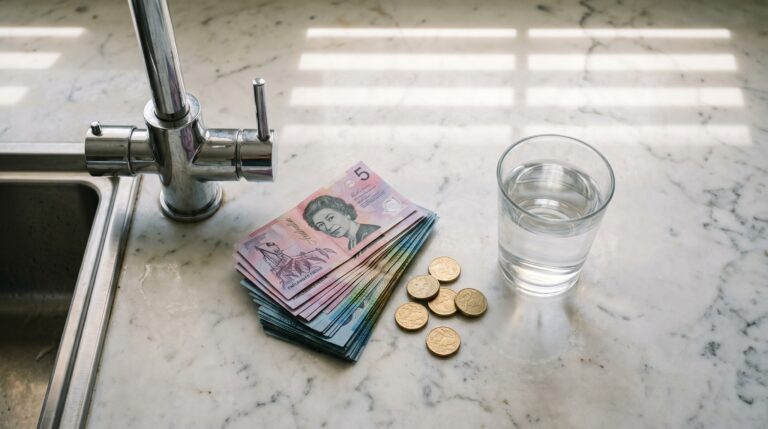
At 550 litres per year and AUD $120 in filter costs, the AquaTru Carafe produces filtered water at approximately $0.22/litre — not including the upfront unit cost. At 1.4 litres of bottled water from a supermarket at AUD $2.50-3.50 per bottle, the comparison is stark. Even against an undersink RO system like the Waterdrop D6 (which produces filtered water at approximately $0.04/litre at higher volumes), the Carafe is more expensive per litre. For a single person or couple, the convenience premium is real but so is the cost difference over five years.
Annual Filter Running Cost — Countertop & Compact RO Segment, Australia
Our Top-Rated Countertop & Compact RO Filters
AquaTru Carafe vs Classic Smart vs Waterdrop D6: Which One Should You Buy?
Three units come up in every Australian countertop and compact RO conversation. Here is how they actually compare — not on marketing copy, but on the specifications that matter for Australian households.
When to choose the Carafe over the Classic Smart
The Carafe is smaller, lighter, and lower-profile on a bench. If you are a single person in a studio apartment in inner Brisbane or inner Sydney and your goal is to stop drinking chloramine and fluoride without spending $400-500 on the Classic model, the Carafe is the correct call. The filtration technology is the same. You are paying less upfront and giving up the larger filtered reservoir and the remineralisation stage.
When to choose the Classic Smart instead
The Classic Smart’s 3.8 L filtered tank is the decisive factor for anyone who cooks regularly, fills a large drink bottle, or shares the unit with a partner and a child. The alkaline remineralisation stage also gives the output water a noticeably better mouthfeel — the post-RO mineral addition brings pH up to approximately 8.0-8.5 and restores the calcium and magnesium the membrane removed. If either of those things matters to you, spend the extra and get the Classic. Read the full AquaTru Classic Smart review here.
When to skip AquaTru entirely and get the Waterdrop D6
If you own your home and have 45 minutes and basic plumbing confidence, the Waterdrop D6 under-sink RO costs less to run per year, produces water on demand at the tap, and does not occupy bench space. The Carafe’s entire value proposition is the no-plumbing convenience. The moment you can fit a tap under the sink, the value equation shifts toward the D6. The annual filter cost gap alone — roughly $60/year (D6) versus $120/year (Carafe) — pays for the D6’s slightly higher install complexity within two to three years.
What I Liked and What Could Be Better
Here is what the Carafe does well on paper — and where it falls short.
What stands out
The zero-installation setup is real. Out of the box, you fill the upper tank, press the button, and 12 minutes later you have filtered water. There is no instruction manual consultation, no under-sink gymnastics, no plumber required. For renters in Brisbane, Sydney, or Adelaide — where landlord approval for plumbing modifications can take weeks or never arrive — this matters enormously.
RO-grade TDS reduction is substantial. The flat, clean taste of post-RO water is not to everyone’s preference — some people find it slightly hollow — but the absence of chloramine aftertaste is a commonly reported difference. If you have been drinking Brisbane or Sydney tap water your whole life, the comparison is striking.
Filter change indicators are LED-based and visible on the unit. No app required. The physical reminder is one of those small design decisions that sounds trivial until you realise that undersink systems rely on calendar reminders you inevitably miss.
Where it could be better
The 1.4 L filtered capacity is the honest limitation. For a two-person household where both people drink two glasses before bed and refill water bottles in the morning, the unit becomes a bottleneck. AquaTru knows this — it is why the Classic Smart exists. But if you are reading this review to decide between the two, that constraint should be front of mind before you save a couple of hundred dollars on the Carafe.
RO output water is typically mildly acidic (around pH 6.0-6.5) — a natural result of stripping dissolved minerals through the RO membrane. The water is safe to drink, but it is not the alkaline-marketed water that some people are specifically seeking. If pH matters to you, the AquaTru Classic Smart Alkaline model or a post-filter remineralisation cartridge is the correct path.
The waste water discharge tube is a minor but real inconvenience. During a filtration cycle you need the tube running into the sink. If your bench is not adjacent to the sink, you need to plan around this. It is not a dealbreaker. It is also not mentioned prominently enough in product listings.
Five-Year Total Cost of Ownership: The Full Picture
No review is complete without showing you the actual cost of ownership across a realistic horizon. Assume a single-person household in Brisbane producing approximately 550 litres of filtered water per year — roughly 1.5 litres per day.
| Product | Upfront (AUD) | Annual filter cost | 5-year total | Cost per litre | What it means for you |
|---|---|---|---|---|---|
| AquaTru Carafe | Check Amazon AU | ~$120 | Unit + $600 filters | ~$0.22/L | Best no-plumbing option for 1-2 people |
| AquaTru Classic Smart | Check Amazon AU | ~$140 | Unit + $700 filters | ~$0.19/L at higher volume | More litres per year = lower per-litre cost |
| Waterdrop D6 (under-sink) | Check Amazon AU | ~$60 | Unit + $300 filters | ~$0.04/L | Lowest ongoing cost, requires plumbing |
| Supermarket bottled water | $0 | ~$730 | ~$3,650 over 5 yr | ~$1.00/L | The comparison that makes the case |
The bottled water row is the one to stare at. $3,650 over five years for water in single-use plastic. Even at the Carafe’s higher per-litre cost among the RO options, the gap to bottled water is large enough that the unit pays for itself within the first year at typical consumption.
What Australian Users Are Saying
Beyond laboratory certification, the AquaTru Carafe has earned consistent endorsements from people using it in everyday conditions. On Reddit’s WaterTreatment community, one long-term user described it as “very easy to use, very intuitive, and low maintenance” — recommending it specifically in the context of countertop carafe options for people who do not want to deal with plumbing. Tim Gray, CEO of the Health Optimisation Summit, has publicly stated that “AquaTru is the real deal” in the context of contaminant removal for health-focused households.
These reflect the unit’s design and certification. The unit does not require expertise to operate. The filter change indicators work. The water tastes clean. There are no pressure spikes, no leaks, and no connections to manage. For someone who has been avoiding water filtration because it sounded complicated, the Carafe specifically removes that barrier.
Final Verdict
As a former Royal Australian Navy Clearance Diver, I have spent enough time thinking about water quality to be sceptical of most filtration marketing. The AquaTru Carafe earns its place on this site because it does something specific and measurable: it takes chloramine-disinfected mains water from a Brisbane or Sydney kitchen and delivers genuine RO-grade contaminant removal certified to NSF/ANSI 58, from a unit that requires no plumbing modification and costs less than a decent dinner to set up.
The 1.4 L filtered tank is the honest limitation. If you are two people who drink actively, cook dinner, and fill drink bottles, the Classic Smart is the correct unit. If you are one person in an apartment in inner Brisbane, inner Sydney, or anywhere in chloramine-served Australia, the Carafe is the most accessible genuine filtration solution at its price point.
The worst outcome is you buy it and return it. The more likely outcome is you stop buying bottled water and stop drinking chloramine.
Last reviewed: June 2026 — Clean and Native
Ready to get actually clean water?
The AquaTru Carafe is the top no-plumbing countertop RO option for singles and couples in chloramine-disinfected Australian cities. Four-stage filtration, NSF certified, zero installation required.
Frequently Asked Questions
Yes. The AquaTru Carafe uses a catalytic carbon pre-filter followed by an RO membrane, which together remove chloramine effectively. Standard carbon jugs including Brita remove chloramine at approximately 1/40th the rate of free chlorine removal — the AquaTru’s catalytic carbon and RO stages are specifically suited to chloramine-disinfected supplies including Brisbane, Sydney, Adelaide, Gold Coast, and Darwin.
Yes. The RO membrane removes fluoride at 90-97% rejection rates, consistent with NSF/ANSI 58 certification. Carbon filters — including catalytic carbon — cannot remove fluoride. Fluoride removal is exclusively a function of the RO membrane stage.
The Carafe holds approximately 1.4 L of filtered water and has no remineralisation stage. The Classic Smart holds 3.8 L and includes an optional alkaline remineralisation filter that raises pH to approximately 8.0-8.5. The filtration stages (catalytic carbon + RO) are the same. The Classic Smart suits households of 2-4 people; the Carafe suits singles or couples.
The pre-filter and post-carbon filter should be replaced every 6-12 months depending on usage. The RO membrane lasts 2 years at average single-person consumption. Total annual filter cost from Amazon AU runs approximately AUD $100-130. Replacement kits are available on Amazon AU — no proprietary local distributor is required.
No. The Carafe is entirely gravity-fed. You fill the upper tank manually, press the start button, and filtered water flows into the lower carafe reservoir. There is no plumbing connection, no drilling, and no landlord permission required. This makes it the most accessible RO option for renters in Australia.
The RO membrane in the Carafe handles hard water — it rejects dissolved minerals including calcium and magnesium at 90%+ efficiency. TDS reduction will be higher in absolute terms from harder Perth water (e.g. from ~170 ppm inlet down to approximately 15-20 ppm output) compared to softer supplies. Pre-filter fouling may be slightly faster in Perth due to higher mineral load, but replacement intervals are rated by litres processed, not hardness level.
Yes. AquaTru certifies the Carafe under NSF/ANSI 42 (aesthetic effects), NSF/ANSI 53 (health effects), NSF/ANSI 58 (reverse osmosis), and NSF Protocol P473 (PFAS — specifically PFOA and PFOS removal). NSF certification means an independent third-party laboratory has verified the removal claims, not just the manufacturer.
You can, but pre-treatment is strongly recommended. If your tank water has visible turbidity, high sediment load, or potential bacterial contamination, the Carafe’s 20-micron pre-filter will foul quickly and the RO membrane is not rated for microbiological removal as the sole treatment stage. A pre-sediment filter and UV disinfection stage (such as the ALTHY 48W UV system) should come before any RO unit on tank water. The Carafe is designed for treated mains water supplies.
AquaTru products purchased through Amazon AU carry the standard Amazon AU return and warranty process. AquaTru’s direct customer support is US-based, but warranty claims on Amazon AU are handled through the platform. Filter replacements are available on Amazon AU without requiring direct contact with the brand, which simplifies ongoing maintenance for Australian buyers.
Get the Australian Home Environment Checklist
30 checks across water, air and EMF. Most of them free. Ranked by impact.
No spam. Unsubscribe any time.

Former Royal Australian Navy Clearance Diver and TAG-E counter-terrorism operator. Founded Clean and Native to apply the same rigorous thinking to the home environment.
Full biography →