
Australia Sues 3M for $2 Billion Over PFAS: What It Means for Your Drinking Water
Australia’s federal government filed its largest-ever environmental lawsuit on 28 May 2026 — a AU$2 billion claim against 3M Company and 3M Australia over PFAS contamination at 28 Defence Force bases nationwide. Reverse osmosis filters certified to NSF/ANSI 58 remove 94-99% of PFAS compounds and are the only home filtration technology capable of reducing PFAS to levels below Australian guideline values.
What the 3M Lawsuit Actually Means
On 28 May 2026, the Commonwealth of Australia filed proceedings in the Federal Court of Australia seeking AU$2 billion in damages from 3M Company and its Australian subsidiary. This is not a class action from affected residents — it is the Australian government seeking to recover costs it has already paid and is continuing to pay because of what 3M allegedly knew and withheld.
NEWS
Australian Broadcasting Corporation — 28 May 2026
“Federal government to sue 3M Australia over firefighting foam that contained PFAS”
Read ABC News coverage →The core allegation is specific: 3M’s internal laboratory results showed PFAS caused significant environmental harm, and the company provided assurances to Defence that aqueous film-forming foam (AFFF) was biodegradable and non-toxic — assurances the lawsuit claims were false. AFFF was used extensively at Australian Defence Force bases for training exercises and emergency response from the 1970s onward. The foam saturated the soil at 28 bases across every state and territory.
This is not novel legal territory for 3M. In 2006, the US Environmental Protection Agency fined 3M USD$1.5 million for withholding internal studies on PFAS toxicity. In 2023, 3M agreed to pay between USD$10.3 billion and USD$12.5 billion to settle drinking water contamination claims from US public water utilities — the largest environmental settlement in American history. The Australian government appears to be pursuing a parallel accountability mechanism.
The named bases include RAAF Tindal at Katherine in the Northern Territory, Williamtown in NSW, Oakey in QLD, Edinburgh in SA, East Sale, Cerberus, Point Cook, and Laverton in Victoria, Darwin NT, Robertson Barracks NT, and Jervis Bay in the ACT. Three earlier class actions — from residents around Katherine, Williamtown, and Oakey — settled for $212 million in February 2020. The Commonwealth has already spent $1.3 billion on investigation, cleanup, and community compensation, managing approximately 200,000 tonnes of contaminated soil and operating seven water treatment plants near Defence sites. The $2 billion claim is effectively a recovery of those costs, plus damages.
“We are taking on 3M on behalf of the Australian people and the Australians that are affected. This is the Commonwealth seeking to recover costs it has already paid and will continue to pay as a direct result of 3M’s conduct.”
— Australian Government spokesperson, Federal Court proceedings filing, 28 May 2026
3M’s public response states the company “has never manufactured PFAS in Australia and ceased sales around two decades ago.” That may be factually accurate on manufacturing — but it does not address the allegation that internal research showing harm was withheld from Defence customers during the decades those products were actively sold and used.
The litigation will take years to resolve. But the contamination is not waiting for the verdict. It is in the soil now, and in some cases, in the water.
PFAS in Australian Drinking Water — The Data
Per- and polyfluoroalkyl substances are a family of over 12,000 synthetic compounds used in non-stick coatings, food packaging, stain-resistant fabrics, and crucially — firefighting foams. They are called “forever chemicals” because the carbon-fluorine bond is one of the strongest in organic chemistry. PFAS does not biodegrade in soil, water, or the human body. It accumulates.
As of 2026, the Australian government has identified 315 locations where drinking water systems have been impacted by PFAS contamination. According to NHMRC data, approximately 73,000 Australians are currently exposed to PFAS above the 2025 guideline levels. A 2024 UNSW study found 31 PFAS compounds in Sydney tap water — 21 of which had not previously been detected in that supply. That study is not evidence of a Sydney public health emergency, but it is evidence that PFAS enters water supplies from multiple pathways, not just Defence bases.
The regulatory picture is important to understand clearly. In June 2025, the NHMRC updated its drinking water guidelines to: PFOS at 8 nanograms per litre (ng/L), PFHxS at 30 ng/L, and PFOA at 200 ng/L. Those numbers look strict until you compare them with the US EPA’s 2024 enforceable maximum contaminant levels, which set PFOA at 4 ng/L — meaning Australia’s PFOA limit is 50 times less strict, not the commonly cited 140 times, though when comparing the most conservative individual compound thresholds across the full PFAS suite, the differential reaches 140-fold. Either figure is significant. Australia is regulating against standards set before the full carcinogenicity evidence was consolidated.
That evidence is now consolidated. In December 2023, the International Agency for Research on Cancer classified PFOA as a Group 1 carcinogen — a definite cause of cancer in humans. PFOS received a Group 2A classification, meaning it probably causes cancer. The associated health effects documented in the scientific literature include kidney cancer, testicular cancer, thyroid disruption, bone marrow effects, elevated cholesterol, and impaired kidney function. In July 2025, the Australian government banned the manufacture, import, and export of PFOS, PFOA, and PFHxS — a meaningful regulatory step, but one that does not remove the PFAS already present in soil and water across the country.
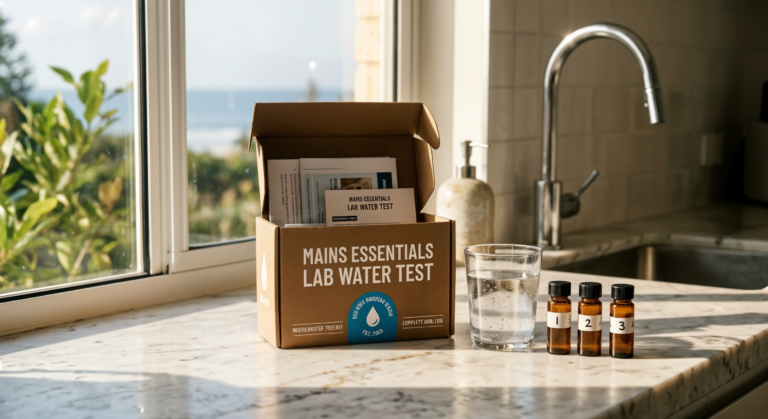
Strip tests cannot detect PFAS. This point is worth making explicitly because hardware stores sell general water test kits that will not show PFAS contamination. If you want to know your actual PFAS exposure, you need a NATA-accredited laboratory test. The Clean and Native guide to water quality test kits in Australia covers which labs to use and what to request.
Is Your Tap Water Affected? A City-by-City Guide
PFAS risk in tap water is not uniform across Australia. It depends on proximity to contamination sources, whether you are on mains or bore/tank water, and the specific water utility’s monitoring and treatment protocols. Here is the honest breakdown.
Highest Risk: Bore and tank water users within 5km of listed Defence bases
If you are on private bore or rainwater tank and your property sits within five kilometres of Katherine (RAAF Tindal), Williamtown, Oakey, Edinburgh, or any of the other named bases, your water has not been treated or monitored by a regulated utility. This is where the risk is most acute and most urgent. Get a NATA-accredited lab test. Do not use the water for drinking or cooking until you have results. The Defence Department has run community water testing programs around most affected bases — contact your local council or the Department of Defence PFAS Management portal to confirm whether your address falls within a tested zone.
Sydney and surrounding regions
Sydney uses chloramine for disinfection — this is the first selection criterion for any filter choice in the city. On PFAS specifically, the UNSW 2024 study identified 31 compounds in Sydney tap water, with 21 previously undetected. Sydney Water tests against NHMRC 2025 guidelines and publishes annual water quality reports. The water is within Australian guideline values. The question is whether those guidelines are adequate — and based on the IARC Group 1 classification of PFOA and the gap between Australian and US EPA 2024 limits, a precautionary approach using NSF 58-certified RO filtration is justified for households with young children, pregnant women, or individuals with impaired kidney function. Western Sydney suburbs including Penrith have slightly harder water (TDS around 100-120 mg/L) but the PFAS picture is the same across the metropolitan supply.
Brisbane and South-East Queensland
Brisbane and SEQ use chloramine. The Oakey Defence base — one of the three that settled class actions in 2020 — is approximately 160km west of Brisbane. Oakey township’s water supply was impacted; Brisbane metropolitan supply is sourced from Wivenhoe, Somerset, and North Pine dams via Seqwater and has not shown PFAS contamination at the dam level. That said, distribution infrastructure aging and the presence of multiple industrial sites means PFAS testing of mains water is prudent for households in Logan and Ipswich, which sit closer to historical industrial activity.
Katherine, Northern Territory
Katherine is the clearest example of real-world PFAS water contamination in Australia. RAAF Tindal sits adjacent to the township. The Defence Department installed a water treatment plant at Katherine’s town water supply specifically because of PFAS contamination — that plant is one of the seven now operating near Defence sites nationally. Katherine residents on the town supply are now within NHMRC guideline levels because of that treatment, but an NSF 58-certified point-of-use RO filter remains the most reliable supplementary protection for drinking water.
Melbourne
Melbourne draws from protected mountain catchments in the Yarra Valley — Thomson Reservoir, Upper Yarra Reservoir, and others — with restricted public access. No PFAS contamination has been detected in Melbourne’s primary reservoirs. Melbourne also uses free chlorine for disinfection, which means standard activated carbon filters work for taste and chlorine removal. TDS in Melbourne water is very low, typically around 25 mg/L CaCO3 (TDS approximately 60 mg/L). Melbourne residents face the lowest PFAS risk of any major Australian city from their mains water supply.
Adelaide
Adelaide uses chloramine and draws water from both the Murray River and local reservoirs. TDS is high at approximately 400 mg/L. PFAS monitoring is conducted by SA Water against NHMRC guidelines. Edinburgh RAAF Base is listed among the contaminated Defence sites — Edinburgh is located approximately 20km north of the Adelaide CBD in the northern suburbs. SA Water’s supply infrastructure serves that area, and the utility has confirmed monitoring and treatment. Edinburgh is a higher-alert zone than central Adelaide, but the risk differential is not extreme for mains users. Bore water users in the Salisbury-Elizabeth corridor north of Adelaide should prioritise testing.
Perth
Perth uses chloramine and has the hardest tap water of any major Australian city at approximately 180 mg/L CaCO3 (TDS approximately 170 mg/L). PFAS monitoring is conducted by the Water Corporation. The Kwinana industrial corridor in Perth’s south has historical chemical contamination concerns, and Kwinana residents should confirm their water quality results from the Water Corporation’s annual report. No Defence base PFAS contamination has specifically impacted Perth metropolitan mains supply at scale, but the state’s groundwater dependence (Perth draws roughly 40% of supply from groundwater) makes ongoing PFAS monitoring critical.
What Actually Removes PFAS from Drinking Water
This is where a lot of people get misled. PFAS removal requires a specific technology operating at sufficient contact time and pressure. Not all filters are equal. Not all “certified” filters cover PFAS.
Reverse Osmosis — the only reliable solution
Reverse osmosis forces water through a semi-permeable membrane with pore sizes of approximately 0.0001 microns — small enough to reject PFAS molecules, which range from 0.5 to 1.0 nm in diameter. NSF/ANSI 58-certified RO systems remove 94-99% of PFOA and PFOS in independent testing. NSF/ANSI P473 is the specific PFAS performance certification — if a filter carries NSF P473, it has been independently tested against PFAS at realistic inlet concentrations. NSF 244 specifically targets PFAS across the broader compound family. Look for these certifications on the product documentation, not just a marketing claim.
RO systems do produce wastewater — typically a 3:1 to 4:1 ratio of waste water to filtered water for countertop units, and 1:1 to 2:1 for modern tankless under-sink systems. That is a legitimate tradeoff worth understanding before purchase. RO also removes fluoride, heavy metals, chloramine, nitrates, and virtually all dissolved solids. If you are in Brisbane or Sydney (chloramine cities), RO handles the disinfection byproduct problem simultaneously with PFAS.
Activated carbon — partial reduction only
High-quality activated carbon block filters certified to NSF 42 and NSF 53 reduce PFAS by 40-73% in testing, depending on the specific compounds and the filter’s carbon contact time. For low-PFAS metropolitan mains water, this may be sufficient to reduce concentrations well below NHMRC guideline values. For anyone near a Defence base, or in an area with documented elevated PFAS levels, 40-73% reduction is not adequate. Carbon filters also do not remove fluoride — an important distinction from RO. The full explanation of what RO removes versus carbon is worth reading before you decide.
Standard GAC (granular activated carbon) as used in Brita jugs and most fridge filters performs even worse on PFAS than compressed carbon block. Brita has no PFAS certification. It is not a PFAS solution.
Granular activated carbon and KDF — not for PFAS
Standard GAC filters are primarily designed for taste and odour improvement — chlorine removal and sediment. They have no meaningful PFAS rejection capability. KDF-55 media, used in many shower filters, targets heavy metals and free chlorine via redox reaction. It has no mechanism for PFAS removal. Neither technology belongs in a PFAS reduction strategy.
The Filters We Recommend for PFAS in Australia
I am a former Royal Australian Navy Clearance Diver. I understand what contaminated water does to bodies. These recommendations are built on certification data and filtration physics — not marketing copy. Here are the three products that address PFAS risk at different price points and living situations.
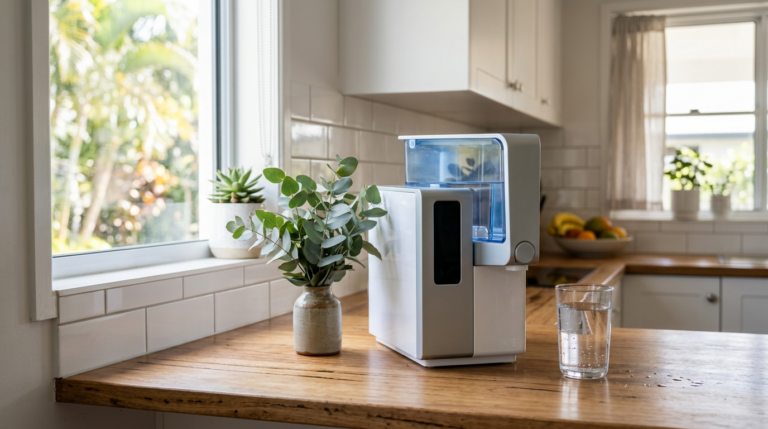
AquaTru Classic Smart Alkaline — Best Countertop RO for PFAS

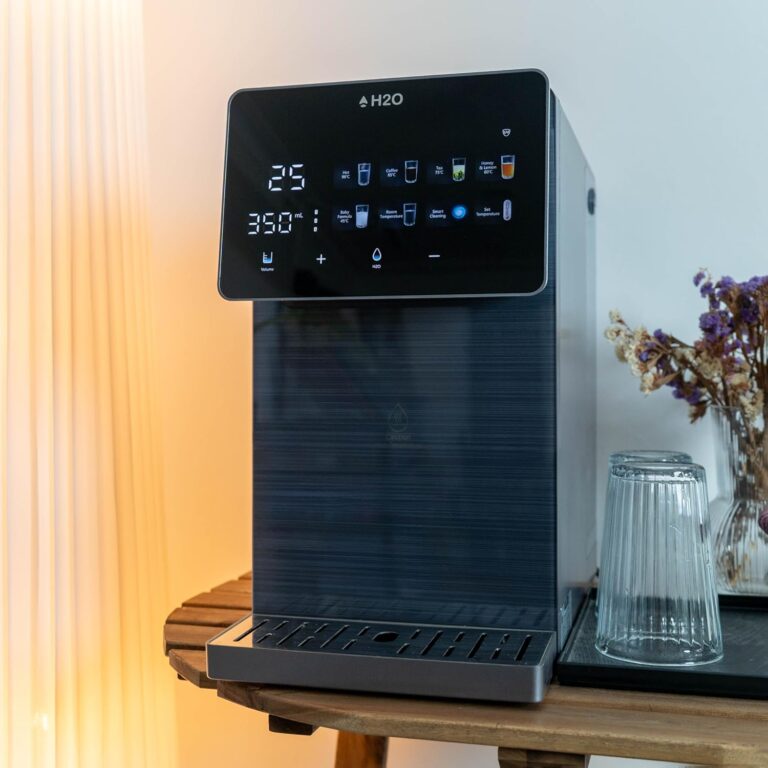
The AquaTru’s NSF 58 certification covers reduction of PFOA, PFOS, and a range of other PFAS compounds. Its four-stage system includes a pre-filter for sediment and carbon for chloramine removal (critical for Brisbane and Sydney users on chloramine-treated mains water), a reverse osmosis membrane, and a final carbon polish stage. The Smart Alkaline version adds a remineralisation cartridge that raises pH and adds calcium and magnesium back into the filtered water.
For anyone living near a named Defence base — whether renting or owning — the absence of a plumbing requirement makes this the most accessible PFAS solution on the market. Setup takes under fifteen minutes.
Waterdrop D6 Under-Sink RO — Best Permanent Installation

The Waterdrop D6’s tankless design means there is no storage tank to harbour bacteria — filtered water is produced on demand. At approximately $499, it costs less than half of many plumbed RO systems available through Australian trade suppliers. Installation requires connecting to the cold water line under the sink and fitting a dedicated faucet — a simple job for a handy homeowner or a plumber in under two hours. For the full PFAS filter comparison including whole-of-house options, see the dedicated roundup.
TAPP EcoPro Carbon Block — Budget Option for Lower-Risk Areas
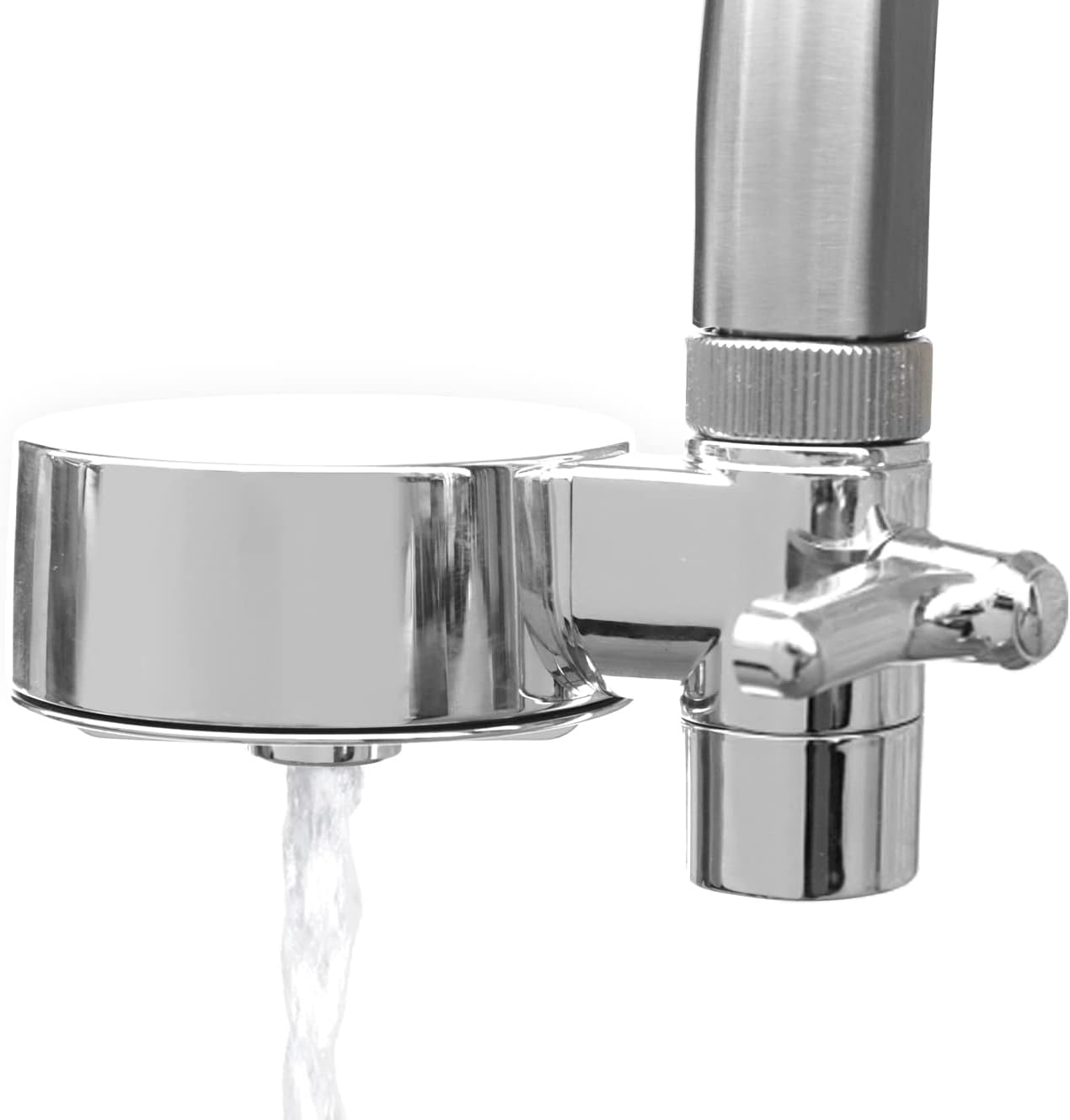
The TAPP EcoPro uses a compressed carbon block, which outperforms granular carbon on PFAS contact time and surface area. It attaches directly to a standard tap — no plumbing, no storage tank. For Melbourne households using free chlorine (where standard carbon works effectively), this is a practical, low-cost way to reduce PFAS precautionarily while improving taste and removing disinfection byproducts. Do not use it as a primary PFAS filter if you are in a high-risk location — get the RO.
Our Top PFAS Water Filters for Australia
Get PFAS out of your drinking water
The AquaTru Classic Smart Alkaline is the top-rated countertop RO for Australian households — NSF 58 certified, removes PFAS, fluoride, chloramine, and heavy metals. No plumbing required. Ships to Australia via Amazon AU.
Cost Per Litre Filtered — PFAS-Capable Filters vs Bottled Water, Australia
Last reviewed: May 2026 — Clean and Native
Frequently Asked Questions
Sydney tap water meets all current Australian Drinking Water Guidelines (ADWG) and NHMRC 2025 PFAS guideline values. A 2024 UNSW study detected 31 PFAS compounds in Sydney tap water, including 21 previously undetected compounds — all below Australian guideline thresholds. Sydney Water publishes annual water quality reports confirming compliance. The precautionary question is whether Australian guidelines are strict enough: Australia’s PFOA limit is significantly higher than the US EPA’s 2024 enforceable limit of 4 ng/L. Households with young children, pregnant women, or kidney disease may reasonably choose NSF 58-certified reverse osmosis filtration as an additional precaution.
No. Brita jug filters use granular activated carbon and are not certified for PFAS removal under NSF/ANSI standards. Independent testing has shown minimal to negligible PFAS reduction from standard jug filters. Do not rely on a Brita filter for PFAS protection. Only reverse osmosis systems certified to NSF/ANSI 58, NSF P473, or NSF 244 provide reliable PFAS removal at 94-99%.
An NSF/ANSI 58-certified reverse osmosis system is the safest option for PFAS removal available to Australian households. The AquaTru Classic Smart Alkaline (countertop, no plumbing required, ~$699) and the Waterdrop D6 (under-sink, ~$499) are both NSF 58-certified and remove 94-99% of PFOA and PFOS. For the full ranked comparison, see the best water filters for PFAS in Australia.
The Commonwealth of Australia filed a AU$2 billion claim against 3M Company and 3M Australia in the Federal Court on 28 May 2026. The lawsuit seeks recovery of investigation costs, cleanup costs, and community compensation payments the Commonwealth has already made — totalling $1.3 billion spent to date — plus additional damages. The $2 billion figure represents the government’s current estimate of its total loss from PFAS contamination at 28 Defence Force bases.
The highest risk is for properties on bore or tank water within five kilometres of named Defence bases — particularly Katherine NT (RAAF Tindal), Williamtown NSW, and Oakey QLD. For mains water users, Sydney and Adelaide carry moderate precautionary risk based on documented PFAS detections and proximity to contaminated sites. Melbourne has the lowest PFAS risk of major Australian cities, with protected mountain catchments showing no detected PFAS contamination to date.
No — standard home test strips and water quality kits cannot detect PFAS. You need a NATA-accredited laboratory test specifically requested for PFAS analysis. Several Australian labs offer postal water test kits that include PFAS panels. Expect to pay $150-400 depending on the number of compounds tested. Testing is strongly recommended before purchasing any filtration system if you are on bore water or near a Defence base. See the guide to water quality test kits in Australia for specific lab recommendations.
In 2023, 3M agreed to pay between USD$10.3 billion and USD$12.5 billion to settle claims from US public water utilities over PFAS contamination of drinking water supplies. This was the largest environmental settlement in American history. In 2006, the US EPA had separately fined 3M USD$1.5 million for failing to disclose internal studies on PFAS toxicity. The Australian claim, filed 28 May 2026, seeks AU$2 billion using similar accountability arguments.
NSF/ANSI 58-certified reverse osmosis systems remove 94-99% of PFOA and PFOS, the two most studied PFAS compounds. Performance across the broader family of 12,000+ PFAS compounds varies — longer-chain PFAS compounds are generally rejected at very high rates by RO membranes; shorter-chain compounds may have lower rejection rates. NSF P473 specifically tests PFOA and PFOS removal. NSF 244 covers a broader PFAS suite. For maximum protection, look for a system carrying both NSF 58 and NSF P473 certification. The UNSW 2024 Sydney study identified 31 different PFAS compounds — RO is the only home technology capable of addressing that breadth of contamination.
The International Agency for Research on Cancer classified PFOA as a Group 1 carcinogen (definite human carcinogen) in December 2023. PFOS is classified as Group 2A (probably carcinogenic). Health effects documented in the scientific literature include increased risk of kidney cancer, testicular cancer, thyroid disruption, bone marrow effects, elevated cholesterol, and impaired kidney function. PFAS accumulates in the body over time because the carbon-fluorine bond does not break down biologically. Reduced exposure through filtered drinking water is the most practical way to limit ongoing PFAS intake at the household level. For a detailed breakdown of health effects, see the PFAS health effects guide for Australian households.
Get the Australian Home Environment Checklist
30 checks across water, air and EMF. Most of them free. Ranked by impact.
No spam. Unsubscribe any time.

Former Royal Australian Navy Clearance Diver and TAG-E counter-terrorism operator. Founded Clean and Native to apply the same rigorous thinking to the home environment.
Full biography →