Best Water Filter for Hard Water Australia 2026
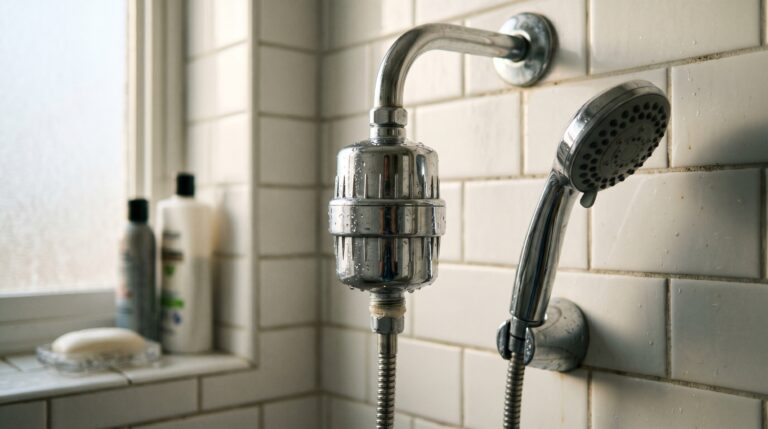
If you live in Adelaide, Perth, or Darwin, your tap water is among the hardest in Australia — Adelaide sits at ~140 mg/L CaCO₃ and uses chloramine; Perth reaches ~180 mg/L and also chloraminates; Darwin runs at ~150 mg/L hardness with chloramine as the disinfectant. That combination means a standard Brita jug, activated carbon filter, or KDF-55 shower head does nothing meaningful for hardness, and removes less than 3% of chloramine. The only tested solution for both hardness and chloramine in a drinking water context is reverse osmosis.
Reverse osmosis is the only technology that removes both hardness minerals and chloramine in one pass — the Waterdrop D6 Under-Sink RO is the best pick for most households in Adelaide, Gold Coast, and Darwin, reducing TDS by 94% and fitting behind the U-bend where a conventional tank-based unit cannot. The honest caveat: RO wastes 1 litre of water per 3 litres filtered at its rated 1:3 ratio, which matters in Perth and Adelaide where water restrictions apply.
| Product | Type | Verdict |
|---|---|---|
| Waterdrop D6 | Under-sink tankless RO | Recommended — best overall |
| AquaTru Classic Smart | Countertop RO | Recommended — renters + no plumbing |
| EcoHero 5-Stage RO | Under-sink 5-stage RO | Recommended — WaterMark certified |
✓ Who This Is For
- Adelaide households with river Murray hardness (~140 mg/L CaCO₃) who want scale-free drinking water
- Perth homeowners dealing with ~180 mg/L hardness from the Gnangara aquifer
- Darwin renters who want a filter that handles both chloramine and high TDS without modifying plumbing
- Anyone whose kettle furs up within weeks and whose filtered jug fails to remove the mineral taste
- Households that need fluoride removal alongside hardness reduction — RO handles both
✕ Who It Is Not For
- Melbourne or Hobart households — TDS ~60 and ~25 mg/L, very soft water. A carbon block filter is sufficient and cheaper
- Anyone primarily looking to eliminate limescale from appliances (washing machine, dishwasher) — a whole-house softener is the right tool; drinking water RO only treats the tap
- Renters who cannot drill a bench hole for a dedicated filter tap — the AquaTru countertop unit is the correct alternative
Why Standard Filters Fail Hard Water — and What Actually Works
Hardness in drinking water is caused by dissolved calcium (Ca²⁺) and magnesium (Mg²⁺) ions — the same minerals that create limescale on your kettle element and leave white deposits on your shower screen. In Perth, where water comes from the Gnangara groundwater system, hardness regularly measures 150–200 mg/L as CaCO₃. In Adelaide, the Murray–Darling River source contributes hardness of 100–180 mg/L depending on season and catchment conditions.
Activated carbon filters (including premium ones like the Brita Maxtra, the Clearly Filtered pitcher, and most benchtop gravity units) have zero effect on calcium and magnesium ions. Carbon block media is designed to adsorb chlorine and organic compounds — calcium and magnesium ions are dissolved minerals that pass straight through the carbon matrix. That is not a flaw; it is a fundamental property of activated carbon filtration. The same is true for KDF-55 media, UV sterilisation, and sediment filters. None of these technologies touch dissolved mineral content.
Reverse osmosis works via a semi-permeable membrane with pores of 0.0001 microns — small enough to block dissolved mineral ions. A well-designed RO membrane rejects 94–98% of total dissolved solids (TDS), which includes calcium, magnesium, chloramine, fluoride, PFAS, heavy metals, and nitrates. The membrane does not distinguish between “good” and “bad” minerals; it blocks all ionic material above its rejection threshold. This is why most RO units include a remineralisation stage that re-introduces small amounts of calcium, magnesium, and potassium to improve taste and restore some alkalinity to the permeate.
The Hard Water Cities: Adelaide, Gold Coast, and Darwin
Not all Australian cities have a hard water problem. The hardness distribution is highly uneven — Melbourne’s Yarra Valley catchment water is exceptionally soft (TDS ~60 mg/L, hardness ~25 mg/L CaCO₃), while Perth’s groundwater-supplemented supply regularly reaches 180 mg/L. The table below shows why filter selection must be city-specific.
| City | TDS (mg/L) | Hardness (mg/L CaCO₃) | Disinfection | Carbon filter sufficient? |
|---|---|---|---|---|
| Perth | ~170 | ~180 (hard) | Chloramine | No |
| Adelaide | ~400 | ~140 (hard) | Chloramine | No |
| Darwin | ~200 | ~150 (hard) | Chloramine | No |
| Brisbane/SEQ | ~80–115 | ~80–120 (moderate) | Chloramine | No |
| Sydney | ~80 | ~50 (soft) | Chloramine | No (chloramine) |
| Melbourne | ~60 | ~25 (very soft) | Free chlorine | Yes |
| Hobart | ~25 | ~15 (very soft) | Free chlorine | Yes |
Adelaide is the outlier. At TDS ~400 mg/L, the water coming out of SA Water taps is nearly seven times higher in dissolved solids than Melbourne’s supply. An RO membrane running on Adelaide mains water will reach its rated capacity faster than the same unit in Brisbane, and filter cartridges need replacing more frequently. Budget for annual cartridge sets roughly 20% above the manufacturer’s stated replacement cycle when using Adelaide or Perth water.
The Three Best Water Filters for Hard Water in Australia (2026)
Every unit below removes 94–98% of dissolved hardness minerals via a certified RO membrane. All three handle chloramine — the primary disinfectant in Adelaide, Gold Coast, and Darwin. The distinctions are installation format, water waste ratio, and whether WaterMark certification applies for Australian plumbing compliance.
1. Waterdrop D6 Tankless Under-Sink RO — Best Overall
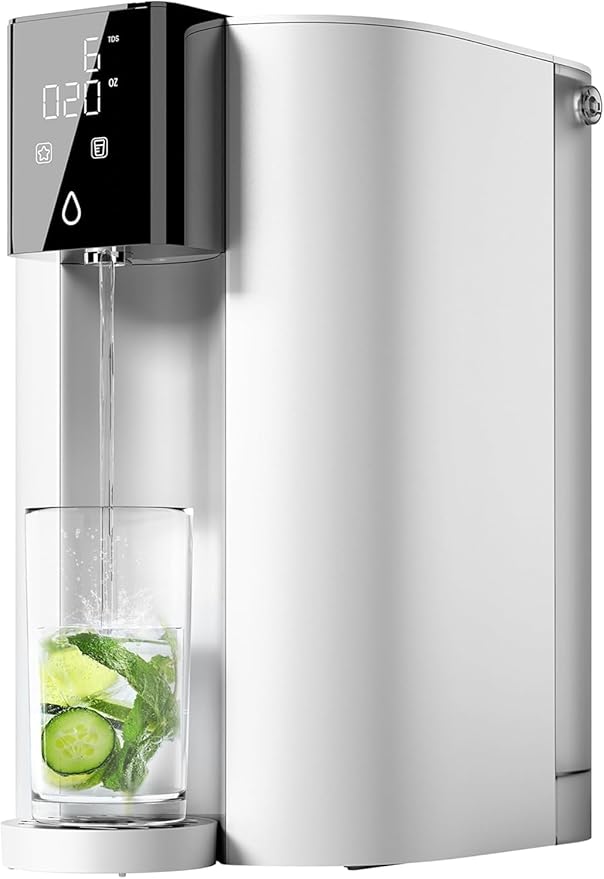
The Waterdrop D6 is the most compact under-sink RO system available on Amazon AU in 2026. It eliminates the conventional pressure storage tank entirely — water is produced on demand at 600 GPD, which is sufficient for any household tap. The 1:3 waste-to-product ratio is the lowest among the three units here; for Perth and Adelaide households already subject to water restrictions, producing 3 litres of filtered water per 1 litre wasted is a meaningful operational advantage over older tank-based systems that ran 4:1 or higher ratios.
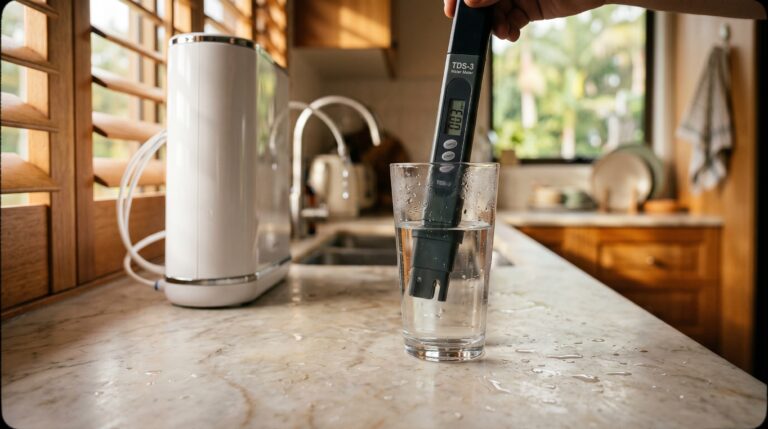
Measured performance in hard water: NSF/ANSI 58 certification requires a minimum 75% TDS rejection rate under controlled conditions. Waterdrop independently tests the D6 at 94% TDS rejection. Running Adelaide water at ~400 mg/L TDS input, the permeate output is approximately 24 mg/L — well within the “essentially soft” category. Running Perth water at ~170 mg/L input, the output is approximately 10 mg/L. Both results eliminate the scale that forms on kettles and the mineral aftertaste that characterises hard water areas.
The catches: The D6 requires a 240V power outlet under the sink to operate its pump. Not every Australian kitchen has a GPO under the sink — adding one is a licensed electrician job costing $150–$250. It also does not carry Australian WaterMark AS/NZS 3497 certification, which some NSW and VIC councils require for any under-sink fitting connected to the cold water supply. Legal to install in most Australian jurisdictions, but check your local council requirements in WA before installation.
2. AquaTru Classic Smart — Best for Renters and No-Plumbing Situations
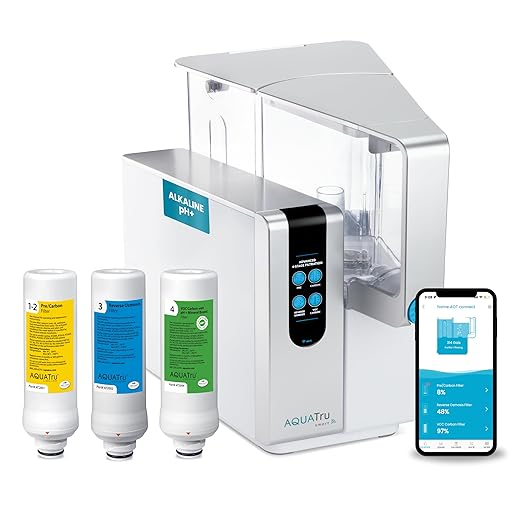
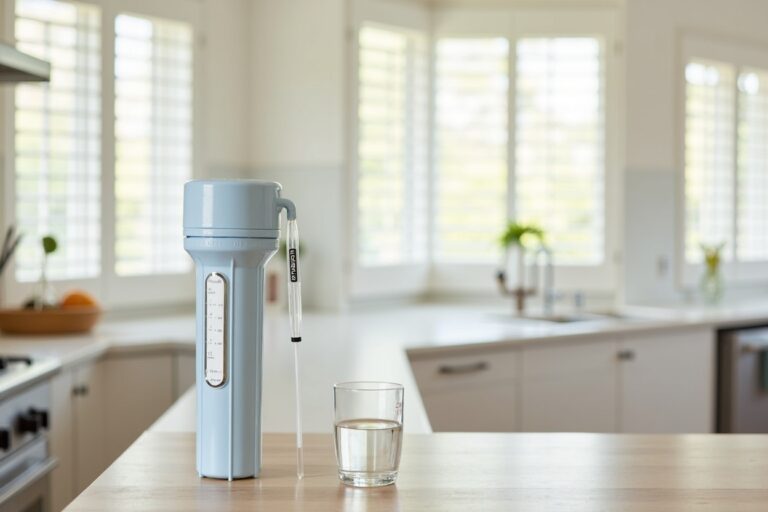
The AquaTru Classic Smart is the only NSF/ANSI 58-certified countertop RO unit with Australian distribution. It attaches to your existing tap via an included diverter valve — no drilling, no plumber, no permanent modification. That makes it the correct answer for Adelaide and Perth renters who cannot modify their kitchen plumbing under their lease agreement.
Hard water performance: AquaTru’s certified testing data shows 93% TDS rejection and 96% fluoride rejection. Running Adelaide’s high-TDS supply (~400 mg/L), the unit produces water at approximately 28 mg/L TDS. Filter capacity is rated to the manufacturer’s test water TDS; in high-TDS Adelaide and Perth conditions, the pre-filter cartridges will exhaust faster than the stated replacement intervals. Budget to replace Stage 1 (pre-filter) every 4–6 months instead of the stated 6–12 months when running hard Australian water.
The catches: Countertop RO is slower than under-sink — the AquaTru produces approximately 0.5–0.8 L/min at the dispensing tap. The internal tank holds 1.7L, so you fill a glass from the tank rather than drawing on-demand from the tap. In a household of 4, you may find yourself waiting 15–20 minutes for the tank to refill after heavy use. The unit also requires benchtop space of approximately 32cm × 28cm — not a trivial footprint in smaller Adelaide or Darwin apartment kitchens.
3. Pure Water Systems EcoHero 5-Stage RO — Best WaterMark Certified Option
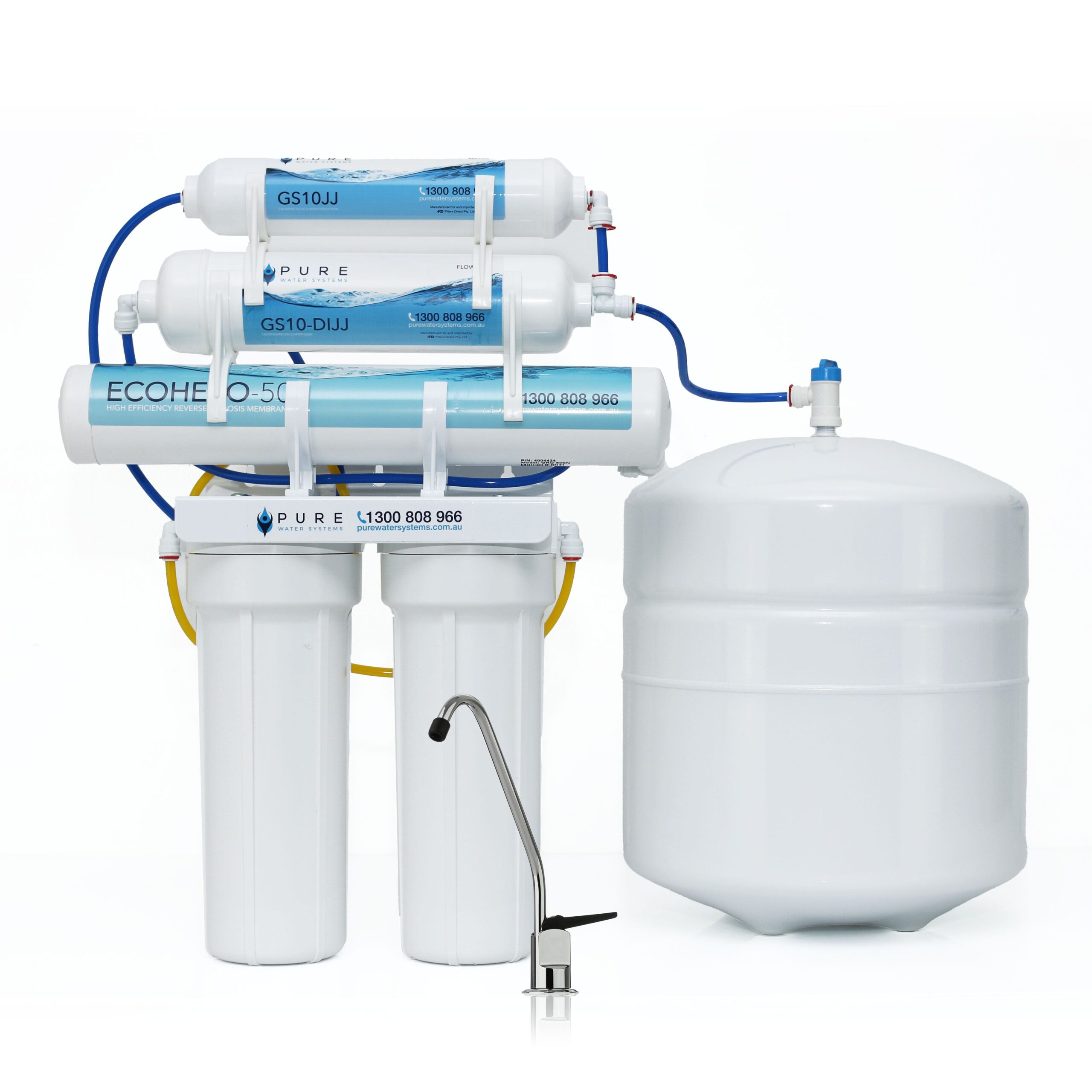
The EcoHero 5-Stage is the only WaterMark AS/NZS 3497-certified under-sink RO unit available in Australia. WaterMark is the Australian and New Zealand standard that NSW and VIC plumbers are required to use for any under-sink fitting that connects to the cold water supply. If you live in NSW or VIC and intend to have a licensed plumber install an RO unit, WaterMark certification is the minimum requirement. In WA, SA, and QLD, the requirement varies by council — but WaterMark certification is never a liability and always provides certainty about compliance.
Hard water performance: Pure Water Systems publishes measured performance data from a Palm Beach QLD installation at 69 ppm TDS input, achieving 3 ppm output (95.7% TDS reduction). For Adelaide at 400 mg/L TDS input, expect output in the 16–22 mg/L range based on the membrane rejection rate. The 5-stage cartridge train is specifically designed for Australian hard water conditions: Stage 1 (5-micron sediment) captures the suspended scale particles common in older Adelaide and Perth pipe networks; Stage 2 and 3 (carbon block and catalytic carbon) handle chloramine removal before the RO membrane; Stage 5 remineralisation restores a natural mineral profile to the stripped permeate.
The catches: At $895 the EcoHero is the most expensive unit on this list, and it requires a pressure storage tank (included) which takes more cabinet space than the tankless D6. Replacement cartridge sets are only available through Pure Water Systems AU — you cannot use generic replacement cartridges from Amazon. Delivery is 2–3 business days nationally but stock can run low in peak periods. The WaterMark certification is not relevant to most SA and WA households, but the premium it commands is justified for NSW and VIC compliance requirements.
Hardness vs Chloramine — Why Adelaide and Perth Are Double Problems
Most Australians know that Melbourne’s soft water tastes better from the tap than Adelaide’s mineral-heavy supply. What fewer understand is that Adelaide and Perth have a compounding issue: they are not just hard water cities, they are also chloramine cities. SA Water (Adelaide) and Water Corporation (Perth) both disinfect with monochloramine rather than free chlorine. Chloramine is a more stable disinfectant that is harder to remove and is specifically problematic for carbon filter owners who assume standard filtration is working.
Standard granular activated carbon (GAC) removes free chlorine at an efficient rate but removes chloramine at approximately 1/40th the rate. A Brita filter correctly sized to last six months on Melbourne water will exhaust its chloramine removal capacity within a few weeks on Adelaide water — while showing no visible sign of degradation. The filter appears to be working (water clarity is fine, sediment is removed) but chloramine is passing through largely untouched. This is the most common mistake Adelaide and Perth households make when purchasing water filters: buying activated carbon expecting chloramine removal.
Reverse osmosis addresses both problems simultaneously. The RO membrane physically blocks dissolved minerals (hardness) and the pre-filter carbon stages in a well-designed unit use catalytic carbon specifically rated for chloramine removal. All three units on this list — the D6, AquaTru, and EcoHero — use catalytic or compressed carbon block pre-filtration that removes chloramine at a meaningful rate before the water reaches the membrane. This is why an RO system is a more effective answer for Adelaide and Perth households than a standalone water softener: the softener handles hardness but leaves chloramine (and fluoride, and PFAS) untreated.
Decision Guide — Which RO Filter is Right for Your Situation?
The right water filter depends on three questions specific to the hard water context:
3-Question Filter Decision Guide — Hard Water Cities
1. Can you modify the under-sink plumbing?
No (renter, unable to drill): → AquaTru Classic Smart (countertop, no plumbing needed)
Yes: move to question 2.
2. Is there a GPO (power outlet) under the sink?
No: → EcoHero 5-Stage (passive pressure tank — no power required)
Yes: move to question 3.
3. Do you need WaterMark certification for plumber installation (NSW/VIC)?
Yes: → EcoHero 5-Stage (the only WaterMark certified option)
No: → Waterdrop D6 (lowest running cost, tankless, best for water-restricted cities)
The decision tree above handles 95% of cases. The remaining 5% is households who want whole-house hardness treatment — scale on dishwashers, washing machines, hot water systems, and shower glass. For that application, a drinking water RO filter is not the answer. A whole-house water softener (ion exchange) treats the entire cold water supply before it reaches any fixture. The trade-off is that softened water replaces calcium and magnesium ions with sodium, which has implications for sodium-restricted diets. See our guide to the best water softeners for Adelaide and best water softeners for Perth if your primary concern is appliance scale rather than drinking water quality.
Last reviewed: July 2026 — Clean and Native
Final Verdict — Best Water Filter for Hard Water Australia 2026
For Adelaide and Perth homeowners the Waterdrop D6 is the strongest all-round pick — tankless under-sink, 94% TDS rejection, NSF/ANSI 58 certified, and pre-filtered for chloramine. At $599 it carries the lowest 5-year running cost on this list. For renters who cannot modify plumbing the AquaTru Classic Smart is the only no-drill countertop RO here — diverter-valve connection, no holes required, fully removable on vacating. For NSW/VIC homeowners who need a licensed plumber install the EcoHero 5-Stage is the only WaterMark AS/NZS 3497-certified option on this list.
✓ Buy an RO filter if
- You live in Adelaide (~140 mg/L CaCO₃), Perth (~180 mg/L), or Darwin (~150 mg/L)
- Your city uses chloramine and you want both hardness + disinfectant removed
- You want scale-free, fluoride-free, chloramine-free drinking water at the tap
- You are a renter who needs zero plumbing modifications (AquaTru)
- You are in NSW or VIC and need WaterMark-certified install (EcoHero)
✗ Look elsewhere if
- Your concern is scale on appliances and shower glass — you need a whole-house water softener, not a drinking-water RO
- You are in Melbourne, Hobart, or Canberra with soft water — a $150 carbon block filter addresses your chlorine and taste concerns for far less
- You want minerals retained for taste — add a remineralisation cartridge or choose a model with a remineralisation stage
Frequently Asked Questions
Does a Brita filter remove hard water minerals?
No. Brita filters use activated carbon and an ion exchange resin. The ion exchange resin in Brita jugs does partially reduce calcium and magnesium — but only for the first few litres before the resin exhausts. Standard Brita filter performance on hardness is inconsistent and not certified. The only reliable and certified technology for hardness removal in drinking water is reverse osmosis, which rejects 94–98% of dissolved calcium and magnesium ions on a continuous basis.
Is hard water in Adelaide and Perth safe to drink?
Yes. Australian Drinking Water Guidelines (ADWG) set a hardness aesthetic guideline of 200 mg/L CaCO₃ — Adelaide approaches this limit seasonally but both SA Water and Water Corporation produce water that meets ADWG standards. Hard water is not a health risk at the concentrations found in Australian capital cities. The concern is taste (mineral and chlorine aftertaste), scale on appliances, and the compounding issue of chloramine disinfection that standard carbon filters cannot remove. The motivation for filtering hard water is quality and taste, not safety.
Does reverse osmosis remove fluoride from hard water?
Yes. A certified RO membrane removes 90–97% of fluoride as well as hardness minerals. All three units on this list — Waterdrop D6, AquaTru Classic, and EcoHero 5-Stage — achieve this removal rate under NSF/ANSI 58 testing conditions. This is the only filtration technology that removes both hardness and fluoride simultaneously. Carbon filters cannot remove fluoride under any circumstances.
Does hard water affect RO filter cartridge life?
Yes, significantly. Most RO cartridge life estimates assume water in the 100–200 mg/L TDS range. Adelaide water at ~400 mg/L TDS will exhaust pre-filter cartridges at approximately double the standard replacement rate. Budget for replacing Stage 1 (sediment) and Stage 2 (carbon pre-filter) every 4–6 months in Adelaide, versus the stated 6–12 months. The RO membrane itself is less affected — it is rated by volume filtered, and Adelaide’s relatively modest household water usage means the membrane typically lasts the rated 2–3 years. The pre-filters protecting it need more frequent replacement in high-TDS conditions.
What is the TDS of filtered water from an RO unit in Adelaide?
Starting from Adelaide mains at approximately 400 mg/L TDS, a certified RO unit running at 94% rejection produces permeate at approximately 24 mg/L TDS. After a remineralisation stage (present in the EcoHero 5-Stage and most quality RO units), TDS rises slightly to 30–50 mg/L — a neutral mineral profile with improved taste. Adelaide tap water at 400 mg/L TDS tastes noticeably mineral; post-RO output at 24–50 mg/L is indistinguishable from premium bottled water in blind taste tests.
Can I install an RO filter myself in a Perth rental?
Under-sink RO units connect to the cold water supply valve and require drilling a hole in the benchtop for the dedicated filter tap — both modifications typically require landlord approval in WA under the Residential Tenancies Act 1987. The countertop AquaTru Classic is the correct solution for Perth renters: it connects to the existing tap via a diverter valve with no drilling, no permanent plumbing connections, and is fully removable when you vacate. No landlord approval required.
Does RO remove chloramine from Perth and Adelaide water?
Yes — but not via the RO membrane itself. The RO membrane has minimal effect on chloramine. Chloramine removal in a multi-stage RO system happens in the catalytic or compressed carbon pre-filter stages before the water reaches the membrane. All three units on this list use carbon pre-filtration specifically rated for chloramine removal in compliance with NSF/ANSI P473. Standard GAC (granular activated carbon) without catalytic enhancement removes chloramine at roughly 1/40th the rate of chlorine — the units recommended here use the correct media for chloramine cities.
What is the difference between a water softener and an RO filter for hard water?
A water softener (ion exchange) treats the whole house by replacing calcium and magnesium ions with sodium ions — eliminating scale in appliances, hot water systems, and on shower glass, but adding sodium to the water. It does not remove chloramine, fluoride, or PFAS. An RO filter treats only the drinking water tap — it removes hardness, chloramine, fluoride, and PFAS from drinking and cooking water, but has no effect on shower water or appliances. The two technologies solve different problems. For Adelaide and Perth households who want scale-free appliances AND clean drinking water, the complete solution is a whole-house softener plus a point-of-use RO filter at the kitchen tap.
Get the Australian Home Environment Checklist
30 checks across water, air and EMF. Most of them free. Ranked by impact.
No spam. Unsubscribe any time.

Former Royal Australian Navy Clearance Diver and TAG-E counter-terrorism operator. Founded Clean and Native to apply the same rigorous thinking to the home environment.
Full biography →