Best Benchtop Water Filter for Fluoride Australia 2026: 6 Options That Actually Reduce It
Drafted with AI assistance and checked against published specifications and certifications. First-hand measurements appear only where stated. How we make content
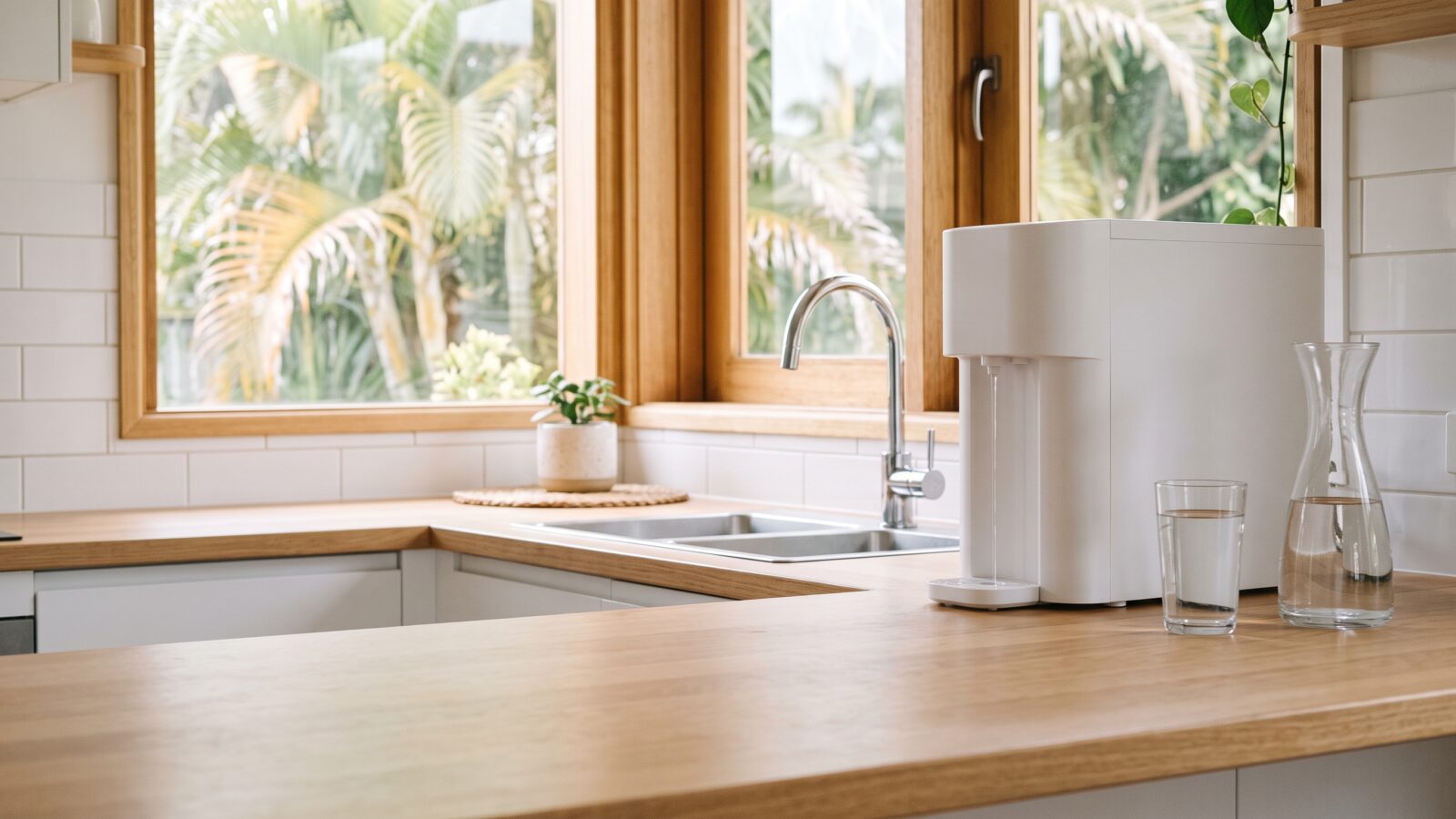
The best benchtop water filter for fluoride in Australia for most people is a countertop reverse osmosis unit, and the one I use and recommend is the Waterdrop C1S ($379.22at Amazon AU · as of 19 Nov 2026, 11:43 pm AEST Details). If you want an independent fluoride certification on the bench, the AquaTru Classic (93.5% average fluoride reduction under NSF/ANSI 58) is the strongest, but it is a US import. The cheapest certified option is the Culligan ZeroWater jug. Standard carbon jugs and alkaline filters do not reduce fluoride.
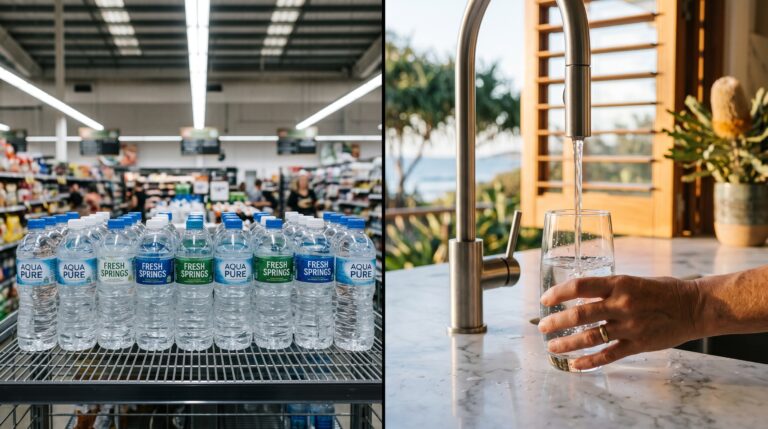
A benchtop filter is the renter’s route to lower-fluoride water: no plumber, nothing for the landlord to approve. The catch is that most benchtop filters sold in Australia are carbon or “mineral” filters that improve taste but leave fluoride where it is. Only a few technologies reduce it: reverse osmosis, distillation, activated alumina, bone char and the deionising resin in ZeroWater-type jugs. This guide sorts the six benchtop options that use one of them, by how well the fluoride claim is backed.
Whether to reduce fluoride is your decision, and this guide doesn’t argue it either way. Australia’s health authorities support community fluoridation for dental health, and the drinking water guideline caps fluoride at 1.5 mg/L. If you have decided to cut it at home, the job is to buy something that actually does.
How this guide was put together. I own and use the Waterdrop C1S countertop RO and, under my sink, a Pure Water Systems EcoHero RO; the readings and photos below are mine, taken with a consumer TDS meter that is not calibrated. I have not tested the other five products, and I have not measured fluoride itself. Each fluoride claim is graded by who backs it: an independent certification, a named laboratory test, the maker alone, or the general research on that technology (the American Dental Association’s guidance). Tap fluoride levels come from each utility or health department. Amazon prices are pulled live; other prices were checked on 11 November 2026.
Countertop RO is the dependable benchtop technology for fluoride. Only two products here carry an independent fluoride certification; the rest rely on a lab test, the maker’s word or the technology’s track record, and this table says which.
| Pick | Best for | Price |
|---|---|---|
| Waterdrop C1S | Best overall: countertop RO, no plumbing, the one I use | $379.22at Amazon AU · as of 19 Nov 2026, 11:43 pm AEST Details |
| Culligan ZeroWater jug | Cheapest certified: NSF/ANSI 53 for fluoride | $54.24at Amazon AU · as of 19 Nov 2026, 8:43 pm AEST Details |
| AquaTru Classic Alkaline | Best certified RO: 93.5% fluoride under NSF/ANSI 58 (import) | $909.83at Amazon AU · as of 19 Nov 2026, 8:29 pm AEST Details |
| HolyH2O Trinity | Gravity, no power: activated alumina, lab-tested | From $199 (on sale from $249) |
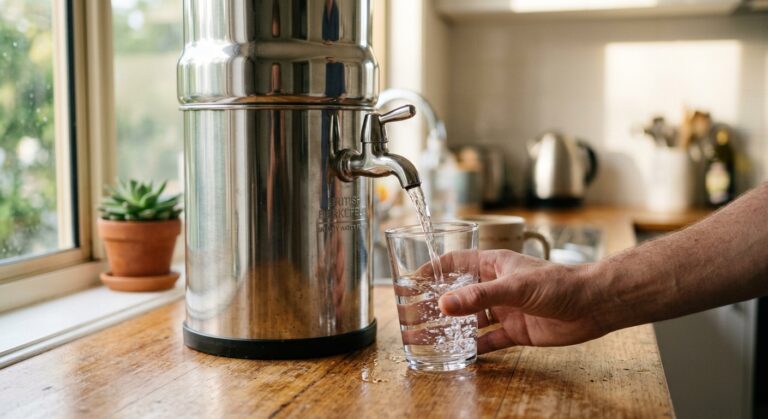
| Big Berkey + PF-2 | Gravity, high volume: maker’s claim only | $662.28at Amazon AU · as of 19 Nov 2026, 8:43 pm AEST Details plus PF-2 |
| VEVOR 4 L distiller | Cheaper than countertop RO; slow | $122.99at Amazon AU · as of 19 Nov 2026, 8:29 pm AEST Details |
HolyH2O price checked on its store on 11 Nov 2026 (12 L size).
✓ Read on if
- You have decided to reduce fluoride in your drinking water
- You rent, or can’t or won’t install an under-sink system
- You want to know which fluoride claims are backed and which aren’t
- You are choosing between RO, a jug, gravity and a distiller
× This guide won’t
- Tell you whether you should remove fluoride
- Treat an uncertified percentage as proven
- Recommend alkaline or “mineral” filters for fluoride: they don’t reduce it
- Replace advice from your dentist, GP or child health nurse
Why most benchtop filters don’t reduce fluoride
Fluoride in tap water is a dissolved ion, small and stable. The activated carbon in most jugs and benchtop cartridges is very good at chlorine, taste and many organic chemicals, but it doesn’t hold on to fluoride. The American Dental Association puts it simply: most carbon filters do not remove fluoride. Alkaline and “mineral” filters add calcium and magnesium and raise pH; that changes the taste and the pH reading, not the fluoride. KDF media is there for chlorine and some metals, not fluoride.
So a premium-looking glass benchtop filter can make lovely-tasting water and still pour out the same fluoride level as the tap. If a filter’s page doesn’t name one of the technologies below, or doesn’t give a fluoride figure and who measured it, assume it doesn’t reduce fluoride.
What does reduce fluoride
Reverse osmosis. A pump pushes water through a membrane fine enough to reject most dissolved ions, fluoride included, and sends the rejected water to a drain or waste tank. The ADA says almost all RO systems remove most fluoride. On the bench this means a countertop RO unit that you fill at the tap. The AquaTru’s certified result, a 93.5% average reduction, shows what a well-made unit does.
Distillation. Water is boiled and the steam condensed in a separate jug, leaving fluoride and other dissolved solids behind. The ADA groups it with RO as removing most fluoride. The trade-off is time and power: a 4 litre batch takes hours.
Activated alumina. A porous aluminium oxide media that adsorbs fluoride. The ADA says some activated alumina filters can remove significant amounts. Results depend on the media, how long the water stays in contact with it and how much of its capacity is used up, so a named test or certification matters more here than with RO.
Deionising resin. ZeroWater-type jugs use a mixed ion-exchange resin that strips dissolved ions, fluoride among them, which is why the Culligan ZeroWater jug can be certified for fluoride. The Minnesota Department of Health notes that such resins can be certified for fluoride. The resin runs out quickly in harder water.
Bone char. Charred animal bone that also adsorbs fluoride; the ADA lists it alongside activated alumina. It is rare in benchtop products sold in Australia and isn’t vegan.
For the full field, including under-sink systems, see the best fluoride water filters in Australia, and for how the membrane works, what reverse osmosis is.
How much fluoride is in your tap water
The Australian Drinking Water Guidelines set a health limit of 1.5 mg/L for fluoride. Most capital cities fluoridate, at roughly 0.6 to 1.0 mg/L (the NHMRC recommends 0.6 to 1.1 mg/L), but the figure, and whether a town fluoridates at all, depends on your supplier. In Queensland each council decides, and some, such as Cairns, don’t fluoridate. These are the published figures:
| Area | Fluoridated? | Published level (mg/L) | Source |
|---|---|---|---|
| Brisbane | Yes | 0.69 (12-month average; SEQ target 0.8) | Seqwater |
| Gold Coast | Yes | 0.73 (12-month average) | Seqwater |
| Sunshine Coast | Yes | 0.76 (12-month average) | Seqwater |
| Sydney | Yes | 1.0 (NSW target) | NSW Health |
| Newcastle and Hunter | Yes | About 1.0 (typical) | Hunter Water |
| Melbourne | Yes | 0.9 (optimum; range 0.7 to 1.2) | Yarra Valley Water |
| Perth | Yes | 0.9 (optimum; range 0.7 to 1.0) | WA Health |
| Adelaide | Yes | Not published on SA Water’s page | SA Water |
| Canberra | Yes | About 0.7 to 0.8 (2024 to 25) | Icon Water |
| Hobart | Yes | 0.9 (mean at the main plants) | Tasmanian Department of Health |
| Darwin | Yes | 0.6 (plant target) | Power and Water |
| Cairns | No | Not dosed | Queensland Health |
Seqwater figures are from its September 2026 zone reports; its monthly averages can sit well below the 12-month average because not every SEQ source is fluoridated. For more areas see fluoride levels by state.
Fluoride at your tap: calculator
Pick your area and a filter. The calculator shows your tap level, how much fluoride two litres a day carries (the adult intake the drinking water guidelines assume), and what the filter’s own evidence says it would leave. Where a product has no published figure, it says so rather than guessing.
About 1.5 mg of fluoride in 2 L a day. (The 1.5 mg/L guideline limits concentration, not daily dose.)
Certified average reduction.
Evidence: AquaTru performance data sheet, NSF/ANSI 58.
The audit’s kitchen page includes the tap water checks I run, including how to read your utility’s fluoride figure for your exact suburb.
The 7-Room Home Audit
38 checks across water, air and EMF, room by room. 29 cost nothing. Ranked by impact and checked against Australian guidelines.
We'll email you the audit and a short series of practical guides. Unsubscribe in one click, any time. Privacy.
Sent. Taking you to your download...
The best benchtop water filters for fluoride in Australia (2026)
1. Waterdrop C1S: best overall
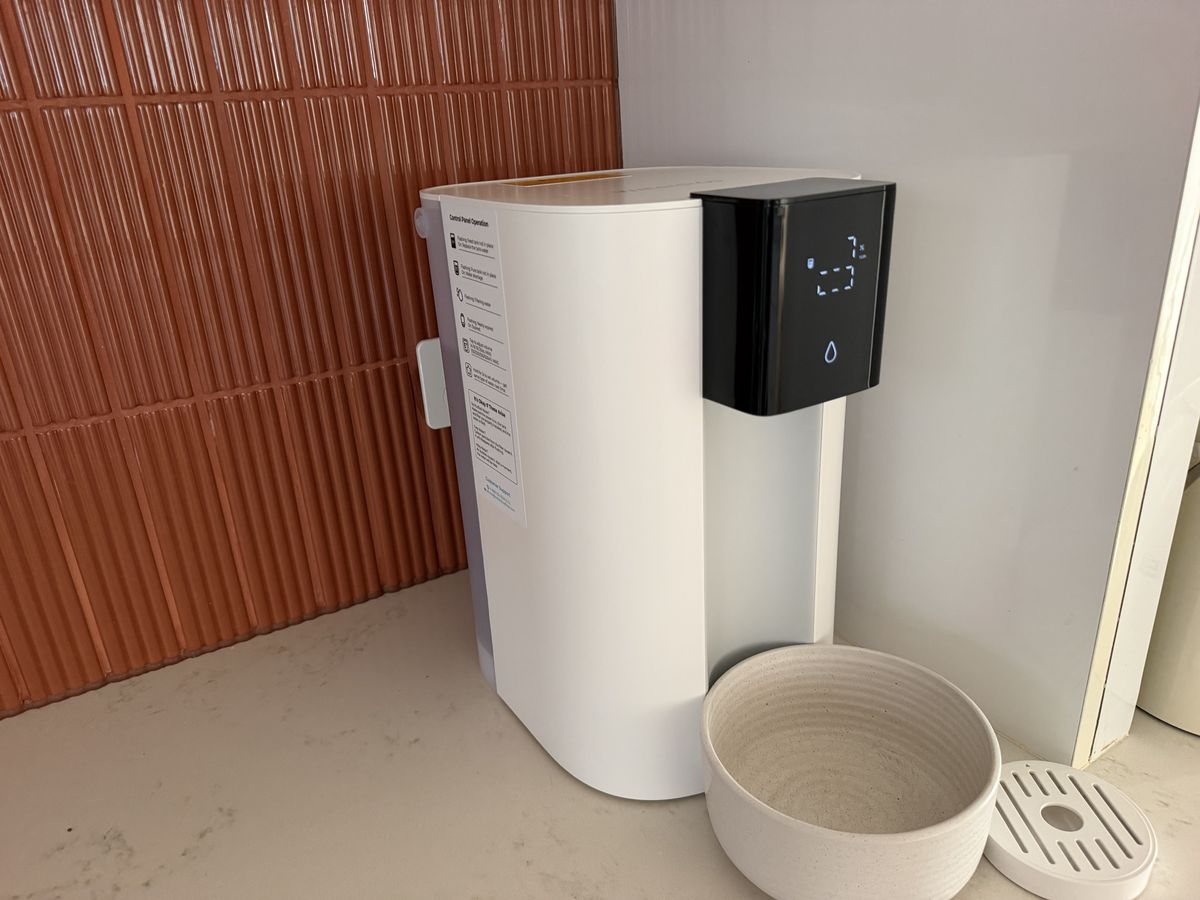 My TDS test69 to 7 ppmTested at home
Countertop RO, one C1RF filter (12 months) | 3.2 L feed tank, 1 L pitcher | 3:1 pure to drain | NSF/ANSI 372 (materials) | No plumbing
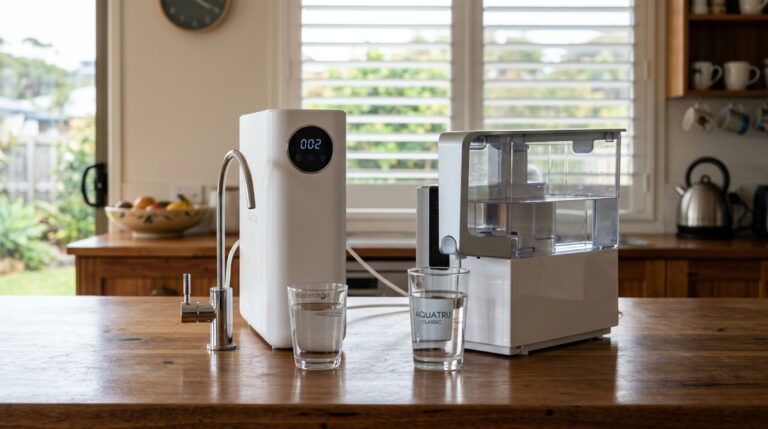
Check the C1S Price on Amazon →Amazon AU price: $379.22 · as of 19 Nov 2026, 11:43 pm AEST DetailsThe C1S is the countertop RO I use at home. You fill its 3.2 L tank at the tap, a pump pushes the water through one twist-lock filter, and RO water collects in a 1 L pitcher. There is no tap connection and nothing to install, so it suits renters. In my Gold Coast kitchen it took tap water from 69 ppm to 7 ppm total dissolved solids on my handheld meter, a 90% drop, which tells me the membrane is doing its job on dissolved ions.
This article contains affiliate links. We may earn a commission at no extra cost to you.
The honest gap: Waterdrop says the C1S removes fluoride but publishes no fluoride figure or fluoride certification; its NSF/ANSI 372 listing covers lead-free materials only. I’m recommending it because RO as a technology removes most fluoride (the ADA’s wording), because my own readings show the membrane working, and because it costs a fraction of the certified AquaTru. If a certified number matters more to you than price, buy the AquaTru. Waterdrop also sells it direct at Waterdrop Australia. Full details are in my Waterdrop C1S review.
✓ Pros
- RO on the bench, no plumbing
- One filter a year
- Tested in my kitchen: 69 to 7 ppm TDS
× Cons
- No certified fluoride figure
- Waste water: about 1 L for every 3 L filtered
- You refill the tank by hand
Buy this if…
you want RO-level fluoride reduction on the bench at a sensible price, and you’re happy to rely on the technology rather than a product certificate.
2. Culligan with ZeroWater jug: cheapest certified
 CertifiedNSF/ANSI 53Fluoride, lead, PFAS
5-stage filter with ion-exchange resin | IAPMO certified to NSF/ANSI 53 incl. fluoride | About 76 L per filter | TDS tester included | Sold by Amazon Global Store
Check the ZeroWater Price on Amazon →Amazon AU price: $54.24 · as of 19 Nov 2026, 8:43 pm AEST DetailsThe only jug I found with an independent fluoride certification. IAPMO certificate W-17155 lists the Culligan ZeroWater pitchers under NSF/ANSI 53 for fluoride, lead, total PFAS, mercury, cadmium, copper, hexavalent chromium and nitrate. The catch is capacity: each filter is rated for 20 US gallons, about 76 litres, so at two litres a day for one person that is roughly five weeks, and less in harder water. The included TDS meter tells you when the resin is spent. It ships to Australia from the Amazon Global Store, so allow for import delivery times and buy spare filters before you run out.
✓ Pros
- Independent fluoride certification
- Low upfront cost
- No power, no waste water
× Cons
- Short filter life, so the highest running cost per litre
- Imported: filters can take a while to arrive
- Small volume per fill
Buy this if…
you live alone or drink little filtered water, and you want certified fluoride reduction for the least money upfront.
3. AquaTru Classic Alkaline: best certified countertop RO
 Fluoride, certified93.5%NSF/ANSI 58 average
Countertop RO, 3 cartridges (pre/carbon, RO, alkaline mineral VOC filter) | IAPMO certified to NSF/ANSI 42, 53, 58, 401 and P473 | 75% efficiency | US import via Amazon Global Store
Check the AquaTru Price on Amazon →Amazon AU price: $909.83 · as of 19 Nov 2026, 8:29 pm AEST DetailsThe best-documented benchtop option for fluoride. AquaTru’s performance data sheet shows a 93.5% average fluoride reduction under NSF/ANSI 58, alongside lead, PFOA/PFOS and TDS. It works like the C1S (fill, filter, pour), and AquaTru quotes 75% efficiency, about the same 3:1 ratio as the C1S. The downsides are all about being an import. It is sold to Australia through the Amazon Global Store, and AquaTru’s US FAQ says its countertop units run off a 120 V plug while its manual lists a 100 to 240 V adapter, so check the adapter label before you plug it into a 240 V socket. Replacement filters are also imports: the one-year pack is $152.39at Amazon AU · as of 19 Nov 2026, 11:29 pm AEST Details. I compare the two head to head in Waterdrop C1S vs AquaTru.
✓ Pros
- Certified fluoride figure
- Also certified for PFOA/PFOS and lead
- Certified efficiency figure (75%)
× Cons
- Import price and delivery
- Check the power adapter is 240 V rated
- No local service agent found
Buy this if…
a certified fluoride number matters more to you than price, and you’ll check the power adapter before first use.
4. HolyH2O Trinity: best gravity filter for fluoride
 Lab test (maker)2.0 to 0.01mg/L fluoride
12, 16 or 22 L | Ceramic pre-filter, cartridge with activated alumina, KDF and carbon, mineral stones | Cartridge 4 to 6 months | From $199 for 12 L, on sale from $249; 16 L $275, 22 L $325 (checked 11 Nov 2026)
See the HolyH2O Trinity →An Australian gravity filter that names its fluoride media. The Trinity’s main cartridge contains activated alumina, plus KDF and carbon for chlorine and taste, and HolyH2O publishes a test by AS Enviro, an ISO/IEC 17025 accredited laboratory, in which fluoride fell from 2.0 mg/L to 0.01 mg/L. That is a named lab result, which puts it ahead of most gravity filters, but it is the maker’s test of its own product, not a certification. HolyH2O says the testing followed NSF/ANSI 42, 53 and 401 methods, which is not the same as being certified to them. Two practical notes: the cartridge needs replacing every four to six months, and the 100-day return applies only to unused units. My full assessment is in the HolyH2O review. For the full breakdown, sizes and running costs, see our HolyH2O Trinity review.
✓ Pros
- Named fluoride media and a named lab test
- No power, no waste water
- Large capacity, Australian seller
× Cons
- Not certified for fluoride
- Cartridge every 4 to 6 months
- Returns only if unused
Buy this if…
you want a large, no-power benchtop filter for a family and you’ll replace the cartridge on time.
5. Big Berkey with PF-2 elements: high-volume gravity, with caveats
 Capacity8.5 LFluoride needs PF-2
Stainless steel, 8.5 L | Black Berkey elements plus PF-2 activated alumina post-filters | PF-2 rated 1,000 US gal (about 3,785 L) per pair | Not certified | US imports
Check the Big Berkey Price on Amazon →Amazon AU price: $662.28 · as of 19 Nov 2026, 8:43 pm AEST DetailsA Berkey only reduces fluoride with the PF-2 post-filters fitted under the Black Berkey elements; the standard elements aren’t sold for fluoride. Berkey’s PF-2 instructions say the media typically brought fluoride under 1 ppm from a 20 to 30 ppm test solution (over 95%), at pH 5 to 7, but name no laboratory and no certifier, and the Black Berkey elements themselves are tested against a protocol rather than certified. There is also regulatory history to know about: in 2022 and 2023 the US EPA issued stop-sale orders on Black Berkey filters, including one to Berkey International in May 2023, because it treats filters containing silver as pesticides and these products were not registered. In September 2026 a US appeals court upheld the refusal of a preliminary injunction against that order. Both the Big Berkey and the PF-2 pair ($172.35at Amazon AU · as of 19 Nov 2026, 5:29 pm AEST Details) reach Australia as imports. It is a capable, high-volume gravity system, but at this price the Trinity has better fluoride evidence.
✓ Pros
- No power, no waste water
- Long-lasting elements
- Stainless steel housing
× Cons
- Fluoride claim is the maker’s only
- PF-2 is an extra purchase
- US regulatory dispute; limited stock
Buy this if…
you already own Black Berkey elements and want to add fluoride reduction. See the Big Berkey review.
6. VEVOR 4 L water distiller: cheaper than countertop RO, slowest
 Per batch4 L4 to 6 hours
750 W | About 1 L an hour | Carbon sachets for volatiles | About 0.75 kWh per litre | Sold by VEVOR Store AU
Check the VEVOR Price on Amazon →Amazon AU price: $122.99 · as of 19 Nov 2026, 8:29 pm AEST DetailsDistillation leaves fluoride behind in the boiling chamber, and the ADA groups it with RO as removing most fluoride. It costs less than countertop RO, but it is slow (a 4 L batch takes four to six hours) and power-hungry: at about 0.75 kWh per litre, two litres a day adds roughly $180 a year at 33c per kWh. It needs regular descaling, and volatile chemicals can carry over with the steam unless the carbon sachet is fresh. It suits someone who wants very low-mineral water and can run a batch overnight. More in the best water distillers.
✓ Pros
- High-removal technology for less than RO
- No filters to buy apart from carbon sachets
- Sold by VEVOR’s Australian Amazon store
× Cons
- Hours per batch
- Highest electricity cost
- Needs descaling
Buy this if…
you drink a litre or two a day, can plan around overnight batches, and want a high-removal technology for less than countertop RO.
Side-by-side comparison
| Product | Technology | Fluoride evidence | Power | Waste water | Filter life | Price |
|---|---|---|---|---|---|---|
| Waterdrop C1S | RO | Technology (ADA); my TDS test 69 to 7 ppm | Yes | 1 L per 3 L | 12 months | $379.22at Amazon AU · as of 19 Nov 2026, 11:43 pm AEST Details |
| Culligan ZeroWater | Ion-exchange jug | Certified, NSF/ANSI 53 (IAPMO) | No | None | About 76 L | $54.24at Amazon AU · as of 19 Nov 2026, 8:43 pm AEST Details |
| AquaTru Classic Alkaline | RO | Certified, NSF/ANSI 58: 93.5% average | Yes (check adapter) | 75% efficiency | Pre and VOC about 2,270 L; RO about 4,540 L (up to 2 years) | $909.83at Amazon AU · as of 19 Nov 2026, 8:29 pm AEST Details |
| HolyH2O Trinity | Gravity, activated alumina | Maker’s test by a named accredited lab | No | None | Cartridge 4 to 6 months | $199 to $325 |
| Big Berkey + PF-2 | Gravity, activated alumina post-filter | Maker’s claim, no lab named | No | None | PF-2: about 3,785 L per pair | $662.28at Amazon AU · as of 19 Nov 2026, 8:43 pm AEST Details plus PF-2 |
| VEVOR 4 L distiller | Distillation | Technology (ADA) | Yes, 750 W | None | Carbon sachets | $122.99at Amazon AU · as of 19 Nov 2026, 8:29 pm AEST Details |
Scroll sideways on a phone. “Technology” means the evidence is for that type of filter in general, not a test of the product.
What I measured at home
As a former Navy Clearance Diver, I don’t trust a piece of kit until I’ve checked it myself. So I ran the same handheld TDS meter on my Gold Coast tap water, on the Waterdrop C1S and on my under-sink EcoHero RO:
| Sample | TDS (handheld meter) | Drop from tap |
|---|---|---|
| Tap water, Palm Beach QLD | 69 ppm | |
| Waterdrop C1S (countertop RO) | 7 ppm | 90% |
| EcoHero 5-stage (under-sink RO) | 3 ppm | About 96% |
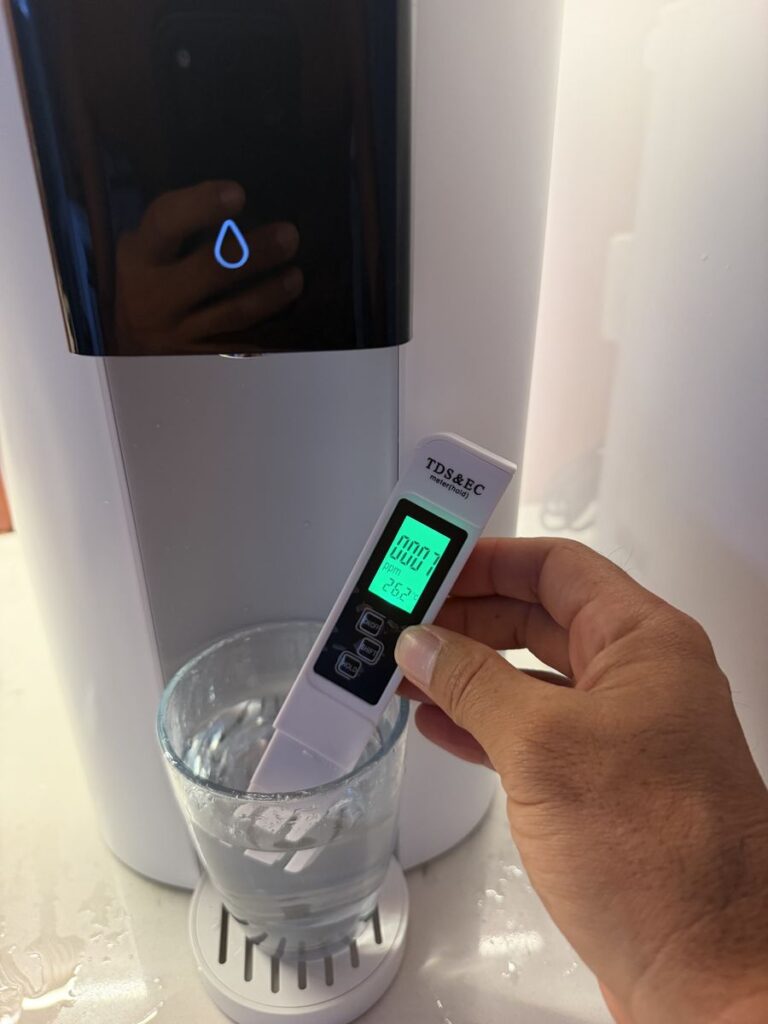
Read these numbers for what they are. A TDS meter measures all dissolved ions together, not fluoride on its own, and mine is a consumer meter that isn’t calibrated, so this is a before-and-after comparison. What it does show is that both RO membranes are rejecting dissolved ions, which is the mechanism that removes fluoride. I haven’t had my filtered water lab-tested for fluoride; when I do, the result will go here.
How to check your filter is working
- Find your tap level. Your utility’s water quality report gives fluoride for your supply zone. Start there, not with a national average.
- For RO, use a TDS meter as a health check. A big drop from tap to filtered water means the membrane is intact. If the filtered reading creeps up over the months, the membrane or filter is due.
- For jugs, follow the TDS meter or the litre count. A ZeroWater filter is spent when its meter says so; activated alumina gives no visible sign, so replace it on schedule.
- For a real fluoride number, test it. A laboratory water test is the only way to know your filtered fluoride level. Home test strips for fluoride exist, but check their range covers the low levels you are trying to measure.
For what a TDS reading can and can’t tell you, see what TDS in water means.
What we left out
Alkaline and mineral glass benchtop filters: pleasant water, no fluoride reduction. Brita and other standard carbon jugs: Brita’s own FAQ says its cartridges will not remove fluoride. Philips ADD6901: an RO dispenser with hot water. Its Australian listing says it removes fluoride among more than 110 contaminants, but gives no fluoride figure and names no certification, so it isn’t a fluoride pick here. Uncertified “removes 99% of fluoride” jugs: several sell in Australia with percentages but no lab, method or certifier named; we left them out until they publish one. For a plumbed-in system, see the full fluoride filter guide, and for every benchtop type, not just fluoride, the best benchtop water filters.
Final verdict
For most people who want less fluoride from a benchtop filter, buy the Waterdrop C1S: countertop RO with no plumbing, one filter a year, and a membrane I’ve watched work on my own tap water. If you want a certificate behind the fluoride number, the AquaTru Classic has the best (93.5% under NSF/ANSI 58) at an import price, and the Culligan ZeroWater jug is the cheapest certified option if you drink little and don’t mind changing filters often. For a no-power family filter, the HolyH2O Trinity has the clearest activated alumina evidence. Skip anything that can’t tell you how it reduces fluoride and who checked it.
Frequently asked questions
What is the best benchtop water filter for fluoride in Australia?
For most people, a countertop reverse osmosis unit such as the Waterdrop C1S: no plumbing, one filter a year, and RO removes most fluoride. If you want an independent fluoride certification, the AquaTru Classic is certified to NSF/ANSI 58 with a 93.5% average reduction, and the Culligan ZeroWater jug is the cheapest certified option.
Does a Brita filter remove fluoride?
No. Brita jugs use carbon and ion-exchange media aimed at chlorine, taste and some metals, and Brita doesn’t claim fluoride reduction. For fluoride you need reverse osmosis, distillation, activated alumina, bone char or a certified deionising jug such as ZeroWater.
Does an alkaline water filter remove fluoride?
No. Alkaline and mineral filters add minerals and raise pH; they don’t reduce fluoride. Unless a filter names a fluoride technology and gives a tested figure, assume the fluoride level is unchanged.
Does reverse osmosis remove fluoride?
Yes. The American Dental Association says almost all reverse osmosis systems remove most fluoride. The AquaTru countertop RO is certified at a 93.5% average reduction under NSF/ANSI 58.
Does the Big Berkey remove fluoride?
Only with the PF-2 fluoride elements fitted under the Black Berkey elements. Berkey reports over 95% reduction in its own testing, but names no laboratory or certifier, so treat it as the maker’s claim.
How much fluoride is in Brisbane and Gold Coast tap water?
Seqwater’s September 2026 reports show a 12-month average of 0.69 mg/L for Brisbane and 0.73 mg/L for the Gold Coast. Queensland Health’s target for South East Queensland is 0.8 mg/L. The health limit in the Australian Drinking Water Guidelines is 1.5 mg/L.
Can I remove fluoride without a plumber?
Yes. Countertop RO units such as the Waterdrop C1S and AquaTru, ZeroWater-type jugs, gravity filters with activated alumina and benchtop distillers all sit on the bench with no plumbing.
Is fluoride in Australian tap water safe?
The NHMRC recommends community fluoridation at 0.6 to 1.1 mg/L, and the drinking water guideline limit is 1.5 mg/L. Whether to reduce your own intake is a personal decision; this guide covers how to do it if you choose to.
- American Dental Association: Fluoridation Facts, home water treatment units and fluoride
- NHMRC: Australian Drinking Water Guidelines, fluoride fact sheet (1.5 mg/L)
- Minnesota Department of Health: home water treatment
- IAPMO R&T certificate W-17155: Culligan with ZeroWater Technology, NSF/ANSI 53
- AquaTru performance data sheet (fluoride 93.5% average)
- AquaTru FAQ (power and efficiency)
- Berkey: PF-2 element instructions
- HolyH2O: Trinity product page and lab results, checked 11 Nov 2026
- Waterdrop Australia: C1S countertop RO
- Seqwater: Brisbane zone water quality report, September 2026
- Seqwater: Gold Coast zone water quality report, September 2026
- Seqwater: Sunshine Coast zone water quality report, September 2026
- NSW Health: fluoridation questions and answers
- Hunter Water: what’s in your water
- Yarra Valley Water: fluoridation
- WA Health: fluoride facts for Western Australia
- SA Water: what’s in your water
- Icon Water: Drinking Water Quality Report 2024 to 25
- Tasmanian Department of Health: Fluoridation Committee annual report 2020 to 21
- Power and Water: Drinking Water Quality Report 2023
- Queensland Health: answers to questions on notice, 16 December 2022 (areas without fluoridation)
- Seqwater: fluoridation of water supply fact sheet (SEQ target 0.8 ppm)
- NHMRC: 2017 public statement on water fluoridation and human health
- Culligan: ZeroWater Technology performance data sheet
- Berkey International v. EPA, No. 24-1917, First Circuit, 18 September 2026 (FindLaw)
- Brita Australia: frequently asked questions (fluoride)
- Appliances Online: Philips ADD6901 listing
This guide is general information, not medical advice. Last reviewed 11 November 2026.

Former Royal Australian Navy Clearance Diver and TAG-E counter-terrorism operator. Founded Clean and Native to apply the same rigorous thinking to the home environment.
Full biography →