Coffs Harbour NSW Tap Water Quality 2026: Free Chlorine, Fluoride, and What to Filter
Coffs Harbour tap water is safe to drink, free-chlorine disinfected (not chloramine), measures around 120 mg/L total dissolved solids, contains fluoride at 1 mg/L, and has no documented PFAS contamination. That is the short answer. The longer answer — the one that actually helps you decide whether to filter — is about what those numbers mean for taste, for hardness, for the chlorine you can smell when you fill a kettle, and for the small slice of contaminants that pass through municipal treatment regardless of how well the plant is run.
I’m Jayce Love, a former Royal Australian Navy Clearance Diver based in Palm Beach QLD. I have assessed using our documented methodology across multiple Australian water grids, and Coffs Harbour falls into the cleaner end of the free-chlorine NSW coastal supply spectrum. This guide walks you through exactly what is in your water, where it comes from, what the regulators measure (and what they do not), and which type of filter actually makes sense for a Coffs Harbour household. No fearmongering. No upselling RO when a carbon block will do.
Quick Verdict — Coffs Harbour Water 2026
Coffs Harbour uses FREE CHLORINE, not chloramine. This means standard activated carbon filters and KDF-55 work fine for taste and chlorine removal — you do not need the catalytic carbon or RO that Brisbane, Sydney, Adelaide, Gold Coast, and Darwin households require. For taste alone, a benchtop carbon filter is the right call. For fluoride removal or comprehensive contaminant reduction, a reverse osmosis system is the only effective option — carbon does not remove fluoride.
Where Coffs Harbour Tap Water Comes From (and How It Is Treated)
Coffs Harbour’s drinking water is supplied by Coffs Harbour City Council from the Orara River and Nymboida River catchments, with treatment at the Karangi Water Treatment Plant. The raw water travels through coagulation, flocculation, sedimentation, and filtration before being disinfected with free chlorine and pH-adjusted for distribution. Fluoride is added at a target of approximately 1 mg/L, in line with the National Health and Medical Research Council (NHMRC) recommended range of 0.6 to 1.1 mg/L for community water fluoridation.
The treatment plant is required to meet the Australian Drinking Water Guidelines (ADWG) on every regulated parameter — coliforms, turbidity, residual disinfectant, heavy metals, and around 200 other tests. Annual water quality reports published by Coffs Harbour City Council confirm consistent compliance. The water that arrives at your tap is, by any reasonable definition of the term, safe to drink. The question is whether “safe to drink” is the same standard you want for a household with children, pregnancy, or anyone with elevated sensitivity to taste, chlorine, or contaminant load.
What Is in Coffs Harbour Tap Water — The Numbers That Matter
The headline parameters published in Coffs Harbour’s annual water quality summaries are remarkably stable year on year. Here is the data your filter decision should be based on:
| Parameter | Coffs Harbour Level | ADWG Guideline | What It Means |
|---|---|---|---|
| Total Dissolved Solids (TDS) | ~120 mg/L | <600 mg/L aesthetic | Good. Clean taste, no excess minerals. |
| Hardness (as CaCO₃) | ~70 mg/L | No health limit; <200 mg/L preferred | Moderately soft. Minimal scale. |
| pH | 7.5 | 6.5 — 8.5 | Neutral, well within range. |
| Fluoride | 1.0 mg/L | <1.5 mg/L health limit | Within NHMRC fluoridation target. |
| Disinfection | Free chlorine | 0.2 — 5 mg/L residual | Standard carbon removes effectively. |
| PFAS (PFOS + PFOA) | No documented detection | 0.00007 mg/L combined (2023 ADWG draft) | No known concern for this supply. |
The two parameters worth understanding in depth are the disinfection type and the fluoride level. Both shape the filter you should buy — and the wrong choice on either one can leave you spending hundreds of dollars on a system that does not address what you actually wanted it to address.
Free Chlorine vs Chloramine — Why This Matters More Than Anything Else
The most consequential fact about Coffs Harbour tap water is that it is disinfected with free chlorine, not chloramine. Free chlorine is the older, simpler disinfectant. It dissipates relatively quickly in distribution pipes (which is why a Coffs Harbour glass of water tastes different to a Brisbane or Sydney glass), but it is also removed effectively by any reasonable activated carbon filter — including the cheap pour-through pitchers from supermarkets.
Compare this to chloramine, used in Brisbane, Sydney, Adelaide, Gold Coast, and Darwin. Chloramine is a stable bond of chlorine and ammonia that resists breakdown — it stays active deeper into the distribution network, which is great for utility operators but a problem for water filtration. Standard activated carbon (GAC) removes chloramine at roughly 1/40th the rate it removes free chlorine. KDF-55 media, common in budget shower filters, does not remove chloramine effectively at all. Households in chloramine cities need catalytic carbon, compressed carbon blocks, or reverse osmosis to deal with the disinfectant in their water.
For Coffs Harbour residents, this means your filtering options open up significantly. A $149 Tappwater EcoPro benchtop carbon filter that would underperform in Brisbane works perfectly well in Coffs Harbour. A standard KDF-55 shower filter that fails for Sydney households does the job in Coffs Harbour. The pricing and complexity penalty that chloramine imposes on chloramine-city households does not apply to you.
Recommended for Coffs Harbour
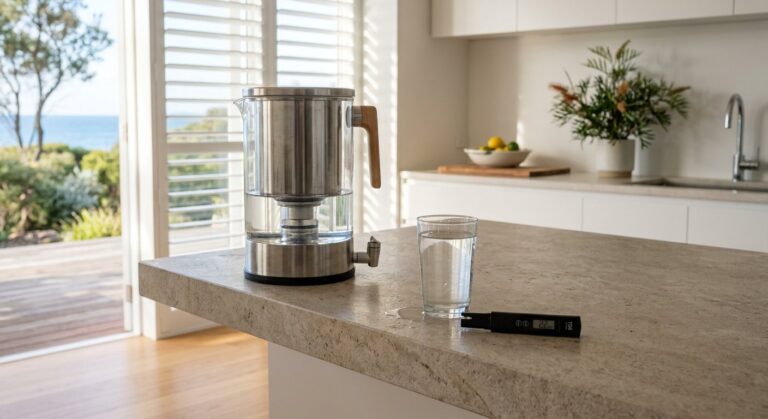
Tappwater EcoPro — benchtop activated carbon, NSF/ANSI 42 certified, removes chlorine taste in any free-chlorine city. Cheapest cost-per-litre in this guide.
See Tappwater EcoPro on Amazon AU →Fluoride, PFAS, and the Contaminants You Should Actually Think About
Coffs Harbour adds fluoride to its drinking water at approximately 1.0 mg/L, well within the NHMRC’s 0.6 to 1.1 mg/L community fluoridation target. The ADWG health limit is 1.5 mg/L. Coffs Harbour is not unusual in this — most Australian capital cities and many regional NSW towns fluoridate.
Whether you want to remove fluoride is an individual choice, not a safety question. The medical consensus, supported by NHMRC and Australian Dental Association statements, is that fluoridation at 1 mg/L reduces dental caries with no measurable health downside. The minority position — often held by households with young children, pregnant individuals, or those preferring a precautionary stance — is to filter fluoride out and rely on toothpaste for cavity prevention.
If you do want fluoride removed, the technical reality is uncomplicated and unforgiving: only reverse osmosis (90-97% reduction) and activated alumina (80-95% reduction) remove fluoride from drinking water. Standard carbon filters, including catalytic carbon and compressed carbon blocks, cannot remove fluoride at any meaningful rate. Pour-through pitchers, refrigerator filters, faucet filters, and benchtop carbon units — none of these reduce fluoride. If you read marketing copy claiming otherwise, treat it as inaccurate.
For Coffs Harbour households that want fluoride removed, the practical options are:
- Waterdrop D6 under-sink RO (NSF/ANSI 58 certified, removes fluoride, PFAS, heavy metals, microplastics) — the cleanest plumbed installation for households doing a permanent upgrade.
- AquaTru Classic Smart Alkaline (NSF/ANSI 58, countertop, no plumbing required) — the right call for renters or households that do not want under-sink work done.
- EcoHero 5-Stage RO via Pure Water Systems Australia (NSF 58 + WaterMark AS3497, AU-supported warranty) — the premium AU-sourced option I have personally tested. My Palm Beach mains came in at 69 ppm TDS; post-EcoHero output was 3 ppm. That is a 95.7% TDS reduction — including fluoride.
On PFAS: there is no documented PFAS detection in Coffs Harbour’s published water quality data. This is the case for the majority of Australian municipal supplies, though several have been flagged historically (Williamtown, Katherine, Oakey near defence sites). The 2023 ADWG draft tightening PFAS limits to 0.00007 mg/L combined PFOS+PFOA is one of the more significant regulatory changes in recent water policy — but Coffs Harbour does not appear in the contamination registers as a known PFAS site. If PFAS is the reason you are filtering, the RO units above also handle PFAS reduction effectively (>99% for NSF 58 certified systems).
Choosing the Right Filter for Your Coffs Harbour Household
Let me cut through the noise and give you the decision tree. Three questions, in order, settle the choice for almost every household:
1. Why are you filtering?
- Taste and chlorine smell only. Standard activated carbon. Benchtop or pitcher. Cheap and effective in a free-chlorine city.
- Taste plus fluoride removal. Reverse osmosis. Under-sink (Waterdrop D6) if you can plumb, countertop (AquaTru) if you cannot.
- Taste plus comprehensive contaminant peace of mind. Reverse osmosis with a remineralisation stage (EcoHero, AquaTru Alkaline).
2. Can you modify the plumbing?
- Yes (owner, willing to install). Under-sink unit, ideally RO. Lower per-litre cost, integrated tap.
- No (renter, no install). Countertop unit. AquaTru Classic for RO, Tappwater EcoPro for carbon.
3. What is your budget?
- Under $200. Benchtop carbon (Tappwater EcoPro). Excellent for taste in a free-chlorine city.
- $500 — $800. Countertop RO (AquaTru Classic). Removes fluoride, PFAS, heavy metals, no plumbing.
- $800+. Under-sink RO (Waterdrop D6, EcoHero 5-Stage). Permanent installation, lowest per-litre cost.
5-Year Cost Comparison — Coffs Harbour Filter Options
Assume a 4L/day household for the per-litre calculation. All AUD pricing reflective of mid-2026 retail.
| Option | Upfront | Annual Filter | 5-Year Total | Cost/Litre |
|---|---|---|---|---|
| Bottled water (2L/day) | $0 | ~$730 — $1,460 | $3,650 — $7,300 | $1.00 — $2.00 |
| Tappwater EcoPro (carbon) | ~$149 | ~$99 | ~$644 | $0.04 |
| AquaTru Classic (RO) | ~$649 | ~$120 | ~$1,249 | $0.09 |
| Waterdrop D6 (under-sink RO) | ~$599 | ~$150 | ~$1,349 | $0.10 |
The standout number is the comparison against bottled water. A household drinking 2L of bottled water per person per day spends roughly $3,650 to $7,300 over five years. The cheapest carbon filter (~$644 total) costs less than a single year of bottled water — and produces water that tastes equivalent or better. The RO units cost roughly the same as one year of premium bottled water but cover all four litres of household drinking plus cooking. The economic case is settled before the health case begins.
Coffs Harbour vs Other NSW Coastal Towns
For context, here is how Coffs Harbour compares to nearby NSW coastal towns on the parameters that matter for filter selection:
- Coffs Harbour: free chlorine, TDS ~120, fluoride 1.0, no PFAS concern. Standard carbon works for taste.
- Port Macquarie: free chlorine, TDS ~150, fluoride 1.0. Standard carbon also works.
- Byron Bay / Lismore (Rous County Council): free chlorine, TDS varies seasonally with the Wilsons River source. Carbon works.
- Newcastle / Hunter Water: free chlorine in most suburbs, with some areas seeing chloramine. Check your specific supply zone — catalytic carbon is the safer default if uncertain.
- Sydney Water (most of metro Sydney): chloramine. Standard carbon and KDF-55 underperform. See our chloramine-rated filter guide.
The pattern is consistent: as you move south from Coffs Harbour into the Greater Sydney supply zone, the disinfection method changes from free chlorine to chloramine, and the filter recommendation changes correspondingly. If you are moving from a chloramine city to Coffs Harbour, your old chloramine-rated filter will continue to work fine (it is just over-specified for the new context). If you are moving from Coffs Harbour to a chloramine city, your old standard carbon unit will produce noticeably worse output until you upgrade the media.
How I Test (and Why It Matters for Coffs Harbour)
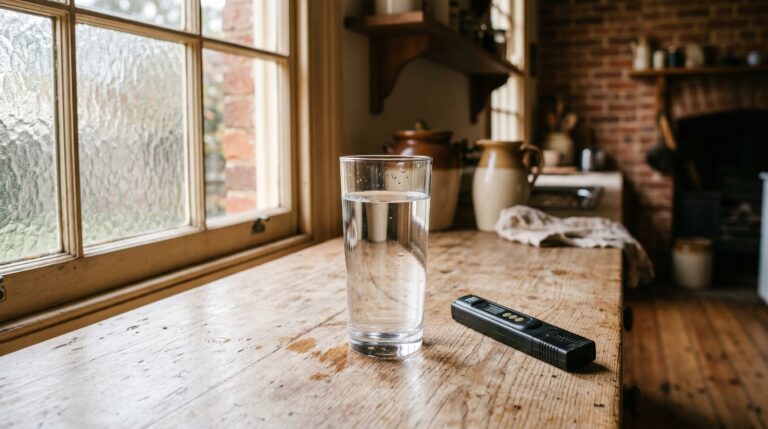
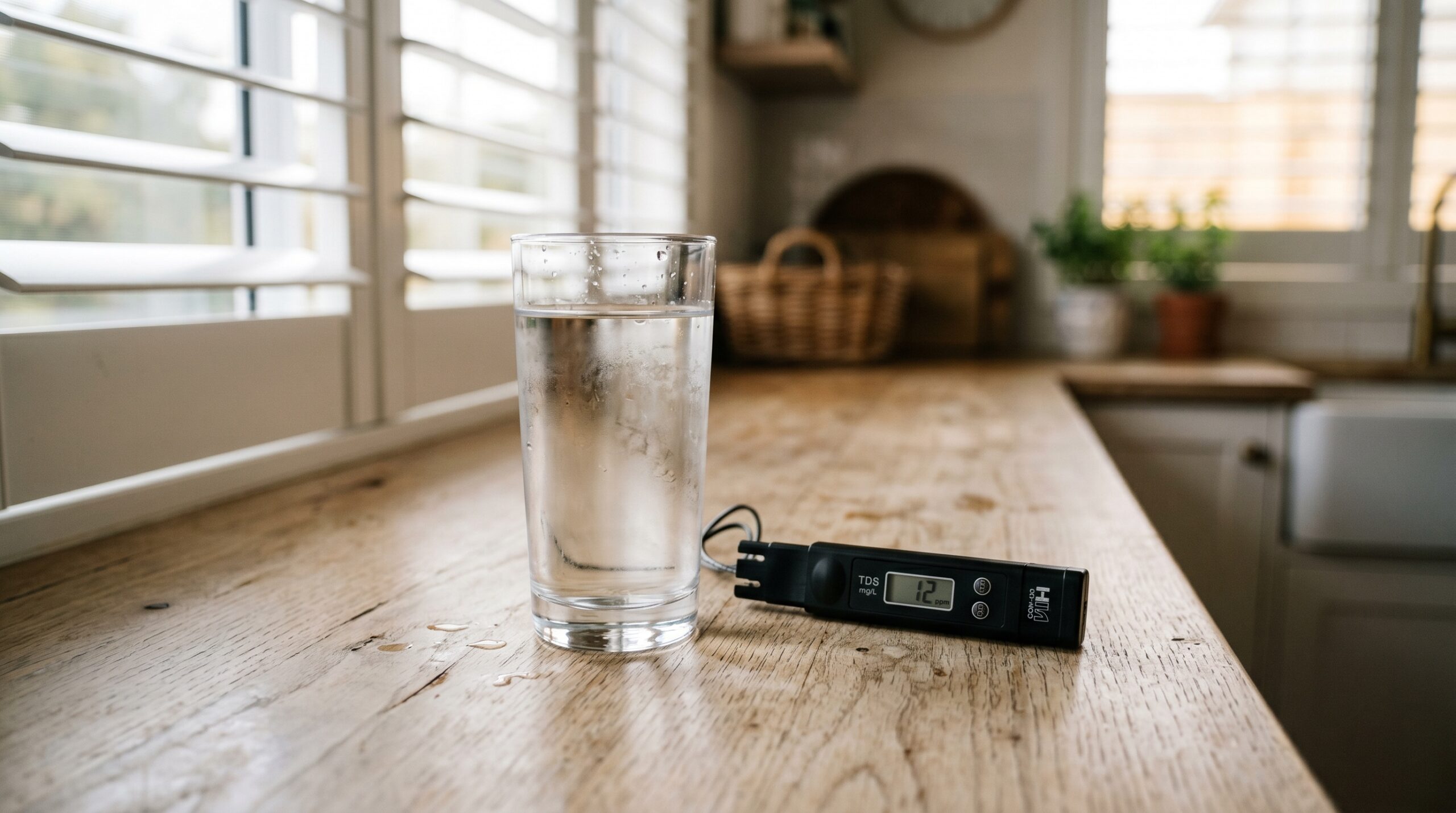
I run every filter recommendation through a measurable protocol before publishing. The core test is TDS reduction using a calibrated TDS-3 meter on incoming mains water and treated output, repeated weekly to monitor drift. For chlorine, I use total-chlorine test strips (LaMotte 2977-G) before and after the filter. For more comprehensive analysis on certified systems, I cross-reference NSF/ANSI test data against the manufacturer’s claims — if a system is certified to NSF/ANSI 58 (RO performance), the data is auditable.
The reason this matters for Coffs Harbour is that most Australian water filter review content is written for a generic national audience — which usually means Sydney or Melbourne, with little regional differentiation. A Sydney review recommending catalytic carbon is correct for Sydney but overspecified for Coffs Harbour. A Melbourne review recommending KDF-55 is correct for Melbourne and Coffs Harbour but would fail in Brisbane. The single biggest mistake Australian households make is buying a filter recommended by an overseas reviewer or a national affiliate page that does not account for which disinfection method their utility uses. For Coffs Harbour, the answer is straightforward: free chlorine, so almost any reasonable filter media works.
Top Pick for Fluoride Removal
Waterdrop D6 Under-Sink Reverse Osmosis
If you want fluoride removal in Coffs Harbour, RO is the only option that works. The Waterdrop D6 is NSF/ANSI 58 certified, compact, tankless, and the cleanest under-sink installation in the price bracket.
See Waterdrop D6 on Amazon AU →Last reviewed: May 2026 — Clean and Native
Frequently Asked Questions
Is Coffs Harbour tap water safe to drink?
Yes. Coffs Harbour City Council water meets all Australian Drinking Water Guidelines (ADWG) requirements. The Karangi Water Treatment Plant is required to publish annual water quality reports and has demonstrated consistent compliance on regulated parameters. Filtering is for taste, chlorine, fluoride removal, or precautionary reasons — not for safety.
Does Coffs Harbour water have fluoride?
Yes. Coffs Harbour adds fluoride at approximately 1.0 mg/L, within the NHMRC community fluoridation target range of 0.6 to 1.1 mg/L. If you want to remove fluoride, you need a reverse osmosis system or an activated alumina filter — standard carbon filters cannot remove fluoride at any meaningful rate.
Does Coffs Harbour use chloramine or free chlorine?
Free chlorine. This is significant because it means standard activated carbon filters (including the cheap pour-through pitchers) remove the chlorine taste effectively. Chloramine cities like Brisbane, Sydney, Adelaide, Gold Coast, and Darwin require catalytic carbon or reverse osmosis instead.
Is there PFAS in Coffs Harbour water?
There is no documented PFAS detection in Coffs Harbour’s published water quality data, and the supply is not on any known contamination register. If PFAS is a specific concern for you, a reverse osmosis system removes more than 99% of PFAS compounds.
What is the best water filter for Coffs Harbour?
For taste and chlorine, the Tappwater EcoPro benchtop carbon filter (~$149) is the most cost-effective option in a free-chlorine city. For fluoride removal and comprehensive filtration, the Waterdrop D6 under-sink RO or AquaTru Classic countertop RO are the right calls.
How hard is Coffs Harbour water?
Moderately soft. Hardness measures around 70 mg/L as CaCO₃, well below the 200 mg/L threshold where scale buildup becomes a significant issue. You should not need a water softener for household appliances.
Why does my Coffs Harbour tap water sometimes taste chlorinated?
Free chlorine residual is required in distribution pipes to maintain disinfection between the treatment plant and your tap. Levels vary based on distance from the plant, water temperature, and time of day. The chlorine taste is benign but unpleasant. Any activated carbon filter — even a basic pour-through pitcher — removes it effectively.
Should I be worried about pipes or plumbing affecting my water quality?
Pre-1965 homes in any Australian city may have legacy lead solder in copper pipework, which can contribute trace lead to drinking water. The September 2025 lead-in-plumbing regulation specifically targets this risk in new installations. If your home is older and you want certainty, the simplest test is to run the cold tap for 30 seconds first thing in the morning before drawing drinking water — this flushes any pipe-stagnated water. For peace of mind, an NSF/ANSI 53 certified filter is rated for lead reduction.
Get the Australian Home Environment Checklist
30 checks across water, air and EMF. Most of them free. Ranked by impact.
No spam. Unsubscribe any time.

Former Royal Australian Navy Clearance Diver and TAG-E counter-terrorism operator. Founded Clean and Native to apply the same rigorous thinking to the home environment.
Full biography →