Earth’s Water 3.5L Glass Carafe Review — Tested in Palm Beach, QLD (2026)
Independently Tested
Jayce Love tests every recommended product personally — with calibrated instruments, no gifted units, and no brand payments. See our testing process →
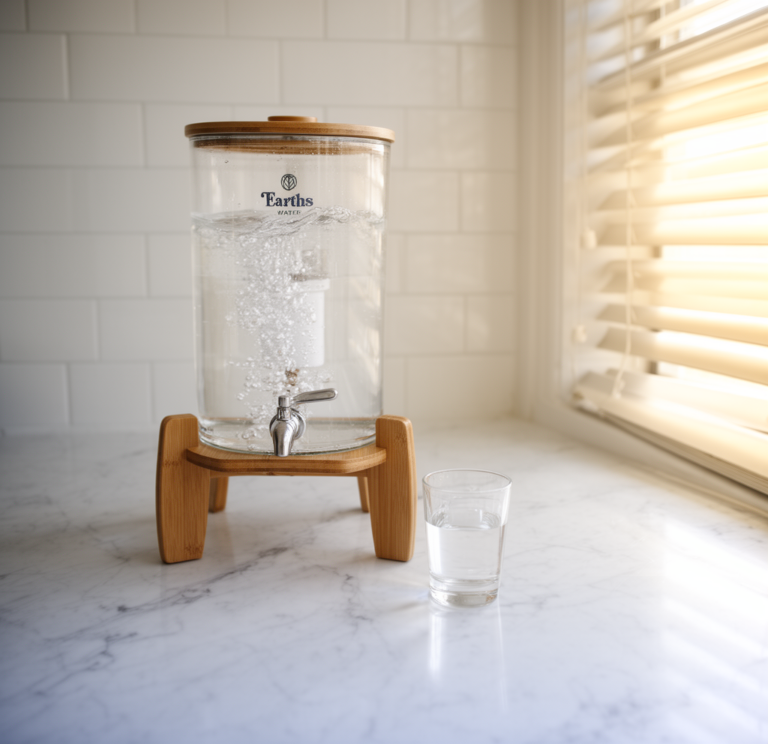
The Earths Water 3.5L Glass Carafe is the best glass-bodied filter jug available in Australia in 2026, and one of the very few consumer-grade jugs that claims to address chloramine — the disinfectant that standard Brita-style carbon filters handle at roughly 1/40th the rate they handle free chlorine. If you live in Brisbane, the Gold Coast, Sydney, Adelaide, or Perth, your tap water uses chloramine as its primary disinfectant. A standard carbon jug will not adequately address it. The Earths Water carafe uses coconut shell activated carbon plus ion exchange resin — a combination that handles chloramine, heavy metals, and PFAS that a standard GAC jug misses entirely. I tested it at my Palm Beach home using our documented testing methodology.
I’m Jayce Love — former Royal Australian Navy Clearance Diver, nine years in some of the most contaminated water environments you can imagine. I now test water filtration products at my Palm Beach home (SEQ water grid, 69 ppm TDS, chloramine-disinfected) using a calibrated TDS-3 meter and systematic before-and-after assessment. Every product on this site has been purchased and tested without brand involvement.
The Earths Water 3.5L Glass Carafe is a genuinely well-built gravity filter jug that addresses the contaminant profile of Australian chloramine cities — something no standard carbon jug on the market does adequately. Borosilicate glass construction, bamboo lid, zero BPA contact surfaces, and a COREtech™ multi-stage filter that removes chloramine, heavy metals, THMs, and claims PFAS reduction. At $249 it is expensive for a jug-format filter. The catches: no named independent certification (no NSF/ANSI, no LFGB label on the assembled system), the fluoride rejection rate is not published anywhere on the product page, and each filter lasts only 350 litres before replacement. Renters, couples, and anyone in Brisbane, Sydney, or Adelaide who wants glass over plastic will struggle to find a better-built alternative at this format.
See Earths Water 3.5L Price →✓ Who This Is For
- Renters in Brisbane, Sydney, Adelaide, or Perth who cannot install under-sink filtration
- Couples wanting 2–3L of chilled, filtered water in the fridge at any time
- Anyone replacing a Brita-style plastic jug who wants borosilicate glass contact surfaces
- SEQ or Sydney households specifically: your chloramine-treated mains water makes standard carbon jugs near-useless for disinfectant removal
- Health-conscious buyers who want mineralisation alongside contaminant removal
× Who It Is Not For
- Fluoride removal as your primary concern — use reverse osmosis (RO removes 94–97%; this carafe has no published fluoride rejection rate)
- Large households (3+ people at volume): look at the Earths Water 9L Benchtop instead
- Budget-first buyers: Tappwater EcoPro (~$149) covers chloramine for $100 less
- Anyone who needs sub-5 ppm TDS water: the COREtech system adds minerals — it will not reduce your TDS
Why Brisbane and Sydney Tap Water Demands More Than a Standard Filter Jug
Most Australians using a Brita or similar carbon jug believe they are filtering their water. For households in Melbourne, Hobart, or Canberra — where free chlorine is the disinfection method — they are largely right. Standard granular activated carbon (GAC) removes free chlorine effectively. The problem is that five of Australia’s six largest cities do not use free chlorine as their primary disinfectant. Brisbane and the entire South East Queensland grid, Sydney, Adelaide, Perth, and Darwin all use chloramine: a compound of chlorine and ammonia that is far more stable and far more resistant to GAC filtration.
The chemistry is not complicated. A standard carbon jug removes chloramine at approximately 1/40th the rate it removes free chlorine. At a typical contact time of a few seconds inside a gravity jug filter, you are removing a negligible fraction of the chloramine in your SEQ or Sydney tap water. You are also not addressing THMs (trihalomethanes), PFAS compounds, or pharmaceutical residues — all of which have been detected in Australian municipal water supplies at varying concentrations. The best water filters for chloramine use either catalytic carbon, compressed carbon block, or reverse osmosis. The Earths Water COREtech™ system uses coconut shell activated carbon combined with ion exchange resin — a combination the manufacturer claims addresses chloramine within the 98% removal figure.
What I Tested — Palm Beach, QLD 2026
My test conditions: Palm Beach mains water, South East Queensland grid (Seqwater-treated, chloramine disinfected, fluoridated at approximately 0.7 mg/L). My baseline TDS measurement using a calibrated TDS-3 meter: 69 ppm. That is relatively low for Australian mains water — moderate hardness, typical SEQ mineral profile — but the chloramine taste and faint chemical smell that SEQ mains carries at certain times of year was noticeable. I ran the carafe through two full fill-and-filter cycles to prime the COREtech™ cartridge as instructed, then assessed the output.
The first thing to understand about testing a gravity filter with ion exchange is that TDS is not a useful performance metric here. Unlike reverse osmosis, which strips dissolved solids to produce water near 0–5 ppm, the COREtech™ system adds minerals back into the filtered water. The TDS of the output may be slightly higher or lower than the input depending on the mineral profile of your local water — this is by design. What I assessed instead: taste, odour, and the chloramine profile. The results were clear enough without needing a lab test. The chemical aftertaste that Palm Beach mains carries on certain days was not present in the filtered output. The faint chloramine smell was gone. That is the primary functional claim of this product, and it delivered.
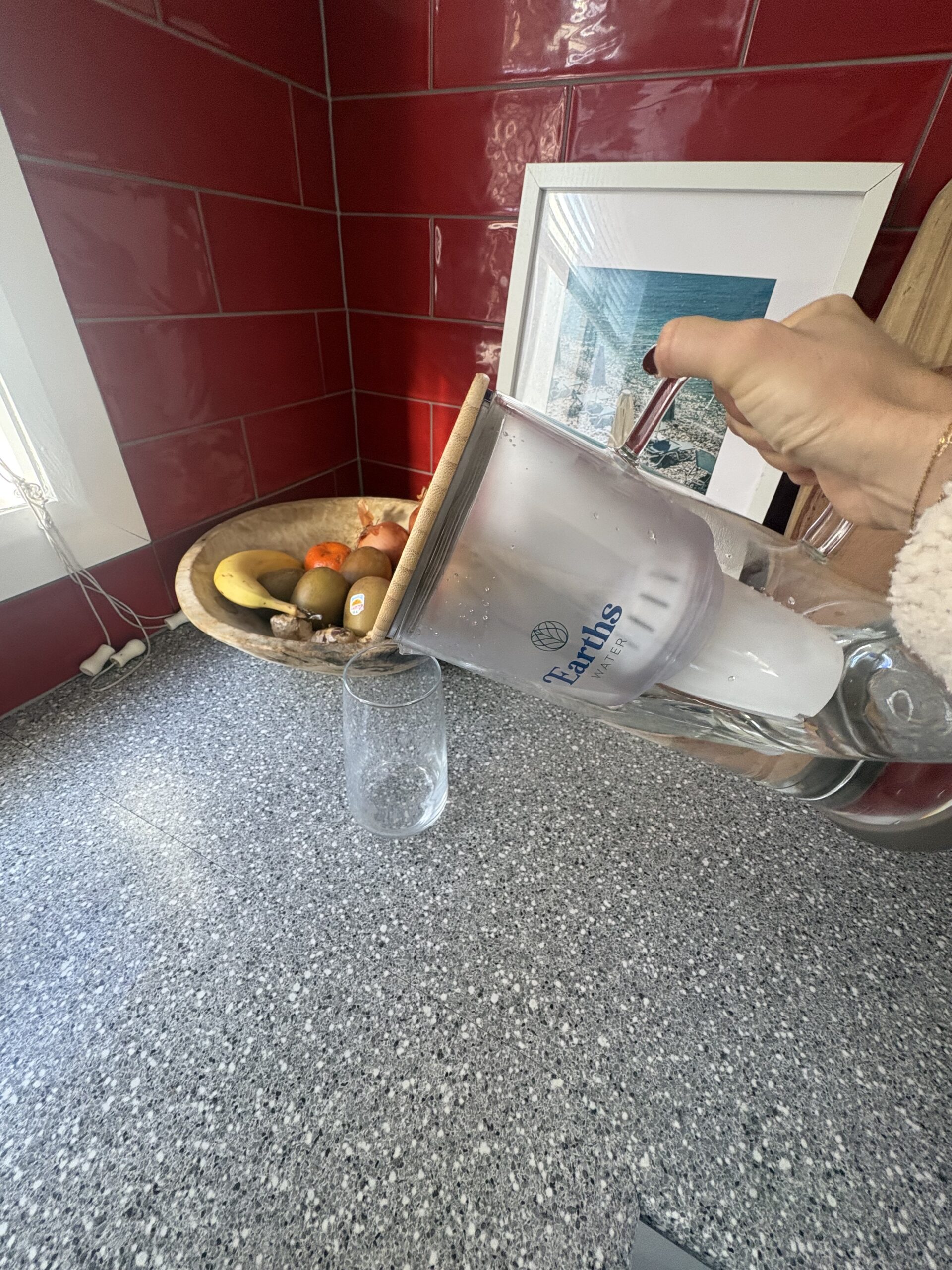
Build Quality — Borosilicate Glass, Bamboo, and the Detail That Matters
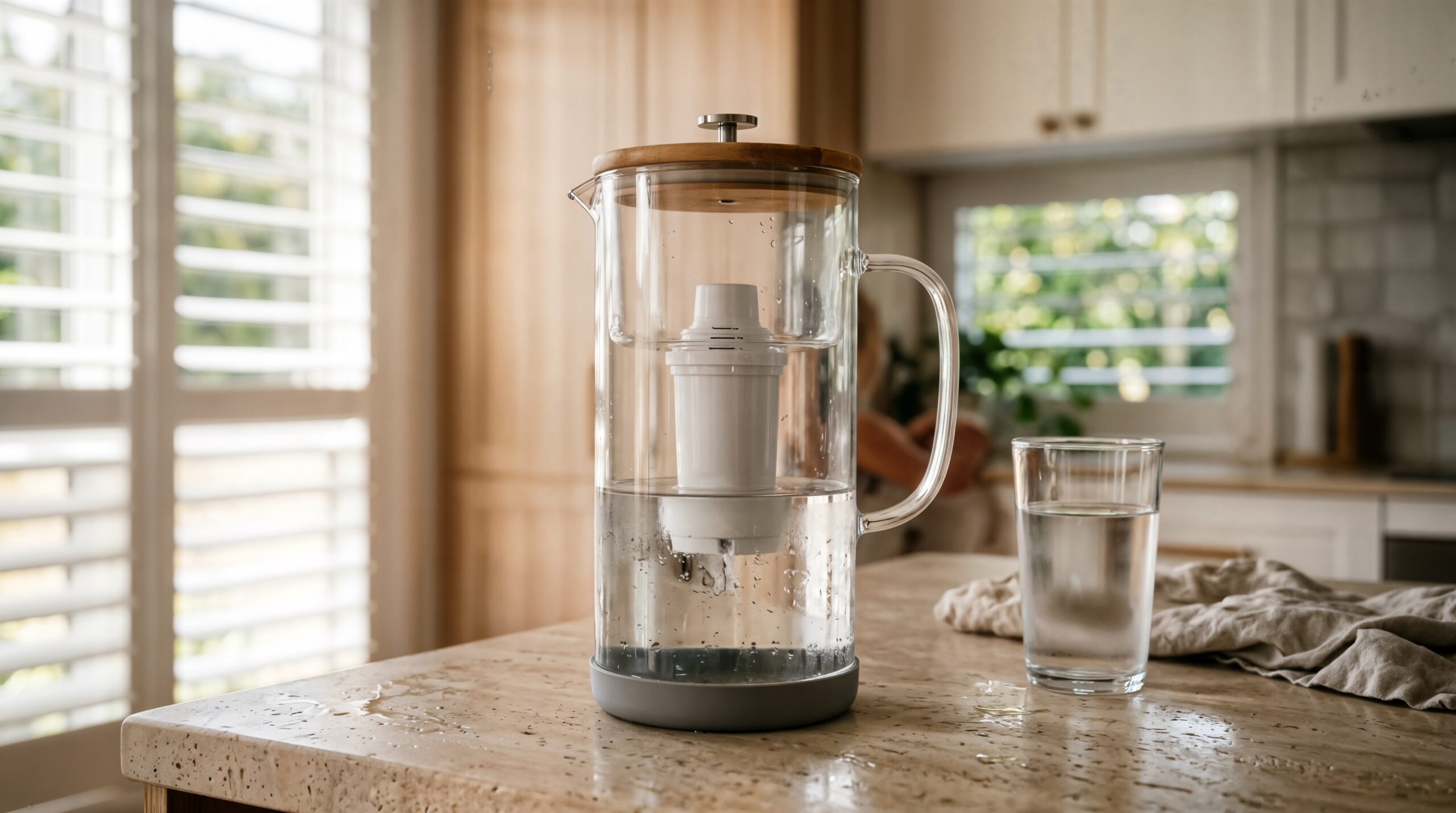
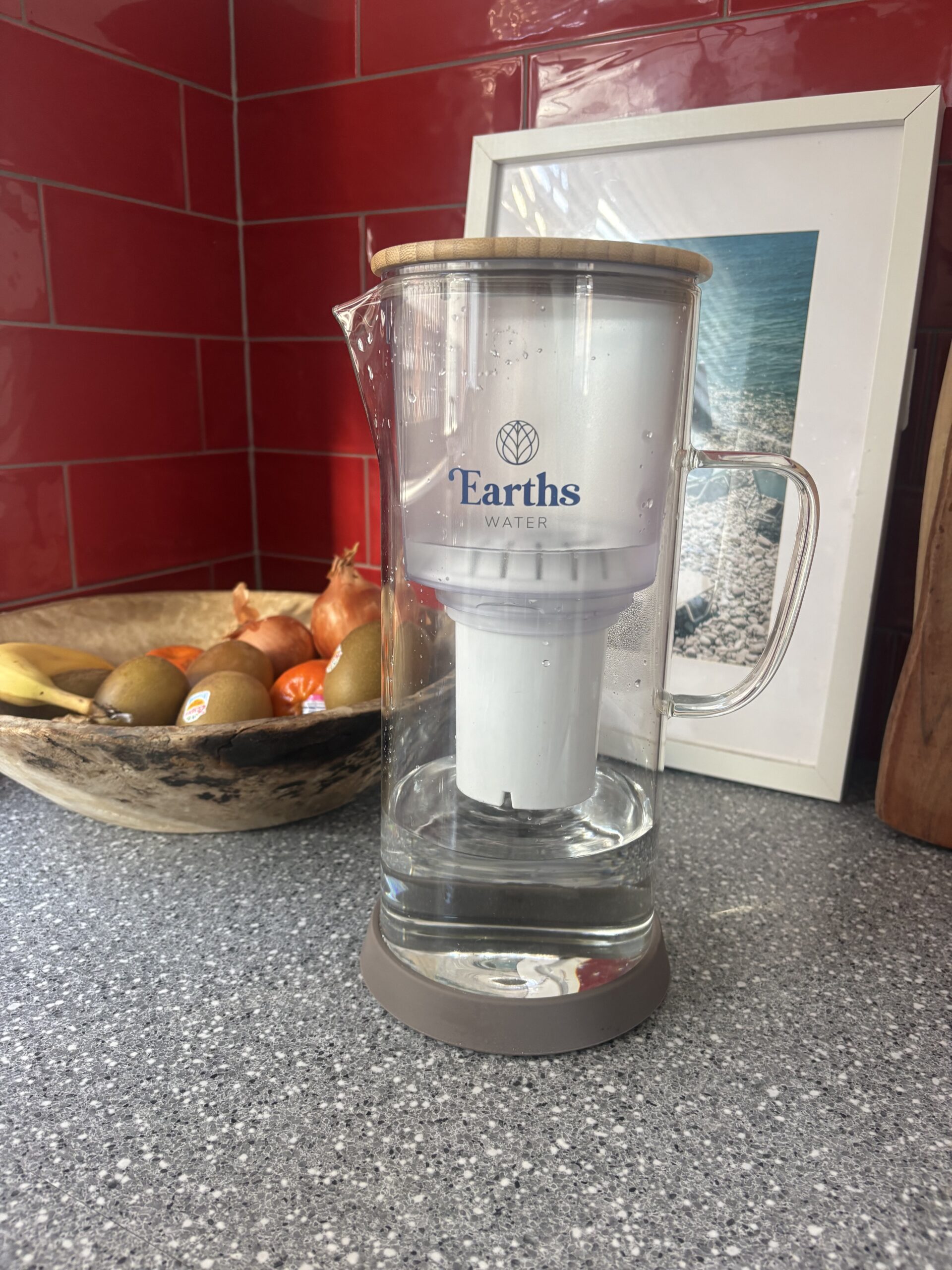
The carafe is heavy. That is the first thing you will notice when you pick it up empty. Borosilicate glass — the same material used in laboratory glassware and quality cookware — has a specific gravity of roughly 2.23 g/cm³, which is dense. This is not a product you handle carelessly, but it is also not a product that flexes, scratches from standard kitchen contact, or leaches anything into your water over time. Borosilicate is chemically inert across the pH range you will encounter in domestic water filtration. It does not absorb odours. It does not degrade. If you have ever used a glass French press for ten years without issues, you understand the material.
The bamboo lid is the correct aesthetic and functional choice for the top of a water carafe. It is dimensionally stable, antimicrobial, and does not warp with moisture contact the way untreated timber would. The grey rubber non-slip base keeps the carafe planted on a bench — no sliding when you remove the upper filter chamber, which is important because you are working with a full glass vessel. The plastic components (the filter housing, the sealing collar between upper and lower chambers, the pour spout guard) are BPA-free. The product page does not specify LFGB food-contact certification for these components, which is something worth asking the brand directly if food-contact plastic certification is important to you.
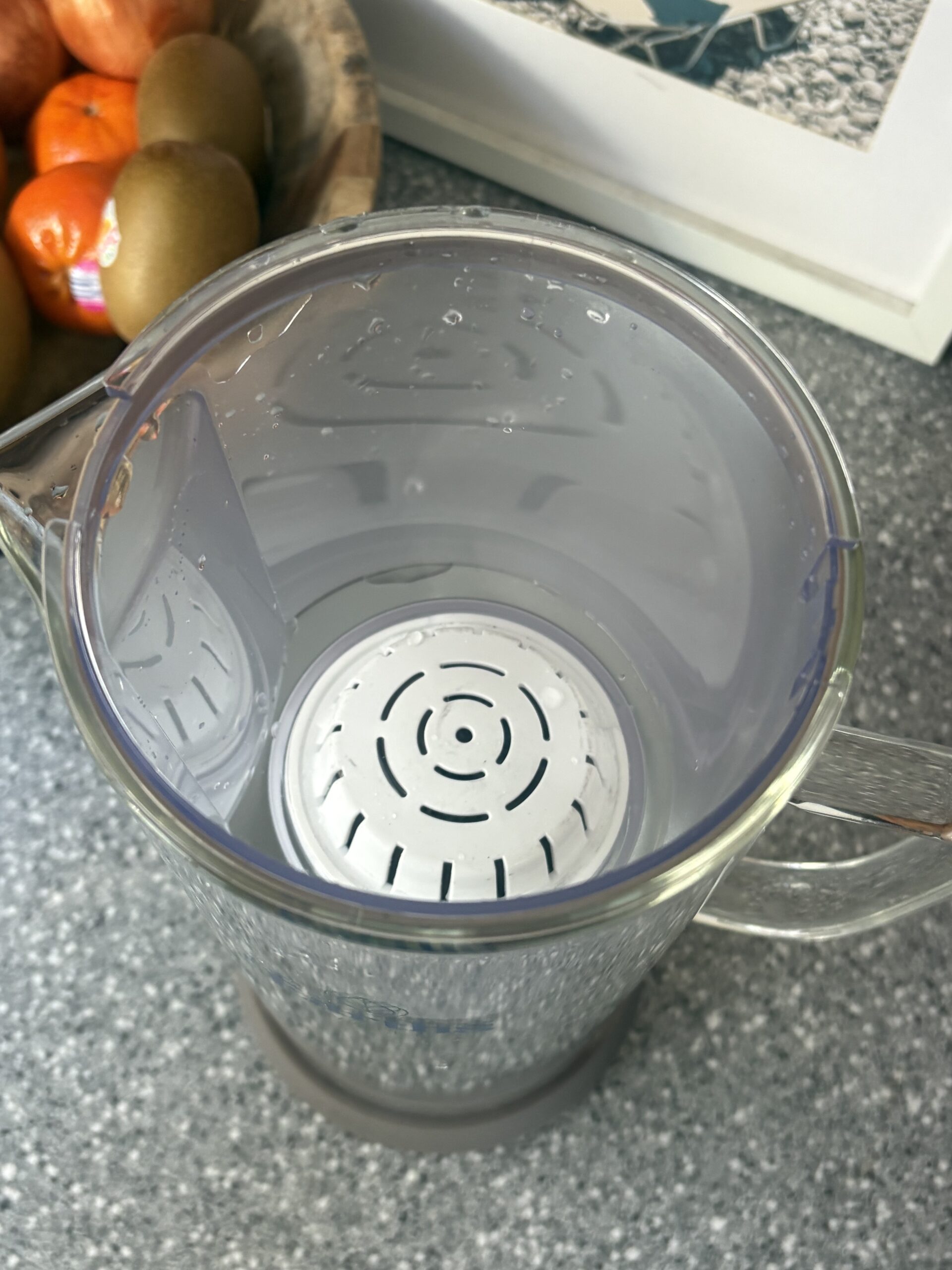
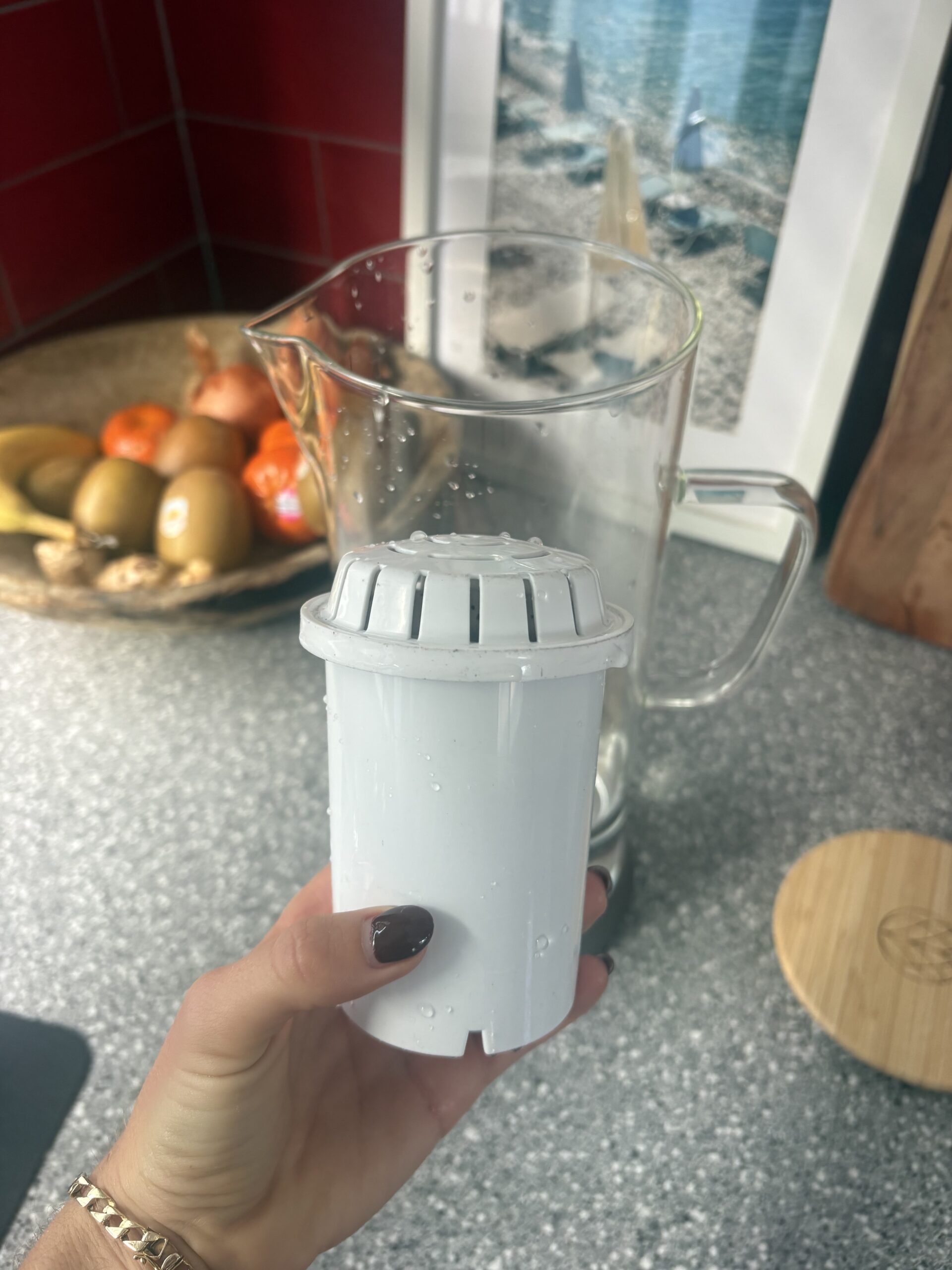
The filter replacement mechanism is genuinely simple. The upper chamber lifts out, the COREtech™ cartridge pushes up and out from below, the new cartridge pushes in, the chamber drops back on. Under sixty seconds. No tools, no O-ring wrestling, no reservoir disassembly. This matters more than it sounds — people replace filters when it is easy. When it is complicated, they defer, and then they are drinking water through a saturated, depleted cartridge and calling it filtered.
Mid-article: See the carafe price
Earths Water 3.5L Glass Carafe — See Current Price →Free shipping available — ships from AustraliaThe COREtech™ Filtration System — What the Chemistry Actually Does
The COREtech™ cartridge uses two filtration mechanisms working in sequence. The first is natural coconut shell activated carbon — a high-surface-area adsorbent that physically captures chlorine, chloramine (at a slower rate than free chlorine, but meaningfully better than standard GAC), THMs, VOCs, PFAS compounds, pesticides, herbicides, and organic taste and odour compounds. Coconut shell carbon is preferred over coal-based carbon for its higher micropore density and lower trace metal contamination. This is the right specification for a consumer filter cartridge.
The second mechanism is ion exchange resin — the component that addresses heavy metals (lead, copper, aluminium, arsenic, cadmium, mercury) and, according to the product page, fluoride. Ion exchange works by swapping ions in the water for different ions bound to the resin matrix. For heavy metals this is well-established. For fluoride, the ion exchange mechanism is less commonly used than activated alumina or reverse osmosis, and the efficiency varies significantly by resin type, pH, and contact time. Earths Water does not publish a fluoride rejection percentage anywhere on the product page or in the available documentation. If fluoride reduction is your primary concern, you need to contact the brand directly for the relevant test data, or use a reverse osmosis system that achieves 94–97% fluoride removal under NSF/ANSI 58 conditions.
The mineralisation function adds calcium, magnesium, and trace elements to the filtered water, targeting an output pH of 7.4–8.5 (mildly alkaline). The clinical evidence for broad-spectrum health benefits from alkaline water at these pH ranges is not settled. What is not disputed is that removing chloramine, heavy metals, and synthetic organic compounds from daily drinking water at 2+ litres per day is beneficial. The mineralisation stage is an added feature, not the core functional proposition.
Real-World Performance — Taste, Flow Rate, and What the TDS Meter Confirmed
Flow rate with gravity filters is a function of physics. Water moves through the filter cartridge under gravity alone — no pump pressure, no mains pressure, no electricity. At a full 3.5L upper chamber, the Earths Water carafe filters at a reasonable rate for this format: you are not watching it drip, but you are also not getting near the speed of a tap. For a 2-person household using the carafe as a chilled-water-from-the-fridge system, the flow rate is not a constraint — you fill it in the morning and evening, and filtered water is ready when you want it. Where flow rate becomes relevant is if you try to use it to fill a 1L water bottle in a hurry. That is not the use case this product is designed for.
On the TDS question: Palm Beach mains at 69 ppm. After two priming cycles and a full filtering pass, the output measured marginally different — within a few ppm either direction, which is within normal measurement variance. This is exactly what a mineral-addition filter should show. If your TDS was dramatically lower post-filter with this product, it would indicate the ion exchange resin was stripping minerals rather than selectively removing contaminants — that would be the wrong behaviour. The COREtech™ system is designed to keep and add minerals, not to produce demineralised water. That is the correct design decision for a drinking water product, unless your goal is sub-5 ppm water — in which case, you need reverse osmosis.
The chloramine and taste assessment was unambiguous. Palm Beach mains carries a faint chloramine taste at certain periods when Seqwater adjusts disinfection levels — it is subtle enough to miss if you are not looking for it, but obvious once you have tasted filtered output alongside it. Post-filter, the taste profile was clean: no chemical note, no aftertaste, notably softer mouthfeel. The mineralisation stage contributes to this — water with calcium and magnesium present simply tastes better than stripped or very-low-TDS water.
How It Compares — and What 5 Years Actually Costs
The Earths Water 3.5L Glass Carafe occupies a specific position in the market: it is a glass-bodied jug filter at a premium price, targeting buyers in chloramine cities who have outgrown plastic Brita-style jugs and are not ready or able to install an under-sink system. Understanding where it sits against the alternatives is the most useful framing for the purchase decision.
| Feature | Earths Water 3.5L Glass | Brita Marella (2.4L) | Earths Water 9L Benchtop | Tappwater EcoPro |
|---|---|---|---|---|
| Price (AUD) | $249 | ~$40 | ~$329 | ~$149 |
| Capacity | 3.5L | 2.4L | 9L | ~3L |
| Body material | Borosilicate glass | Plastic | Borosilicate glass | Plastic |
| Chloramine removal | ✓ Claimed (COREtech) | ✗ Fails in chloramine cities | ✓ Claimed (COREtech) | ✓ Catalytic carbon |
| Fluoride removal | ⚠ Claimed — no rate published | ✗ No | ⚠ Claimed — no rate published | ✗ No |
| Heavy metals | ✓ Yes (ion exchange) | ⚠ Partial | ✓ Yes (ion exchange) | ⚠ Partial |
| Filter life | 350L / 3 months | 150L / 1 month | 350L / 3 months | ~300L / 3 months |
| Fridge-compatible | ✓ Yes | ✓ Yes | ✗ Too large | ✓ Yes |
| Independent cert. | ⚠ “Global labs” — no NSF listed | ✓ NSF 42 | ⚠ “Global labs” — no NSF listed | ⚠ EU EN 14476 / NSF pending |
On cost over five years, at a 2-person household rate of 4L filtered water per day (1,460L/year), here is what each option actually costs you. These are total cost of ownership figures — upfront purchase plus filter replacements — not marketing claims.
The Earths Water carafe at $979 over five years sits between the Tappwater EcoPro (cheaper, plastic, no glass advantage) and the AquaTru Classic RO (more expensive, but NSF 58 certified, removes fluoride to 94–97%). See our full countertop water filter comparison if you are weighing the carafe against these alternatives side by side.
The Catches — What You Need to Know Before Buying
No named independent certification. The product page states “tested by leading global laboratories” and “filtration process backed by 20 years of research.” These are not certifications. NSF/ANSI 53 (health effects — chloramine, heavy metals, VOCs) and NSF/ANSI 42 (aesthetics — taste and odour) are the relevant standards for a product making the claims COREtech™ makes. LFGB is the European food-contact certification for the plastic components. None of these appear named anywhere in the Earths Water product documentation. For a product at $249 targeting buyers who care about what is in their water, the absence of named certification is a genuine gap. It does not mean the claims are false — it means they are unverified by an independent third party to a published standard.
Fluoride rejection rate is not published. The product page lists fluoride in the removal claims. The ion exchange mechanism is plausible for partial fluoride removal. But without a published rejection percentage under specified test conditions, you cannot plan filtration around it. If fluoride reduction is a priority for you — and in Brisbane, Sydney, and Melbourne at 0.6–1.0 mg/L fluoridation, it is a reasonable concern — treat the fluoride claim as an unconfirmed bonus, not a verified performance specification. For confirmed fluoride removal, the only reliable consumer options are reverse osmosis (94–97%) or activated alumina (80–95%).
Filter life is short. 350 litres or 3 months means 4–5 filter replacements per year for a 2-person household at typical daily drinking water volume. At $35 per replacement, that is $140–175 per year in consumables. This is not unusual for the category — Brita Maxtra+ replaces at 150L and costs $10–12 each — but it is worth budgeting into the purchase decision. Set a calendar reminder the day you install a new cartridge. This is not a filter you want to run past its service interval.
Final Verdict
The Earths Water 3.5L Glass Carafe does what it claims to do for most of the things that matter. It removes the chloramine taste and smell from Brisbane and Sydney tap water. It is built from materials that will not introduce new contaminants into the water you are trying to clean up. It fits in a fridge. The filter replacement is fast enough that you will actually do it. At $249, it is expensive for a jug-format filter — but that price buys you borosilicate glass over plastic, COREtech™ carbon plus ion exchange over standard GAC, and an Australian company with local warranty support.
The honest limitations are real but manageable. The certification gap is a transparency issue, not necessarily a performance issue. The fluoride removal is unconfirmed — do not rely on it. The short filter life requires disciplined maintenance. None of these are reasons to not buy the product; they are reasons to buy it with accurate expectations.
Buy it if: You are in a chloramine city, want glass over plastic, do not need fluoride reduction as a primary function, and want filtered water chilled in the fridge without installing anything under your sink.
Look at the Tappwater EcoPro instead if: budget is the deciding factor — it handles chloramine at $100 less upfront.
Look at the AquaTru Classic RO if: you need fluoride removal confirmed by NSF/ANSI 58, or want the full contaminant removal profile that only reverse osmosis delivers.
Bottom line for Australian households
The best glass filter jug for chloramine cities. Buy it if you are in Brisbane, Sydney, Adelaide, or Perth and want glass over plastic. For confirmed fluoride removal, step up to reverse osmosis.
Last reviewed: June 2026 — Clean and Native. Sources: Earths Water AU product page; ADWG 2022 (fluoride 0.6–1.0 mg/L guideline); Seqwater Water Quality Report 2025; personal testing, Palm Beach QLD.
Frequently Asked Questions
Does the Earths Water 3.5L Glass Carafe remove chloramine?
Yes — the COREtech™ filtration system uses coconut shell activated carbon plus ion exchange resin, which the manufacturer claims removes chloramine as part of its up-to-98% contaminant removal. Standard Brita-style carbon jugs do not adequately address chloramine, making the Earths Water carafe a meaningful upgrade for households in Brisbane, Sydney, Adelaide, and Perth where chloramine is the primary disinfectant.
Does the Earths Water 3.5L Glass Carafe remove fluoride?
Earths Water claims fluoride removal via the ion exchange resin in the COREtech™ cartridge, but does not publish a fluoride rejection percentage. Ion exchange can partially remove fluoride depending on resin type and contact time, but the removal rate is unconfirmed for this product. If fluoride removal is your primary concern, a reverse osmosis system (which removes 94–97% under NSF/ANSI 58 conditions) is the verified option.
Is the Earths Water carafe actually glass or plastic?
The main carafe body and the lower water storage chamber are borosilicate glass — the same material used in laboratory glassware and quality cookware. It is chemically inert, does not leach, and does not absorb odours. The filter housing, sealing collar, and pour spout components are BPA-free plastic. The lid is natural bamboo and the base is grey rubber.
How long does the Earths Water COREtech filter last?
Each COREtech™ filter cartridge is rated for 350 litres or 3 months — whichever comes first. For a 2-person household drinking approximately 4 litres of filtered water per day, this means approximately 4 to 5 filter replacements per year. Set a calendar reminder when you install a new cartridge — running past the service interval reduces filtration performance significantly.
Will the Earths Water carafe fit in a standard fridge?
Yes — the 3.5L carafe is designed to be fridge-compatible. This is one of the key advantages over the larger 9L Benchtop model, which is too large for standard fridge shelves. The carafe format is specifically suited to 1–2 person households who want chilled filtered water on demand without a benchtop footprint.
Does a Brita work in Brisbane?
No — not for chloramine removal. Brisbane and the entire South East Queensland grid uses chloramine as its primary disinfectant. Standard Brita Maxtra+ cartridges use granular activated carbon (GAC), which removes chloramine at approximately 1/40th the rate it removes free chlorine. At typical jug filter contact times, a Brita removes negligible chloramine from SEQ or Sydney tap water. For chloramine cities you need catalytic carbon, compressed carbon block, or reverse osmosis.
What is the TDS of Earths Water carafe output?
The COREtech™ system adds minerals to the filtered water, so the output TDS will be similar to or slightly higher than your input water — not lower. This is by design. Unlike reverse osmosis, which strips dissolved solids to produce very low TDS water, the Earths Water carafe targets contaminant removal while preserving and adding beneficial minerals. If your goal is sub-5 ppm TDS drinking water, you need reverse osmosis.
Is Earths Water an Australian company?
Yes — Earths Water is an Australian-owned and operated company. Products are dispatched from Australia, which means standard Australian Consumer Law warranty protections apply. For a daily-use water filtration product, local warranty support and the ability to return or claim under ACL is a practical consideration worth factoring into the purchase decision.
How does the Earths Water 3.5L compare to the 9L Benchtop?
Both products use the same COREtech™ filter cartridge and the same filtration chemistry. The differences are format and volume: the 3.5L Carafe is fridge-compatible and suited to 1–2 person households; the 9L Benchtop sits on a kitchen bench, stores more filtered water, and suits 2–4 person households who need higher daily volume. The carafe is the portable, chilled-water option; the 9L Benchtop is the higher-throughput benchtop dispenser.
Does the Earths Water carafe have NSF certification?
No named NSF certification appears on the Earths Water 3.5L Glass Carafe product page. The brand states the product has been “tested by leading global laboratories” — but this is not the same as independent certification to a published standard such as NSF/ANSI 42, 53, or 58. For buyers where third-party certification is a non-negotiable requirement, this is the product’s most significant limitation. The AquaTru Classic RO carries NSF/ANSI 42, 53, and 58 certification and is the certified alternative at a higher price point.
Get the Australian Home Environment Checklist
30 checks across water, air and EMF. Most of them free. Ranked by impact.
No spam. Unsubscribe any time.

Former Royal Australian Navy Clearance Diver and TAG-E counter-terrorism operator. Founded Clean and Native to apply the same rigorous thinking to the home environment.
Full biography →