Fluoride Levels in Australian Tap Water by State 2026
Australian tap water fluoride levels are regulated under the ADWG at a target range of 0.6 to 1.1 mg/L depending on climate, but actual concentrations vary significantly by state — from near-zero in unfluoridated Queensland towns to a consistent 1.0 mg/L across metropolitan Sydney and Melbourne. If you want to reduce fluoride in your drinking water, only reverse osmosis (90-97% removal) or activated alumina (80-95% removal) will do it — standard carbon filters, including catalytic carbon, cannot remove fluoride at all.
Most Australians receive fluoridated tap water at 0.6-1.0 mg/L, well within the ADWG maximum of 1.5 mg/L, but the actual concentration you drink depends on your state, your local council, and whether your supply is naturally or artificially fluoridated. Nationally, about 90% of the population receives fluoridated water — but Queensland drags that average down significantly, with many regional councils opting out entirely. If you want to remove or reduce fluoride, a countertop or under-sink reverse osmosis system is the only practical household option. Carbon filters — Brita jugs, benchtop carbon blocks, even catalytic carbon — do not touch fluoride. Not partially. Not at all.
Key catches
- Carbon filters (GAC, catalytic, block) cannot remove fluoride — this is the single most common buyer mistake
- Unfluoridated towns (mostly regional QLD) typically test below 0.1 mg/L naturally — reduction is unnecessary there
- The ADWG health-based guideline value for fluoride is 1.5 mg/L, but target dosing ranges from 0.6 to 1.1 mg/L depending on climate zone
- Dental fluorosis risk increases above 1.5 mg/L in children under 8 — well above Australian tap water targets
| Filter Technology | Fluoride Removal | Verdict |
|---|---|---|
| Reverse Osmosis (RO) | 90-97% | Recommended — best household option |
| Activated Alumina | 80-95% | Effective but requires pH control and media replacement |
| Bone Char | Up to 90% (varies with contact time) | Niche — limited availability in AU, performance drops with use |
| Carbon (GAC, catalytic, block) | 0% | Does not remove fluoride |
| KDF-55 | 0% | Does not remove fluoride |
How Fluoride Gets Into Australian Tap Water
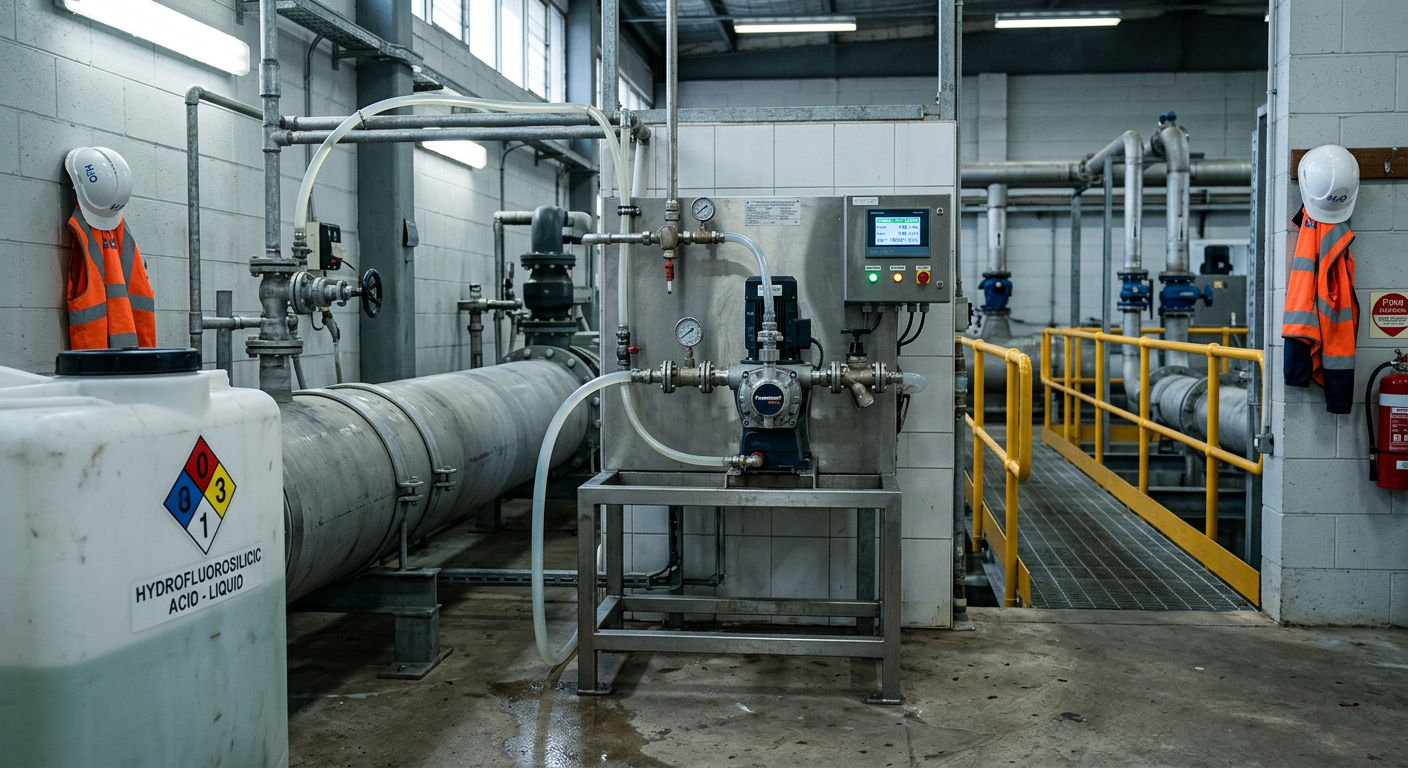
There are two ways fluoride ends up in your drinking water: it occurs naturally in the source water, or your water utility adds it. Most Australians receive artificially fluoridated water — meaning hydrofluorosilicic acid or sodium fluorosilicate is dosed into the treatment process at a controlled rate. Understanding which type you are dealing with matters, because the concentrations are very different.
Natural fluoride in Australian groundwater and surface water is typically well below 0.1 mg/L, according to the NHMRC Australian Drinking Water Guidelines. This means that if your town does not fluoridate, your tap water contains trace amounts — essentially negligible from a dental or health perspective. The fluoride you are drinking in Sydney, Melbourne, Brisbane, Perth, or Adelaide is almost entirely added during treatment.
The ADWG sets a health-based guideline value of 1.5 mg/L as the upper limit for fluoride in drinking water. This is the concentration above which dental fluorosis risk increases, particularly in children under eight whose permanent teeth are still forming. But the target dosing range is much lower: 0.6 to 1.1 mg/L, adjusted for climate. Hotter regions (northern Queensland, Darwin, Western Australia) use the lower end of the range because people drink more water. Cooler climates (Melbourne, Hobart, Canberra) can dose toward the upper end.
The NHMRC reviewed this target range in their 2017 Public Statement and reaffirmed the 0.6-1.1 mg/L band as appropriate for Australian conditions. SEQ Water’s network fluoridates within the 0.6 to 0.8 mg/L band, sitting in the middle of the target range.
Fluoride Levels by State and Territory — 2026 Data
Here is the state-by-state breakdown of fluoride concentrations in Australian tap water. No other resource online quantifies these numbers alongside population coverage and regulatory authority in a single table. This is the reference.
| State / Territory | Typical Fluoride (mg/L) | Population Covered (%) | Regulatory Authority | Disinfection Type |
|---|---|---|---|---|
| ACT | 0.8-1.0 | ~100% | ACT Health / Icon Water | Free chlorine |
| NSW | 0.6-1.0 | ~96% | NSW Health / Fluoridation of Public Water Supplies Act 1957 | Chloramine (Sydney metro); free chlorine (regional) |
| VIC | 0.7-1.0 | ~90% | DHHS Victoria / Health (Fluoridation) Act 1973 | Free chlorine |
| QLD | 0.6-0.8 (fluoridated); <0.1 (unfluoridated) | ~79% | QLD Health / Water Fluoridation Act 2008 (council discretion) | Chloramine (SEQ); free chlorine (regional) |
| SA | 0.7-0.9 | ~90% | SA Health / SA Water | Chloramine |
| WA | 0.7-0.9 (Perth metro); variable (regional) | ~92% | WA Health / Water Corporation | Chloramine |
| TAS | 0.7-1.0 | ~90% | TAS Health / TasWater | Free chlorine |
| NT | 0.6-0.7 (Darwin); <0.1 (remote) | ~70% | NT Health / Power and Water Corporation | Chloramine (Darwin) |
NSW — The Most Comprehensively Fluoridated State
New South Wales has the longest legislative history of fluoridation in Australia. The Fluoridation of Public Water Supplies Act 1957 gives NSW Health the authority to direct water utilities to fluoridate, and approximately 96% of the population receives fluoridated water as a result. Sydney Water Corporation (which services metropolitan Sydney, the Illawarra, and the Blue Mountains) doses at a target of 1.0 mg/L — the highest consistent target in the country.
If you live in Penrith, western Sydney, or the Blue Mountains, your water passes through the Warragamba or Prospect treatment plants and receives fluoride at 0.9-1.0 mg/L. Hunter Water in Newcastle targets a similar range. The only NSW residents receiving unfluoridated water are those on private bores or a handful of very small regional supplies. For the vast majority, your NSW tap water contains fluoride at approximately 1.0 mg/L.
Remember: Sydney metro uses chloramine disinfection, not free chlorine. If you install a filter to remove fluoride, your system also needs to handle chloramine — and standard GAC carbon will not cut it. You need reverse osmosis, which addresses both problems simultaneously.
QLD — The Outlier State
Queensland is the reason Australia’s national fluoridation rate is not above 95%. The Water Fluoridation Act 2008 gave Queensland councils the power to decide whether to fluoridate their local supply — and many said no. As of 2026, approximately 79% of Queenslanders receive fluoridated water, but that number masks enormous local variation.
SEQ Water (serving Brisbane, Gold Coast, Sunshine Coast, Ipswich, Logan, and surrounding areas) fluoridates at 0.6-0.8 mg/L. If you live anywhere from Caboolture to Coolangatta on reticulated supply, you are receiving fluoridated water. But drive two hours north to Bundaberg or south-west to Toowoomba (which stopped fluoridation in 2014), and your tap water contains less than 0.1 mg/L fluoride naturally.
Cairns (population ~160,000) voted against fluoridation in a 2013 referendum. Townsville fluoridates. Rockhampton does not. Mackay does. This patchwork makes Queensland actually unique — your fluoride exposure depends entirely on which council area you live in, not the state government. If you are in a regional QLD town and want to know whether your water is fluoridated, check your local council’s annual water quality report or call them directly.
VIC — Very Soft Water, Moderate Fluoride
Melbourne Water fluoridates at 0.7-1.0 mg/L across the Yarra Valley, South East, and Greater Western catchments. Melbourne’s famously soft water (approximately 25 mg/L CaCO₃, TDS around 60 mg/L) means that fluoride is essentially the most significant added substance in the supply. Regional Victorian cities including Geelong, Ballarat, and Bendigo also fluoridate.
Melbourne uses free chlorine — not chloramine — for disinfection. This means a standard carbon block filter will remove taste and chlorine effectively, but it will not remove fluoride. If fluoride reduction is your goal, you still need RO or activated alumina, regardless of how clean Melbourne’s base water is.
WA — Hard Water With Added Fluoride
Western Australia introduced fluoridation in 1968, and Water Corporation’s 2023-24 Drinking Water Quality Annual Report confirms that Perth metro and most major regional centres receive fluoridated water at 0.7-0.9 mg/L. Coverage sits at approximately 92% of the state population.
The wrinkle in WA is water hardness. Perth households face the hardest tap water of any Australian capital at approximately 180 mg/L CaCO₃ (TDS around 170 mg/L). Combined with chloramine disinfection, this creates a double challenge: standard carbon filters fail on chloramine, and hard water accelerates scale build-up in filter housings. RO is the most logical choice for Perth households — it handles fluoride, chloramine, hardness, and elevated TDS in a single system.
Residents in the Kwinana industrial corridor and Rockingham areas face the additional consideration of potential PFAS contamination from nearby industrial sites — another contaminant that only RO addresses effectively (NSF/ANSI P473 certification).
SA, TAS, NT — State-Specific Notes
South Australia fluoridates at 0.7-0.9 mg/L via SA Water, covering approximately 90% of the population. Adelaide’s water is notably hard (approximately 140 mg/L CaCO₃, TDS around 400 mg/L) and uses chloramine disinfection. Like Perth, RO is the most practical technology for Adelaide residents wanting to address fluoride, chloramine, and hardness together.
Tasmania fluoridates most major centres through TasWater at 0.7-1.0 mg/L. Hobart uses free chlorine. With very soft water (approximately 15 mg/L CaCO₃, TDS around 25 mg/L), Hobart has some of the simplest base water chemistry in the country — but fluoride removal still requires RO or activated alumina, not carbon.
Northern Territory fluoridates Darwin and a few regional centres at 0.6-0.7 mg/L (lower target due to higher average water consumption in the tropical climate). Darwin uses chloramine disinfection. Remote communities — many on bore water — are largely unfluoridated and may have naturally elevated fluoride from geological sources, sometimes exceeding the ADWG 1.5 mg/L guideline. If you are on an NT bore, test before filtering.
Natural Fluoride vs. Added Fluoride — Why the Distinction Matters
Every competitor article on this topic mentions “adjusted fluoride levels” without explaining the critical difference between what is already in your water and what gets added. Here is why it matters.
Natural fluoride in Australian surface water and most groundwater sits below 0.1 mg/L, according to the NHMRC. This is trace-level — barely detectable. Some bore water in specific geological formations (particularly in parts of the NT, WA, and western NSW) can contain naturally elevated fluoride, occasionally exceeding 1.5 mg/L. The ADWG health-based guideline value of 1.5 mg/L exists specifically because of these natural occurrences, not because water utilities risk over-dosing.
Artificially fluoridated water uses one of three compounds: hydrofluorosilicic acid (the most common in Australia), sodium fluorosilicate, or sodium fluoride. These are added at tightly controlled rates by automated dosing systems with real-time monitoring. The fluoride ion released into the water is chemically identical regardless of source — natural calcium fluoride in groundwater or hydrofluorosilicic acid from a dosing pump.
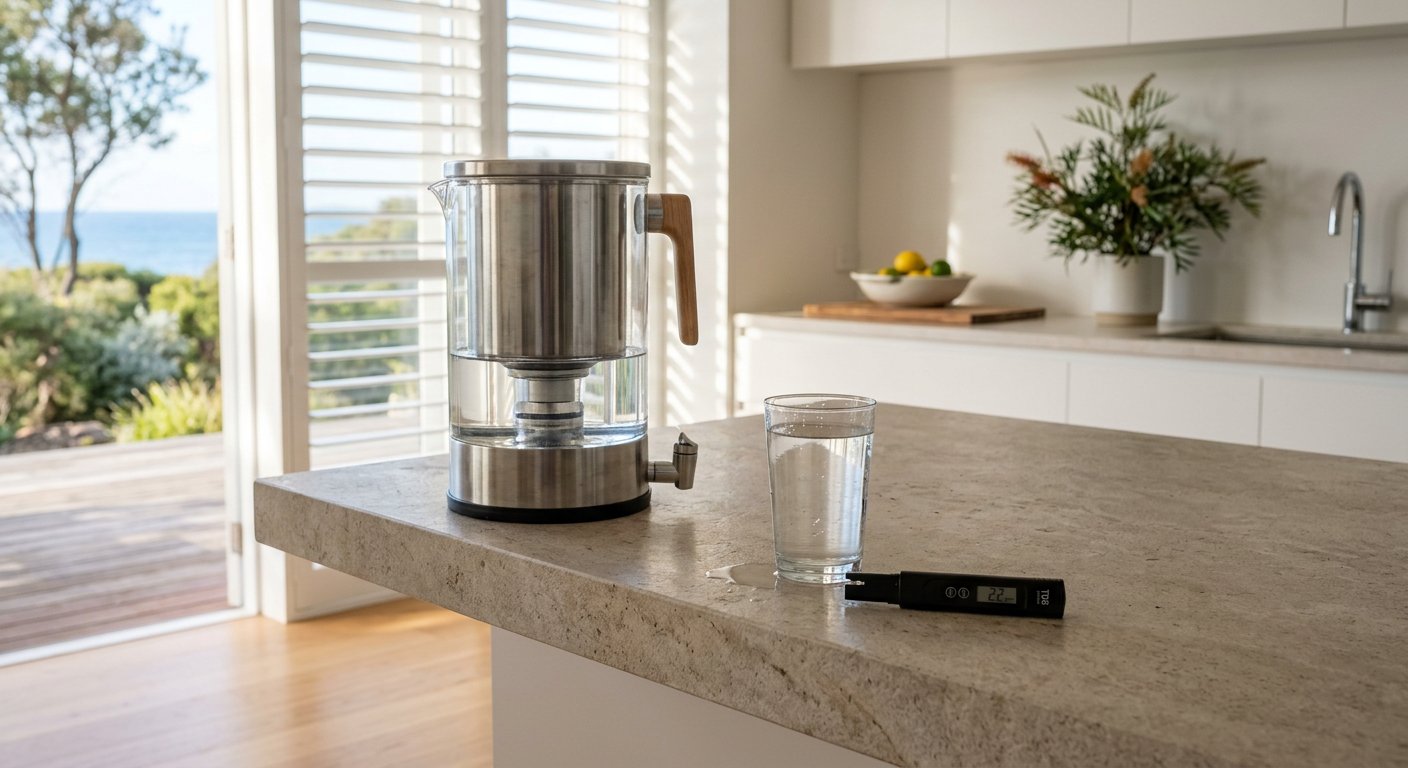
Why does this matter for filtration decisions? Because you should test before you filter. If you are in an unfluoridated town like Cairns, Bundaberg, or Toowoomba, your water already contains less than 0.1 mg/L fluoride. Spending $500-$700 on a reverse osmosis system specifically for fluoride removal would be solving a problem you do not have. Use a $20 TDS meter as a baseline indicator, and request your local council’s annual water quality report for the specific fluoride concentration.
Conversely, if you are on bore water in a region with naturally high fluoride (parts of the Pilbara in WA, or western NSW), you may be exposed to concentrations above the ADWG guideline — and RO becomes a health-protective measure, not a preference. Get your water laboratory-tested. A NATA-accredited lab test costs $50-$100 and gives you the exact number.
Not sure which filter actually fits your situation?
Fluoride is only one variable — chloramine, PFAS, and hardness all differ by city and supply type. Our full roundup compares and ranks every major option for Australian tap water conditions.
See the Best Water Filter Australia Rankings →Dental Fluorosis Threshold and Health Context
If you have children under eight, this is the section that matters most. Dental fluorosis — the white speckling or mottling of developing tooth enamel — is caused by excessive fluoride intake during tooth formation. The NHMRC identifies 1.5 mg/L as the threshold above which the risk of dental fluorosis increases meaningfully. Australian dosing targets (0.6-1.1 mg/L) are set deliberately below this threshold.
The practical reality: at 0.6-1.0 mg/L in tap water, the risk of anything more than very mild cosmetic fluorosis is low. The NHMRC’s 2017 systematic review of water fluoridation found that fluoridation at Australian target levels reduces tooth decay by 26-44% in children and 27% in adults. These are population-level statistics from Australian data, not extrapolations from overseas studies.
However, fluoride exposure is cumulative. Your child is not only exposed through tap water — they are exposed through toothpaste (typically 1,000-1,500 mg/kg fluoride), any swallowed mouthwash, and fluoride in processed food and beverages manufactured with fluoridated water. For parents who want to reduce total fluoride exposure while maintaining dental health through topical application (toothpaste), filtering the drinking water while continuing to use fluoride toothpaste is a coherent approach. This is not anti-fluoride — it is dose management.
For adults with no developing teeth, the health considerations are different. The WHO, NHMRC, and ADWG all agree that fluoride at 0.6-1.1 mg/L poses no established health risk to adults. The decision to filter fluoride at these concentrations is a personal preference, not a medical necessity. Make it an informed one based on your actual water concentration, not fear.
Which Filters Actually Remove Fluoride (and Which Do Not)
This is where most people get it wrong, because filter marketing is deliberately vague. Here is the physics.
Reverse osmosis (RO) removes 90-97% of fluoride. An RO membrane has pore sizes around 0.0001 microns — small enough to reject dissolved fluoride ions. A countertop RO unit like the AquaTru Classic or an under-sink unit like the Waterdrop D6 will reduce 1.0 mg/L fluoride down to 0.03-0.10 mg/L — essentially the same as unfluoridated water. RO also handles chloramine (critical for Brisbane, Sydney, Adelaide, Gold Coast, and Darwin), PFAS, lead, and hardness. One system, multiple contaminants.
Activated alumina removes 80-95% of fluoride. It works through adsorption — the fluoride ions bind to the aluminium oxide media surface. The catch: performance depends heavily on water pH (best at pH 5.5-6.5, but most Australian tap water sits at pH 7.0-8.5), flow rate, and media exhaustion. As the alumina saturates, removal drops. This technology works, but requires more maintenance and monitoring than RO.
Bone char (bone charcoal) can remove fluoride, with removal rates up to 90% under ideal conditions. It works through a combination of ion exchange and adsorption. The limitation: bone char is not widely available in Australian filter systems, performance degrades as the media loads up, and contact time requirements mean it works best in gravity-fed or slow-flow configurations. It is a viable option for those who specifically want to avoid RO’s water waste ratio, but it is niche.
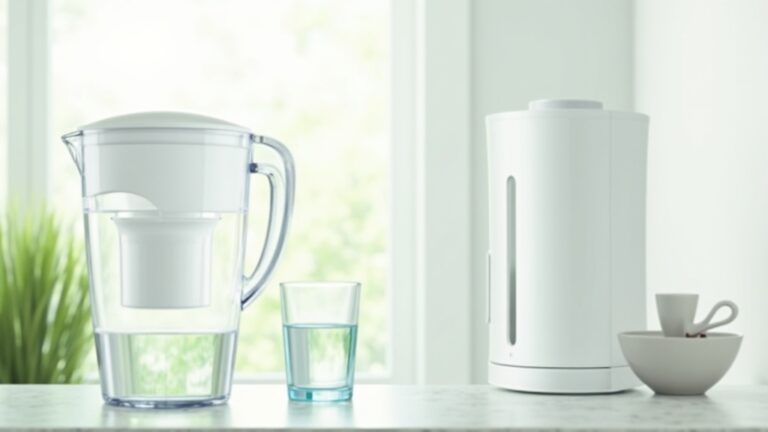
Carbon filters — all types — remove zero fluoride. Granular activated carbon (GAC), carbon block, catalytic carbon, coconut shell carbon. None of them. The fluoride ion is too small and chemically stable to be adsorbed by carbon media. A Brita jug, a benchtop carbon filter, an under-sink carbon block — they will improve taste, remove chlorine (free chlorine only — not chloramine in Brisbane, Sydney, Adelaide, Gold Coast), and reduce some organic compounds. But fluoride passes straight through. If a carbon filter brand claims fluoride removal, ask for NSF/ANSI 53 test data specific to fluoride. They will not have it, because carbon does not remove fluoride.
KDF-55 removes zero fluoride. KDF is a zinc-copper alloy media designed for heavy metal and free chlorine reduction. It has no mechanism for fluoride removal. Shower filters using KDF-55 (which is most of them) do nothing for fluoride in your shower water. They also do nothing for chloramine, which is a separate problem for Brisbane, Sydney, Adelaide, Gold Coast, and Darwin households — use a vitamin C shower filter in those cities.
Decision Tree — Do You Need a Fluoride Filter?
Three questions. That is all you need to answer.
Question 1: Is your water supply fluoridated? Check your council’s annual water quality report or call your water utility. If your supply is unfluoridated (regional QLD towns like Cairns, Bundaberg, Toowoomba, or remote NT communities on bore water with no treatment), your tap water likely contains less than 0.1 mg/L fluoride. You do not need a fluoride filter. If your supply IS fluoridated (most of Australia), proceed to Question 2.
Question 2: What is your primary concern? If you want to reduce fluoride specifically — whether for children under eight, cumulative exposure management, or personal preference — you need RO or activated alumina. Carbon will not do it. No exceptions. If your primary concern is taste and chlorine/chloramine, a catalytic carbon block may suffice, but it will not touch fluoride.
Question 3: Can you modify your plumbing? If yes, an under-sink RO system like the Waterdrop D6 is the cleanest installation — dedicated filter tap on your sink, out of sight, 600 GPD flow rate. If you are renting or do not want to touch plumbing, a countertop RO like the AquaTru Classic sits on the bench and plugs into a power point. No plumber. No landlord approval. Same fluoride removal performance.
That is the decision. The filter technology that matches your situation is not a matter of opinion — it is a matter of chemistry. Every glass of fluoridated water you drink without an RO system contains fluoride at the level your utility set it. Whether that concerns you is your call. But if it does, now you know exactly what to buy.
5-Year Cost Comparison — RO Systems for Fluoride Removal
Every dollar you spend on bottled water to avoid fluoride is a dollar you could have invested in a system that pays for itself. Here is the maths, assuming a 4 L/day household consumption (the NHMRC baseline for an Australian adult).
| System | Upfront Cost (AUD) | Annual Filter Cost | 5-Year Total | Cost Per Litre |
|---|---|---|---|---|
| AquaTru Classic Smart Alkaline (Countertop RO) | ~$699 | ~$120 | ~$1,299 | $0.18 |
| Waterdrop D6 (Under-Sink RO) | ~$549 | ~$100 | ~$1,049 | $0.14 |
| Bottled Water (Mount Franklin / equivalent) | $0 | ~$1,460 (4L/day @ $1.00/L) | ~$7,300 | $1.00 |
| Brita Jug (carbon — does NOT remove fluoride) | ~$45 | ~$60 | ~$345 | $0.05 (but 0% fluoride removal) |
At $0.14-$0.18 per litre, RO-filtered water costs a fraction of bottled. And unlike bottled water, you are not adding to the estimated 373 million plastic bottles that go to Australian landfill annually, according to ABS waste data. The Brita jug is cheaper per litre — but it removes zero fluoride. Spending $345 over five years on a filter that does not address your stated concern is not saving money. It is wasting it.
City-Specific Filter Recommendations
Your city determines your disinfection type, which determines your filter requirements alongside fluoride. Here is the cheat sheet.
| City | Fluoride (mg/L) | Disinfection | Carbon Filter OK? | Recommended for Fluoride |
|---|---|---|---|---|
| Sydney | 0.9-1.0 | Chloramine | No (chloramine + no fluoride removal) | RO only |
| Brisbane / SEQ | 0.6-0.8 | Chloramine | No (chloramine + no fluoride removal) | RO only |
| Melbourne | 0.7-1.0 | Free chlorine | Yes for taste/chlorine; No for fluoride | RO for fluoride |
| Adelaide | 0.7-0.9 | Chloramine | No (chloramine + no fluoride removal) | RO only |
| Perth | 0.7-0.9 | Chloramine | No (chloramine + no fluoride removal) | RO only |
| Hobart | 0.7-1.0 | Free chlorine | Yes for taste/chlorine; No for fluoride | RO for fluoride |
| Canberra | 0.8-1.0 | Free chlorine | Yes for taste/chlorine; No for fluoride | RO for fluoride |
| Darwin | 0.6-0.7 | Chloramine | No (chloramine + no fluoride removal) | RO only |
| Cairns | <0.1 (unfluoridated) | Free chlorine | Yes for taste/chlorine | Not needed for fluoride |
| Toowoomba | <0.1 (unfluoridated since 2014) | Free chlorine | Yes for taste/chlorine | Not needed for fluoride |
The pattern is clear: if you live in a chloramine city (Brisbane, Sydney, Adelaide, Gold Coast, Darwin) and want fluoride removed, standard carbon filters fail on both counts. RO is not optional — it is the only technology that handles both chloramine and fluoride. In free chlorine cities (Melbourne, Hobart, Canberra), carbon handles taste and chlorine, but you still need RO specifically for fluoride.
For a deeper look at the best under-sink water filters in Australia, we have ranked the top systems by contaminant removal, certification, and long-term cost. If you are in Brisbane specifically, see our best water filter for Brisbane 2026 guide, which covers the SEQ Water chloramine challenge in detail.
Final Verdict
Australian tap water fluoride levels range from near-zero in unfluoridated regional towns to 1.0 mg/L in metropolitan Sydney, with most fluoridated supplies sitting between 0.6 and 1.0 mg/L — all within the ADWG’s health-based guideline of 1.5 mg/L. Whether you choose to reduce fluoride is a personal decision, not a medical emergency. But if you do choose to reduce it, the technology is not negotiable: reverse osmosis is the only practical household filter that removes fluoride reliably (90-97%). Carbon filters do not remove fluoride. Not partially. Not at all.
For the best fluoride removal value in Australia, a countertop RO like the AquaTru Classic ($0.18/L over 5 years) or an under-sink RO like the Waterdrop D6 ($0.14/L over 5 years) will deliver fluoride-free drinking water at a fraction of bottled water cost. Test your water first. Know your number. Then make an informed decision.
Last reviewed: August 2026 — Clean and Native
Ready to remove fluoride from your tap water?
The AquaTru Classic Smart Alkaline is the top-rated countertop RO for Australian homes — no plumbing required, 94-97% fluoride removal, and it handles chloramine for Brisbane, Sydney, Adelaide, Gold Coast, and Darwin households.
Frequently Asked Questions
What is the fluoride level in Australian tap water?
Fluoridated Australian tap water contains 0.6-1.0 mg/L of fluoride, depending on your state, local climate, and water utility. The ADWG target dosing range is 0.6-1.1 mg/L. Unfluoridated supplies typically test below 0.1 mg/L.
Does Melbourne tap water have fluoride?
Yes. Melbourne Water fluoridates at 0.7-1.0 mg/L across all three retail water companies (Yarra Valley Water, South East Water, and Greater Western Water). Melbourne uses free chlorine for disinfection, not chloramine.
Does Brisbane tap water have fluoride?
Yes. SEQ Water fluoridates the south-east Queensland supply (Brisbane, Gold Coast, Sunshine Coast, Logan, Ipswich) at 0.6-0.8 mg/L. Brisbane also uses chloramine dis
Get the Australian Home Environment Checklist
30 checks across water, air and EMF. Most of them free. Ranked by impact.
No spam. Unsubscribe any time.

Former Royal Australian Navy Clearance Diver and TAG-E counter-terrorism operator. Founded Clean and Native to apply the same rigorous thinking to the home environment.
Full biography →Similar Posts
Does Brisbane Tap Water Have Fluoride? What You Need to Know
does Brisbane tap water have fluoride — Clean & Native’s Australian guide covering everything you need to know, with evidence-based recommendations.
PFAS Water Filtration: New Tech Removes Forever Chemicals
Reverse osmosis and activated carbon block filters are the two technologies with verified PFAS removal rates for Australian households — RO membranes…
Brisbane Drinking Water Quality 2026: What’s Actually in Your Tap Water
Brisbane tap water is chloraminated, moderately hard, and fluoridated. PFOA detected in raw source water at Mt Crosby. What the data means for your family and which filters address Brisbane-specific concerns.
What Is TDS in Water? A Plain-English Guide for Australian Homes
TDS (Total Dissolved Solids) in water refers to the total concentration of dissolved minerals, salts, and organic compounds measured in parts per million…
Pure Water Systems Whole House Water Filter Australia: The Complete Range Reviewed
Pure Water Systems whole house water filter range reviewed — from the $999 Twin Big White to the $2,499 Twin UV system. Australian-owned, WaterMark certified, with the PFAS Protect cartridge option for Sydney and Brisbane households.
Water Filter Pitcher vs Countertop RO System: Which Should You Choose? (Australia 2026)
Choosing between a water filter pitcher and a countertop reverse osmosis (RO) system can be challenging for Australian households. Both options promise…