Air Purifier vs Air Conditioner: What Each One Actually Does to Your Air
Drafted with AI assistance and checked against published specifications and certifications. First-hand measurements appear only where stated. How we make content
How this assessment was made. I own and run one of the products discussed here: a Coway Airmega 150 in my 12.5 m² bedroom in Palm Beach, with a phone sound reading and photos of its pre-filter after a month. Everything about air conditioners comes from manufacturer and government sources, cited below; I have not tested an air conditioner’s filtration. Prices were checked on Amazon AU on 2 Nov 2026. Drafted with AI assistance and checked against the sources: how we make content.
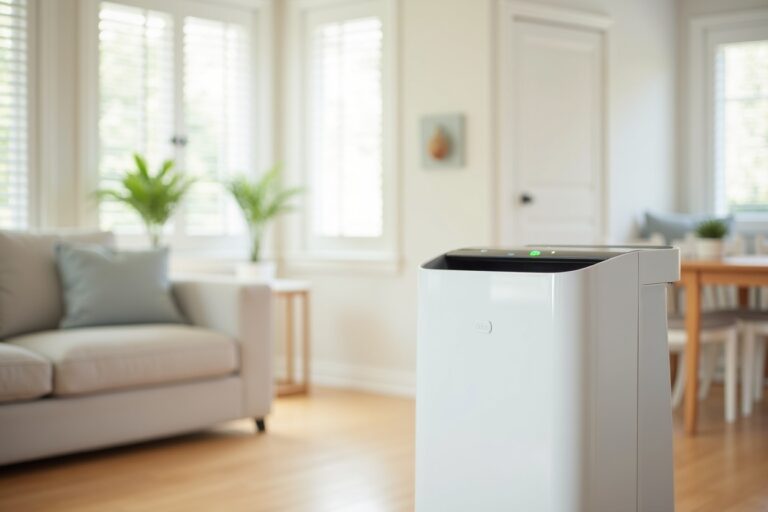
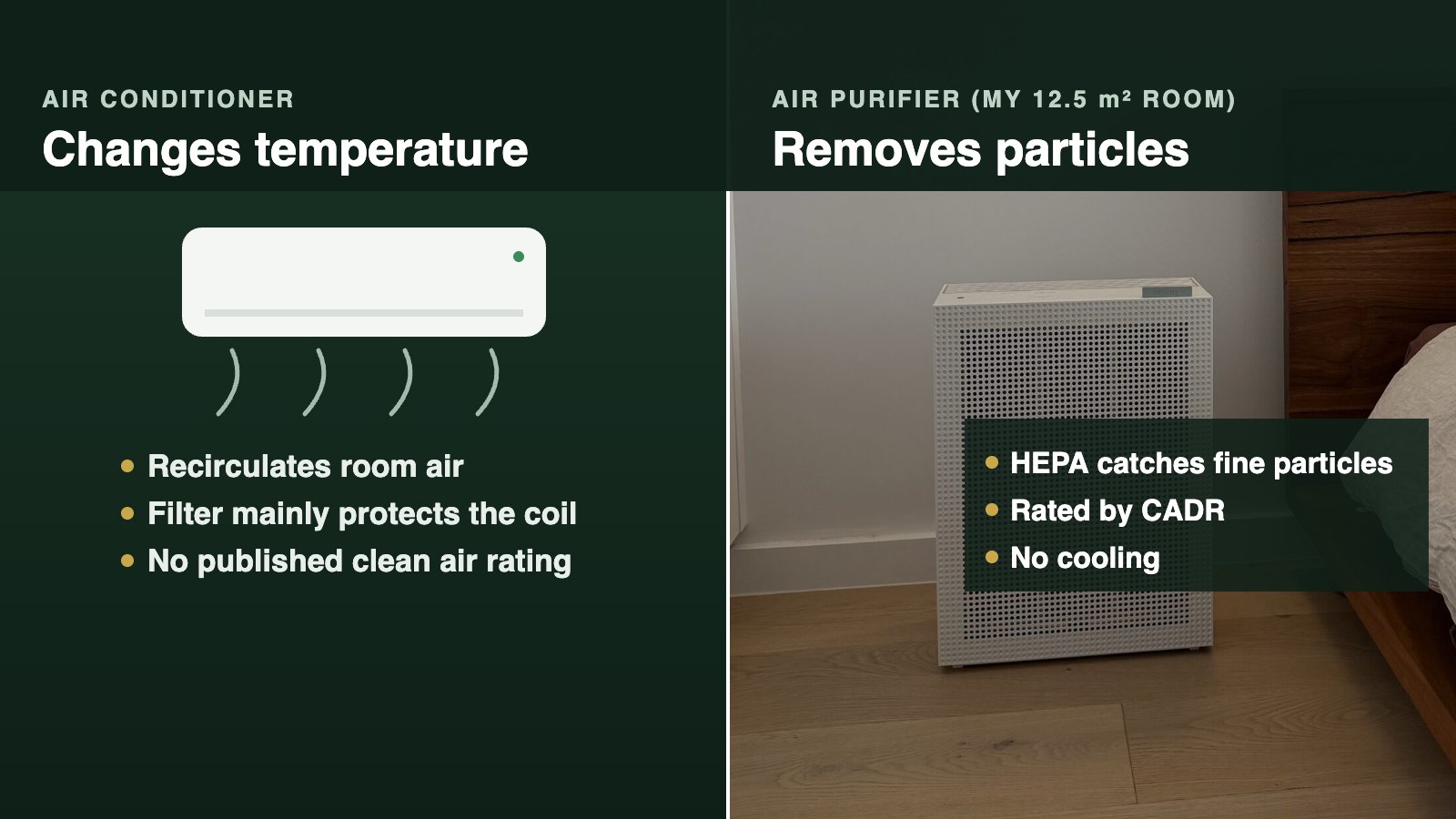
Short answer: an air conditioner changes the temperature and humidity of the air in a room; an air purifier removes particles from it. A split system recirculates the room’s own air through a coarse filter that keeps dust out of the machine, and it does not bring in fresh air. A HEPA air purifier is built and rated to capture fine particles such as smoke, pollen and pet dander, but it does not cool, heat or dry the room. They do different jobs, so most Australian homes that care about both comfort and air quality run them together.
If the problem is heat or humidity, you need the air conditioner. If the problem is dust, allergens, pet hair or bushfire smoke, you need a HEPA purifier sized to the room. If the problem is a stuffy room, mould or chemical smells, neither fixes it alone: that is ventilation and moisture control.
| Purifier to pair with your AC | Best for | Price (2 Nov 2026) |
|---|---|---|
| Coway Airmega 150 | Bedrooms to about 21 m²; the one I run at home | $254 |
| Philips PureProtect 3200 | Living areas; no ions or ozone (Philips) | $382 |
| Coway Airmega 400 | Large open-plan rooms and smoke, about 46 m² | $849 |
✓ This page is for you if
- You have a split system and wonder whether it already cleans the air
- You are choosing between spending on cooling or on air quality
- Bushfire smoke, pets or allergies are the reason you are asking
- You want to know which settings to use during a smoke event
× It will not
- Size an air conditioner for you: ask a licensed installer
- Replace advice from your GP on asthma or allergies
- Recommend running anything that draws smoky outdoor air inside
- Pretend a purifier cools a room. It does not
The difference in one table
| Question | Split system air conditioner | HEPA air purifier |
|---|---|---|
| Main job | Cools or heats the room; Dry mode removes humidity | Removes airborne particles |
| Where the air comes from | The room itself: it recirculates indoor air (Daikin) | The room itself |
| Brings in fresh outside air? | No | No |
| Filter | Washable mesh filter that protects the coil; some models add an air-purifying filter | Pre-filter plus HEPA, often with a carbon layer |
| Rated for cleaning speed? | We found no split system sold in Australia with a published clean air delivery rate (CADR) | Yes: CADR, which you can size to the room |
| Changes temperature or humidity? | Yes | No |
| Removes gases and odours? | Not rated; some purifying filters claim odour reduction | Only with a carbon filter, and only partly |
| Typical power draw | Hundreds of watts to several kilowatts | Tens of watts (Airmega 150: 35 W) |
What an air conditioner does to your air
A common belief is that an air conditioner brings fresh air in from outside. Daikin says the opposite: air conditioners “draw air from inside the room, and cools or heats it, and returns the air back into the room.” The outdoor unit exchanges heat, not air.
Three things happen to the air on its way through:
- Temperature. The coil cools or heats it. This is the job an air conditioner is built for.
- Humidity. Cooling pulls moisture out of the air, and many units have a Dry mode. Daikin describes Dry mode as eliminating humidity “while maintaining the indoor temperature as much as possible.”
- Coarse filtering. A washable filter in the indoor unit catches dust and lint before it reaches the coil. Daikin’s advice is to clean it every two weeks, more often in dusty homes, and says replacing a blocked filter with a clean one can cut energy use by 5% to 15%.
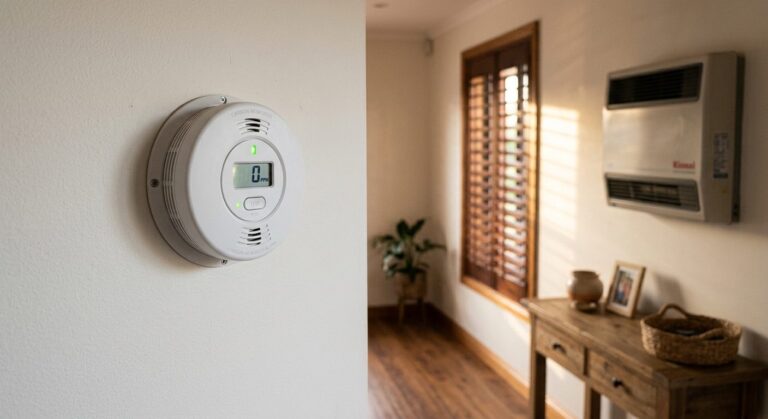
Some brands add an extra filter. Daikin says all its split systems have “an air-purifying filter”, that many models have a titanium air-purifying filter that traps “most microscopic airborne particles”, and that its split systems are approved under the National Asthma Council’s Sensitive Choice program. Those are real features, but we found no split system sold in Australia, including models marketed with purifying features, that publishes a clean air delivery rate, so you cannot size one as a purifier the way you can a HEPA unit. And like any central filter, it only cleans while the unit is running: the US EPA notes that HVAC filters “work to filter the air only when the system is operating.”
What an air purifier does
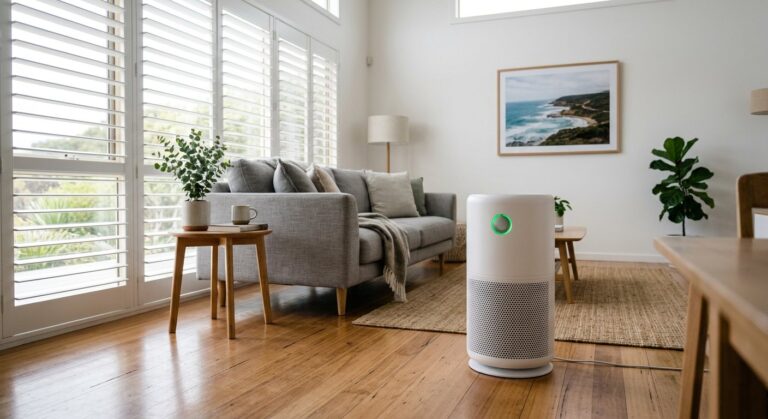
A portable air purifier pulls room air through a stack of filters and pushes it back out. In a HEPA unit the stack is usually a washable pre-filter for hair and lint, a carbon layer for some odours, and a HEPA filter for fine particles. It does nothing to the temperature or humidity.
The number that matters is the clean air delivery rate (CADR): how much particle-free air the unit delivers. You size a purifier by matching its smoke CADR to the floor area, so you can work out whether it will keep up with your room before you buy. Our best air purifier guide sizes every pick this way, and has a two-question finder if you want a quick answer.
Limits worth knowing, from the US EPA’s guide to air cleaners: “No air cleaner or filter will eliminate all of the air pollutants in your home”, most filters target either particles or gases, not both, and “Filtration does not replace the need to control pollutants and ventilate.” The EPA also says to avoid air cleaners that intentionally produce ozone.
Does an air conditioner purify the air?
Partly, and not in a way you can measure from the box. A split system’s standard filter is there to protect the machine and catch visible dust. Models with an added purifying filter do more, by the maker’s account, but without a CADR there is no way to compare one with a purifier or to know how quickly it clears a room after, say, smoke gets in.
Two practical consequences. First, keep the air conditioner’s filter clean whatever else you do: it is the cheapest air quality and efficiency win in the house. Second, if you need particles out of the air (smoke, pollen, dander, dust mite allergen), buy a HEPA purifier with a published CADR rather than relying on the air conditioner.
Running both together
Yes, you can run an air purifier with the air conditioner on, and the combination works well. Closing up the room to cool it also helps the purifier, because NSW Health notes a purifier must be used “in small, well-sealed areas” to work well. A few setup points:
- Close doors and windows. The purifier then cleans one body of air instead of an endless supply from outside.
- Size the purifier to the room. Use the smoke CADR and the floor area, not the room size printed on the box.
- Do not block either machine. Leave space around the purifier’s intake and outlet, and avoid putting it where the split system’s airflow blasts straight into it.
- Clean both pre-filters. The air conditioner’s every couple of weeks (Daikin’s advice), the purifier’s as its manual says.
- Still ventilate. Air the room when the outdoor air is clean, or run an exhaust fan. Neither machine replaces fresh air.
Bushfire smoke: which air conditioners are safe to run
This is where the difference matters most. Victoria’s Better Health Channel advises: “Do not use air conditioners that draw in air from outside when it is smoky outside.” Its guidance by type:
| Type | When it is smoky outside |
|---|---|
| Split system (including central ducted) | Can be used provided all external doors and windows are closed |
| Cassette unit | Switch off any fresh air or ventilation function |
| Window or wall box unit | Only with the outside air vent closed, so indoor air is recirculated |
| Evaporative cooler (central) | Do not use: it will quickly draw smoke inside |
| Portable refrigerated, single hose | Do not use |
| Portable refrigerated, two hose | Can be used; make sure the seal around the window vent kit is tight |
| Portable evaporative cooler (no hose) | Can be used, provided external doors and windows are sealed |
Source: Better Health Channel, “Using air conditioners when it’s smoky outside”. Check your own unit’s manual for any fresh air setting.
NSW Health adds two points: switch the air conditioner to recirculate if it has the function, and “consider using an air purifier with a high efficiency particle air (HEPA) filter to remove smoke from your indoor air.” It also warns that humidifiers, negative ion generators and odour absorbers “do not remove fine particles in bushfire smoke.” For picks sized for smoke, see the bushfire smoke purifier guide.
Which one do you need?
Start from the problem, not the product:
| Your problem | What fixes it | Where to go next |
|---|---|---|
| Too hot or too cold | Air conditioner | A licensed installer for sizing |
| Sticky, humid air | Air conditioner on Dry mode, or a dehumidifier | Dehumidifiers for mould |
| Dust, pet hair, pollen, dust mite allergen | HEPA purifier sized by CADR | Bedroom purifiers |
| Bushfire or wood smoke | HEPA purifier in a closed room; AC on recirculate if safe for your type | Smoke purifiers |
| Mould smell or visible mould | Fix the moisture source first; a purifier only catches airborne spores | Mould and purifiers |
| New furniture or paint smell | Ventilation first; a purifier with a substantial carbon filter helps | Formaldehyde guide |
| Stuffy room, headaches, poor focus | Ventilation: neither machine removes carbon dioxide | CO2 monitor review |
My setup: the purifier in my bedroom
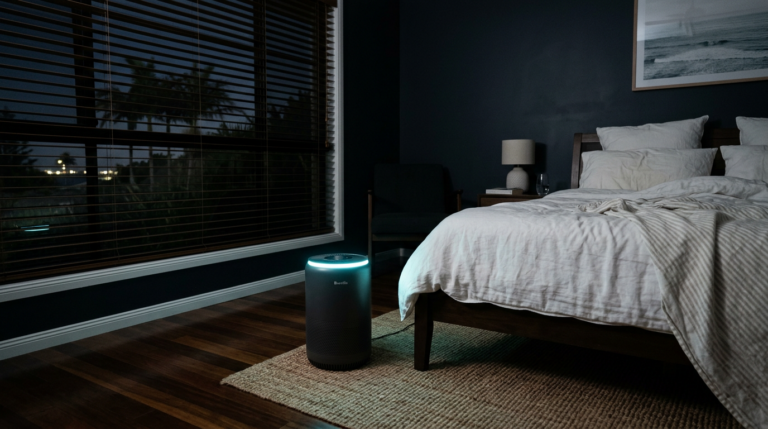
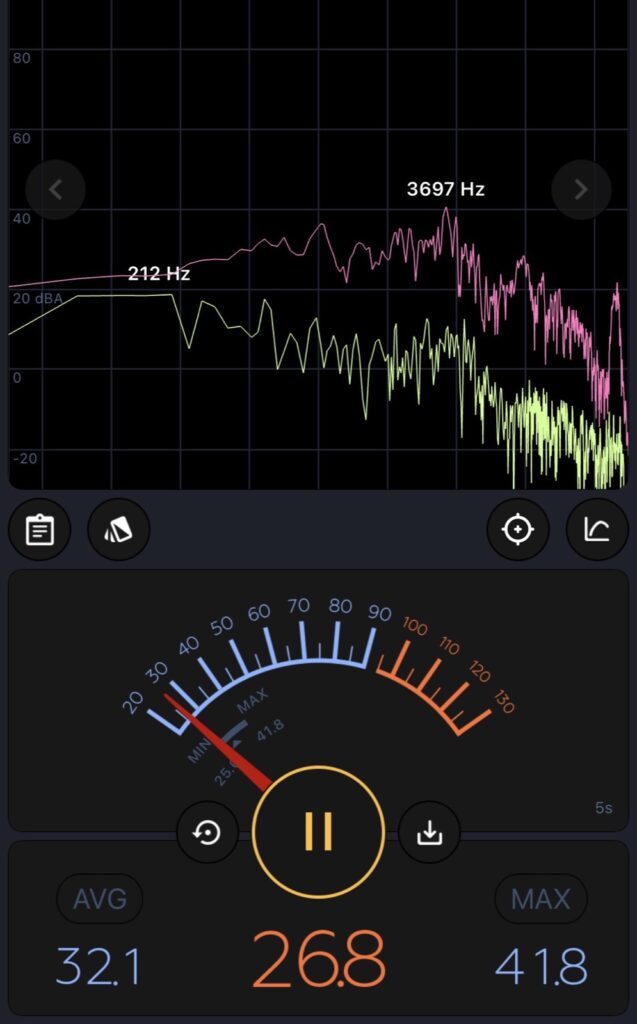
My bedroom is 12.5 m², and a Coway Airmega 150 runs beside the bed on Silent overnight. I chose it on two numbers. Coway US rates it at a smoke CADR of 153 cfm on the AHAM test, which by the US EPA’s sizing chart (about two-thirds of the floor area in square feet) covers about 21 m², so in my room it has spare capacity and can run quietly. And on Silent, the Decibel X app on my phone averaged 32.1 dBA at one metre. A phone app is not a certified sound meter, but it is a fair comparison point.
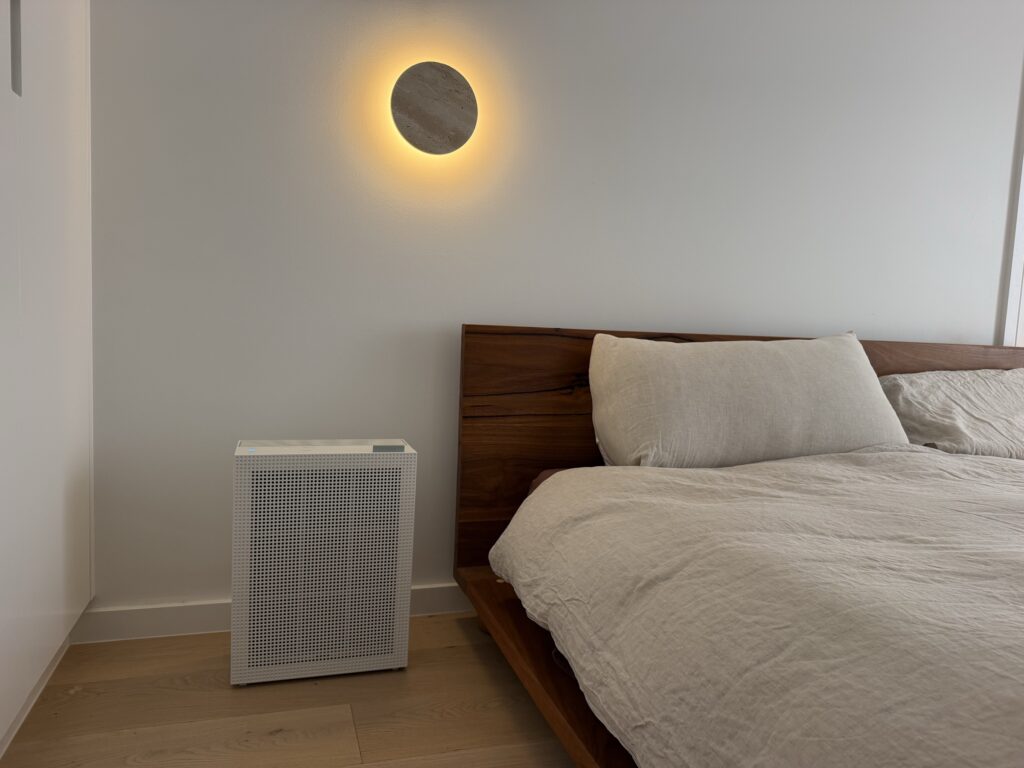
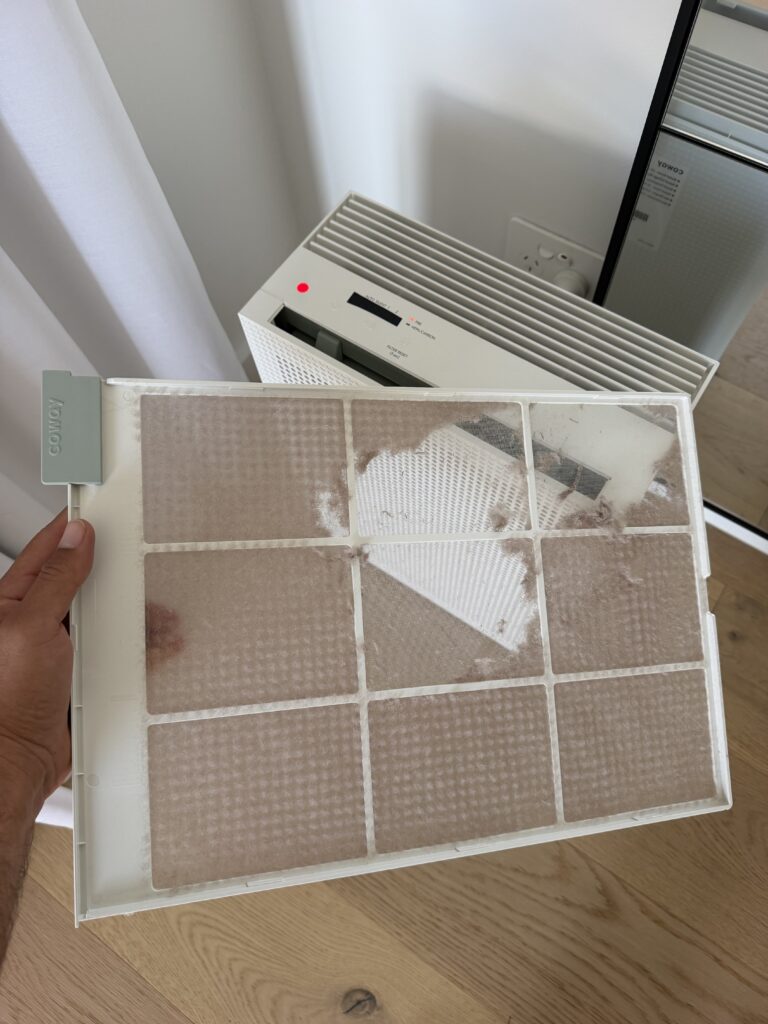
The clearest evidence of what it does is the pre-filter. After one month it was coated in grey dust and hair from my dog: material the purifier pulled out of my bedroom air. I have not logged particle counts, so I am not giving you a percentage. The point for this comparison is simple: that is a job for a purifier, and Coway rates the unit at 35 W, a small fraction of what any air conditioner draws.
Full detail in my Coway Airmega 150 review.
Purifiers that pair well with an air conditioner
Three HEPA units with published airflow figures, sized for the rooms Australians most often air-condition. Room sizes use the US EPA’s sizing chart (about two-thirds of the floor area in square feet), applied to the US smoke CADR at a standard 2.4 m ceiling.
 Bedrooms~21 m²by the EPA rule
Smoke CADR 153 cfm (Coway US, AHAM test; Coway Australia lists 281 m³/h on the GB/T test) | 35 W | no ioniser listed (Coway) | Sensitive Choice approved | 32.1 dBA on Silent at 1 m (my reading) | $254, sold by Coway Australia (2 Nov 2026)
Check the Airmega 150 price on Amazon → Living areas520 m³/hCADR, GB/T test (Philips)
HEPA NanoProtect + carbon | no ions or ozone emitted (Philips) | 36 W | CADR is on the Chinese GB/T test, not AHAM, so not directly comparable | $382, sold by Amazon AU (2 Nov 2026)
Check the Philips 3200 price on Amazon → Large rooms~46 m²by the EPA rule
Smoke CADR 328 cfm (Coway US, AHAM test; Coway Australia lists 677 m³/h on the GB/T test) | two-sided intake | 66 W | Sensitive Choice approved | $849, sold by Coway Australia (2 Nov 2026)
Check the Airmega 400 price on Amazon →Five more picks, including budget options, are compared in the best air purifier guide, and the HEPA claims behind them are checked in the best HEPA purifier guide.
Air conditioners with built-in purifiers, and purifier fans
Split systems with purifying filters. Worth having, and worth asking about when you replace a unit. Just treat the claim as a bonus, not as a substitute for a sized HEPA purifier, because we found no published CADR to check it against.
Ducted systems. If you have ducted air conditioning, ask your installer whether the return air filter can take a better grade. The US EPA suggests a MERV 13 filter, “or as high a rating as your system fan and filter slot can accommodate.” A denser filter can restrict airflow, so this is a question for the installer, not a swap to do blind.
Purifier fans. Products sold as a purifier and fan in one move air across you, which feels cooler, but they do not refrigerate the air, so they do not lower the room temperature the way an air conditioner does. Judge them as purifiers: look for a published CADR.
Ionisers and plasma features. Some purifiers and some air conditioners add ion generators. NSW Health says negative ion generators do not remove fine smoke particles, and the US EPA advises avoiding devices that intentionally produce ozone. If your unit has an ion or plasma setting, a HEPA filter does the real work; you can leave it off.
Prices change. Check Amazon AU before buying.
Frequently asked questions
What is the difference between an air purifier and an air conditioner?
An air conditioner changes the temperature and humidity of the air in a room. An air purifier removes particles such as dust, pollen, pet dander and smoke. A split system recirculates indoor air through a coarse filter; a HEPA purifier is rated by its clean air delivery rate to capture fine particles. Neither brings in fresh outside air.
Does an air conditioner bring in fresh air from outside?
No. Daikin states that air conditioners draw air from inside the room, cool or heat it and return it to the room. To bring in fresh air you need to open a window or run ventilation.
Can I use an air purifier and an air conditioner at the same time?
Yes. Closing the room to cool it also helps the purifier, which NSW Health says works best in small, well-sealed areas. Size the purifier by its smoke CADR and keep it out of the direct airflow from the split system.
Is an air purifier the same as an air conditioner?
No. A purifier does not cool, heat or dry the room, and an air conditioner is not rated to clean the air at a measurable rate. They do different jobs.
Should I run the air conditioner during bushfire smoke?
A split system can be used if all doors and windows are closed, according to Victoria’s Better Health Channel. Do not use central evaporative coolers, single-hose portable units, or anything with a fresh air function switched on. Portable evaporative coolers and two-hose portable units can be used if the room is sealed. Set the unit to recirculate if it has that option, and use a HEPA purifier.
Does an air conditioner help with mould?
It can help by lowering humidity, especially on Dry mode, but the moisture source still needs fixing. A purifier only catches spores that are airborne; it does not stop mould growing.
Do I still need a purifier if my split system has an air-purifying filter?
If you have allergies, pets or smoke to deal with, yes. We found no split system sold in Australia with a published clean air delivery rate, so you cannot size its filter to a room. A HEPA purifier with a published CADR is the measurable option.
- Daikin Australia: can air conditioners ventilate my home?
- Daikin Australia: how often should I clean my air conditioner filter?
- Daikin Australia: what the controller modes mean (Dry mode)
- Daikin Australia: Sensitive Choice program and air-purifying filters
- Better Health Channel (Victoria): using air conditioners when it’s smoky outside
- NSW Health: protect yourself from bushfire smoke
- US EPA: Guide to Air Cleaners in the Home, 2nd edition
- US EPA: air cleaners and air filters in the home
Get the Australian Home Environment Checklist
30 checks across water, air and EMF. Most of them free. Ranked by impact.
No spam. Unsubscribe any time.

Former Royal Australian Navy Clearance Diver and TAG-E counter-terrorism operator. Founded Clean and Native to apply the same rigorous thinking to the home environment.
Full biography →