Best HEPA Air Purifier Australia 2026: 5 Picks and How to Check the HEPA Claim
Drafted with AI assistance and checked against published specifications and certifications. First-hand measurements appear only where stated. How we make content
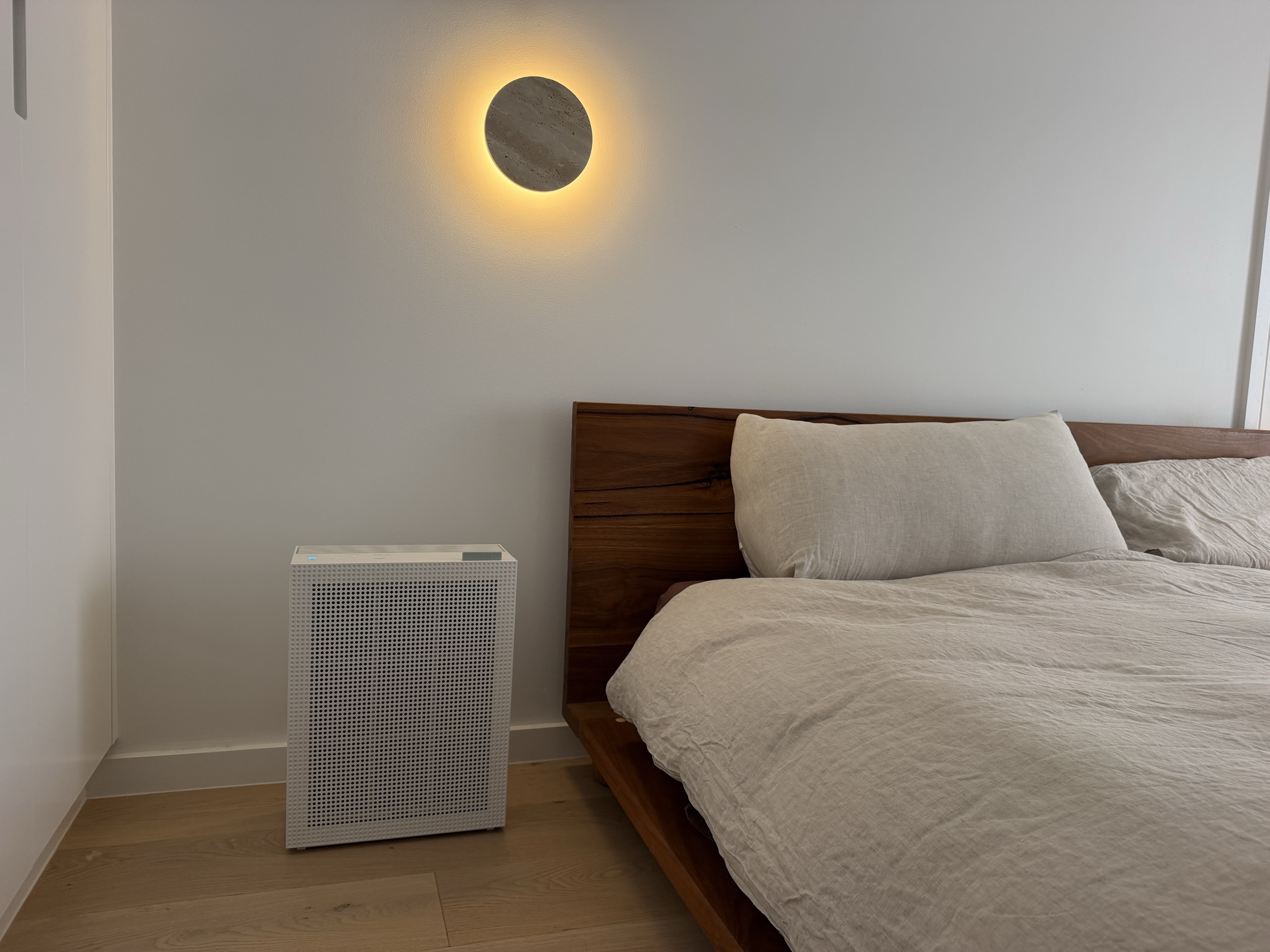
How this assessment was made. I run a Coway Airmega 150 in my own bedroom in Palm Beach, QLD; the photos and the noise reading on this page are mine. I haven’t run the other four purifiers. They are assessed on the HEPA and CADR claims each manufacturer publishes, read word for word, plus independent checks where they exist (AHAM-verified CADR, ECARF certification) and Sensitive Choice approval, and their Amazon Australia listings, checked for price, stock and ratings on 28 Oct 2026. Clean and Native may earn a commission on some links.
The best HEPA air purifier is one with a HEPA filter, no ioniser running, and a published clean air delivery rate (CADR) big enough for the room. For a bedroom, that is the Coway Airmega 150 (about $299 on Amazon AU), which I run in my own bedroom. For a living room, the Winix 5500-2 (about $279), with an AHAM-verified CADR. For open-plan areas, the Levoit Core 600S-P (about $459).
Here is the part most HEPA guides skip: only one of the five brands below puts an H13 label on these models, none says a lab tested the filter to the European EN 1822 standard, and their efficiency claims are measured at different particle sizes, so the HEPA label alone can’t separate them. As a former Navy Clearance Diver, I was trained to read what equipment is actually rated to do, not what the box says. With air purifiers, that number is the CADR. This guide shows how to read both.
Buy on CADR, not on the HEPA label. Size it with the EPA’s two-thirds rule, and switch off any ion or plasma setting.
| Pick | Best for | Price (28 Oct 2026) |
|---|---|---|
| Coway Airmega 150 | Bedrooms to ~21 m²; the one I own | ~$299 |
| Winix 5500-2 | Living rooms to ~32 m²; AHAM Verifide | ~$279 |
| Philips PureProtect 3200 | No ions or ozone; filter test method published | ~$395 |
| Levoit Core 600S-P | Open-plan areas to ~57 m² | ~$459 |
| Coway Airmega 100 | Small rooms to ~15 m² | ~$229 |
✓ A HEPA purifier is worth buying if
- Someone in the house has asthma or allergies to dust, pollen or pets
- You need a clean room during bushfire or hazard-reduction smoke
- Cooking, a wood heater or the road outside raises fine particles indoors
- You want a quieter bedroom unit that runs all night
× It won’t fix
- Damp and mould growth (that needs moisture control)
- Gases like formaldehyde in any meaningful amount (carbon layers are thin)
- A room with the doors and windows open
- An undersized unit in a big open-plan space
What HEPA actually means
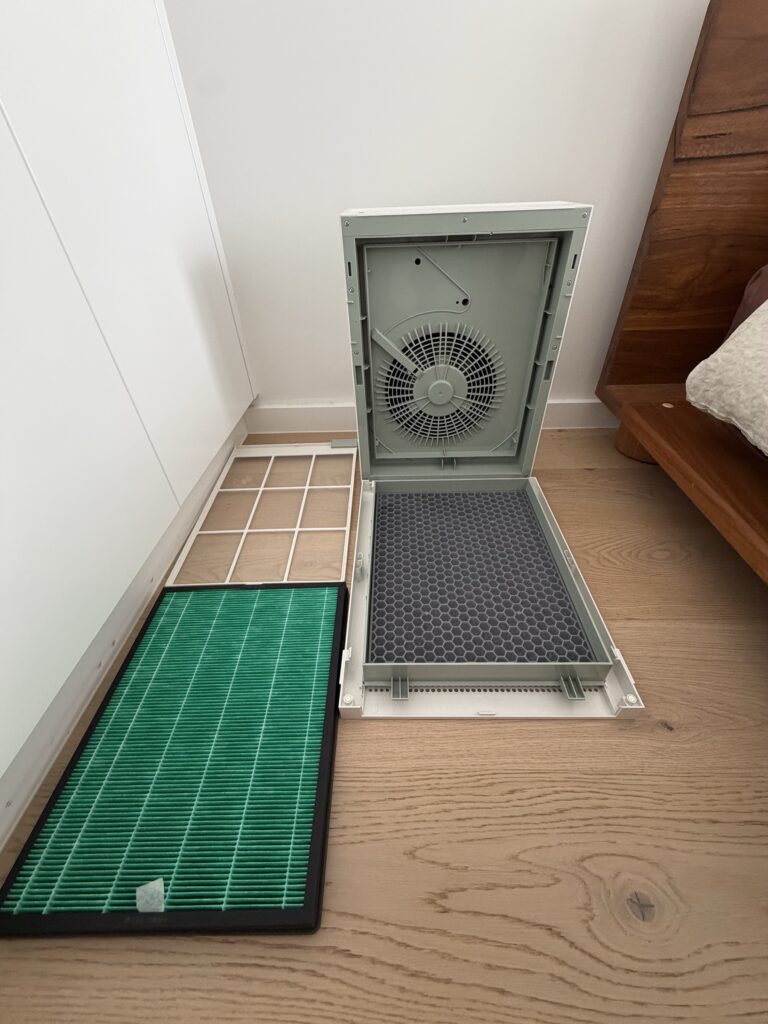
There are two common definitions, and they are different tests. The US definition, as quoted by the US EPA from the Department of Energy, is a filter that “can theoretically remove at least 99.97% of dust, pollen, mold, bacteria, and other airborne particles with a size of 0.3 microns (µm).” The EPA notes that 0.3 µm is “the most penetrating particle size” and that “Particles that are larger or smaller are trapped with even higher efficiency.”
The European standard, EN 1822, grades filters into classes tested at each filter’s own most penetrating particle size: H13 must capture at least 99.95% and H14 at least 99.995%. So “H13” and “99.97% at 0.3 microns” are not the same claim, and one isn’t simply better than the other. “True HEPA” has no regulatory definition at all; it is a marketing phrase. For the detail, see HEPA certification explained and True HEPA vs H13.
What the brands actually claim
I read each manufacturer’s own product page for the filter claim, word for word.
| Purifier | Manufacturer’s filter claim | Particle size | Test or standard named |
|---|---|---|---|
| Coway Airmega 150 | Removes “over 99.999%” of odours, pollen and pollutants (whole unit); “Based on the HEPA filter media standard” | Not stated | None named |
| Coway Airmega 400 | “99.999% of nano-sized particles” | “down to 0.01 microns” | None named |
| Winix 5500-2 | “Captures 99.99%” of pollutants | “as small as 0.003 microns” | “independent laboratory tests”, not named |
| Philips 3200 | Filtration “captures 99.97% of particles as small as 0.003 microns” (all 3 layers) | 0.003 and 0.3 µm | “DIN71460 with NaCl aerosol”, tested by iUTA |
| Levoit Core 600S | AU manual: “H13 True HEPA”, at least 99.97% at 0.3 µm. AU Amazon listing: no percentage | 0.3 µm | H13 label; no lab or EN 1822 test named |
Only Levoit uses an H13 label, none says the filter was tested to EN 1822, and the efficiency figures are measured at different particle sizes, so you can’t line them up and pick the highest number. Philips is the only one that names its test method. That doesn’t make the filters bad. A genuine HEPA-grade filter in any of these units will catch spores, pollen, dust and smoke particles very efficiently. It means the filter label isn’t where the real differences are.
Why CADR matters more than the label
A perfect filter in a small, slow fan cleans very little air. CADR, the clean air delivery rate, measures how much clean air the whole machine delivers, filter and fan together. The US EPA’s sizing rule is to “Choose a device with a clean air delivery rate (CADR) for tobacco smoke that is at least two-thirds of the room area in square feet.” At a 2.4 m ceiling, that works out to about 12 m³/h of smoke CADR per square metre of floor (my arithmetic from the EPA rule).
Two cautions. First, CADR figures come from different tests: AHAM’s American test gives smoke, dust and pollen figures in cubic feet per minute, while Philips quotes a Chinese GB/T figure in m³/h. They aren’t directly comparable. Second, AHAM Verifide means a CADR was checked by an independent lab. Winix states it on its 5500-2 page; Coway’s smoke, dust and pollen figures are in AHAM’s format, and HouseFresh reports that Coway sends its purifiers through the program. Levoit and Philips figures here are manufacturer claims. Room claims on boxes (Coway’s 1,035 square feet for the 150, Philips’ 135 m²) are based on one air change an hour or another maker’s method, far fewer than you want for smoke or allergies; ignore them and use the two-thirds rule. Our CADR calculator does the sums.
Ionisers, plasma and ozone
Some HEPA purifiers add an ion-generating stage. The US EPA advises against air cleaners that intentionally produce ozone, notes that air cleaners containing ionisers “may have the potential to emit ozone,” and warns that ozone “may also worsen chronic respiratory diseases such as asthma.” NSW Health says “negative ion generators” do not remove fine particles in bushfire smoke.
Two picks have an ion feature you can switch off. The Winix 5500-2 has PlasmaWave; Winix says it can be turned off from the control panel and switches off automatically in Sleep mode, and that its purifiers emit less than 0.01 ppm of ozone; Ausclimate’s spec sheet for the Australian Zero model reports 3 parts per billion in UL testing. HouseFresh found it turns back on after a power cut. Levoit’s US manual for the Core 600S and 600S-P describes an optional plasma function; the Amazon AU listing for the 600S-P (model LAP-C601S-WCA) doesn’t mention one. California’s CARB certification limits ozone output but, in CARB’s own words, “does not reflect air cleaner effectiveness.” The Coway units list no ioniser, and Philips states the 3200 emits “no ions, chemicals or ozone.” See ozone and ioniser purifiers vs HEPA.
Five HEPA myths
“HEPA removes everything.” HEPA is a particle filter. It catches dust, pollen, pet dander, mould spores and smoke particles. It does little for gases such as formaldehyde, cooking smells or the volatile compounds from new furniture. That job falls to the activated carbon layer, and in most portable purifiers the carbon is a thin sheet. If gases are your main concern, look for a deep carbon bed rather than a better HEPA grade.
“0.3 microns is the smallest particle HEPA can catch.” The opposite. The EPA describes 0.3 µm as the most penetrating particle size, the hardest to catch, and says larger and smaller particles are trapped with even higher efficiency. That is why brands can quote figures at 0.01 or 0.003 microns: smaller particles move erratically and hit the fibres. It is also why those figures don’t tell you much more than the 0.3 µm test does.
“H14 is always better than H13.” On the filter alone, H14 captures more at its most penetrating size (at least 99.995% against 99.95%). In a room, the difference is swamped by airflow. A denser filter can slow the fan, and a purifier that moves less air cleans the room more slowly. CADR captures both effects in one number; the filter class captures one.
“A HEPA purifier fixes allergies on its own.” It lowers what is floating in the air of one closed room. Dust mite and pet allergen also settle into bedding, carpet and soft furnishings, where a purifier can’t reach. Washing bedding, vacuuming with a sealed HEPA vacuum and keeping pets out of the bedroom do the rest. See the best HEPA vacuums. For dust and dust mites specifically, see the best air purifiers for dust.
“You can wash a HEPA filter.” Pre-filters on most units can be vacuumed or rinsed. The HEPA layer is a pleated mat of very fine fibres, and none of the makers here rates it as washable; water or a brush can damage the structure that does the filtering. Replace it on the maker’s schedule, and wear a mask if it has been catching smoke or mould.
Sizing table
| Room | Floor area | Smoke CADR needed | Fits |
|---|---|---|---|
| Small bedroom or study | 10 to 15 m² | ~70 to 110 cfm | Coway Airmega 100, Airmega 150 |
| Main bedroom | 15 to 20 m² | ~110 to 145 cfm | Coway Airmega 150 |
| Living room | 25 to 30 m² | ~180 to 215 cfm | Winix 5500-2, Philips 3200 |
| Open-plan living | 40 to 55 m² | ~290 to 395 cfm | Levoit Core 600S-P |
Needed CADR is my calculation from the EPA two-thirds rule (1 m² = 10.76 square feet), at a 2.4 m ceiling. Higher ceilings need a bigger unit.
The best HEPA air purifiers
1. Coway Airmega 150: best for bedrooms
 Bedrooms | I own this~21 m²EPA 2/3 rule on 153 cfm smoke CADR
Pre-filter + carbon + HEPA | Smoke CADR 153 cfm (Coway) | No ioniser listed | 35 W | Sensitive Choice approved | 304 ratings, 4.7 stars | ~$299 (28 Oct 2026)
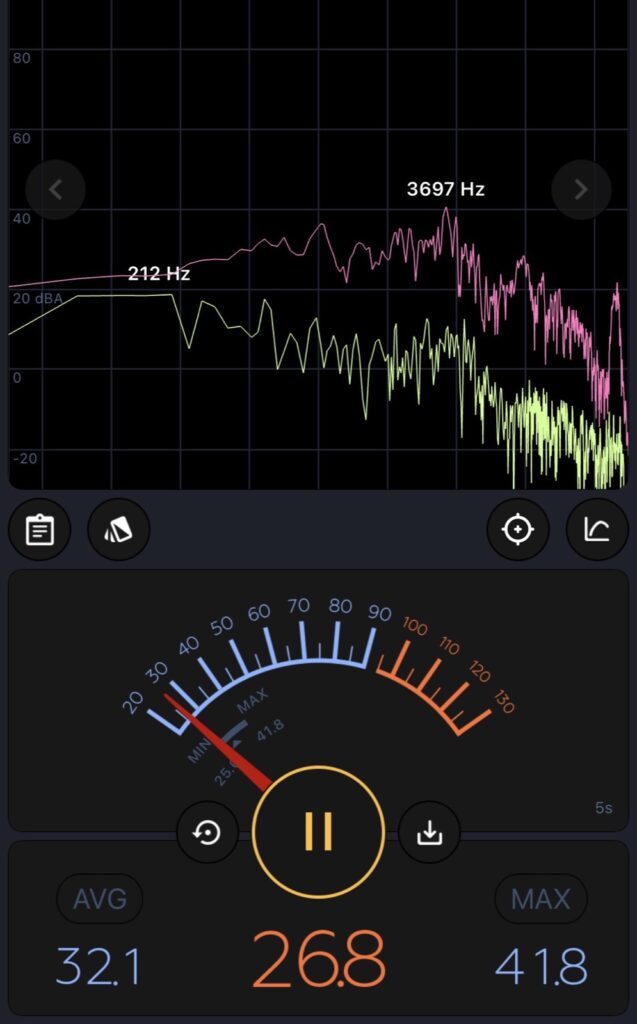
Check the Airmega 150 Price on Amazon →This is the purifier in my bedroom in Palm Beach. Coway publishes a smoke CADR of 153 cfm for it, which covers a bedroom of up to about 21 m² on the EPA rule. It uses a pre-filter, a carbon deodorisation layer and a HEPA filter, lists no ioniser, draws 35 W, and is approved under the National Asthma Council’s Sensitive Choice program. Coway rates the HEPA filter at a year and the deodorisation filter at 6 months. On Silent I measured 32.1 dBA at one metre with a phone app, quiet enough to sleep beside. For noise figures across brands, see the quietest air purifiers compared. Coway’s filtration claim (“over 99.999%”) comes with no particle size or named standard, the same gap as most brands. About $299 on Amazon AU, sold by Coway Australia, with 304 ratings averaging 4.7.
✓ Pros
- The unit I run at home
- No ioniser listed; Sensitive Choice approved
- Quiet on Silent (32.1 dBA at 1 m, my reading)
× Cons
- Bedroom-sized only (~21 m²)
- Filtration claim has no stated test or particle size
- Deodorisation filter every 6 months
Buy this if…
you want one purifier for a bedroom up to about 20 m², running all night.
2. Winix 5500-2: best for living rooms
 Living rooms~32 m²EPA 2/3 rule on 232 cfm (AHAM)
Pre-filter + carbon + True HEPA + PlasmaWave (switch it off) | AHAM Verifide CADR | 27,688 ratings, 4.6 stars | Sold by Amazon AU | ~$279 (28 Oct 2026)
Check the Winix 5500-2 Price on Amazon →Winix says the 5500-2 is AHAM Verifide, and HouseFresh reports AHAM figures of 232 cfm for smoke, about 32 m² on the EPA rule. Winix calls the filter True HEPA and claims it “Captures 99.99%” of pollutants “as small as 0.003 microns”, based on unnamed independent laboratory tests. The catch is PlasmaWave, its ion stage. Switch it off from the control panel, and check it after a power cut, because HouseFresh found it turns itself back on. About $279 on Amazon AU, sold by Amazon, with 27,688 ratings averaging 4.6, the most of any purifier here.
✓ Pros
- AHAM Verifide smoke CADR (232 cfm)
- About $279
- Huge rating base (27,688 ratings)
× Cons
- PlasmaWave must be switched off
- Turns PlasmaWave back on after a power cut
- Too big for a small bedroom
Buy this if…
the room is a living area of up to about 32 m² and you’ll remember to switch PlasmaWave off.
3. Philips PureProtect 3200: best for no ions and a published filter test
 No ions, tested filterDIN 71460filter test named by Philips
HEPA NanoProtect + carbon | CADR 520 m³/h (GB/T, not AHAM) | No ions or ozone (Philips) | 15 to 47.5 dB(A) | 36 W | ECARF certified | 43 ratings, 4.9 stars | ~$395 (28 Oct 2026)
Check the Philips 3200 Price on Amazon →Philips is the only brand here that names the test behind its filter claim: 99.97% at 0.003 microns, “tested to DIN71460 with NaCl aerosol 0.003um and 0.3um” by the German institute iUTA. Philips also states the 3200 emits “no ions, chemicals or ozone”, and it is ECARF certified allergy-friendly. Its CADR of 520 m³/h is measured to the Chinese GB/T standard, so it isn’t comparable with the AHAM figures above; I would treat it as a living-room unit rather than trust the 135 m² on the box. It runs from 15 to 47.5 dB(A) and draws 36 W, with a filter rated at about a year. It is not on the Sensitive Choice list. About $395 on Amazon AU, with 43 ratings averaging 4.9.
✓ Pros
- Filter test method published
- No ions or ozone (Philips)
- Quiet low setting (15 dB(A))
× Cons
- CADR on a GB/T basis, not AHAM
- Small rating base (43 ratings)
- Not Sensitive Choice approved
Buy this if…
you want no ion or plasma stage at all and a filter claim you can trace to a named test.
4. Levoit Core 600S-P: best for open-plan areas
 Open-plan areas~57 m²EPA 2/3 rule on Levoit’s 410 cfm
Pre-filter + HEPA + carbon | CADR 697 m³/h, 410 cfm (Levoit, not split by smoke) | 26 to 55 dB | 49 W | 6,121 ratings, 4.6 stars | ~$459 (28 Oct 2026)
Check the Core 600S-P Price on Amazon →For a big open-plan living area, the Core 600S-P has the most airflow per dollar here: Levoit rates it at 697 m³/h (410 cfm), about 57 m² on the EPA rule, though Levoit doesn’t split the figure into smoke, dust and pollen, so leave a margin. Levoit’s manual for the Australian Core 600S calls the filter “H13 True HEPA” capturing at least 99.97% at 0.3 microns, and gives 26 to 55 dB and 49 W; the Amazon AU unit is listed as model LAP-C601S-WCA, so check the manual in the box. Levoit’s US manual describes an optional plasma function on some versions; if yours has one, leave it off. About $459 on Amazon AU, with 6,121 ratings averaging 4.6. For more big-room options, see the best air purifiers for large rooms.
✓ Pros
- Most airflow per dollar here
- Large rating base (6,121 ratings)
- 49 W
× Cons
- No separate smoke CADR
- Amazon unit is a non-AU model number
- Loud on top speed (55 dB)
Buy this if…
the room is an open-plan area of about 40 to 55 m².
5. Coway Airmega 100: best for small rooms
 Small rooms~15 m²EPA 2/3 rule on 108 cfm smoke CADR
Pre-filter + HEPA + deodorisation | Smoke CADR 108 cfm (Coway spec sheet) | 20 to 48 dB(A) | 25 W | Filters ~12 months | 549 ratings, 4.5 stars | ~$229 (28 Oct 2026)
Check the Airmega 100 Price on Amazon →For a nursery, study or small bedroom, the Airmega 100 is the smaller sibling of my 150. Coway’s spec sheet gives a smoke CADR of 108 cfm, about 15 m² on the EPA rule, a three-in-one pre-filter, HEPA and deodorisation filter rated at 12 months, 20 to 48 dB(A) and 25 W. Sensitive Choice announced its approval in a news item last updated in December 2025. About $229 on Amazon AU, sold by Coway Australia, with 549 ratings averaging 4.5. For compact options sized by real CADR, see the best small air purifiers.
✓ Pros
- Coway quality in a small unit
- No ioniser listed
- Sensitive Choice approved (Dec 2025)
× Cons
- Small rooms only (~15 m²)
- Costs more per unit of CADR than the 150
- One combined filter to replace
Buy this if…
the room is under about 15 m², such as a nursery, study or small bedroom.
Comparison table
| Spec | Airmega 150 | Winix 5500-2 | Philips 3200 | Core 600S-P | Airmega 100 |
|---|---|---|---|---|---|
| CADR | 153 cfm smoke | 232 cfm smoke (AHAM) | 520 m³/h (GB/T) | 410 cfm (Levoit) | 108 cfm smoke |
| Room (EPA 2/3 rule) | ~21 m² | ~32 m² | Living room* | ~57 m² | ~15 m² |
| Filter test named | No | No | Yes (DIN 71460) | H13 label only | No |
| Ion or plasma stage | None listed | PlasmaWave, switchable | None (Philips) | Some versions | None listed |
| Power (max) | 35 W | ~53 W (HouseFresh, measured) | 36 W | 49 W | 25 W |
| Sensitive Choice | Yes | AU Zero model only | No | No | Yes |
| Price (28 Oct 2026) | ~$299 | ~$279 | ~$395 | ~$459 | ~$229 |
*The Philips GB/T CADR can’t be put through the EPA’s AHAM-based rule directly. The Winix’s Sensitive Choice approval covers the Australian Zero model sold by Ausclimate (AUS-1050AZBU), which isn’t confirmed to be identical to the 5500-2.
How to run a HEPA purifier
Close the room. NSW Health’s bushfire advice is that “To work well, the purifier must be used in small, well-sealed areas.” The same goes for allergies: a purifier in a room with the door open is trying to clean the whole house.
Run it continuously. For smoke, the US EPA says to “Run the air cleaner continuously on the highest fan setting.” For day-to-day use, Auto mode is fine; the sensor ramps it up when particles rise.
Keep the intake clear of walls and curtains, and switch off any ion or plasma setting.
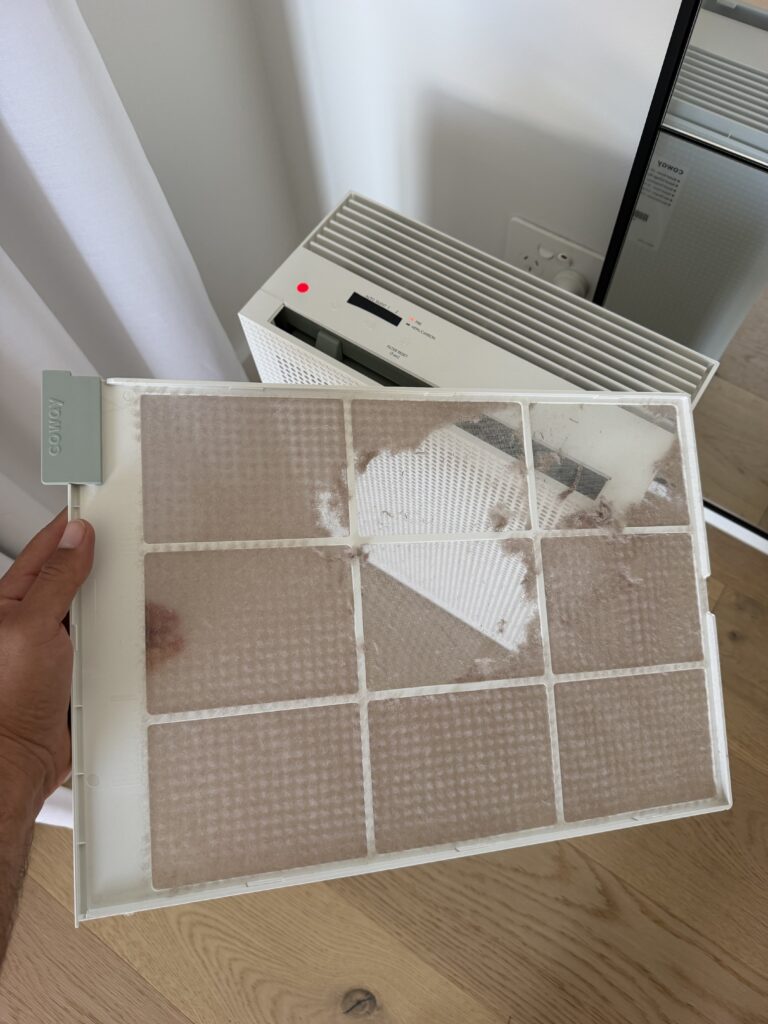
Change filters on schedule. Pre-filters can usually be vacuumed; HEPA filters can’t be washed. For intervals and costs by brand, see the filter replacement guide.
Which HEPA purifier for which problem
Bushfire and hazard-reduction smoke. This is where HEPA earns its keep in Australia. NSW Health advises that people “consider using an air purifier with a high efficiency particle air (HEPA) filter to remove smoke from your indoor air,” and the Australian Government Department of Health says purifiers with a HEPA filter “can reduce the number of fine particles indoors,” adding: “seal the room and match the air purifier to the size of the room it is in.” EPA Victoria goes further, noting that “Portable air cleaners are more effective in rooms smaller than the maximum room size specified by the manufacturer.” Pick one room, usually a bedroom, close it up, and run a correctly sized unit on high. For smoke-specific picks, see the best purifiers for bushfire smoke.
Asthma and allergies. The National Asthma Council’s Sensitive Choice program is the Australian badge to look for. The National Asthma Council says products are “rigorously reviewed and approved by an independent expert panel,” and applicants must provide independent testing, but the program also says “approval does not mean the approved product is better than all other similar products.” Treat it as a sensible floor, then size on CADR. Two picks here carry it: the Coway Airmega 150 and Airmega 100. For more, see the best air purifiers for asthma.
Pets. Pet hair is large and mostly caught by the pre-filter, which is why it needs regular vacuuming in a house with a dog or cat. Dander is fine and stays airborne longer, which is the HEPA layer’s job. A unit with an easy-to-clean pre-filter matters more here than the HEPA grade. See the best air purifiers for pets.
Mould. A HEPA filter catches airborne spores, but the US EPA says plainly that “Portable air cleaners and furnace/HVAC filters do not address the cause of mold and musty odors.” Fix the moisture first with a dehumidifier, then filter. See the best air purifiers for mould and the best dehumidifiers for mould.
Cooking, gas stoves and wood heaters. All three produce fine particles that HEPA handles well, and gases that it doesn’t. A rangehood vented outside does more for a kitchen than any purifier; a purifier helps in the living room next to it. See gas stoves and indoor air and wood heater smoke indoors.
A baby’s room. Small room, quiet setting, no ions: the Coway Airmega 100 fits, and its 20 dB(A) low setting suits a nursery. Keep it out of reach and clear of the cot.
How we checked each claim
For each purifier I went to the manufacturer’s own product page or manual and copied the filter claim word for word: the efficiency figure, the particle size and any test named. I then looked for independent confirmation: AHAM Verifide status for CADR, ECARF certification for allergy claims, and the Sensitive Choice listings. Amazon Australia listings were checked on the day for price, seller, stock and rating count, because a purifier you can’t buy from a reputable seller isn’t a recommendation. Where a figure comes from a different country’s model, or a different test, the article says so. Claims we couldn’t trace to a primary source, such as room sizes on retail listings, were left out or labelled. The only first-hand measurements on this page are from my own Airmega 150, and the one noise reading is from a phone app, which gives a guide rather than a lab figure.
What we left out
Breville Smart Air Viral Protect Max: Breville describes an “AntiViral HEPA-13 filter” that reduces “99.97% of viral particles and allergens down to 0.3µm”, which mixes the EN 1822 class with the US test figure; it doesn’t name the standard behind its 530 m³/h CADR, it isn’t on the Sensitive Choice list, and it had four Amazon AU ratings averaging 2.9 when we checked. Coway Airmega 400: a strong large-room unit (328 cfm smoke CADR, Sensitive Choice approved) but about $999 on Amazon AU today, more than double the Levoit. Unbranded “H13” purifiers with no published CADR: an H13 claim means nothing if the fan can’t move the air.
Which should you buy?
A bedroom: Coway Airmega 150. A living room: Winix 5500-2, PlasmaWave off. No ion stage, ever: Philips PureProtect 3200. Open-plan living: Levoit Core 600S-P. A nursery or study: Coway Airmega 100. For every room and budget, see the best air purifiers in Australia; for bedrooms specifically, the best bedroom air purifiers; for smoke, the best purifiers for bushfire smoke.
On a tighter budget? See the best air purifiers under $200, sized on real CADR for Australian bedrooms.
Final verdict
Every purifier on this list has a HEPA-type filter, and none says it was tested to EN 1822, so the HEPA label is the wrong place to compare them. Compare CADR, size it with the EPA’s two-thirds rule, and avoid running an ioniser. On those terms, the Coway Airmega 150 is the bedroom pick I run at home, the Winix 5500-2 is the best-verified living-room unit, and the Levoit Core 600S-P covers open-plan spaces.
Prices change. Check Amazon AU before buying.
Frequently asked questions
What is the best HEPA air purifier in Australia?
For a bedroom, the Coway Airmega 150 (about $299, about 21 m²). For a living room, the Winix 5500-2 (about $279, about 32 m², AHAM-verified CADR) with PlasmaWave switched off. For open-plan areas, the Levoit Core 600S-P (about $459).
Is H13 better than True HEPA?
They are different tests. EN 1822 H13 means at least 99.95% at the filter’s most penetrating particle size. The US HEPA definition is at least 99.97% at 0.3 microns. True HEPA has no regulatory definition. Neither label tells you how much air the purifier cleans; CADR does.
How do I know if an air purifier has a real HEPA filter?
Look for the efficiency figure, the particle size it was measured at, and the test named. Most brands give only part of that. Philips names its test (DIN 71460) for the 3200. Then check the CADR, which matters more for results.
What size HEPA purifier do I need?
The US EPA rule: a smoke CADR, in cubic feet per minute, of at least two-thirds of the room’s floor area in square feet. That is about 12 cubic metres an hour per square metre at a 2.4 m ceiling. A 15 m² bedroom needs about 110 cfm.
Do HEPA purifiers produce ozone?
A HEPA filter doesn’t. Some purifiers add an ioniser or plasma stage that can. Switch it off. The Coway models list no ioniser, and Philips says the 3200 emits no ions or ozone.
Should a HEPA purifier run all the time?
Yes, ideally on Auto with the room closed. During smoke events the US EPA says to run it continuously on the highest fan setting.
Do HEPA filters remove smoke and mould spores?
They capture the particles: smoke particles, spores, pollen and dust. They don’t remove gases well, and they don’t fix the damp that grows mould.
Does a HEPA purifier help with bushfire smoke?
Yes, for fine particles, in a closed room. NSW Health and the Australian Government Department of Health both recommend a HEPA purifier matched to the room size, with doors and windows shut. Ionisers do not remove fine smoke particles.
Can you wash a HEPA filter?
No. Pre-filters can usually be vacuumed or rinsed, but washing the HEPA layer damages the fibres that do the filtering. Replace it on the maker’s schedule.
Is a Sensitive Choice purifier better?
It has been approved by an independent expert panel on independent test evidence, which is a sensible floor for asthma and allergy households. The program itself says approval does not mean a product is better than similar ones, so still size it on CADR.
How often should a HEPA filter be replaced?
Usually every 6 to 12 months, depending on the model and how hard it runs. Coway rates the Airmega 150’s HEPA filter at a year; Philips rates the 3200’s at about a year.
- US EPA: what is a HEPA filter?
- MANN+HUMMEL: EN 1822 filter classes (H13, H14)
- US EPA: how to create a cleaner air room (2/3 CADR rule)
- US EPA: guide to air cleaners in the home
- US EPA: ozone generators that are sold as air cleaners
- AHAM Verifide: air cleaner CADR and the 2/3 rule
- Coway: Airmega 150 (HEPA wording, CADR, power, filter life)
- Sensitive Choice: approved Coway air purifiers
- Coway Airmega 100 specification sheet (retailer copy)
- Sensitive Choice: Airmega 100 approval (Dec 2025)
- Coway: Airmega 400 (HEPA wording, CADR)
- Winix America: 5500-2 product spotlight (True HEPA wording, AHAM Verifide)
- Winix America: PlasmaWave FAQ (switching it off, Sleep mode, CARB)
- Ausclimate: Winix Zero AUS-1050AZBU specification sheet
- HouseFresh: Winix 5500-2 review (AHAM CADR, PlasmaWave behaviour)
- Philips: PureProtect 3200 AC3220 (DIN 71460 filter test, GB/T CADR, no ions)
- Levoit Core 600S (LAP-C601S-WAUR) user manual, Australian model (copy)
- Levoit: PlasmaPro 600S-P user manual (US model LAP-C601S-WUSR, switchable plasma)
- California Air Resources Board: certified air cleaning devices
- NSW Health: protect yourself from bushfire smoke
- Australian Government Department of Health: bushfire smoke fact sheet
- EPA Victoria: smoke and portable indoor air cleaners (publication 1809)
- US EPA: A Brief Guide to Mold, Moisture and Your Home
- National Asthma Council Australia: the Sensitive Choice program
- Breville: Smart Air Viral Protect Max specifications
- Sensitive Choice: what the blue butterfly means
Get the Australian Home Environment Checklist
30 checks across water, air and EMF. Most of them free. Ranked by impact.
No spam. Unsubscribe any time.

Former Royal Australian Navy Clearance Diver and TAG-E counter-terrorism operator. Founded Clean and Native to apply the same rigorous thinking to the home environment.
Full biography →