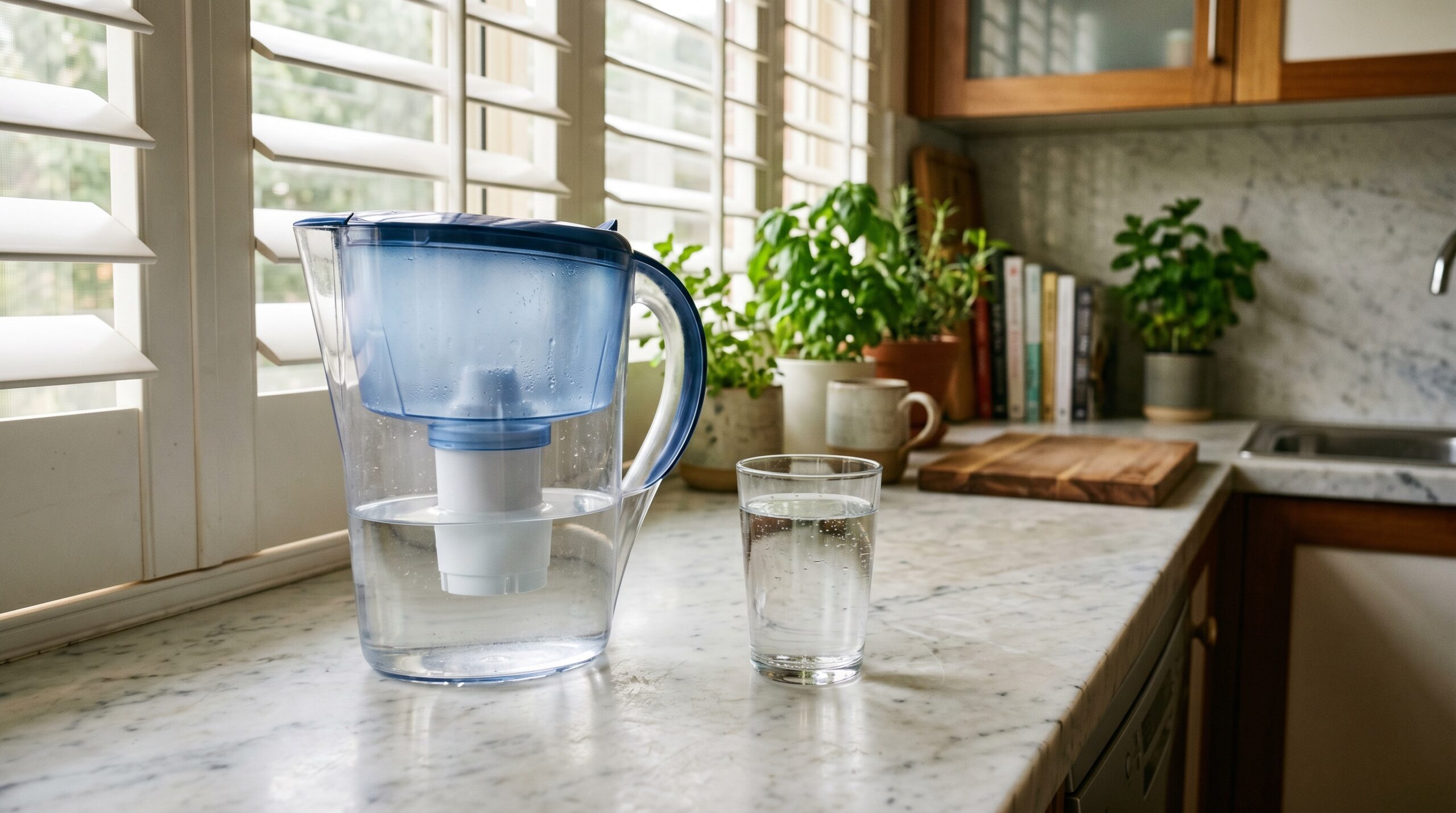
PFAS Forever Chemicals Found in Australian Tap Water
PFAS (per- and polyfluoroalkyl substances) have been detected in Australian tap water supplies across every major city, with Sydney alone testing positive for 31 distinct PFAS chemicals — yet Australia’s regulatory limits sit up to 140 times higher than the current US maximum contaminant levels, meaning water that passes Australian Drinking Water Guidelines may still carry a significant chemical load. Reverse osmosis is the only consumer-grade filtration technology proven to remove PFAS to below detection limits.
What PFAS Are — and Why “Forever Chemical” Is Not a Marketing Term
PFAS stands for per- and polyfluoroalkyl substances. There are over 14,000 compounds in this chemical family. What they share is a carbon-fluorine bond — one of the strongest in organic chemistry, with a bond energy of approximately 544 kJ/mol. That bond does not break down in water, soil, or the human body under normal conditions. The half-life of some PFAS compounds in human blood serum is measured in years.

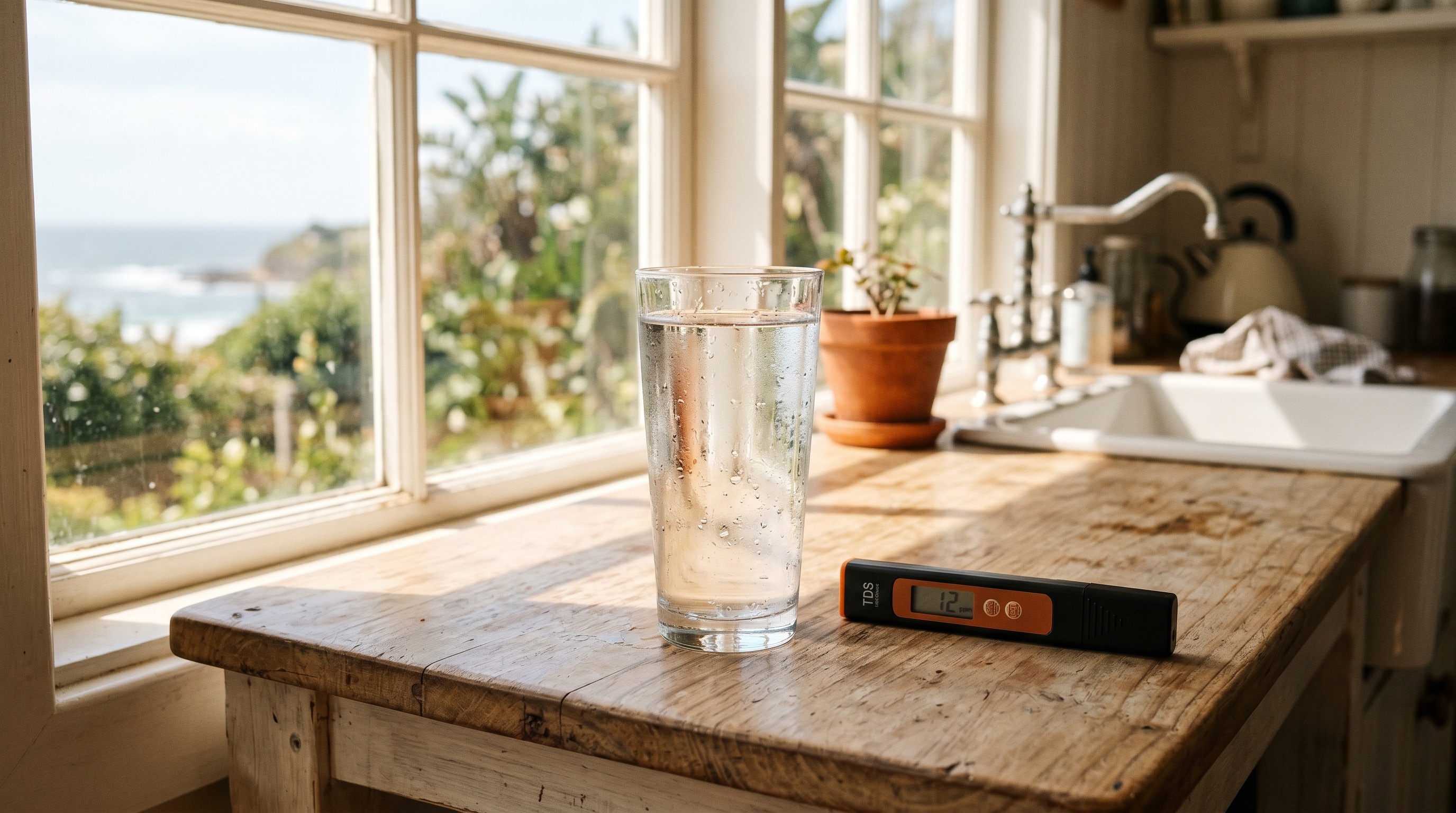
They were designed to be indestructible. PFOA (perfluorooctanoic acid) and PFOS (perfluorooctane sulfonic acid) — the two compounds most commonly regulated — were used for decades in non-stick cookware, food packaging, firefighting foam (AFFF), waterproof clothing, and industrial processes. Manufacturing sites, airports, and military bases using AFFF are the primary contamination point sources in Australia. The chemicals leached into groundwater, surface water, and municipal supplies over decades of use.
The health evidence has hardened substantially since 2018 when Australia last updated its ADWG PFAS guidance. The US National Toxicology Program concluded in 2024 that PFOA and PFOS are “presumed to be immune hazards to humans” at exposures well below current Australian limits. The International Agency for Research on Cancer (IARC) upgraded PFOA to Group 1 — a confirmed human carcinogen — in 2023. PFOS remains Group 2B. These are not contested fringe findings. They are the current scientific consensus from the world’s two most authoritative cancer research bodies.
The 140x Gap: Australia’s Guidelines vs. Reality
Australia’s current ADWG health-based guidance value sits at 70 nanograms per litre (ng/L) for PFOS and PFOA combined. The US EPA’s April 2024 final rule set maximum contaminant levels (MCLs) at 4 ng/L for PFOA and 4 ng/L for PFOS individually — a standard that is effectively 140 times stricter than Australia’s combined limit, as confirmed in FOI documents released by Australia’s Department of Health (FOI-5077, July 2024).
This is not a minor rounding difference. It means drinking water that fully complies with Australian guidelines could contain PFAS at concentrations that would be illegal to supply in the United States, Canada, and the European Union. The EU has set a maximum of 0.5 ng/L for the sum of 20 specified PFAS compounds in drinking water under the 2020 Drinking Water Directive — more than 100 times stricter than Australian guidance on a per-compound basis.
Australia’s ADWG is due for a PFAS review, but no updated guidance values have been published as of June 2026. The NHMRC, which administers the ADWG, acknowledged in its 2023 review cycle that emerging science warranted reassessment. That reassessment is ongoing. In the meantime, Australian water utilities are legally compliant at concentrations that international bodies now classify as health-relevant.
The practical consequence: Sydney Water, SEQ Water, and the Water Corporation of Western Australia can all test “within guidelines” and issue clean-bill reports — while delivering water carrying a chemical load that the US EPA would require urgent remediation to address. Compliance is not the same as safety when the guidelines lag the science by a decade.
31 PFAS Chemicals in Sydney Tap Water: What the 2024 Research Actually Found
A 2024 study by researchers at UNSW Sydney, published in collaboration with data reported by Innovation News Network, detected 31 distinct PFAS compounds in Sydney tap water samples. This is a number that should reframe the entire public discussion. Australia’s ADWG currently sets guidance values for PFOS and PFOA. Two compounds. The research found 31.
The remaining 29 compounds detected in Sydney water carry no Australian regulatory limit at all. They are not monitored for compliance. They are not required to be reported to the public. Some of these “unregulated” PFAS compounds — including PFBS, PFHxS, and various fluorotelomer sulfonates — have emerging evidence of toxicity, but are simply outside the current guidance framework. You cannot exceed a limit that does not exist.
NSW is not uniquely contaminated. The ABC reported in August 2024 that PFAS had been detected in NSW water filtration plants themselves — meaning the treatment process is not eliminating these compounds before distribution. The same reporting confirmed PFAS presence in platypus livers collected from NSW waterways, a finding that demonstrates the chemicals are bioaccumulating through the food chain at measurable concentrations, not simply passing through aquatic systems.
Sydney’s highest-risk zones correlate with proximity to historical AFFF use sites. The DCCEEW national contamination register lists over 700 confirmed PFAS contamination sites across Australia. In Sydney, areas proximate to Williamtown RAAF Base (Hunter Valley), the former Mascot fire training grounds, and Holsworthy Military Area carry the longest documented contamination histories. Western Sydney suburbs including Penrith, Blacktown, and Liverpool draw from catchments with higher historical industrial activity and correspondingly higher measured PFAS loads in some monitoring periods.
Brisbane and south-east Queensland face a compounding factor: the region uses chloramine disinfection (not free chlorine), and chloramine interacts differently with organic compounds in source water. Standard granular activated carbon (GAC) filtration — which is what most household filter jugs use — removes chloramine at roughly 1/40th the rate of free chlorine, and has negligible effect on PFAS regardless of disinfection type. SEQ Water’s monitoring data for the Mt Crosby and North Pine treatment plants shows PFAS detections within guidelines, but uses the outdated 70 ng/L combined limit as the compliance benchmark.
Perth households face Australia’s hardest tap water at approximately 180 mg/L CaCO3, with TDS around 170 mg/L. The Water Corporation of WA has documented PFAS contamination in groundwater sources associated with Perth Airport and the Pearce RAAF Base north of the city. Residents in Bullsbrook, Gnangara, and the Kwinana industrial corridor have received alternative water supply advice at various points due to PFAS in local bores.
Which Filters Actually Remove PFAS — and Which Are Useless
This is where most coverage fails the reader. PFAS removal is not a general filtration problem — it is a membrane and media-specific problem. The answer matters because the wrong filter gives you false confidence while delivering every PFAS molecule directly into your glass.
Reverse Osmosis: The Only Consumer Technology with Verified PFAS Removal
Reverse osmosis (RO) membranes remove PFAS through physical size exclusion and charge rejection. NSF/ANSI P473 is the certification standard specifically for PFAS reduction in drinking water treatment systems — it tests for PFOA and PFOS reduction under defined laboratory conditions at specified pressures and flow rates. Systems certified to NSF/ANSI P473 are required to demonstrate at least 97% reduction. That is the number you are looking for on any product claim.
The AquaTru Classic countertop RO is NSF P473 certified and available in Australia. It requires no plumbing modification — the tank fills from your tap, the membrane does the work, and the filtered output sits in a separate reservoir. For renters or anyone who cannot modify under-sink plumbing, this is the highest-effectiveness PFAS solution available without a tradesperson. The waste ratio is approximately 3:1 (three litres of reject water per litre of filtered output), which is the honest tradeoff for a countertop system.
For homeowners, the PWS EcoHero 5-Stage under-sink RO carries NSF/ANSI 58 certification and meets AS/NZS 3497 (WaterMark), which is the Australian standard for plumbing product compliance. Under-sink RO units connect to your cold water supply line and deliver filtered water through a dedicated tap. Waste ratios on modern units are significantly lower than older designs — down to 1.5:1 on efficient membranes.
Activated Alumina: Effective for PFAS, Not Commonly Sold Standalone in Australia
Activated alumina media removes PFAS through adsorption — the fluorinated compounds bind to the aluminium oxide surface. Removal rates of 80–95% are documented in controlled studies. The limitation is media saturation: activated alumina beds require regeneration or replacement, and once saturated they can release captured contaminants back into the water. It is used in municipal-scale treatment and some multi-stage under-bench systems, but is not a reliable standalone consumer solution in the Australian market.
Standard Carbon Filters: Do Not Remove PFAS
Standard granular activated carbon (GAC) — the media in Brita jugs, refrigerator filters, and most countertop filter pitchers — does not remove PFAS at any meaningful rate. The carbon surface area in a standard GAC block is optimised for chlorine and taste compounds, not for the molecular size and charge profile of PFAS. Compressed carbon block filters (like those in Tappwater or similar) perform similarly: they handle taste and chloramine better than GAC but do not remove PFAS.
Gravity filters using ceramic and carbon media — including the Berkey — are not certified for PFAS removal under NSF/ANSI P473. Berkey’s own documentation does not claim PFAS removal. Any filter without a specific NSF P473 certification should be assumed to provide zero PFAS reduction.
KDF-55 and Vitamin C Shower Filters: Not Relevant to PFAS
KDF-55 is a copper-zinc redox media effective for free chlorine reduction. Vitamin C (ascorbic acid) neutralises chloramine. Neither technology has any documented effect on PFAS. Shower filters are relevant to disinfection byproduct exposure, not PFAS. If you are in Brisbane, Sydney, Adelaide, Gold Coast, or Darwin (all chloramine cities), a vitamin C or catalytic carbon shower filter is worth having — but it will not address PFAS in your drinking water. Those are separate problems requiring separate solutions.
Cost Per Litre Filtered — PFAS-Capable vs. Standard Filters, Australian Market
Assumes 4 litres/day household consumption; annual filter costs at manufacturer-published replacement intervals; AUD pricing June 2026.
Formula: (annual filter replacement cost) / (daily litres x 365). Bottled water: Coles 10×1.25L pack $2.50 = $0.20/L retail. Brita: 6-filter annual pack ~$65 / 1,460L = $0.045/L filter cost + cartridge water loss = approx $0.22/L effective. AquaTru: ~$120/yr replacement filters / 1,460L = ~$0.08/L. PWS EcoHero: ~$60/yr filter pack / 1,460L = ~$0.04/L. Sources: Coles AU, Brita AU, Amazon AU (AquaTru), purewatersystems.com.au. Bar fill #3A8A5A = top-rated pick; #1A3326 = peer products. Brita and bottled water provide zero PFAS removal.
How to Know If Your Suburb Is at Higher Risk
Australia’s PFAS contamination is not evenly distributed. It clusters around historical use sites, and the further you live from one, the lower your baseline risk — though “lower” is not “zero” given PFAS mobility in catchment water systems.
The DCCEEW maintains a national PFAS contamination sites register. As of 2025, over 700 sites are listed. The highest-risk categories are: current and former military bases where AFFF was used for firefighting training, commercial airports with historical foam use, and industrial sites manufacturing or using fluorinated compounds. In every Australian capital, at least one of these categories falls within a relevant catchment or groundwater system.
In New South Wales, the Williamtown RAAF Base contamination (Hunter region, north of Newcastle) is the most documented case. Residents within the investigation area — including suburbs such as Williamtown, Fullerton Cove, and Grahamstown — have been issued public health advice about tap water use at various points since 2016. The investigation area is still active. Sydney’s western suburbs, served by Prospect Reservoir and the Upper Canal system, have shown lower but non-zero PFAS readings in utility monitoring data.
In Queensland, the Amberley RAAF Base near Ipswich is the primary point source. Ipswich, Springfield, and surrounding Logan City suburbs receive SEQ Water-treated supply that is monitored for PFAS — again, using the 70 ng/L compliance benchmark rather than the stricter international standards. Brisbane city centre and northern suburbs draw from Wivenhoe Dam, which is upstream of the major contamination sites and tends to show lower PFAS loads in monitoring data.
Western Australia has documented contamination at RAAF Pearce (Bullsbrook, north of Perth), Perth Airport, and several Kwinana industrial sites. Residents relying on private bores in these areas received alternate water supply arrangements from the state government. Metropolitan Perth reticulated supply from the Water Corporation is treated at Mundaring and Serpentine, with published monitoring data generally within guidelines — under the 70 ng/L standard.
South Australia’s Adelaide faces a different challenge: very hard water (140 mg/L CaCO3, TDS ~400 mg/L) combined with chloramine disinfection and documented PFAS at Edinburgh RAAF Base north of the city. Standard GAC pitcher filters, already ineffective for chloramine at 1/40th the rate of free chlorine removal, provide zero additional defence against PFAS. Adelaide residents who invest in a pitcher filter for taste are getting almost nothing for their water safety dollar.
The most actionable step before purchasing any filter: request your utility’s latest water quality report and look specifically for PFAS monitoring data. Sydney Water, Melbourne Water, SEQ Water, SA Water, and the Water Corporation all publish annual water quality reports. The PFAS section, where it exists, will list compounds tested, detection levels, and the compliance standard used. Compare those numbers to the US EPA’s 4 ng/L benchmark, not Australia’s 70 ng/L limit, to get an honest read on where your supply sits.
Is Australia’s PFAS Problem Getting Worse Over Time?
The honest answer is: we do not know, because the monitoring framework is not designed to tell us. Australia’s ADWG requires utilities to test for PFOA and PFOS when there is a known source risk. There is no national mandatory routine surveillance requirement for all 14,000+ PFAS compounds across all supplies. The 31 compounds detected by UNSW in Sydney water were found by researchers using a broader analytical method than utilities routinely deploy for compliance testing.
What we can say with confidence is that PFAS concentrations in contaminated sites have not declined meaningfully. PFAS do not degrade. They do not flush from groundwater systems on any human-relevant timescale. The US Agency for Toxic Substances and Disease Registry (ATSDR) notes that while point-source contamination can be controlled by removing the input, existing contamination persists for decades. Sites where AFFF use ended in the 1990s are still showing measurable PFAS in surrounding groundwater in 2024.
The number of compounds being detected is increasing — not because contamination is necessarily worsening, but because analytical chemistry has improved and researchers are now looking for the full PFAS family rather than just PFOA and PFOS. The 31-compound Sydney finding is partly a story about better measurement. That framing does not reduce the concern; it means historical data underestimated the chemical load that was always present.
Regulatory pressure is building. The EU’s 2020 Drinking Water Directive, implemented from 2026 across member states, sets the 0.5 ng/L sum-of-20 PFAS limit. US state-level standards in California, Michigan, and Massachusetts are stricter than the federal EPA standard. Australia’s NHMRC has acknowledged the need for ADWG PFAS review. Whether the revised limits will align with US or EU standards, or adopt a more conservative Australian-specific benchmark, is not yet settled. For now, the gap remains.
A Decision Framework: Do You Need an RO Filter?
Three questions. Answer them in order.
1. Do you live near a known PFAS contamination site? Check the DCCEEW register and your utility’s annual water quality report. If your suburb is within 10 km of a listed military base, airport, or industrial PFAS site, and your utility’s monitoring data shows any PFAS detection above 4 ng/L (the US EPA MCL), you have a documented case for filtration. If your utility doesn’t publish PFAS data at all, assume the precautionary position.
2. Can you modify your plumbing? If yes — homeowner, apartment with under-sink access — an under-sink RO system like the PWS EcoHero 5-Stage is the most cost-effective long-term solution at approximately $0.04/L filtered. If no — renter, apartment with no under-sink space — the AquaTru Classic countertop RO requires no plumbing, sits on the bench, and provides NSF P473-certified PFAS removal at $0.08/L.
3. Which city are you in? If you are in Brisbane, Sydney, Adelaide, Gold Coast, or Darwin, your water is disinfected with chloramine — and standard carbon pitchers fail on both chloramine AND PFAS simultaneously. An RO system solves both. Melbourne, Hobart, Canberra, and Townsville use free chlorine, where a compressed carbon block handles taste and chloramine adequately — but still does nothing for PFAS. If PFAS is your concern, RO is the answer regardless of city.
Last reviewed: June 2026 — Clean and Native
Ready to remove PFAS from your drinking water?
The PWS EcoHero 5-Stage RO is the top-rated under-sink filter for Australian homes — NSF 58 certified, WaterMark AS3497, removes PFAS, fluoride, chloramine, and lead at $0.04 per litre. No plumbing? The AquaTru Classic countertop RO is NSF P473 certified and requires zero installation.
Final Verdict
This finding is most relevant for Australian households concerned about long-term health impacts, as PFAS contamination in tap water presents a potential risk that current regulatory standards may not adequately address. Install a high-quality water filtration system certified to remove PFAS compounds, such as those reviewed at See Pure Water Systems, to reduce your family’s exposure to these persistent chemicals.
Frequently Asked Questions
PFAS (per- and polyfluoroalkyl substances) are a family of over 14,000 synthetic chemicals that share a carbon-fluorine bond — one of the strongest in organic chemistry at approximately 544 kJ/mol. This bond does not break down under normal environmental conditions, meaning PFAS persist in soil, water, and human tissue for years or decades. The half-life of PFOS in human blood serum is estimated at 5.4 years. The “forever chemical” label refers to this environmental and biological persistence.
UNSW Sydney researchers detected 31 distinct PFAS compounds in Sydney tap water in 2024. Australia’s ADWG sets guidance values for only two — PFOA and PFOS. The remaining 29 compounds detected carry no Australian regulatory limit and are not subject to mandatory compliance testing by utilities.
Meeting Australia’s ADWG PFAS guidance (70 ng/L combined for PFOS + PFOA) means the water is legally compliant under Australian standards. However, the US EPA’s 2024 maximum contaminant levels are 4 ng/L individually — 140 times stricter. IARC classified PFOA as a confirmed Group 1 human carcinogen in 2023. “Compliant” and “safe by international standards” are not the same thing under current Australian guidelines.
No. Standard granular activated carbon (GAC) filters — including Brita, Pur, and similar pitcher-style filters — do not remove PFAS at any meaningful rate. These filters are optimised for chlorine, taste, and odour. Only reverse osmosis systems certified to NSF/ANSI P473 have demonstrated verified PFAS reduction (97% or greater) in independent testing.
Reverse osmosis is the only consumer-grade technology with NSF/ANSI P473 certification for PFAS reduction. The AquaTru Classic countertop RO (no plumbing required) and the PWS EcoHero 5-Stage under-sink RO are the two systems recommended for Australian households. Both remove 90–97% of PFAS along with fluoride, lead, and chloramine. Standard carbon filters, gravity filters, and KDF-based systems do not remove PFAS.
For drinking and cooking, a point-of-use reverse osmosis filter at the kitchen tap is sufficient and significantly more cost-effective than whole-house RO. PFAS exposure through bathing and showering is considered lower risk than ingestion, as PFAS are not efficiently absorbed through intact skin. Your primary intervention should be at the drinking water tap. Whole-house RO is expensive to install, maintain, and generates large volumes of reject water.
Risk correlates with proximity to historical AFFF use sites. The highest-documented cases are: Williamtown RAAF Base area (NSW Hunter region), Amberley RAAF Base (Ipswich, QLD), RAAF Pearce (Bullsbrook, WA), Edinburgh RAAF Base (north Adelaide, SA), and multiple commercial airports. Urban reticulated supply from major utilities is generally lower risk than private bores near these sites, but monitoring uses Australia’s outdated 70 ng/L benchmark rather than international standards.
Yes. Reverse osmosis removes PFAS regardless of whether the disinfectant is chloramine or free chlorine. In Brisbane and south-east QLD (chloramine city), RO provides a double benefit: it removes both PFAS and the disinfection byproducts that standard GAC carbon filters fail to address. GAC removes chloramine at 1/40th the rate of free chlorine, making it nearly useless for Brisbane tap water on multiple counts.
Request your utility’s latest Annual Drinking Water Quality Report. For filtration options against PFAS, see our PFAS forever chemicals water filtration guide. Sydney Water, SEQ Water, SA Water, Melbourne Water, and the Water Corporation of WA all publish these annually. Look for the PFAS monitoring section and compare detection levels against the US EPA 4 ng/L benchmark (not the Australian 70 ng/L limit) for a realistic safety picture. Also check the DCCEEW national PFAS contamination sites register for any listed sites within your catchment area.
Yes. RO membranes remove fluoride at 90–97% efficiency. This is the only consumer technology with verified fluoride removal — activated alumina achieves 80–95% but is not widely sold as a standalone consumer product in Australia. Carbon filters, including catalytic carbon, cannot remove fluoride. If fluoride removal is part of your concern alongside PFAS, RO is the single technology that addresses both.
Get the Australian Home Environment Checklist
30 checks across water, air and EMF. Most of them free. Ranked by impact.
No spam. Unsubscribe any time.

Former Royal Australian Navy Clearance Diver and TAG-E counter-terrorism operator. Founded Clean and Native to apply the same rigorous thinking to the home environment.
Full biography →