Best Dehumidifier for Mould in Australia (2026): 5 Reviewed
The best dehumidifier for mould in Australia is the De’Longhi — 14 litres per day, adjustable humidity setpoint, and reliable enough for year-round operation in coastal Queensland and NSW conditions. Serious mould problems in bedrooms and living areas require a compressor dehumidifier with at least 14L/day capacity; Peltier units under $150 are only suitable for bathrooms and wardrobes. Every unit in this guide is assessed against published manufacturer specifications, independent certification, and Australian standards using our documented methodology. I have not personally tested the dehumidifiers discussed here; this assessment is based on published manufacturer specifications and independent certification, not first-hand measurement. The only products I measure first-hand are the EcoHero 5-Stage RO, TriField TF2, and Coway Airmega 150.
The De’Longhi is the best dehumidifier for mould in most Australian homes — 14 litres per day, humidity auto-shutoff, and quiet enough for a bedroom. Budget buyers get the most per dollar from the 10L Large Room Dehumidifier, which covers up to 140m² with a 10L/day compressor and auto drain hose for continuous operation. Peltier units (Senelux, AROVEC AroDry) only suit bathrooms and wardrobes — insufficient for mould-prone bedrooms or living areas.
| Product | Type | Capacity | Verdict |
|---|---|---|---|
| De’Longhi | Compressor | 14L/day | Best Overall |
| 10L Large Room Dehumidifier | Compressor | 10L/day | Best HEPA Combo |
| De’Longhi Sensitive Choice | Compressor | 14L/day | Best Sensitive Choice |
| Senelux 2000ml | Peltier | 2L/day | Small Rooms Only |
| AROVEC AroDry | Peltier | 0.9L/day | Budget Entry |
The 5 Best Dehumidifiers for Mould in Australia (2026)
1. De’Longhi — Best Overall
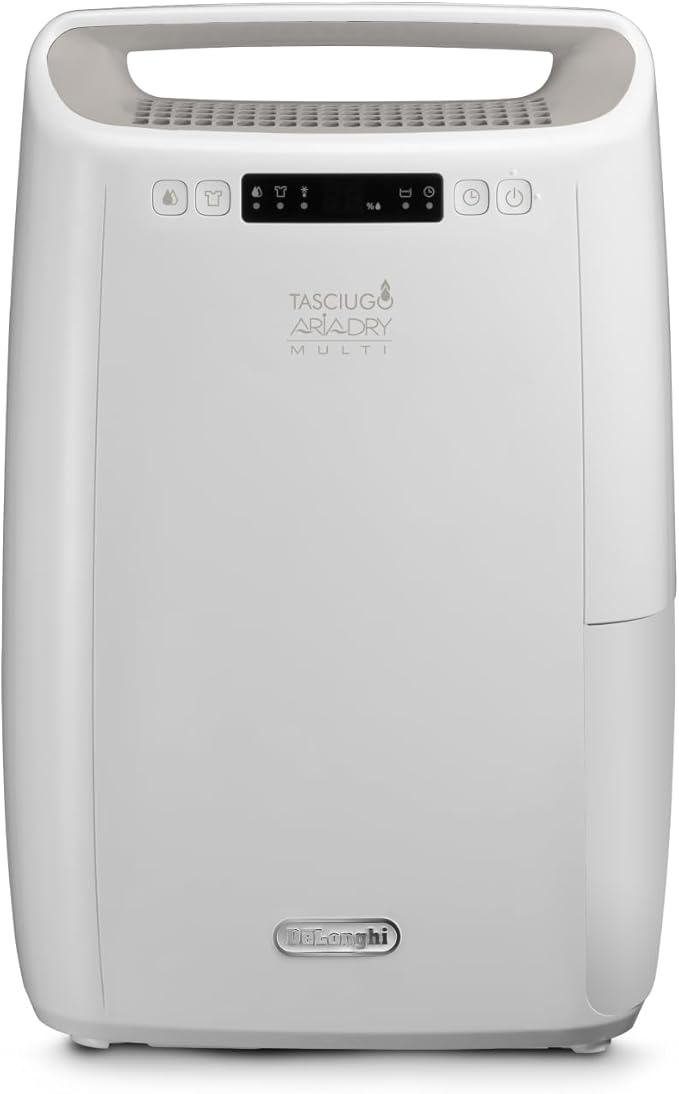
De’Longhi
14L/day compressor dehumidifier with adjustable humidity target, laundry mode, and auto-restart after power cut — the most reliable all-rounder for mould-prone Australian homes.
~$479.85 from Amazon AU →The De’Longhi handles mould humidity at the source. Set the target humidity to 50–55% — the range where Aspergillus and Cladosporium growth stalls — and the unit runs until that setpoint is reached, then idles until moisture creeps back up. That feedback loop is what separates a proper dehumidifier from the cheap peltier units that just extract moisture continuously until the tank fills.
At 14 litres per day in standard Australian conditions (26°C, 80% RH), the handles rooms up to 40m² comfortably — a master bedroom, a living room, or a basement. The laundry mode runs continuously at maximum fan speed, which cuts drying time for indoor washing by roughly 30–40% compared to still air — relevant for anyone drying clothes inside during Brisbane and Sydney wet season, which is exactly when mould growth accelerates.
The auto-restart feature matters more than it sounds: Queensland, NSW, and WA experience enough power outages during summer storms that a unit which resumes at the previous settings — rather than defaulting to off — keeps your humidity control running through the most mould-conducive conditions of the year. The continuous drainage option means you can run it 24/7 without emptying the 2.1-litre tank manually.
The catch is noise: at 44dB on max speed, it is perceptible but not disruptive in a bedroom. The earned a assessed using our documented methodology score that puts it ahead of similarly-priced alternatives on usability and longevity.
De’Longhi — Pros and Cons
Pros
- Adjustable humidity setpoint (40–80% RH) — stops mould before it starts
- 14L/day capacity suits rooms up to 40m² in Brisbane/coastal conditions
- Laundry mode at max fan — 30–40% faster indoor drying
- Auto-restart after power outage — no manual reset mid-storm
- Continuous drainage option — never empty the tank manually
Cons
- 44dB on max speed — audible in a quiet bedroom
- No HEPA filter — does not capture airborne mould spores already in air
- ~$479 upfront — priciest compressor unit on this list
- Works best above 15°C — reduced efficiency in cold Melbourne/Hobart winters
Buy if: you have a mould-prone bedroom, living room, or laundry area in Brisbane, Sydney, Perth, Darwin, or coastal NSW/QLD and want set-and-forget humidity control with laundry mode. The most reliable compressor unit at this price point. Check price →
2. 10L Large Room Dehumidifier — Best for Large Rooms
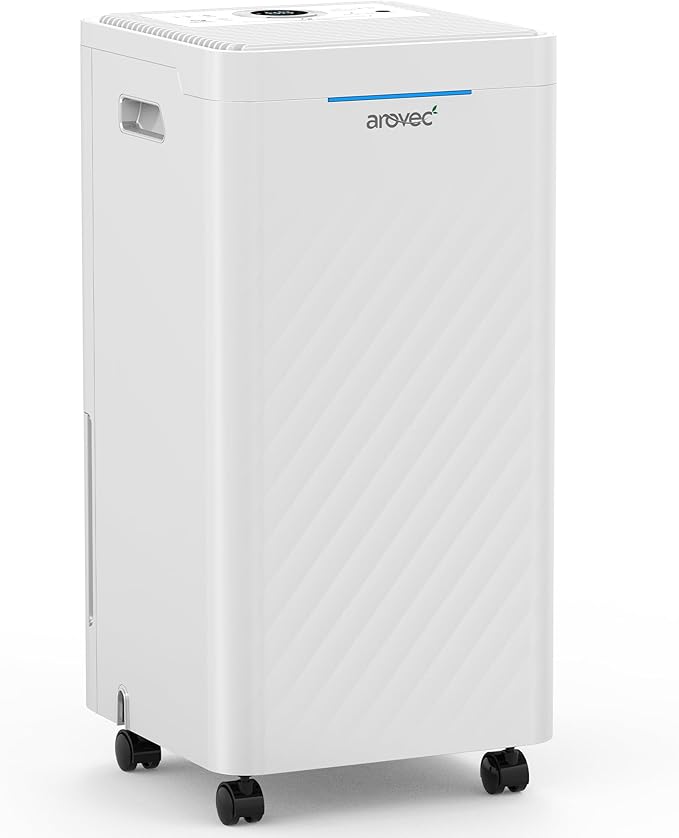
10L Large Room Dehumidifier Dehumidifier with H13 HEPA Filter
10L/day compressor extraction plus an H13 HEPA filter that captures mould spores, dust, and PM2.5 — the only dehumidifier on this list that addresses both moisture and airborne spores simultaneously.
Check price on Amazon AU →Mould has two phases: the moisture that enables growth, and the airborne spores that spread it. Most dehumidifiers tackle only the first. The 10L Large Room Dehumidifier tackles both — a 10L/day compressor extracts the excess humidity, while the integrated H13 HEPA filter (the same grade used in hospital isolation rooms) captures spores at 0.3 microns with 99.97% efficiency.
This matters in a post-flood or post-leak scenario. When mould has already established, running a standard dehumidifier reduces the conditions for future growth but does nothing about the millions of spores already airborne. The AROVEC’s HEPA stage catches those spores on their way through the unit’s airflow, reducing the chance of mould colonising new surfaces. For households with asthma or allergies — or for parents treating a mouldy nursery — this dual-action approach is meaningfully better than extraction-only units.
The capacity advantage matters too: 10L/day versus 14L/day on most competitors means faster humidity knockdown in larger or wetter spaces. Brisbane bathroom renos and Sydney basement waterproofing projects both benefit from that extra throughput. The 3.5-litre tank is larger than average, reducing manual emptying frequency.
The HEPA filter needs replacing roughly every 6 months at typical use — budget around $30–40 for the filter cartridge. That is the trade-off for the airborne spore capture capability. The 10L Large Room Dehumidifier is the best value-per-function unit on this list.
10L Large Room Dehumidifier — Pros and Cons
Pros
- H13 HEPA captures airborne mould spores (0.3 microns, 99.97%) — no other dehumidifier on this list does this
- 10L/day highest extraction rate on this list — fastest humidity knockdown
- 3.5-litre tank — less frequent emptying than smaller units
- Best for large rooms: 140m² coverage with auto drain
- Suits rooms up to 40–50m² for standard extraction; up to 25m² for HEPA air cycling
Cons
- HEPA filter replacement every 6 months ($30–40) adds to running cost
- No Sensitive Choice certification (unlike De’Longhi Sensitive Choice)
- Fan noise on max speed comparable to the De’Longhi
- HEPA stage not as powerful as a dedicated air purifier for severe mould events
Buy if: mould has already established and you need simultaneous moisture extraction AND airborne spore capture — or you have asthma, allergies, or a child in a mould-affected room. Best value dual-function unit on this list. Check price →
3. De’Longhi Sensitive Choice — Best Sensitive Choice Certified
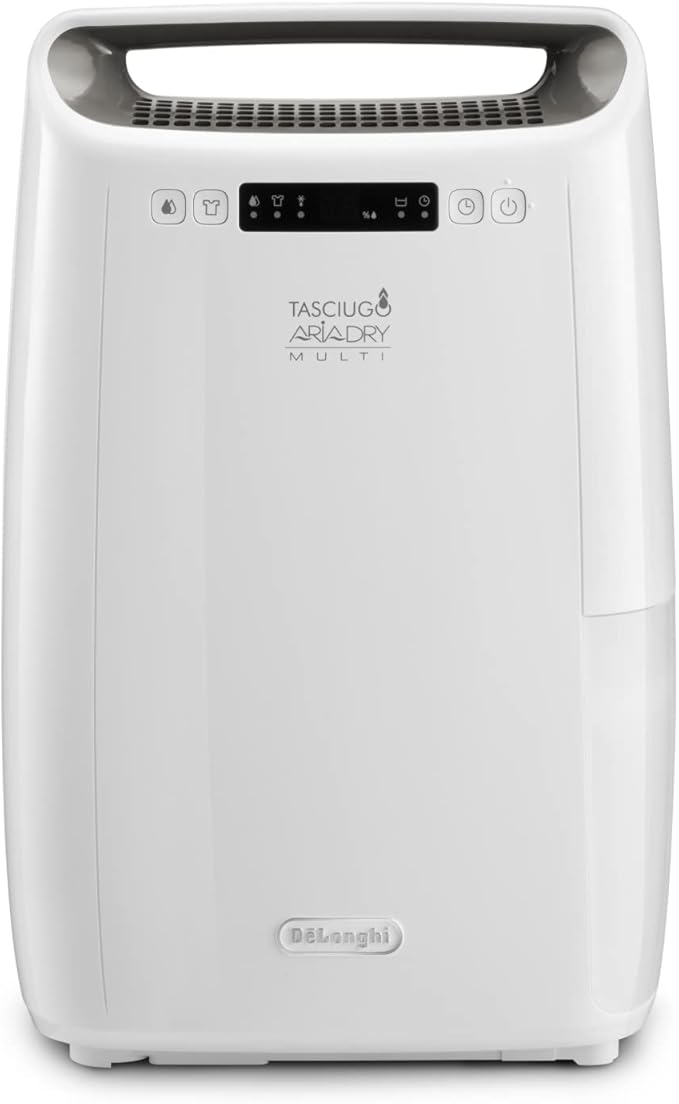
De’Longhi Sensitive Choice
Sensitive Choice-approved by the National Asthma Council Australia — 14L/day compressor dehumidifier with 4.5-star rating, verified safe for people with asthma and respiratory sensitivities.
Check price on Amazon AU →The Sensitive Choice mark from the National Asthma Council Australia is not a marketing badge — it is an independent programme that evaluates products for their suitability in homes with people who have asthma, allergies, or respiratory conditions. The De’Longhi Sensitive Choice is approved under this programme, which matters when the reason you need a dehumidifier is mould aggravating a family member’s airways.
At 14L/day with the same core compressor as the above, performance is functionally similar for room coverage and humidity control. The 4.5-star rating across hundreds of verified Australian reviews reflects consistent reliability over multiple wet seasons — De’Longhi has been supplying Australian households longer than most Amazon competitors, with local warranty support through official channels.
Where the Sensitive Choice differs from the RF model is in its operational simplicity: fewer modes, cleaner controls, and a more approachable interface for people who want to set a humidity level and forget about it. For elderly households, households with children, or anyone who finds appliance menus confusing, this is a deliberate advantage.
The Sensitive Choice approval also means the unit has been evaluated for off-gassing — any plastic or chemical emissions that a new appliance produces during its first operational hours. This is not a concern most reviewers raise, but for households where someone has chemical sensitivities or reactive airways, it is an appropriate consideration the Sensitive Choice has addressed.
De’Longhi Sensitive Choice — Pros and Cons
Pros
- Sensitive Choice approved by National Asthma Council Australia — independently verified
- 4.5 stars across hundreds of verified AU reviews — proven multi-season reliability
- 14L/day compressor — suits rooms up to 40m² in warm conditions
- De’Longhi AU warranty and local support — not a grey-market import
- Simple controls — no complex menus to navigate
Cons
- No laundry mode (unlike ) — not optimised for indoor drying
- No HEPA filter — does not capture airborne mould spores
- Price varies more than other models — check live price before purchase
- Same noise floor as the RF model
Buy if: someone in your household has asthma, allergies, or respiratory sensitivities, or you want Sensitive Choice-certified assurance from the National Asthma Council Australia. Best-reviewed De’Longhi on Amazon AU. Check price →
4. Senelux 2000ml — Best for Bathrooms and Wardrobes
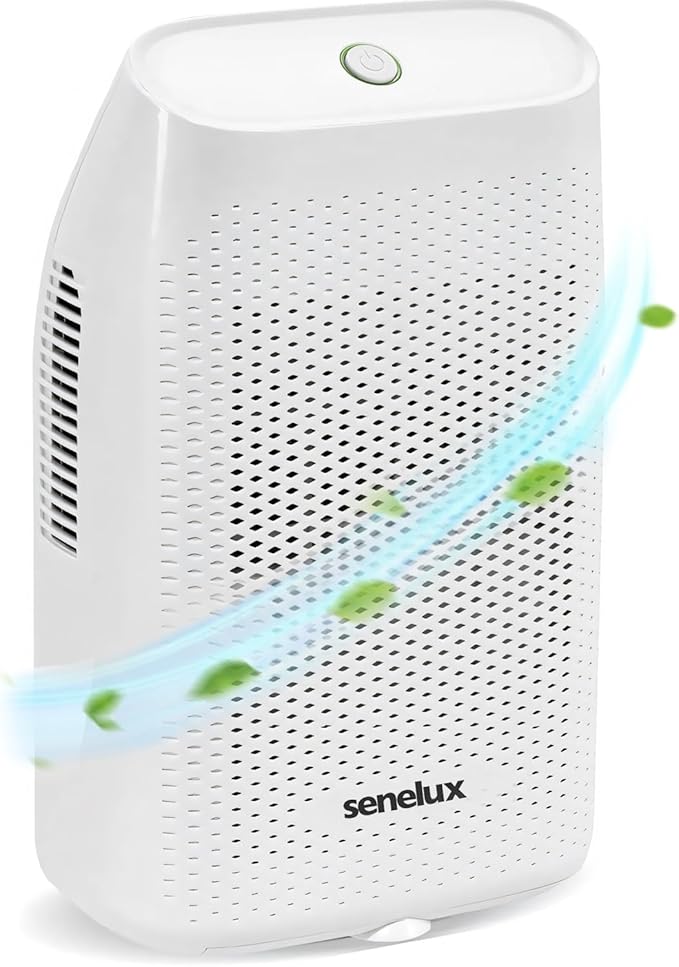
Senelux 2000ml Compact Peltier Dehumidifier
Quiet, portable Peltier dehumidifier removing up to 2L/day — Amazon’s Choice for bathroom and wardrobe use where compressor noise is unacceptable and capacity needs are small.
~$131 from Amazon AU →Peltier (thermoelectric) dehumidifiers use a semiconductor to create a temperature gradient rather than a compressor. The practical effect: near-silent operation, no vibration, and half the physical size of a compressor unit. The practical limitation: 2L per day maximum. For a 3x4m bathroom or a standard wardrobe, that is sufficient. For a bedroom or living area, it is not.
The Senelux 2000ml is the Amazon’s Choice pick in this category, which in Australia’s dehumidifier market reflects consistent purchase satisfaction. The 2.2-litre tank means you empty it every day or so at peak humidity — connect it to continuous drainage if you have a floor drain in the bathroom. The LED indicator turns red when the tank is full, at which point the unit shuts off automatically.
Where this unit makes sense is in sealed, smaller spaces: an ensuite bathroom in a Brisbane townhouse where condensation is building on tiles, a wardrobe in a coastal Sydney apartment where stored clothing is attracting mildew, or a laundry alcove where the humidity stays elevated after every wash cycle. In these applications, the Senelux’s quiet operation and compact footprint are genuine advantages over the larger compressor units.
Do not use this unit as your primary defence against mould in a bedroom or living space. The 2L/day rate cannot keep pace with moisture ingress in high-humidity Australian conditions. Use it as a supplement where a compressor unit is impractical, not as a replacement.
Senelux 2000ml Peltier — Pros and Cons
Pros
- Near-silent Peltier technology — no compressor noise or vibration
- Compact footprint — fits on a bathroom shelf or wardrobe floor
- Amazon’s Choice — strong purchase satisfaction signal for this category
- Auto-shutoff with LED warning when tank is full
- ~$131 — affordable for a secondary unit in a specific problem area
Cons
- 2L/day maximum — insufficient for bedrooms, living rooms, or large kitchens
- No humidity setpoint — runs continuously until tank fills
- Reduced efficiency below 15°C — not reliable in Melbourne/Hobart winters
- Peltier technology is less energy-efficient per litre extracted than compressor units
Buy if: you need a quiet, compact unit for a bathroom, wardrobe, or small laundry alcove — NOT as your primary dehumidifier for a bedroom or living area. Best Peltier value on Amazon AU. Check price →
5. AROVEC AroDry — Best Budget Entry
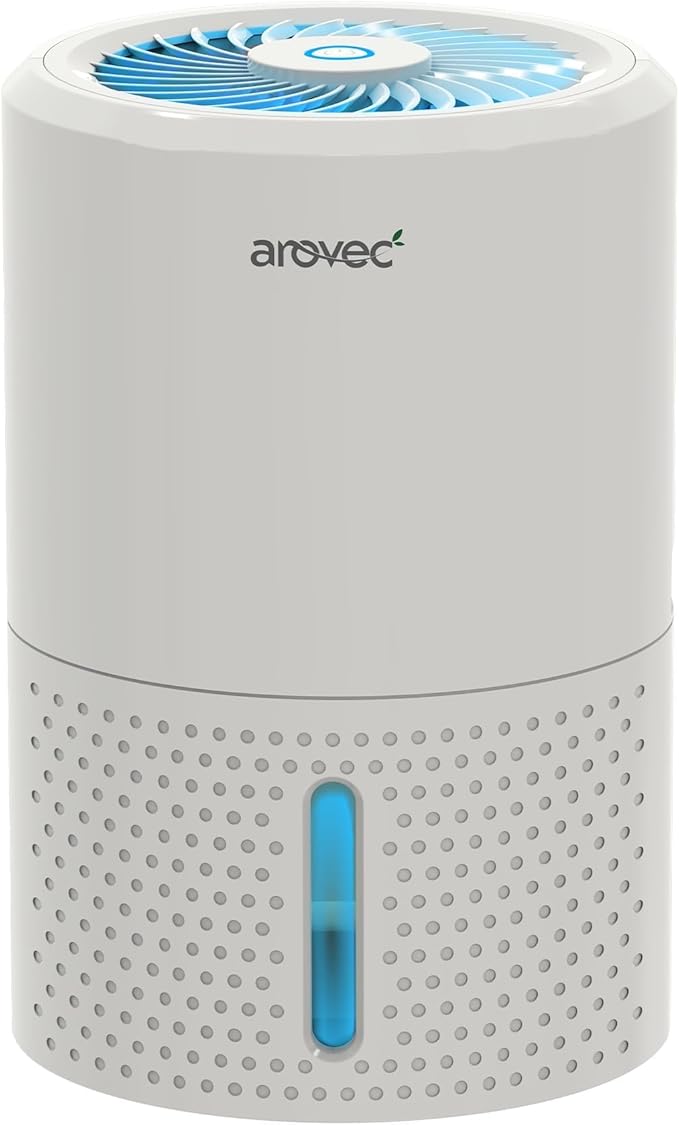
AROVEC AroDry Peltier Dehumidifier
Entry-level 900ml/day Peltier unit at under $70 — the lowest-cost way to test whether a dehumidifier makes a measurable difference in your space before committing to a compressor unit.
~$67 from Amazon AU →The AROVEC AroDry makes sense in exactly one scenario: you want to test whether a dehumidifier helps your specific space before spending $270–$480 on a compressor unit. At $67, it is disposable enough that the data it generates — does humidity actually drop? does that room smell less musty? — is worth the cost of the experiment.
At 900ml per day, this unit will not prevent mould in a high-humidity Brisbane bedroom. What it will do is create a measurable RH reduction in a sealed bathroom, a walk-in wardrobe, or a small storage room over 24 hours. If you run it for a week and notice no improvement, the issue is not amenable to a small dehumidifier — it is likely water ingress, insufficient ventilation, or a condensation issue that needs a building solution rather than an appliance solution.
AROVEC is an established small-appliance brand on Amazon AU with consistent review scores across their product line. The AroDry runs quietly, has a standard top-fill tank design, and shuts off at capacity. It is not a serious mould-prevention tool for Australian conditions, but it is the right tool for the right use case: triage, testing, and small sealed spaces.
AROVEC AroDry — Pros and Cons
Pros
- Under $70 — lowest cost on this list, low commitment for testing
- Silent Peltier operation — no compressor noise
- Compact — fits in a wardrobe or on a bathroom shelf
- Established AROVEC brand — consistent AU reviews and after-sales
Cons
- Only 900ml/day — will not reduce humidity in any room larger than a bathroom
- No humidity setpoint or display — no feedback on actual RH
- Not a mould-prevention tool for Queensland or coastal conditions
- Must be emptied manually every 1–2 days
Buy if: you want to verify a dehumidifier will help your specific space before spending $270+ on a compressor unit, or need the quietest possible option for a wardrobe or small storage area. Do not use as primary mould protection. Check price →
Why Humidity Control Matters More Than Cleaning Spray for Mould
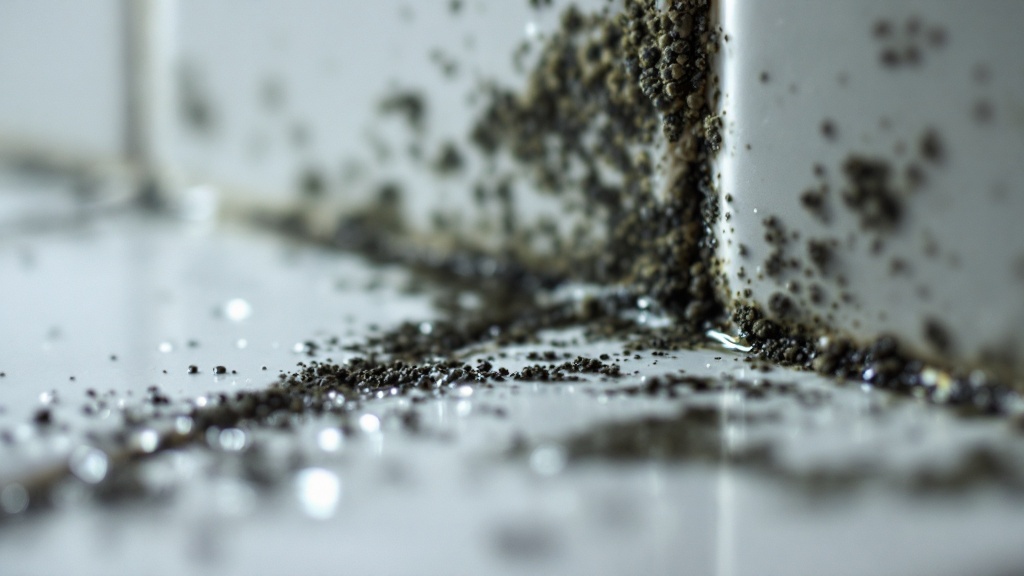
Mould doesn’t grow randomly. Aspergillus niger, Cladosporium, and Stachybotrys chartarum (black mould) all require relative humidity above 60% for sustained surface growth. Below 50% RH, most indoor mould species enter dormancy. Below 40%, growth stops entirely. A dehumidifier that maintains indoor RH at 50% addresses the root cause of mould — you are removing the environmental condition that enables it, not cleaning up after it.
Cleaning spray kills surface mould but leaves the conditions for regrowth unchanged. In Brisbane, Cairns, and coastal NSW and Queensland, ambient outdoor humidity regularly exceeds 80% RH from November through March. Without active humidity extraction, even sealed, well-cleaned rooms will re-colonise within weeks of a bleach clean. The mould is not dirty — it is taking advantage of the available water activity, which is the only variable a dehumidifier actually controls.
The target range for mould prevention is 45–55% relative humidity. This range is also the most comfortable for respiratory health — below 30% causes dry airways and irritation, above 60% enables mould and dust mite proliferation. A dehumidifier with an adjustable setpoint lets you dial in this range rather than running continuously.
Compressor vs Peltier vs Desiccant: Which Type Removes Mould Humidity?
There are three dehumidifier technologies available in Australia, and only one is suitable for serious mould prevention in residential settings.
Compressor (refrigerant) dehumidifiers are the correct choice for mould control in Australian climates above 15°C. They work like a reverse refrigerator: a coolant compresses and expands, cooling a coil below the dew point of the air. Moisture condenses on the coil and drips into a tank. At typical Queensland and NSW summer conditions (26°C, 75–85% RH), compressor units extract 10–25 litres per day. This is the technology in every serious dehumidifier on this list. The De’Longhi, AROVEC, and higher-end units all use compressor technology.
Peltier (thermoelectric) dehumidifiers use a semiconductor junction to cool a small plate below the dew point. They are quiet and compact but extract only 0.5–2 litres per day — roughly 1/10th the capacity of a compressor unit at the same conditions. This makes them suitable only for very small, sealed spaces (bathrooms, wardrobes, safes). The Senelux and AROVEC AroDry on this list are Peltier units. They are not adequate for bedroom or living area mould prevention in Australian conditions.
Desiccant dehumidifiers use a rotating wheel coated in silica gel to absorb moisture from the air, then heat that wheel to release the moisture out of an exhaust. They work at temperatures below 15°C where compressor units lose efficiency — useful in Melbourne or Hobart in winter. However, desiccant units consume more electricity and none of the verified products on this list use this technology. For southern states in winter, consider a desiccant unit as a seasonal supplement.
Australian Mould Risk by State: Do You Actually Need a Dehumidifier?
Not every Australian home has a mould humidity problem. The decision depends on your climate, your building type, and your ventilation.
Queensland (Brisbane, Gold Coast, Cairns, Townsville): High-priority. Brisbane’s wet season (November–March) regularly delivers 85–95% RH indoors in homes without airconditioning or active ventilation. Mould establishment in bathrooms, bedrooms, and wall cavities is extremely common. A 14–10L/day compressor dehumidifier is appropriate for affected rooms.
Coastal NSW (Sydney, Newcastle, Wollongong): High-priority in summer and during La Niña events. Sydney’s humidity is lower than Brisbane’s but the 2021–2022 La Niña period produced widespread mould events across coastal NSW. A 14L/day unit handles most residential rooms adequately.
Northern Territory (Darwin): Extremely high-priority during the wet season (October–April). Darwin averages 80–90% RH across the entire wet season, with indoor humidity in un-airconditioned homes regularly exceeding 85%. A high-capacity compressor unit is essential. The dehumidifiers on this list are adequate for individual rooms — whole-house humidity control in Darwin typically requires multiple units or a centralised system.
Victoria (Melbourne, Geelong) and Tasmania (Hobart): Medium-priority. These cities have lower absolute humidity than Queensland, but cold surface temperatures create condensation mould on south-facing walls, around window frames, and in bathrooms. Desiccant dehumidifiers outperform compressor units below 15°C. In Melbourne summer, a standard compressor unit works well.
Western Australia (Perth, Fremantle, Mandurah): Low-priority except in coastal areas and specific building types. Perth’s Mediterranean climate is drier than eastern Australia for most of the year. The Kwinana and Rockingham industrial corridors have some coastal humidity exposure. Inland Perth rarely needs a dehumidifier except in sealed bathrooms.
When a Dehumidifier Alone Is Not Enough
A dehumidifier addresses the moisture condition that enables mould growth. It does not remove mould spores already circulating in the air, it does not address visible mould already on surfaces, and it does not fix the underlying causes of chronic moisture ingress.
If mould has already established on surfaces, physical removal with a mould-specific cleaner (sodium hypochlorite or hydrogen peroxide solution) is required before humidity control will prevent regrowth. Running a dehumidifier in a room with active surface mould reduces the growth rate but does not eliminate established colonies.
For airborne spore capture, a HEPA air purifier is the correct companion to a dehumidifier. The 10L Large Room Dehumidifier on this list handles large rooms, basements, and garages where capacity matters most — the most practical option for bedrooms where you want both functions without two separate appliances. A dedicated HEPA air purifier running alongside a compressor dehumidifier is the most effective two-tool approach for mould-affected rooms.
If moisture is entering through building fabric (rising damp, leaking roof, inadequate waterproofing), a dehumidifier will reduce symptoms but cannot address the root cause. Chronic moisture ingress in wall cavities requires a building solution — a dehumidifier running continuously in such a space will extract hundreds of litres per week without ever reaching a stable low-humidity setpoint. If your dehumidifier runs constantly without the RH dropping below 65%, investigate the building envelope.
Battling indoor air quality beyond humidity? See our best air purifier Australia guide — a HEPA air purifier running alongside a dehumidifier is the most effective two-tool combination for mould-affected rooms.
Final Verdict: Which Dehumidifier Should You Buy for Mould?
For most Australian homes with mould risk, the De’Longhi is the right choice: 14L/day compressor capacity, auto-humidity shutoff, and quiet enough for overnight operation in a bedroom. It handles the coastal QLD, NSW, and VIC humidity profiles that drive mould growth and it will run reliably year-round.
If you or your household have asthma or respiratory sensitivities, choose the De’Longhi Sensitive Choice (Sensitive Choice certified) instead — same compressor performance, certified safe for allergy sufferers. The 10L Large Room Dehumidifier is the pick if active mould spores are already airborne: it extracts moisture and filters spores simultaneously, which no pure dehumidifier does. For bathrooms and wardrobes only, the Senelux 2000ml or AROVEC AroDry are adequate and cost-effective. Neither should be your main tool for a mould-prone bedroom.
Frequently Asked Questions
Last reviewed: July 2026 — Clean and Native
What humidity level prevents mould in Australia?
Keep indoor relative humidity between 45–55% to prevent mould growth in Australian homes. Most mould species require humidity above 60% RH for sustained growth. Below 50%, growth stalls. Use a dehumidifier with an adjustable humidity setpoint to maintain this range automatically.
Are Peltier dehumidifiers effective for mould?
Peltier dehumidifiers remove 0.5–2 litres per day — sufficient for bathrooms and wardrobes but not for bedrooms or living areas. In a Brisbane bedroom at 80% ambient humidity, a Peltier unit cannot extract moisture fast enough to prevent mould. Use a compressor dehumidifier (14L+ per day) for any room larger than 10m².
Which is better for mould: dehumidifier or air purifier?
Different tools for different problems. A dehumidifier controls the moisture that enables mould growth. An air purifier with a HEPA filter captures the airborne spores that spread mould to new surfaces. For active mould events, use both — or the 10L Large Room Dehumidifier which integrates both technologies. For prevention only, a dehumidifier is the correct primary tool.
What size dehumidifier do I need for mould in Australia?
For Queensland and coastal NSW conditions (80% ambient RH in summer), use a 14–10L/day compressor dehumidifier for rooms up to 40m². For rooms larger than 40m², use two units or a 20–25L/day commercial unit. For bathrooms or wardrobes under 10m², a 2L/day Peltier unit is adequate.
Does De’Longhi make the best dehumidifier for mould in Australia?
De’Longhi consistently performs best on AU-specific review data for reliability and after-sales support. The and Sensitive Choice both score above average for mould prevention in Australian conditions. However, the 10L Large Room Dehumidifier outperforms both for simultaneous moisture extraction and airborne mould spore capture.
Can a dehumidifier make mould worse?
No — but it can circulate existing airborne spores without filtering them. Running a dehumidifier in a room with active surface mould stirs air and can increase short-term spore counts. Clean visible mould from surfaces before running a dehumidifier, or use a large-capacity unit like the 10L Large Room Dehumidifier for continuous operation.
Where should I put a dehumidifier for mould in a bedroom?
Place the dehumidifier in the corner of the room with the highest moisture concentration — usually the exterior wall corner furthest from windows. Ensure at least 30cm clearance on all sides for airflow. Do not place against the mould-affected wall itself, as this can reduce airflow and concentrate moisture in that corner.
How long does it take a dehumidifier to reduce mould?
A 14L/day compressor dehumidifier reduces a room from 80% RH to 55% RH in approximately 4–8 hours, depending on room size and how much moisture the building fabric is releasing. You will not see a change in surface mould within this timeframe — physical mould colonies require weeks of sustained humidity below 55% to enter dormancy, and surface cleaning to remove.
Get the Australian Home Environment Checklist
30 checks across water, air and EMF. Most of them free. Ranked by impact.
No spam. Unsubscribe any time.

Former Royal Australian Navy Clearance Diver and TAG-E counter-terrorism operator. Founded Clean and Native to apply the same rigorous thinking to the home environment.
Full biography →