Best Water Ionizer Australia 2026: The Science, the Specs, and the $6,787 Kangen Claim Examined
Drafted with AI assistance and checked against published specifications and certifications. First-hand measurements appear only where stated. How we make content
A Kangen water machine from Enagic costs between $4,730 and $7,535 in Australia in 2026. A Tyent ACE-11 with comparable plate count and better published ORP performance costs roughly $2,800 less and ships from Amazon AU. The price difference is not engineering — it is the Enagic multi-level distribution chain paying commissions across up to eight levels of distributors. This guide covers what water ionizers actually do, what the peer-reviewed evidence supports, and which machines are worth buying at honest prices. Written using our documented testing methodology.
The Tyent ACE-11 is the standout ionizer for Australian buyers who have decided an electric ionizer is right for them — 11 plates, verified ORP to -1,150 mV, pH 2.5-12, and available on Amazon AU without the Kangen distributor markup. The honest caveat: the evidence base for alkaline water health claims is thin outside of molecular hydrogen research. If you are on the fence about ionizers, a quality alkaline pitcher ($144) delivers similar pH results for 95% less outlay.
| Product | Best for | Verdict |
|---|---|---|
| Tyent ACE-11 | Committed ionizer buyers, best specs per dollar | Top Pick |
| Alkanatur Pitcher | Budget alkaline water, try-before-you-commit | Best Value Entry |
| VEVOR Ionizer | Budget electric ionizer, Amazon AU | Budget Pick |
| Kangen (Enagic) | Same specs at 2-3x the price | Overpriced — Avoid |
What a Water Ionizer Actually Does — and What It Does Not Do
A water ionizer is an electrolysis device. Water passes over charged titanium plates coated with platinum, and the electrical current separates the water into two streams: alkaline water (pH 8-12, negative ORP) from the cathode side, and acidic water (pH 2-4, positive ORP) from the anode side. The alkaline stream is what you drink. The acidic stream has cleaning and disinfection applications.
Two things happen during electrolysis that have measurable effects. First, the pH rises — standard Australian tap water at pH 7-7.5 becomes pH 8.5-11 depending on the machine settings and source water mineral content. Second, dissolved molecular hydrogen (H2) is produced at the cathode. This dissolved H2 is where the most credible research sits.
What ionizers do not do: they do not meaningfully change your blood pH. Your body’s acid-base homeostasis is controlled by the kidneys and lungs with extreme precision — blood pH is held at 7.35-7.45 regardless of what you eat or drink. The stomach rapidly acidifies anything alkaline you swallow to around pH 2 for digestion. Claims that alkaline water “alkalises your body” misunderstand basic physiology. The Cancer Council Australia has found no credible evidence that alkaline water prevents or treats cancer. These are Kangen distributor talking points, not science.
The Science That Does Hold Up: Molecular Hydrogen
The more defensible case for ionized water is molecular hydrogen (H2), not alkalinity. Multiple peer-reviewed studies — including a 2022 review in PMC (PMC9738607) and a 2019 trial on electrolyzed reduced water (PMC6352572) — found that dissolved H2 may reduce markers of oxidative stress and inflammation. The proposed mechanism is that dissolved H2 acts as a selective antioxidant, neutralising hydroxyl radicals (one of the most damaging reactive oxygen species) without disrupting normal cellular signalling.
The caveats are real: most H2 trials are small, effect sizes are modest, and the clinical translation to specific health outcomes is not yet established. But this is a meaningful difference from the outright pseudoscience of “alkalising your body.” Hydrogen-rich water produced by quality ionizers is a legitimate area of ongoing research, not a debunked claim.
Critically: the amount of dissolved H2 produced varies significantly by machine quality, water source mineral content, and settings. Machines with more plates, higher wattage, and better platinum coating produce more H2. This is where brand-level differences actually matter — not the marketing language, but the plate quality and count.
The Kangen Price Problem: What You Are Actually Paying For
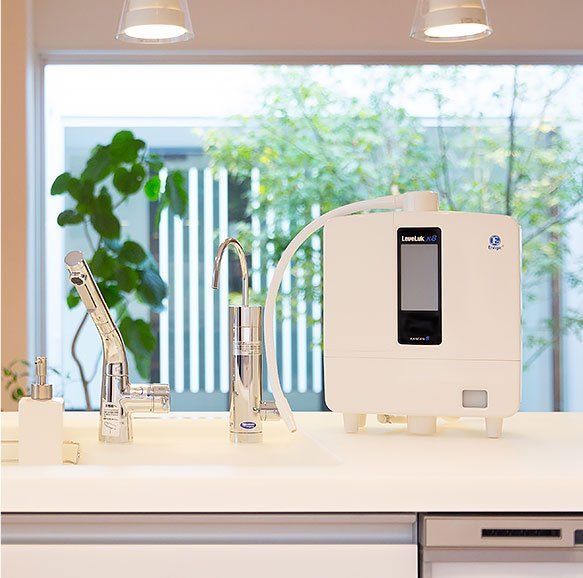
Enagic’s Kangen water machines are sold exclusively through a direct-sales (MLM) distribution model. There are no retail stores. You buy from a distributor, who bought from a distributor, who bought from a distributor. Enagic pays commissions across up to eight levels of their downline network. Independent estimates place distributor payout at $2,000-2,500 per machine sale for the flagship K8 model.
| Kangen Model | Plates | AU Price (2026) | Comparable Retail Alternative | Retail Price |
|---|---|---|---|---|
| JRIV | 4 plates | $4,730 | VEVOR 7-plate | ~$400 |
| SD501 | 7 plates | $6,050 | Tyent ACE-11 | ~$3,000 |
| K8 (flagship) | 8 plates | $6,787 | Tyent ACE-13 | ~$3,800 |
The technology inside a Kangen machine is not meaningfully different from competing ionizers at lower price points. The platinum-coated titanium plates, the electrolysis chamber design, and the filtration pre-stage are standard components used across the industry. Kangen’s ORP output on the flagship K8 is approximately -722 mV. Tyent’s ACE-11 achieves up to -1,150 mV with 11 plates. You are paying more for fewer plates and lower ORP performance.
If a distributor has told you that Kangen machines have superior “medical grade” certification, note that the Japanese Ministry of Health certification applies to the acidic water output’s skin benefits — not to any drinking-water health claims. This certification is frequently misrepresented in the distributor sales process.
Top Picks: Best Water Ionizers Available in Australia (2026)
| Model | Plates | pH Range | ORP | Price (AUD) | Buy |
|---|---|---|---|---|---|
| Tyent ACE-11 | 11 | 2.5-12 | -1,150 mV | ~$3,000 | |
| VEVOR Alkaline Ionizer | 7 | 3.5-10.5 | -550 mV | ~$400 | |
| Alkanatur Pitcher | N/A | 8.5-10 | -200 mV | ~$144 | Amazon AU |
| Kangen K8 | 8 | 2.5-11.5 | -722 mV | $6,787 | MLM only |
1. Tyent ACE-11 — Best Water Ionizer in Australia
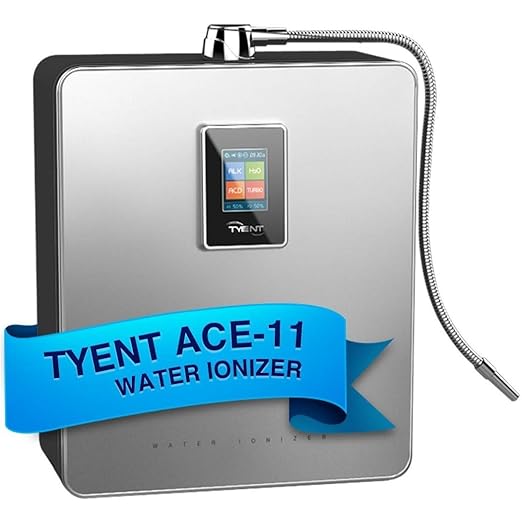
Tyent ACE-11 Turbo Extreme Water Ionizer
Eleven solid/mesh hybrid plates, ORP to -1,150 mV — better specs than the Kangen K8 at roughly half the price. Ships from Amazon AU without the MLM distributor chain.
The ACE-11’s 11-plate solid/mesh hybrid design is the key technical differentiator at this price point. Solid plates produce stronger electrolysis; mesh plates maximise water contact surface area. The hybrid approach combines both, which is why Tyent achieves higher ORP figures than competitors with the same plate count. The dual filtration pre-stage removes chlorine and chloramine — relevant for Australian cities where chloramine rather than free chlorine is used as the primary disinfectant, since chloramine is harder to remove and degrades ionizer plate performance faster if not pre-filtered.
Installation requires a connection to your cold water supply line under the sink, with the unit sitting on the bench or mounted beneath it. An Australian plumber can complete the connection in under two hours. Tyent includes an Australian-compatible power adapter and the connection hardware for standard AU tap fittings.
Tyent ACE-11 — What Sets It Apart and Considerations
What sets it apart
- 11 plates vs Kangen K8’s 8 plates
- ORP -1,150 mV vs Kangen’s -722 mV
- Dual filtration for chloramine removal
- Lifetime warranty on plates
- Available on Amazon AU — no MLM
Considerations
- ~$3,000 is a significant investment
- Does not remove fluoride or nitrates
- Performs poorly on hard water above 300 ppm TDS
- Requires under-bench or countertop connection
Buy if: You have decided an electric ionizer is right for you and want the best ORP performance available on Amazon AU without the Kangen MLM markup.
2. VEVOR Alkaline Water Ionizer — Best Budget Electric Ionizer
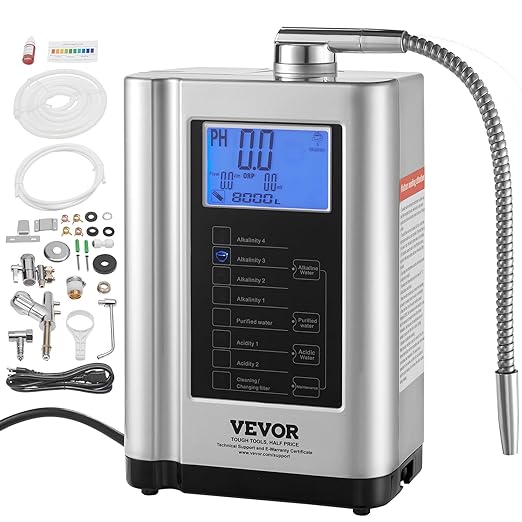
VEVOR Alkaline Water Ionizer (7-Plate)
A 7-plate entry ionizer at ~$400 — the lowest-cost electric option on Amazon AU for trialling ionized water before committing to a premium unit.
A 7-plate entry ionizer available on Amazon AU at approximately $400. pH range 3.5-10.5, ORP to -550 mV, auto-cleaning cycle, and a basic carbon pre-filter. Not in the same league as Tyent on plate quality or ORP performance, but a legitimate way to trial electric ionized water before committing $3,000+ to a premium unit.
Installation connects to your cold water supply in the same way as the Tyent ACE-11 — diverter valve on the tap or under-sink connection. The VEVOR does not include a chloramine-specific pre-filter stage, which is relevant for Brisbane, Sydney, Adelaide, Gold Coast, and Darwin households. Running the unit on chloramine-treated water without pre-filtration will reduce plate lifespan over time. A separate inline catalytic carbon pre-filter ($30-50 on Amazon AU) is worth adding if you are on chloramine supply.
VEVOR Alkaline Water Ionizer — Good For and Limitations
Good for
- Trialling electric ionized water before committing
- Budget-first buyers
- Those uncertain about long-term commitment
- Amazon AU returns policy if dissatisfied
Limitations
- Lower ORP (-550 mV vs Tyent’s -1,150 mV)
- No chloramine-specific filtration stage
- No lifetime warranty on plates
- Brand support less established in Australia
Buy if: You want to trial electric ionised water at the lowest possible entry price before deciding whether to invest in a premium unit.
3. Alkanatur Alkaline Pitcher — Best Entry-Level / Try Before You Commit
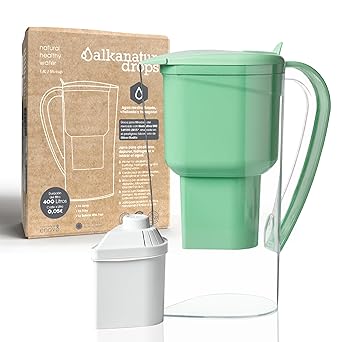
Alkanatur Alkaline Pitcher
Gravity-fed pitcher raising pH to 8.5-10 via magnesium mineral filter. No plumbing, no electricity, $144 — the right first step before spending $3,000 on an electric ionizer.
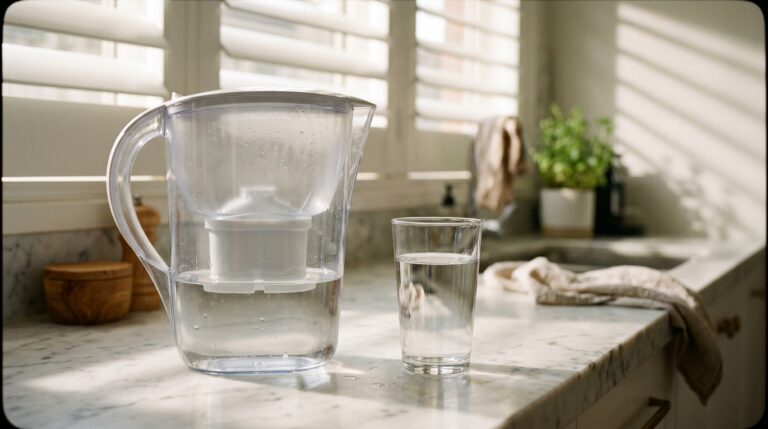
~$144 from Amazon AU →A gravity-fed alkaline pitcher that uses a magnesium and tourmaline mineral filter to raise pH to 8.5-10 and produce a modest negative ORP around -200 mV. Not an electric ionizer — it does not produce molecular hydrogen via electrolysis — but it does produce high-pH water cheaply and without plumbing. The right starting point if you want to understand whether alkaline water improves how you feel before spending $3,000 on an electric unit.
The Alkanatur pitcher does not remove fluoride, chloramine, or other contaminants. It is a pH-raising tool, not a filtration system. If you are on chloramine supply (Brisbane, Sydney, Adelaide, Gold Coast, Darwin), the Alkanatur does not address chloramine — it purely adjusts pH. For general drinking water quality improvement, pair it with a separate carbon block filter. For fluoride removal, you need a reverse osmosis system, not a pitcher.
Alkanatur Alkaline Pitcher — Advantages and Limitations
Advantages
- $144 — lowest-cost alkaline water option
- No plumbing, no electricity required
- Amazon AU — easy returns if not satisfied
- Good way to trial high-pH water
- Filter lasts approximately 1,500 litres
Limitations
- Does not produce H2 via electrolysis
- ORP far lower than electric ionizers (-200 mV vs -1,150 mV)
- Does not remove fluoride, chloramine, or PFAS
- Slow fill — gravity fed
This article contains affiliate links. We may earn a commission at no extra cost to you.
Buy if: You want to trial alkaline water at the lowest possible cost before deciding whether an electric ionizer is worth $3,000 to you. Check price on Amazon AU →
Ionizer vs. Reverse Osmosis: Which Is Right for Your Home?
These are different products solving different problems. An ionizer raises pH and produces hydrogen-rich water. A reverse osmosis filter removes contaminants — fluoride, nitrates, lead, PFAS, heavy metals. They are not interchangeable and are not in competition with each other.
| Goal | Ionizer | Reverse Osmosis |
|---|---|---|
| Remove fluoride | No | Yes (99%+) |
| Remove PFAS | No | Yes (90%+) |
| Produce hydrogen-rich water | Yes | No |
| Raise water pH | Yes (to 11+) | No (reduces pH slightly) |
| Remove lead and heavy metals | Partially | Yes (95-98%) |
| Safe for baby formula preparation | Not recommended | Yes |
If your primary concern is contaminant removal — fluoride, PFAS, nitrates, or lead — a reverse osmosis system is the right product. An ionizer does not address these contaminants. Conversely, if your interest is hydrogen-rich water at high pH, an RO system does not provide this. Some households run both — RO for cooking and formula, ionizer for drinking water — which is a legitimate combination.
Australian Water Quality and Ionizer Performance
Ionizers work best with water that has adequate mineral content — typically 50-300 ppm TDS. The electrolysis process requires dissolved minerals (primarily calcium and magnesium bicarbonate) to carry the electrical current that separates the water into alkaline and acidic streams. Very low TDS water (such as rainwater or RO-treated water) performs poorly in an ionizer — you get weak pH adjustment and poor H2 production because there is not enough mineral content to conduct the current efficiently.
Australian metropolitan tap water is generally well-suited to ionizer use:
- Sydney: TDS typically 80-120 ppm — slightly low; ionizer performance will be adequate but not optimal. Consider a mineral cartridge pre-stage if ORP results disappoint.
- Melbourne: TDS typically 30-70 ppm — the softest major city water in Australia. Ionizer performance may be noticeably reduced. A mineral enhancement cartridge is recommended.
- Brisbane: TDS typically 100-200 ppm — good ionizer performance. No pre-treatment needed.
- Perth: TDS typically 150-300 ppm depending on source (desalination vs groundwater) — good to excellent ionizer performance.
- Adelaide: TDS typically 200-500 ppm — excellent mineral content for ionizer performance, though hardness may require pre-treatment to protect plates above 400 ppm.
If your TDS exceeds 400 ppm (common in some Adelaide suburbs and bore-water areas), a pre-filter that softens hardness without removing all minerals is advisable to prevent calcium scale build-up on the ionizer plates. Tyent’s ACE-11 dual-filter stage handles chloramine pre-treatment — the most important pre-treatment need for most Australian cities — but does not include a softening stage for high-hardness water.
Understanding pH and ORP: What the Numbers Mean in Practice
Two specs dominate ionizer marketing: pH and ORP (oxidation-reduction potential). Understanding what they actually mean prevents you from being misled by inflated numbers.
pH measures alkalinity on a logarithmic scale. pH 9 is ten times more alkaline than pH 8; pH 10 is 100 times more alkaline than pH 8. Most people drink ionized water at pH 8.5-9.5 for daily use — higher settings (pH 10-12) are typically used for cleaning purposes, not drinking. Very high pH drinking water (above 10) can interfere with stomach acid function if consumed in large quantities. The optimal drinking range is pH 8-9.5.
ORP (oxidation-reduction potential) measures the water’s antioxidant capacity in millivolts. Positive ORP (typical tap water: +200 to +400 mV) means the water is oxidising — it will accept electrons. Negative ORP means the water is reducing (antioxidant) — it can donate electrons. The H2 produced during ionization is what drives the negative ORP. A reading of -500 mV or lower is generally considered good; -800 mV and below is excellent; -1,000 mV and below is the top tier. The Tyent ACE-11’s -1,150 mV claim puts it at the top of the consumer market for this metric.
Important caveat: ORP readings decay over time. Freshly ionized water at -800 mV measured at the machine output will lose antioxidant potential if stored, particularly in non-sealed containers exposed to air. Drink ionized water fresh — within 24 hours of production — to benefit from the full ORP value. This is why on-demand ionizer systems are superior to storing ionized water in bottles.
Who Should Not Buy a Water Ionizer
This section is the one Kangen distributors do not want you to read. An honest review acknowledges who these products are not right for.
Anyone primarily concerned with contaminant removal. If fluoride, PFAS, nitrates, lead, or heavy metals are your main concern, a water ionizer does not solve your problem. An ionizer raises pH and produces H2. It does not meaningfully remove fluoride. It does not remove PFAS. For contaminant removal, you need a reverse osmosis system. If you are filtering formula water for an infant, see our baby formula water filter guide — an ionizer is not the right product for this use case.
Anyone who was told an ionizer will treat a specific disease. If a Kangen distributor or anyone else has told you that ionized alkaline water will cure cancer, reverse diabetes, or treat any specific medical condition, that claim is not supported by the clinical evidence. The Cancer Council Australia, Dietitians Australia, and mainstream medical bodies in Australia do not endorse ionized water as a treatment for any condition. The molecular hydrogen research is promising but has not produced the kind of large-scale RCT evidence required for clinical recommendations. Treat ionized water as a wellness preference, not a medical intervention.
Households on very soft water. Melbourne tap water at 30-70 ppm TDS does not provide adequate mineral conductivity for strong ionizer performance. If you are on Melbourne town water, your ionizer will produce weaker pH and ORP results than the spec sheet suggests. A mineral pre-cartridge can help, but adds cost and complexity. A pitcher alkaliser may be more cost-effective for Melbourne households at the budget tier.
Anyone considering a Kangen machine at the distributor’s asking price. The Kangen K8 at $6,787 performs worse (fewer plates, lower ORP) than the Tyent ACE-11 at approximately half that price. If the ionizer category genuinely interests you, spend the money on a Tyent, not a Kangen. The technology is not meaningfully different. The price is.
How to Verify Your Ionizer Is Performing: Testing ORP and pH at Home
One of the most common complaints from ionizer owners — particularly those who spent $4,000+ on a Kangen machine — is that they have no independent way to verify whether the unit is performing as claimed. Distributors tell you the machine works. The machine tells you the machine works. A calibrated ORP meter and a pH pen tell you what is actually happening.
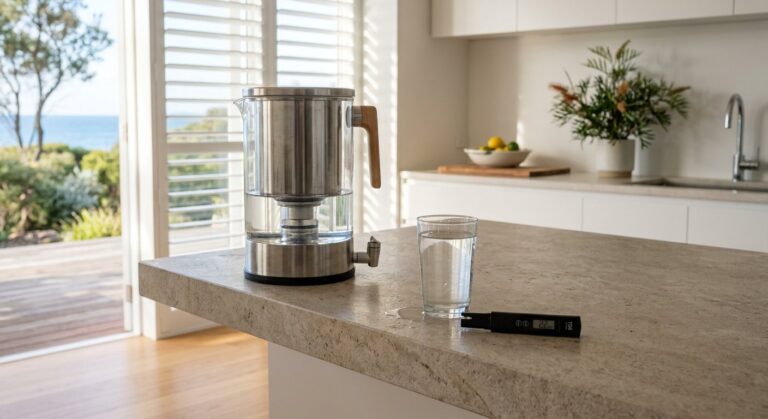
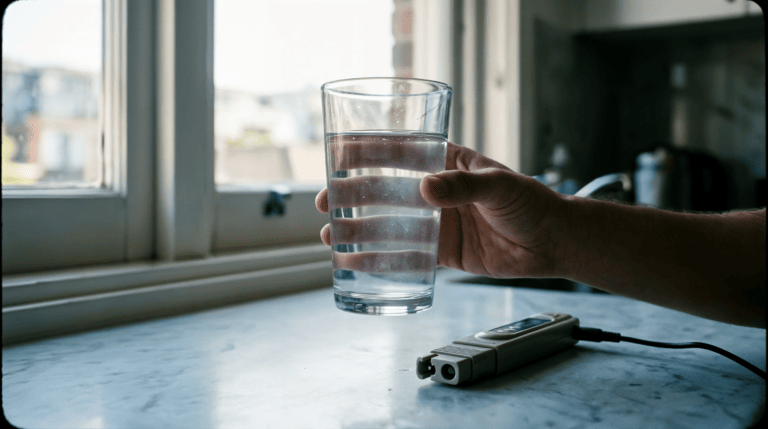
Testing is straightforward and cheap. An ORP meter (also called a redox meter) costs $30-80 on Amazon AU. A digital pH pen costs $15-40. Combined, you have the tools to audit any ionizer claim independently. Here is how to use them:
- Collect a fresh sample: Run the ionizer at your preferred alkaline setting and collect 100-200 mL directly from the output — do not let it sit. ORP degrades within minutes of exposure to air.
- Measure ORP immediately: Submerge the ORP meter probe, wait for the reading to stabilise (typically 30-60 seconds), and record the value. A quality ionizer on good source water should read -400 mV or lower at the mid-alkaline setting. The Tyent ACE-11 on Brisbane or Perth water should reach -700 to -900 mV on its high setting.
- Measure pH: Submerge the pH pen in the same sample, wait for stabilisation, and record. Compare against the setting you selected on the machine. Significant discrepancy (more than 0.5 pH off) may indicate a pre-filter that needs replacement or source water that is too soft for the setting.
- Test your source water: Also measure your unfiltered tap water — this gives you a baseline and lets you calculate the actual improvement the ionizer is delivering.
- Test periodically: Run this check every three months and whenever you replace a filter. A degrading ORP reading over time usually signals a pre-filter that needs replacement, or in older machines, plate degradation.
If you have a Kangen machine and the ORP reading is less negative than the spec sheet claims, this is a common finding. Published Kangen ORP specs are measured under ideal laboratory source water conditions — often Japanese tap water at higher TDS than typical Australian supplies. Test your machine on your actual water.
Ionizer Maintenance: Filter Replacement Schedule and Costs
Electric ionizers require two types of maintenance: pre-filter replacement and self-cleaning cycle management. Neglecting either will degrade performance and, in the case of pre-filter neglect, accelerate plate wear that shortens machine life.
Pre-filter replacement: Most quality ionizers, including the Tyent ACE-11, use a two-stage pre-filtration system before the electrolysis chamber. Stage one typically removes sediment and particulates; stage two handles chlorine and chloramine. Filter lifespan is rated by volume (typically 1,500-3,000 litres) rather than time, since usage rates vary. For a household consuming 5 litres per day from the ionizer, a 2,000-litre filter lasts approximately 400 days. For households consuming 10+ litres per day, replacement every 6-8 months is realistic. Tyent replacement filters for the ACE-11 are available on Amazon AU at approximately $80-120 per filter set per year. Do not use third-party non-certified filters on a quality ionizer — they may not provide adequate chloramine removal and will accelerate plate wear.
Auto-cleaning cycles: Most electric ionizers run an automatic reverse-polarity cleaning cycle every 10-15 litres of water produced. This brief cycle reverses the electrical charge across the plates, dissolving calcium and mineral scale that would otherwise build up and reduce plate efficiency. The cleaning cycle water (acidic water) drains to the waste outlet — this is normal. Do not interrupt or disable the auto-cleaning cycle. If you are on Adelaide hard water (400+ ppm TDS), increase manual descaling frequency: quarterly rather than bi-annually.
Manual descaling: Even with auto-cleaning, annual manual descaling using citric acid solution is recommended for all ionizers in Australian water conditions. Most manufacturers provide a descaling procedure in the manual. For Tyent ACE-11 owners, the process involves running a diluted citric acid solution through the unit, allowing it to dissolve mineral deposits, then flushing with fresh water. Budget 30 minutes and $10 in citric acid per annual descale.
| Maintenance Task | Frequency | Cost (AUD) | Notes |
|---|---|---|---|
| Pre-filter replacement (Tyent ACE-11) | Every 6-12 months | $80-120/set | Available on Amazon AU |
| Auto-cleaning cycle | Automatic (every 10-15 L) | No cost | Do not disable |
| Manual citric acid descale | Annually (quarterly on hard water) | ~$10 | More frequent for Adelaide, some WA areas |
| ORP/pH performance check | Quarterly | ~$50 one-off (meter purchase) | Verify machine performing to spec |
Recognising Common Kangen Distributor Claims: A Fact-Check
If a Kangen distributor has reached out to you or you have attended a Kangen presentation, you will have encountered a specific set of claims. This section addresses each claim against the available evidence.
Claim: “Kangen water cures cancer.” This is not supported by clinical evidence. The Cancer Council Australia explicitly states there is no credible evidence that alkaline water prevents or treats cancer. The biological mechanism proposed — that alkaline water changes your body’s pH — contradicts established physiology. Your blood pH is tightly regulated at 7.35-7.45 regardless of what you drink. Stomach acid immediately neutralises alkaline water to approximately pH 2 during digestion. This claim is pseudoscience.
Claim: “Kangen has a Japanese Ministry of Health certification that other ionizers don’t have.” Partially true, significantly misleading. Enagic does hold a Japanese medical device certification — but this applies specifically to the acidic water output’s use as a skin and wound disinfectant, not to any drinking-water health benefits. Competitors can and do obtain equivalent certifications. The certification is frequently presented as if it validates Kangen’s drinking-water health claims; it does not.
Claim: “The Tyent/competitor plates are not real solid platinum.” Kangen distributors frequently claim that competitor machines use inferior plate materials. The standard across the quality ionizer industry — including both Enagic and Tyent — is titanium plates coated with a platinum alloy. The relevant variable is coating thickness and the solid vs mesh vs hybrid plate design, not a categorical difference between “real” and “fake” platinum. Tyent’s hybrid solid/mesh plate design achieves higher ORP than Kangen’s solid-only plates of fewer count.
Claim: “You need to drink Kangen water for 90 days to feel the effects.” This claim serves to prevent returns and complaints within any reasonable trial period. There is no scientific basis for a 90-day minimum requirement. If a health intervention requires 90 days before any measurable effect, the evidence standard for that claim should be commensurately higher — and the evidence for Kangen-specific 90-day protocols does not exist in peer-reviewed literature.
Claim: “Our water is used in Japanese hospitals.” Japanese hospitals do use electrolysed acidic water as a disinfectant in some applications — specifically for wound cleaning and surface disinfection, where the acidic stream (not the alkaline drinking water) has documented antibacterial properties. This is a legitimate use. It is not a claim that Japanese hospitals use Kangen alkaline water as a treatment for patient conditions. The distinction between acidic water for disinfection and alkaline water for drinking is consistently blurred in Kangen presentations.
Ionizer Setup: Connecting the Tyent ACE-11 to an Australian Kitchen
The Tyent ACE-11 is designed for countertop or under-sink installation and ships with hardware for both configurations. For most Australian kitchens, countertop installation is completed without a plumber. Under-sink installation requires tapping into the cold water supply line and is best done with a plumber’s assistance.
- Countertop installation: The unit includes a diverter valve that fits standard Australian tap heads via the M22 aerator thread (the standard thread on most Australian kitchen taps made after 2000). Attach the diverter, connect the included flexible tubing to the ionizer input, and direct the alkaline output spout over the sink. The acidic water drain line goes into the sink. No tools required. Total installation time: 10-15 minutes. Tyent includes Australian-compatible adapters in the box.
- Under-bench installation: The unit mounts under the sink with a dedicated alkaline water tap through a bench hole. A plumber taps into the cold water supply, connects the feed line to the ionizer, and connects the alkaline output to the dedicated tap. The acidic drain line connects to the sink waste. Budget $100-180 for a plumber’s visit. The under-bench installation eliminates the countertop footprint and gives a cleaner finished appearance.
- Initial flush cycles: After installation, run three to five flush cycles (fill the ionizer and drain to waste without collecting the output water) before using the output for drinking. This removes any manufacturing residue from the filtration media and pre-conditions the plates for consistent performance.
- Power connection: The ACE-11 ships with an Australian-spec power adapter (240V). Plug into a standard power point near the sink. The unit draws power only when water is flowing through it and during cleaning cycles — standby power consumption is negligible.
For Melbourne households with soft water (30-70 ppm TDS): if initial ORP readings disappoint after installation, consider adding an inline mineral cartridge to the input line before the ionizer. These cartridges dissolve small amounts of calcium and magnesium bicarbonate into the water, raising TDS to the 80-150 ppm range optimal for electrolysis, without adding hardness scale risk. They are available on Amazon AU for approximately $30-50 and last 6-12 months depending on water flow.
Related Guides
- Best alkaline water filter Australia 2026 — pitcher and gravity alkaline filter alternatives to electric ionizers
- Best reverse osmosis system Australia 2026 — if contaminant removal is your primary goal, not pH
- Best water filter for baby formula Australia 2026 — ionizers are not appropriate for formula water; this guide covers what is
Frequently Asked Questions
Is a water ionizer worth it in Australia?
For most Australians, no — the evidence base for alkaline water health claims is weak, and Australian tap water quality is high by global standards. For those specifically interested in molecular hydrogen research and willing to pay $2,500-3,500 for a quality ionizer like the Tyent ACE-11, there is a legitimate case based on emerging H2 antioxidant evidence. At Kangen prices ($4,700-6,800), there is no case — you are paying a distributor markup, not buying superior technology.
Is Kangen water worth the price in Australia?
No. The Kangen K8 at $6,787 AUD delivers fewer plates (8) and lower ORP (-722 mV) than the Tyent ACE-11 at approximately $3,000, which has 11 plates and achieves -1,150 mV ORP. The Enagic price premium reflects a multi-level distributor commission structure, not superior engineering. The technology is the same across the ionizer industry; the distribution model is what inflates Kangen’s price.
Does alkaline water actually improve health?
The evidence is mixed. Claims that alkaline water “alkalises your body” or treats disease are not supported by clinical evidence — blood pH is tightly regulated by the kidneys and lungs regardless of what you drink. The more credible research focuses on molecular hydrogen (H2) produced during electrolysis, with some peer-reviewed studies suggesting modest antioxidant and anti-inflammatory effects. The Cancer Council Australia and mainstream medical bodies do not endorse alkaline water as a medical treatment.
What is the best alternative to Kangen water in Australia?
The Tyent ACE-11 is the best direct alternative — 11 plates, higher ORP than Kangen’s K8, available on Amazon AU without the MLM distributor markup, and approximately $3,700 cheaper than the Kangen K8. For a budget alternative that produces alkaline water without electrolysis, the Alkanatur Pitcher at $144 on Amazon AU is the lowest-cost entry point.
Can I use a water ionizer with Melbourne tap water?
Melbourne tap water is among the softest in Australia (30-70 ppm TDS). Ionizers require dissolved minerals to conduct electrolysis effectively, so Melbourne water produces weaker pH and ORP results than the same machine would produce in Brisbane or Perth. A mineral enhancement cartridge pre-stage can improve performance, but adds cost. For Melbourne households, an alkaline pitcher may be more cost-effective at the budget end of the market.
Does a water ionizer remove fluoride?
No. Water ionizers do not remove fluoride. Electrolysis alters the pH and electrical charge of the water but does not filter out dissolved minerals including fluoride. If fluoride removal is your primary concern — for example, for baby formula preparation — you need a reverse osmosis system. Ionizers and RO filters solve different problems and are not substitutes for each other.
How much does a water ionizer cost to run in Australia?
Electric ionizers consume minimal power — typically 80-200 watts during active use, but only when water is flowing through the unit (usually seconds per fill). Electricity cost is negligible. The main running cost is filter replacement: typically one to two filters per year at $50-150 per filter for quality machines like Tyent. Total annual running cost is approximately $100-200 AUD depending on the model and water usage volume.
What should I look for when buying a water ionizer in Australia?
Plate count (7+ plates for serious use), ORP output (-500 mV minimum, -800 mV+ preferred), platinum coating thickness and quality, pH range (2.5-12 covers all use cases), pre-filtration for chloramine (relevant for most Australian cities), and warranty terms — specifically whether the plate warranty is lifetime or time-limited. Avoid any machine sold exclusively through MLM distributors where pricing transparency is absent. Verify that replacement filters are available in Australia before purchasing any brand.
Final Verdict
If you have decided an electric water ionizer is right for you, buy a Tyent ACE-11 from Amazon AU and save $3,700 over the equivalent Kangen model. If you are curious about alkaline water but not ready to spend $3,000, start with the Alkanatur Pitcher at $144 — it produces alkaline water cheaply and ships from Amazon AU with a returns policy. If your goal is fluoride or contaminant removal, buy a reverse osmosis system instead — ionizers do not solve that problem.
Buy the Tyent ACE-11 if you:
- Are committed to an electric ionizer
- Want the best ORP performance available on Amazon AU
- Were considering Kangen and want the same tech at half the price
- Have $3,000 budget and Brisbane, Perth, or Adelaide water
Buy the Alkanatur Pitcher if you:
- Want to trial alkaline water before committing
- Have a sub-$200 budget
- Are on Melbourne soft water where electric ionizers underperform
- Prefer no plumbing or electricity
Top Pick
Tyent ACE-11 — Best Water Ionizer Australia
11 plates. -1,150 mV ORP. Available on Amazon AU without the Kangen markup.
Get the Australian Home Environment Checklist
30 checks across water, air and EMF. Most of them free. Ranked by impact.
No spam. Unsubscribe any time.

Former Royal Australian Navy Clearance Diver and TAG-E counter-terrorism operator. Founded Clean and Native to apply the same rigorous thinking to the home environment.
Full biography →