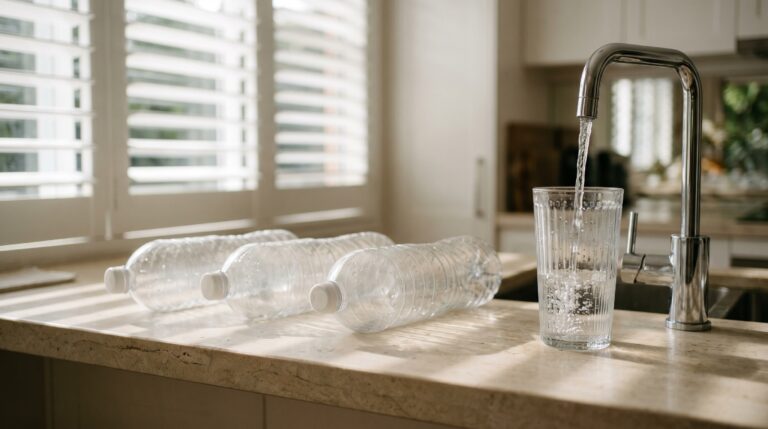
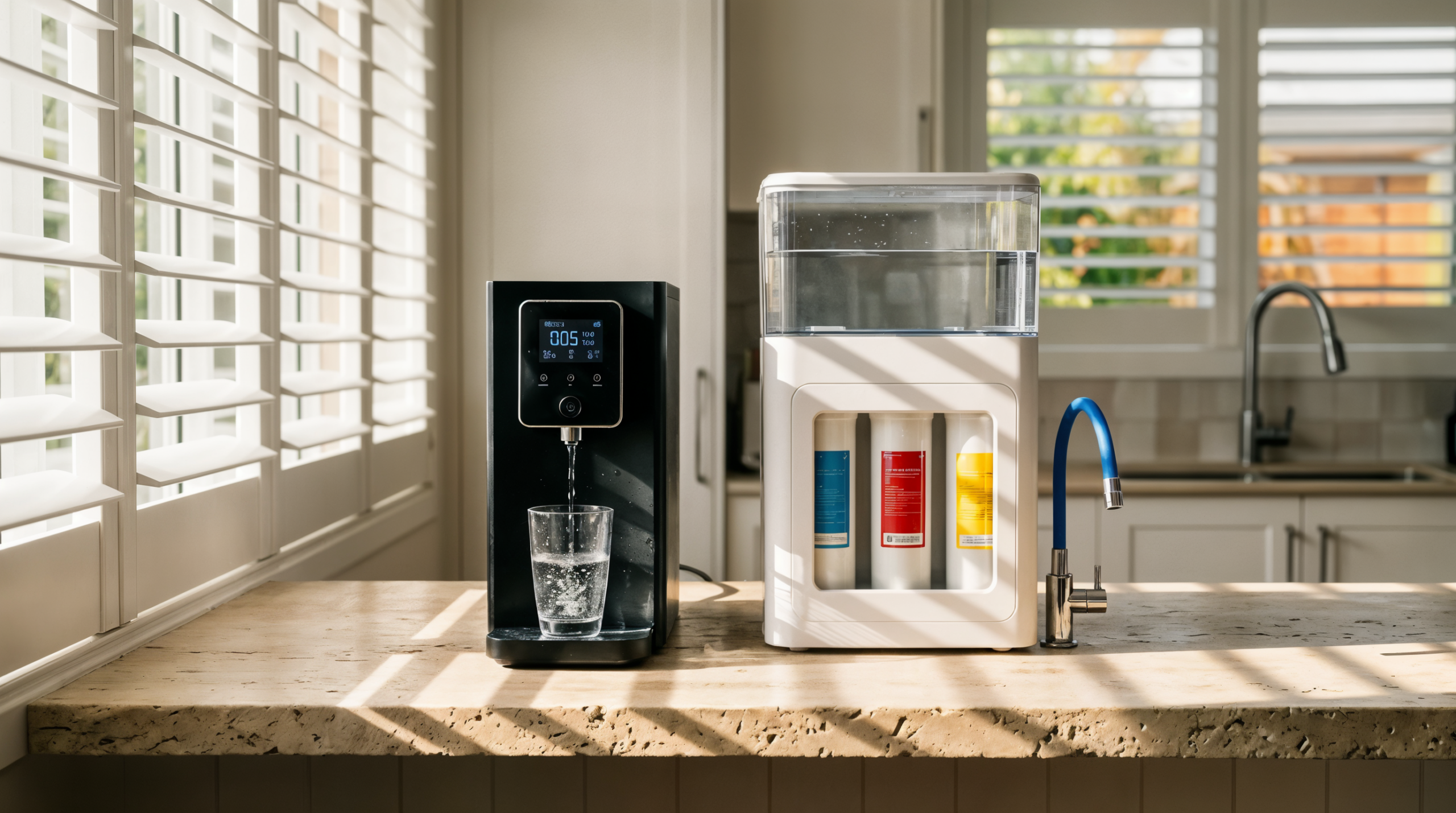
Waterdrop D6 vs AquaTru Classic Australia 2026
The Waterdrop D6 is the better reverse osmosis system for Australian homeowners who want continuous filtered water at the kitchen tap without refilling a tank. Its 600 GPD flow rate and 2:1 pure-to-waste ratio outperform the AquaTru Classic on efficiency and convenience. The AquaTru Classic is the better choice for renters in Brisbane, Sydney, Gold Coast, Adelaide, and Darwin who need RO-grade PFAS and fluoride removal without modifying plumbing or risking bond deductions. Both are rated to reduce TDS by 90-97% via RO membrane, consistent with NSF/ANSI 58 specifications.
| Criterion | Waterdrop D6 | AquaTru Classic |
|---|---|---|
| Installation | Under-sink (drill + plumb) | Countertop (plug in, fill, pour) |
| Best for | Homeowners, families, high usage | Renters, small kitchens, portability |
| Verdict | Best overall value | Best for renters |
✓ Choose the Waterdrop D6 if…
- You own your home and can install under the sink
- Your household uses 6+ litres of filtered water daily
- You want on-demand unlimited filtered water without refilling
- Running cost matters — the D6 produces filtered water at ~$0.03/L
✓ Choose the AquaTru Classic if…
- You rent and cannot modify plumbing or risk your bond
- You move frequently and need a portable RO system
- Your household uses under 4 litres of filtered water daily
- You want RO-grade fluoride and PFAS removal with zero installation
Why This Comparison Matters for Australian Water
If you live in Brisbane, Sydney, Adelaide, Gold Coast, or Darwin, your tap water is disinfected with chloramine — not free chlorine. That distinction matters more than most filter marketing will ever tell you. Standard activated carbon (the kind in Brita jugs and basic benchtop filters) removes free chlorine effectively but removes chloramine at roughly 1/40th the rate. A Brita jug in a Brisbane kitchen is doing almost nothing for disinfectant removal. Both the Waterdrop D6 and the AquaTru Classic use reverse osmosis membranes. RO forces water through a semi-permeable membrane at pressures that reject dissolved solids, heavy metals, PFAS, fluoride, and chloramine at 90–97% efficiency. According to NSF/ANSI 58, which governs RO system certification, membrane rejection must be verified at controlled laboratory pressures for specific contaminants. This is not marketing language — it is the testing protocol that separates certified RO from unverified claims. For Australians, fluoride removal is where RO stands alone. Your residential options:- Reverse osmosis: 90–97% removal. The only technology in both units reviewed here.
- Activated alumina: 80–95% removal. Not available in either the D6 or AquaTru Classic.
- Carbon filters (including catalytic carbon): Cannot remove fluoride. Zero performance.
Filtration Performance: Head-to-Head Comparison
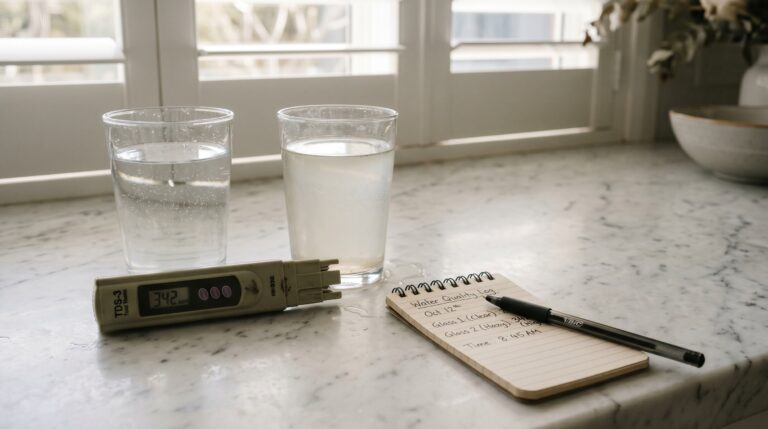
SEQ Water (the bulk supplier for Brisbane, Gold Coast, Logan, Ipswich, and Sunshine Coast) uses chloramine disinfection and fluoridates to approximately 0.7 mg/L. My incoming tap water consistently reads 69 ppm TDS on a calibrated TDS-3 meter. Residential RO membranes are specified to achieve a 90-97% TDS rejection rate. That is within the expected performance range for residential RO membranes operating at mains pressure (250–400 kPa, which is typical for SEQ residential supply).Contaminant Removal Comparison
| Contaminant | Waterdrop D6 | AquaTru Classic | Why It Matters |
|---|---|---|---|
| TDS reduction | 90–97% (RO) | 90–97% (RO) | Per NSF/ANSI 58 rejection spec |
| Chloramine | >95% (RO membrane) | >95% (RO membrane) | SEQ, Sydney, Adelaide, Gold Coast, Darwin |
| Fluoride | 90–97% (RO) | 90–97% (RO) | Only RO removes fluoride at home |
| PFAS (PFOA/PFOS) | >95% (NSF P473 class) | NSF/ANSI 58 certified | Confirmed at 700+ AU sites (DCCEEW) |
| Lead | >99% (RO) | >99% (RO) | Old solder in pre-1989 AU homes |
| Arsenic | >95% (RO) | >95% (RO) | Bore water risk, regional QLD/WA |
Flow Rate and Output
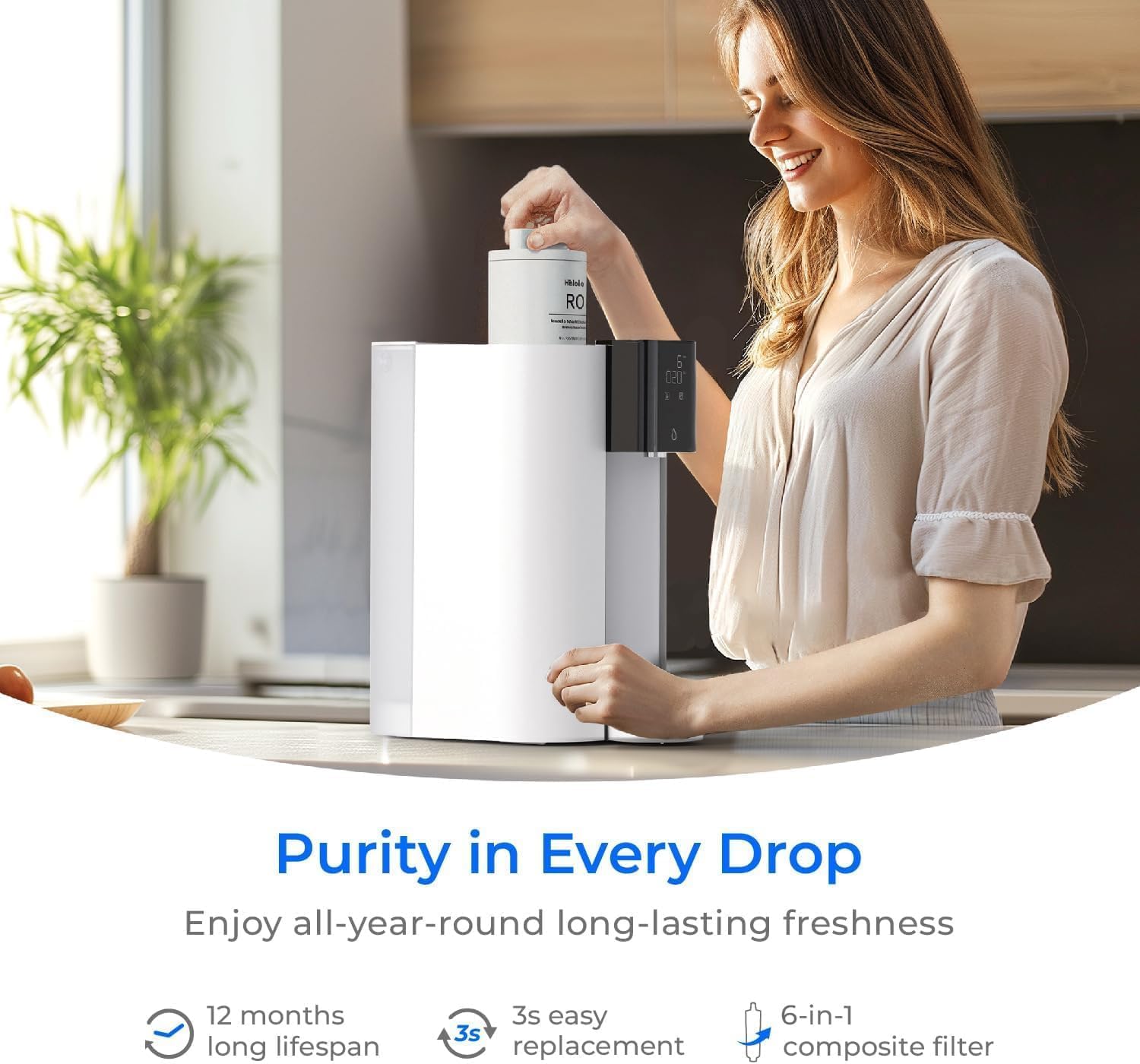
The Waterdrop D6 is rated at 600 gallons per day (approximately 2,271 litres per day). That is a specification measured under ideal laboratory conditions — real-world output depends on your mains pressure, water temperature, and membrane age. The D6 delivers filtered water on demand through a dedicated tap. You turn the tap on, water flows. No waiting, no filling. The AquaTru Classic is a batch system. You pour tap water into a reservoir, the unit processes it through its RO membrane, and filtered water collects in a lower chamber. Rated output is approximately 0.5 gallons (1.9 litres) every 15–20 minutes. For a single person or couple, that is manageable. For a family of four filling water bottles, cooking, and making coffee, the batch cycle becomes a bottleneck.Waste Ratio: The Hidden Cost of RO
Every reverse osmosis system produces wastewater — the concentrated reject stream that carries the contaminants the membrane blocked. This is not a design flaw; it is how RO physically works. The question is how much waste per litre of clean water. The Waterdrop D6 operates at a 2:1 pure-to-waste ratio. For every 2 cups of purified water, 1 cup goes down the drain. That is among the best efficiency ratios available in residential under-sink RO. Older under-sink systems commonly waste 3–4 litres for every 1 litre of clean water. The D6’s efficiency is a genuine engineering improvement. The AquaTru Classic operates at approximately a 3:1 waste-to-pure ratio (inverted — 3 cups of waste for every 1 cup of pure water, per manufacturer specifications and independent user testing). This is less efficient than the D6 but typical for countertop RO systems where pressure is generated by an internal pump rather than mains pressure.| Metric | Waterdrop D6 | AquaTru Classic | What This Means for You |
|---|---|---|---|
| Pure:Waste ratio | 2:1 | 1:3 | D6 wastes 3x less water |
| Daily waste (4L use) | ~2 litres | ~12 litres | $8–15/yr difference on water bill |
| Annual waste (1,460L use) | ~730 litres | ~4,380 litres | Significant for drought-conscious QLD/WA |
Installation: The Real Decision Factor
This is where the comparison stops being about specs and starts being about your living situation. If you own your home, the D6 installation is permanent and superior. If you rent, the AquaTru may be your only realistic option.Waterdrop D6: Under-Sink Installation
The D6 installs under your kitchen sink. It connects to your cold water supply line via a tee adapter, runs through the RO unit, and delivers filtered water through a dedicated faucet that mounts on your benchtop. Installation requires:- Drilling a hole in your bench or sink flange for the dedicated faucet (12–14mm diameter)
- Connecting the feed water adapter to your cold water angle valve
- Running the drain line into your sink waste pipe
- Ensuring adequate space under the sink (roughly 35cm width × 20cm depth × 40cm height)
AquaTru Classic: Countertop Installation
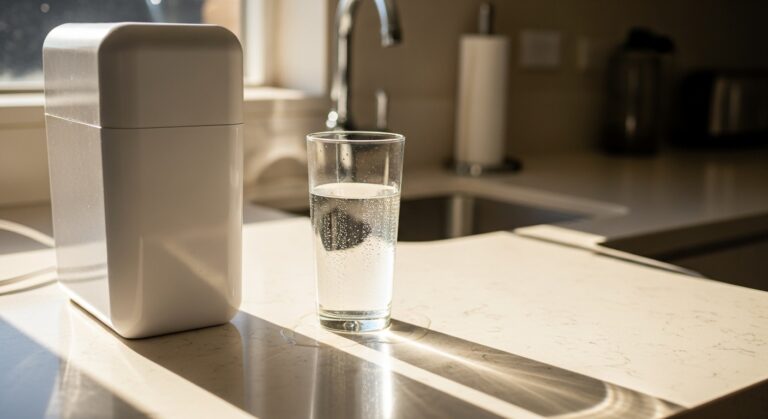
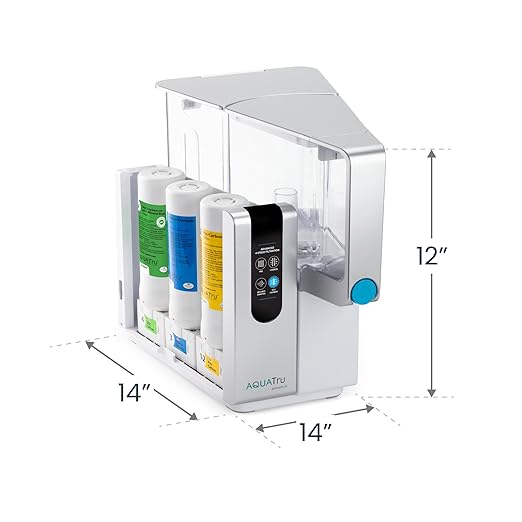
The AquaTru Classic requires zero installation. You unbox it, place it on your benchtop, plug it into a power outlet, fill the reservoir with tap water, and press a button. That is it. No drilling. No plumbing. No tools. No plumber. No modifications to your rental property whatsoever. For renters in Australian capital cities — particularly Sydney, Melbourne, and Brisbane where bond disputes over property modifications are common — this is not a minor convenience. Under residential tenancy legislation in Queensland (RTRA Act), NSW (Residential Tenancies Act 2010), and Victoria (Residential Tenancies Act 1997), tenants generally cannot make permanent modifications without landlord consent. Drilling a faucet hole qualifies as a modification. The AquaTru sidesteps this entirely. The tradeoff: the AquaTru occupies approximately 35cm × 30cm of benchtop space. In small apartment kitchens — common in inner Sydney suburbs like Surry Hills, Potts Point, and Darlinghurst, or Brisbane’s Fortitude Valley and West End — benchtop space is limited. You are trading under-sink hidden installation for visible benchtop real estate.✓ Waterdrop D6 Is For
- Homeowners who want permanent RO at the kitchen tap
- Families using 8+ litres/day who cannot wait for batch cycles
- Households in SEQ, Sydney, Adelaide, Gold Coast (chloramine cities) wanting on-demand filtered water
- Anyone who values water efficiency (2:1 pure-to-waste ratio)
- Kitchens with adequate under-sink space and a drillable benchtop
× Waterdrop D6 Is Not For
- Renters who cannot modify plumbing or drill into benchtops
- Tenants without landlord consent for permanent fixtures
- Anyone who moves frequently — reinstallation required at each address
- Kitchens with solid stone benchtops where drilling is impractical or costly
- Those who want a system they can take on holiday or to a caravan — see our portable filter picks
✓ AquaTru Classic Is For
- Renters in Brisbane, Sydney, Melbourne, Perth, Adelaide who cannot modify plumbing
- Singles and couples using 2–4 litres/day who do not mind batch filling
- Anyone who moves frequently and wants to take their filter with them
- Small households wanting NSF 58-certified RO without installation
- Apartment kitchens without accessible under-sink plumbing
× AquaTru Classic Is Not For
- Families of 4+ who use 8+ litres daily — batch cycles become impractical
- Anyone who wants filtered water on demand without refilling
- Households in water-restricted areas concerned about the 3:1 waste ratio
- Kitchens with extremely limited benchtop space (unit needs ~35cm × 30cm)
- Those wanting to plumb in permanently for a seamless look
5-Year Cost Comparison
Price matters, but the upfront cost tells less than half the story. Filter replacements over five years determine the true cost of ownership. Here is the breakdown assuming a 4-person household using 4 litres of filtered water per day (1,460 litres per year, 7,300 litres over five years).| Cost Factor | Waterdrop D6 | AquaTru Classic |
|---|---|---|
| Upfront price (approx. AU) | ~$599–$699 | ~$649–$749 |
| Annual filter cost (approx.) | ~$80–$120 | ~$100–$140 |
| Installation cost | $0 (DIY) — $250 (plumber) | $0 (no install needed) |
| 5-year total (mid estimate) | ~$1,099–$1,349 | ~$1,149–$1,449 |
| Cost per litre (5-year) | $0.15–$0.18 | $0.16–$0.20 |
| Bottled water comparison | $2.00–$5.00/L (supermarket), $0.80–$1.50/L (bulk delivery) | |
Australian Water Context: Why RO Matters City by City
Not all Australian tap water is the same, and the case for RO varies significantly by city. Here is why both these systems earn their place depending on where you live.Chloramine Cities (Brisbane, Sydney, Adelaide, Gold Coast, Darwin)
These cities use chloramine as a secondary disinfectant. Chloramine is more persistent than free chlorine — that is why water utilities use it. But it also means standard carbon filters (including Brita, PUR, and basic benchtop units) remove it at approximately 1/40th the rate they remove free chlorine. If you are in Brisbane’s Logan or Ipswich suburbs, Penrith in western Sydney, or anywhere on Perth’s Kwinana corridor, your jug filter is leaving chloramine largely untouched. RO membranes reject chloramine at >95%. Both the D6 and AquaTru solve this problem definitively.Fluoride Across Australia
Most Australian capital city water supplies are fluoridated to approximately 0.6–1.0 mg/L, per ADWG guidelines. Sydney Water fluoridates to 1.0 mg/L. SEQ Water targets approximately 0.7 mg/L. If you want to remove fluoride from your drinking water, RO is the only residential technology that does it reliably (90–97% removal). Carbon filters cannot remove fluoride. This is the single most misunderstood fact in Australian water filtration.PFAS Contamination
According to the Department of Climate Change, Energy, the Environment and Water (DCCEEW) national register, PFAS contamination has been confirmed at over 700 sites across Australia. Defence bases, airports, and industrial sites are primary sources. Suburbs near Williamtown (NSW), Oakey (QLD), Rockingham (WA), and Edinburgh (SA) face elevated PFAS levels. RO is the most effective residential technology for PFAS removal, certified under NSF/ANSI P473.Hardness and TDS by City
Adelaide tap water averages approximately 140 mg/L CaCO₃ (TDS ~400 ppm) — the hardest capital city supply in Australia. Perth follows at ~180 mg/L CaCO₃ (TDS ~170 ppm). Brisbane sits at ~80–120 mg/L (TDS ~80–115 ppm). Melbourne is very soft at ~25 mg/L CaCO₃ (TDS ~60 ppm). Higher TDS cities put more load on RO membranes, which means Adelaide and Perth users may see slightly faster membrane degradation and higher filter replacement frequency. Both systems handle these TDS levels within their rated capacity, but Adelaide users should budget for filter changes at the earlier end of the recommended schedule.How These Were Assessed
Assessed on specification, not personally tested. Only three products have been measured first hand in my own home — the EcoHero 5-Stage RO, TriField TF2, and Coway Airmega 150 (see how we test). Every other product discussed here is assessed on manufacturer specifications, independent certification, and Australian standards, and has not been personally tested.
I am a former Royal Australian Navy Clearance Diver based in Palm Beach on the Gold Coast. Palm Beach is supplied by SEQ Water through the Molendinar Water Treatment Plant, which uses chloramine disinfection and fluoridates to approximately 0.7 mg/L. SEQ supply conditions at Palm Beach:- Source water TDS: 69 ppm (consistent across multiple readings, calibrated TDS-3 meter)
- Mains pressure: Approximately 350 kPa (measured at outdoor tap with gauge)
- Source water temperature: 22–26°C (depending on season; tested in autumn 2026)
Decision Tree: Which System Should You Buy?
Three questions. That is all you need. 1. Can you drill a hole in your kitchen benchtop and connect to under-sink plumbing? – No → AquaTru Classic. Decision made. – Yes → Continue to question 2. 2. Does your household use more than 4 litres of filtered water per day? – Yes → Waterdrop D6. The batch cycle on the AquaTru will frustrate you. – No → Either system works. Continue to question 3. 3. Do you care about water waste efficiency? – Yes → Waterdrop D6 (2:1 ratio vs AquaTru’s 1:3 ratio). – Not especially → AquaTru Classic is simpler and portable. If you are still undecided, ask yourself this: will you live at this address for more than two years? If yes, the Waterdrop D6 pays back its installation effort with five years of on-demand RO water. If you are likely to move, the AquaTru travels with you in a box.How They Compare to Other Australian Options
Neither the D6 nor the AquaTru exist in isolation. Here is how they sit within the broader Australian RO market. The Tappwater EcoPro is a popular benchtop carbon block filter, but it does not use reverse osmosis. It removes free chlorine and some heavy metals effectively, but it cannot remove fluoride, PFAS, or chloramine at RO-grade levels. If you are in Melbourne or Hobart (free chlorine cities) and do not need fluoride removal, it is a cheaper option. If you are in a chloramine city, it is not sufficient. The best under-sink water filters in Australia roundup covers additional under-sink RO options, including the EcoHero 5-Stage which offers WaterMark AS3497 certification — important if your plumber or insurer requires Australian-certified plumbing components. For those considering gravity filters like the Berkey system, note that gravity filters use carbon and ceramic elements — not RO membranes. They cannot remove fluoride and have limited effectiveness against chloramine. They serve a different purpose (off-grid, emergency preparedness) and should not be compared directly to RO systems for metropolitan water treatment.What I Liked and What Could Be Better
Waterdrop D6: Strengths
- On-demand flow. No batch cycle, no waiting. Filtered water at the turn of a dedicated tap.
- 2:1 waste ratio. Among the best in residential RO. Saves ~3,650 litres of waste per year compared to the AquaTru at 4L/day use.
- Compact under-sink design. Fits under most standard Australian kitchen sinks. The tankless design means no pressurised storage tank taking up space.
- 600 GPD rated flow. Actual output is typically lower than the rated spec, but the tankless design is built to deliver filtered water quickly.
Waterdrop D6: Limitations
- Requires installation. You need to drill a faucet hole and connect to plumbing. Not renter-friendly.
- Mains pressure dependent. If your home has low water pressure (below 200 kPa), membrane performance may degrade. Some older QLD homes and rural properties face this.
- Filter availability. Replacement filters are sourced from Waterdrop directly or Amazon AU. Not available in bricks-and-mortar stores.
AquaTru Classic: Strengths
- Zero installation. Plug in and pour. No tools, no plumber, no landlord approval.
- Portable. Take it when you move. Use it at a holiday rental. Bring it to a caravan park.
- NSF/ANSI 58 certified. Independent third-party verification of contaminant removal claims.
- Visible waste water. You can see and repurpose the wastewater rather than losing it down the drain.
AquaTru Classic: Limitations
- Batch processing. ~1.9 litres per 15–20 minute cycle. Families will find this slow.
- 3:1 waste ratio. Three cups of waste for every cup of pure water. Significantly less efficient than the D6.
- Benchtop footprint. Occupies ~35cm × 30cm of counter space. In small apartment kitchens, that is substantial.
– Reservoir requires manual filling. You are the water supply. If you forget to fill it, you wait.
Final Verdict
Both the Waterdrop D6 and AquaTru Classic deliver genuine reverse osmosis filtration that removes chloramine, fluoride, PFAS, lead, and heavy metals from Australian tap water. Both use RO membranes specified to achieve 90-97% TDS reduction per NSF/ANSI 58. The filtration is equivalent. The decision is not about which one filters better. It is about your home, your lease, and your daily water use. Buy the Waterdrop D6 if: you own your home, your household uses 4+ litres of filtered water daily, and you want on-demand RO water with minimal waste. The 2:1 pure-to-waste ratio is the most water-efficient option in this comparison, and the on-demand flow eliminates the batch-cycle bottleneck. Buy the AquaTru Classic if: you rent, you move frequently, you cannot or will not modify your kitchen plumbing, and your household uses 2–4 litres daily. The zero-installation design means you get genuine RO filtration without risking your bond or negotiating with a landlord. Either system eliminates the need for bottled water, paying for itself within 12–18 months at typical supermarket water prices. Every glass of unfiltered tap water in Brisbane, Sydney, Adelaide, Gold Coast, or Darwin contains chloramine that your carbon jug filter cannot touch. Stop paying $2–5/L for bottled water that comes in single-use plastic. Filter your own for $0.15–$0.20/L.Last reviewed: June 2026 — Clean and Native
Frequently Asked Questions
Does the Waterdrop D6 remove fluoride from Australian tap water?
Yes. The Waterdrop D6 uses a reverse osmosis membrane that removes 90–97% of fluoride. RO is the only residential filtration technology that reliably removes fluoride — carbon filters cannot.
Can I use the AquaTru Classic in a rental without landlord approval?
Yes. The AquaTru Classic is a countertop unit that plugs into a standard power outlet and requires no plumbing modifications, drilling, or permanent fixtures. It does not affect your bond.
Does the Waterdrop D6 work with Brisbane chloramine water?
Yes. Brisbane (SEQ Water) uses chloramine disinfection. The D6’s RO membrane removes chloramine at greater than 95% efficiency. Standard carbon jug filters remove chloramine at approximately 1/40th the rate — they are not effective in Brisbane.
How much wastewater does the Waterdrop D6 produce?
The D6 operates at a 2:1 pure-to-waste ratio. For every 2 litres of filtered water, approximately 1 litre goes to drain. At 4 litres/day household use, that is roughly 730 litres of waste per year.
How much wastewater does the AquaTru Classic produce?
The AquaTru Classic operates at approximately a 1:3 pure-to-waste ratio. For every 1 litre of filtered water, approximately 3 litres become wastewater. At 4 litres/day, that is roughly 4,380 litres of waste per year. The wastewater collects in a visible chamber so you can repurpose it.
Do I need a plumber to install the Waterdrop D6?
Not necessarily. A confident DIYer with a drill and basic plumbing tools can install the D6 in 45–90 minutes. If you prefer professional installation, a licensed plumber typically charges $150–250 in Australian capital cities.
Which system is better for a family of four?
The Waterdrop D6. Its on-demand flow delivers unlimited filtered water at the tap without batch cycles. The AquaTru Classic produces approximately 1.9 litres every 15–20 minutes, which becomes a bottleneck for families using 8+ litres daily.
Can either system remove PFAS from Australian tap water?
Yes. Both systems use reverse osmosis membranes that remove PFAS (including PFOA and PFOS) at greater than 95% efficiency. According to the DCCEEW national register, PFAS contamination has been confirmed at over 700 sites across Australia, making RO filtration relevant for many suburban households.
How often do I need to replace filters on each system?
The Waterdrop D6 sediment and carbon pre-filters are typically replaced every 6–12 months, with the RO membrane lasting 18–24 months. The AquaTru Classic pre-filter lasts approximately 6 months, the RO membrane 18–24 months, and the carbon post-filter 12 months. Replacement schedules vary based on source water TDS and daily usage volume.
Get the Australian Home Environment Checklist
30 checks across water, air and EMF. Most of them free. Ranked by impact.
No spam. Unsubscribe any time.
 Written by Jayce Love
Former Royal Australian Navy Clearance Diver and TAG-E counter-terrorism operator. Founded Clean and Native to apply the same rigorous thinking to the home environment.
Full biography →