Best Small Air Purifier Australia 2026: 4 Compact Picks That Actually Clean
Drafted with AI assistance and checked against published specifications and certifications. First-hand measurements appear only where stated. How we make content
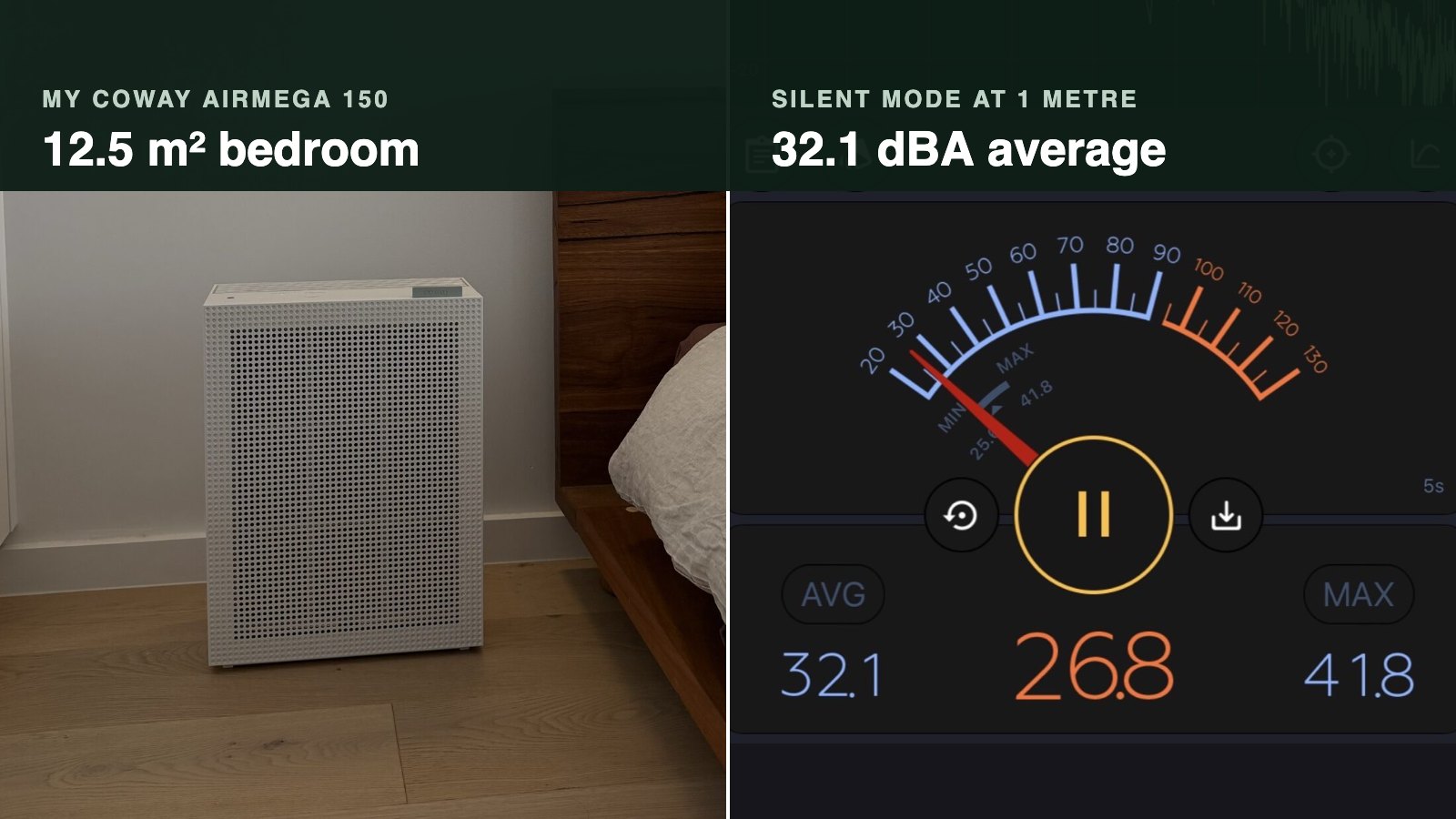
How this assessment was made. I run a Coway Airmega 150 in my own 12.5 m² bedroom in Palm Beach, QLD; the noise reading and photos on this page are mine. I haven’t tested the other purifiers. Their figures come from the manufacturers’ published specifications and the Amazon Australia listings, and every room size is worked out with the US EPA’s two-thirds rule rather than taken from the box. Prices, sellers and ratings were checked on Amazon Australia on 29 Oct 2026. Clean and Native may earn a commission on some links.
The best small air purifier in Australia is the Coway Airmega 100: a 22 by 22 cm footprint and a smoke CADR of 108 cfm, enough for a bedroom or study of about 15 m², for about $229 on Amazon AU. On a budget, the Levoit Core 300 cleans a similar room for about $169. If your small room is a bedroom up to about 21 m², the slim Coway Airmega 150 is the one I sleep beside (about $299). The Levoit Core Mini (about $79) is a desk purifier, not a room purifier.
Small is the easy part. Plenty of purifiers fit on a bedside table; far fewer move enough air to clean the room they sit in. The trap with compact purifiers is a box that says “up to 80 m²” on a machine that, by the US EPA’s sizing rule, suits a room of about 15. As a former Navy Clearance Diver, I learnt to size equipment for the job from the numbers, not the label. This guide does that for small purifiers: what “small” can realistically clean, the four worth buying, and where tiny purifiers don’t make sense at all.
Buy the smallest purifier whose clean air delivery rate (CADR) covers your room on the EPA rule. Anything smaller is a night light with a fan.
| Pick | Why | Price (29 Oct 2026) |
|---|---|---|
| Coway Airmega 100 | Best small purifier: bedrooms and studies to ~15 m² | ~$229 |
| Levoit Core 300 | Budget pick for rooms to ~15 m² | ~$169 |
| Coway Airmega 150 | Slim bedroom purifier to ~21 m²; the one I own | ~$299 |
| Levoit Core Mini | Desk or bedside only, ~5 m² | ~$79 |
✓ A small purifier is the right buy if
- The room is a bedroom, study, nursery or small apartment under about 20 m²
- Floor or bench space is tight
- You want something you can move between rooms
- It will run all night and needs to be quiet
× Buy a bigger purifier instead if
- The room is an open-plan living area
- You need serious bushfire smoke protection in a large space
- You want one purifier to cover the whole house (no portable purifier does)
- The room is small but the door is always open to the rest of the house
What a small purifier can clean
An air purifier’s size on the floor tells you very little. What matters is its clean air delivery rate, or CADR: how many cubic feet (or cubic metres) of particle-free air it delivers per minute (or hour) on its top setting. AHAM, the US appliance association that verifies CADR, publishes three figures for most purifiers, for smoke, dust and pollen. Smoke is the one to size with, because smoke particles are the smallest and hardest to catch.
The sizing rule AHAM publishes and the US EPA recommends is simple: choose a purifier whose smoke CADR in cubic feet per minute is at least two-thirds of the room’s floor area in square feet. Turn that into metric and a 10 m² study (about 108 square feet) needs a smoke CADR of about 72 cfm; a 15 m² bedroom needs about 108 cfm. That is the range where good small purifiers sit. Below about 60 cfm, a purifier is cleaning a desk, not a room.
The rule assumes the purifier runs on high with the door closed. In real life you’ll run a bedroom purifier on a lower, quieter setting overnight, which is why I’d size up rather than down: a purifier with headroom can do the job at a speed you can sleep through.
Why the room size on the box is wrong
Compact purifiers are where room-size claims get most creative. The Amazon AU listing for the Levoit Core 300 says it can “cover up to 80 m² once per hour”. The listing for the Core Mini says it can purify 34 m² once in an hour. Both are true in a narrow sense: they describe one complete air change per hour, which is far too slow to keep a room clean while new particles keep coming in. Levoit’s own US page for the Core Mini-P gives the honest version: 254 square feet at one air change per hour, but 53 square feet (about 5 m²) at 4.8 air changes per hour.
By my arithmetic, the two-thirds rule works out to about five air changes per hour in a room with a 2.4 m ceiling, which is what you want for allergies and smoke. That is why every room size in this guide is smaller than the box: I’ve applied the same rule to every purifier so you can compare them.
| Purifier | Room on the listing | Room on the EPA 2/3 rule |
|---|---|---|
| Levoit Core Mini | 34 m² (once an hour) | ~5 m² |
| Levoit Core 300 | Up to 80 m² (once an hour) | ~15 m² |
| Coway Airmega 100 | Up to 25 m² “in just 15 minutes” | ~15 m² |
| Coway Airmega 150 | Up to 73 m² | ~21 m² |
Room sizes on the EPA rule are my calculation: smoke CADR in cfm × 1.5 = square feet, ÷ 10.76 = m². For the Levoit Core 300, which publishes 187 m³/h without a smoke figure, I converted to 110 cfm. The Core Mini uses Levoit’s US figure of 34 cfm for the Core Mini-P.
Sizing table for small rooms
| Room | Typical size | Smoke CADR needed | Small purifiers that fit |
|---|---|---|---|
| Home office desk | Personal space only | n/a | Levoit Core Mini |
| Box room or study | 8 to 10 m² | ~55 to 72 cfm | Coway Airmega 100, Levoit Core 300 |
| Nursery or second bedroom | 10 to 12 m² | ~72 to 86 cfm | Coway Airmega 100, Levoit Core 300 |
| Main bedroom | 12 to 15 m² | ~86 to 108 cfm | Airmega 100 or Core 300 (just), Airmega 150 |
| Large bedroom or studio | 16 to 21 m² | ~115 to 150 cfm | Coway Airmega 150 |
| Bigger than that | Over 21 m² | 150 cfm plus | Not a small purifier; see the large-room guide |
Measure the room rather than guessing: a 3 by 3.5 m bedroom is 10.5 m², a 3.5 by 4 m main bedroom is 14 m². For anything above 21 m², see the best air purifiers for large rooms, or run your numbers through our CADR calculator.
Footprint and weight
If you’re buying small because space is tight, the shape matters as much as the size. Round purifiers like the Coway Airmega 100 and Levoit Core 300 draw air in all the way around, so they need clear space on every side. Flat-fronted purifiers like the Airmega 150 are slim: at 34 cm wide and 16.5 cm deep it takes less floor beside a bed than a round unit, though Coway’s manual still asks for at least 20 cm of clearance from walls and objects on each side.
| Purifier | Size (D x W x H) | Weight | Shape |
|---|---|---|---|
| Levoit Core Mini | 16.3 x 16.3 x 26 cm | 1.04 kg | Round, 360° intake |
| Levoit Core 300 | 22 x 22 x 36 cm | Not reliably listed | Round, 360° intake |
| Coway Airmega 100 | 22.1 x 22.1 x 40.6 cm | 3.0 kg | Round, 360° intake |
| Coway Airmega 150 | 16.5 x 34 x 47 cm | 5.5 kg | Flat front, slim (20 cm clearance per Coway) |
Dimensions and weights are from the Amazon AU listings, except the Airmega 100, where Coway’s spec sheet (22.1 x 22.1 x 40.6 cm, 3.0 kg) differs from the listing (1.6 kg), so I’ve used Coway’s figures. The Core 300 listing gives a weight of 400 g, which is clearly wrong for a purifier of that size, so I’ve left it out.
Living with a small purifier: my bedroom
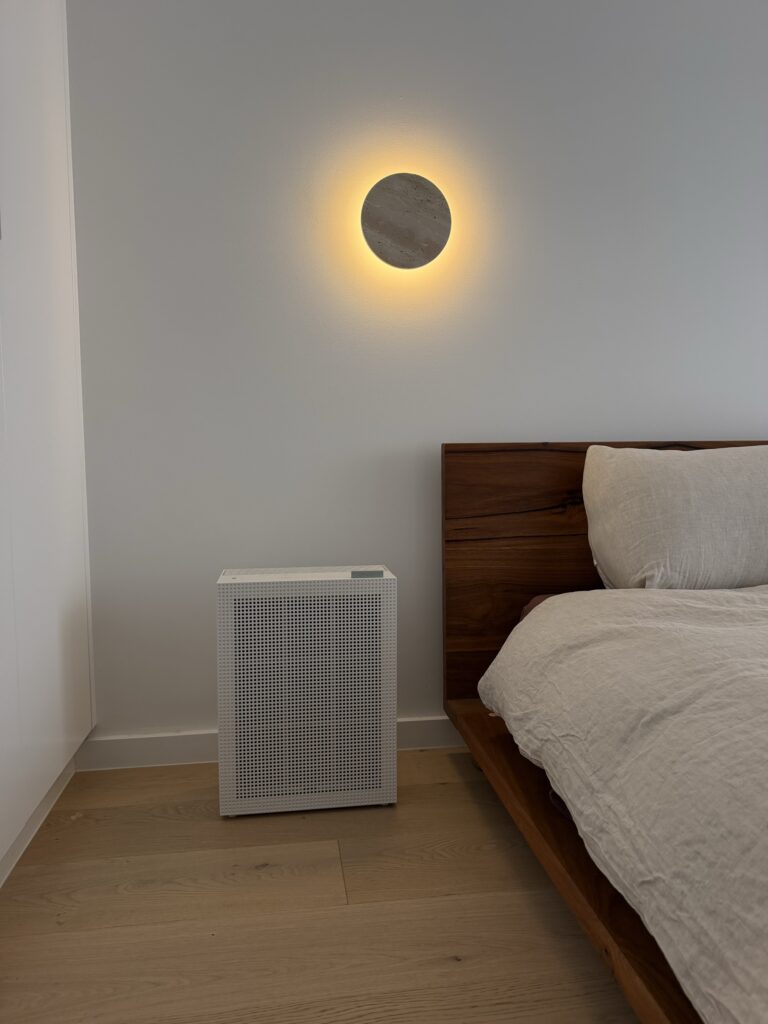
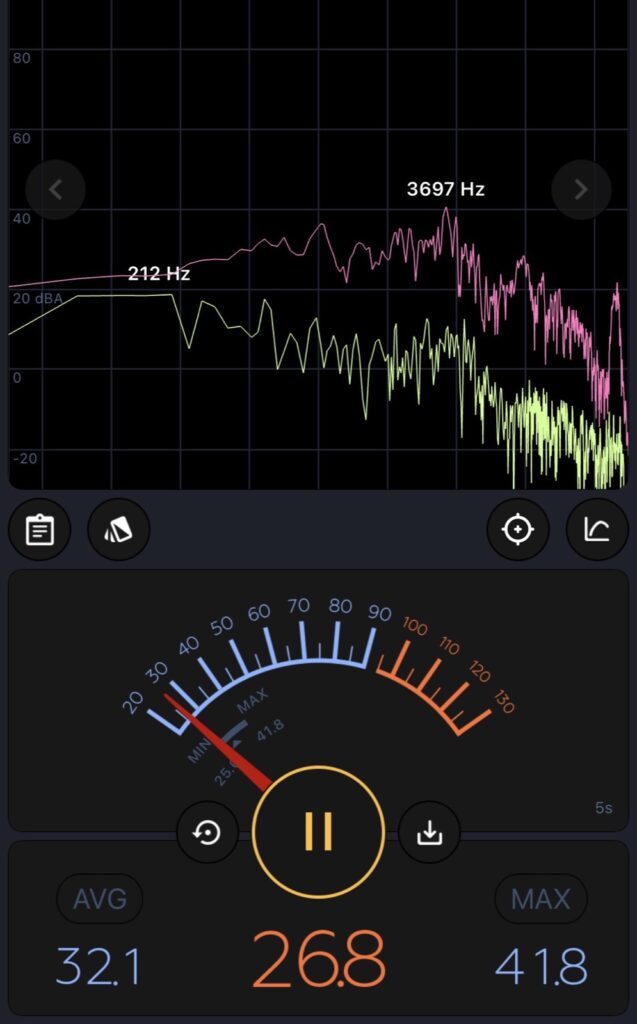
My Airmega 150 lives in a 12.5 m² bedroom in Palm Beach, beside the bed, on the timber floor. On the EPA rule it covers about 21 m², so in my room it has headroom, and that headroom is what makes it livable: it can run on Silent all night and still be doing useful work. On Silent, the Decibel X app on my phone recorded an average of 32.1 dBA at one metre. That’s a phone reading, not a lab figure, but it is close to the World Health Organization’s 30 dB guideline for bedrooms, and I sleep with it running.
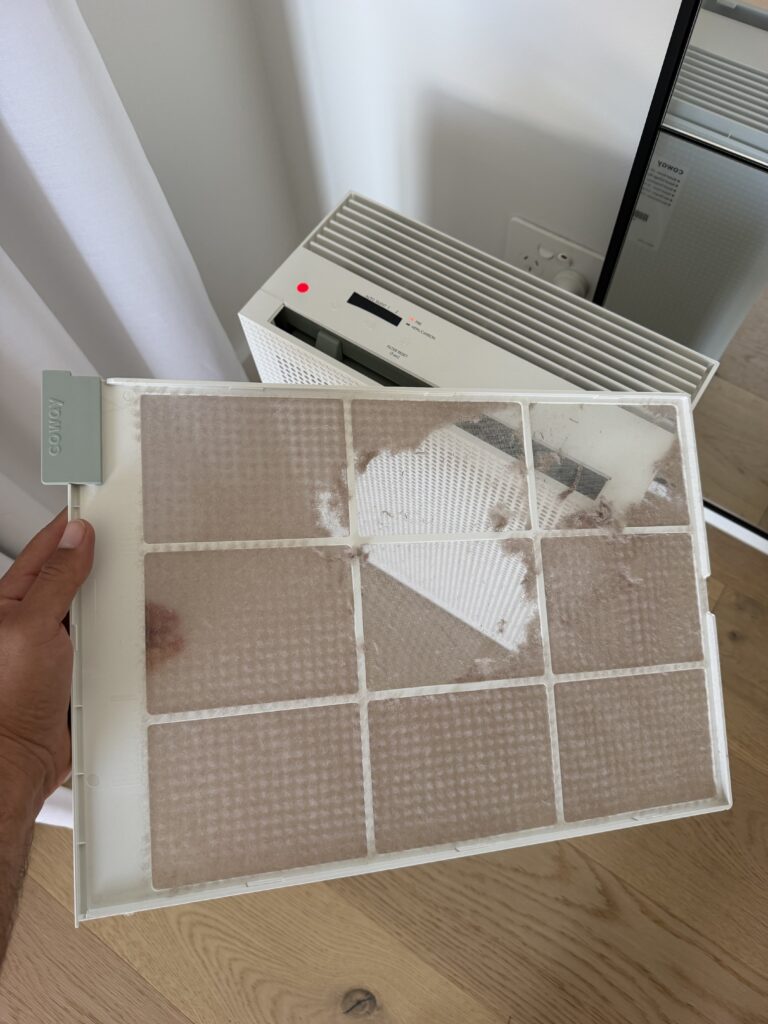
The other thing a month in a small room shows you is how much a small purifier catches. With a dog in the house, the pre-filter was grey with dust and hair after four weeks. In a small room the same dust is concentrated in less air, so a compact purifier’s pre-filter loads up quickly; clean it every couple of weeks rather than waiting for the reminder. The full story is in my Coway Airmega 150 review.
The best small air purifiers
1. Coway Airmega 100: best small air purifier
 Best small purifier22 x 22 cmfootprint, 3.0 kg (Coway spec sheet)
Smoke CADR 108 cfm (Coway), ~15 m² on the EPA 2/3 rule | Particle sensor and Auto | 20 to 48 dB(A) | 25 W | Sensitive Choice approved | 550 ratings, 4.5 stars | ~$229 (29 Oct 2026)
Check the Airmega 100 Price on Amazon →The Airmega 100 is the best balance of size and real cleaning power here. Coway’s spec sheet gives smoke, dust and pollen CADRs of 108, 124 and 112 cfm, which covers a room of about 15 m² on the EPA rule, from a purifier 22 cm across and 3.0 kg (Coway’s spec sheet; the Amazon AU listing says 1.6 kg). It has a pre-filter, a deodorisation layer and a HEPA filter, which Coway rates at about 12 months, and a particle sensor that drives Auto mode, with a Sleep mode that turns off all the lights. Coway rates it at 20 to 48 dB(A) and 25 W. Sensitive Choice, the National Asthma Council’s program, announced its approval in December 2025. About $229 on Amazon AU, with 550 ratings averaging 4.5.
For a nursery, study or second bedroom of 10 to 12 m², it can do the job on a medium setting rather than flat out. In a 15 m² main bedroom it is at its limit and will need a higher speed, which is when the Airmega 150 makes more sense.
✓ Pros
- Real CADR in a 22 cm footprint
- Particle sensor and Auto mode
- Sensitive Choice approved; no ioniser listed
× Cons
- Round shape needs clear space all round
- At its limit in a 15 m² room
- One combined filter to replace
Buy this if…
you want the most cleaning per square centimetre of floor, for a room up to about 12 to 15 m².
2. Levoit Core 300: best budget small purifier
 Budget22 x 22 cmfootprint (Amazon AU)
CADR 187 m³/h (Levoit AU listing, test not stated), ~15 m² | 24 dB in Sleep mode | No ioniser | No particle sensor | 740 ratings, 4.6 stars | ~$169 (29 Oct 2026)
Check the Levoit Core 300 Price on Amazon →The Core 300 is the long-running budget pick for small rooms. Levoit’s Australian listing gives a CADR of 187 m³/h (about 110 cfm) without naming the test or splitting it by smoke, dust and pollen, which puts it at about 15 m² on the EPA rule, much the same as the Airmega 100. It has a pre-filter, activated carbon and HEPA in one cylindrical filter, no ioniser, and a Sleep mode Levoit rates at 24 dB. What you give up for the lower price is a particle sensor, so there is no Auto mode: you choose the speed yourself. It is sold by VeSync, Levoit’s parent company. About $169 on Amazon AU, with 740 ratings averaging 4.6.
✓ Pros
- About $169
- Similar room size to the Airmega 100
- No ioniser; 24 dB in Sleep mode
× Cons
- CADR test method not stated
- No particle sensor or Auto mode
- Thin carbon layer
Buy this if…
you want a small-room HEPA purifier under $200 and are happy to set the speed yourself.
3. Coway Airmega 150: best slim purifier for small bedrooms
 Slim | I own this16.5 cmdeep, fits beside a bed (Amazon AU)
Smoke CADR 153 cfm (Coway), ~21 m² on the EPA 2/3 rule | 34 x 47 cm front, 5.5 kg | 32.1 dBA on Silent at 1 m (my reading) | 35 W | Sensitive Choice approved | 304 ratings, 4.7 stars | ~$299 (29 Oct 2026)
Check the Airmega 150 Price on Amazon →This is the one in my bedroom. It isn’t the smallest purifier here, but it is the best shape for a tight bedroom: 16.5 cm deep, so it fits beside a bed or bedside table with the 20 cm of clearance Coway’s manual asks for. Coway publishes smoke, dust and pollen CADRs of 153, 161 and 220 cfm, about 21 m² on the EPA rule, which is why it can run quietly in a 12 to 15 m² bedroom. It draws 35 W, lists no ioniser, has a particle sensor with Auto mode, and is Sensitive Choice approved. It is heavier than the round units at 5.5 kg, so it is a purifier you place once rather than carry around. About $299 on Amazon AU, sold by Coway Australia, with 304 ratings averaging 4.7.
✓ Pros
- The unit I sleep beside: 32.1 dBA on Silent at 1 m
- Slim, flat-front shape fits beside a bed
- Headroom for a 15 m² bedroom
× Cons
- 5.5 kg: not one to carry room to room
- Deodorisation filter every 6 months
- Dearer than the Airmega 100
Buy this if…
the purifier is for a bedroom up to about 21 m² and floor space beside the bed is tight.
4. Levoit Core Mini: for a desk, not a room
 Desk only34 cfmCADR (Levoit US, Core Mini-P)
16.3 x 16.3 x 26 cm, 1.04 kg (Amazon AU) | ~5 m² on the EPA 2/3 rule | 7 W | 25 to 44 dB (Levoit US) | Ozone free (Levoit) | 633 ratings, 4.4 stars | ~$79 (29 Oct 2026)
Check the Core Mini Price on Amazon →I’ve included the Core Mini because it is one of the most popular small purifiers on Amazon AU, and because it shows the limit of small. It is genuinely tiny, 16 cm across and about 1 kg, draws 7 W, and has a three-layer filter. Levoit’s US page for the near-identical Core Mini-P gives a CADR of 34 cfm and is upfront that this suits about 53 square feet (5 m²) at 4.8 air changes an hour. On the EPA rule that is a desk, a bedside table or a small home-office nook, not a bedroom. Levoit describes the Mini-P as ozone free, but publishes no HEPA test standard for it. About $79 on Amazon AU, with 633 ratings averaging 4.4.
Used within arm’s reach, a desk purifier blows a stream of filtered air towards you, which some people find helps at a desk during hay fever season. Just don’t expect it to clean the room.
✓ Pros
- Very small and light
- 7 W: cheap to run all day
- About $79
× Cons
- Cleans about 5 m² on the EPA rule
- No published HEPA test standard
- Filters every 4 to 6 months (Levoit AU listing)
Buy this if…
you want clean air at a desk or bedside, and you already know it won’t clean the whole room.
Comparison table
| Spec | Airmega 100 | Core 300 | Airmega 150 | Core Mini |
|---|---|---|---|---|
| Smoke CADR | 108 cfm | ~110 cfm* | 153 cfm | 34 cfm* |
| Room (EPA 2/3 rule) | ~15 m² | ~15 m² | ~21 m² | ~5 m² |
| Footprint | 22.1 x 22.1 cm | 22 x 22 cm | 16.5 x 34 cm | 16.3 x 16.3 cm |
| Weight | 3.0 kg | Not reliable | 5.5 kg | 1.04 kg |
| Particle sensor | Yes | No | Yes | No |
| Quietest (maker) | 20 dB(A) | 24 dB | 19.98 dB(A) | 25 dB |
| Power (max) | 25 W | Not verified | 35 W | 7 W |
| Price (29 Oct 2026) | ~$229 | ~$169 | ~$299 | ~$79 |
*The Core 300 figure is Levoit’s 187 m³/h converted to cfm (not a smoke-specific CADR). The Core Mini figure is Levoit’s US rating for the Core Mini-P. Noise figures are the manufacturers’ own; none of these brands states the distance it measured at, so treat small differences with caution.
Running costs
Small purifiers are cheap to run, which matters because a purifier only works while it’s on. Here is the most each could cost in electricity running flat out, 24 hours a day, all year, at an assumed 30 cents per kWh. In practice you’ll run them on lower settings most of the time and pay less.
| Purifier | Max power | kWh per year at max, 24/7 | Cost per year at 30c/kWh |
|---|---|---|---|
| Levoit Core Mini | 7 W | 61 kWh | ~$18 |
| Coway Airmega 100 | 25 W | 219 kWh | ~$66 |
| Coway Airmega 150 | 35 W | 307 kWh | ~$92 |
The calculation is watts × 8,760 hours ÷ 1,000 = kWh, × $0.30. Check your own electricity rate on your bill. I couldn’t verify the Core 300’s rated power from Levoit, so it’s left out. Filters are the bigger running cost: budget for a genuine replacement every 12 months for the Airmega 100 (Coway’s rating), and every 4 to 6 months for the Core Mini (Levoit’s AU listing), more often in a dusty home. Third-party filters are cheaper, but they rarely publish any test data, so you can’t be sure they’re true HEPA. See the filter replacement guide.
Where to put a small purifier
Close the door. Every room size in this guide assumes the door is shut. With the door open, a small purifier is trying to clean the whole house and will make little difference to any of it.
Give it space. Round purifiers with 360° intakes need clear space all round; keep them at least 30 cm from walls and curtains. Coway asks for at least 20 cm of clearance around the Airmega 150 as well. Don’t push either behind furniture.
Keep it off the floor if you can, but stable. A small purifier on a low table or bench picks up less carpet fluff and pet hair and blows clean air nearer your breathing height. Make sure it can’t be knocked off, especially in a nursery.
Point the outlet across the room, not at your face. A purifier works by circulating the room’s air through the filter, not by blowing a jet at you. In a bedroom, a couple of metres from the bed is quieter and just as effective.
Run it all the time. Particles keep coming in through doors, windows and vents. A small purifier that runs on low around the clock does more than one switched on for an hour.
Cars, caravans, desks and nurseries
Cars. Most plug-in car purifiers are either very small fans with a filter or ionisers, and very few publish a CADR. Your car already has a better air filter: the cabin filter behind the glovebox. Replacing it on schedule, choosing an activated carbon cabin filter if your car takes one, and switching to recirculate for short periods in smoke or heavy traffic (then back to fresh air, so carbon dioxide doesn’t build up and the windows don’t fog) will usually do more than a gadget in the cup holder. If you buy a car purifier anyway, avoid anything that mentions ions, plasma or ozone.
Caravans and campervans. A caravan’s living space is often 8 to 12 m², which is small-purifier territory. The Coway Airmega 100 at 25 W is practical on 240 V power at a powered site. Running it off-grid is another matter: check your inverter and battery capacity before relying on it overnight. In bushfire smoke on the road, a small HEPA purifier in a closed van is a sensible precaution; see the best air purifiers for bushfire smoke.
Desks and home offices. In a small, closed study the Airmega 100 or Core 300 will clean the whole room. If you share an open office or can’t close the door, a desk purifier like the Core Mini is the only small option that makes a local difference, because it puts a stream of filtered air right where you sit.
Nurseries. For a baby’s room, size for the room, choose a purifier with no ioniser, keep the cord out of reach and the unit away from the cot, and use the lowest setting that keeps up. The Airmega 100 suits most nurseries. See the best air purifiers for a baby’s room.
Five checks before you buy
Small purifiers are where the listings are weakest, so run every candidate through these five checks before you pay.
1. Is there a CADR, and for what? A smoke CADR in cfm, ideally AHAM-verified, is the gold standard. A single m³/h figure with no test named is weaker but usable. No CADR at all means you can’t size it, so don’t buy it.
2. Does the room size match the CADR? Multiply the smoke CADR in cfm by 1.5 and divide by 10.76 to get the room in m² on the EPA rule. If the listing claims three or four times that, it is quoting one air change an hour.
3. Is the filter True HEPA? Look for the words True HEPA or a named class such as H13. “HEPA-type” isn’t the same thing.
4. Is there an ioniser, plasma or UV stage? If there is, check it can be switched off, and switch it off. A small room concentrates whatever a purifier releases.
5. What does the genuine filter cost, and how often? A cheap purifier with a $40 filter every four months costs more over three years than a dearer one with a yearly filter. Check the brand’s own replacement filter before you buy the purifier.
Small purifiers to avoid
USB and “personal” ionisers. Necklace purifiers, USB sticks and tiny fanless boxes have little or no fan and no meaningful CADR. Many work by releasing ions, and some produce ozone. The US EPA warns against air cleaners that intentionally produce ozone, which irritates the lungs. See ozone and ioniser purifiers vs HEPA.
“HEPA-type” filters. True HEPA is defined by its efficiency at 0.3 microns. “HEPA-type”, “HEPA-like” and “99% HEPA” have no agreed standard. If a small purifier doesn’t say True HEPA and doesn’t give a CADR, assume it isn’t doing much.
Room sizes with no CADR. A box that says “up to 60 m²” without a CADR, or without saying how many air changes per hour, is telling you nothing you can check.
Plasma and UV add-ons in small units. Some small purifiers, including the Levoit Core 302S currently on Amazon AU, add a plasma or ion stage. Even when it can be switched off, it is a feature you don’t need in a bedroom.
What we left out
Levoit Core 302S: its Amazon AU listing (about $179) advertises a plasma ion stage alongside the HEPA filter. Coway Airmega Mighty: a proven purifier, but at about $399 on Amazon AU and with a larger round body, it isn’t a small purifier at a small price. Coway Airmega 50: approved by Sensitive Choice in December 2025, but we couldn’t find it sold on Amazon AU when we checked. Philips 800 series: we found replacement filters on Amazon AU but not the purifier itself. Xiaomi compact purifiers: listings on Amazon AU were third-party imports with room claims we couldn’t match to a published CADR.
Which should you buy?
A study, nursery or bedroom up to about 15 m²: Coway Airmega 100. The same room for less: Levoit Core 300. A main bedroom up to about 21 m², where floor space is tight: Coway Airmega 150. A desk or bedside only: Levoit Core Mini. Anything bigger: the best air purifiers for large rooms. For quiet first, see the quietest air purifiers; for all bedroom options, the best air purifiers for bedrooms; for every HEPA option, the best HEPA air purifiers.
Related guides: the best air purifiers under $200 and the best air purifiers for pet hair.
If the small room is your study, see the best air purifiers for a home office, including the CO2 problem no purifier fixes.
Final verdict
The best small air purifier is the smallest one that can still clean your room at a speed you can live with. For most small rooms that is the Coway Airmega 100: 22 cm across, with a smoke CADR that covers about 15 m² on the EPA rule. The Levoit Core 300 does a similar job for less, without the sensor. For a small bedroom where the purifier will run all night, the slim Coway Airmega 150 is the one I sleep beside. And the Levoit Core Mini is a good desk purifier, as long as you buy it for the desk.
Prices change. Check Amazon AU before buying.
Frequently asked questions
What is the best small air purifier in Australia?
The Coway Airmega 100: a 22 by 22 cm footprint, with a smoke CADR of 108 cfm that covers a room of about 15 m² on the US EPA’s rule, for about $229 on Amazon AU. The Levoit Core 300 is the budget alternative at about $169.
Do small air purifiers actually work?
Yes, if they’re sized for the room. A compact HEPA purifier with a smoke CADR of around 100 cfm can clean a closed 10 to 15 m² bedroom properly. Very small desk and USB purifiers, with CADRs of 30 to 40 cfm or none at all, only make a difference within a metre or so.
What size air purifier do I need for a small bedroom?
Use the US EPA rule: a smoke CADR in cubic feet per minute of at least two-thirds of the floor area in square feet. A 10 m² bedroom needs about 72 cfm; a 15 m² bedroom about 108 cfm. Size up if you want it to run quietly on a low setting.
Why does the box say my small purifier covers 80 m²?
Some listings quote the room a purifier can clean once an hour. That is far too slow to keep up with new particles. The EPA rule works out to about five air changes an hour, which gives a much smaller, more realistic room size.
Is a mini air purifier worth it for a desk?
It can be, as long as you only expect it to clean the air close to you. The Levoit Core Mini (34 cfm on Levoit’s US rating) suits about 5 m² on the EPA rule: a desk or bedside, not a room.
Do car air purifiers work?
Most plug-in car purifiers publish no CADR and many are ionisers. Replacing the car’s cabin filter on schedule, using an activated carbon cabin filter where available, and using recirculate for short periods in smoke usually does more.
Can I use a small air purifier in a caravan?
Yes. A caravan living area is often 8 to 12 m², which suits a small HEPA purifier such as the Coway Airmega 100 (25 W). Check your inverter and battery capacity before running it off-grid overnight.
How much does it cost to run a small air purifier?
Very little. At an assumed 30 cents per kWh, the Coway Airmega 100 at its 25 W maximum would cost about $66 a year running flat out around the clock, and much less on lower settings. Filters are the bigger cost.
- US EPA: how to create a cleaner air room (2/3 CADR rule)
- AHAM Verifide: air cleaner CADR and the 2/3 rule
- US EPA: guide to air cleaners in the home
- US EPA: ozone generators that are sold as air cleaners
- US EPA: what is a HEPA filter?
- Coway Airmega 100 specification sheet (CADR, noise, power, filter life; retailer copy)
- Coway Airmega 100: Amazon AU listing (dimensions, weight, particle sensor, Sensitive Choice)
- Sensitive Choice: Airmega 100 approval (Dec 2025)
- Coway: Airmega 150 CADR (153 smoke, 161 dust, 220 pollen) and power
- Coway Airmega 150: Amazon AU listing (dimensions, weight)
- Levoit Core 300: Amazon AU listing (CADR 187 m³/h, 24 dB Sleep mode, dimensions)
- Levoit Core Mini: Amazon AU listing (dimensions, 7 W, 25 dB)
- Levoit: Core Mini-P (34 cfm CADR, room size at 1 and 4.8 ACH, 25 to 44 dB)
- WHO: Community Noise (Berglund and Lindvall, eds, 1995), bedroom guideline values
- Sensitive Choice: approved Coway air purifiers
Get the Australian Home Environment Checklist
30 checks across water, air and EMF. Most of them free. Ranked by impact.
No spam. Unsubscribe any time.

Former Royal Australian Navy Clearance Diver and TAG-E counter-terrorism operator. Founded Clean and Native to apply the same rigorous thinking to the home environment.
Full biography →