Waterdrop C1S Review (2026): I Tested This Countertop RO in My Australian Kitchen
Drafted with AI assistance and checked against published specifications and certifications. First-hand measurements appear only where stated. How we make content
How this assessment was made. I bought this Waterdrop C1S with my own money on Amazon AU on 4 November 2026 ($379.22) and set it up beside the sink in my Palm Beach, QLD kitchen. Every photo on this page is mine. I timed the setup and the 8 oz fill with my phone, and tested total dissolved solids (TDS) with the same handheld TDS and EC meter I used on my under-sink EcoHero RO; it is a consumer meter and not calibrated, so read the numbers as a before-and-after comparison. TDS does not measure PFAS, lead or fluoride; for those I rely on Waterdrop’s published lab claims and say so. This is a first-week review; I will update it after a full filter life. Specifications and prices were checked on Waterdrop’s and Amazon’s pages on 7 Nov 2026. Drafted with AI assistance and checked against my notes and the sources: how we make content.
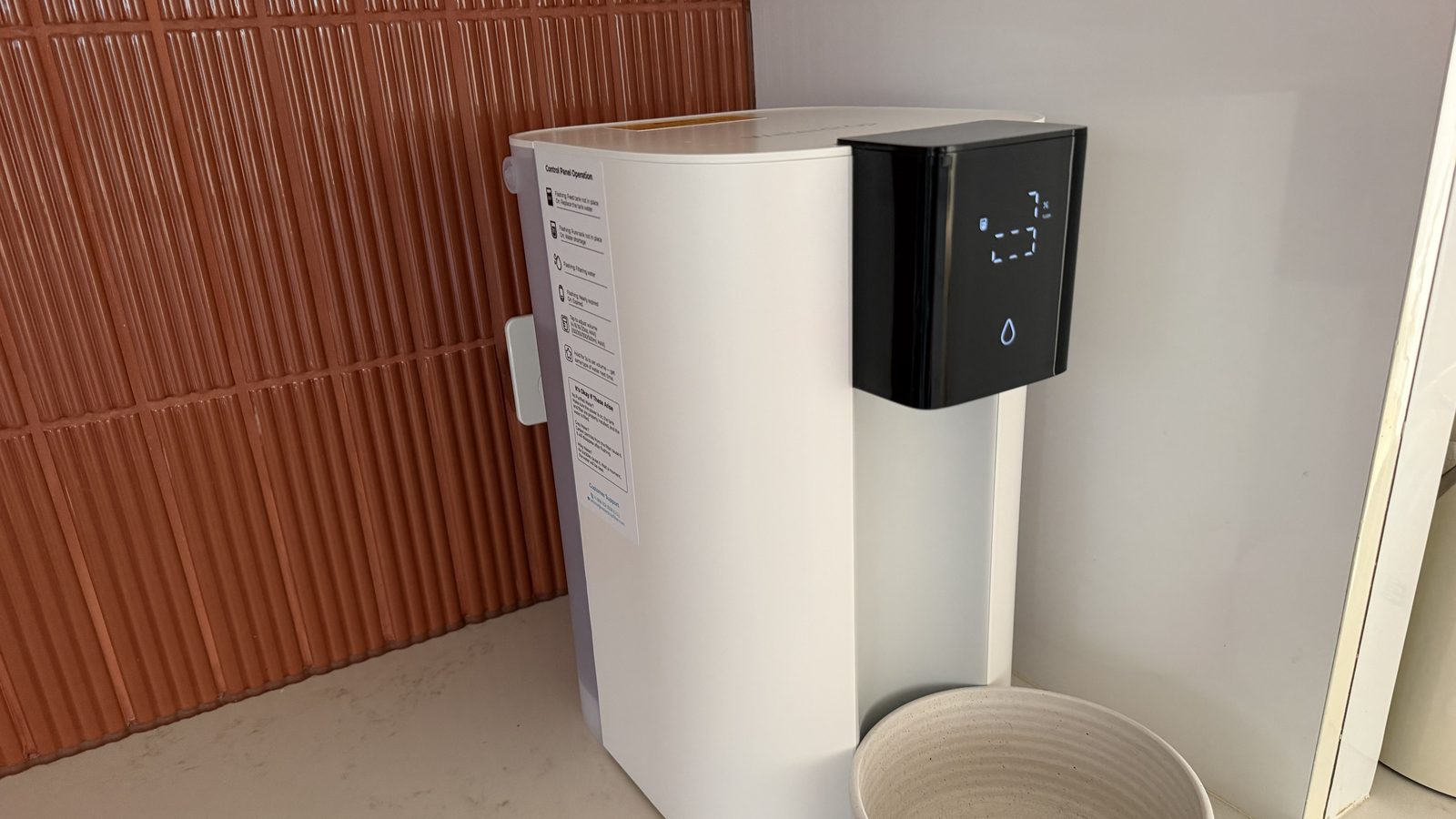
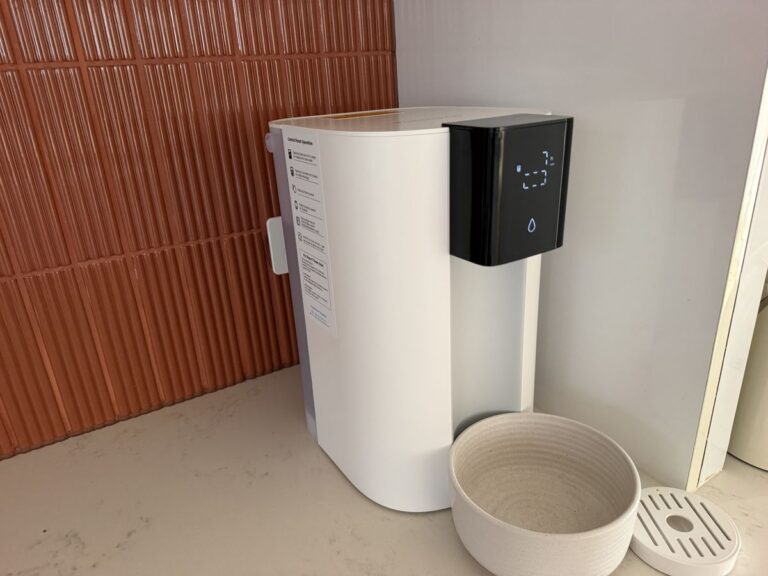
The Waterdrop C1S is a plug-in countertop reverse osmosis (RO) filter: you pour tap water into a 3.2 L tank and it pumps it through a single C1RF filter into a 1 L pitcher. In my kitchen it cut Gold Coast tap water from 69 ppm to 7 ppm TDS on my meter (a 90% drop), took about 20 minutes to set up including the automatic flush, and filled a glass on its 8 oz setting in 20.5 seconds. At $379.22 online it is the best no-plumbing RO I would recommend to renters and small kitchens.
I spent my working life as a Royal Australian Navy Clearance Diver, where you trust equipment you have tested, not the label on the box. So this review shows you what I measured, what I could not measure, and the one thing about the C1S that almost nobody mentions: there is no separate waste tank.
Buy it if you rent, cannot drill a benchtop or under-sink cupboard, or want RO water without a plumber. Skip it if your household drinks more than about 8 L a day, or you can install an under-sink system: that is less refilling and it filtered slightly lower on my meter.
| Item | Detail | Result (7 Nov 2026) |
|---|---|---|
| Waterdrop C1S (Amazon AU) | Renters, small benches, no plumbing | $379.22 |
| My TDS test | Gold Coast tap water | 69 ppm to 7 ppm |
| Setup time | Unbox, fit filter, auto flush | About 20 min |
| Running cost | C1RF filter, 12 months | $99.99 a year |
Who the Waterdrop C1S suits, and who should skip it
✓ Buy the C1S if
- You rent and cannot plumb in an under-sink RO system
- Your bench is small: the footprint is 29.7 x 21.1 cm
- You want RO-level TDS reduction for drinking and cooking water
- You like a set glass size every time (the favourite key)
- Your tap water is mains supply under 500 ppm TDS
× Look elsewhere if
- Your household drinks and cooks with more than about 8 L a day
- You can install under the sink: less refilling, lower TDS on my meter
- You want hot water too: the C1H was cheaper on Amazon AU when I checked
- You are on rainwater, bore or tank water that has not been treated
- You want an independently certified performance claim (NSF/ANSI 58)
My testing conditions
| Item | Detail |
|---|---|
| Where | My kitchen, Palm Beach, Gold Coast QLD. Unit on the bench to the right of the sink |
| Water | City of Gold Coast mains tap water, 69 ppm TDS on my meter |
| Bought | Amazon AU, 4 November 2026, $379.22, sold by WaterdropDirect AU. My money, not a sample |
| TDS meter | Handheld TDS and EC meter, the same one I used on my EcoHero under-sink RO. Not calibrated |
| Timing | Phone stopwatch for the 8 oz fill; phone clock for setup |
| Length of use | First week. I will add results through the C1RF filter’s 12-month life |
For context, I have run an EcoHero 5-stage under-sink RO system since mid-2025. On the same meter it takes my tap water from 69 ppm to 3 ppm. That gives me a direct, same-water, same-meter benchmark for the C1S. My full write-up is in the EcoHero review.
Unboxing: what is in the box
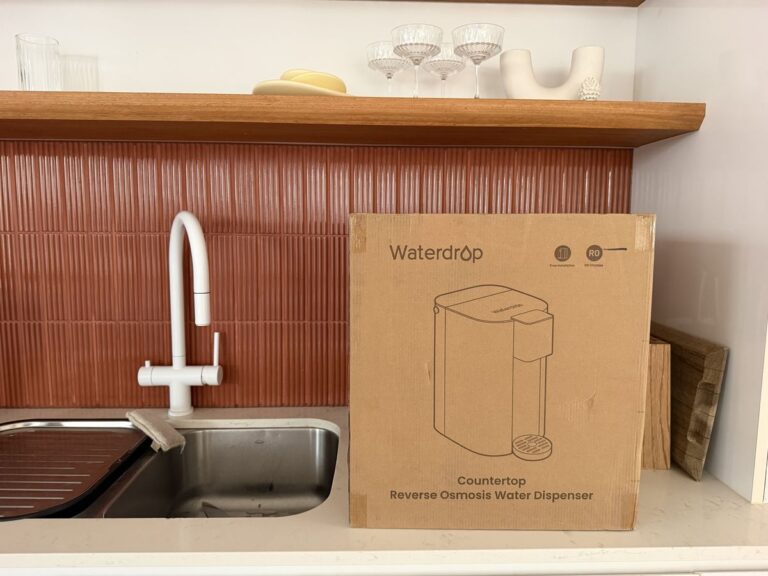
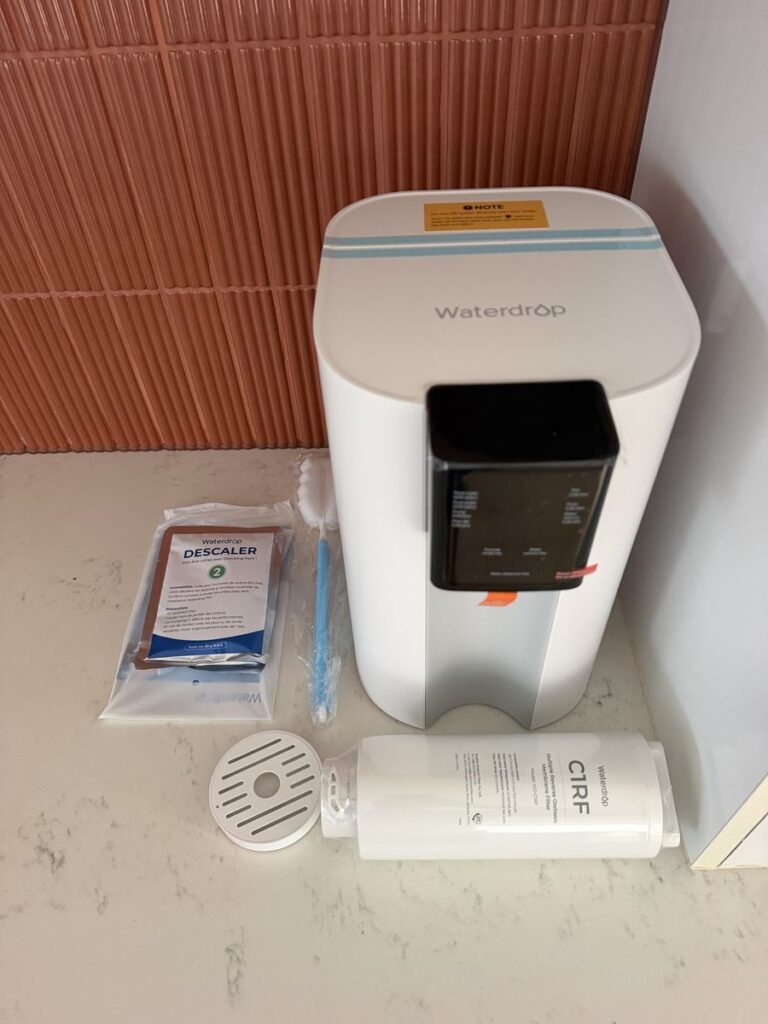
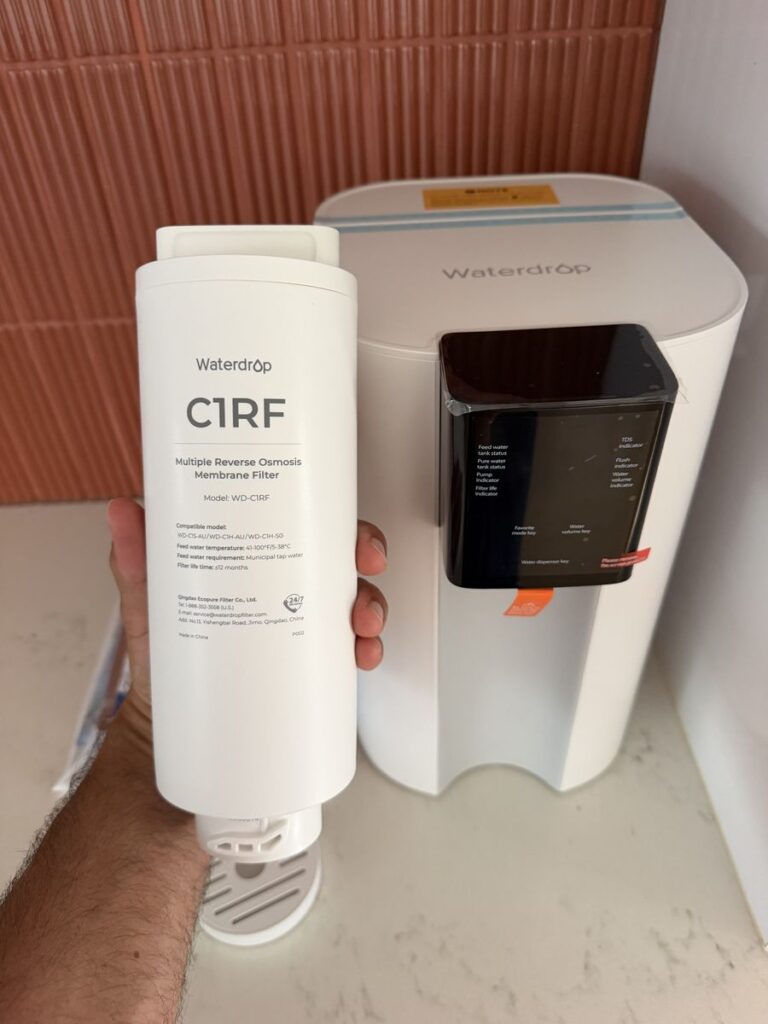
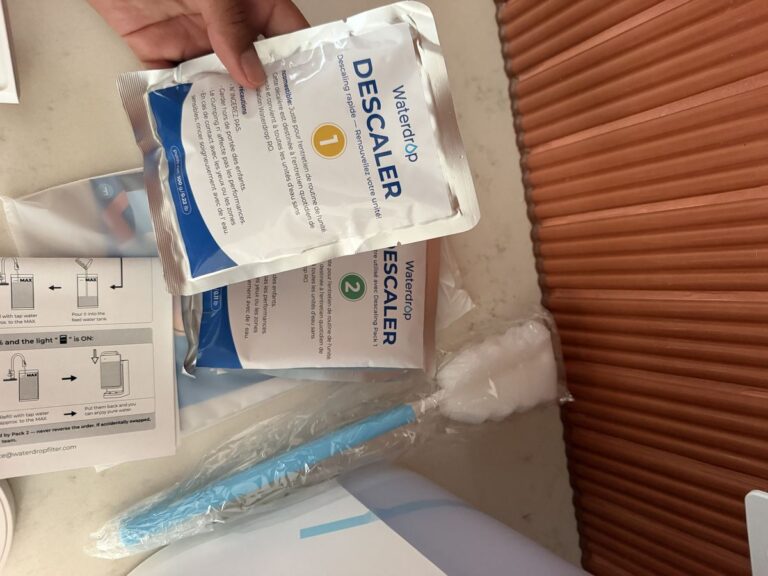
The box holds the main unit with its removable 1 L pure water pitcher and 3.2 L feed tank, the C1RF filter packed separately, a drip tray, the manual and an “Important Notes” card. Mine also included two descaler sachets and a long cleaning brush, which Waterdrop’s US product page does not list among the box contents.
The screen arrives under a black protective film that you must peel off, or the touch keys will not register; Waterdrop flags this on the Amazon listing too.
Setup: 20 minutes, step by step
The manual is clear and includes a QR code to a video installation guide, which I followed. Total time from opening the box to a finished first flush was about 20 minutes, which matches the manual’s own estimate for the flush alone, so most of that time is the machine working, not you.
- Peel the screen film and place the unit on a flat bench near a power point.
- Fit the C1RF filter into the top of the unit and twist it clockwise until it locks (photo below).
- Fill the feed tank at the tap to the MAX line and slide it back in.
- Plug in. The C1S starts flushing the new filter automatically and shows progress as a percentage.
- When the OUT icon lights, tip out what is left in the feed tank, refill with fresh tap water and keep going until the display reaches 100%. Do not drink the flush water.
- Optional, recommended: Waterdrop’s card says to flush one or two more tanks after the cycle to improve taste.
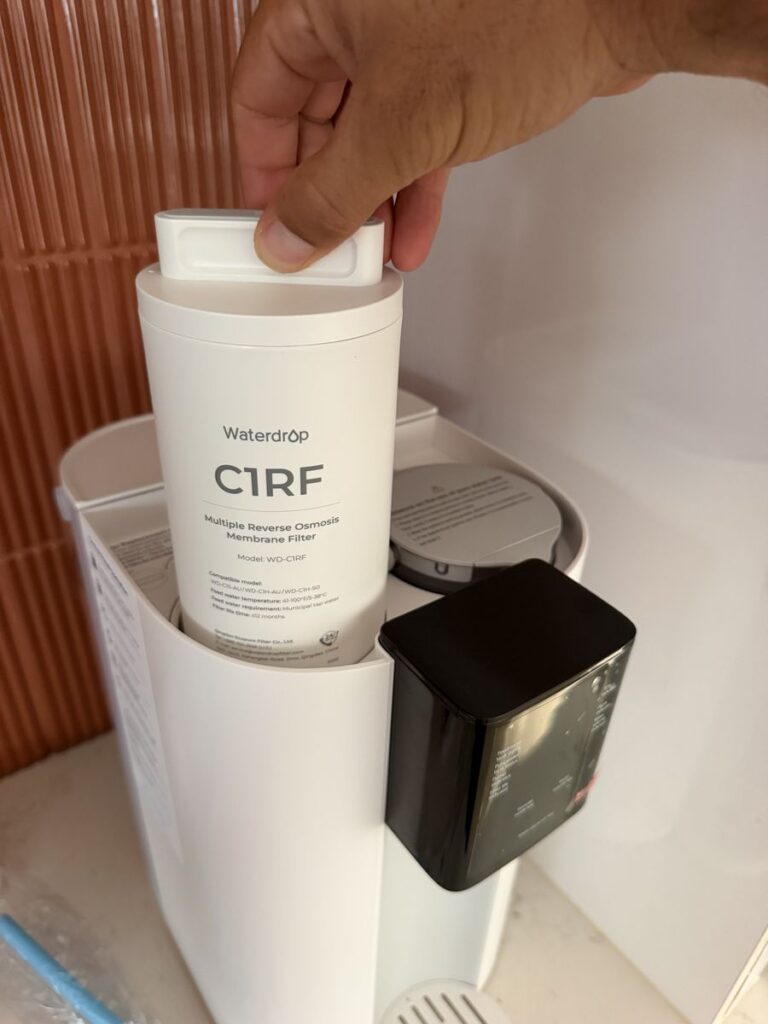
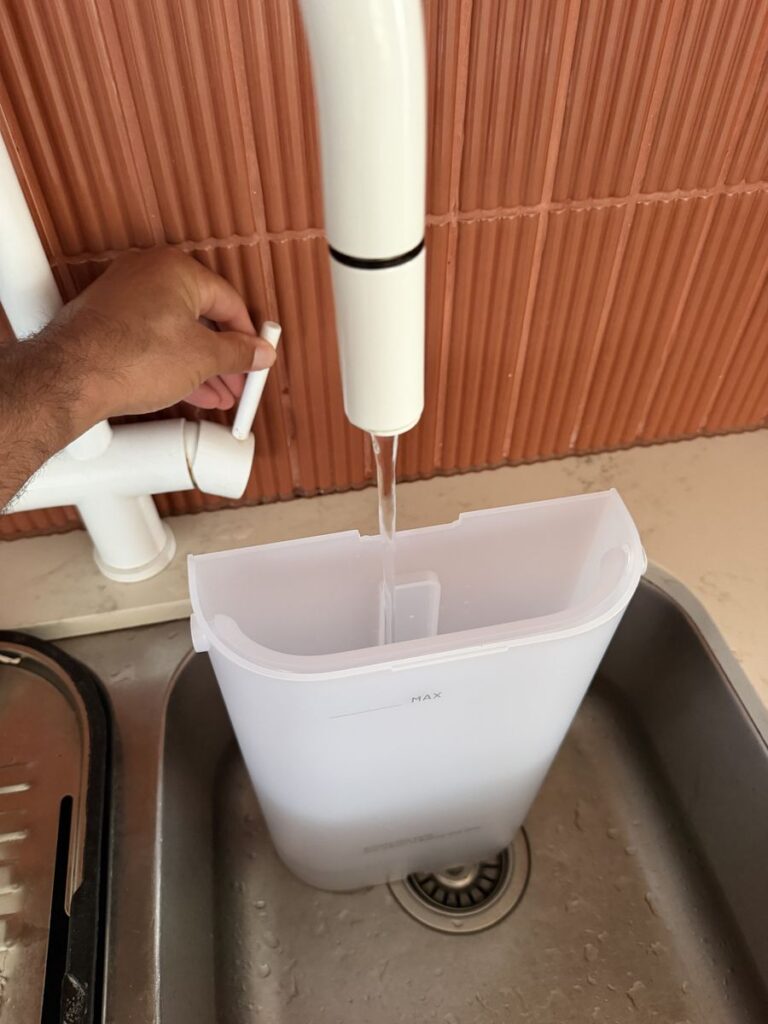
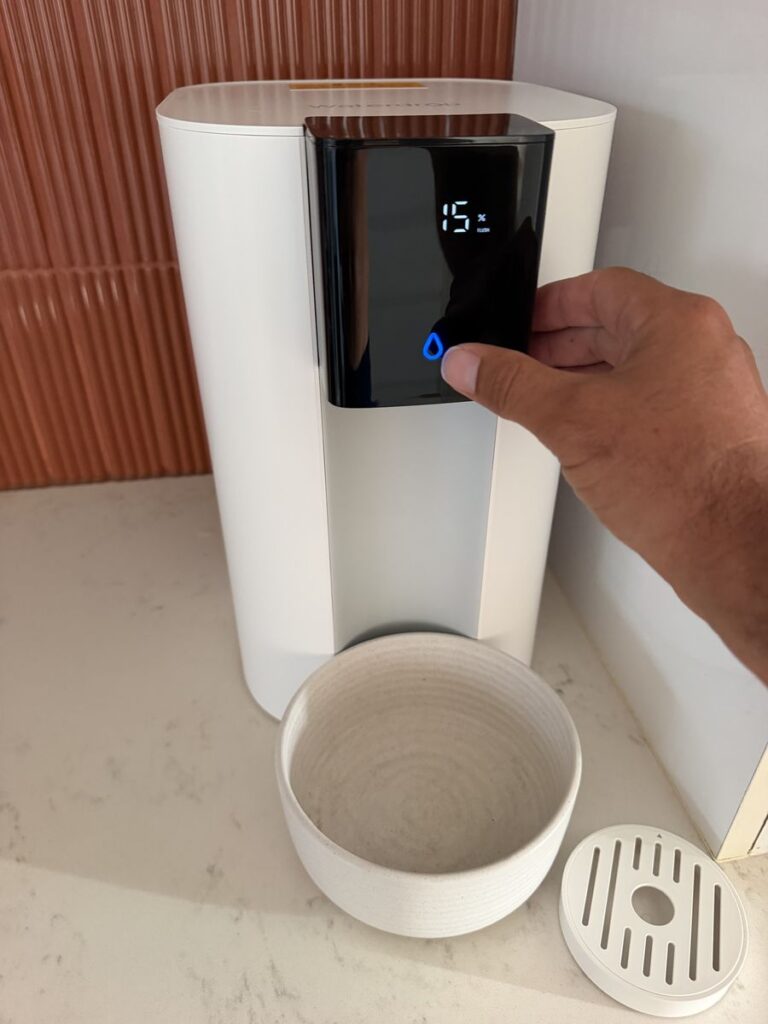
Nothing needs a tool, a drill or a plumber. An under-sink RO like my EcoHero needs a cold-water connection, a drain line and a faucet hole; this is a different category of easy.
TDS results: 69 ppm to 7 ppm
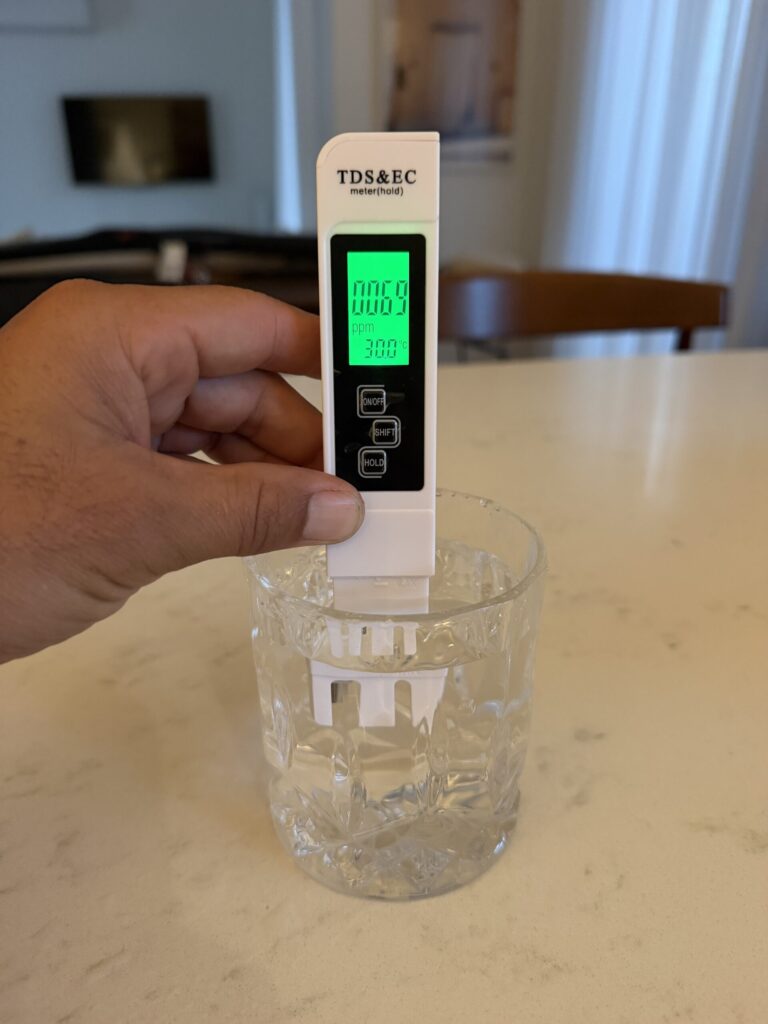
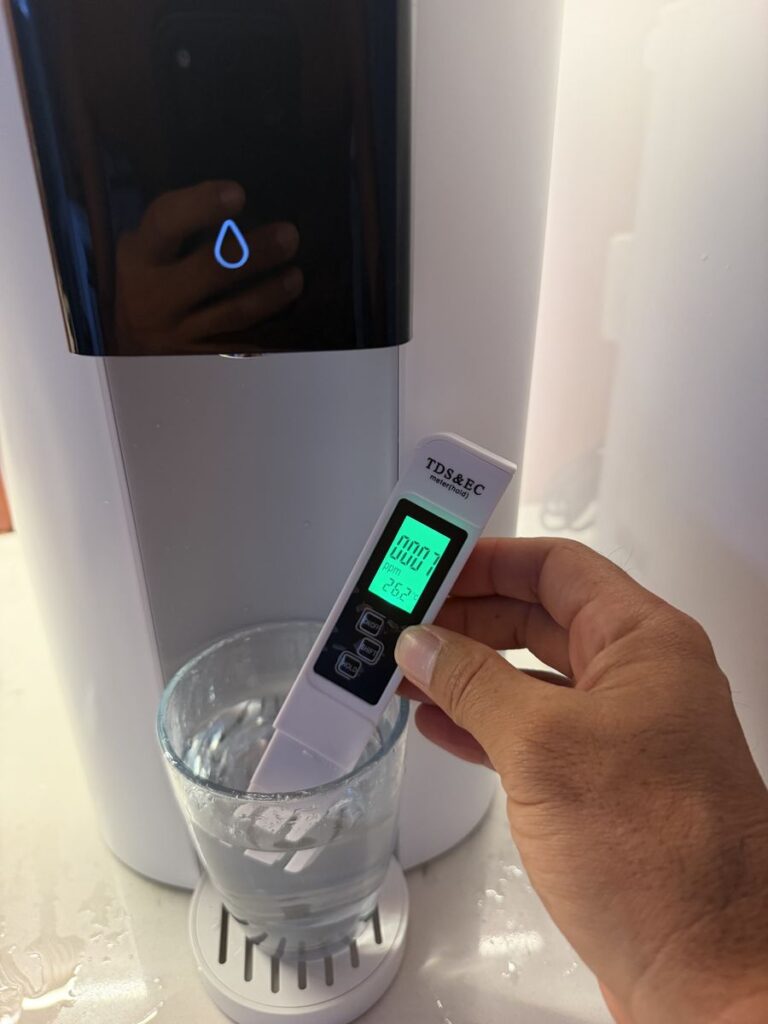
| Sample | Reading | Instrument |
|---|---|---|
| Gold Coast tap water | 69 ppm | Handheld TDS and EC meter |
| Waterdrop C1S, glass dispensed | 7 ppm (90% lower than tap) | Same handheld meter |
| Waterdrop C1S, its own display | 003 (3 ppm) | Built-in TDS sensor |
| EcoHero under-sink RO, for comparison | 3 ppm | Same handheld meter |
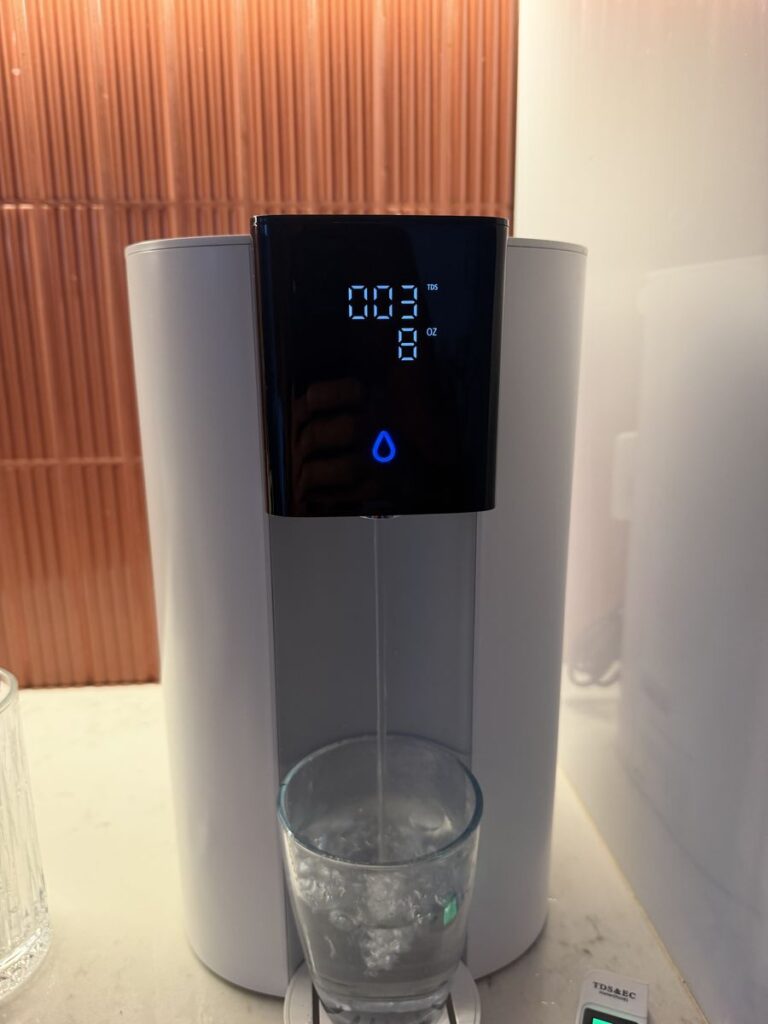
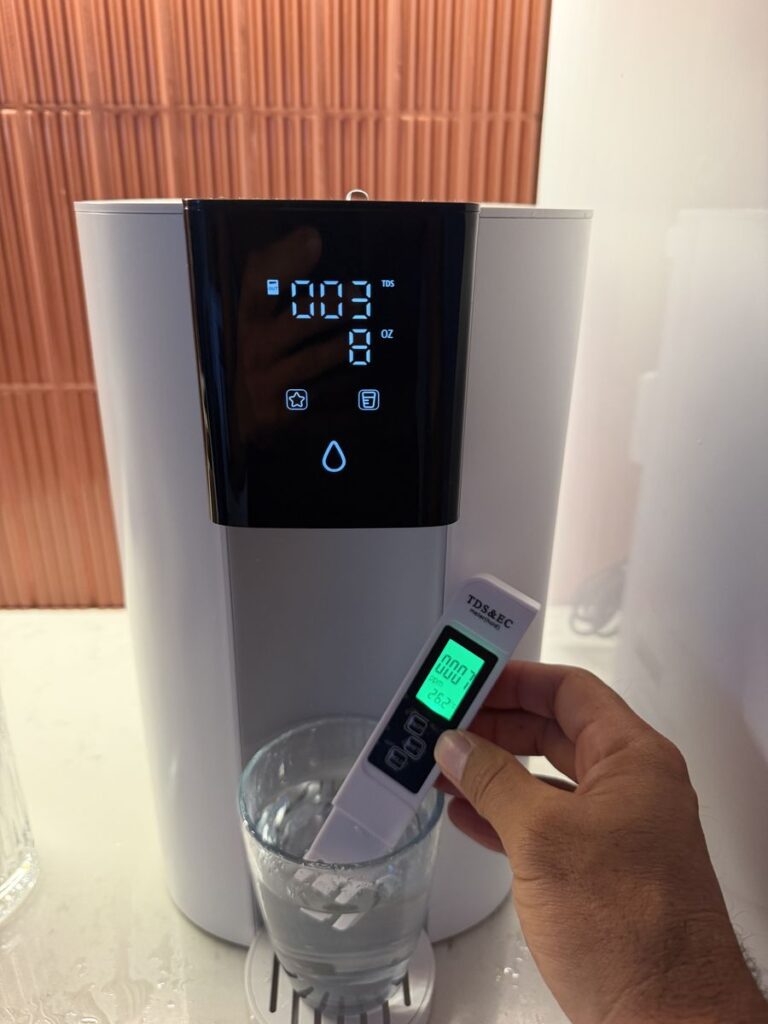
Two things stand out. First, the C1S display read 3 ppm while my handheld meter read 7 ppm in the glass. A gap that size is normal: the built-in sensor reads water inside the machine, my meter reads it in an open glass, and neither instrument is calibrated. I trust the handheld number more for comparisons because it is the same meter I use on every filter I test.
Second, the C1S landed slightly higher than my EcoHero (7 vs 3 ppm). Both are a long way below the 600 mg/L level the Australian Drinking Water Guidelines use for good-tasting water, so in practice both are very low. Waterdrop’s own Important Notes card also says the C1S’s output TDS can drift up as the feed tank empties, which I explain below.
Daily use: fill speed, noise and taste
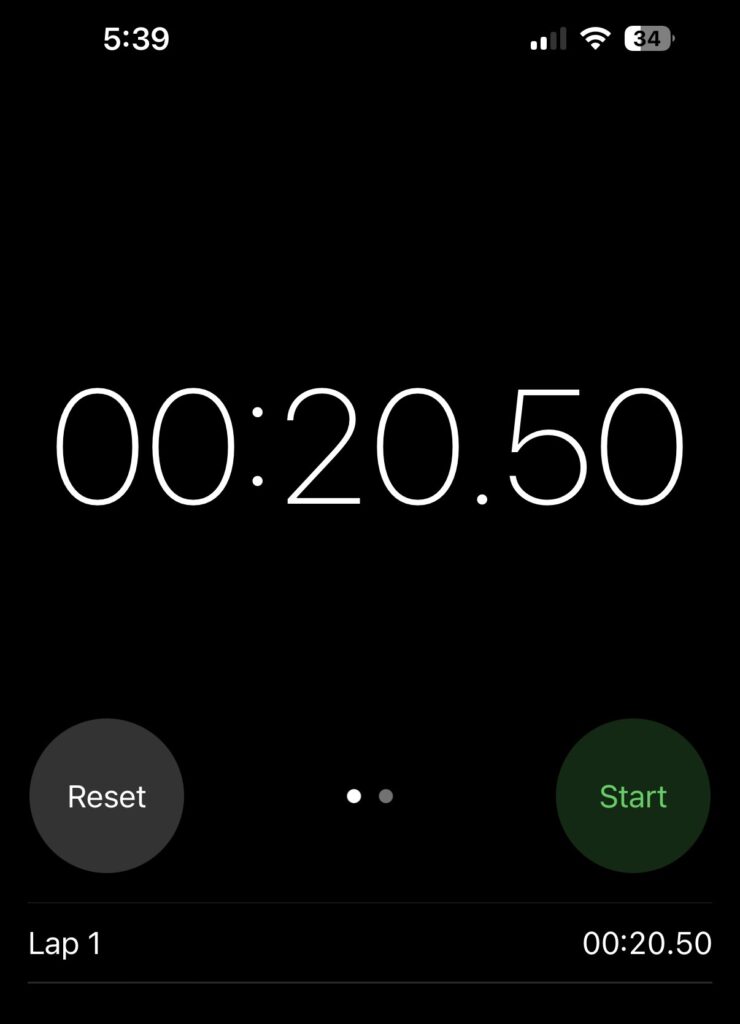
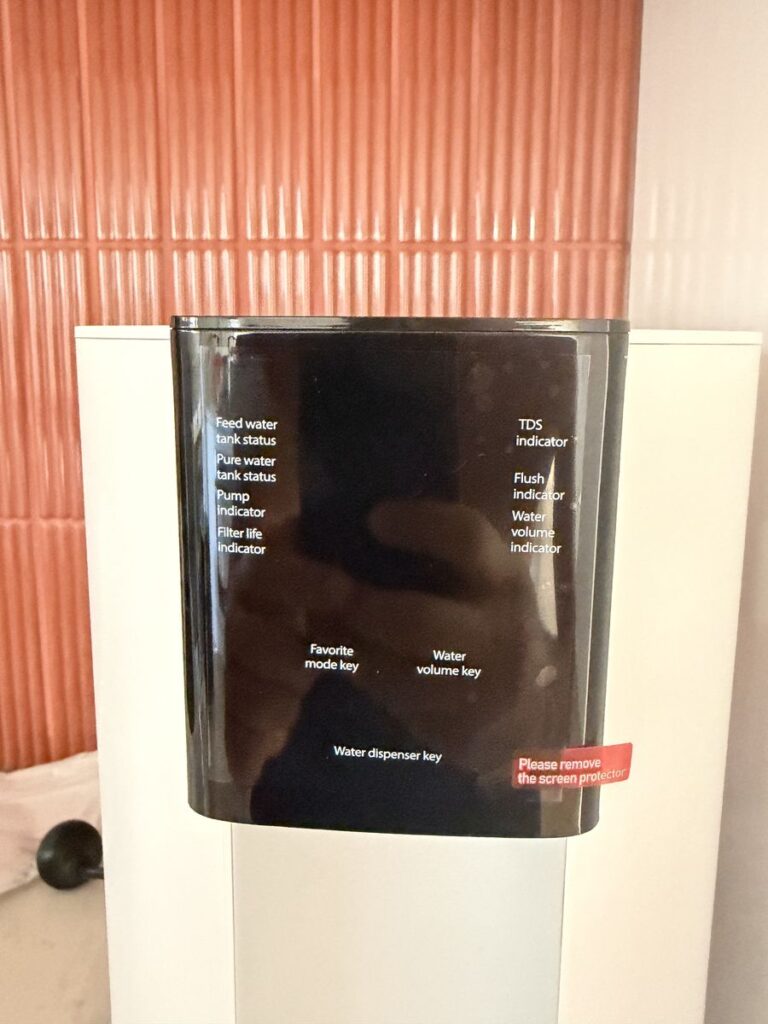
Fill speed. On the 8 oz setting the C1S filled my glass in 20.50 seconds by stopwatch. That is 8 US fluid ounces, about 237 mL, so roughly 0.7 L a minute from the pitcher. It is a pump, not a tap: slower than pouring from a jug, quick enough for a glass. A 1 L bottle at that rate is about 87 seconds (my calculation, not timed).
Presets. Tap the cup key to cycle 4, 8, 16 and 20 oz and MAX (150, 250, 350 and 500 mL and MAX in metric mode, per the label). Hold the star key for two seconds to save your usual amount, and it pours the same volume every time. This is the feature I liked most: one tap, walk away, come back to a full glass.
Noise. Very little, which is what I expected from a small countertop pump.
Taste. Clean, with no odd smell or plastic taste, even with a brand-new filter on day one. A new filter can taste off for the first few litres, so run the full flush before you drink from it.
Bench footprint. With a 29.7 x 21.1 cm footprint it fits a narrow bench without crowding it, which was one reason I chose it, along with its strong reviews and Amazon’s Choice badge. It is 34.8 cm tall, so check the clearance under overhead cupboards; you lift the feed tank out to refill it.
The feed tank: where the waste water goes
Every RO system splits water into pure water and a concentrate that carries the rejected minerals away. Under a sink, the concentrate runs down the drain. The C1S has no drain and no separate waste tank. Waterdrop’s Important Notes card says waste water is discharged during filtration and the feed tank’s TDS may rise as the level drops, which points to the concentrate going back into the feed tank.
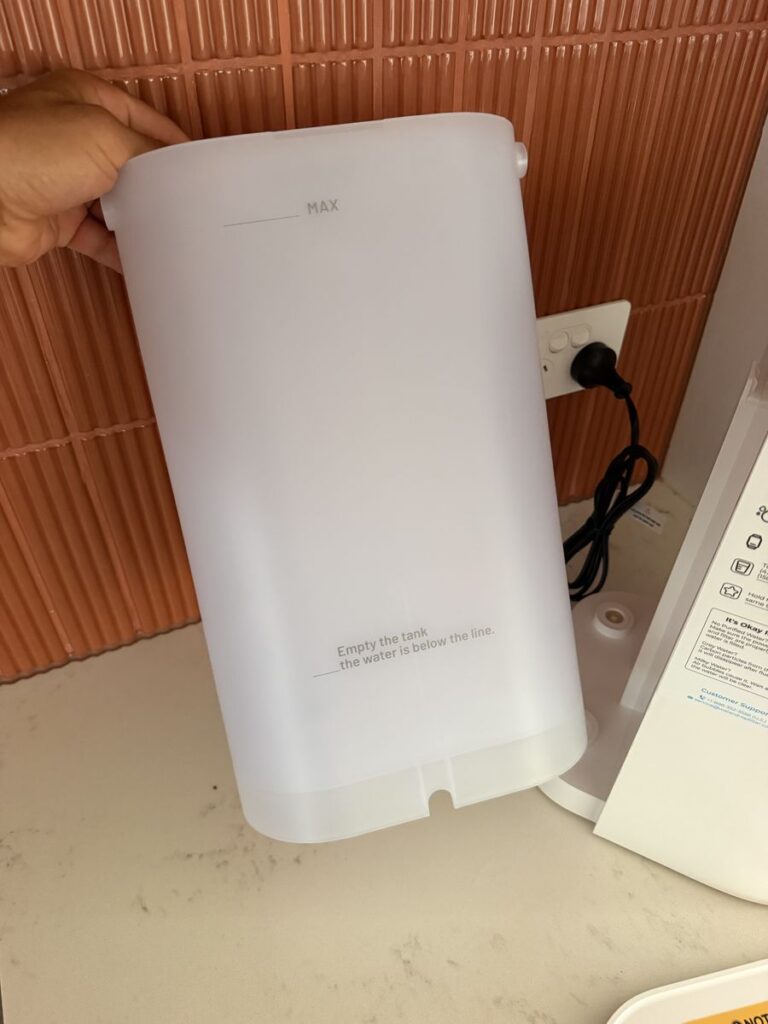
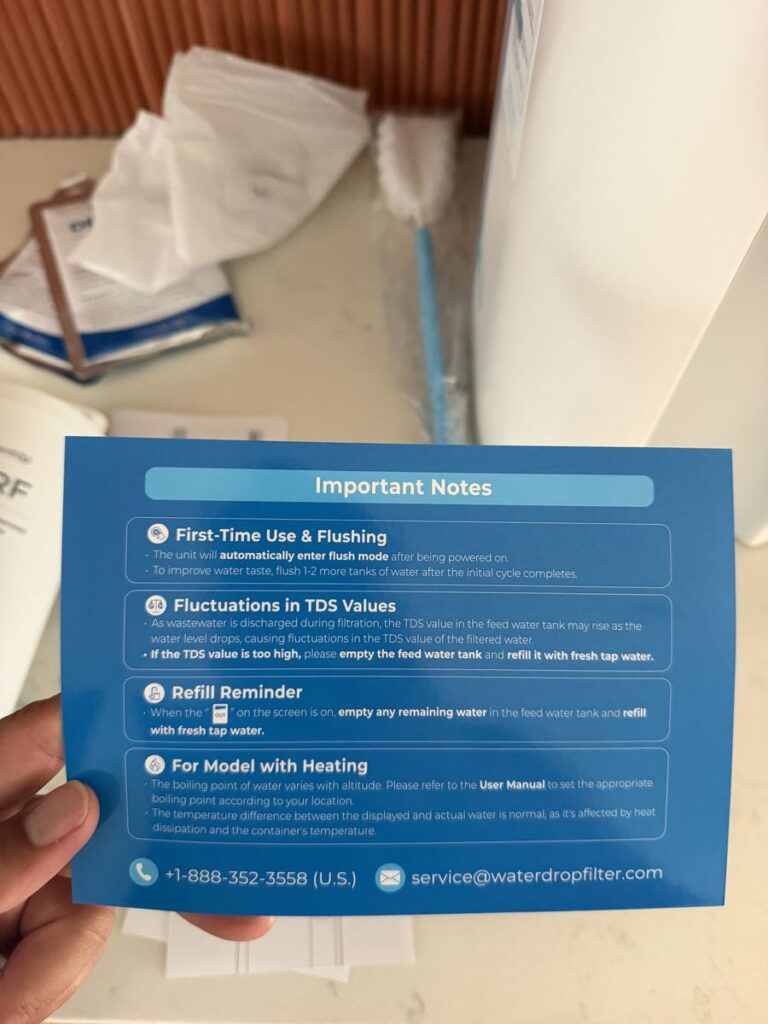
What that means in practice: when the OUT icon lights, you tip what is left in the feed tank down the sink and refill with fresh tap water, rather than topping it up. That leftover is your waste water. It is also why I have not “emptied a waste tank” yet: there is not one to empty. Waterdrop rates the C1S at a 3:1 pure-to-drain ratio, which is efficient for RO, and the manual says the feed water should be under 500 ppm TDS; Gold Coast water at 69 ppm is well inside that.
Two habits keep the output TDS low: refill with fresh water every time instead of topping up, and if the display reading creeps up, empty the feed tank early. Rinse the pitcher if the unit sits unused for more than 48 hours, as the manual advises.
Check all seven rooms, not just this one
38 checks, 29 free, ranked by impact. Sent as a 32-page PDF.
We'll email you the audit and a short series of practical guides. Unsubscribe in one click, any time. Privacy.
Sent. Taking you to your download...
What Waterdrop claims vs what is certified
Read the certification line carefully. The C1S is certified to NSF/ANSI 372, which covers lead-free materials in contact with water. It is not certified to NSF/ANSI 58, the performance standard for reverse osmosis systems. The reduction figures are Waterdrop’s own claims from third-party lab testing (the Amazon listing names SGS).
| Claim | Waterdrop figure | Status | My check |
|---|---|---|---|
| TDS reduction | 94.95% | Waterdrop lab claim | 90% on my meter (69 to 7 ppm) |
| Lead reduction | 99.94% | Waterdrop lab claim | Not tested: TDS cannot measure lead |
| PFOA, PFOS, fluoride, chlorine, copper, arsenic | Grouped under one combined “99.94%” line; no separate figure for each | Waterdrop claim | Not tested; the combined line conflicts with Waterdrop’s own 94.95% TDS figure |
| Lead-free materials | NSF/ANSI 372 | Certified | n/a |
RO membranes as a technology reduce PFAS, fluoride and heavy metals well, which is why RO sits at the top of our PFAS filter guide. But a specific product claim is only as good as its test report. If certified performance matters most to you, look for NSF/ANSI 58 or 53 certification. For more on how RO works, see what a reverse osmosis filter is.
Running cost calculator
The C1S has one consumable: the C1RF filter, rated for 12 months or 1,100 US gallons (about 4,164 L), whichever comes first. Enter how much you use and what bottled water costs you to see the real numbers.
Waterdrop C1S specifications
| Spec | Waterdrop C1S |
|---|---|
| Type | Countertop reverse osmosis, no installation, plug-in |
| Filtration | 6-stage, single C1RF composite cartridge with RO membrane |
| Feed tank / pure pitcher | 3.2 L / 1 L, both removable |
| Rated output | 75 gallons per day |
| Pure-to-drain ratio | 3:1 |
| Filter life | 12 months or 1,100 US gal (about 4,164 L) |
| Dispense presets | 4, 8, 16, 20 oz, MAX (150, 250, 350, 500 mL, MAX) |
| Feed water | Under 500 ppm TDS; 5 to 38 °C; room temperature only |
| Power | 50 W, 100 to 240 V |
| Size / weight | 29.7 x 21.1 x 34.8 cm / 6.35 kg |
| Certification | NSF/ANSI 372 (lead-free materials) |
| Warranty | 1 year, manufacturing defects |
| Price (7 Nov 2026) | $379.22at Amazon AU · as of 19 Nov 2026, 11:43 pm AEST Details; $499 list at Waterdrop AU ($399.20 with its 20%-off code when checked) |
Sources: Waterdrop’s Australian product page, the WD-C1S manual and the label on my unit. Waterdrop’s page also mentions both 5-stage and 6-stage in different places; the spec tables on both product pages and the Amazon listing say 6-stage.
What I liked and what could be better
✓ Pros
- 90% TDS reduction on my Gold Coast tap water
- About 20 minutes from box to clean water, no tools or plumbing
- Small footprint for a narrow bench
- Repeatable volume presets and a favourite key
- Quiet, clean-tasting from day one
- One twist-lock filter a year, $99.99 online
× Cons
- You refill the 3.2 L feed tank by hand and tip out the leftover
- Slightly higher TDS than my under-sink EcoHero (7 vs 3 ppm)
- Only NSF/ANSI 372 certified; reduction figures are Waterdrop’s claims
- Display TDS read lower than my handheld meter
- 1 L pitcher is small for big households
- Room temperature only; no hot or chilled water
Buy this if…
you rent or have a small kitchen, drink up to a few litres of filtered water a day, and want RO-level results without touching the plumbing.
Waterdrop C1S vs the alternatives
| System | Price | Install | Best for | My take |
|---|---|---|---|---|
| Waterdrop C1S | $379.22at Amazon AU · as of 19 Nov 2026, 11:43 pm AEST Details | None | Renters, small benches | Tested: 69 to 7 ppm. My pick for no-plumbing RO |
| Waterdrop C1H | Currently unavailable on Amazon AUas of 19 Nov 2026, 5:43 pm AEST Details | None | Want instant hot water too | Same C1RF filter, adds hot water; cheaper than the C1S on Amazon AU when checked |
| Waterdrop A2 | Amazon AU | None | Bigger households | Larger, pricier countertop RO; not tested by me |
| Cascade WaterBar (H2O) | Amazon AU | None | Another no-plumbing RO | Not tested by me; see our Cascade review |
| EcoHero 5-stage (under sink) | $949 system, Pure Water Systems (7 Nov 2026) | Plumber or capable DIY | Owners, high daily use | In my kitchen since mid-2025: 69 to 3 ppm; no refilling |
The surprise in this table is the C1H: when I checked, the instant-hot version was slightly cheaper than the C1S on Amazon AU and uses the same C1RF filter. If you would use hot water for tea or cooking, it is the better buy at that price; prices on these two move often, so compare both on the day. The two are compared head to head, with a chooser that works off the day’s prices, in Waterdrop C1S vs C1H. My notes are in the C1H review, and the AquaTru comparison is in Waterdrop C1S vs AquaTru.
 Countertop RO
6-stage C1RF | 3.2 L feed tank, 1 L pitcher | 3:1 ratio | 29.7 x 21.1 x 34.8 cm | NSF/ANSI 372
Check the C1S price on Amazon AU →Amazon AU price: $379.22 · as of 19 Nov 2026, 11:43 pm AEST Details Countertop RO + hot
Uses the same C1RF filter as the C1S | Instant hot water | No installation | Not tested by me
Check the C1H price on Amazon AU → Annual filter12-month life
Fits C1S and C1H | 12 months or 1,100 US gal | Twist-lock
Check the C1RF price on Amazon AU →Amazon AU price: $99.99 · as of 19 Nov 2026, 8:43 pm AEST Details Under-sink RO$949system only
Tested under my sink since mid-2025 | 69 to 3 ppm on the same meter | Needs installation
Black Friday alternative: Waterdrop X8 on Amazon AU →Amazon AU price: $611.29 · as of 19 Nov 2026, 11:43 pm AEST DetailsFinal verdict
The Waterdrop C1S does what it promises where I could check it: it took my Gold Coast tap water from 69 ppm to 7 ppm, it was running clean water in about 20 minutes with no tools, and it pours a set glass in about 20 seconds without fuss. The trade-offs are honest ones for a countertop RO: you carry water to it, you tip out the concentrate-rich leftover, and its contaminant claims rest on Waterdrop’s own lab tests rather than an NSF/ANSI 58 certificate.
For renters and anyone with a small bench, it is the countertop RO I would buy, at $379.22 online. If you would use hot water, check the C1H price the same day. If you own your home and drink a lot of water, an under-sink system like my EcoHero is less work and filtered a little lower. More options in the best countertop water filters, the best RO systems and the best water filters in Australia.
Prices change often on Amazon AU. All three checked on 7 Nov 2026.
Frequently asked questions
Is the Waterdrop C1S worth it in Australia?
For renters and small kitchens, yes. In my test it cut Gold Coast tap water from 69 ppm to 7 ppm TDS, set up in about 20 minutes with no plumbing, and costs $379.22 online plus about $100 a year for the filter. Households drinking more than about 8 L a day will find an under-sink RO less work.
Does the Waterdrop C1S remove fluoride?
Waterdrop lists fluoride among the contaminants the C1S reduces, but its Australian product page only groups it under a combined “99.94%” line with lead and other contaminants, with no separate fluoride figure. Reverse osmosis as a technology does reduce fluoride. I could not test fluoride with a TDS meter.
Does the Waterdrop C1S remove PFAS?
Waterdrop lists PFOA and PFOS among the contaminants it reduces, from third-party lab testing, grouped under a combined “99.94%” line on the Australian page rather than a separate PFAS figure. The C1S is certified to NSF/ANSI 372 for lead-free materials, not to a PFAS performance standard.
Where does the waste water go on the Waterdrop C1S?
There is no separate waste tank. The concentrate appears to return to the feed tank: Waterdrop’s card says the feed tank’s TDS rises as it empties. When the OUT icon lights, tip out what is left and refill with fresh tap water.
How long does the Waterdrop C1S take to set up?
About 20 minutes in my kitchen, including the automatic first flush. You fit the filter, fill the feed tank, plug in and let it flush to 100%, emptying and refilling the feed tank when prompted.
How fast does the Waterdrop C1S dispense water?
On the 8 oz setting it filled my glass in 20.50 seconds, about 0.7 L a minute. It has presets of 4, 8, 16 and 20 oz and MAX, and a favourite key that remembers your usual amount.
How often do you change the Waterdrop C1S filter?
Every 12 months or 1,100 US gallons (about 4,164 L), whichever comes first. The C1RF filter was $99.99 online and $119.99 at Waterdrop Australia when checked. It twists out and in without tools.
Why does the C1S display show a different TDS to my meter?
The built-in sensor reads water inside the machine and a handheld meter reads it in an open glass; consumer meters are not calibrated either. Mine showed 3 on the display and 7 ppm on my meter. Use one meter consistently for comparisons.
- Amazon AU: Waterdrop C1S listing (price, seller, rating, SGS testing, flushing note), checked 7 Nov 2026
- Waterdrop Australia: C1S product page (6-stage, 3:1, 75 GPD, size, weight, NSF/ANSI 372, 99.94% lead and 94.95% TDS claims, C1RF $119.99), checked 7 Nov 2026
- Waterdrop US: C1S product page (filter life 12 months or 1,100 gallons, volume presets, TDS alert)
- Waterdrop WD-C1S user manual (3.2 L feed tank, 1 L pure tank, 50 W, feed water under 500 ppm, 5 to 38 C, about 20-minute flush)
- Amazon AU: Waterdrop C1RF replacement filter, checked 7 Nov 2026
- Amazon AU: Waterdrop C1H listing, checked 7 Nov 2026
- NHMRC: Australian Drinking Water Guidelines, total dissolved solids fact sheet (600 mg/L, based on taste)
- NSF: NSF/ANSI 58, the performance standard for reverse osmosis drinking water systems
- WaterWorld: interpreting NSF/ANSI 372 (lead content of materials) vs reduction standards

Former Royal Australian Navy Clearance Diver and TAG-E counter-terrorism operator. Founded Clean and Native to apply the same rigorous thinking to the home environment.
Full biography →The 7-Room Home Audit
Your tap water is one room. The audit covers all seven: 38 checks across water, air and EMF, 29 of them free, ranked by impact against Australian guidelines.
- Morning tap flush: the free lead fix most homes skip
- How to read your utility's water quality report
- Renting or owning: the two reverse osmosis filters I use at home
We'll email you the audit and a short series of practical guides. Unsubscribe in one click, any time. Privacy.
Sent. Taking you to your download...