Best Water Softener Adelaide 2026: River Murray Hard Water Solutions
Adelaide tap water is the hardest in Australia — 140-200 mg/L CaCO³ depending on the season — and the River Murray source means TDS swings between 200 and 450 mg/L across the year. If your kettle is coated in white crust and your hot water system is struggling, this guide tells you exactly which system fixes it.
Why Adelaide Has Australia’s Hardest Tap Water
Adelaide’s water hardness is not a random quirk — it is the direct result of where the water comes from. The River Murray drains a catchment of roughly 1.06 million km² across four states, picking up dissolved calcium and magnesium carbonates as it runs over limestone and sedimentary rock through South Australia. By the time it reaches SA Water’s Mannum-to-Adelaide and Murray Bridge-to-Onkaparinga pipelines, the hardness regularly sits between 140 and 200 mg/L CaCO³.
SA Water classifies this as “moderately hard” in official communications, but that classification undersells the practical impact. The Australian Drinking Water Guidelines (ADWG 2024) set no mandatory hardness limit, but the aesthetic guideline of 200 mg/L CaCO³ is regularly exceeded in Adelaide during summer and autumn. For context: Melbourne’s Yarra Valley catchment delivers water at roughly 25 mg/L CaCO³. Adelaide’s water is five to eight times harder than Melbourne’s.
The TDS picture is equally stark. Adelaide tap water TDS ranges from approximately 200 mg/L in winter to 450 mg/L in summer — the highest seasonal variation of any Australian capital. The desalination plant at Lonsdale provides some blending capacity, but it does not eliminate the seasonal swing. Higher TDS means more dissolved solids beyond just hardness minerals — including sodium, sulphates, and chlorides — which affects taste, appliance lifespan, and the load placed on any filtration system downstream of a softener.
Seasonal Variation — Why Adelaide’s Hard Water Problem Is Not Static
Most water softener guides treat hardness as a fixed number. In Adelaide, that approach will leave you undersized. SA Water blends Murray River water with output from the Happy Valley reservoir and the Lonsdale desalination plant, but the blend ratio shifts with rainfall, river flow, and reservoir levels. During winter and spring, rainfall increases Murray flow, dilutes mineral concentration, and delivers softer water. Come February and March — peak summer demand — the Murray is running at its lowest and the water arriving at your tap can be measurably harder and saltier than what you were using in July.
This matters for two reasons. First, if you select a water softener rated for 140 mg/L and your summer water runs at 190 mg/L, the resin bed will exhaust faster and regenerate more frequently. That drives up salt consumption and operational cost. Second, the elevated summer TDS means that softening alone — which addresses hardness by exchanging calcium and magnesium ions for sodium — does not reduce total dissolved solids. A softener actually increases sodium concentration slightly. If your primary concerns are taste and total dissolved solids, you need filtration after the softener, not just softening.
The practical implication: Adelaide homeowners need a softener rated for at least 200 mg/L CaCO³ hardness. A system sized for the SA Water “average” will underperform every summer when scale build-up is already worst.
Salt-Based vs Salt-Free for Adelaide Hardness Levels
This is where a lot of Adelaide homeowners get misled by national comparison guides that do not account for local hardness levels. Salt-free systems — which use template-assisted crystallisation (TAC) or electromagnetic conditioning — work by changing the physical form of calcium carbonate rather than removing it. Hardness minerals stay in the water but crystallise in a form that does not adhere to surfaces. At hardness levels below 75-100 mg/L CaCO³, TAC systems perform reasonably well. At Adelaide’s 140-200 mg/L range, independent testing consistently shows TAC effectiveness drops off. You are not removing the minerals — you are hoping they pass through without sticking.
Salt-based ion exchange is the only technology with documented effectiveness at Adelaide’s hardness levels. The mechanism is simple: water passes through a resin bed where calcium and magnesium ions are exchanged for sodium ions. The output is actually soft water — typically below 50 mg/L CaCO³ — which eliminates scale formation, extends appliance lifespan, and reduces soap and detergent consumption. The resin bed regenerates periodically using a salt brine solution, flushing the captured calcium and magnesium to drain.
The tradeoff with salt-based systems is installation and ongoing cost. You need a licensed plumber to install the bypass valve and plumb the system into your main line. You need to purchase and load salt blocks or pellets regularly — typically every 6-8 weeks for an average Adelaide household. And South Australian council regulations on brine discharge to stormwater need to be checked with your local council before install. Most Adelaide metropolitan areas permit discharge to the sewer; stormwater discharge restrictions apply in some zones.
One specific note for Adelaide: because SA Water uses chloramine disinfection — not free chlorine — standard carbon block pre-filters in whole-home systems are largely ineffective for disinfectant removal. This does not affect the softener’s ion exchange function, but if you are adding whole-home filtration alongside the softener, the filter medium must be catalytic carbon or reverse osmosis, not standard GAC. See our chloramine vs free chlorine guide for a full breakdown by city.
Adelaide Water Softener Recommendations

✓ Pros
- Salt-based ion exchange — the only technology consistently effective at Adelaide’s 140-200 mg/L hardness range
- Sized for Australian conditions including seasonal Murray peaks
- Australian-owned supplier with local phone support — not a grey import
- Whole-home protection including hot water system, dishwasher, and washing machine
✗ Cons
- Requires licensed plumber installation — budget $200-400 additional in Adelaide
- Ongoing salt cost — approximately $80-150/year for an average Adelaide household
- Does not reduce TDS or remove chloramine — Adelaide users wanting taste improvement need a downstream filter
PWS Water Softener — What You Need to Know for Adelaide Specifically
Hardness capacity
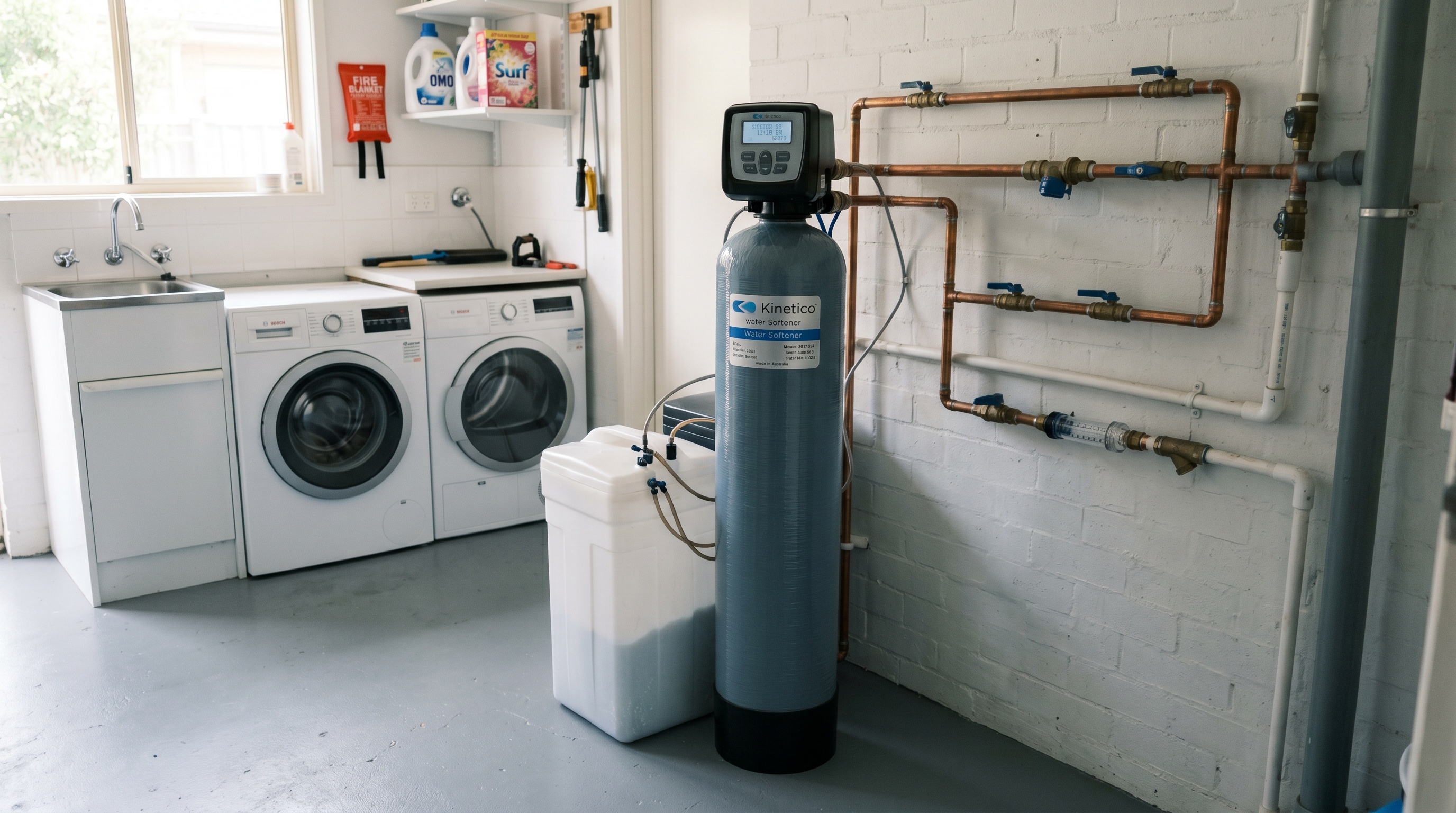
The PWS Water Softener uses a high-capacity resin bed rated for Australian hard water conditions. For Adelaide’s summer peak of up to 200 mg/L CaCO³, this means the system regenerates more frequently than it would in a softer-water city — but it handles the load without under-treatment. Pure Water Systems’ technical team can advise on regeneration frequency based on your household size and local hardness data.
Salt consumption in Adelaide conditions
At 200 mg/L hardness and typical Adelaide household consumption of 600-800 litres per day for a family of four, expect regeneration approximately every 10-14 days. Budget around $100-150 per year for salt. Block or pellet salt is available from hardware stores across Adelaide including Bunnings and Total Tools.
Does not address TDS or chloramine
This is the most important limitation for Adelaide users. Ion exchange replaces calcium and magnesium with sodium — it does not reduce TDS. Adelaide’s summer TDS of up to 450 mg/L will be largely unchanged after softening. If taste and total dissolved solids are a concern, you need a downstream filter. Because Adelaide uses chloramine (not free chlorine), that downstream filter must use catalytic carbon or reverse osmosis — not standard GAC. See the cross-sell section below.
NHMRC compliance
The NHMRC updated its plumbing product leaching standards for metals including lead and manganese in 2025. When selecting any plumber for your Adelaide softener install, confirm that bypass valves and fittings supplied are compliant with AS/NZS 4020 (products in contact with drinking water). Pure Water Systems supplies components specified for Australian drinking water contact — confirm with your installer that locally sourced fittings meet the same standard.
Adelaide Hard Water — Top Recommendations
See full water softener rankings for Australia →The Adelaide Dual Problem: When You Need Softening AND Filtration
A softener removes hardness. It does not remove chloramine, it does not reduce TDS to any meaningful degree, and it does not address taste. For many Adelaide households, the tap water taste problem is as noticeable as the scale problem — particularly in summer when TDS is at its highest and the chloramine concentration remains constant year-round.
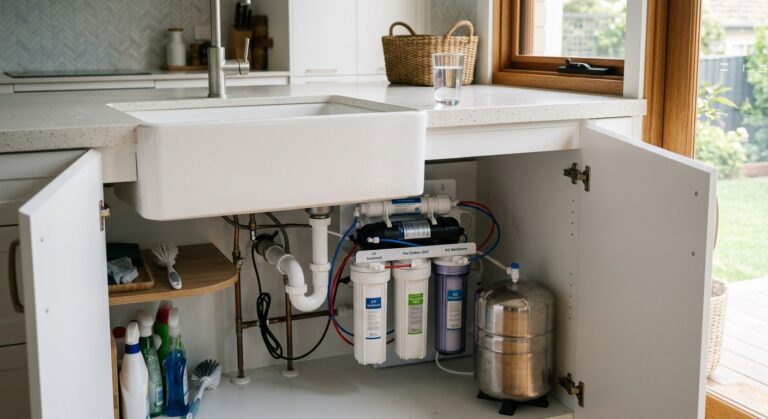
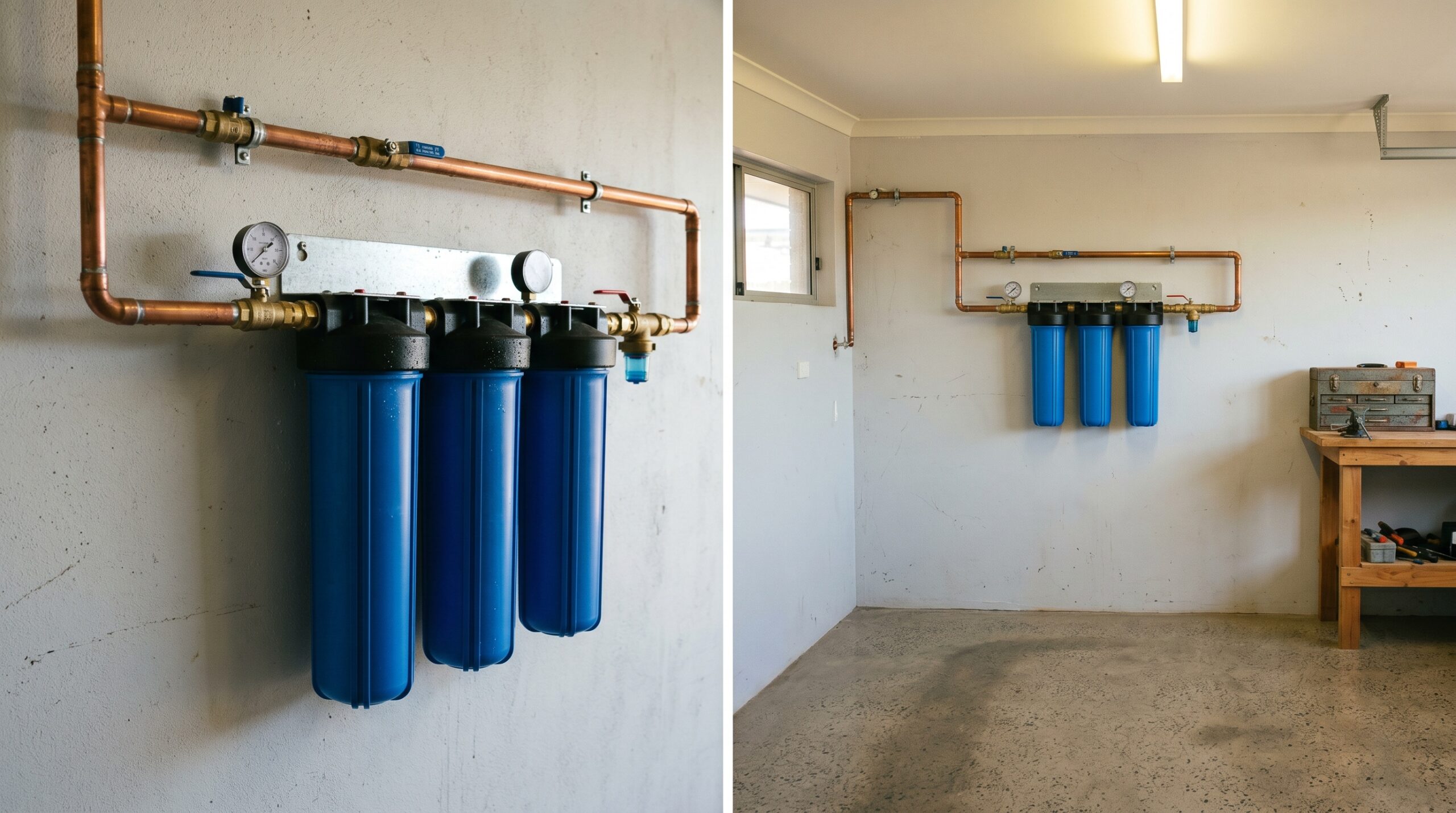
The solution is a two-stage approach. The PWS Water Softener handles whole-home hardness at the mains entry point. A downstream filtration system then addresses TDS, chloramine, and taste at the point of use. Pure Water Systems’ Twin Big White Town Water Package is designed exactly for this — a dual-vessel catalytic carbon and sediment filtration system that handles chloramine (which standard GAC cannot touch) and reduces TDS taste compounds after softening. This combination gives Adelaide households actually soft, clean-tasting water from every tap.
This matters particularly for inner southern suburbs like Morphett Vale, Christie Downs, and Hackham where the water quality varies most with seasonal Murray draw. The best water filter Adelaide guide covers the filtration side in detail — read it alongside this page if TDS and taste are part of your problem.
Alternative: Aquasana EQ-1000-AST-UV

✓ Pros
- No salt — no ongoing consumable cost beyond filter replacements
- UV stage adds disinfection for well water or tank water situations
- Available on Amazon AU with simple delivery
- Rated 1 million litres — lower per-year filter cost than many alternatives
✗ Cons
- Salt-free TAC technology is less reliable at Adelaide’s 140-200 mg/L hardness — does not remove hardness minerals
- Adelaide uses chloramine — confirm carbon media spec before assuming chloramine removal
- Still requires plumber installation at mains entry
The Aquasana suits Adelaide renters who cannot install a permanent whole-home system, or owner-occupiers in suburbs with lower seasonal hardness (closer to 140 mg/L) who want filtration and scale mitigation without the salt commitment. If your hardness is regularly above 175 mg/L — which is common in summer across Adelaide’s northern suburbs including Gawler, Elizabeth, and Salisbury — the PWS salt-based system is the more reliable choice.
NHMRC Compliance Checklist for Adelaide Softener Installs
The NHMRC updated its drinking water guidelines in 2025, with specific revisions to plumbing product leaching standards covering lead, manganese, and other metals. For any whole-home water softener install in Adelaide, run through these points with your licensed plumber before sign-off:
- AS/NZS 4020 compliance: All fittings, bypass valves, and brine tanks that contact drinking water must be tested to AS/NZS 4020. Ask your plumber for the product compliance documentation before installation.
- WaterMark certification: The bypass valve assembly should carry WaterMark certification (or an equivalent certification recognised by SA Water and SA plumbing regulations).
- Brine discharge: Confirm with your local council whether brine discharge is permitted to the sewer in your area. Most Adelaide metropolitan council areas permit sewer discharge — stormwater discharge is prohibited.
- Plumber licence: In South Australia, plumbing work on mains water supply requires a licensed plumber. An unlicensed install voids any manufacturer warranty and may affect your home insurance.
- Post-install flush: After installation, flush the system for at least 15 minutes before returning the supply to household use to clear any debris from the install process.
The ADWG does not set a mandatory hardness limit, but SA Water monitors hardness as part of its aesthetic parameter reporting. If you have specific water quality concerns related to your suburb or street, SA Water publishes suburb-level water quality data — check that page for the most current SA Water reporting for your area.
5-Year Cost Comparison — Adelaide Water Softener Options
| Product | Upfront Cost | Annual Running Cost | 5-Year Total | Notes |
|---|---|---|---|---|
| PWS Water Softener | $3,295 + ~$300 install | ~$130/yr (salt) | ~$4,245 | 10% off with reduces upfront to $2,966 |
| Aquasana EQ-1000-AST-UV | See Amazon + ~$300 install | Filter replacement varies | — | Salt-free; scale prevention only at Adelaide hardness levels |
| No treatment (appliance cost) | $0 | $300-600/yr (descaling, early appliance failure) | $1,500-3,000+ | Scale costs estimated from appliance repair data; hot water system replacement adds $800-2,000 |
The “do nothing” cost is not zero. Hard water scale at 200 mg/L CaCO³ reduces hot water system efficiency and shortens element lifespan. SA Water’s own documentation notes that scale build-up in hot water systems increases energy consumption — typically 5-8% for every 1.5mm of scale. Over five years in an untreated Adelaide home, the cumulative cost of descaling, element replacement, and reduced appliance lifespan often exceeds the upfront cost of a softener.
See the full Australian water softener comparison for detailed cost modelling across a broader range of systems.
Ready to solve Adelaide’s hard water problem?
The PWS Water Softener is the most capable salt-based system for Adelaide’s River Murray hardness. the $3,295 price. For whole-home softening AND filtration, ask Pure Water Systems about the Twin Big White Town Water Package combination.
Last reviewed: May 2026 — Clean and Native
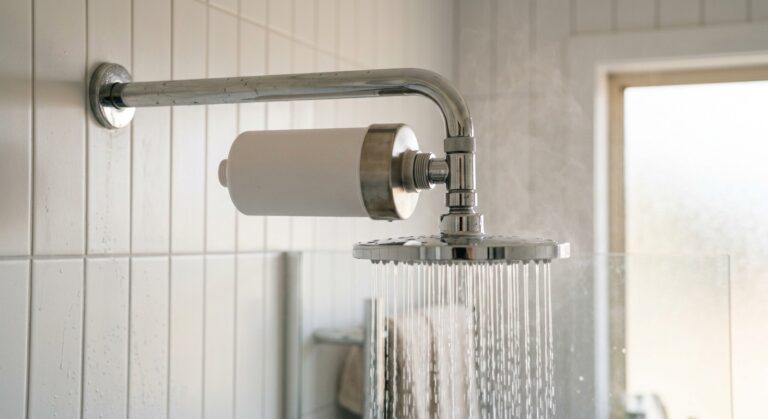
Also filtering your shower water? See our full Best Shower Filter Australia 2026 guide — including the only catalytic carbon option proven effective for chloramine cities.
Frequently Asked Questions
Adelaide tap water hardness ranges from approximately 140 mg/L CaCO³ in winter to 200 mg/L CaCO³ in summer and autumn, depending on the blend of River Murray water, Happy Valley reservoir water, and desalination output. SA Water classifies it as “moderately hard”, though the summer peak regularly approaches the ADWG aesthetic guideline of 200 mg/L CaCO³.
SA Water uses chloramine (not free chlorine) as the primary disinfectant across the Adelaide metropolitan water supply. This is important for filter selection: standard GAC carbon filters remove chloramine at roughly 1/40th the rate they remove free chlorine. For chloramine removal in Adelaide, you need catalytic carbon or reverse osmosis — not a standard Brita-type filter.
No, not on its own. A water softener addresses hardness minerals (calcium and magnesium) by replacing them with sodium. It does not remove chloramine, reduce TDS, or improve taste in any direct sense. Adelaide’s summer TDS of up to 450 mg/L — and the chloramine disinfection — are the main drivers of tap water taste. For taste improvement, you need a catalytic carbon filter or reverse osmosis system downstream of the softener.
No. Ion exchange water softeners do not remove PFAS (per- and polyfluoroalkyl substances). The 2025 NHMRC health guideline values for PFAS in drinking water are very low — PFOA at 0.00007 mg/L, PFOS at 0.00007 mg/L — and removal requires reverse osmosis or activated carbon specifically rated for PFAS. SA Water monitors PFAS across its supply network; current SA Water reporting shows Adelaide metropolitan supply is within NHMRC guideline values, but for PFAS removal certainty, reverse osmosis is the only technology with documented effectiveness.
Yes. In South Australia, any work on the mains water supply including whole-home softener installation requires a licensed plumber. An unlicensed installation may void the product warranty and could affect your home insurance. Budget $200-400 for a licensed plumber in the Adelaide metropolitan area, on top of the softener purchase price.
Adelaide’s primary water source is the River Murray, which varies significantly in flow rate, mineral concentration, and TDS across seasons. In winter and spring, higher rainfall increases Murray flow and dilutes mineral concentration, delivering softer water. By summer and autumn, river flow drops, mineral concentration rises, and the blend from SA Water’s desalination plant cannot fully compensate. The result is that hardness and TDS both peak in the months when Adelaide demand is also highest.
Salt-free TAC (template-assisted crystallisation) systems work by changing the physical form of calcium carbonate rather than removing it. Independent testing shows TAC effectiveness drops off above approximately 120 mg/L CaCO³. At Adelaide’s summer hardness of up to 200 mg/L, salt-free systems are unlikely to provide the same level of scale prevention as salt-based ion exchange. They may reduce scale adhesion to some extent, but they will not produce actually soft water at Adelaide’s hardness levels.
Adelaide has the highest TDS seasonal variation of any Australian capital. TDS ranges from approximately 200 mg/L in winter to 450 mg/L in summer and autumn, depending on the River Murray source blend. The ADWG aesthetic guideline for TDS is 600 mg/L, so Adelaide remains within guidelines, but the elevated TDS is noticeable in taste — particularly above 300 mg/L. A water softener does not reduce TDS; for TDS reduction you need reverse osmosis.
Get the Australian Home Environment Checklist
30 checks across water, air and EMF. Most of them free. Ranked by impact.
No spam. Unsubscribe any time.

Former Royal Australian Navy Clearance Diver and TAG-E counter-terrorism operator. Founded Clean and Native to apply the same rigorous thinking to the home environment.
Full biography →