Extreme Heat Australia 2026: Stay Safe Indoors
Drafted with AI assistance and checked against published specifications and certifications. First-hand measurements appear only where stated. How we make content
Extreme heat kills more Australians than bushfires, cyclones, and floods combined, according to the Australian Red Cross. During a 2026 heatwave, the sealed indoor environment most people retreat to becomes a concentration chamber for volatile organic compounds (VOCs), trapped PM2.5 particulates, and elevated disinfection byproducts in tap water — unless you actively manage air quality, hydration, and electrical load.
This guide covers the three indoor threats that spike during extreme heat events — degraded air, compromised water quality, and increased household EMF — plus the specific equipment and practical steps that fix each one. As a former Navy Clearance Diver who now tests indoor environmental equipment at our Palm Beach lab on the Gold Coast, I approach heat preparedness the same way I approach any operational risk: identify, measure, and eliminate threats in order of severity.
Related: best air purifiers Australia 2026 · best air purifiers for dust Australia · best air purifier for bushfire smoke
Why Extreme Heat Is Australia’s Most Lethal Natural Hazard in 2026
Cyclones, bushfires, and floods dominate the news cycle. But extreme heat has caused more deaths in Australia than all three combined over the past century, according to the Australian Red Cross. The Bureau of Meteorology (BOM) recorded 2024 as one of Australia’s warmest years on record, and BOM’s State of the Climate 2024 report confirms that the frequency and intensity of extreme heat events are increasing, particularly across south-west and south-east Australia.
The cities that bear the worst of it are geographically predictable. Penrith in western Sydney hit 48.9°C in January 2020 — the highest temperature ever recorded in a Sydney metropolitan area. Melbourne’s western and northern suburbs regularly exceed 40°C during January heatwaves, with Laverton and Tullamarine recording some of Victoria’s highest urban temperatures. Adelaide’s northern suburbs — Elizabeth, Salisbury, and Gawler — sit in a natural heat basin that can sustain 42°C+ for multiple consecutive days.
The World Health Organization’s 2024 Heat-Health Action Plan (HHAP) framework identifies indoor environmental quality as a critical but under-addressed component of heat preparedness. Most Australian state heat plans focus on hydration and shelter. They do not address what happens chemically and physically to the air inside your home when you seal every window and run the air conditioner for 72 consecutive hours during a multi-day heat event.
That oversight is the gap this guide fills. Three things change inside your home during extreme heat: the air gets chemically worse, the water gets chemically worse, and your electrical load — and therefore your electromagnetic field exposure — spikes. We address each one in order of impact.
How Extreme Heat Destroys Indoor Air Quality
The universal advice during a heatwave is to stay indoors with the air conditioning running. That advice is correct — but incomplete. Without understanding what happens to your indoor air when you seal up your home at 40°C+, you are solving the thermal problem while creating a respiratory one.
VOC Off-Gassing Doubles With Every 10°C Rise
Volatile organic compounds (VOCs) are gases released from furniture, paint, carpet, adhesives, cleaning products, and composite building materials. According to research published in the journal Environmental Science & Technology, VOC emission rates roughly double for every 10°C increase in temperature. This is a well-established relationship in building science, governed by the Arrhenius equation applied to material outgassing.
In practical terms: when your home’s interior rises from 22°C to 32°C during a heatwave — even with air conditioning struggling to keep up — the furniture, flooring, and cabinetry in your rooms release measurably more formaldehyde, benzene, toluene, and xylene into the air. The CSIRO Indoor Air Quality programme has identified formaldehyde concentrations in new Australian homes exceeding the NHMRC guideline of 0.1 mg/m³ under normal conditions. During sustained heat events, those concentrations climb higher.
New-build suburbs are disproportionately affected. Homes in Oran Park and Marsden Park (western Sydney), Tarneit and Wyndham Vale (western Melbourne), and Springfield and Ripley (south-west Brisbane) contain higher volumes of new synthetic materials, engineered timber products, and adhesives. These off-gas aggressively when heated. If your home is less than five years old and you are sealed inside during 40°C+ heat, your formaldehyde exposure is elevated compared to an older, well-ventilated home with fewer synthetic materials.
Sealed Homes Trap PM2.5, Ozone, and Cooking Particulates
When you close every window and door during a heatwave, your air exchange rate drops to near zero. Any particulates already inside — PM2.5 from cooking, cleaning products, incense, candles, or outdoor infiltration before you sealed up — stay trapped. They recirculate through your home with no dilution path.
Ground-level ozone also spikes during heatwaves. According to NSW DPIE air quality monitoring stations, ground-level ozone in Sydney’s western suburbs regularly exceeds the National Environment Protection Measure (NEPM) 8-hour average standard of 0.065 ppm during sustained heat events. Ozone forms via photochemical reactions between nitrogen oxides (NOx) and VOCs in sunlight — conditions that heatwaves amplify. Once ozone infiltrates through gaps in your building envelope (door seals, window frames, exhaust vents), it becomes trapped inside your sealed home.
Ozone is a powerful respiratory irritant. At concentrations above 0.05 ppm, it causes airway inflammation, coughing, and reduced lung function, according to the WHO Air Quality Guidelines 2021. Children, elderly people, and anyone with asthma or COPD are at highest risk.
Your Air Conditioner Recirculates — It Does Not Filter
This is the most widely misunderstood aspect of indoor air quality during heat events. Your ducted or split-system air conditioner uses a mesh filter designed to protect the unit’s evaporator coils from large debris. It is engineered for the unit’s benefit, not yours. A standard residential AC filter captures particles above roughly 10 microns. PM2.5 — the fine particulate matter that penetrates deepest into lung tissue and enters the bloodstream — passes straight through.
During a multi-day heatwave, your AC is recirculating the same VOC-laden, PM2.5-contaminated, ozone-containing air through your home hour after hour. It cools you thermally while doing nothing about the chemical and particulate load you are breathing. In homes with ducted systems, the ductwork itself can harbour dust, mould spores, and allergens that get redistributed every time the system cycles on.
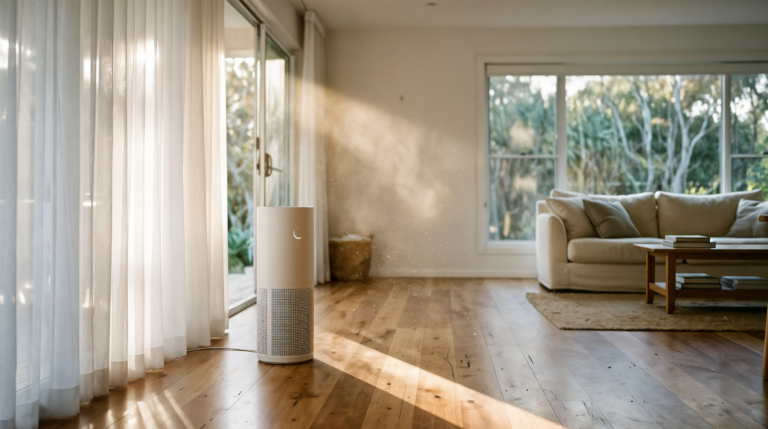
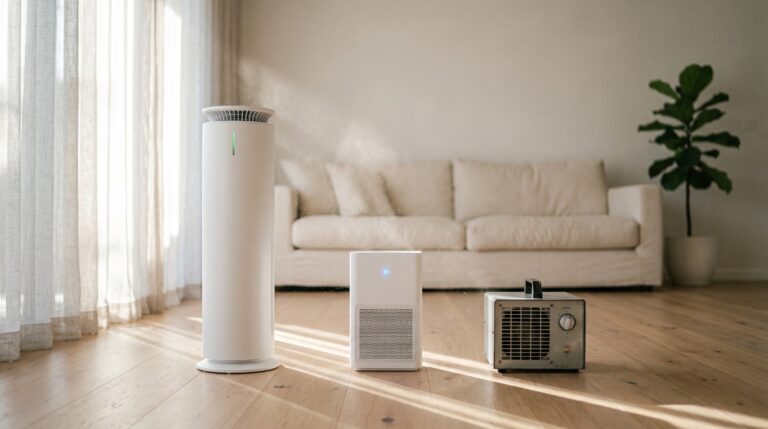
The fix is not a better AC filter. The fix is a standalone H13 HEPA air purifier with an activated carbon stage. H13 HEPA filtration captures 99.97% of particles at 0.3 microns — including PM2.5, PM1.0, pollen, mould spores, and smoke particles. The activated carbon stage adsorbs gaseous pollutants: VOCs, formaldehyde, and ozone. For a sealed Australian home during a heatwave, a quality HEPA purifier is not a luxury — it is the difference between breathing clean air and breathing a concentrated chemical soup.
The Right Equipment: Air Purifiers for Extreme Heat
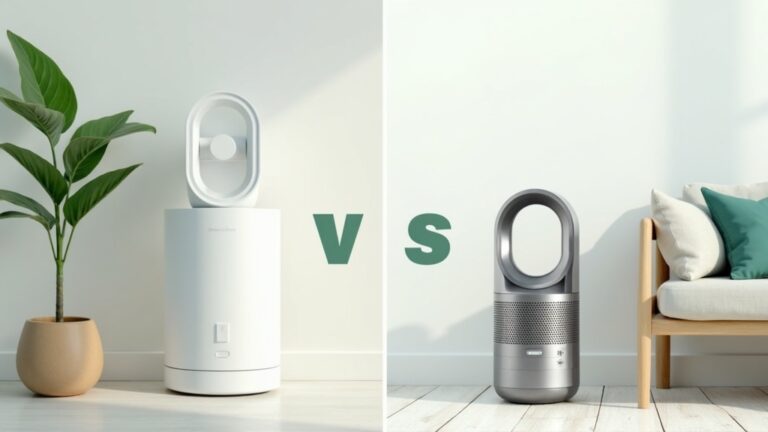
Not every air purifier is suitable for a sealed heatwave environment. You need three things: high Clean Air Delivery Rate (CADR) to match Australian room sizes, genuine H13 HEPA filtration (not “HEPA-type” or “HEPA-style” marketing), and a meaningful activated carbon bed for VOC and ozone adsorption. Here are the two units I recommend based on specification analysis.
Breville Protect Max — Top Pick for Main Living Areas
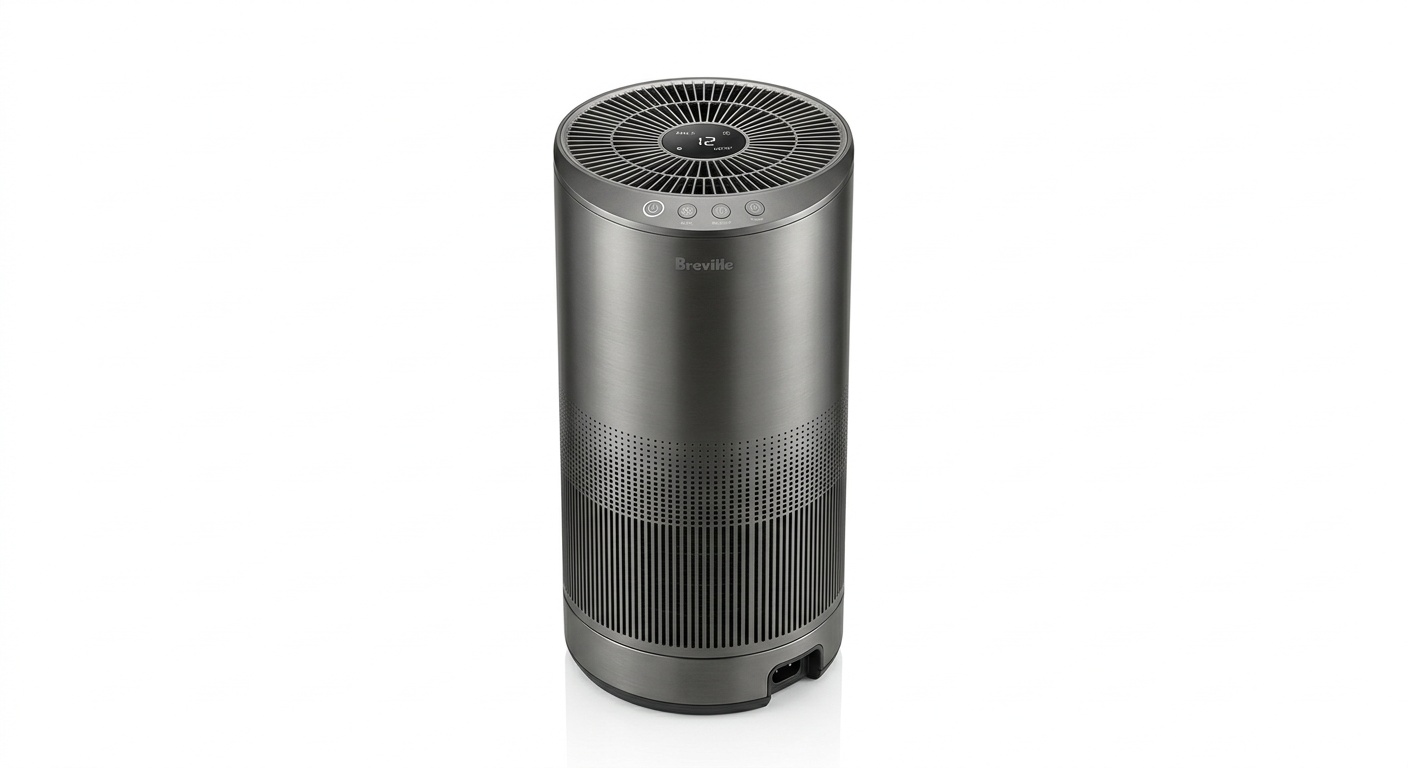
The Breville Protect Max is well suited to the main living area during summer. At 550 CADR, it delivers enough air exchanges per hour to service a room up to approximately 40 square metres — which covers the typical open-plan kitchen-living area in most Australian homes built after 2000.
The activated carbon bed is what makes it relevant for heatwave conditions specifically. A HEPA-only unit captures particles but does nothing about the VOCs, formaldehyde, and ozone that spike during extreme heat. The Breville’s carbon stage adsorbs these gaseous pollutants. The built-in PM2.5 laser sensor automatically adjusts fan speed when particulate levels rise — useful when cooking in a sealed home or when outdoor smoke infiltrates during concurrent bushfire seasons.
At 24 dB on sleep mode, it is quieter than a whisper. During a multi-day heatwave where you are sleeping with the air conditioner running, adding a HEPA purifier that you cannot hear is the practical standard. Anything louder than 30 dB and people switch it off overnight — defeating the purpose entirely.
The limitation: at ~$468, it is not the cheapest option. For bedrooms or smaller rooms, the Levoit below is a more cost-effective choice. For your main living area during a heatwave, the Breville’s CADR and carbon bed are worth the premium.
For a full comparison against other top units, see our best air purifier Australia 2026 guide.
Levoit Core 400S — Best Value for Bedrooms and Second Rooms
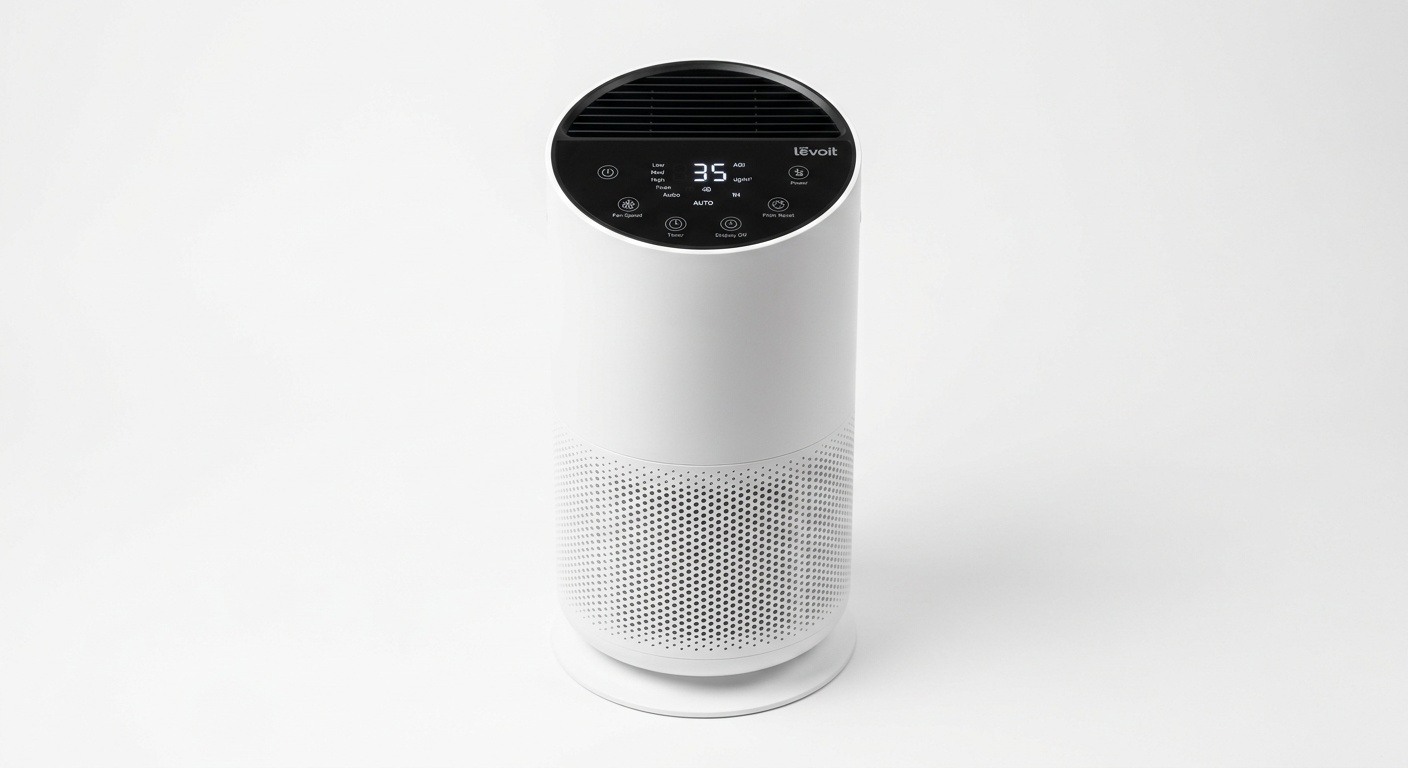
The Levoit Core 400S is the unit I recommend when people ask about a second purifier for the bedroom or when budget is the primary constraint. It uses the same H13 HEPA + activated carbon filtration combination as the Breville, but at a lower CADR — making it ideal for rooms up to approximately 30 square metres rather than the 40+ square metre coverage of the Protect Max.
The smart app control (via VeSync) lets you schedule the unit to ramp up before you enter the bedroom — useful during heatwaves when you want the air pre-cleaned by the time you go to sleep. It also integrates with Alexa and Google Home if you use voice control, though I would note that keeping a smart speaker in the bedroom introduces a Wi-Fi transmitter at close range. If EMF is a concern, use the physical controls and schedule via the app from another room.
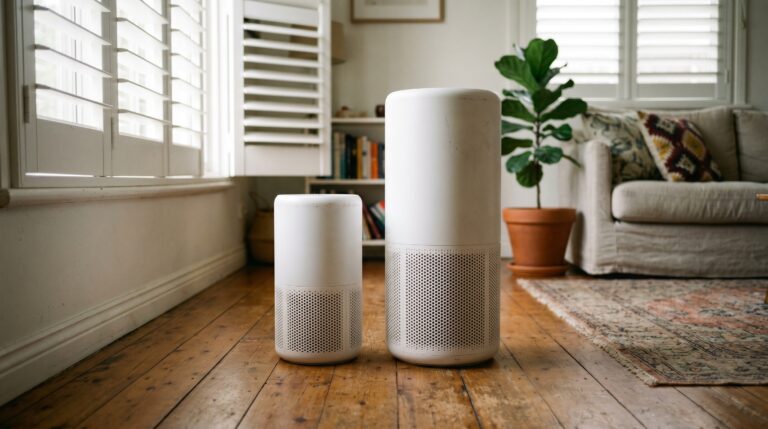
At ~$349, it costs roughly $120 less than the Breville Protect Max. For a household equipping multiple rooms during summer, the practical strategy is Breville in the main living area and Levoit in the primary bedroom. That covers the two spaces where Australians spend the most time during a sealed-up heatwave.
Air Purification
Ventilation handles the source. A HEPA filter handles what is already in the air.
For particulates, VOCs, and bushfire smoke, a HEPA air purifier sized correctly for your room is the most reliable active intervention. We have ranked the top options for Australian homes.
See the Air Purifier Guide →How Extreme Heat Affects Your Tap Water Quality
Air quality is the primary indoor threat during a heatwave, but your tap water quality also degrades — through chemistry most people never consider. Understanding this is especially important because the standard advice during extreme heat is to drink more water. If that water carries elevated disinfection byproducts, you are solving dehydration while increasing your chemical exposure.
Heat Accelerates Disinfection Byproduct Formation
Disinfection byproducts (DBPs) form when the disinfectant used in municipal water treatment — either free chlorine or chloramine — reacts with natural organic matter (NOM) in the water. The two most regulated classes are trihalomethanes (THMs) and haloacetic acids (HAAs). According to the Australian Drinking Water Guidelines (ADWG 2024), the guideline value for total THMs is 0.25 mg/L.
Here is what most people miss: DBP formation is temperature-dependent. Higher water temperatures accelerate the reaction between disinfectant and organic matter. During a sustained heatwave, reservoir water temperatures rise, treated water sits in distribution pipes that absorb heat from the surrounding ground, and the end result is higher THM and HAA concentrations at your tap. Research published in the Journal of Water and Health (WHO peer-reviewed journal) has documented that DBP concentrations can increase by 20–40% during summer heat events compared to winter baseline levels.
The disinfection type matters. In chloramine cities — Brisbane and the SEQ region, Sydney, Adelaide, Gold Coast, and Darwin — the chloramine itself is more stable at high temperatures than free chlorine, which means it persists longer in the distribution network. However, chloramine produces its own class of byproducts: N-nitrosodimethylamine (NDMA) and iodinated DBPs, which some toxicological studies have flagged as potentially more harmful than chlorinated DBPs at equivalent concentrations.
In free chlorine cities — Melbourne, Hobart, Canberra, Cairns, and Toowoomba — the chlorine breaks down faster in heat, which reduces residual disinfectant at the tap. Water utilities sometimes respond by increasing chlorine dosing during heatwaves to maintain adequate disinfection through the distribution system, which paradoxically increases DBP formation potential.
The practical implication: during a heatwave, when you are told to drink more water, the water itself may contain elevated DBPs. Activated carbon filtration (catalytic carbon for chloramine cities, standard GAC for free chlorine cities) effectively reduces THMs and many other DBPs. Reverse osmosis removes them almost entirely. For a deeper dive on testing your specific tap water, see our guide on water filtration for Australian homes.
Practical Water Actions During a Heatwave
You do not need to buy a new water filter system during a heatwave. But if you already have one, this is when it matters most. And if you do not have one, understanding what is in your water during extreme heat may be the motivation to act.
- If you have an activated carbon filter (undersink or benchtop): run it. This is when it earns its cost. Carbon adsorbs THMs and chloroform effectively. In chloramine cities, ensure your filter uses catalytic carbon, not standard GAC — standard GAC removes chloramine at approximately 1/40th the rate.
- If you have a reverse osmosis system: this is your best protection. RO membranes reject THMs, HAAs, and most other DBPs at rates above 90%, according to NSF/ANSI 58 testing protocols.
- If you have no filter: run your cold tap for 30–60 seconds before filling a glass, especially first thing in the morning. Water that has sat in pipes overnight in a hot home will have higher DBP concentrations than freshly flushed water. Store filtered or flushed water in glass containers in the fridge — cold storage slows further DBP formation.
- Hydration priority: even with elevated DBPs, the risk of dehydration during extreme heat far outweighs the risk of DBP exposure from tap water. Drink the water. But if you can filter it, filter it.
Electrical Load and EMF During Extreme Heat
This is the tertiary concern — less immediately dangerous than air and water quality, but worth understanding for anyone already managing their home EMF environment. During a heatwave, your household electrical load spikes. Multiple air conditioners, fans, the fridge working harder, HEPA purifiers running continuously, and devices charging — all of it increases the AC magnetic fields in your home.
According to ARPANSA, Australia’s radiation protection authority, the general public exposure limit for 50 Hz magnetic fields is 1,000 µT — a thermal-safety standard. The precautionary Building Biology SBM-2015 guidelines recommend sleeping areas stay below 0.2 µT. During a heatwave with everything running, bedside magnetic field levels in a typical home can climb above the Building Biology 0.2 µT sleeping-area guideline due to the combination of split-system AC units, a fridge cycling frequently, and multiple power boards under load.
The highest-impact, lowest-cost action is a mechanical outlet timer on your Wi-Fi router. Scheduling the router off during sleep hours (e.g. 11 PM – 6 AM) eliminates the largest RF source in most bedrooms. At under $20, it is the best return-on-investment EMF action available. It also works during heatwaves as a forced digital curfew — which, given that screens and stress compound heat-related sleep disruption, has behavioural benefits beyond EMF reduction.
If your bedroom shares a wall with a smart meter (Ausgrid in NSW, Energex in QLD — both use 900 MHz mesh network meters), and your AC unit is on the exterior wall above the smart meter, the combined EMF from both sources can be significant. The practical fix is free: move your bed to an interior wall. Measure first with a basic EMF meter if you want to confirm — but the intervention costs nothing.
The Extreme Heat Indoor Survival Checklist — 2026
This is the actionable section. Print it out, stick it on the fridge, and work through it before the next forecast heatwave. Actions are ranked by impact — the first items make the biggest difference.
🔥 Before the Heatwave Hits (24–48 Hours Out)
| ☐ | Position your HEPA purifier. Place it in your main living area with 30 cm clearance around intake. Set to auto mode so it ramps when PM2.5 rises from cooking or infiltration. (Breville Protect Max for rooms up to 40 m²; Levoit Core 400S for bedrooms.) |
| ☐ | Check your AC filter. Pull the mesh filter from your split-system or ducted unit. If it is visibly clogged with dust, wash or vacuum it. A clogged AC filter reduces airflow, makes the unit work harder, and increases power consumption — worsening both cooling performance and EMF exposure. |
| ☐ | Pre-filter water. If you have an undersink or benchtop carbon filter, fill glass containers with filtered water and refrigerate. Cold-stored filtered water has lower DBPs and is immediately available for drinking without waiting for the filter flow rate. |
| ☐ | Set up your router timer. Plug your Wi-Fi router into a mechanical outlet timer set to cut power from 11 PM – 6 AM. Removes the strongest RF source in most bedrooms during sleep. |
| ☐ | Move the bed. If your bed is against an exterior wall that shares a smart meter or AC compressor, move it to an interior wall. Free action, immediate EMF reduction. |
🌡️ During the Heatwave (Daily Actions)
| ☐ | Keep the HEPA purifier running 24/7. Do not switch it off to save power. A HEPA purifier uses 30–60 watts — roughly the same as a light bulb. Your AC uses 1,500–3,000 watts. The purifier’s power cost is negligible; its health benefit is not. |
| ☐ | Use the range hood when cooking. In a sealed home, cooking is the single largest source of PM2.5. Run your range hood on high for at least 15 minutes after cooking finishes. If you do not have a ducted range hood (recirculating models only), rely on the HEPA purifier to capture cooking particulates — position it within 3 metres of the cooktop. |
| ☐ | Flush taps before drinking. Run the cold tap for 30–60 seconds before filling a glass, especially first thing in the morning. This clears water that has sat in hot pipes overnight, reducing DBP exposure. |
| ☐ | Avoid adding chemical load. Do not use aerosol sprays, scented candles, air fresheners, or oil diffusers during a sealed-up heatwave. Every aerosolised chemical you release into a sealed room stays in the air until the HEPA purifier captures it or you ventilate. |
| ☐ | Ventilate strategically. If overnight temperatures drop below 25°C (check BOM forecast), open windows for 30 minutes at dawn to flush accumulated VOCs and CO₂. Close everything again before the temperature rises above 28°C. This window of opportunity exists in most Australian cities except during the most extreme multi-day events. |
| ☐ | Hydrate with cold filtered water. The NHMRC recommends adults drink 2.6 L (men) or 2.1 L (women) per day under normal conditions. During extreme heat, add 500 mL–1 L. Drink from the pre-filtered, refrigerated supply you prepared. Cold water absorbs faster and reduces core body temperature more effectively than room-temperature water. |
✅ After the Heatwave Breaks
| ☐ | Full ventilation. Open every window and door for at least 2 hours. Flush accumulated VOCs, CO₂, and stale air from the entire house. Let the HEPA purifier run during this flush — it will capture any outdoor particulates that enter while you ventilate. |
| ☐ | Check your HEPA filter indicator. If your purifier ran continuously for 3+ days during extreme heat, the filter may have processed significantly more particulate load than normal. Check the filter life indicator and replace if below 20%. |
| ☐ | Clean AC coils and filters. After a sustained heatwave, your AC has been working at maximum capacity. Clean or replace the mesh filter and consider a professional coil clean if the unit has been running continuously for multiple days. |
Suburb-by-Suburb Heat Vulnerability — Where the Risk Is Highest
Not all Australian suburbs face equal heat risk. Urban heat island effects, geographical basins, and building density create extreme variation even within the same city.
| City | Highest-Risk Suburbs | Peak Temp Record | Water Disinfection |
|---|---|---|---|
| Sydney | Penrith, Richmond, Badgerys Creek, Marsden Park | 48.9°C (2020) | Chloramine |
| Melbourne | Laverton, Tullamarine, Craigieburn, Werribee | 46.4°C (2009) | Free chlorine |
| Adelaide | Elizabeth, Salisbury, Gawler, Parafield Gardens | 46.1°C (2019) | Chloramine |
| Perth | Midland, Jandakot, Pearce, Rockingham | 44.0°C (2016) | Chloramine |
| Brisbane | Ipswich, Logan, Gatton, Archerfield | 43.2°C (2004) | Chloramine |
| Darwin | Entire metro area (tropical, sustained heat + humidity) | 38.4°C (2019) | Chloramine |
The urban heat island effect adds 2–8°C to temperatures in built-up areas compared to surrounding rural areas, according to CSIRO urban climate research. Suburbs with large amounts of asphalt, concrete, and minimal tree canopy — like the new-build corridors of western Sydney and western Melbourne — experience the most extreme temperatures. These are also the suburbs with the newest homes, which contain the highest concentration of off-gassing materials.
If you live in one of these high-risk suburbs, the checklist above is not optional. A HEPA purifier in your main living area is as important as your air conditioner during a 40°C+ event. If you are in a dusty suburb, you face compound risk: heat-driven VOCs plus elevated dust particulates from construction activity in growth corridors.
Concurrent Threats: When Bushfire Smoke Meets Extreme Heat
Australia’s bushfire season (October–March in NSW, VIC, and QLD) overlaps directly with extreme heat season. This is not a coincidence — the same atmospheric conditions that produce heatwaves also produce bushfire conditions. And when bushfire smoke arrives during a heatwave, you face a compound indoor air threat: elevated VOCs from heat plus PM2.5 from smoke infiltration.
During the 2019–2020 Black Summer bushfire season, Sydney’s PM2.5 concentrations exceeded the NEPM standard of 25 µg/m³ (24-hour average) on multiple consecutive days, reaching peaks above 500 µg/m³ in parts of western Sydney according to NSW DPIE monitoring data. That is more than 20 times the safe limit. Residents were sealed inside homes that were simultaneously experiencing heatwave temperatures.
If you are shopping for an air purifier with heat preparedness in mind, this concurrent bushfire scenario is the strongest argument for prioritising a unit with a large activated carbon bed — not just HEPA. The HEPA stage handles the smoke particulates. The carbon stage handles the VOCs that spike from both heat-driven off-gassing and bushfire smoke chemistry (which contains its own complex VOC profile including benzene, acrolein, and polycyclic aromatic hydrocarbons).
The Breville Protect Max handles both. The Levoit Core 400S handles both. Either one running in a sealed room during a bushfire-smoke-plus-heatwave event is the single most important piece of equipment you own after your air conditioner itself. For our complete assessment, see the best air purifier for bushfire smoke guide.
What to do about your indoor air.
Our indoor air quality guide covers the hierarchy of fixes — from free (ventilation) to practical (air purifiers) — ranked by impact and cost for Australian homes.
Air Quality Guide →Last reviewed: July 2026 — Clean and Native
Frequently Asked Questions — Extreme Heat and Indoor Air Quality
Does extreme heat make indoor air quality worse?
Yes. VOC emission rates from furniture, paint, carpet, and building materials roughly double for every 10°C increase in temperature, according to research in Environmental Science & Technology. Sealing your home during a heatwave traps these elevated VOCs alongside PM2.5 from cooking and outdoor infiltration, creating significantly worse indoor air than normal conditions.
Does my air conditioner filter the air?
No. Standard residential AC filters capture particles above approximately 10 microns to protect the unit’s coils. PM2.5 — the fine particulate that causes the most respiratory harm — passes straight through. Your AC cools the air but recirculates the same unfiltered, VOC-laden air repeatedly. A standalone H13 HEPA purifier is required for actual air filtration.
What size air purifier do I need for a heatwave?
Match the CADR (Clean Air Delivery Rate) to your room size. For a standard Australian open-plan living area of 35–40 square metres, a purifier with at least 500 CADR provides adequate air exchanges. The Breville Protect Max at 550 CADR covers this. For bedrooms (15–25 m²), a unit with 300+ CADR like the Levoit Core 400S is sufficient.
Does extreme heat affect tap water quality in Australia?
Yes. Higher water temperatures accelerate the formation of disinfection byproducts (DBPs) including trihalomethanes and haloacetic acids. Research published in the Journal of Water and Health documents DBP concentration increases of 20–40% during summer heat events compared to winter. This affects both chloramine cities (Brisbane, Sydney, Adelaide, Gold Coast) and free chlorine cities (Melbourne, Hobart).
Should I run my air purifier 24/7 during a heatwave?
Yes. A HEPA air purifier uses 30–60 watts — roughly the same as a single light bulb. The electricity cost is negligible (approximately $0.15–$0.30 per day at average Australian electricity rates). During a sealed-up heatwave, the purifier needs to run continuously to keep pace with ongoing VOC off-gassing and PM2.5 from cooking.
Which Australian suburbs face the worst extreme heat?
Penrith in western Sydney recorded 48.9°C in 2020 — the highest temperature recorded in a Sydney metropolitan area. Western Melbourne suburbs (Laverton, Tullamarine, Werribee), northern Adelaide (Elizabeth, Salisbury, Gawler), and Ipswich/Logan west of Brisbane all face extreme urban heat island effects, adding 2–8°C above surrounding rural areas according to CSIRO research.
Can I open windows at night during a heatwave?
Only if the overnight temperature drops below 25°C. Check the BOM forecast. If it does, open windows for 30 minutes at dawn to flush accumulated VOCs and CO₂, then close everything before the outside temperature exceeds 28°C. During the most extreme multi-day events, overnight temperatures may stay above 25°C and this window does not exist — making continuous HEPA filtration even more critical.
What should I avoid doing indoors during extreme heat?
Do not use aerosol sprays, scented candles, air fresheners, incense, or essential oil diffusers in a sealed home during a heatwave. Every aerosolised chemical you release stays trapped in your indoor air until the HEPA purifier captures it or you ventilate. Also avoid unnecessary cooking without the range hood running — frying and grilling produce the highest PM2.5 emissions of any indoor activity.
Does a HEPA air purifier remove bushfire smoke during a heatwave?
Yes. H13 HEPA filters capture 99.97% of particles at 0.3 microns, which includes the PM2.5 that constitutes the most harmful fraction of bushfire smoke. Units with activated carbon stages (like the Breville Protect Max and Levoit Core 400S) also adsorb gaseous VOCs from smoke chemistry, including benzene and acrolein. During concurrent bushfire-plus-heatwave events, this dual-stage filtration is essential.
How much does it cost to run a HEPA air purifier during a heatwave?
Between $0.15 and $0.30 per day at average 2026 Australian electricity rates (approximately 33 cents per kWh). Most HEPA purifiers draw 30–60 watts on medium settings. Running one 24/7 for a week-long heatwave costs approximately $1.50–$2.10 in electricity. Compare this to your split-system AC, which draws 1,500–3,000 watts and costs $12–$24 per day to run continuously.
Last reviewed: July 2026. Heat event data sourced from Bureau of Meteorology and Australian Red Cross. Air quality data from NSW DPIE monitoring network. Confirm product specifications before purchase.
Get the Australian Home Environment Checklist
30 checks across water, air and EMF. Most of them free. Ranked by impact.
No spam. Unsubscribe any time.

Former Royal Australian Navy Clearance Diver and TAG-E counter-terrorism operator. Founded Clean and Native to apply the same rigorous thinking to the home environment.
Full biography →