Xiaomi Air Purifier 4 Pro vs Levoit Core 600S Australia
The Levoit Core 600S is the stronger choice for most Australian households. It delivers a certified CADR of 410 m³/h (smoke), ships from Australian warehouses with local warranty support, and operates at 26 dB on its lowest speed — quieter than a bedroom at night. The Xiaomi Smart Air Purifier 4 Pro offers a higher peak CADR of 500 m³/h and a lower price point, but Australian availability is inconsistent, warranty support runs through international channels, and the OLED display panel and Mi Home app ecosystem require more setup effort for Australians already embedded in Alexa or Google Home. Both use H13 HEPA filtration. This article — built using our documented methodology — breaks down every specification, cost, and Australian-specific consideration so you can decide in under ten minutes.
The Levoit Core 600S is the better buy for Australian homes. It combines a 410 m³/h smoke CADR with 26 dB sleep mode, VeSync app control, and genuine AU retail support through Amazon AU. The Xiaomi Smart Air Purifier 4 Pro has a higher raw CADR (500 m³/h) and a lower sticker price (~$349-$399 AUD when available), but limited Australian stock, no local warranty infrastructure, and higher ongoing filter costs erode that advantage. For bushfire smoke season in NSW, VIC, and QLD, the Levoit’s consistent Australian availability and proven after-sales support matter more than peak airflow numbers on a spec sheet.
Key catches
- Xiaomi AU stock is unpredictable — Amazon AU listings frequently show “Currently unavailable” or ship from overseas with 2-4 week delays
- Xiaomi replacement filters cost ~$79-$99 AUD and must often be sourced internationally; Levoit filters are $69-$79 AUD on Amazon AU with Prime delivery
- Neither unit removes formaldehyde at rates meaningful for Australian building standards — if that is your concern, look at units with specific formaldehyde-decomposition catalysts
- The Levoit Core 600S is listed at $599 AUD on Amazon AU but frequently drops to $449-$499 during sales events
| Spec | Levoit Core 600S | Xiaomi 4 Pro | What It Means |
|---|---|---|---|
| CADR (smoke) | 410 m³/h | 500 m³/h | Xiaomi clears smoke faster in large rooms |
| Coverage (mfr claim) | Up to 63 m² | Up to 60 m² | Near-identical real-world coverage |
| Noise (lowest) | 26 dB | 32.1 dB | Levoit is noticeably quieter for bedroom use |
| Filter type | H13 HEPA + carbon | H13 HEPA + carbon | Both capture 99.97% at 0.3 µm |
| Smart app | VeSync (iOS/Android) | Mi Home / Xiaomi Home | VeSync more reliable for AU users; Mi Home needs region config |
| Voice assistant | Alexa, Google Home | Alexa, Google Home, HomeKit (via Mi Home) | Xiaomi adds Apple HomeKit — an edge for iPhone households |
| AU price (typical) | $599 (often $449-$499 on sale) | $349-$399 (when in stock) | Xiaomi cheaper upfront — but see filter cost section |
| AU warranty | 2 years, AU-based support | 1 year, international support | Levoit warranty is enforceable under ACL |
| Filter replacement | ~$69-$79 AUD (Amazon AU) | ~$79-$99 AUD (often import) | Levoit filters are easier and cheaper to source locally |
| Weight | 7.3 kg | 6.8 kg | Both portable enough to move between rooms |
✓ Choose the Levoit Core 600S if
- You want guaranteed Australian stock with Prime delivery and local warranty support
- You need a bedroom-grade purifier — 26 dB sleep mode is 6 dB quieter than the Xiaomi
- You already use VeSync app or Google Home/Alexa and want a simple setup
- You live in NSW, VIC, or QLD bushfire corridors and need reliable filter resupply year after year
- You prefer to avoid region-locking headaches with the Mi Home app
× Choose the Xiaomi 4 Pro if
- You are already in the Xiaomi/Mi Home ecosystem and want unified smart home control
- You need Apple HomeKit compatibility and are comfortable sourcing replacement filters online
- Budget is the primary constraint and you can find AU stock at $349-$399
- You want the OLED touchscreen display for at-a-glance PM2.5 and filter life readings
- You are comfortable with international warranty and troubleshooting via overseas support
Why This Comparison Matters for Australian Buyers
If you search for “Xiaomi air purifier vs Levoit” from an Australian IP address, you get results written for American and British markets. The pricing is in USD or GBP. The availability assumptions are wrong. The warranty structures do not apply. And nobody tells you the single most important fact for an Australian buyer: can you actually purchase this unit and its replacement filters from an Australian retailer with enforceable consumer protection under the Australian Consumer Law (ACL)?
For the Levoit Core 600S, the answer is yes. It is sold directly on Amazon AU with a 2-year manufacturer warranty, and Levoit has an Australian support channel. Replacement filters are stocked on Amazon AU with Prime delivery. If the unit fails within warranty, you have a local returns process.
For the Xiaomi Smart Air Purifier 4 Pro, the answer is complicated. Xiaomi sells phones, wearables, and some home products through Australian retail channels (JB Hi-Fi, The Good Guys). But the air purifier range has inconsistent AU distribution. As of mid-2026, Amazon AU listings for the Xiaomi 4 Pro frequently show “Currently unavailable” or ship from international warehouses with 2-4 week delivery windows. That means no local warranty, no easy returns, and filter replacements that require international shipping.
This matters more than CADR numbers. A purifier you cannot get filters for is a $400 paperweight. A warranty you cannot enforce is not a warranty. These are the practical realities this comparison addresses — not just which spec sheet looks better.
Filtration Performance: CADR, H13 HEPA, and What the Numbers Mean
Both the Xiaomi Smart Air Purifier 4 Pro and the Levoit Core 600S use H13 HEPA filters, which according to the EN 1822 standard capture 99.97% of particles at 0.3 micrometres. This is the particle size that is hardest to filter — the Most Penetrating Particle Size (MPPS). Anything larger or smaller is actually caught more efficiently. So when you see “H13 HEPA”, you are looking at a tested, standardised performance floor, not a marketing claim.
Where the two units diverge is in Clean Air Delivery Rate (CADR) — the volume of filtered air delivered per hour, measured in cubic metres. According to Xiaomi’s published specifications, the Smart Air Purifier 4 Pro delivers a CADR of 500 m³/h. According to Levoit’s published specifications, the Core 600S delivers a CADR of 410 m³/h (smoke). That is a 22% advantage for the Xiaomi on raw airflow.
Does Higher CADR Actually Matter in Your Room?
CADR is measured under laboratory conditions in a sealed test chamber. In your home, the real question is: how many air changes per hour (ACH) does the unit deliver in your specific room? The AHAM recommendation for allergy sufferers is a minimum of 4.8 ACH. Here is what that looks like for common Australian room sizes:
| Room Size | Volume (2.7m ceiling) | Levoit 600S ACH | Xiaomi 4 Pro ACH | Both Adequate? |
|---|---|---|---|---|
| Bedroom (16 m²) | 43.2 m³ | 9.5 | 11.6 | Yes — both well above 4.8 minimum |
| Living room (30 m²) | 81 m³ | 5.1 | 6.2 | Yes — both adequate |
| Open-plan kitchen/living (50 m²) | 135 m³ | 3.0 | 3.7 | Neither hits 4.8 — consider a larger unit or two units |
| Open-plan (65 m²) | 175.5 m³ | 2.3 | 2.8 | No — both undersized. Consider higher-CADR units |
The calculation: ACH = CADR ÷ room volume. For rooms under 40 m² (the typical Australian master bedroom or study), both purifiers deliver well above the 4.8 ACH threshold. The Xiaomi’s 22% CADR advantage only becomes meaningful in larger open-plan spaces — and even there, neither unit truly copes. For the vast majority of Australian bedrooms and medium living rooms, the CADR difference between these two units is academic.
Activated Carbon and VOC Removal
Both units include an activated carbon layer for volatile organic compound (VOC) and odour removal. Neither manufacturer publishes a standardised activated carbon weight or a specific toluene CADR. According to Levoit’s published specifications, the Core 600S uses a “3-in-1” composite filter with a dedicated carbon layer. According to Xiaomi’s published specifications, the 4 Pro uses a similar layered filter with an activated carbon segment. Without standardised carbon mass data, it is impossible to declare either unit superior for gas-phase filtration based on manufacturer claims alone.
What can be said: both carbon stages will reduce cooking odours, mild paint fumes, and general household VOCs. Neither is designed for heavy industrial gas-phase filtration. If your primary concern is formaldehyde off-gassing from new furniture or renovations — common in new Australian homes built to tight NCC 2022 standards — neither unit provides a specialised formaldehyde-decomposition catalyst. That requires a different technology class entirely.
Noise Levels: Why the Levoit Wins the Bedroom
You sleep with this machine running 20 centimetres from your head. Noise is not a secondary consideration — it is the single specification that determines whether you will actually use the purifier every night or turn it off at 2 AM because it is annoying you.
According to Levoit’s published specifications, the Core 600S produces 26 dB on its lowest fan speed (Sleep Mode). According to Xiaomi’s published specifications, the Smart Air Purifier 4 Pro produces 32.1 dB on its lowest setting. That 6 dB difference is not trivial. In acoustic terms, every 6 dB increase represents a perceived doubling of loudness. The Levoit at 26 dB sits below the threshold of a quiet bedroom (typically 30 dB according to the WHO Night Noise Guidelines for Europe). The Xiaomi at 32.1 dB sits above that threshold.
For context: a whisper at one metre is approximately 30 dB. A quiet suburban Australian bedroom at night (no traffic, windows closed) registers around 28-32 dB. The Levoit Core 600S on Sleep Mode will be inaudible in most Australian bedrooms. The Xiaomi 4 Pro on its lowest setting will produce a faint but perceptible hum — enough to bother light sleepers, particularly in the quiet suburbs of Brisbane’s bayside, Adelaide’s eastern suburbs, or Melbourne’s inner-east where ambient noise is already low.
Maximum Speed Noise
On maximum fan speed — which you will use during bushfire smoke events or after cooking — the Levoit Core 600S reaches approximately 55 dB according to manufacturer specifications, and the Xiaomi 4 Pro reaches approximately 64.5 dB. At maximum speed, both are too loud for comfortable sleeping. The strategy is to run on high speed when you leave the room (or before bed to purge smoke), then drop to Sleep Mode when you get in. This is where the Levoit’s superior low-speed noise floor pays off: you get a meaningful clean-air pre-charge on high, then silence when it counts.
Smart Features: VeSync vs Mi Home for Australian Users
Both purifiers connect to your home Wi-Fi and offer app-based control. But the experience of setting them up and using them in Australia is materially different.
Levoit Core 600S: VeSync App
The Levoit Core 600S uses the VeSync app (iOS and Android). According to Levoit’s published documentation, the app provides remote on/off control, fan speed adjustment, Sleep Mode scheduling, filter life monitoring, and real-time air quality readings from the onboard PM2.5 sensor. The VeSync app works on the Australian App Store and Google Play without region configuration. It integrates natively with Amazon Alexa and Google Home — both widely used in Australian smart home setups.
The VeSync app is not perfect. User reviews on the Australian App Store report occasional connectivity drops when the purifier loses Wi-Fi, and the app’s UI is functional rather than elegant. But it works reliably out of the box for Australian users without any workarounds.
Xiaomi 4 Pro: Mi Home App
The Xiaomi Smart Air Purifier 4 Pro uses the Mi Home (now rebranded Xiaomi Home) app. According to Xiaomi’s published documentation, the app provides similar functionality: remote control, scheduling, PM2.5 monitoring, and filter life tracking. It additionally integrates with Apple HomeKit — a genuine advantage for iPhone-centric households.
However, the Mi Home app in Australia has historically required users to set their server region to “Mainland China” or “Singapore” during setup to access the full air purifier product catalogue. Some Australian users report that setting the region to “Australia” does not display the air purifier as a compatible device. This is a known issue documented across multiple Reddit threads and Xiaomi community forums. It is not a dealbreaker — the workaround takes five minutes — but it is an annoyance that does not exist with the Levoit.
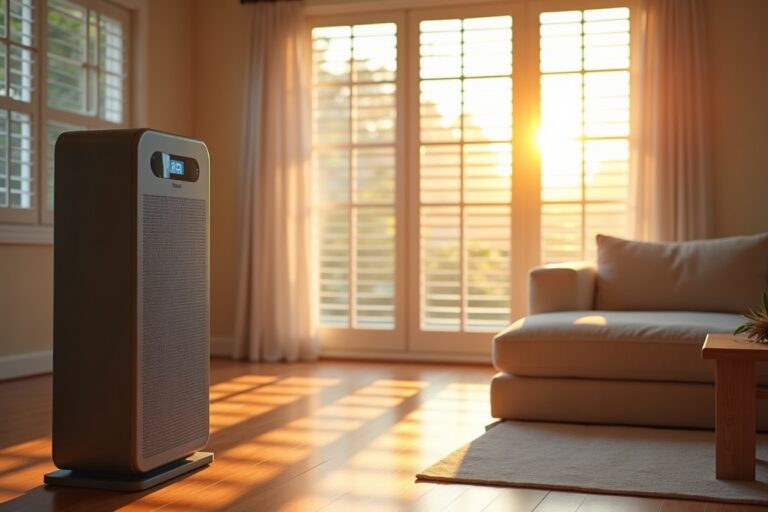
The Xiaomi 4 Pro also features an OLED display panel on the front of the unit showing real-time PM2.5 readings, temperature, humidity, and filter life percentage. This is a genuine hardware advantage — the Levoit relies entirely on app-based readings. If you want at-a-glance air quality data without pulling out your phone, the Xiaomi delivers it.
Home Assistant and Advanced Smart Home Integration
For Australian users running Home Assistant (a popular open-source smart home platform), both units have community integrations. The Levoit Core 600S can be controlled via the VeSync integration in Home Assistant. The Xiaomi 4 Pro can be controlled via the Xiaomi Miot integration. Both require configuration, and neither is officially supported by the purifier manufacturer for Home Assistant use. If advanced automation is your priority — triggering purifier high speed based on an external PM2.5 sensor, for example — research the specific Home Assistant integration status for your chosen model before purchasing.
Australian Availability and Warranty: The Practical Reality
This is the section most comparison articles skip entirely. And it is the section that matters most when your purifier fails on the third day of a Sydney or Melbourne smoke event and you need a replacement or a warranty claim resolved within the week.
Levoit Core 600S: Strong AU Presence
The Levoit Core 600S is sold directly on Amazon AU. Replacement filters are stocked on Amazon AU. Levoit has an Australian support email and processes warranty claims through Amazon AU’s returns infrastructure. Under the Australian Consumer Law (ACL), products sold to Australian consumers through Australian retail channels carry statutory guarantees regardless of the manufacturer’s stated warranty period — meaning if the unit fails within a reasonable time, you have a legal right to a repair, replacement, or refund.
The Levoit Core 600S is listed at $599 AUD at full price on Amazon AU, but it regularly drops to $449-$499 during Prime Day, Black Friday, and seasonal sales. Filter replacements are typically $69-$79 AUD with Prime delivery in 1-2 business days to most Australian capital cities.
Xiaomi 4 Pro: Inconsistent AU Stock
The Xiaomi Smart Air Purifier 4 Pro has inconsistent Australian distribution. As of mid-2026, it is not listed on the Xiaomi Australia official store (which focuses on phones, wearables, and scooters). Amazon AU listings exist but frequently show “Currently unavailable” or are fulfilled by international sellers with shipping times of 2-4 weeks. The typical price when available is $349-$399 AUD.
The warranty situation is less clear. If purchased from an international seller on Amazon AU, warranty claims may need to be directed through Xiaomi’s international support channels. ACL protections still apply to the seller, but enforcing a claim against an overseas-based marketplace seller is materially harder than dealing with a locally supported brand like Levoit.
Replacement filter availability is the critical issue. Xiaomi air purifier filters are not consistently stocked on Amazon AU. Genuine Xiaomi replacement filters for the 4 Pro cost approximately $79-$99 AUD when sourced from international sellers, with shipping times that can stretch to 2-3 weeks. During peak bushfire season — exactly when you need filters most — international supply chains are under strain, and stock-outs are common. The Levoit filter supply chain, by contrast, is locally managed and consistently stocked.
5-Year Cost of Ownership: The Full Picture
The Xiaomi 4 Pro looks cheaper on the sticker. It is not necessarily cheaper over five years. Here is the maths.
Both manufacturers recommend filter replacement every 6-12 months depending on use. In Australian conditions — particularly in south-east Queensland, coastal NSW, and Victoria where bushfire smoke, pollen, and humidity drive higher particle loads — realistic filter life is 6-8 months with daily use. The following calculation assumes one filter replacement per year (conservative) and the lower end of currently available Australian pricing.
| Cost Item | Levoit Core 600S | Xiaomi 4 Pro |
|---|---|---|
| Unit price (typical AU) | $499 (sale price) | $379 (when available) |
| Annual filter cost | $75 | $89 |
| Annual energy (est. 8h/day) | ~$28 (50W avg × 8h × 365 × $0.26/kWh) | ~$31 (55W avg × 8h × 365 × $0.26/kWh) |
| 5-year total | $1,014 | $979 |
| Cost per day (5-year) | $0.56 | $0.54 |
The 5-year total cost difference is approximately $35 AUD — effectively a rounding error. The Xiaomi’s lower upfront cost is partially offset by higher filter replacement costs and international shipping surcharges. The cost-of-ownership argument is a draw. Neither unit is meaningfully cheaper over time. This means your decision should be driven by performance, noise, availability, and warranty — not price.
Energy cost estimate uses 8 hours daily operation at $0.26/kWh, which according to the Australian Energy Regulator’s Default Market Offer is a reasonable mid-range figure for 2025-2026 electricity pricing in NSW, VIC, and QLD.
Bushfire Smoke Season Performance: The Real Australian Test
During NSW and Victorian bushfire season (October through March), PM2.5 concentrations in Sydney’s western suburbs, Melbourne’s northern corridors, and Brisbane’s south-west can spike above 200 µg/m³ — more than 8x the NEPM standard of 25 µg/m³ (24-hour average). During the Black Summer of 2019-2020, according to NSW Department of Planning and Environment data, Penrith and Campbelltown recorded AQI readings above 2,000 — literally off the chart.
In these conditions, you want three things from an air purifier: high CADR to turn the room over fast, sealed H13 HEPA to capture fine PM2.5 particles, and available replacement filters because you will burn through them faster during smoke events.
The Xiaomi 4 Pro’s 500 m³/h CADR gives it a theoretical edge in purging a smoke-filled room faster than the Levoit’s 410 m³/h. In a 30 m² living room, the Xiaomi would reach clean air approximately 4-5 minutes faster on maximum speed. That is a real but modest advantage.
The Levoit’s advantage is reliability of supply. When bushfire smoke hits and every household in Sydney and Melbourne is ordering purifier filters simultaneously, the Levoit filters are stocked in Australian warehouses. The Xiaomi filters are not. You cannot filter smoke with a unit that has a degraded filter and no replacement available for three weeks.
If you live in the bushfire smoke corridors of western Sydney, the Blue Mountains, central Victoria, or south-east Queensland, this supply chain reliability is not a nice-to-have. It is the deciding factor.
How Both Compare to the Breville Protect Max
Neither the Xiaomi 4 Pro nor the Levoit Core 600S is the top-performing air purifier available in Australia. That distinction belongs to the Breville Protect Max, which delivers a CADR of 550 m³/h according to Breville’s published specifications — 34% higher than the Levoit and 10% higher than the Xiaomi — with H13 HEPA filtration and a 3-stage filter system including a larger activated carbon bed.
The Breville also comes with full Australian warranty support (Breville is an Australian company headquartered in Sydney), consistent Amazon AU stock, and readily available replacement filters. At approximately $468 AUD on Amazon AU, it sits between the Xiaomi and the Levoit on upfront price while outperforming both on CADR.
The trade-off: the Breville is louder than the Levoit Core 600S on its lowest setting (though quieter than the Xiaomi), and it is a physically larger unit. For bedrooms where noise is the top priority, the Levoit still wins. For living rooms and open-plan spaces where CADR and airflow matter most, the Breville is the better choice. For a deep dive, read our full Australian air purifier rankings.
Quick Three-Way Comparison
| Spec | Breville Protect Max | Levoit Core 600S | Xiaomi 4 Pro |
|---|---|---|---|
| CADR (smoke) | 550 m³/h | 410 m³/h | 500 m³/h |
| Noise (low) | ~30 dB | 26 dB | 32.1 dB |
| AU price (typical) | ~$468 | ~$499 (sale) | ~$379 (when avail.) |
| AU warranty | 2 yr, AU-based | 2 yr, AU support | 1 yr, international |
| Best for | Living rooms, open plan | Bedrooms, noise-sensitive | Mi Home / HomeKit users |
Decision Tree: Which Purifier Should You Buy?
Three questions. That is all you need.
1. Is bedroom noise your top priority?
Yes → Levoit Core 600S (26 dB sleep mode). No other unit in this price bracket matches it for overnight silence.
No → Go to question 2.
2. Are you already in the Xiaomi/Mi Home ecosystem and need Apple HomeKit?
Yes → Xiaomi Smart Air Purifier 4 Pro, but only if you can source it from an Australian warehouse. Check Amazon AU stock before ordering. Budget for international filter sourcing.
No → Go to question 3.
3. Do you want the highest CADR with full Australian support?
Yes → Breville Protect Max (550 m³/h, AU warranty, AU filter supply).
Best value with AU support → Levoit Core 600S.
Final Verdict
For most Australian households, the Levoit Core 600S is the correct choice between these two units. It delivers 410 m³/h CADR with H13 HEPA filtration, runs at a bedroom-compatible 26 dB on Sleep Mode, ships from Australian warehouses with local warranty support, and has a reliable filter supply chain on Amazon AU. Over five years, it costs effectively the same as the Xiaomi 4 Pro.
The Xiaomi Smart Air Purifier 4 Pro is not a bad product. It has a higher CADR (500 m³/h), a superior OLED display, and Apple HomeKit support. But its inconsistent Australian availability, lack of local warranty infrastructure, and unreliable filter supply chain create real-world risks that its spec sheet advantages do not compensate for. If you are already deep in the Xiaomi ecosystem and comfortable with international sourcing, it is a viable option. For everyone else, the Levoit is the safer and smarter purchase.
And if neither unit quite fits — if you want the highest CADR available with full Australian support — the Breville Protect Max at 550 m³/h is the benchmark. For a complete breakdown, see our Levoit Core 600S detailed review.
The Levoit Core 600S: 26 dB sleep mode, H13 HEPA, and available on Amazon AU today.
410 m³/h CADR, local 2-year warranty, and filter replacements you can actually buy in Australia. $499 on sale — less than $0.56 per day over five years.
Last reviewed: August 2026 – Clean and Native
The Breville Protect Max is the benchmark air purifier for Australian homes.
550 CADR, H13 HEPA, activated carbon stage, and CADR/m² ratio that outperforms Dyson at the same price. Available on Amazon AU.
Frequently Asked Questions
Is the Xiaomi Smart Air Purifier 4 Pro available in Australia?
As of mid-2026, the Xiaomi Smart Air Purifier 4 Pro has inconsistent Australian availability. It is not sold through the Xiaomi Australia official store. Amazon AU listings exist but frequently show “Currently unavailable” or ship from international warehouses with 2-4 week delivery times. Check Amazon AU stock before ordering.
Does the Levoit Core 600S work with Google Home and Alexa in Australia?
Yes. According to Levoit’s published specifications, the Core 600S integrates with both Amazon Alexa and Google Home via the VeSync app, which is available on the Australian App Store and Google Play without region configuration.
Which air purifier is quieter for bedroom use?
The Levoit Core 600S at 26 dB on Sleep Mode is 6 dB quieter than the Xiaomi 4 Pro at 32.1 dB. In acoustic terms, that 6 dB difference represents a perceived doubling of loudness. The Levoit is effectively inaudible in most bedrooms.
Can the Xiaomi 4 Pro or Levoit 600S remove bushfire smoke?
Both use H13 HEPA filters that capture 99.97% of particles at 0.3 micrometres, including the fine PM2.5 particles in bushfire smoke. Both are effective for smoke. The practical difference is filter availability during smoke season — Levoit filters are stocked on Amazon AU; Xiaomi filters often require international sourcing.
How much do replacement filters cost in Australia?
Levoit Core 600S replacement filters cost approximately $69-$79 AUD on Amazon AU with Prime delivery. Xiaomi 4 Pro replacement filters cost approximately $79-$99 AUD and often require international shipping with 2-3 week delivery times.
Does the Xiaomi air purifier work with Apple HomeKit?
Yes. According to Xiaomi’s published specifications, the Smart Air Purifier 4 Pro supports Apple HomeKit via the Mi Home (Xiaomi Home) app. This is a genuine advantage over the Levoit Core 600S, which does not support HomeKit. Note that some Australian users report needing to set their Mi Home app region to a non-Australian server to access the air purifier product catalogue.
How often should I replace the HEPA filter?
Both manufacturers recommend replacement every 6-12 months. In Australian conditions with high pollen loads (September-November in Brisbane and south-east QLD) and bushfire smoke (October-March in NSW, VIC, and QLD), realistic filter life with daily use is closer to 6-
Get the Australian Home Environment Checklist
30 checks across water, air and EMF. Most of them free. Ranked by impact.
No spam. Unsubscribe any time.

Former Royal Australian Navy Clearance Diver and TAG-E counter-terrorism operator. Founded Clean and Native to apply the same rigorous thinking to the home environment.
Full biography →Similar Posts
Winix 5500-2 Review Australia 2026
The Winix 5500-2 is a solid mid-range True HEPA purifier that earned its Wirecutter recommendation for a reason: reliable particulate filtration, a…
Coway Airmega 200M vs Austin Air Australia 2026: Which Air Purifier Is Better?
IQAir vs Austin Air Australia 2026 — Clean & Native’s Australian guide covering everything you need to know, with evidence-based recommendations.
Best Air Purifier for Formaldehyde Australia 2026: New Build Off-Gassing Solved
You sign the contract, get the keys, and walk into your brand-new home. It smells like fresh paint, new carpet, and something else — something chemical…
Best Air Purifiers for Victorian Bushfire Smoke
Victorian bushfire smoke drives indoor PM2.5 concentrations above 200 µg/m³ in suburbs from Gippsland to inner Melbourne — over eight times the NEPM…
Bushfire Smoke & Air Quality: How to Stay Safe Indoors
Bushfire smoke is not a nuisance — it is a documented health hazard with no safe level of exposure, according to the Royal Australian College of…
Melbourne Smoke Haze: Best Air Purifiers for Bushfire Season
Melbourne’s worst bushfire smoke events push PM2.5 concentrations above 200 g/m³ — forty times the safe 24-hour average — and a correctly sized…