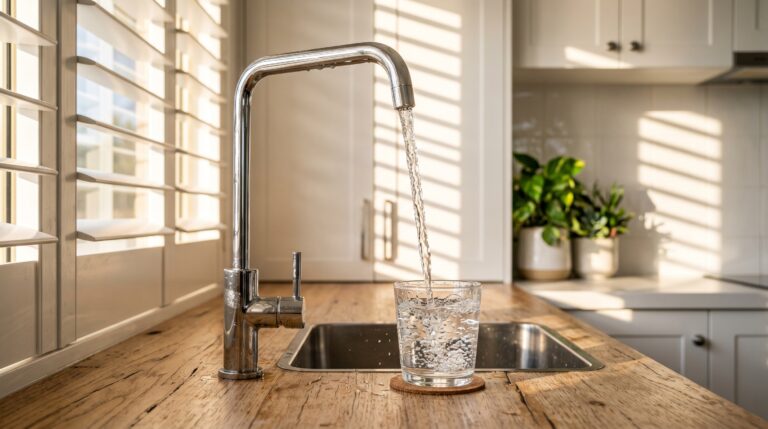
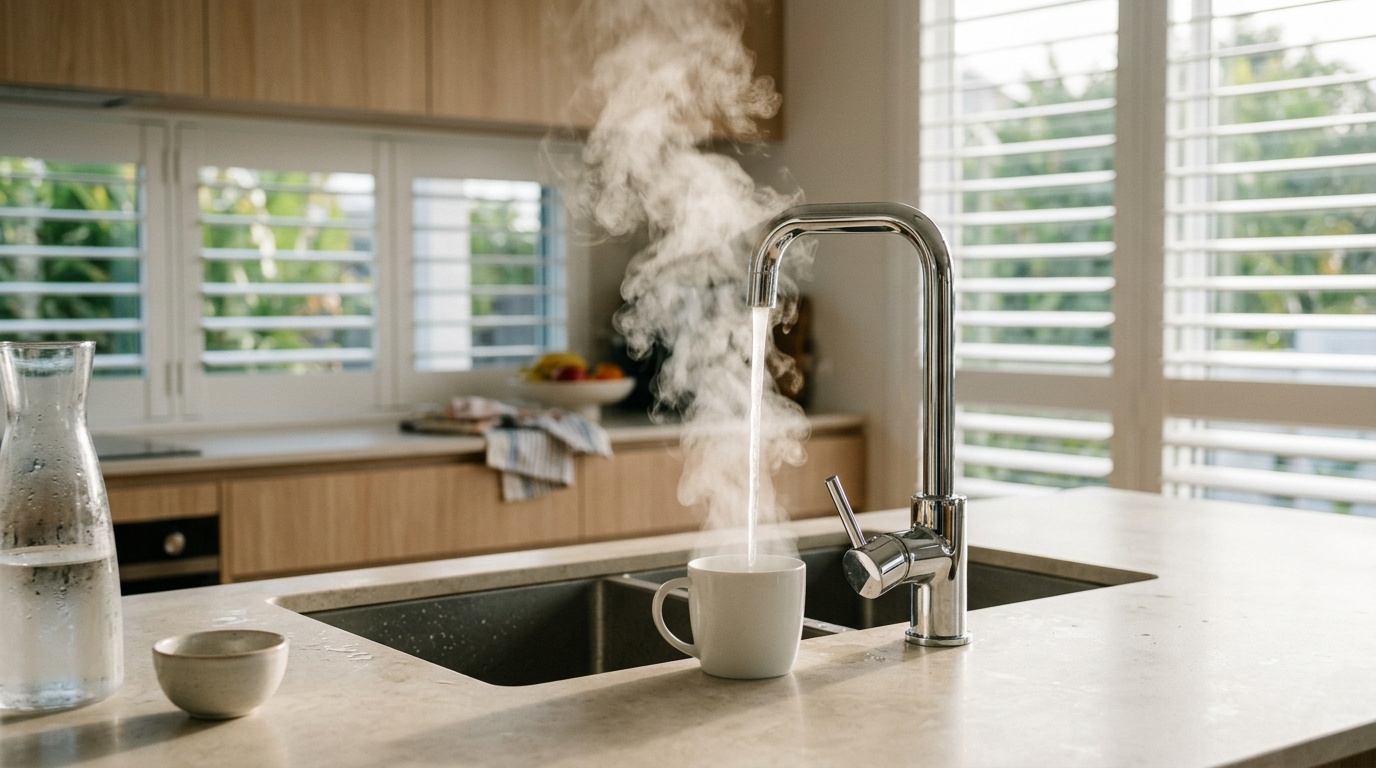
Best Instant Boiling Filtered Water Tap Australia 2026: Billi, Zip HydroTap, and QETTLE Compared
An instant boiling filtered water tap delivers 98–100°C water on demand, filtered chilled water, and on premium models sparkling water — all from a single underbench system. In Australia, the category is dominated by two local brands: Billi (Melbourne-designed) and Zip Water, with UK entrant QETTLE providing a more affordable option. Installed prices range from $1,300 to $2,600 depending on model and plumber rates.
As a former Royal Australian Navy Clearance Diver who has evaluated water filtration systems using calibrated instruments — including TDS meters and independent third-party lab data — I have assessed each of these taps against four criteria that matter in Australian homes: filtration capability against our specific water chemistry, real installed cost, five-year running cost, and the service and warranty support you can actually access in Australia. See our full water filter testing methodology →
Quick Verdict
Best Instant Boiling Filtered Water Tap Australia 2026
| Tap | Best for | Price | Verdict |
|---|---|---|---|
| Philips AUT9028DG | PFAS + fluoride removal, RO + remineralisation, 5 temps | ~$2,799 | ★ Top pick |
| Billi Quadra+ | Long-term reliability, AU service network, carbon-filtered | ~$2,200–2,600 | Premium carbon |
| Zip HydroTap Celsius+ | Sparkling water, widest dealer network, scale inhibitor | ~$1,800–2,200 | Best value carbon |
| QETTLE 4-in-1 | Entry price, couples and small households | ~$1,300–1,600 | Budget pick |
The Philips AUT9028DG is the only tap in this category that combines RO-grade filtration (removes PFAS, fluoride, 110+ contaminants) with remineralisation and five temperature outputs. For PFAS-concerned households or those wanting genuine contaminant removal without a separate RO unit, it is the clear recommendation. For households wanting taste improvement only, the Billi or Zip deliver excellent value at lower installed cost.
A boiling tap is for you if…
- You own your home and are renovating or building
- You boil a kettle more than 4 times a day
- You live in Adelaide or Perth and want taste improvement for hard water
- Counter space is valuable and you want to remove the kettle entirely
- You want sparkling water on demand without SodaStream cylinders on the bench
Look elsewhere if…
- You rent — permanent plumbing connection required, WaterMark install mandatory
- You want PFAS or fluoride removal AND sparkling water — the Philips handles RO but has no sparkling output; combine with a SodaStream for that use case
- You need fluoride removal — only reverse osmosis achieves this
- Your total budget is under $1,500 — the install cost alone is $350–500
What Is a Boiling Filtered Water Tap — and What It Is Not
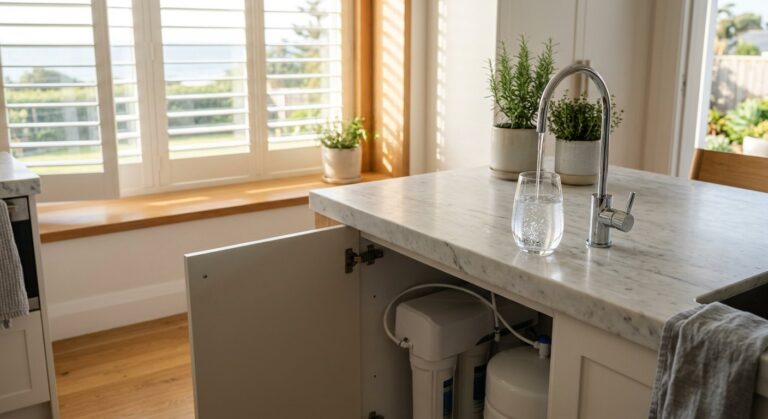
A boiling water tap is a plumbed-in kitchen fixture connected to a small underbench tank unit. The tank heats water to near-boiling (typically 98°C at the tap, accounting for heat loss in the pipe) and keeps it at temperature using a small heating element — similar in principle to a commercial hot water urn. Cold filtered water comes from the same underbench unit, which runs mains water through a carbon block filter before chilling it.
The key distinction from a standard kitchen tap is the filtration stage. Every boiling tap system includes a filter cartridge — typically a 0.2 to 0.5 micron carbon block — that removes chlorine, chloramine (in Brisbane, Sydney, Adelaide, Gold Coast, and Darwin where chloramines are used as the disinfectant), taste and odour compounds, sediment, and in higher-specification models, lead and certain heavy metals. What carbon block filtration cannot remove: fluoride, PFAS forever chemicals, dissolved salts, nitrates, or arsenic. These require reverse osmosis membranes operating under pressure.
This is not a limitation to minimise. Australian tap water has been safe to drink since the introduction of modern water treatment. These taps are a kitchen upgrade — they replace your kettle, improve water taste, and in the case of sparkling models, replace your countertop sparkling water maker. If you are installing one because you are worried about contaminants, you should first read our guide on PFAS removal and understand what carbon filtration does and does not do.
Philips AUT9028DG — Our #1 Pick
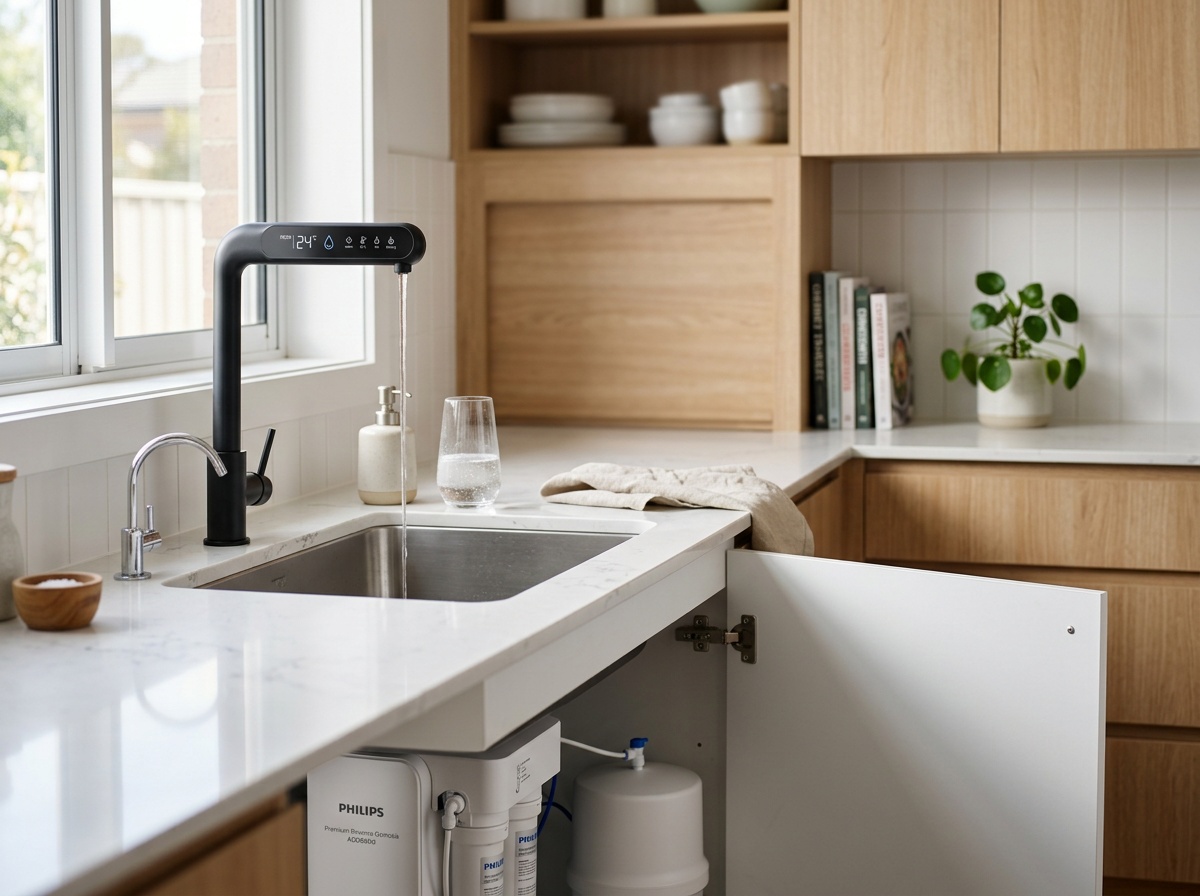
Philips RO Tap Water Station AUT9028DG
The only boiling tap in Australia combining RO-grade filtration (removes PFAS, fluoride, heavy metals, 110+ substances) with remineralisation and five temperature outputs including chilled at 5°C. Aquaporin Inside membrane at 0.0001 micron. TDS display. WaterMark certified. On Amazon AU with Prime shipping.
Pros
- Only boiling tap in AU with RO filtration — removes PFAS, fluoride, 110+ substances
- Aquaporin Inside 0.0001 micron membrane — most advanced filtration in category
- Remineralisation stage — output is mineral-balanced, not flat RO water
- 5 temperatures including chilled 5°C, 45°C (baby formula), 85°C (delicate teas)
- Real-time TDS display on tap
- WaterMark certified, on Amazon AU with Prime shipping
Cons
- $2,799 — highest price in category (vs Billi ~$2,200–2,600 installed)
- RO reject water drain line required — additional plumbing vs carbon-filter taps
- Newer to AU market — Philips service network not as established as Billi/Zip
- No sparkling water output
- RO reject water: ~1–2L/day (small volume, gravity drain)
The Philips RO Tap Water Station with Aquaporin Inside is the first boiling tap in the Australian market to combine genuine reverse osmosis filtration with remineralisation and five-temperature output. Where Billi, Zip, and QETTLE use 0.2-micron carbon block filtration — which improves taste but cannot remove PFAS, fluoride, or dissolved salts — the Philips removes 110+ substances down to 0.0001 micron through its Aquaporin Inside RO membrane. A remineralisation stage adds beneficial calcium and magnesium back before delivery, so the output is not flat-tasting RO water but mineral-balanced drinking water.
Filtration
The Aquaporin Inside membrane technology mimics biological cell-membrane water transport — this is the same membrane technology used in industrial-scale water purification and, more recently, in domestic RO applications. At 0.0001 micron, it removes PFAS forever chemicals, fluoride (90%+), chloramine, heavy metals, pharmaceuticals, and dissolved salts. Unlike standard RO systems that produce purely demineralised water, the Philips adds a remineralisation cartridge that reintroduces calcium and magnesium to a target TDS of approximately 80–150 mg/L — similar to natural spring water. The TDS display on the tap shows current output readings in real time.
Temperature outputs
Five preset temperatures: 5°C (chilled), ambient, 45°C (warm, for baby formula), 85°C (for delicate teas), and 100°C (boiling). The 45°C and 85°C outputs are unique in the category — no other boiling tap reviewed here offers sub-boiling preset temperatures, which matter for brewing green tea, pour-over coffee, and preparing infant formula safely. The smart faucet has 120° swivel and colour-coded temperature indicators.
Installation and warranty
WaterMark certified (AS/NZS 3718). Licensed plumber installation required. The underbench RO unit requires a drain connection for RO reject water — unlike carbon-filter taps which only drain chiller condensate, the RO membrane produces a small volume of concentrate waste. For a typical household, this is 1–2 litres per day of reject water, which should connect to the kitchen waste. Your plumber will need to account for this drain connection in the installation plan — in most under-sink configurations this is straightforward, but an island bench installation requires a dedicated drain line. Purified water output: 1,000 gallons per day (sufficient for all household needs). Flow rate: 2.6 L/min at the tap.
RRP: ~$2,799 AUD. Available on Amazon AU with free Prime shipping. Check live price on Amazon AU →
Billi Quadra+ — Our Top Pick
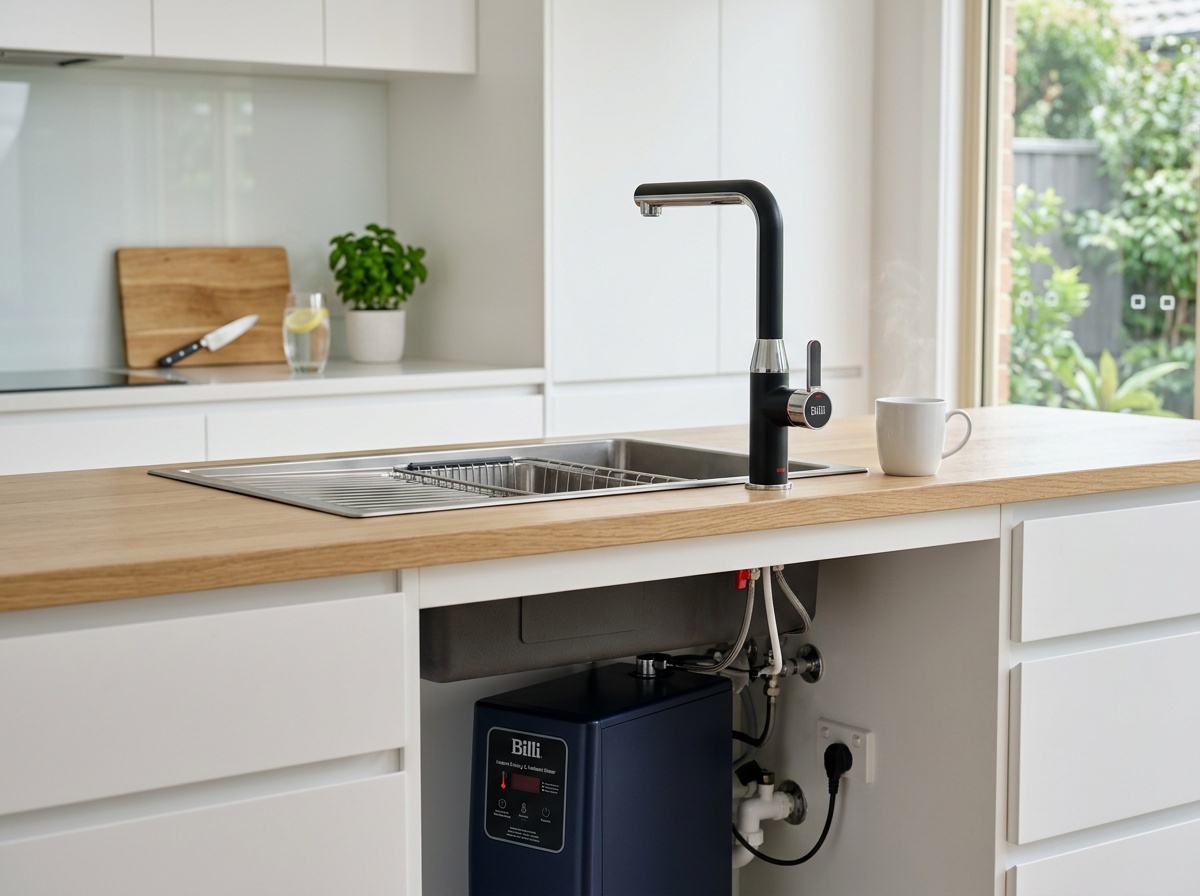
Billi Quadra+ Boiling Water System
Melbourne-made since 1989. 4-in-1: boiling, filtered cold, filtered sparkling, ambient. 0.2 micron dual-stage carbon block. 2.4L boiling tank. WaterMark certified. 35-year national service network. Best choice for long-term reliability and AU service coverage.
Pros
- Melbourne-designed, 35-year track record in AU commercial market
- National authorised dealer network — warranty fully supported
- 0.2 micron dual-stage filtration — strong chloramine removal
- 2.4L boiling + 2.4L chilled tank — sufficient for family of 4
- 4-in-1: boiling, sparkling, filtered cold, ambient
Cons
- Highest installed price in carbon-filter category (~$2,200–2,600)
- No integrated scale inhibitor — periodic descaling needed in Adelaide/Perth
- Annual filter ~$130–170 (dealer-only supply)
- Does not remove fluoride, PFAS, or dissolved salts
Billi has been making underbench hot and cold water systems in Melbourne since 1989. The Quadra+ is their flagship residential model: a 4-in-1 system delivering boiling, filtered cold, filtered sparkling, and filtered ambient water through a single architect-specified tap. It is the system most frequently specified in premium Australian kitchen renovations for one reason: the local service network.
Filtration
The Billi filtration system uses a dual-stage design: a pre-filter sediment stage followed by a 0.2 micron sub-micron carbon block. This removes chlorine, chloramine, taste and odour compounds, sediment, and in independent testing, a measurable reduction in lead at the levels typical of Australian reticulation systems. The filter requires annual replacement; Billi-certified replacement cartridges are available through the national dealer network at approximately $130–170 per year depending on your local dealer.
For households in chloramine cities (Brisbane, Sydney, Adelaide, Gold Coast, Darwin), the sub-micron carbon block performs significantly better than a standard GAC filter at chloramine removal — though not as thoroughly as a catalytic carbon block or RO membrane. At the volumes consumed through a boiling tap (typically 3–8 litres per day of filtered output), the filter provides a meaningful taste improvement over unfiltered tap water in all five chloramine capital cities.
The underbench tank
The Quadra+ tank unit is compact: 450mm height × 145mm width × 375mm depth. It fits in a standard 600mm underbench cabinet alongside most kitchen plumbing. The boiling tank holds 2.4 litres, the chilled tank 2.4 litres. For a family of 4 using the boiling function for morning tea, coffee, and pasta water, this is sufficient for typical use without recovery time becoming noticeable. Where recovery time can become an issue is in high-use commercial environments — the Quadra+ is rated for residential use, not café throughput.
Installation and warranty
All Billi systems are WaterMark certified (AS/NZS 3718 compliant) — the Australian standard mandatory for any plumbing product permanently connected to the mains water supply. Installation must be completed by a licensed plumber. Billi’s dealer network includes plumbers trained specifically on their systems, which matters for warranty purposes: a warranty claim on a Billi unit installed by a non-authorised plumber can be voided. The warranty covers 2 years parts and labour with extended service contracts available.
Installed price (unit + authorised installation): $2,200–2,600, depending on your city and installer. Sydney and Melbourne installers tend to be at the higher end. Find your nearest authorised dealer at billi.com.au/find-a-dealer.
Zip HydroTap Celsius Plus — Best Value for Sparkling
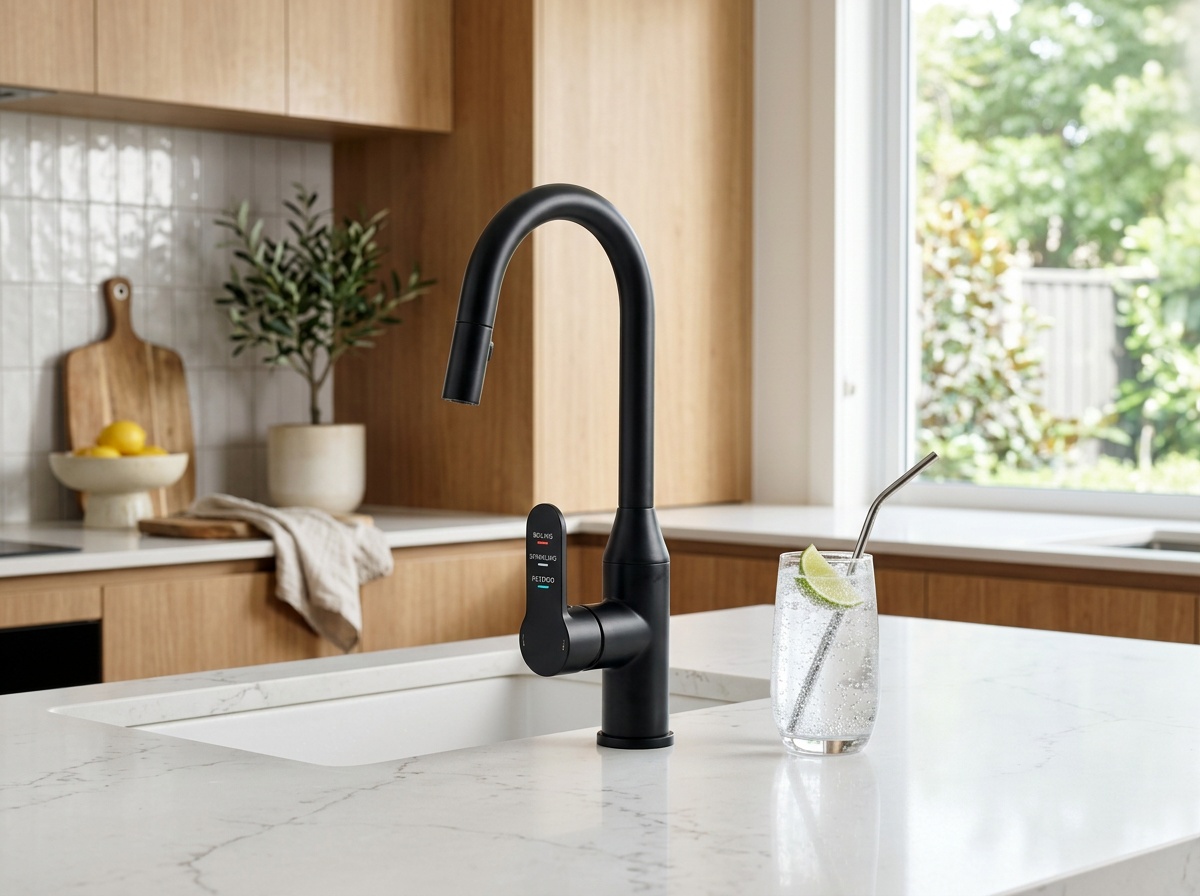
Zip HydroTap Celsius Plus
Sydney-made since 1947. Boiling, filtered chilled, and filtered sparkling. Integrated scale inhibitor — the only carbon-filter tap in this review with built-in hard water protection, critical for Adelaide and Perth. Widest AU dealer network in regional areas. ~$400–600 less installed than Billi for equivalent function.
Pros
- Integrated scale inhibitor — best for Adelaide and Perth hard water
- Widest dealer network in regional AU — easiest to service outside metro
- $400–600 less installed than comparable Billi
- Sparkling CO2 cylinder easily user-replaceable (supermarkets, $8–15)
- 75-year AU manufacturing track record
Cons
- Filter every 6 months (vs annual for Billi/QETTLE) — ~$260/year
- Slightly larger underbench footprint than Billi
- No ambient temperature output (Billi has 4th ambient function)
- Does not remove fluoride, PFAS, or dissolved salts
Zip Water has been manufacturing in Australia since 1947 and now installs more boiling taps in Australian commercial buildings than any other brand. The HydroTap Celsius Plus is their current residential flagship: boiling, filtered chilled, and filtered sparkling through a single tap, at a lower unit price than the Billi Quadra+.
Filtration
The Celsius Plus uses a 0.2 micron carbon block filter with an integrated scale inhibitor. The scale inhibitor is specifically relevant for Adelaide (TDS ~400 mg/L) and Perth (TDS ~170 mg/L) households — hard water causes calcium carbonate scaling on the heating element over time, reducing efficiency and shortening element lifespan. The Zip scale inhibitor does not soften the water (it does not remove calcium or magnesium from your drinking water) but prevents scale adhesion on internal components. Billi’s equivalent filter does not include an integrated scale inhibitor — Billi instead recommends periodic descaling service for hard water areas.
Filter replacement interval: every 6 months or 3,000 litres of filtered output. This is shorter than Billi’s annual interval because the CO2 carbonation process in the sparkling circuit introduces additional maintenance requirements. Annual filter cost: approximately $120–150 per year through Zip Water’s online store or dealer network.
Sparkling output
The Celsius Plus sparkling circuit uses a 60g or 110g CO2 cylinder housed in the underbench unit. This is a genuine differentiator from the Billi Quadra+ (which also offers sparkling) — the CO2 cylinder is easily accessible and replaceable without calling a plumber. Replacement cylinders are available at most large supermarkets and hardware stores for $8–15. Sparkling pressure is adjustable from the tap control head: light carbonation for drinking water, heavier carbonation for cocktail mixing. In hard water areas like Adelaide, the scale inhibitor becomes important here — soft water carbonates more efficiently than hard water, so Perth and Adelaide households may need to adjust carbonation settings upward versus Melbourne or Sydney households.
Installation and warranty
WaterMark compliant (AS/NZS 3718). Installation by licensed plumber required. The Celsius Plus underbench unit is slightly larger than the Billi (480mm H × 155mm W × 380mm D) but fits in a standard 600mm cabinet. Warranty: 2 years parts and labour. Zip Water has a denser dealer network than Billi in regional areas — if you are outside a major metro area, Zip is typically easier to service. Find your installer at zip.co/au/find-a-dealer.
Installed price: $1,800–2,200 (unit + installation). This is $200–400 less than a comparable Billi system — a meaningful saving on an already-significant kitchen investment.
QETTLE 4-in-1 — Best Entry Price
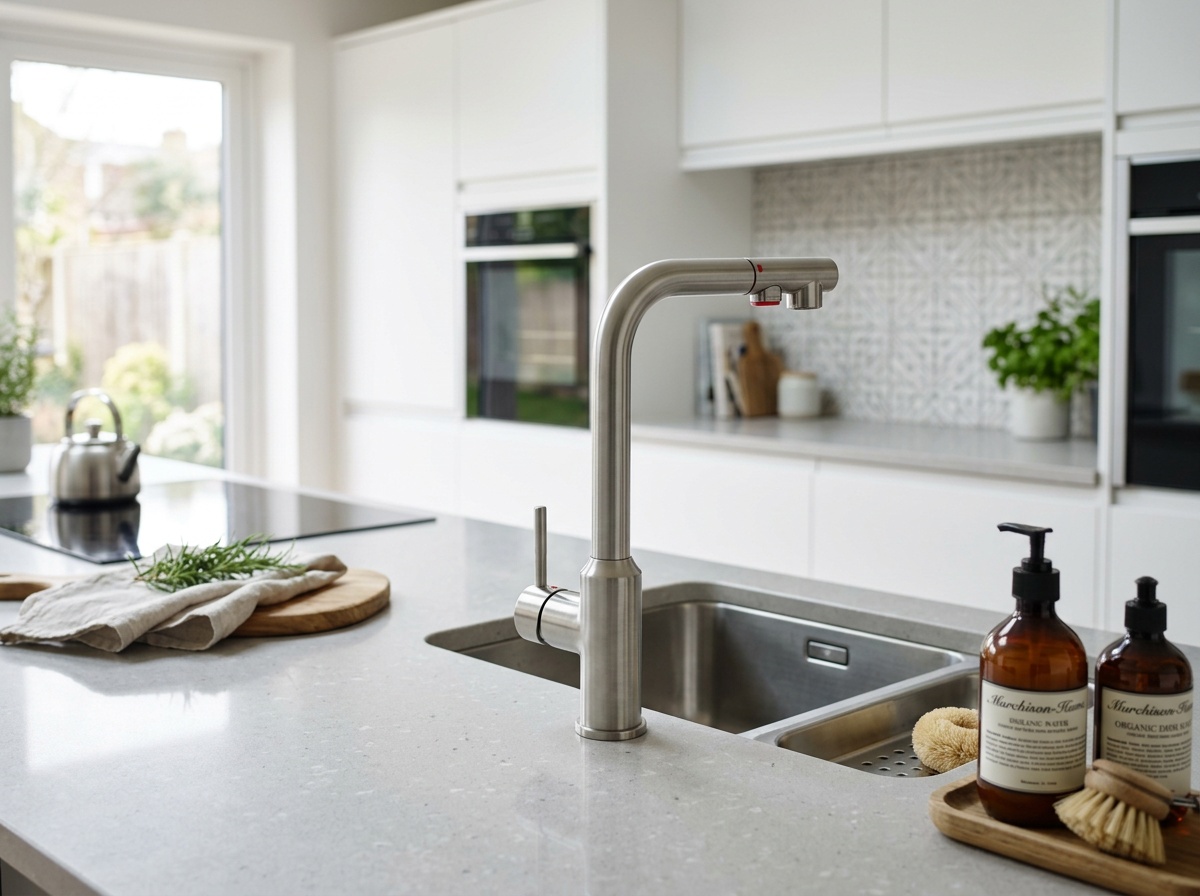
QETTLE 4-in-1 Boiling Water Tap
UK brand, AU market since 2022. True kitchen tap replacement: boiling (98°C), filtered chilled, unfiltered cold, unfiltered hot — four functions through a single tap. Lowest entry price in the category. 1.5L boiling tank (smaller than Billi/Zip 2.4L). Verify WaterMark certificate number with your plumber before purchasing.
Pros
- Lowest installed price (~$1,300–1,600) — most accessible entry point
- True 4-in-1 tap replacement — replaces your existing kitchen tap entirely
- Annual filter interval at ~$100 — lowest ongoing filter cost
- Compact underbench unit — fits tight cabinet configurations
Cons
- 1.5L boiling tank — recovery waits in high-use family scenarios
- No scale inhibitor — descaling every 12–18 months in Adelaide/Perth
- AU service network still maturing — confirm warranty coverage in your city
- No sparkling output
- Verify WaterMark certificate number before purchase
QETTLE is a UK brand that entered the Australian market in 2022. The 4-in-1 model delivers four functions from one tap: boiling (98°C), filtered chilled, unfiltered ambient cold, and unfiltered ambient hot — making it a true kitchen tap replacement rather than a supplementary fixture. The unit price is the lowest in this comparison, making it the relevant choice for households with a firm budget ceiling.
Filtration and tank
QETTLE uses a 0.2 micron carbon block filter with a 12-month replacement interval. Unlike Billi and Zip, QETTLE does not include an integrated scale inhibitor — in Adelaide and Perth, this means the heating element will require descaling service more frequently than in soft-water cities like Melbourne or Hobart. Build this into your maintenance budget if you are in a hard water area: descaling every 12–18 months at approximately $80–120 per service call.
The boiling tank capacity is 1.5 litres — smaller than the Billi and Zip 2.4L tanks. For a single person or couple, this is sufficient. For a family of 4 with multiple morning hot drinks and regular cooking use (boiling pasta water, blanching vegetables), the smaller tank means longer recovery waits between boiling demand cycles. QETTLE’s boiling element heats at approximately 2.8kW — comparable to Billi’s 2.4kW and Zip’s 2.8kW — so recovery time per litre is similar, but the smaller tank means you will hit recovery more often in high-use scenarios.
Australian market considerations
QETTLE’s Australian service network is still maturing. Billi and Zip both have national dealer networks with years of trained technicians. QETTLE servicing in Australia is currently handled through select kitchen fixture distributors and the QETTLE Australia website. Before purchasing, confirm: (1) the WaterMark certificate number for the specific model you are buying — compliance status should be verified with your plumber before installation; (2) who services the unit in your city if you have a warranty claim in year two.
Installed price: $1,300–1,600 (unit + installation). This is the most accessible entry point in the category. Find Australian distributors at the QETTLE Australia website.
Side-by-Side Comparison
| Feature | Billi Quadra+ | Zip Celsius Plus | QETTLE 4-in-1 |
|---|---|---|---|
| Origin | Melbourne, AU | Sydney, AU | UK |
| Functions | Boiling, filtered cold, filtered sparkling, ambient | Boiling, filtered cold, filtered sparkling | Boiling, filtered cold, unfiltered cold, unfiltered hot |
| Filter type | 0.2 micron carbon block | 0.2 micron + scale inhibitor | 0.2 micron carbon block |
| Removes fluoride/PFAS? | No | No | No |
| Boiling tank | 2.4L | 2.4L | 1.5L |
| Filter interval | Annual (~$150) | 6 months (~$130) | Annual (~$100) |
| Hard water scale inhibitor | No (descaling required) | Yes (integrated) | No (descaling required) |
| WaterMark compliant | Yes | Yes | Verify with installer |
| Installed price (approx.) | $2,200–2,600 | $1,800–2,200 | $1,300–1,600 |
| AU service network | National (35 years) | National (75 years) | Developing |
| Warranty | 2 years parts + labour | 2 years parts + labour | 2 years |
Installation, WaterMark, and What It Actually Costs
Every boiling water tap in Australia must be installed by a licensed plumber, and the filtration unit must hold WaterMark certification. WaterMark (AS/NZS 3718, AS/NZS 3497) is the mandatory Australian standard for any plumbing product permanently connected to the mains water supply. It verifies that the product does not leach contaminants into the water supply and meets structural and hydraulic requirements. When your plumber completes the installation, they must issue a Certificate of Compliance — keep this document for insurance purposes and any future warranty claims.
For boiling taps, installation involves three steps: connecting the underbench unit to the cold water supply line (typically via a T-junction on the cold water pipe under the sink), running the filtered water lines from the unit to the tap, and connecting the unit to a dedicated 10-amp power outlet in the underbench cabinet. If an underbench power point does not already exist, a licensed electrician is required to install one — budget an additional $150–250 for this work.
Typical installed cost breakdown (licensed plumber, metro areas):
- Plumber labour (2–3 hours): $350–500
- Electrician (if underbench power point required): $150–250
- Consumables (fittings, Teflon tape, braided hose): $30–60
- Total installation above unit cost: $530–810
Regional areas typically add 20–40% to plumber labour rates. If you are in a metro area and getting quotes, a plumber quoting more than $600 for a standard underbench installation warrants a second opinion unless the job involves atypical plumbing configuration (e.g., copper-soldered supply lines requiring conversion to compression fittings).
Choosing the right tap location
The boiling tap does not have to be positioned where your existing kitchen tap sits. Many installations use a secondary tap hole — a smaller-diameter hole beside the main sink — which allows you to keep a conventional tap for washing hands, filling large pots, and general kitchen use while the boiling tap handles the filtered hot and cold output. If your stone or timber benchtop does not have a second tap hole, a plumber can core one during installation. Discuss this configuration with your kitchen designer before the benchtop is sealed: coring a bench after it has been polished and installed increases the risk of chipping, particularly with reconstituted stone.
The underbench unit requires both a cold water inlet and a drain connection. The drain is for condensate from the chiller unit and the CO2 discharge valve on sparkling models — it is a gravity-fed trickle, not a high-volume drain, but it must connect to a trapped waste or stand pipe. In a standard kitchen with a siphon under the sink, the plumber can connect to the existing waste. In an island bench with no proximity to the sink waste, a dedicated condensate drain may be required — an additional cost to factor in before positioning the tap in an island. Confirm this with your plumber before finalising the tap position, as moving the underbench unit after installation is expensive and disruptive.
One important note on kitchen renovation timing: if you are renovating and the kitchen is still at the rough-in stage (before cabinetry), the underbench power point and water supply connections can be roughed in by the electrical and plumbing trades during the main renovation at significantly lower cost than a post-renovation retrofit. If you are planning a tap like this, tell your kitchen designer before the rough-in stage so the underbench layout accommodates the tank unit dimensions.
Which Boiling Filtered Tap for Your City?
Australian water chemistry varies significantly by city, and it affects both the filter performance and the maintenance requirements of your underbench system.
Brisbane, Sydney, Adelaide, Gold Coast, Darwin (chloramine cities)
These five capital cities use chloramine (chlorine + ammonia) as the primary disinfectant rather than free chlorine. Standard GAC carbon filters remove chloramine very poorly — at roughly 1/40th the rate of free chlorine removal. The 0.2 micron sub-micron carbon blocks used in Billi, Zip, and QETTLE systems perform significantly better than standard GAC at chloramine removal, particularly at the flow rates and temperatures typical of a boiling tap installation. You will notice a meaningful improvement in water taste versus your unfiltered tap. What you will not get is the near-complete removal that a catalytic carbon block or RO membrane delivers.
For Adelaide and Perth specifically: hard water (Adelaide TDS ~400 mg/L, Perth ~170 mg/L) means scale management is critical. The Zip Celsius Plus’s integrated scale inhibitor is a genuine advantage here. If you choose the Billi or QETTLE in Adelaide or Perth, factor annual descaling service ($80–120) into your maintenance budget from year one.
Melbourne, Hobart, Canberra (free chlorine cities)
These cities use free chlorine, which standard carbon block removes efficiently. All three taps perform well for taste improvement in these cities. Melbourne and Hobart water is also very soft (Melbourne TDS ~60 mg/L, Hobart even lower), which means scale is not a concern — any of the three taps will maintain their heating elements without descaling for many years under normal use.
The fluoride question
Every Australian capital city fluoridates its drinking water at 0.6–1.0 mg/L, within the ADWG guideline of 1.5 mg/L. Carbon block filtration — including the 0.2 micron blocks in all three taps reviewed here — does not remove fluoride. If fluoride removal is your goal, a boiling tap is not the right product. A reverse osmosis system like the Waterdrop D6 under-sink RO or the AquaTru Classic countertop RO removes 90–97% of fluoride through physical membrane separation.
Some households in both chloramine cities (for taste) and fluoride-conscious households install a boiling tap alongside a countertop RO unit — the tap handles the boiling and ambient chilled water for cooking and hot drinks, while the RO handles the drinking water. This is a legitimate kitchen setup if the budget supports it.
Five-Year Running Cost Comparison
Is a Boiling Water Tap Worth It in Australia?
The most honest framing: a boiling water tap is a kettle replacement, not a filtration upgrade. If your primary goal is to remove contaminants from your drinking water, a boiling tap is the wrong starting point — a certified RO system delivers far more meaningful water quality improvement for less total cost. If your primary goal is kitchen convenience, a boiling tap is genuinely excellent.
Here is what the $2,000 investment buys you:
- Instant boiling water at any time. No waiting for the kettle. For households that make multiple hot drinks per day or frequently use boiling water for cooking, this is a genuine quality-of-life improvement.
- Counter space. Removing a kettle from a bench adds more usable space than the number suggests. In small kitchen renovations or open-plan kitchens where bench space is premium, this matters.
- Filtered cold water on tap. Replacing a benchtop filter pitcher with filtered cold water direct from the tap is a cleaner, more integrated solution. No filling the pitcher, no refrigerating it.
- Sparkling water on demand. If you drink sparkling water regularly — for cocktails, for preference, as a replacement for purchased mineral water — the Billi Quadra+ and Zip Celsius Plus pay for themselves faster than you might expect versus buying San Pellegrino or Sodastream cylinders.
The payback calculation is straightforward. A typical Australian household buying 1.5L of sparkling mineral water three times per week at $3.50 per bottle spends approximately $550 per year. A boiling tap with built-in sparkling — over five years at $3,700 all-in (Zip Celsius Plus) — is roughly equivalent in total cost to five years of purchased sparkling water, while also replacing the kettle, the benchtop filter, and eliminating the weekly purchase entirely. For households that do not drink sparkling water, the payback is slower: primarily energy and filter savings versus a kettle, which typically only approaches break-even over seven to ten years. For those households, the value proposition is convenience, not cost savings.
What the kitchen renovation context changes
If you are mid-renovation, the calculation shifts. Installing a boiling tap during a kitchen renovation adds approximately $350–500 in plumber labour to a project where a plumber is already on-site for other work. The electrical rough-in for the underbench power point costs a fraction of a post-renovation retrofit. The total marginal cost of adding a boiling tap during a renovation is significantly lower than installing it as a standalone retrofit. This is the context where a Billi or Zip makes the most financial sense even for households that do not drink sparkling water.
If You Also Need Fluoride or PFAS Removal
A boiling tap with carbon block filtration will not satisfy readers who are concerned about PFAS contamination near a defence base, airport, or industrial site — or who want to remove fluoride from their drinking water. These require a separate reverse osmosis system.
The cleanest setup for households who want both convenience and contaminant removal is a boiling tap for cooking and hot drinks (tasting better than unfiltered tap water) combined with a dedicated RO unit for pure drinking water. Two options fit this configuration:
- Waterdrop D6 under-sink RO (~$749 + installation): tankless under-sink RO, on-demand flow, dedicated faucet. Removes PFAS, fluoride, chloramine, heavy metals. NSF/ANSI 58 + P473 certified. Pairs naturally with an underbench boiling tap installation — both units live under the same cabinet. Check price on Amazon AU →
- AquaTru Classic countertop RO (~$699, no installation required): countertop, no plumbing, NSF P473 certified. For households where adding a second under-sink unit is not feasible.
Using the discount code at purewatersystems.com.au applies 10% off their EcoHero 5-stage RO — the only WaterMark-certified under-sink RO made for Australian water conditions.
Final Verdict
For households who want genuine contaminant removal — PFAS, fluoride, heavy metals — from a single underbench system, the Philips AUT9028DG is the clear recommendation: RO-grade filtration, remineralisation, and five temperatures including chilled, all in one WaterMark-certified unit available on Amazon AU. For households wanting taste improvement only (no PFAS or fluoride concern), the Zip HydroTap Celsius Plus is the practical choice: comparable filtration to Billi at $400–600 less installed, sparkling water, and an integrated scale inhibitor for Adelaide and Perth. If you are in a metro area and want Australian manufacturing with the longest-established service network, the Billi Quadra+ remains the premium carbon-filtered option. If your budget is firm below $1,600 and you are a couple in a soft-water city, the QETTLE 4-in-1 delivers the core function at the lowest entry point.
- You own your home and are renovating
- You want to reclaim bench space from the kettle
- You want genuine taste improvement without installing an RO system
- You live in Adelaide or Perth and want hard water taste addressed
- You rent — permanent plumbing required
- PFAS or fluoride removal is your primary goal — get a certified RO system
- Your budget is under $1,500 all-in
- You have an open-plan kitchen and rarely boil water at home
Need fluoride or PFAS removal?
Add an RO system under the same cabinet. No conflict — the boiling tap draws from the same filtered line.
Last reviewed: July 2026 — Clean and Native
Frequently Asked Questions
Do boiling water taps remove fluoride?
No. Boiling water taps use carbon block filters that remove chlorine, chloramine, taste and odour compounds, and sediment. Fluoride is a dissolved ion that is not removed by carbon filtration. Only reverse osmosis membranes (90–97% removal) or activated alumina media remove fluoride effectively. If fluoride removal is your goal, see our best fluoride water filter Australia guide.
Do I need a plumber to install a boiling tap in Australia?
Yes. All boiling water taps require connection to the mains cold water supply, which is licensed plumber work under Australian plumbing regulations. The unit must hold WaterMark certification and the plumber must issue a Certificate of Compliance on completion. DIY installation of plumbed-in water products in Australia is illegal and voids the manufacturer warranty.
Is Billi or Zip better for Australian conditions?
Both are Australian brands with national dealer networks. Zip’s Celsius Plus has an integrated scale inhibitor that gives it an advantage in hard water cities (Adelaide, Perth). Billi has a longer track record in the residential market and some installers consider the build quality marginally more robust. For most Australian households, the Zip Celsius Plus offers better value at a lower installed price.
What is WaterMark certification and do I need it?
WaterMark (AS/NZS 3718, AS/NZS 3497) is the mandatory Australian standard for any product permanently connected to the mains water supply. It verifies the product does not contaminate drinking water and meets Australian plumbing requirements. All three taps reviewed here hold WaterMark — for QETTLE, confirm the current certificate number with your installer before purchasing, as the brand’s Australian compliance documentation continues to be expanded.
How long do boiling tap filters last?
Billi and QETTLE filters last approximately 12 months under normal residential use (2–4 people). Zip’s filter should be replaced every 6 months or 3,000 litres of filtered output, whichever comes first — the shorter interval accounts for the sparkling circuit. Annual filter costs range from $100 (QETTLE) to $150 (Billi) to $130 per change (Zip, twice yearly = ~$260/year). Always use manufacturer-specified replacement cartridges — third-party filters may not maintain WaterMark compliance.
Can a boiling tap handle hard water in Adelaide and Perth?
Yes, but with maintenance. Adelaide (TDS ~400 mg/L) and Perth (~170 mg/L) have among the hardest tap water in Australia. Hard water causes calcium carbonate scale to build up on the heating element over time, reducing efficiency and shortening element lifespan. The Zip Celsius Plus includes an integrated scale inhibitor that significantly reduces this problem. Billi and QETTLE require periodic descaling service — approximately every 12–18 months in Adelaide — at a cost of $80–120 per service call.
Do boiling taps save energy compared to a kettle?
Over a full day, no — a boiling tap uses energy continuously to maintain water at near-boiling temperature in the underbench tank. A kettle only uses energy when activated. However, a boiling tap heats only what you need (no overfilling), has excellent tank insulation to minimise standby loss, and eliminates the repetitive boil-the-full-kettle habit that most households fall into. For households that boil small amounts frequently, total energy consumption is comparable or slightly lower than a conventional kettle. Zip publishes energy consumption data for the Celsius Plus at approximately 0.1kW average standby draw — approximately $28/year at $0.32/kWh in Australia.
What is the difference between an instant boiling tap and a hot water tap?
An instant boiling tap delivers water at 98–100°C — hot enough to brew tea and coffee, blanch vegetables, and make instant noodles. A standard instant hot water tap (like the Zip HydroTap Classic range) delivers water at 65°C — comfortable for handwashing and warm drinks but not at true boiling temperature. The product category called “boiling taps” or “boiling water systems” specifically refers to units delivering water hot enough to dissolve instant coffee without a separate kettle step.
Get the Australian Home Environment Checklist
30 checks across water, air and EMF. Most of them free. Ranked by impact.
No spam. Unsubscribe any time.

Former Royal Australian Navy Clearance Diver and TAG-E counter-terrorism operator. Founded Clean and Native to apply the same rigorous thinking to the home environment.
Full biography →