How Reverse Osmosis Works: A Complete Guide for Australian Homes (2026)
Reverse osmosis works by forcing tap water through a 0.0001-micron semi-permeable membrane under pressure, removing 90–97% of fluoride, up to 98% of PFAS, chlorine byproducts, heavy metals, and dissolved solids that carbon filters can’t touch. It’s the only proven residential filtration technology that removes fluoride and handles chloramine-treated water in Brisbane, Sydney, Adelaide, Perth, and Darwin. The catches: you’ll waste 1–3 litres for every litre purified (tankless systems are most efficient), and mineralisation cartridges are essential unless you’re supplementing electrolytes separately.
| System Type | Best For | Verdict |
|---|---|---|
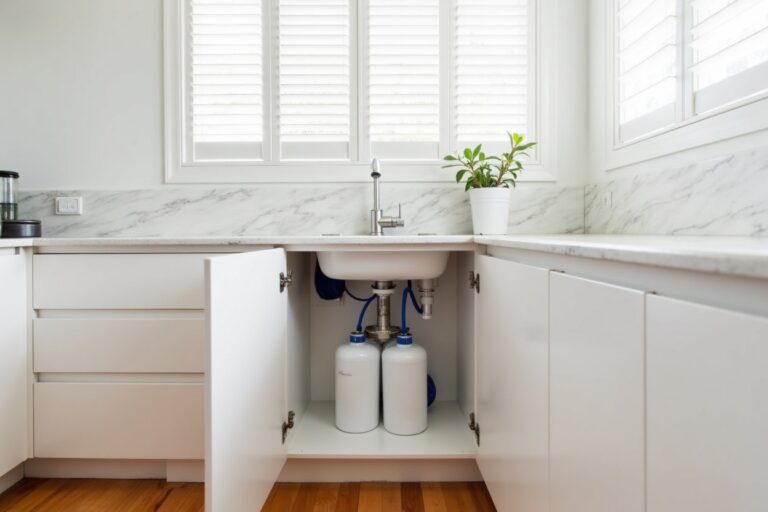
| Under-sink RO (e.g. Waterdrop D6) | Chloramine cities, PFAS zones, permanent install | Recommended |
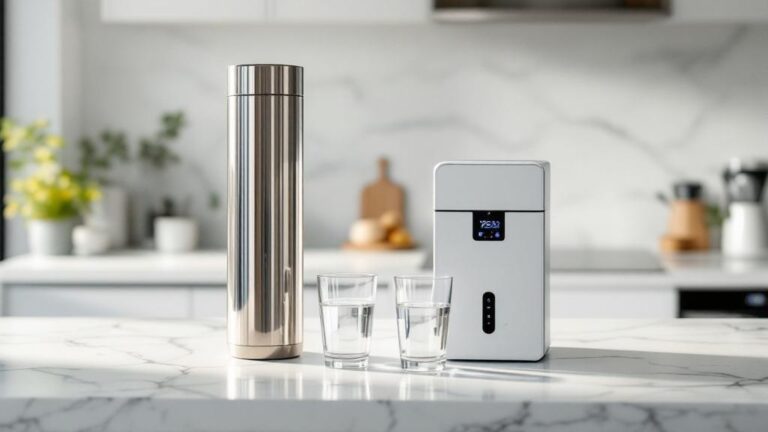
| Countertop RO (e.g. AquaTru) | Renters, no plumbing required, fluoride removal | Good for portability |
| Carbon-only filters | Chlorine removal only, NOT fluoride/PFAS | Avoid for contaminant removal |
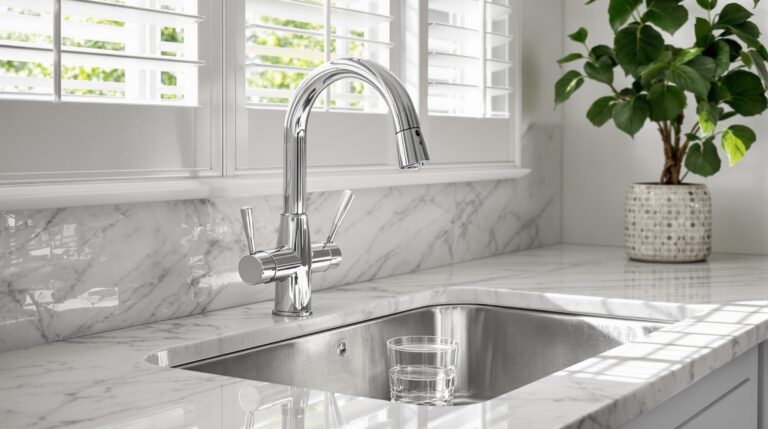
If you’ve ever looked closely at your tap water — really looked — you might already suspect it’s carrying more than just H₂O. And you’d be right. Australian tap water, while generally safe by regulatory standards, routinely contains fluoride, chlorine byproducts, trace heavy metals, agricultural runoff, and in some regions, PFAS compounds. Reverse osmosis removes virtually all of it. In this guide — compiled through hands-on testing and our documented methodology — I explain exactly how reverse osmosis works, what it removes, how it compares to alternatives, and whether it makes sense for your home.
Written by Jayce Love, former Royal Australian Navy Clearance Diver and founder of Clean & Native.
Key Facts
What you need to know before buying an RO system
| Membrane pore size | 0.0001 microns — removes dissolved ions, PFAS, viruses |
| Fluoride removal | 90–97% — only residential technology that reliably does this |
| PFAS removal | Up to 98% — relevant near 50+ confirmed AU contamination sites |
| Chloramine cities | Brisbane, Sydney, Adelaide, Perth, Darwin — standard carbon fails |
| Waste water | 1:1 to 1:3 permeate-to-drain (tankless systems most efficient) |
| Maintenance | Pre-filters 6–12 months; membrane 2–3 years |
What Is Reverse Osmosis? (The Science Explained)
Osmosis is a natural process in which water moves through a semi-permeable membrane from an area of low solute concentration to an area of high solute concentration. Your body relies on it constantly — it’s how cells regulate hydration and how nutrients cross biological barriers.
Reverse osmosis does the opposite. By applying pressure to the more concentrated side of a membrane, it forces water to move against its natural gradient — from the contaminated side to the clean side. Dissolved solids, heavy metals, chemicals, and pathogens can’t follow. They’re left behind and flushed to drain.
The key to this whole process is the RO membrane itself. A high-quality RO membrane has pore sizes of approximately 0.0001 microns. To put that in context:
- Sediment filters: ~10 microns (catches visible particles and sediment)
- Hollow fibre filters: ~0.1 microns (catches protozoa and most bacteria)
- RO membranes: ~0.0001 microns (catches dissolved ions, viruses, PFAS, and more)
A water molecule is small enough to pass through an RO membrane. Almost nothing else is. That’s what makes reverse osmosis categorically different from any other residential water filtration technology.
The pressure required to push water through the membrane is typically supplied by your home’s mains water pressure (in under-sink systems) or a small internal pump (in countertop systems). Either way, the process is continuous, passive, and requires no user action beyond routine filter changes.
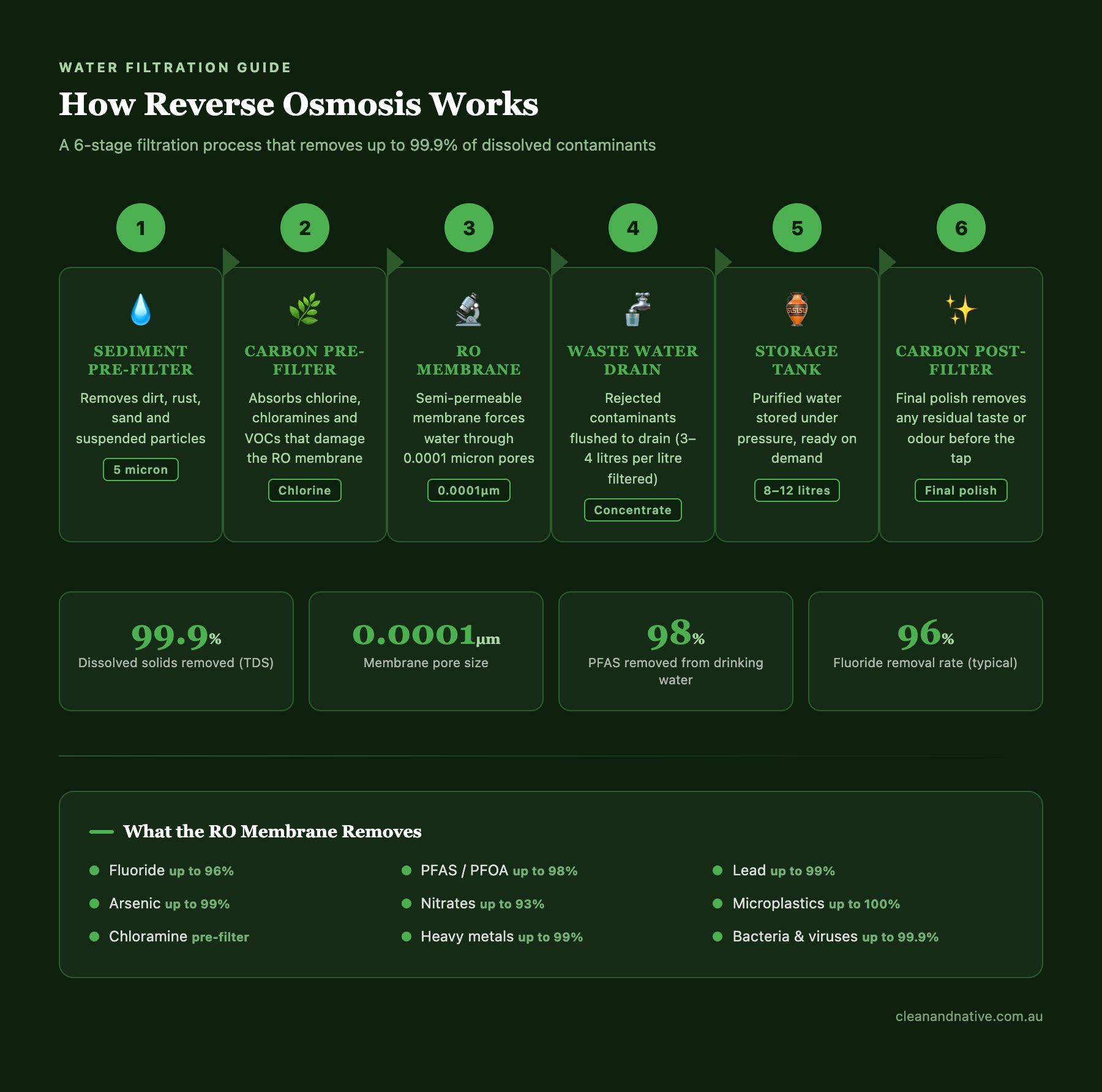
How the 6-Stage Filtration Process Works
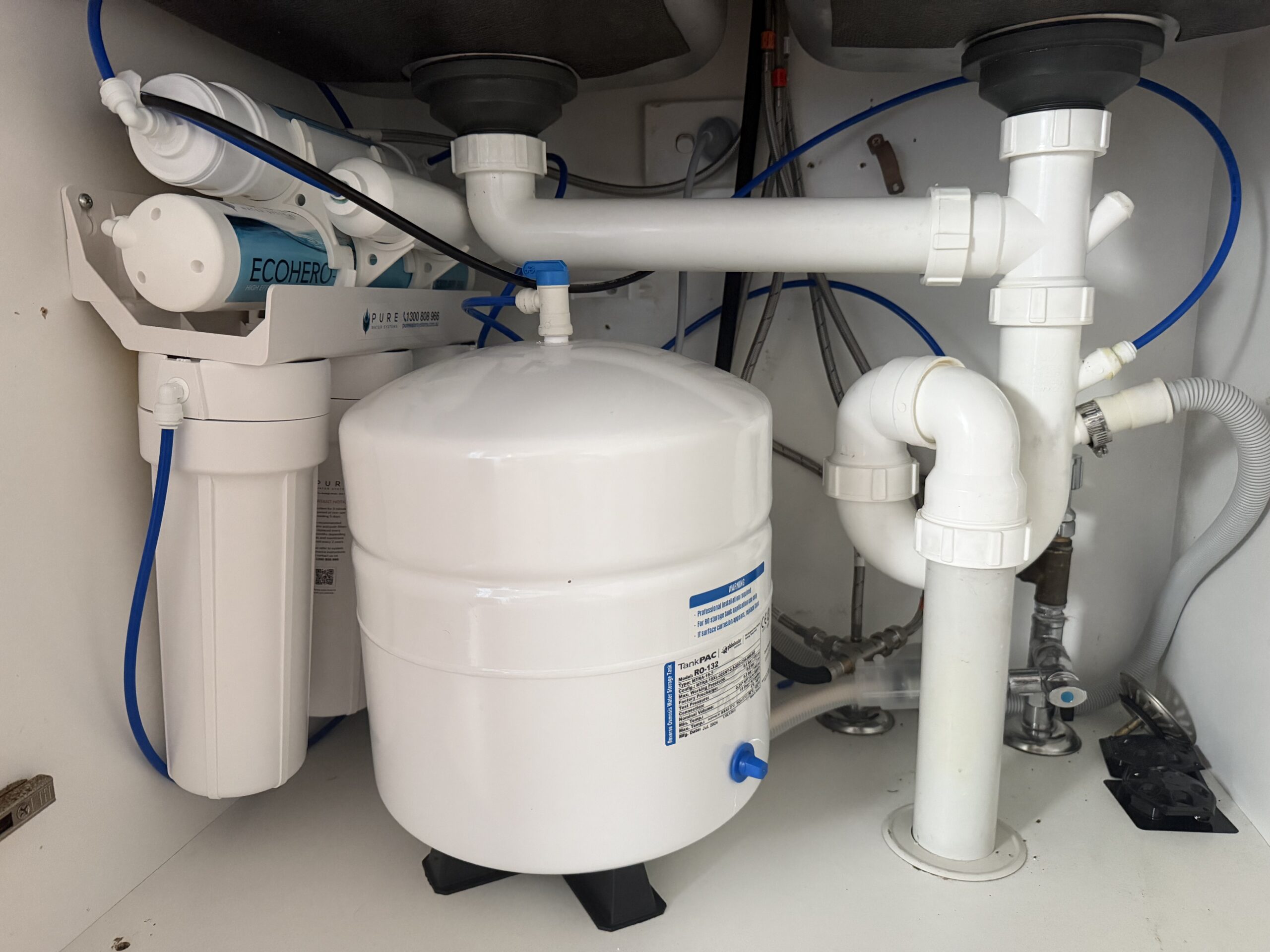
A basic RO unit uses three to four stages. Higher-quality systems — including most of those we recommend — use five to six stages, adding remineralisation and UV sterilisation for a more complete result. Here’s what each stage does and why it matters.
Stage 1 — Sediment Pre-Filter (5–10 microns)
The first filter catches visible physical contaminants: dirt, rust, sand, and other suspended particles. This stage exists primarily to protect the RO membrane from premature clogging. Skipping it would dramatically shorten membrane life. Replace every 6–12 months depending on your source water quality.
Stage 2 — Activated Carbon Block Filter
A compressed activated carbon block adsorbs chlorine, chloramines, and volatile organic compounds (VOCs). This stage is critical because chlorine, while useful in the distribution network, degrades RO membranes on contact. Most Australian utilities use chloramine rather than free chlorine — activated carbon block (not granular carbon) is necessary to address it effectively.
Stage 3 — Second Carbon Pre-Filter
Some systems add a second carbon stage before the membrane for additional chloramine and chemical reduction. In areas with higher disinfection byproduct levels — common in older distribution networks — this stage provides meaningful additional protection.
Stage 4 — RO Membrane (0.0001 microns)
This is the core of the system. The semi-permeable membrane under pressure separates purified water (the permeate) from the concentrated reject stream (the brine). The membrane removes fluoride, lead, arsenic, nitrates, PFAS, pharmaceuticals, dissolved solids, and virtually everything else at the ionic level. It typically lasts 2–3 years before replacement.
Stage 5 — Post Carbon Polishing Filter
The polishing filter improves taste and odour, removing any residual compounds that may have passed through earlier stages or leached from the storage tank. This is the last contact point before water reaches your tap, so it has a disproportionate impact on taste.
Stage 6 — Remineralisation Filter
RO water is effectively stripped of all dissolved minerals, including beneficial ones like calcium and magnesium. A remineralisation stage — typically containing calcite, magnesium oxide, or a proprietary mineral blend — adds these back in controlled amounts. This improves taste noticeably and addresses concerns about mineral-depleted water.
Some systems include a seventh stage with UV sterilisation. While RO already removes bacteria and viruses at the membrane, UV adds redundancy and is particularly useful for homes with older plumbing or tank water.
What Does Reverse Osmosis Remove From Water?
Here’s a direct, evidence-based summary of what a quality RO system removes and at what efficacy rates:
| Contaminant | Removal Rate | Australian Relevance |
|---|---|---|
| PFAS | Up to 98% | Contamination confirmed near 50+ sites nationally |
| Lead | Up to 99% | Older brass fittings and lead-jointed pipes in pre-1990s homes |
| Arsenic | Up to 99% | Present in some regional groundwater sources |
| Fluoride | 90–96% | Added by SA Water (0.6–1.1 mg/L) and Sydney Water (~0.8 mg/L) |
| Nitrates | Up to 93% | Agricultural runoff concern in rural QLD, SA, and VIC |
| Microplastics | ~100% | Found in tap water samples across all major Australian cities |
| Bacteria and viruses | 99.9%+ | Particularly relevant for tank water or boil water advisory areas |
| Chlorine and chloramines | >95% | Used for disinfection by all major Australian utilities |
| Pharmaceuticals and hormones | >95% | Trace detection increasing in recycled and surface water sources |
| Dissolved salts (TDS) | 90–98% | Adelaide TDS ~400 mg/L; Perth ~170 mg/L — both significantly reduced |
On PFAS: PFAS contamination in Australian drinking water has been confirmed near former defence bases, airports, and fire training facilities across every state and territory. Consistent regulatory limits remain inconsistent nationally. RO is among the most effective available treatments.
On fluoride: the Australian Drinking Water Guidelines recommend a maximum of 1.5 mg/L, with most utilities targeting 0.6–1.0 mg/L. Whether you want to remove fluoride is a personal decision — the evidence for community water fluoridation at these concentrations is well-established — but RO gives you that option at up to 96% removal efficiency. No other mainstream residential filter achieves this.
Our Top-Rated RO Systems for Australian Homes
Reverse osmosis is the only residential technology that reliably removes PFAS, fluoride, chloramine, and heavy metals — the four contaminants most Australians face.
Australian Context: Why Your City Determines Which Filter Works
This is the section most guides skip — and it’s the most important for Australians. The type of disinfectant your utility uses determines whether a standard carbon filter will help you at all.
There are two disinfection systems used across Australian cities:
- Chloramine (monochloramine): Used in Brisbane/SEQ, Sydney, Adelaide, Perth, and Darwin. Standard activated carbon (GAC) removes free chlorine efficiently but removes chloramine at roughly 1/40th the rate. A Brita-style pitcher filter installed in Brisbane is doing almost nothing for disinfection byproducts.
- Free chlorine: Used in Melbourne, Hobart, Canberra, Townsville, Cairns, and Toowoomba. Standard carbon filters work well here for chlorine taste and odour.
| City | Disinfection | Standard Carbon? | RO Effective? |
|---|---|---|---|
| Brisbane / SEQ | Chloramine | ✗ Fails for chloramine | ✓ Yes (>95%) |
| Sydney | Chloramine | ✗ Fails for chloramine | ✓ Yes (>95%) |
| Adelaide | Chloramine | ✗ Fails for chloramine | ✓ Yes (>95%) |
| Perth | Chloramine | ✗ Fails for chloramine | ✓ Yes (>95%) |
| Darwin | Chloramine | ✗ Fails for chloramine | ✓ Yes (>95%) |
| Melbourne | Free chlorine | ✓ Works for chlorine | ✓ Yes |
| Hobart | Free chlorine | ✓ Works for chlorine | ✓ Yes |
| Canberra | Free chlorine | ✓ Works for chlorine | ✓ Yes |
| Townsville / Cairns | Free chlorine | ✓ Works for chlorine | ✓ Yes |
The implication: if you’re in a chloramine city, RO isn’t just the best option — it’s one of only two that actually work (the other being a catalytic carbon block system). If you’re in a free chlorine city, a good carbon filter handles chlorine taste and odour, but RO still adds significant value for fluoride, PFAS, and hardness reduction.
Reverse Osmosis vs Other Filter Types
RO vs Activated Carbon Filters (Pitcher or Inline)
Carbon filters are excellent at removing chlorine, chloramines (with catalytic carbon), and improving taste. They’re affordable and easy to install. But they don’t remove fluoride, nitrates, PFAS, heavy metals, or dissolved salts at meaningful levels. For general taste improvement in a free chlorine city, carbon is sufficient. For comprehensive contaminant removal, it’s inadequate.
RO vs Berkey (Gravity-Fed)
Berkey removes bacteria, protozoa, some heavy metals, chlorine, and a range of chemicals — but does not effectively remove nitrates, fluoride (without optional PF-2 add-on filters), or dissolved salts. Independent third-party testing on PFAS removal has been inconsistent, and Berkey is not certified to NSF/ANSI standards for the same contaminant claims as RO systems. For off-grid or emergency preparedness it has a role. As a primary system for chemical and ionic contaminants, RO outperforms it significantly. For dedicated comparisons, see our RO vs gravity filter systems, RO vs gravity filter guide, and Big Berkey vs Doulton comparison.
RO vs Hollow Fibre / Ultrafiltration (UF)
Hollow fibre and UF membranes filter down to 0.01–0.1 microns — effective for removing protozoa and bacteria, useful for tank water. They don’t remove dissolved contaminants including fluoride, PFAS, heavy metals, or nitrates. An excellent option for microbiological risk; not a substitute for chemical filtration.
RO vs Ion Exchange (Water Softeners)
Ion exchange softeners address hardness (calcium and magnesium) by replacing those ions with sodium. They’re not designed to remove PFAS, heavy metals, fluoride, or nitrates. They serve a different purpose and are often used alongside RO rather than as an alternative — particularly useful in Adelaide and Perth where hardness is high.
Reverse Osmosis Pros and Cons
Advantages
- Broadest contaminant removal — the only residential technology that removes fluoride, PFAS, nitrates, heavy metals, and dissolved salts in a single pass
- NSF/ANSI certified options — third-party tested against specific contaminant claims
- Works on chloramine — unlike standard carbon, RO pre-stages handle chloramine cities correctly
- Passive operation — once installed, no user action required
- Renter-friendly countertop options — AquaTru and Waterdrop countertop models require no plumbing modification
Disadvantages
- Waste water — traditional tank systems reject 2–4 L per litre filtered; modern tankless systems improve this to ~1:1
- Slower output — stored in a tank; flow rate lower than inline carbon filters
- Removes some beneficial minerals — remineralisation stage addresses this; standard in 5–6 stage systems
- Maintenance required — pre-filters every 6–12 months; membrane every 2–3 years
- Higher upfront cost — under-sink installation adds cost compared to pitcher filters
Is RO Right for Your Australian Home?
RO makes strong sense if you:
- Live near a PFAS contamination site or in a region with elevated nitrates (rural QLD, SA, Northern VIC)
- Have a pre-1990 home with lead-jointed pipes or old brass fixtures
- Want to remove fluoride from your drinking water
- Have infants, immunocompromised household members, or are pregnant
- Use tank water as your primary source
- Live in a chloramine city (Brisbane, Sydney, Adelaide, Perth, Darwin) and want genuine chemical removal
- Live in Adelaide or Perth where high TDS (~400 mg/L and ~170 mg/L respectively) significantly affects taste
RO may be more than you need if you:
- Live in Melbourne, Hobart, or Canberra with no lead plumbing and only want chlorine taste/odour removed — a catalytic carbon inline filter is sufficient and cheaper
- Are a single-person household with low consumption — maintenance cost is less easily justified
For a deeper look at what your tap water actually contains before you filter it, start with what’s actually in Australian tap water — a state-by-state breakdown. For product recommendations, see our ranked guide to the best water filters in Australia.
Ready to choose the right filter?
We have ranked the best countertop and under-sink RO systems available in Australia — including options for renters who cannot modify their plumbing.
See the Top-Rated Water Filters →Frequently Asked Questions
Does reverse osmosis remove fluoride from Australian tap water?
Yes. A quality RO system removes 90–96% of fluoride. This is the only mainstream residential filtration technology that reliably achieves this — activated carbon, hollow fibre, and UV do not remove fluoride at meaningful levels. Sydney Water targets ~0.8 mg/L; SA Water targets 0.6–1.1 mg/L. After RO, levels typically drop below 0.05 mg/L.
Does reverse osmosis remove chloramine?
Yes, and this is one of the most important distinctions for Australians. The carbon pre-stages in an RO system are sized to handle chloramine. Brisbane, Sydney, Adelaide, Perth, and Darwin all use chloramine as their primary disinfectant. Standard carbon pitcher filters (Brita, etc.) remove almost no chloramine from these water supplies — you need catalytic carbon or RO.
How much water does a reverse osmosis system waste?
Traditional tank-based RO systems produce roughly 2–4 litres of drain (reject) water per litre of filtered output. Modern tankless systems like the Waterdrop D6 achieve close to 1:1, significantly reducing waste. If water efficiency is a concern, specify a tankless system or add a permeate pump to a traditional model.
How often do RO filters need replacing?
Sediment and carbon pre-filters need replacing every 6–12 months depending on source water quality. The RO membrane lasts 2–3 years under normal residential use. The post-carbon polishing filter needs replacement annually. Most modern systems include replacement reminders or app notifications.
Is reverse osmosis water safe to drink every day?
Yes. RO water is safe for daily consumption. The claim that demineralised water leaches minerals from the body is not supported by the weight of scientific evidence at typical residential consumption levels. A remineralisation stage (standard in 5–6 stage systems) restores calcium and magnesium. The WHO has reviewed this question and concluded RO water is suitable for long-term consumption.
What TDS reading should my RO water produce?
A well-functioning RO system produces water with TDS of 10–50 mg/L, down from typical Australian tap readings of 60–400 mg/L. Adelaide tap water runs ~400 mg/L TDS; Perth ~170 mg/L; Melbourne ~60 mg/L. If your post-RO TDS reads above 100 mg/L, the membrane may be near end of life.
Can renters install a reverse osmosis system?
Yes, with a countertop RO system. Units like the AquaTru Classic sit on the benchtop, require no plumbing modification, and move with you. Under-sink systems require drilling a hole for a dedicated tap, which most landlords need to approve. Countertop RO is the recommended default for renters. Our AquaTru vs Clearly Filtered pitcher comparison covers the top countertop options.
How does reverse osmosis compare to boiling water?
Boiling kills bacteria and viruses — for a full technology breakdown, see our reverse osmosis vs standard water filter guide. Boiling does not remove chloramine, fluoride, PFAS, heavy metals, or nitrates. Boiling actually concentrates dissolved solids as water evaporates — TDS increases. Boiling is appropriate during a microbiological boil water alert; it is not a substitute for filtration when chemical contaminants are the concern. RO addresses both simultaneously.
Get 10% Off Your Water Filter
Enter your email below to unlock an exclusive discount code for PureWaterSystems.com.au — Australia's leading supplier of NSF/ANSI-certified filtration.
Get the Australian Home Environment Checklist
30 checks across water, air and EMF. Most of them free. Ranked by impact.
No spam. Unsubscribe any time.

Former Royal Australian Navy Clearance Diver and TAG-E counter-terrorism operator. Founded Clean and Native to apply the same rigorous thinking to the home environment.
Full biography →