
Earthing Side Effects: What to Expect When You Start Grounding (Australia 2026)
Most earthing side effects are mild, temporary, and resolve within one to two weeks of consistent use. The most commonly reported experiences are tingling or warmth in the hands and feet, brief fatigue, and changes in sleep quality — all consistent with the body equalising its electrical potential with the earth’s surface after prolonged electrical isolation. If you are experiencing unusual sensations after starting a grounding mat or spending time barefoot on the ground, this article gives you a systematic breakdown of what is happening, what is normal, what is not, and who should speak to a doctor before continuing.
Quick Verdict
Most earthing side effects are temporary. One clinical interaction — blood thinners — requires medical supervision.
| Side effects | Tingling, fatigue, vivid dreams — all normalise within 1–2 weeks |
| Medical red flag | On warfarin or blood thinners — see GP before starting |
| Best first step | Start with 20–30 min barefoot outdoors before buying any gear |
Earthing Side Effects at a Glance
The table below summarises every documented adjustment response, how common it is, typical duration, and the recommended action. This is the reference most people are looking for.
| Side Effect | How Common | Duration | What to Do |
|---|---|---|---|
| Tingling / warmth in hands and feet | Very common | 1–2 weeks | Normal — reduce session to 15 min if intense |
| Fatigue / drowsiness | Common | 3–7 days | Allow extra sleep; cortisol rhythm resetting |
| Vivid dreams | Common (overnight use) | 1–2 weeks | Start with daytime grounding first |
| Headaches | Occasional | Session-only | Check earth connection; switch to outdoor grounding |
| Increased joint awareness | Rare | Ongoing if arthritic | Stop; consult GP or rheumatologist |
| ⚠ Blood thinner interaction | All users on anticoagulants | Ongoing | See GP before starting — INR monitoring required |
What Is Actually Happening When You Earth: The Physics First
Before cataloguing side effects, it is worth being precise about what earthing does at a physical level — because most of the sensations people report make more sense once you understand the mechanism.
The earth’s surface carries a net negative charge, maintained continuously by global atmospheric electrical activity including lightning strikes (approximately 40 to 50 per second worldwide). When a conductive path is established between your skin and the earth — bare feet on grass, a grounding mat connected to the earth pin of a wall socket, or a grounding rod driven into soil outside — electrons can flow from the earth into your body until electrical equilibrium is reached.
The human body, particularly one that spends most of its time in rubber-soled shoes on insulated flooring, can carry a measurable positive surface charge relative to earth. Research published in the Journal of Environmental and Public Health (Chevalier et al., 2012) documented that grounding the body reduces body voltage by several orders of magnitude — in some cases from hundreds of millivolts to near zero within seconds of contact.
That rapid electron transfer is what people are feeling when they report tingling. It is not imaginary. It is physics.

What is less certain — and what this article will be honest about — is the degree to which that electron transfer produces measurable health outcomes, and whether some of the experiences people report represent genuine physiological change or expectation effects. The evidence base is growing but not yet conclusive on all claims. For a full review of the science, see Does Earthing Work? The Scientific Evidence.
The Most Common Earthing Side Effects: A Systematic Breakdown
The following side effects are drawn from published earthing research, practitioner-reported observations, and the clinical literature on biological responses to electrical grounding. Where a side effect has no peer-reviewed basis, that is stated explicitly.
1. Tingling or Prickling Sensations (Hands, Feet, Legs)
This is the single most commonly reported sensation when starting earthing, and it is the one that causes the most concern. In most cases, it is benign and indicates that electron flow is occurring.
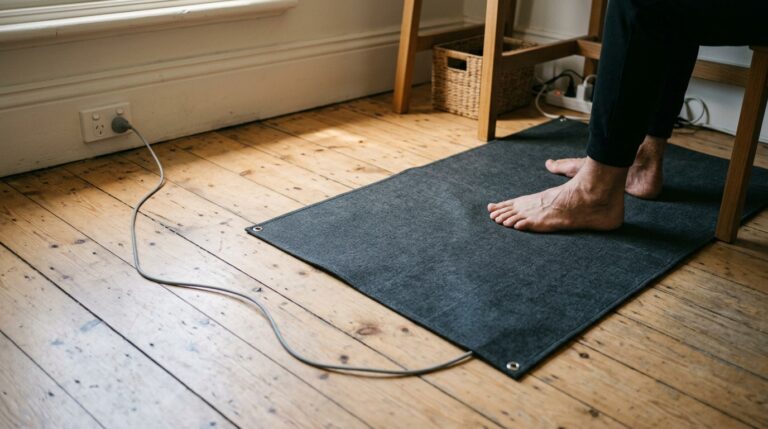
The sensation is most pronounced in the extremities — hands and feet — because these areas have high concentrations of sensory nerve endings and because the electrical potential difference between body and earth is being equalised from the point of contact outward. Users who begin with a grounding mat placed under their desk (foot contact) most often report tingling in the soles of the feet and occasionally up the lower legs.
In the Chevalier et al. (2012) controlled trial published in the Journal of Environmental and Public Health, 42% of participants reported some form of physical sensation during initial grounding sessions. None of these were classified as adverse events.
Timeline: In the majority of users, tingling reduces significantly after one to two weeks of consistent daily use. The body reaches a new electrical baseline and the sensation of equalisation diminishes. If tingling persists beyond two weeks at the same intensity, or is accompanied by numbness, that warrants a conversation with your GP — not because earthing has caused a problem, but because persistent tingling in the extremities has independent clinical causes that should be ruled out (peripheral neuropathy, B12 deficiency, poor circulation).
When tingling is not from earthing: If you are experiencing tingling only in one limb, or it comes with weakness or loss of sensation, that is not an earthing response. Stop and see a doctor.
2. Temporary Fatigue in the First Week
A significant number of people who begin overnight grounding — using a grounding sheet or mat in bed — report feeling more tired than usual during the first three to seven days. This is counterintuitive given that earthing research consistently shows improvements in sleep architecture, but there is a plausible explanation.
A 2004 study by Ghaly and Teplitz published in the Journal of Alternative and Complementary Medicine measured cortisol secretion profiles in grounded versus ungrounded sleepers over six weeks. Grounded subjects showed normalisation of the cortisol curve — specifically, a shift toward lower night-time cortisol and higher morning cortisol. For people whose cortisol was previously dysregulated (elevated at night, suppressed in the morning), this recalibration can initially produce deeper, more restorative sleep — and waking from genuinely restorative sleep after a period of poor sleep quality can feel like fatigue because the body is catching up on sleep debt.
In plain terms: if you have been sleeping poorly for years and suddenly begin sleeping more deeply, the first week often feels like you are catching up on a debt. That is not a side effect of earthing causing fatigue — it is the effect of sleeping properly for the first time in a while.
What to watch for: Fatigue that persists beyond two weeks of consistent use, or fatigue accompanied by other symptoms (headache, digestive changes, mood disruption), should not be attributed to earthing. See your GP.
3. Vivid Dreams and Changes in Sleep Quality
Changes in dreaming are among the more surprising reports from new earthing users. People who previously reported dreamless or fragmented sleep describe vivid, sometimes intense, dreams during the first one to three weeks of grounded sleep.
The mechanism here is reasonably well understood. The Ghaly and Teplitz (2004) cortisol study documented changes in sleep stage architecture in grounded subjects. REM sleep — the stage during which dreaming occurs — is suppressed by elevated night-time cortisol. As cortisol normalises, REM sleep increases, and with it, dream activity. This is the same mechanism by which people who stop drinking alcohol experience a dramatic increase in vivid dreaming during the first week of sobriety (alcohol suppresses REM sleep).
This is not a negative effect. It is a measurable physiological shift. However, for some people — particularly those processing stress or trauma — suddenly increased dream intensity can feel disruptive. If that is the case, consider beginning with short daytime grounding sessions (20 to 30 minutes) before transitioning to overnight use.
4. Temporary Muscle Soreness or Joint Awareness
Some users — particularly those with chronic inflammation, arthritis, or long-standing musculoskeletal complaints — report a brief period of increased awareness of their joints or muscles during the first week of earthing. This is often described as a mild ache or heightened sensitivity rather than sharp pain.
The published basis for this is limited. One plausible explanation comes from the anti-inflammatory research: Oschman et al. (2015), published in the Journal of Inflammation Research, proposed that grounding facilitates electron transfer to free radicals at sites of inflammation, reducing oxidative stress. If this mechanism is real, then areas with existing inflammation may be more reactive to the change — analogous to how a healing wound can be temporarily more sensitive during the repair process.
Important caveat: This explanation is theoretical and not confirmed by a randomised controlled trial specifically designed to test it. The honest position is that we do not fully know why some people with joint conditions report temporary soreness. If you have existing joint or muscle conditions and experience significant worsening of pain after starting earthing, stop and consult your treating practitioner.
5. Warmth or a Mild Heat Sensation
Some users report a sensation of warmth — particularly in the feet and legs — during grounding sessions. This is consistent with documented evidence that grounding improves peripheral circulation.
Sinatra et al. (2011) published thermographic imaging data in the Journal of Alternative and Complementary Medicine showing increased peripheral blood flow in grounded subjects compared to ungrounded controls, visible on infrared imaging. Improved peripheral circulation produces a warmth sensation. This is generally considered a positive response.
6. Headache — The Least Common but Most Reported Online
Headache is frequently mentioned in online earthing communities as a side effect, but it does not appear in any of the published controlled earthing studies as a documented adverse event. This discrepancy matters.
The most likely explanations for headaches reported by earthing beginners are:
- Dehydration — grounding sessions are often associated with increased time spent lying still or sitting, and people forget to drink water
- Expectation effects — headache is a non-specific symptom triggered by many variables
- Coincidental causes unrelated to earthing (screen time, caffeine, stress)
- In rare cases, the grounding mat itself may be picking up stray voltage if the local wiring has issues — this is worth testing if headaches are consistent and reproducible during sessions
If you are getting headaches consistently during or immediately after grounding sessions, check that your grounding mat is connected properly and that your wall socket’s earth pin is actually earthed. In older Australian homes — particularly pre-1980s construction — earth connections can be degraded or absent. A simple socket tester (available at most hardware stores) will tell you. ARPANSA guidelines on residential electrical safety are relevant context here if you are using indoor grounding equipment connected to mains earthing.
The “Detox” Claim: What the Evidence Actually Says
A substantial portion of the earthing wellness community attributes early side effects — fatigue, soreness, vivid dreams, even headache — to “detoxification.” The claim is that grounding accelerates the removal of toxins from the body, and that symptoms are the body processing this release.
This is not supported by peer-reviewed evidence. There is no published study demonstrating that earthing increases urinary excretion of heavy metals, organic compounds, or any other measurable detoxification marker. The body’s detoxification systems (hepatic metabolism, renal filtration, lymphatic drainage) are not known to be regulated by surface electrical charge.
That does not mean the side effects are not real — tingling, fatigue, and vivid dreams are real and have plausible physiological explanations as documented above. It means the “detox” framing is not supported by the available evidence and should not be the explanation you rely on.
The honest position: early earthing side effects are likely explained by cortisol recalibration, improved sleep architecture, and electron transfer to inflammatory sites. “Detox” is a label applied to real phenomena with an unsupported mechanism.
Who Should Be Cautious About Earthing: Medical Considerations
For the majority of healthy adults, earthing at safe voltage levels carries no documented risk. However, there are specific populations where caution is appropriate and, in some cases, where medical consultation before starting is the correct course of action.
People on Anticoagulant Medication
This is the most evidence-based caution in the earthing literature and should not be dismissed.
Sinatra et al. (2013) published a case series in Alternative Therapies in Health and Medicine documenting changes in blood viscosity and coagulation parameters in patients who began earthing while on anticoagulant therapy. Specifically, earthing appeared to reduce blood viscosity (thin the blood) in a manner consistent with its proposed anti-inflammatory mechanisms. In patients already taking warfarin, aspirin therapy, or other anticoagulants, this additive effect could theoretically increase bleeding risk.
The authors explicitly recommended that patients on anticoagulant therapy who wish to begin earthing do so under medical supervision, with regular INR monitoring if on warfarin.
This is the one area of earthing safety where there is peer-reviewed evidence of a genuine clinical interaction. If you are on blood thinners of any kind — including prescription anticoagulants (warfarin, apixaban, rivaroxaban, dabigatran) or regular aspirin therapy — speak to your GP before beginning earthing. This is not a precautionary overstatement. It is the recommendation of the researchers who conducted the relevant study.
People with Implanted Cardiac Devices (Pacemakers, ICDs)
There is no published study demonstrating that earthing at standard ground potential levels interferes with pacemakers or implantable cardioverter-defibrillators. Grounding mats and sheets designed for earthing do not emit electromagnetic fields — they are passive conductive devices. The theoretical concern is that any electrical connection to an external potential could, in theory, introduce a signal that an implanted device might detect.
In practice, the voltages involved in earthing are at earth potential (0V relative to earth), meaning there is no current drive — electrons flow only to equalise potential and then stop. This is fundamentally different from a powered electrical device, which maintains a voltage differential.
That said, the precautionary position — and the one I would apply if I were advising someone personally — is to consult the cardiologist who manages your device before starting earthing. The risk is probably zero. “Probably” is not good enough when the consequence of being wrong is a cardiac event.
People with Epilepsy
No published earthing study has reported seizure-related adverse events. There is no identified mechanism by which earthing at ground potential would increase seizure risk. However, if vivid dreams or changes in sleep architecture are documented triggers for your epilepsy, the changes in sleep quality associated with initial earthing should be discussed with your neurologist before beginning overnight grounding.
Pregnant Women
No studies have been conducted on earthing in pregnancy. The absence of evidence is not evidence of harm, but it also means no safety data exists. Standard precautionary advice applies: consult your obstetrician or midwife before introducing any new health practice during pregnancy.
When Tingling Is Not Normal: Red Flags to Watch For
Tingling that resolves or reduces progressively over one to two weeks of consistent earthing is expected and benign. The following scenarios warrant stopping earthing and seeking medical assessment — not because earthing has definitely caused a problem, but because they are symptoms that require clinical evaluation independent of earthing:
- Tingling that is one-sided (only in one arm, hand, leg, or foot)
- Tingling accompanied by weakness, loss of grip strength, or difficulty walking
- Tingling that is not reducing after two full weeks of daily use
- Heart palpitations or irregular heartbeat during or immediately after grounding sessions
- Chest discomfort of any kind during grounding
- Severe headache with neck stiffness or visual disturbance
- Any symptom that you would normally consider reason to see a doctor — the fact that it coincides with starting earthing does not mean earthing caused it, and it does not mean you should wait to get it checked
The ADWG (Australian Drinking Water Guidelines) principle of precaution is applicable in spirit here: the threshold for seeking professional advice should be low when symptoms are persistent or affecting quality of life.
Practical Steps to Minimise Discomfort When Starting Earthing
Most side effects can be reduced or eliminated by starting with shorter sessions and building duration gradually. The following protocol is systematic and avoids the most common mistakes people make when beginning earthing:
Week One: Short Daytime Sessions Only
Start with 20 to 30 minute grounding sessions during the day — either barefoot on grass, sand, or concrete, or using a grounding mat indoors. Do not begin with overnight use. This allows your body to begin electrical equalisation without the additional variable of sleep architecture changes.
Australian environments well suited to outdoor earthing: beach sand (highly conductive due to moisture content and mineral composition), lawn grass after watering, concrete paths (earthed when in contact with soil). Asphalt, sealed pavers, and synthetic turf are not conductive.
Week Two: Extend Sessions and Introduce Overnight if Desired
If daytime sessions are comfortable — tingling is mild and reducing — extend to 45 to 60 minutes and consider introducing a grounding sheet for sleep. Expect the first few nights to involve more vivid dreaming and potentially more tiredness the following day. This is expected and generally resolves by the end of week two.
Hydration
Drink water consistently during and around grounding sessions. Hydration affects skin conductivity and overall electrical properties of the body. This is not a specific earthing recommendation — it is basic physiology. Dehydrated tissue is less conductive and will have a different response to electron transfer than adequately hydrated tissue.
Check Your Equipment
If you are using an indoor grounding mat, verify that your wall socket’s earth connection is functional. A basic socket tester costs under $20 at most Australian hardware stores and will indicate whether the earth pin is connected. Grounding mats connected to a faulty earth — particularly in older Australian homes — provide no benefit and may, in rare wiring fault scenarios, create a genuine risk. This is worth five minutes and $20 to verify.
For a detailed guide to choosing and evaluating grounding equipment, see Best Grounding Mat Australia 2026.
For a full safety assessment of earthing practice, see Is Earthing Safe?.
EMF Measurement
You cannot reduce what you have not measured.
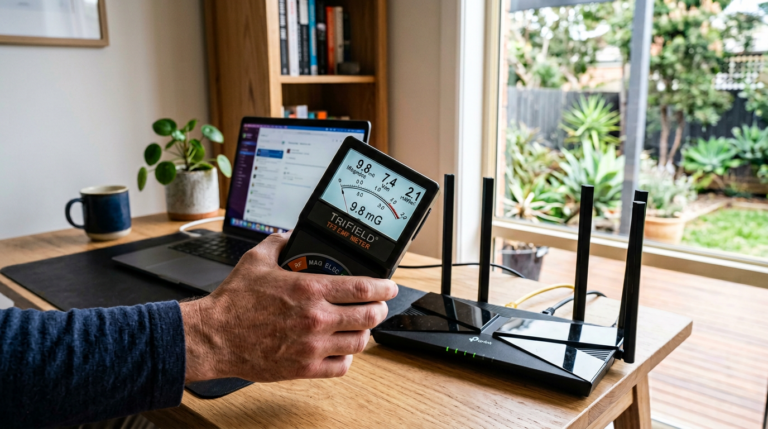
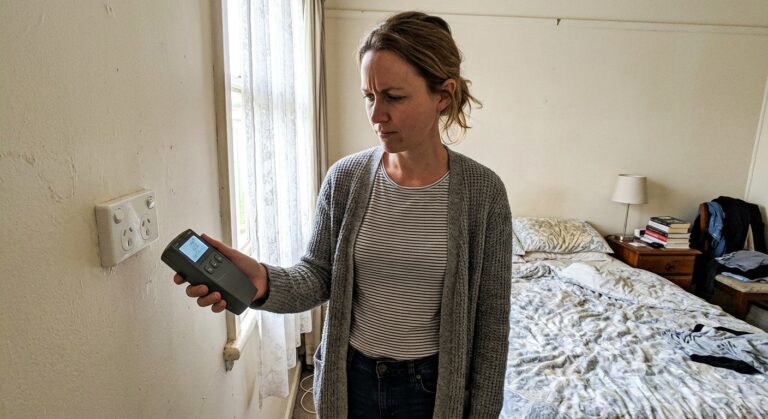
The TriField TF2 measures AC magnetic, AC electric, and RF/microwave fields in a single meter. It is what I use to audit rooms at the Palm Beach house. The readings determine the action — not guesswork.
See the TriField TF2 Review →Earthing Side Effects Compared: Indoor Grounding Mats vs Outdoor Barefoot Grounding
The side effect profile is not identical between indoor and outdoor earthing, and understanding the differences helps you interpret what you are experiencing.
| Variable | Outdoor Barefoot Grounding | Indoor Grounding Mat |
|---|---|---|
| Conductivity | Variable — depends on surface moisture, soil type | Consistent — determined by mat material and socket earth quality |
| Tingling intensity | Generally lower — larger contact surface, more diffuse | Can be more pronounced — concentrated contact area |
| Sleep effect onset | Not applicable (outdoor is typically daytime) | Within 1-3 nights of grounded sleeping |
| Voltage risk | Negligible — no mains connection | Low but requires verified earth connection |
| Additional EMF exposure | None | None from mat itself — but proximity to mains wiring is a variable |
| Stray voltage risk | Negligible in residential outdoor areas | Possible in homes with wiring faults — test with socket tester |
| Cost to begin | Zero | $60 to $250 AUD depending on mat type |
Practical recommendation: If you are uncertain about side effects or want to minimise variables, start outdoors. Twenty minutes barefoot on the grass or at a Queensland beach costs nothing, has no equipment risk, and will tell you quickly whether you are sensitive to the initial electrical equalisation effect. If outdoor grounding is comfortable, transitioning to an indoor mat for overnight use is a logical next step.
Australian-Specific Context: Environment and Earthing Conditions
Australia‘s climate and geography create some of the best natural earthing conditions in the world. This is relevant to side effect management because outdoor earthing on high-conductivity surfaces tends to produce a more gradual, comfortable equalisation experience than concentrated indoor mat contact.
Beach sand: Wet sand is among the most conductive natural surfaces available. Coastal Queensland, New South Wales, Western Australian beaches — all are excellent earthing environments. The combination of mineral-rich sand, salt water content, and broad foot contact means rapid equalisation with lower concentrated tingling.
Lawn after watering: Dry Australian summer lawns have significantly reduced conductivity compared to moist post-watering grass. If you are grounding on lawn, do it after watering or in the early morning when dew is present.
Concrete vs asphalt: Bare concrete that is in contact with soil below — pathways, driveways — is conductive. Sealed asphalt is not. This matters because many Australians assume suburban footpaths are grounded; they may not be depending on the surface composition.
Indoor electrical environment: Older Australian homes — particularly those built before the 1980s — may have degraded or absent earth connections. The AS/NZS 3000 Wiring Rules require earth connections in modern construction, but heritage or unrenovated properties may not meet current standards. If your grounding mat feels unusually intense or produces unexpected sensations, have an electrician verify your earth connection before continuing.
What the Research Does and Does Not Tell Us About Side Effects
This section exists because most earthing content online either overclaims the evidence or dismisses it entirely. Neither position is accurate.
What the published research documents:
- Reduction in body voltage during grounding (Chevalier et al., 2012)
- Normalisation of cortisol secretion patterns with overnight grounding (Ghaly and Teplitz, 2004)
- Reduction in subjective pain and sleep disturbance (Ghaly and Teplitz, 2004)
- Changes in blood viscosity consistent with reduced coagulation (Sinatra et al., 2013)
- Improved peripheral circulation visible on thermographic imaging (Sinatra et al., 2011)
- Reduction in inflammatory markers in delayed-onset muscle soreness (Brown et al., 2015, Open Access Journal of Sports Medicine)
What the research does not document:
- Any confirmed adverse events from earthing in published controlled trials
- Detoxification effects measured by excretion of specific compounds
- Long-term safety data beyond six to twelve week study periods
- Mechanism of action confirmed at molecular level for all claimed effects
Limitations of the current evidence base: Most earthing studies are small (under 100 participants), conducted by researchers with a declared interest in earthing, and not yet replicated by independent groups. This does not mean the findings are wrong — it means they are preliminary and require independent replication before being treated as established science.
The position of this site: earthing is low-risk, has a plausible physical mechanism, and early research is promising. The side effects documented here are real and have physiologically coherent explanations. The evidence does not yet support claiming earthing cures or prevents any specific disease.
Adjusting Your Earthing Practice Based on Side Effects
Side effects in the first two weeks should influence how you adjust your practice — not whether you stop entirely (unless a medical red flag appears). The following adjustments are systematic and evidence-informed:
If tingling is intense: Reduce session length to 10 to 15 minutes and build up over two weeks. Use outdoor barefoot grounding on beach sand rather than a concentrated mat contact point. Ensure you are well hydrated before sessions.
If fatigue is affecting daily function: Shift overnight grounding sessions to ensure you are in bed with adequate time for your usual sleep duration plus one additional hour in the first week. The initial sleep debt catch-up period requires more total sleep time.
If vivid dreams are disruptive: Begin with daytime-only grounding for two weeks before transitioning to overnight use. This allows cortisol normalisation to begin gradually before sleep architecture changes are introduced.
If headaches are consistent during sessions: Test your wall socket earth connection. Move the grounding mat further from active power cables. Try outdoor grounding instead to eliminate the indoor electrical environment as a variable. If headaches persist only during grounding sessions across multiple surfaces and locations, stop and consult a GP.
If joint awareness increases: This is the side effect with the weakest evidence base for a positive explanation. If you have an existing inflammatory joint condition and soreness clearly increases after beginning earthing and reduces when you stop, the most prudent action is to stop and discuss with your rheumatologist or GP before trying again.
Ready to try grounding?
Premium Grounding ships certified mats and sheets to Australia. Start with 20–30 min daily.
Start with a measurement, not a purchase.
Most EMF reduction advice skips the step that makes everything else meaningful — knowing your actual readings. Our measurement guide covers the room-by-room protocol used at the Palm Beach house.
EMF Measurement Guide →Ready to Try Earthing? Our Picks for Australians
Most of the side effects in this article are adjustment responses — they pass within two weeks. If you have read this far and want to start, here is the most sensible path: 20 minutes barefoot on grass or wet sand costs nothing and has the same physical mechanism as any mat. If you want to extend that to your desk or your sleep, these are the two products we recommend based on testing and verified specifications.
Best for desk workers
Premium Grounding Universal Mat
Carbon/PU surface — wipes clean, doesn’t absorb sweat. 4.8m cord with 100kΩ inline resistor. Body voltage drop tested to 0.03–0.07V AC. ~$129–$149 AUD.
- Desk or floor use
- Rolls up for travel
- Verified AU earth connection
Best for overnight earthing
Earthing Oz Grounding Sheet
Organic cotton with woven silver thread. 6–9 hours passive overnight earthing — no positioning discipline required. 90-day trial. $229–$280 AUD.
- Australian-stocked, local support
- Replicates research protocols
- Queen and king sizes available
We earn a small commission at no cost to you if you buy through these links. We only recommend products we have tested and verified at the Palm Beach house.
Frequently Asked Questions: Earthing Side Effects Australia
Is tingling during earthing dangerous?
In the majority of cases, no. Tingling during earthing is the sensory experience of electrons equalising between the earth and your body — a documented physical process. It is most pronounced in the hands and feet, typically reduces within one to two weeks of consistent use, and was not classified as an adverse event in any published earthing clinical trial. Tingling that is one-sided, accompanied by weakness or numbness, or that does not reduce after two weeks warrants a GP visit independent of earthing.
Why do I feel more tired after starting earthing?
Temporary fatigue in the first week of overnight grounding is the most commonly documented adjustment response. The most evidence-supported explanation is that grounding normalises cortisol secretion patterns (documented in Ghaly and Teplitz, 2004), producing deeper, more restorative sleep. People catching up on sleep debt after a period of poor sleep quality often feel more tired before they feel better. If fatigue persists beyond two weeks or is severe, consult a GP.
Can earthing interfere with my medications?
There is one documented clinical interaction: anticoagulant medications. Sinatra et al. (2013) documented changes in blood viscosity in earthed patients on anticoagulant therapy, recommending medical supervision and INR monitoring for warfarin patients who begin earthing. If you are on any blood-thinning medication — warfarin, aspirin therapy, novel anticoagulants — inform your GP before starting earthing and ask for INR monitoring if you are on warfarin. Do not self-adjust medication doses based on perceived changes in bleeding or bruising during earthing.
How long do earthing side effects last?
In the published research, adjustment symptoms — tingling, fatigue, vivid dreams, headaches — typically resolve within one to two weeks of consistent daily earthing. Sleep quality improvements are reported from day three to day seven. If a side effect is still present and disruptive after four weeks, it is unlikely to be an adjustment response and warrants clinical assessment.
Can earthing cause headaches?
Headaches are occasionally reported, most often in indoor earthing setups near active power circuits. If your grounding mat is plugged into a wall socket with a poor earth, or is positioned close to high-current cables, you may be experiencing field exposure rather than field reduction. Test with outdoor barefoot grounding — if headaches do not occur outdoors, the issue is the indoor electrical environment, not earthing itself. Persistent headaches during outdoor grounding warrant a GP visit.
Is grounding safe to do every day?
Published clinical trials have used daily protocols of 30 to 90 minutes without reporting adverse events. Overnight grounding — 6 to 8 hours nightly — was used in the Ghaly and Teplitz (2004) cortisol study without adverse events. There is no evidence that daily grounding at typical durations causes harm. The exception is anticoagulant medication users, who should use daily grounding only under GP supervision with INR monitoring.
Can children and elderly people use grounding mats safely?
There is no published evidence of harm from earthing in children or elderly populations. Children who spend time barefoot outdoors are already earthing naturally. For elderly individuals on multiple medications — particularly anticoagulants or antihypertensives — discuss with a GP before starting a mat-based grounding protocol, as the blood viscosity and circulation changes documented in research may interact with medication dosing.
Do I need a grounding mat or can I just go barefoot outside?
Outdoor barefoot grounding on moist soil, grass, sand, or concrete is the original and most evidence-supported form of earthing. It requires no equipment and has the same physical mechanism as mat-based grounding. Grounding mats are useful when outdoor access is limited — high-rise apartments, office environments, cold climates, or overnight use. For most Australians with garden access, 20 to 30 minutes barefoot on wet grass or beach sand each morning achieves the same electron transfer as a mat session.
Best Earthing Products Australia 2026: Mats, Sheets, Pillowcases & Bands
Compare every earthing product category tested in Australia →Get the Australian Home Environment Checklist
30 checks across water, air and EMF. Most of them free. Ranked by impact.
No spam. Unsubscribe any time.

Former Royal Australian Navy Clearance Diver and TAG-E counter-terrorism operator. Founded Clean and Native to apply the same rigorous thinking to the home environment.
Full biography →