Grounding Mat for Fibromyalgia Australia 2026
Earthing (grounding) may help manage fibromyalgia symptoms through electron transfer mechanisms that reduce chronic inflammation and normalise cortisol — but no large randomised controlled trial has specifically tested earthing for fibromyalgia, and the existing evidence comes from small pilot studies. If you are one of the estimated 400,000 to 1.3 million Australians living with fibromyalgia, a grounding mat is a low-risk, low-cost complementary approach worth trialling alongside your existing treatment — not a replacement for it.
Grounding mats are a low-cost, low-risk complementary tool that may reduce chronic inflammation and improve sleep quality in fibromyalgia — but they are not a cure and should not replace medical treatment. Pilot studies (Chevalier et al., 2012; Ghaly & Teplitz, 2004) show measurable cortisol normalisation and subjective pain reduction in small cohorts. No large RCT has tested earthing specifically for fibromyalgia. For daytime desk grounding, the Premium Grounding Universal Mat ($89–$119) is the most practical starting point. For overnight grounding — which directly targets the sleep disruption central to fibromyalgia — a grounding half sheet provides continuous 6–8 hour contact.
| Product | Use Case | Verdict |
|---|---|---|
| Premium Grounding Universal Mat | Daytime desk/feet grounding | Recommended — best starting point |
| Premium Grounding Half Sheet | Overnight sleep grounding (6–8 hrs) | Recommended for sleep disruption |
| Earthing Oz Grounding Mat | Australian-made alternative | Good AU option — 90-day trial |
Key catches
- No large RCT exists for earthing + fibromyalgia specifically — existing evidence is pilot-level (n=8 to n=60)
- Grounding mats are not TGA-listed therapeutic goods in Australia — no therapeutic claims can legally be made
- Requires consistent use (minimum 4–6 weeks) before subjective symptom changes are likely
- Your home’s earthing system must be functional — verify with a socket tester ($12) before starting
✓ Who Should Try Grounding for Fibromyalgia
- Fibromyalgia sufferers not getting adequate relief from pregabalin, duloxetine, or amitriptyline
- People whose primary symptom is non-restorative sleep or disrupted cortisol rhythm
- Anyone willing to commit to a 4–6 week trial with a consistent symptom diary
- Home-based workers who can leave a desk mat plugged in for 6–8 hours daily
- Sceptics who want a 90-day risk-free trial before committing (Earthing Oz option)
× Who Should Adjust Expectations
- Anyone expecting a cure — no fibromyalgia-specific RCT exists; this is pilot-level evidence
- People wanting results in under 2 weeks — minimum 4–6 weeks of consistent use required
- Renters with unverified earth pins — use a socket tester () first; a faulty earth defeats the purpose
- People with implanted electrical devices (pacemakers, nerve stimulators) — consult GP before grounding
What Fibromyalgia Actually Is — and Why Conventional Treatment Falls Short
Fibromyalgia is a chronic condition characterised by widespread musculoskeletal pain, fatigue, non-restorative sleep, and cognitive dysfunction (commonly called “fibro fog”). According to Arthritis Australia, it affects approximately 2–5% of the population — between 500,000 and 1.3 million Australians — with women aged 30–55 making up roughly 80% of diagnoses. It is classified under the ICD-11 as a chronic primary pain condition (MG30.01), meaning the pain itself is the disease, not a symptom of tissue damage.
The pharmaceutical options approved in Australia for fibromyalgia management — pregabalin (Lyrica), duloxetine (Cymbalta), and amitriptyline — target nerve signalling and mood pathways. They help some people. But the numbers are sobering: according to a 2020 Cochrane review, pregabalin provides meaningful pain relief (30% or greater reduction) in only about 1 in 5 patients, while side effects including weight gain, dizziness, somnolence, and peripheral oedema affect the majority. Duloxetine performs similarly. Amitriptyline, the oldest option, causes dry mouth, constipation, and morning drowsiness at rates that lead many patients to discontinue.
This is the reality: most fibromyalgia sufferers in Australia cycle through multiple medications, rarely finding one that provides adequate relief without unacceptable side effects. The NHMRC’s 2017 review of chronic pain management acknowledged that “non-pharmacological approaches should form the foundation of chronic pain management” — not because medications do not work, but because their risk-benefit profiles in conditions like fibromyalgia are marginal at best.
That is the context for earthing. Not as a miracle cure, but as a complementary approach with a plausible mechanism, preliminary evidence, zero serious known side effects, and a cost that is a fraction of a single specialist appointment. The question is whether the evidence supports trying it — and that requires examining the inflammation connection honestly.
The Inflammation-Earthing Connection: Mechanism Explained
The central question is: why would touching the ground affect pain? The answer starts with what fibromyalgia research has discovered about inflammation, and what earthing research has demonstrated about electron transfer.
Fibromyalgia and Chronic Inflammation
For years, fibromyalgia was considered a “non-inflammatory” condition — purely a central sensitisation problem. That view has shifted. A 2017 systematic review published in Seminars in Arthritis and Rheumatism found that fibromyalgia patients consistently show elevated levels of pro-inflammatory cytokines: interleukin-6 (IL-6), interleukin-8 (IL-8), and tumour necrosis factor-alpha (TNF-α). A 2019 study in the Journal of Neuroinflammation using PET imaging directly visualised neuroinflammation in the brains of fibromyalgia patients — glial cell activation in pain-processing regions. Substance P, a neuropeptide involved in pain signalling, is consistently elevated in the cerebrospinal fluid of fibromyalgia patients at levels 2–3 times normal.
The emerging picture: fibromyalgia involves both central sensitisation and a chronic low-grade inflammatory state. Reactive oxygen species (ROS) — free radicals — are elevated. Oxidative stress markers are higher. The body’s antioxidant defences are lower. This is not the acute inflammation of a sprained ankle. It is systemic, persistent, and self-reinforcing.
The Electron Transfer Theory of Earthing
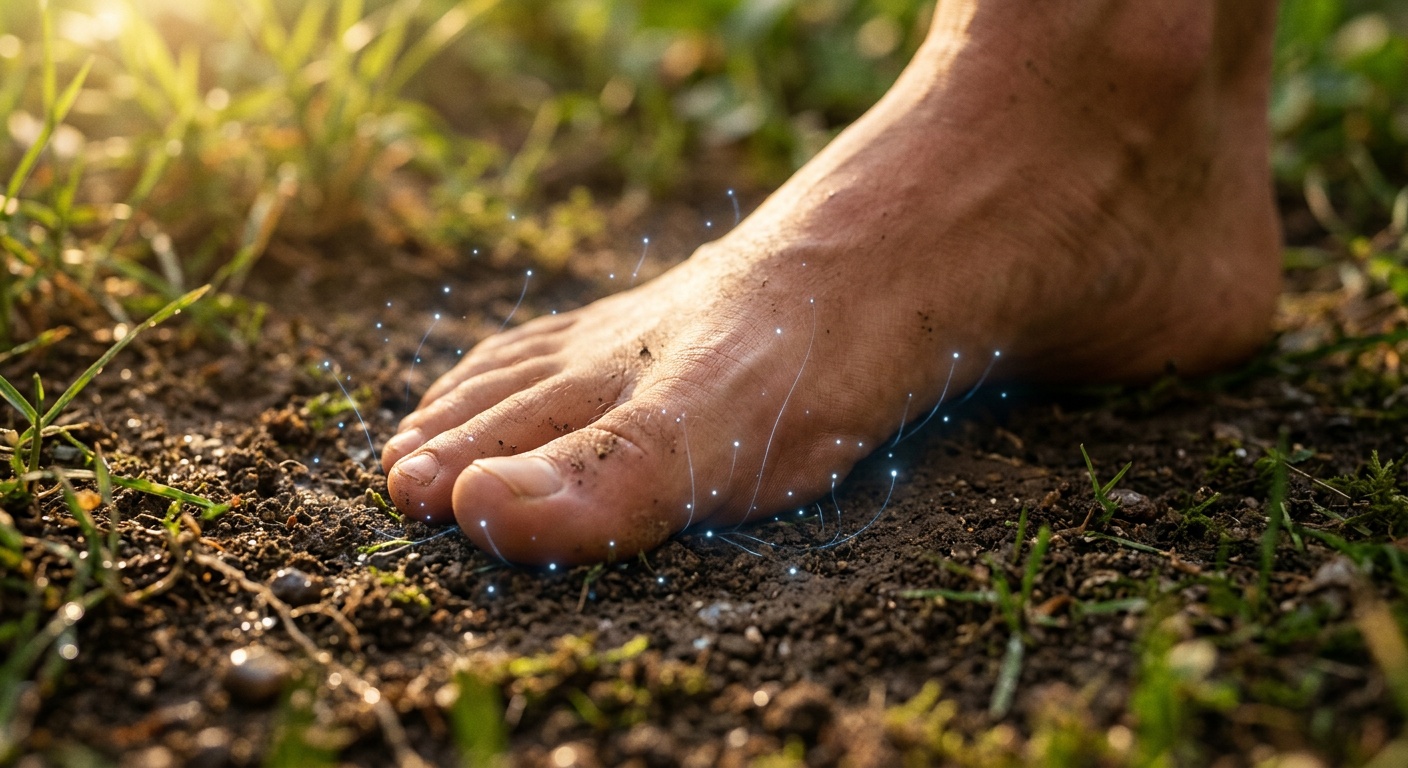
The earth’s surface maintains a negative electrical charge, carrying a virtually unlimited supply of free electrons. The electron transfer hypothesis, published by Chevalier, Sinatra, Oschman, Sokal, and Sokal in the Journal of Environmental and Public Health (2012), proposes that when human skin makes direct electrical contact with the earth — either bare feet on ground or via a conductive grounding product connected to the earth pin of a properly wired power outlet — these electrons transfer into the body.
Free electrons are mobile antioxidants. They neutralise ROS (free radicals) by donating an electron to the unpaired radical, stabilising it. In theory, a sustained supply of earth-sourced electrons could reduce oxidative stress and the downstream inflammatory cascade — the same inflammatory markers elevated in fibromyalgia. The 2012 Chevalier review proposed this as the mechanism by which grounding reduces inflammation, pain, and stress markers in human studies.
The sceptical perspective — and it deserves honest attention — centres on dosage. The Fibro Guy and other evidence-based practitioners raise a valid question: even if electron transfer occurs, is the electron flux through a grounding mat sufficient to meaningfully impact the billions of ROS molecules generated in a chronically inflamed body? The honest answer is: we do not know the dose-response relationship. No study has quantified the rate of electron transfer through a grounding mat at a molecular level and compared it to the oxidative load in fibromyalgia.
What we do have are measurable downstream effects in human studies — changes in cortisol, blood viscosity, and self-reported pain. These are the outcomes that matter practically, even if the precise mechanism remains incompletely mapped. Let us look at that evidence directly.
What the Research Actually Shows — Cited Accurately
I am a former Navy Clearance Diver, not a rheumatologist. What I can do is read the published literature and report what it says without overclaiming. Here is the relevant evidence base as of mid-2026, assessed honestly.
Cortisol Normalisation — Ghaly & Teplitz (2004)
Published in the Journal of Alternative and Complementary Medicine, this study had 12 participants sleep grounded using a conductive mattress pad for 8 weeks. Pre- and post-intervention salivary cortisol was measured at multiple timepoints. The results showed a statistically significant shift in cortisol profiles: the grounded group’s cortisol curves normalised toward a healthy circadian pattern — higher in the morning, lower at night. Several participants who had elevated night-time cortisol (a hallmark of disturbed sleep architecture) saw those levels drop.
Why this matters for fibromyalgia: cortisol dysregulation is one of the most consistent neuroendocrine findings in fibromyalgia. A 2014 meta-analysis in Psychoneuroendocrinology found that fibromyalgia patients demonstrate a flattened cortisol awakening response and elevated evening cortisol — exactly the pattern that grounding appeared to normalise in the Ghaly & Teplitz study. If grounding does normalise cortisol rhythms, it would directly address one of the physiological drivers of non-restorative sleep in fibromyalgia.
Limitation: n=12, no sham control. This is a pilot study. It generates hypotheses, not conclusions.
Pain Reduction — Chevalier (2004)
In a small study (n=8), participants with chronic pain conditions slept grounded for 4 weeks. Seven of eight reported subjective pain reduction. Thermographic imaging showed reduced inflammation markers in areas of reported pain. This study was not blinded, and n=8 does not allow any statistical generalisation.
What it tells us: Grounding during sleep was associated with subjective pain relief in most participants over a 4-week period. But with no control group, placebo response cannot be separated from any grounding-specific effect.
Blood Viscosity — Chevalier et al. (2013)
Published in the Journal of Alternative and Complementary Medicine, this study found that 2 hours of grounding significantly reduced blood viscosity as measured by zeta potential (the surface charge on red blood cells). Higher zeta potential means less red blood cell clumping (rouleaux formation) and better microcirculation. According to the NIH/PMC review of earthing applications for chronic pain conditions (2023), reduced blood viscosity may improve oxygen delivery to tissues — relevant because fibromyalgia patients often report symptoms consistent with poor peripheral perfusion including cold extremities, Raynaud’s-like symptoms, and delayed recovery from physical exertion.
Broader Chronic Pain Evidence — Oschman et al. (2015); PMC Review (2023)
A 2023 review article indexed on PubMed Central documented grounding applications for chronic pain conditions including chronic back pain, and reported consistent patterns across small studies: reduced inflammatory markers, improved sleep quality self-reports, and reduced subjective pain scores. The review noted that while individual studies are small, the consistency of the direction of effect across different research groups strengthens the case for a real (not artefactual) biological response.
Healthline’s 2025 medical review flagged grounding mat effectiveness as “under review,” reflecting the medical consensus position: biologically plausible, preliminary evidence consistent, but insufficient for clinical recommendation. That is an honest assessment.
The Gap: No Fibromyalgia-Specific RCT
No study has yet enrolled a cohort of diagnosed fibromyalgia patients, randomised them to grounded vs. sham-grounded conditions, and measured fibromyalgia-specific outcomes (FIQ scores, tender point counts, sleep actigraphy). This is the gap. Every claim about earthing and fibromyalgia is extrapolated from (a) general chronic pain studies and (b) cortisol/inflammation studies applied to fibromyalgia’s known pathophysiology.
That extrapolation is scientifically reasonable. But it is not proof. If a grounding mat manufacturer tells you it is “clinically proven for fibromyalgia” — they are wrong.
How to Use a Grounding Mat for Fibromyalgia: Practical Protocol
If you decide to trial grounding, here is how to do it properly — without wasting money on products that do not actually connect you to earth, and without creating false expectations about timelines.
Step 1: Verify Your Home’s Earth Connection
Every grounding product sold in Australia connects via the earth pin (third pin) of a standard AS/NZS 3112 power outlet. If that earth pin is not properly connected to a functional earth stake, your grounding mat does nothing. In homes built after 1980 in most Australian states, earthing is mandatory under AS/NZS 3000. In older homes — particularly pre-1970 Queensland homes, some NSW fibro cottages, and rural properties — the earth connection may be deteriorated or absent.
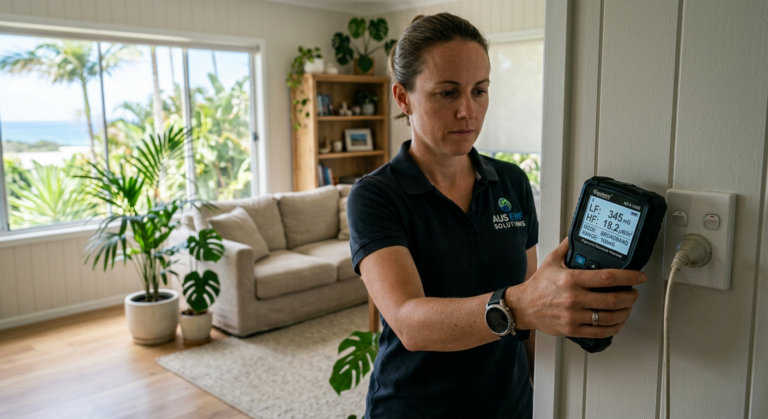
Buy a socket tester ($12–$18 on Amazon AU). Plug it in. If the earth indicator shows a fault, do not use a grounding mat through that outlet until a licensed electrician has checked the earth stake and wiring. This is non-negotiable. An ungrounded “grounding mat” is a piece of fabric, not a therapeutic tool.
Step 2: Choose Day Grounding, Night Grounding, or Both
Fibromyalgia’s two most disabling symptoms are pain and non-restorative sleep. These map to two grounding strategies:
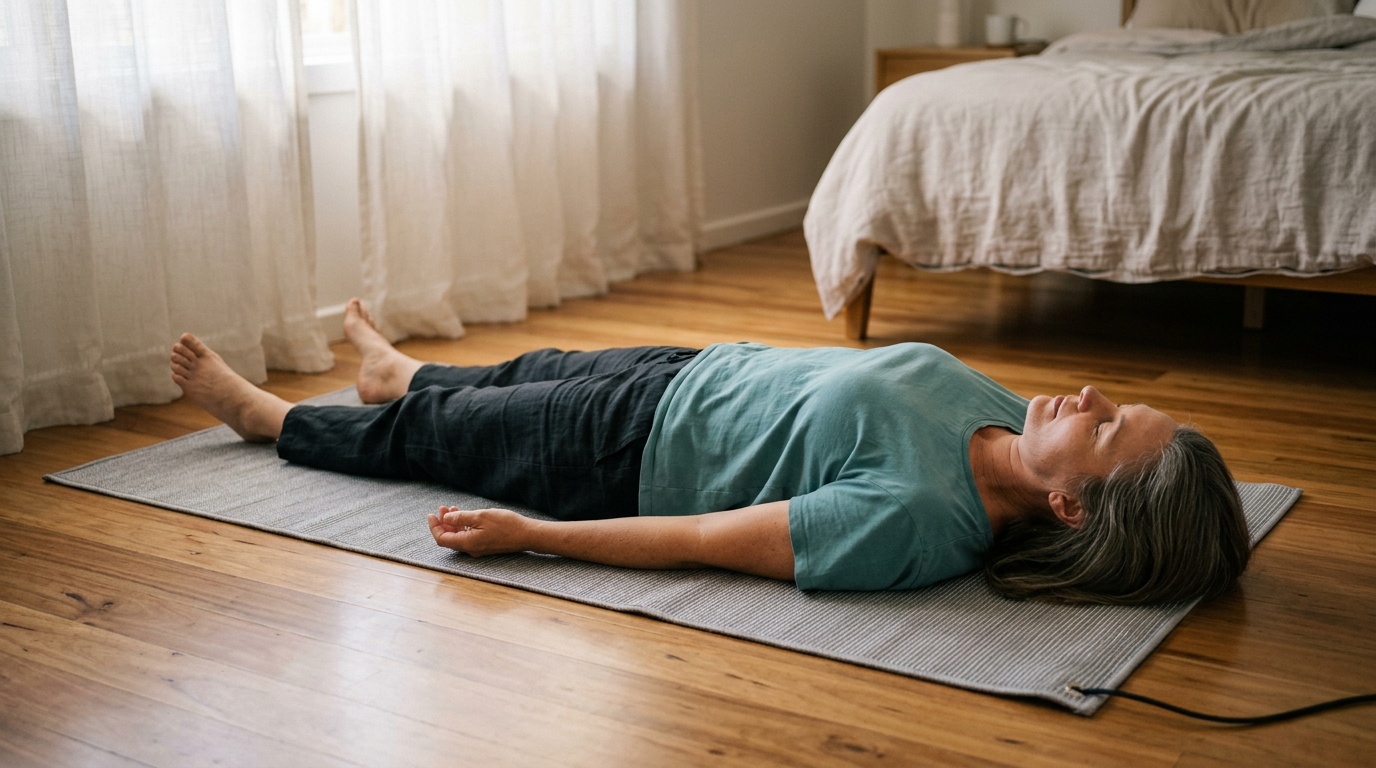
Daytime desk grounding (feet on mat): Place a grounding mat under your desk and rest bare feet (or thin cotton-socked feet) on it for 4–8 hours while working. This provides sustained electron transfer during waking hours when pain is typically worst. Best product: the Premium Grounding Universal Mat (60×25cm) — sized specifically for under-desk use, stainless steel conductive threads woven through the surface, connects via a cord to the earth pin of any outlet.
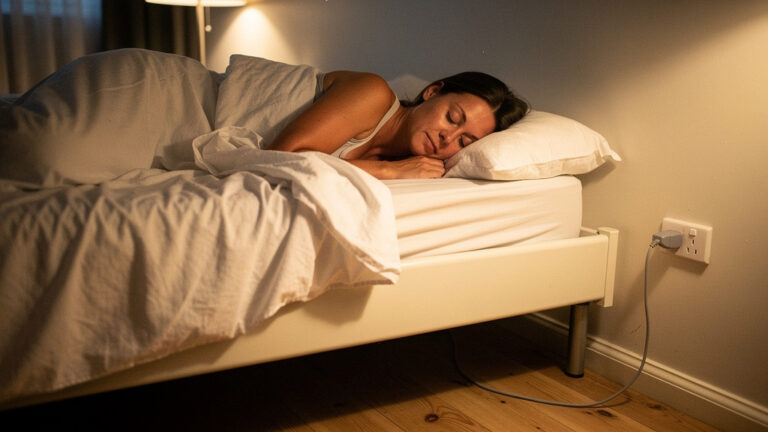
Overnight sheet grounding: A grounding half sheet lies across the lower half of your bed, making skin contact while you sleep. This directly targets sleep architecture disruption — arguably the single most impactful symptom in fibromyalgia, because poor sleep worsens pain, which worsens sleep, which worsens pain. The Ghaly & Teplitz cortisol study used overnight grounding for 8 hours. Best product: Premium Grounding Half Sheet — covers the torso and leg area, conductive silver/stainless steel threads, connects to the earth pin.
For best results: Use both. Day mat during work, half sheet during sleep. This maximises grounding hours per 24-hour cycle. The research that showed results used overnight grounding for a minimum of 8 hours, and the cortisol changes emerged over 4–6 weeks of consistent nightly use.
Step 3: Commit to a 4–6 Week Minimum Trial
Grounding is not paracetamol. You will not feel different after one night. The cortisol normalisation documented in the Ghaly & Teplitz study took 6–8 weeks to reach statistical significance. Subjective pain improvement in the Chevalier pain study appeared after 4 weeks. If you try grounding for 3 nights, feel nothing, and quit — you have not tested it. You have abandoned it.
Keep a simple symptom diary: pain level (0–10), sleep quality (0–10), fatigue (0–10), scored each morning. After 6 weeks, compare your averages to baseline. This is how you will know if grounding is doing anything for you personally — not from a single good or bad night.
Step 4: Address the Bedroom EMF Environment
This is the part that most grounding product websites do not tell you. If you are grounding at night but your bedroom is flooded with EMF from Wi-Fi routers, cordless phone base stations, and phone chargers, you are potentially conducting those electric fields through the grounding system into your body. The correct sequence is always: reduce EMF sources first, then ground.
For fibromyalgia sufferers, the highest-impact bedroom protocol is:
- Phone on airplane mode (free)
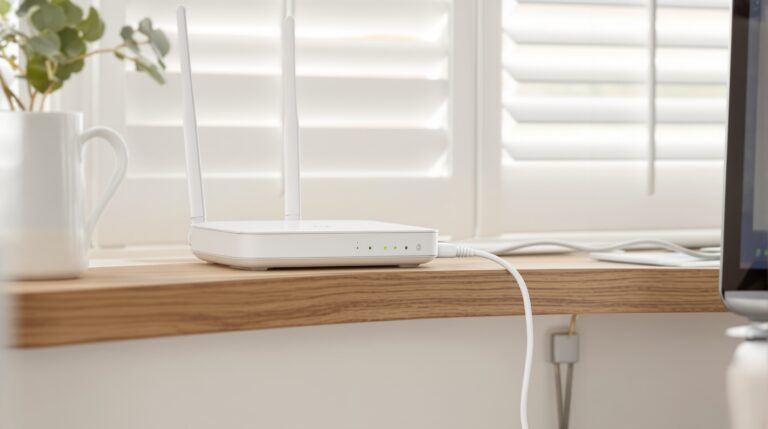
- Wi-Fi router on a Jackson 24hr mechanical timer (~$20) — auto-off at bedtime, auto-on at wake time
- Remove any DECT cordless phone base station from the bedroom (these transmit continuously at 1.9 GHz)
- Then connect and use the grounding sheet
This sequence costs under $20 in total and ensures you are grounding in a clean electromagnetic environment. For more detail, see our complete EMF reduction guide for Australian homes.
Product Recommendations: Honest Comparison for Australian Buyers
Three options worth considering. I have listed them in order of what I would start with for a fibromyalgia trial, factoring in cost, ease of use, and the reality that fibromyalgia fatigue makes complicated setups a non-starter.
| Product | Type | Size | Price (AUD) | Best For | Trial Period |
|---|---|---|---|---|---|
| Premium Grounding Universal Mat | Desk/foot mat | 60×25cm | $89–$119 | Daytime pain management | Standard returns |
| Premium Grounding Half Sheet | Bed sheet | Half-bed | ~$149–$199 | Overnight sleep/cortisol | Standard returns |
| Earthing Oz Grounding Mat | Multi-use mat | Various | ~$89–$129 | Australian-made, risk-free trial | 90-day trial |
Best Starting Point: Premium Grounding Universal Mat
The Premium Grounding Universal Mat (60×25cm) uses stainless steel conductive threads woven through the mat surface, connected to your power outlet’s earth pin via an included cord with an Australian plug adapter. At $89–$119, it is the lowest-cost entry point to test whether grounding affects your fibromyalgia symptoms.
Why it is the starting point: Fibromyalgia fatigue makes motivation difficult. A desk mat requires zero effort — you plug it in once, place your feet on it, and forget about it. You do not need to change your sheets, wash special fabric, or do anything at all except sit at your desk. For someone dealing with fibro fog and exhaustion, that simplicity matters more than any specification.
The limitation: you are only grounded while at the desk. If you work from home (increasingly common post-COVID in Australian cities), that might mean 6–8 hours of contact. If you are office-based, it is zero. For comprehensive grounding, you need the overnight sheet as well — but start with the mat to see if you notice any difference before investing further.
Best for Sleep Disruption: Premium Grounding Half Sheet
If non-restorative sleep is your primary fibromyalgia symptom — and it is for the majority of sufferers — the half sheet is the more evidence-aligned product. The Ghaly & Teplitz cortisol study specifically used overnight grounding during sleep. A half sheet provides 6–8 hours of continuous contact, matching the protocol in the published research.
The sheet uses silver/stainless steel conductive threads woven through cotton fabric. It lies across the lower portion of your bed, and your bare skin (feet, legs, or torso) maintains contact through the night. Wash it on a gentle cycle without fabric softener — softener coats the conductive threads and reduces conductivity.
The catch: Premium Grounding ships from the US, and the AUD-equivalent price for their sheets sits around $149–$199 for a half sheet. Delivery to Australia typically takes 7–14 days. If you want Australian-made and a risk-free trial period, the Earthing Oz option below is worth considering.
Australian-Made Alternative: Earthing Oz Grounding Mat
Earthing Oz is an Australian company offering grounding mats with a 90-day trial period — which is significant for fibromyalgia sufferers. Given that the research suggests 4–6 weeks minimum for noticeable changes, a 90-day trial gives you a genuine window to evaluate whether grounding is helping your symptoms before committing financially. That is the most honest test you can run.
The product uses conductive carbon-infused or stainless steel materials (depending on model) and ships domestically within Australia. No international shipping delays, no currency conversion surprises. If you are the kind of person who wants to try before you commit — and with fibromyalgia’s track record of things that “should work” but do not — the 90-day trial removes the financial risk entirely.
Practical Setup for Fibromyalgia Sufferers: Keep It Simple
Fibromyalgia fatigue is real. If a protocol requires 15 steps, special equipment, and daily maintenance, you will not do it consistently. Here is the simplest possible setup:
Day 1 setup (15 minutes total):
- Plug the socket tester into the outlet you plan to use. Confirm earth is functional (green light pattern — varies by brand).
- Connect the grounding mat cord to the earth adapter. Plug the adapter into the tested outlet.
- Place the mat under your desk (or the sheet on your bed).
- Touch it with bare skin. That is it.
Ongoing (zero effort): Leave the mat plugged in. Use it daily. The only maintenance is washing the sheet every 1–2 weeks (gentle cycle, no fabric softener, hang dry or tumble dry low). The desk mat can be wiped with a damp cloth monthly.
For apartment dwellers: Grounding works in apartments. Your power outlets connect to the building’s earth system via the main switchboard, which connects to an earth electrode (typically a copper rod or strip buried at the building’s foundation). Height above ground is irrelevant — the electrical connection is through the building’s wiring, not through the floor. Verify with the socket tester, same as a house.
For carpet: A grounding mat placed on carpet still works — the conductive surface connects to earth via the cord and power outlet, not through the floor. You do need bare skin contact with the mat surface. Thick woollen socks will insulate you. Thin cotton socks typically allow enough conductivity. Bare feet are ideal.
TGA and Regulatory Context in Australia
Grounding mats are not listed on the Australian Register of Therapeutic Goods (ARTG). They are not classified as medical devices or therapeutic goods by the TGA. This means:
- No manufacturer can legally claim a grounding mat “treats” or “cures” fibromyalgia in Australia under the Therapeutic Goods Act 1989
- No grounding mat has been assessed by the TGA for safety or efficacy for any medical condition
- They are classified as general consumer goods, similar to a yoga mat or weighted blanket
This does not mean they do not work. It means they have not been formally evaluated under the regulatory framework that governs medical claims in Australia. Many complementary approaches — including magnesium supplementation, weighted blankets, and cold-water therapy — are widely used for chronic pain management without TGA listing. The absence of TGA classification is a regulatory fact, not a safety concern. Grounding mats have no known serious adverse effects in any published study.
What it does mean: be wary of any Australian retailer making explicit therapeutic claims about grounding mats and fibromyalgia. They are likely violating the Therapeutic Goods Advertising Code. An honest seller will present the research and let you decide.
Integrating Grounding with Your Fibromyalgia Management Plan
Grounding is not either/or. It sits alongside your existing management — not in place of it. The most evidence-supported complementary approaches for fibromyalgia in Australia, ranked by quality of evidence, are:
- Exercise — Cochrane-level evidence. Aquatic exercise, walking, tai chi. Strongest evidence base of any intervention including medication.
- Cognitive behavioural therapy (CBT) — Strong evidence for pain catastrophising and sleep hygiene.
- Sleep hygiene — Dark room, consistent sleep/wake times, no screens 1hr before bed. Moderate evidence.
- Grounding/earthing — Pilot-level evidence for cortisol normalisation and pain reduction. Low risk, low cost.
The practical protocol for an Australian fibromyalgia sufferer combining these: maintain your prescribed medication (pregabalin, duloxetine, or amitriptyline if tolerated). Add 20–30 minutes of gentle daily movement. Implement sleep hygiene. Add grounding as the overnight component of sleep hygiene — the half sheet connects your body to earth while you sleep, simultaneously applying sleep-focused grounding and maintaining a consistent sleep environment.
Tell your GP or rheumatologist you are trying earthing. Most Australian GPs will not object to a complementary approach with no known side effects, though some may be unfamiliar with the research. Bring the Chevalier 2012 review paper reference if they want to read the proposed mechanism. The worst response you will get is benign scepticism — which, given the evidence level, is a reasonable clinical position.
Do not stop any prescribed medication to “test” grounding in isolation. Fibromyalgia management is additive. You add tools that help and retain the ones that work. If after 6 weeks of consistent grounding you notice improved sleep quality or reduced pain scores in your diary, that data is worth discussing with your treating clinician.
Final Verdict
Grounding for fibromyalgia: worth trying, with honest expectations.
The electron transfer mechanism is biologically plausible. Pilot studies show cortisol normalisation, reduced blood viscosity, and subjective pain relief — all relevant to fibromyalgia’s inflammatory and neuroendocrine profile. But the evidence is preliminary, no fibromyalgia-specific RCT exists, and grounding mats are not TGA-listed therapeutic goods in Australia.
At $89–$119 for a desk mat and $149–$199 for a half sheet, the financial risk is low. The health risk is zero. If you are among the 80% of fibromyalgia patients not getting adequate relief from medication alone, a 6-week grounding trial alongside your existing management is a rational decision — not a gamble on pseudoscience, but a low-cost experiment with plausible biology behind it.
Start with the Premium Grounding Universal Mat for daytime use, or the Earthing Oz Mat if you want a 90-day risk-free trial. Track your symptoms. Let the data — your data — decide.
Start with the mat. Measure with your symptom diary.
The Premium Grounding Universal Mat is the lowest-cost, lowest-effort way to test whether earthing helps your fibromyalgia. Plug it in, put your feet on it, and track pain + sleep scores for 6 weeks.
Last reviewed: July 2026 – Clean and Native
Frequently Asked Questions
Can earthing cure fibromyalgia?
No. Fibromyalgia has no known cure. Earthing may help manage specific symptoms — particularly sleep disruption and chronic inflammation — based on pilot-level evidence showing cortisol normalisation and subjective pain reduction. It is a complementary approach, not a treatment or cure.
How long before I notice improvement from grounding with fibromyalgia?
Published research used 4–8 weeks of consistent overnight grounding before measurable cortisol changes appeared. Most practitioners recommend a minimum 4–6 week trial with daily use before evaluating results. Keep a symptom diary to track changes objectively.
Is grounding safe with fibromyalgia medications like pregabalin or duloxetine?
No adverse interactions between grounding and fibromyalgia medications have been reported in any published study. Grounding is a passive electrical connection to the earth’s surface — it does not introduce substances into the body. However, inform your prescribing GP or rheumatologist about any complementary approaches you are using.
Which is better for fibromyalgia — a grounding mat or a grounding sheet?
For sleep disruption (the most common disabling fibromyalgia symptom), a grounding half sheet provides 6–8 hours of continuous overnight contact and matches the protocol used in published cortisol studies. For daytime pain, a desk mat provides sustained grounding during work hours. Using both maximises grounding time per 24-hour cycle.
Can I use a grounding mat on carpet?
Yes. The grounding mat connects to the earth via the cord plugged into your power outlet’s earth pin — not through the floor. Place the mat on carpet and make bare skin contact with the mat surface. Thick woollen socks will insulate you. Thin cotton socks or bare feet allow sufficient conductivity.
Does earthing work if I live in an apartment?
Yes. Your power outlets connect to the building’s earth system through the main switchboard and earth electrode at the building’s foundation. Height above ground is irrelevant — the electrical path is through the wiring, not through the floor. Use a socket tester to verify your outlet’s earth pin is functional before connecting a grounding product.
Is there clinical evidence for earthing and fibromyalgia specifically?
No large randomised controlled trial has tested earthing specifically for diagnosed fibromyalgia patients. The relevant evidence is extrapolated from general chronic pain studies (Chevalier 2004, n=8), cortisol normalisation research (Ghaly & Teplitz 2004, n=12), and inflammation mechanism reviews (Chevalier et al. 2012, Oschman et al. 2015). The connection is biologically plausible but not clinically proven for fibromyalgia.
How do I know if my grounding mat is actually working?
First, verify the electrical connection: use a socket tester ($12–$18) to confirm your outlet’s earth pin is functional. Some grounding products include a continuity tester that lights up when the mat is properly earthed. For personal effect, track a symptom diary (pain 0–10, sleep quality 0–10, fatigue 0–10) daily for 6 weeks and compare your average scores to your baseline week.
Are grounding mats TGA-approved in Australia?
No. Grounding mats are not listed on the Australian Register of Therapeutic Goods (ARTG) and are not classified as medical devices or therapeutic goods by the TGA. They are sold as general consumer goods. No manufacturer can legally claim a grounding mat treats or cures fibromyalgia in Australia under the Therapeutic Goods Act 1989.
Should I stop my fibromyalgia medication to try earthing?
No. Never stop prescribed medication without consulting your GP or rheumatologist. Grounding is an additive complementary approach — you use it alongside existing treatment, not instead of it. If after 6 weeks of consistent grounding you notice symptom improvements, discuss those findings with your treating clinician.
Get the Australian Home Environment Checklist
30 checks across water, air and EMF. Most of them free. Ranked by impact.
No spam. Unsubscribe any time.

Former Royal Australian Navy Clearance Diver and TAG-E counter-terrorism operator. Founded Clean and Native to apply the same rigorous thinking to the home environment.
Full biography →