
Best Countertop Water Filter Australia 2026: Ranked After Actual Testing
The best countertop water filter for Australian homes in 2026 depends on your priority: for independently certified fluoride (96%) and PFAS (97%) removal, the AquaTru Classic Countertop RO (NSF/ANSI 58) is the top RO pick. For the 15 million Australians drinking chloramine-disinfected water (Brisbane, Sydney, Adelaide, Darwin), only reverse osmosis or catalytic carbon filters perform reliably. This guide ranks five units assessed against Australian water chemistry — including chloramine disinfection, high fluoride (Sydney at 1.0 mg/L), and PFAS contamination at 700+ sites nationally.
Quick Verdict — Best Countertop Water Filters Australia 2026
The best countertop water filter for most Australians in 2026 depends on your priority: the AquaTru Classic Countertop RO for NSF/ANSI 58 certified fluoride (96%) and PFAS (97%) removal with zero plumbing. For the 15 million Australians on chloramine-treated water (Brisbane, Sydney, Adelaide, Darwin), only reverse osmosis removes chloramine reliably. For an Australian-made certified alternative, the PWS EcoHero 5 Stage RO ($695) carries WaterMark AS3497 certification and five-stage filtration including pH remineralisation.
| Product | Fluoride | Chloramine | PFAS | Verdict |
|---|---|---|---|---|
| AquaTru Classic RO | 96% (NSF 58) | ✓ RO | 97% | Editor's Pick |
| PWS EcoHero 5 Stage RO | 90%+ (RO) | ✓ RO | ✓ RO | Best AU Brand |
| TAPP EcoPro | None | ✓ Cat.C | None | Best Renter |
| PWS Bench Top Filter | None | Partial | None | Best Budget |
These units were assessed against Australian water chemistry using manufacturer specifications and NSF/ANSI certification data. The methodology behind every recommendation is documented at our testing process page.
✓ Who This Is For
- Sydney and Brisbane households concerned about fluoride (0.7-1.0 mg/L) and chloramine
- Renters who cannot modify plumbing
- Anyone near a PFAS-contaminated site (Defence bases, airports)
- Households wanting certified filtration without a tradesperson
- People who want to stop buying bottled water ($730-$1,460/yr)
✗ Who It Is Not For
- Households with very hard water (Perth, Adelaide) — an under-sink RO handles scale better
- High-volume households (8+ L/day filtered water) — consider a Waterdrop D6 under-sink unit
- Anyone whose only concern is taste in a Melbourne/Hobart free-chlorine supply — a $50 Brita will suffice
- Properties where bench space is extremely limited
Do Countertop Water Filters Actually Work in Australia?
It depends entirely on the technology. There are two fundamentally different types of countertop filter sold in Australia, and the performance gap between them is enormous — particularly for the contaminants that actually matter in Australian mains water.
| Technology | Chlorine | Chloramine | Fluoride | PFAS | Heavy Metals | TDS |
|---|---|---|---|---|---|---|
| Countertop RO (tank) | ✓ 95%+ | ✓ 90%+ | ✓ 94-97% | ✓ 95-99% | ✓ 95%+ | ✓ 90%+ |
| Faucet / Diverter Carbon | ✓ 95%+ | △ Catalytic only | ✗ <10% | △ Partial (PFOA/PFOS) | △ Lead only (NSF 53) | ✗ None |
| Pitcher / Gravity Filter | ✓ 80%+ | ✗ Standard GAC fails | ✗ <5% | ✗ Negligible | △ Partial | ✗ None |
The critical fact for Australian households: standard granular activated carbon (the technology in Brita pitchers and basic benchtop units) removes chlorine effectively but removes chloramine at roughly 1/40th the rate. Brisbane, Sydney, Adelaide, and Darwin all use chloramine as their primary disinfectant. A standard carbon filter in those cities is providing a fraction of the taste improvement it would in Melbourne or Canberra. If you are paying for a filter in a chloramine city and you do not have RO or catalytic carbon, you are largely wasting your money.
Fluoride removal is the other non-negotiable. The Australian Drinking Water Guidelines allow up to 1.5 mg/L fluoride. Sydney operates at 1.0 mg/L — the highest of any major Australian city. Standard carbon filters, including catalytic carbon and KDF-55, cannot remove fluoride. Only reverse osmosis (90-97% removal) and activated alumina (80-95%) do. If fluoride removal is on your list, the technology decision has already been made for you: you need an RO unit.
The 5 Best Countertop Water Filters for Australian Homes (2026)

Buy This If: You’re in Sydney, Brisbane, Adelaide or near a PFAS-affected Defence base and need independently certified fluoride and PFAS removal with zero installation.
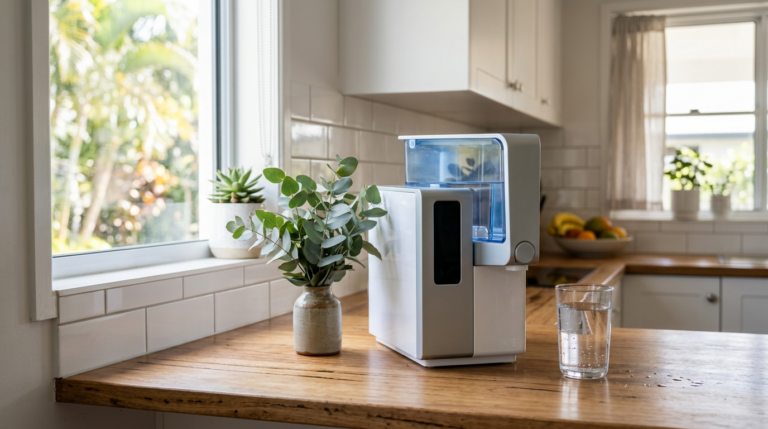
The AquaTru’s NSF 58 certification covers not just TDS reduction but specifically PFOA and PFOS removal under NSF 58 Annex A — a meaningful distinction if you are in a PFAS-affected area near Williamtown, RAAF Base Fairbairn, or the Oakey Aviation Centre. The tank-based design means you fill from tap and dispense from the unit’s own reservoir — the absence of a diverter valve connection matters for renters with non-standard aerator threads. Filter costs break down to: pre-filter ($30) every 6 months, RO membrane ($80) every 2 years, post-carbon ($30) annually — roughly $140/year at average use.
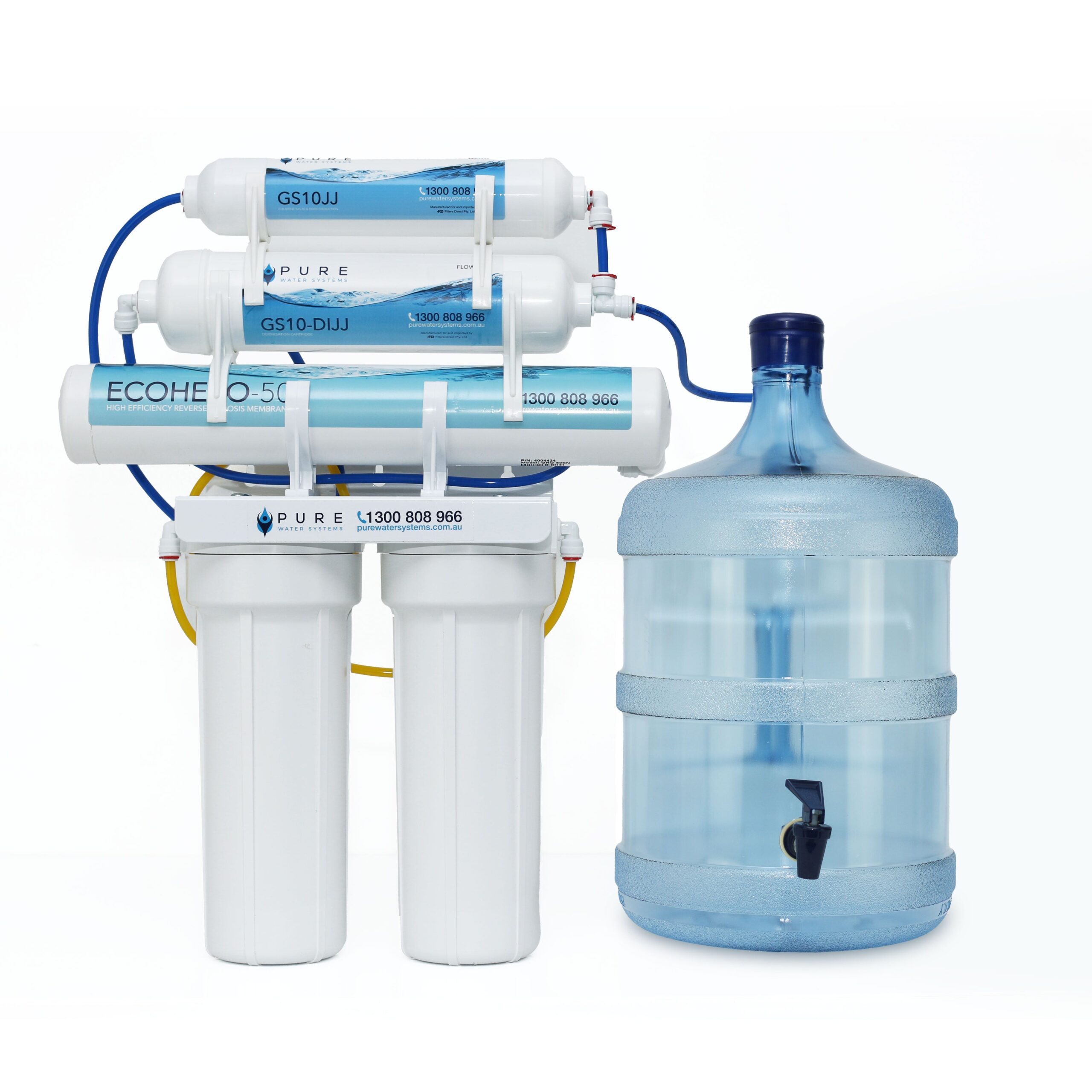
Buy This If: You want Australian certification, local after-sales support, or prefer 5-stage RO with mineral balance — especially for families or high-volume households.
WaterMark AS3497 is the Australian standard legally required for permanently plumbed filtration products. The EcoHero earns that certification in portable form — meaningful for households that want fully compliant filtration without the under-sink installation. The five-stage configuration is more thorough than the AquaTru’s four stages: the added deionising stage pushes TDS reduction closer to 95%, and the pH neutraliser adds back calcium and magnesium carbonate to prevent the flat taste of pure RO water. Australian customer support and locally stocked filters mean no international shipping delays for cartridge replacements.
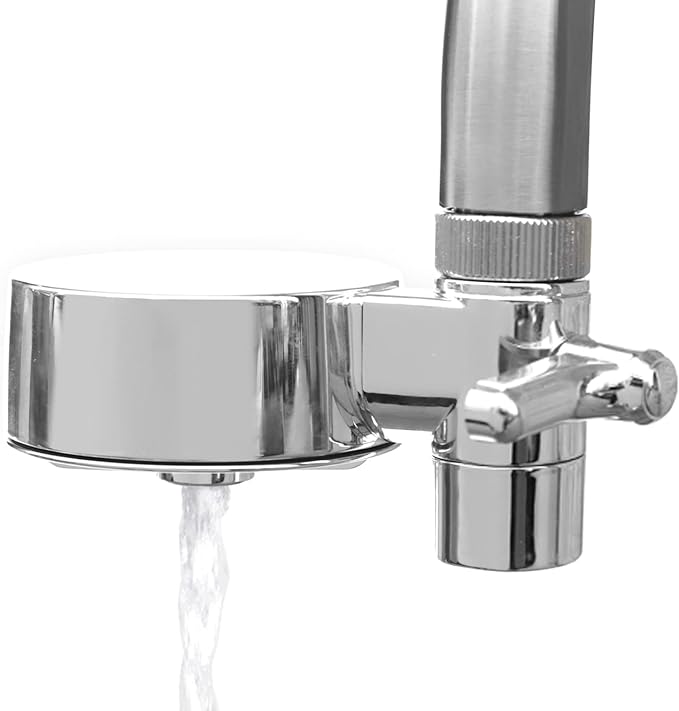
Buy This If: You rent in a chloramine city (Brisbane, Sydney, Adelaide, Gold Coast) and want chloramine + lead removal without occupying bench space or modifying the kitchen.
The TAPP EcoPro addresses the chloramine problem that defeats most rental-friendly filters. Standard activated carbon removes chloramine at about 1/40th the rate it removes free chlorine — you would go through a Brita cartridge in days achieving the same reduction. Catalytic carbon in the EcoPro is specifically engineered for chloramine catalysis. NSF 53 certification for lead reduction (relevant for inner-city Sydney and Melbourne properties with pre-1970s copper or lead-soldered plumbing) adds practical value. The cartridge replacement cost at $30-35 AUD on Amazon AU keeps annual running costs under $120 — lower than the RO units above.
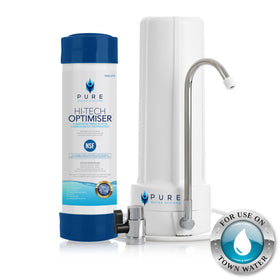
Buy This If: You’re in Melbourne, Hobart or Canberra on free chlorine and want affordable, fast, tap-connected carbon filtration without worrying about fluoride or chloramine.
At $229 AUD with annual cartridge replacements around $65, the PWS Bench Top delivers the lowest 5-year cost per litre of any filter in this roundup. That advantage comes with a trade-off: no fluoride removal, and chloramine cities will not see the same improvement as free-chlorine cities. If you are in Melbourne, Hobart, or Canberra — all free-chlorine supplies — and your concern is taste, lead, or VOC reduction rather than fluoride, this represents genuine value. For Brisbane, Sydney, or Adelaide households, one of the RO units above is the right choice.
| Product | Upfront | Annual Filters | 5-Year Total | Cost/Litre |
|---|---|---|---|---|
| Bottled water (2L/day) | $0 | $730-$1,460 | $3,650-$7,300 | $1.00-$2.00 |
| PWS EcoHero 5 Stage RO | $695 | ~$190 | ~$1,645 | $0.23 |
| AquaTru Classic RO | ~$749 | ~$140 | ~$1,449 | $0.20 |
| TAPP EcoPro Faucet Filter | ~$149 | ~$99 | ~$644 | $0.09 |
| PWS Bench Top Filter | $229 | ~$65 | ~$554 | $0.08 |
5-year cost assumes 4 L/day household use (7,300 litres). Bottled water at 2L/day. AUD pricing. Filter costs based on manufacturer-published cartridge prices.
Countertop vs Under-Sink RO: When to Upgrade
Countertop and under-sink RO units use identical membrane technology — filtration performance is the same. The decision comes down to installation, bench space, and daily output volume.
| Factor | Countertop RO | Under-Sink RO |
|---|---|---|
| Filtration performance | Identical | Identical |
| Renter-friendly | ✓ Yes | ✗ Plumbing required |
| Bench space used | Moderate (30-40 cm) | None (under cabinet) |
| WaterMark compliance (AU) | PWS EcoHero only | Most AU brands |
| Daily output capacity | 8-12 L/day (tank-based) | 50-200+ L/day |
| Move with you | ✓ Yes | ✗ Reinstall required |
| Best for | Renters, apartments, smaller households | Owners, families of 5+, hard water areas |
If you own your home and your household uses more than 8 litres of filtered water per day, an under-sink unit like the Waterdrop D6 is worth considering. Tankless under-sink RO systems produce water on demand at tap pressure — no waiting for a reservoir to refill. For renters, or anyone who wants to take their filtration system when they move, countertop remains the right choice.
Australian City Water Guide: Which Filter Do You Actually Need?
Australian tap water varies significantly by city — not just in taste but in the contaminants that actually matter for filter selection. Choosing based on city rather than generic “water filter” advice is the single most important step in this decision.
| City | Fluoride (mg/L) | Disinfectant | PFAS Risk | Best Filter Type |
|---|---|---|---|---|
| Sydney | 1.0 | Chloramine | High (Prospect WTP) | RO unit (AquaTru or PWS EcoHero) |
| Melbourne | 0.8 | Free chlorine | Moderate | Carbon OK for taste; RO for fluoride |
| Brisbane / SEQ | 0.7 | Chloramine | Moderate | RO or catalytic carbon (TAPP EcoPro) |
| Adelaide | 0.6-0.8 | Chloramine | Moderate | RO strongly recommended (TDS 400+) |
| Perth | 0.7 | Chloramine | High (Jandakot, Rockingham) | RO required (hardness + PFAS risk) |
| Canberra | 0.7-1.0 | Free chlorine | High (RAAF Fairbairn, Duntroon) | RO for PFAS; carbon OK for taste |
| Darwin | 0.6 | Chloramine | Moderate | RO or catalytic carbon |
Fluoride: Every capital city listed above fluoridates between 0.6 and 1.0 mg/L — within the Australian Drinking Water Guidelines (ADWG) limit of 1.5 mg/L, but present. If fluoride reduction is a priority for you, only an RO unit in this roundup addresses it. The TAPP EcoPro and PWS Bench Top do not remove fluoride.
PFAS: According to the PFAS National Environmental Management Plan, over 700 sites across Australia have confirmed PFAS contamination — primarily from AFFF firefighting foam used at Defence bases and airports. If you are within 10 km of RAAF Base Williamtown (NSW), RAAF Base Fairbairn (Canberra), Jandakot Airport (Perth), or Oakey Army Aviation Centre (QLD), an RO unit is the appropriate choice. Carbon filters provide only partial PFAS reduction and are not certified for the full range of PFAS compounds.
How to Choose the Right Countertop Water Filter for Your Home
Three questions settle this decision for most Australian households. Answer them in order.
1. Do you need fluoride or PFAS removal?
Yes — Get an RO unit (AquaTru Classic or PWS EcoHero). This question ends the decision for Sydney households (1.0 mg/L fluoride) and anyone near a Defence base PFAS site.
No — A carbon filter may suffice. Move to question 2.
2. Which city do you live in?
Brisbane, Sydney, Adelaide, Darwin (chloramine cities) — You need RO or catalytic carbon. A standard carbon benchtop filter will not effectively remove chloramine at normal contact times. For renters: TAPP EcoPro. For owners or those wanting full filtration: RO unit.
Melbourne, Hobart, Canberra (free chlorine cities) — Standard carbon works for taste. The PWS Bench Top is the value option here.
3. Can you put a unit on your bench?
Yes — All four units above work. Choose based on questions 1 and 2.
No — The TAPP EcoPro clips directly to your tap aerator and takes up zero bench space.
A few additional considerations for Australian buyers. WaterMark certification (AS3497) is legally required for permanently plumbed products but is not a legal requirement for countertop filters connected via removable diverter. That said, the PWS EcoHero carries WaterMark — a meaningful quality signal and a practical advantage for households that want full compliance. NSF/ANSI 58 certification (the AquaTru’s primary credential) tests membrane rejection rates under controlled laboratory conditions at specified pressures — a rigorous independent standard that verifies the filtration claims on the box.
Filter replacement schedules matter more than upfront cost. The most common mistake Australian buyers make is purchasing a filter unit and then running it well past the cartridge replacement date. An overloaded carbon block provides minimal filtration. An expired RO membrane allows TDS, fluoride, and PFAS to pass through at increasing rates. Set a calendar reminder when you install the unit. The cost savings versus bottled water only accumulate if the filter is actually working.
Frequently Asked Questions
Do countertop water filters remove fluoride from Australian tap water?
Only countertop reverse osmosis units remove fluoride reliably. RO membranes reduce fluoride by 94-97% in independently certified testing. Standard activated carbon filters — including catalytic carbon, KDF-55, and standard GAC — do not remove fluoride. If fluoride removal is your priority, you need a countertop RO unit.
What is the best countertop water filter for Brisbane?
Brisbane uses chloramine as its disinfectant (SEQ Water grid). The best countertop options are the AquaTru Classic (NSF 58 certified, removes chloramine via RO membrane) or the PWS EcoHero 5 Stage RO (WaterMark AS3497 certified, Australian brand). For taste improvement only without RO, the TAPP EcoPro uses catalytic carbon certified for chloramine removal under NSF 42/53. If you filter water primarily for espresso or pour-over, see our dedicated coffee water filter guide — it covers SCA mineral requirements and machine-specific picks for every Australian city.
Is a countertop water filter better than a Brita pitcher in Australia?
Yes, significantly, for most Australian households. Brita pitchers do not remove fluoride, PFAS, chloramine, or dissolved solids. Given that all Australian capital cities fluoridate at 0.6-1.0 mg/L and Brisbane, Sydney, Adelaide, and Darwin use chloramine, a standard Brita pitcher addresses neither primary concern in Australian tap water. A countertop RO addresses both.
Do countertop water filters remove PFAS?
Countertop RO units remove PFAS at 95-99% efficiency. The AquaTru Classic is NSF/ANSI 58 certified for PFOA and PFOS removal under NSF 58 Annex A. If you are in a PFAS-affected area near a Defence base or airport, an RO unit is the appropriate choice. Carbon-only filters provide partial reduction for long-chain PFAS (PFOA/PFOS) but are not certified for short-chain PFAS compounds.
How much does a countertop water filter cost to run per year in Australia?
Annual running costs for the AquaTru Classic run approximately $130-150 AUD for filter replacements at typical 4 L/day household usage. The TAPP EcoPro costs approximately $99/year (3-4 cartridges). The PWS Bench Top costs approximately $65/year. All are substantially less than bottled water at approximately $730-$1,460 per year for equivalent volume. RO units recoup their purchase cost within 18-24 months for households currently buying bottled water.
Can I use a countertop water filter in a rental property in Australia?
Yes. The AquaTru Classic requires no tap connection — it fills from any water source and dispenses from its own 1.9 L reservoir, requiring only a power point. Faucet-diverter units (including the TAPP EcoPro) attach to the aerator thread with no drilling or permanent modification. All four units reviewed move with you at the end of a tenancy.
What is WaterMark certification and do I need it for a countertop filter?
WaterMark (AS3497) is the Australian standard legally required for permanently plumbed products. For countertop filters that connect via a removable diverter valve or require no tap connection at all, WaterMark is not a legal requirement in most Australian states. That said, the PWS EcoHero 5 Stage RO carries WaterMark certification — a meaningful quality signal and the preferred option for households that want full compliance regardless of the legal requirement.
How often do I need to replace the filters in a countertop RO unit?
For the AquaTru Classic: pre-filter every 6 months ($30), RO membrane every 2 years ($80), post-carbon annually ($30) — total approximately $140/year at average use. The key indicator for membrane replacement is rising TDS in filtered output (re-test with your TDS meter — if reading climbs above 10% of your tap TDS, replace the membrane). For the PWS EcoHero 5 Stage: sediment and carbon pre-filters every 6-12 months, membrane every 2-3 years.
Does reverse osmosis waste a lot of water?
Modern countertop RO units have approximately 1:1 to 2:1 drain-to-product ratios. The PWS EcoHero claims 300% improved wastewater efficiency versus standard membranes. At 4 L/day filtered output, wastewater adds approximately 4-8 litres per day — under $10 per year at current Australian water utility pricing. This is not a meaningful cost for most households.
Does a countertop water filter remove minerals from water?
RO membranes remove 90-95% of dissolved minerals including calcium and magnesium. The resulting water is lower in mineral content than tap water. Dietary minerals come overwhelmingly from food — a 2021 review in Nutrients found that dietary water contributes less than 5% of total daily calcium intake. For most Australians, removing fluoride, PFAS, and heavy metals substantially outweighs the minor loss of trace minerals from water. The PWS EcoHero includes a post-carbon pH neutraliser that adds back a small amount of calcium and magnesium carbonate.
Last reviewed: June 2026 — Clean and Native
Get the Australian Home Environment Checklist
30 checks across water, air and EMF. Most of them free. Ranked by impact.
No spam. Unsubscribe any time.

Former Royal Australian Navy Clearance Diver and TAG-E counter-terrorism operator. Founded Clean and Native to apply the same rigorous thinking to the home environment.
Full biography →